



Amisulbrom

Based on 1 Customer Validation
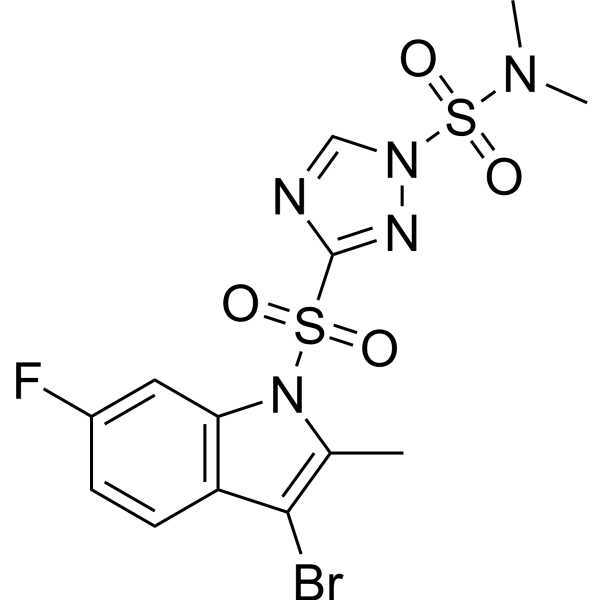
Amisulbrom is a sulfonamide fungicide used to control oomycete diseases. Amisulbrom inhibits the cytochrome-bc1 complex of the mitochondrial electron transport system.
For research use only. We do not sell to patients.
- Purity : 99.92%
- CAS No.: 348635-87-0
- Formula: C13H13BrFN5O4S2
- Molecular Weight:466.31
-
Storage:Powder -20°C, 3 years ; In solvent -80°C, 6 months , -20°C, 1 month

To place orders, for customer services and technical support, please contact: MedChemExpress USA
Tel: 609-228-6898 E-mail: [email protected] [email protected]


-
 Biological Activity
-
Chemical Information
-
Solvent & Solubility
- Purity & Documentation
- References
-
 Help & FAQs


-

HY-121214R
Amisulbrom (Standard)Fungicide -
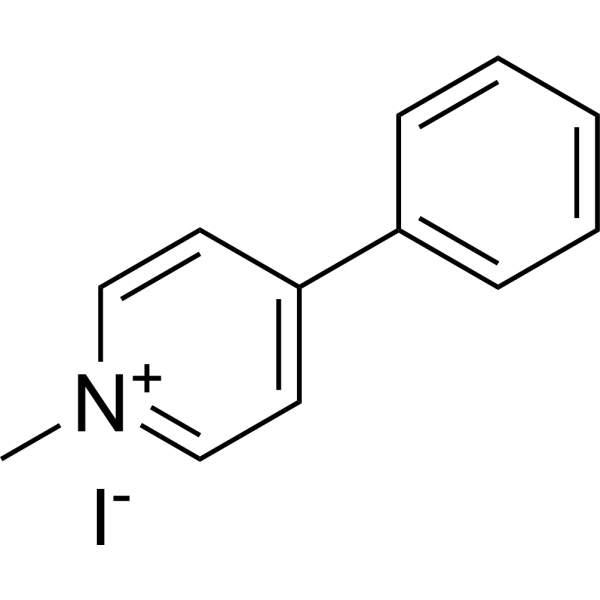
HY-W008719
MPP+ iodideMPTP Metabolite -
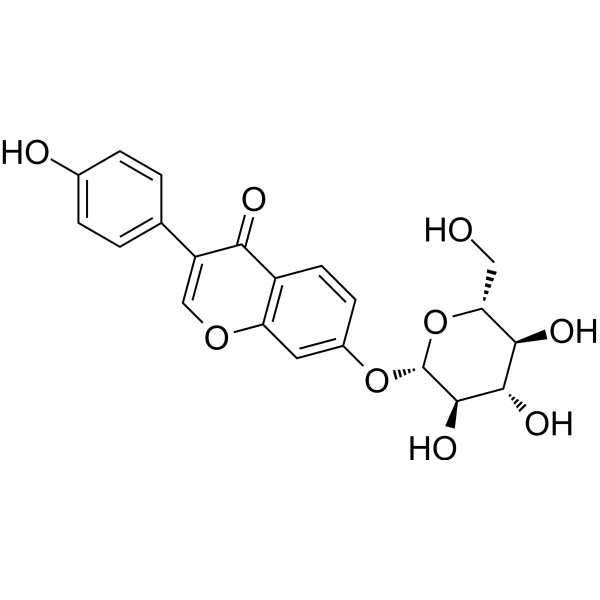
HY-N0018
DaidzinReverse Transcriptase Inhibitor -
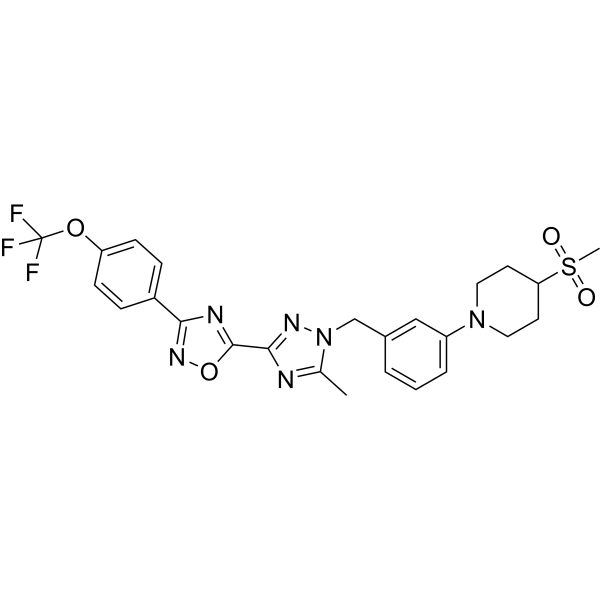
HY-112037
IACS-010759OXPHOS Inhibitor -
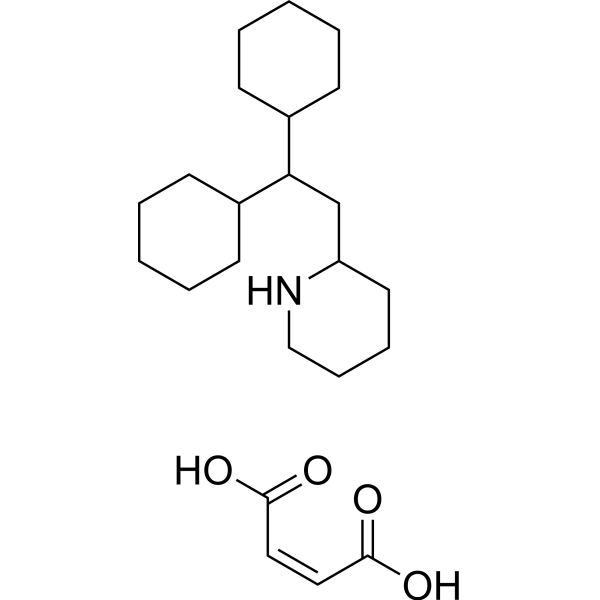
HY-B1334A
Perhexiline maleateCPT1/CPT2 Inhibitor -
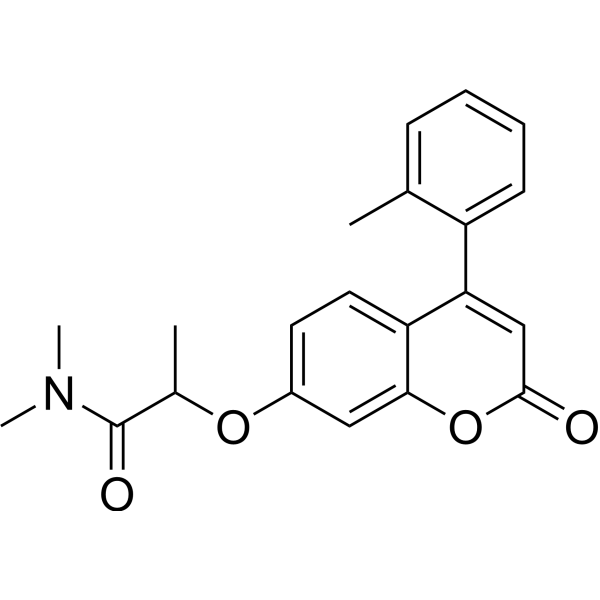
HY-134539
IMT1POLRMT Inhibitor -
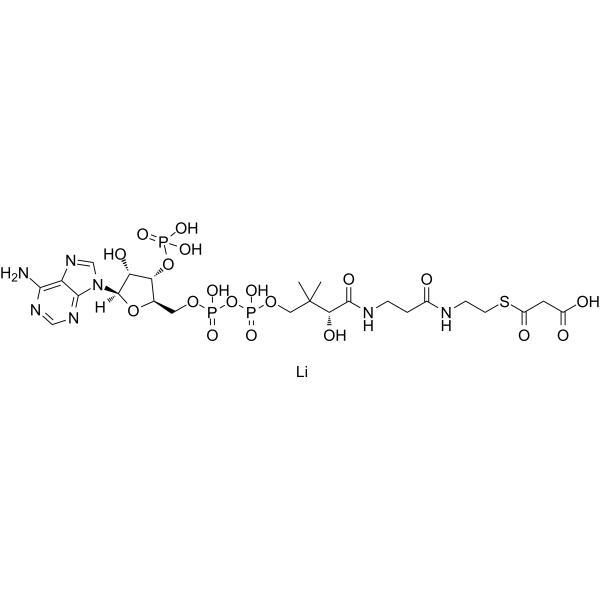
HY-136408
Malonyl CoA lithiumCPT1 Inhibitor -
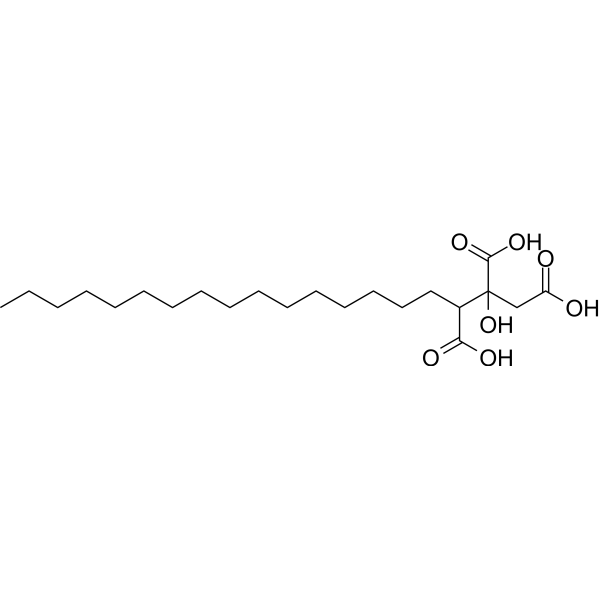
HY-N4104
Agaric acidAdenine Nucleotide Translocase Inhibitor -
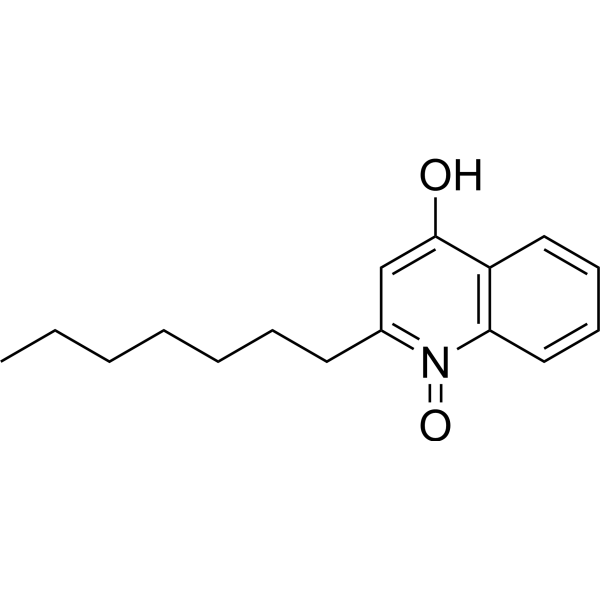
HY-130055
HQNONDH-2 Inhibitor -
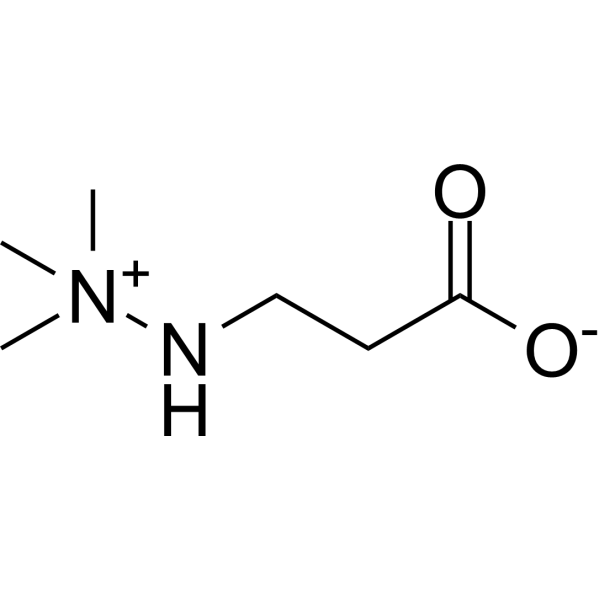
HY-B1836
MeldoniumBBOX1/OCTN2 Inhibitor -
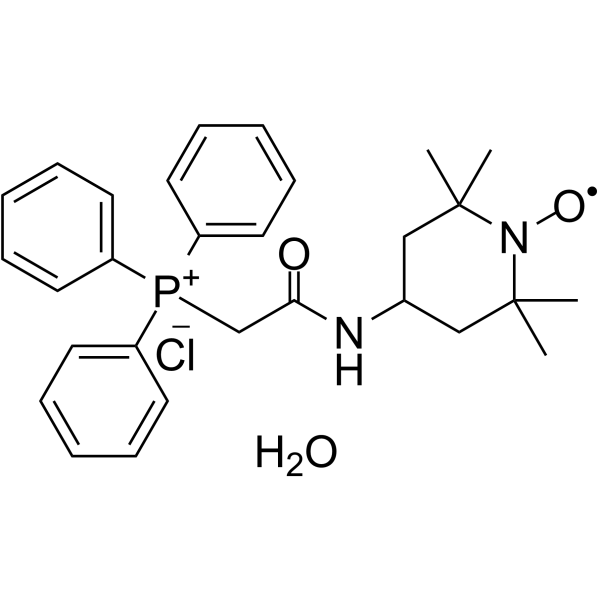
HY-125944
MitoTEMPO hydrateAntioxidant -
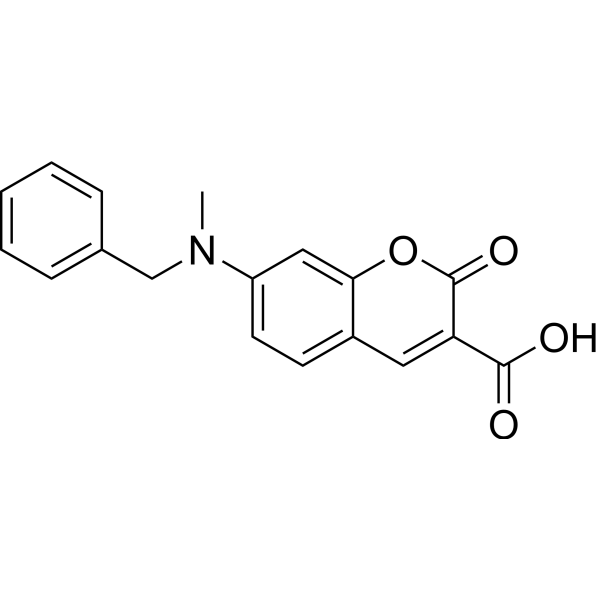
HY-D0713
7ACC2Monocarboxylate Transporter Inhibitor


Biological Activity
Description
In Vitro
Amisulbrom (5-50 mg/L, 48 h) exerts cytotoxicity in human trophoblast cells (HTR-8/SVneo) and human endometrial cells (T HESCs), with LC50 values of 20.37 and 16.18 mg/L, respectively[2].
Amisulbrom (5-15 mg/L, 48 h) induces apoptosis and G2/M phase arrest in HTR-8/SVneo and T HESCs[2].
Amisulbrom (5-15 mg/L, 48 h) reduces the mitochondrial membrane potential and causes intracellular Ca2+ overload in HTR-8/SVneo and T HESCs[2].
Amisulbrom (15 mg/L, 15-120 mins) induces ROS accumulation and inhibits the phosphorylation of PI3K/AKT pathway-related proteins in HTR-8/SVneo and T HESCs[2].
Amisulbrom (15 mg/L, 24-36 h) inhibits the migration in HTR-8/SVneo and T HESCs[2].
Amisulbrom (10 days) inhibits the germination of resting spores and reduces the viability of Plasmodiophora brassicae[3].
MedChemExpress (MCE) has not independently confirmed the accuracy of these methods. They are for reference only.
-
Cell Line:HTR-8/SVneo and T HESCs
-
Concentration:5, 10 and 15 mg/L
-
Incubation Time:48 h
-
Result:Decreased the proportion of G0/G1 phase cells to 91.79% and increased G2/M phase cells to 109.06% in HTR-8/SVneo.
Decreased the proportion of G0/G1 phase cells to 92.34%, increased G2/M phase cells to 114.41% and increased S phase cells to 112.92% in T HESCs.
Downregulated the mRNA expression of cyclin genes CCNA2, CCNB1, CCND1, and CCNE2 in both cells at 15 mg/L.
In Vivo
MedChemExpress (MCE) has not independently confirmed the accuracy of these methods. They are for reference only.
-
Animal Model:Zebrafish embryo models[1]
-
Dosage:0.0075, 0.075 and 0.75 μM
-
Administration:From 3 hours post-fertilization to 72 h
-
Result:Showed no significant difference in survival rate Increased hatching rate at 48 h and returned to the control level at 72 h.
Increased malformation rate.
Presented pericardial edema and blood clot clustering.
Decreased in heart rate.
Revealed a reduction in the number of circulating erythrocytes.


Chemical Information
-
CAS No. 348635-87-0
-
Appearance Solid
-
Molecular Weight 466.31
-
Formula C13H13BrFN5O4S2
-
Color White to off-white
-
SMILES
O=S(N1N=C(S(=O)(N2C(C)=C(Br)C3=C2C=C(F)C=C3)=O)N=C1)(N(C)C)=O
-
Shipping
Room temperature in continental US; may vary elsewhere.
-
Storage
Powder -20°C 3 years In solvent -80°C 6 months -20°C 1 month


Solvent & Solubility
In Vitro:
DMSO : 50 mg/mL (107.22 mM; Need ultrasonic; Hygroscopic DMSO has a significant impact on the solubility of product, please use newly opened DMSO)
Please refer to the solubility information to select the appropriate solvent. Once prepared, please aliquot and store the solution to prevent product inactivation from repeated freeze-thaw cycles.
Storage method and period of stock solution: -80°C, 6 months; -20°C, 1 month. When stored at -80°C, please use it within 6 months. When stored at -20°C, please use it within 1 month.
Please refer to the solubility information to select the appropriate solvent. Once prepared, please aliquot and store the solution to prevent product inactivation from repeated freeze-thaw cycles.
Storage method and period of stock solution: -80°C, 6 months; -20°C, 1 month. When stored at -80°C, please use it within 6 months. When stored at -20°C, please use it within 1 month.
Concentration (start) × Volume (start) = Concentration (final) × Volume (final)


Purity & Documentation
-
Data Sheet (280 KB)
-
SDS (761 KB)
- English - EN (761 KB)
- Français - FR (761 KB)
- Deutsch - DE (761 KB)
- Norwegian - NO (761 KB)
- Español - ES (761 KB)
- Swedish - SV (761 KB)
- Italian - IT (761 KB)
- Korean - KR (761 KB)
- Portuguese - PT (761 KB)
-
Handling Instructions (2659 KB)
References
[1]. Xueying Ma, et al. Amisulbrom causes cardiovascular toxicity in zebrafish (Danio rerio). Chemosphere. 2021 Nov;283:131236. [Content Brief]
[2]. Kim M, et al. Amisulbrom induces mitochondrial dysfunction, leading apoptosis and cell cycle arrest in human trophoblast and endometrial cells. Pestic Biochem Physiol. 2025 Apr;209:106347. [Content Brief]
[3]. Yu Z, et al. Evaluation of Amisulbrom Products for the Management of Clubroot of Canola (Brassica napus). Plants (Basel). 2023 Dec 21;13(1):28. [Content Brief]


Complete Stock Solution Preparation Table
Please refer to the solubility information to select the appropriate solvent. Once prepared, please aliquot and store the solution to prevent product inactivation from repeated freeze-thaw cycles.
Storage method and period of stock solution: -80°C, 6 months; -20°C, 1 month. When stored at -80°C, please use it within 6 months. When stored at -20°C, please use it within 1 month.
| Optional Solvent | Concentration Solvent Mass | 1 mg | 5 mg | 10 mg | 25 mg |
|---|---|---|---|---|---|
| DMSO | 1 mM | 2.1445 mL | 10.7225 mL | 21.4450 mL | 53.6124 mL |
| 5 mM | 0.4289 mL | 2.1445 mL | 4.2890 mL | 10.7225 mL | |
| 10 mM | 0.2144 mL | 1.0722 mL | 2.1445 mL | 5.3612 mL | |
| 15 mM | 0.1430 mL | 0.7148 mL | 1.4297 mL | 3.5742 mL | |
| 20 mM | 0.1072 mL | 0.5361 mL | 1.0722 mL | 2.6806 mL | |
| 25 mM | 0.0858 mL | 0.4289 mL | 0.8578 mL | 2.1445 mL | |
| 30 mM | 0.0715 mL | 0.3574 mL | 0.7148 mL | 1.7871 mL | |
| 40 mM | 0.0536 mL | 0.2681 mL | 0.5361 mL | 1.3403 mL | |
| 50 mM | 0.0429 mL | 0.2144 mL | 0.4289 mL | 1.0722 mL | |
| 60 mM | 0.0357 mL | 0.1787 mL | 0.3574 mL | 0.8935 mL | |
| 80 mM | 0.0268 mL | 0.1340 mL | 0.2681 mL | 0.6702 mL | |
| 100 mM | 0.0214 mL | 0.1072 mL | 0.2144 mL | 0.5361 mL |


Amisulbrom Related Classifications
HY-121214 Related Classifications
 Powered by Bioz