


1. Search Result
Search Result
Results for "

oxidative indicator

" in MedChemExpress (MCE) Product Catalog:

17

Inhibitors & Agonists

7

Fluorescent Dye

3

Biochemical Assay Reagents

3

Natural
Products

1

Isotope-Labeled Compounds

1

Click Chemistry

Targets Recommended:
Cat. No. Product Name Target Research Areas Chemical Structure
  • HY-D1055
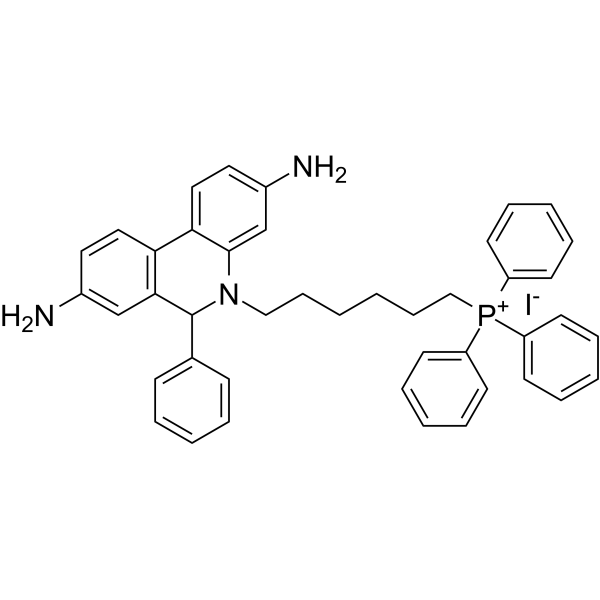
    MitoSOX Red
    Maximum Cited Publications
    263 Publications Verification

    Fluorescent Dye Reactive Oxygen Species (ROS) Mitochondrial Metabolism Cancer
    MitoSOX Red is a live cell fluorescent probe that specifically targets mitochondria and is cell membrane permeable. MitoSOX Red enters mitochondria and is oxidized by superoxide but not by other ROS or RNS generating systems. The oxidized MitoSOX Red then binds to nucleic acids in mitochondria/nucleus, producing strong red fluorescence. MitoSOX Red can be used as a fluorescent indicator to specifically detect superoxide. In addition, superoxide dismutase (SOD) can prevent the oxidation of MitoSOX Red.
    Excitation/emission wavelength: 510/580 nm.
    MitoSOX Red
  • HY-N0321

    trans-Caftaric acid

    Others Cardiovascular Disease Neurological Disease Inflammation/Immunology
    Caftaric acid (trans-Caftaric acid) is a polyphenolic antidiuretic, antioxidant and anti-apoptotic agent that can be hydrolyzed by intestinal microbial esterases. Caftaric acid exerts its antioxidant and potential anti-inflammatory effects mainly through intestinal microbial metabolism. Caftaric acid can reduce renal damage, restore electrolyte balance, renal function indicators and antioxidant enzyme activities in a rat albinism model, and further exert anti-oxidative stress and anti-inflammatory activities .
    Caftaric acid
  • HY-D0018
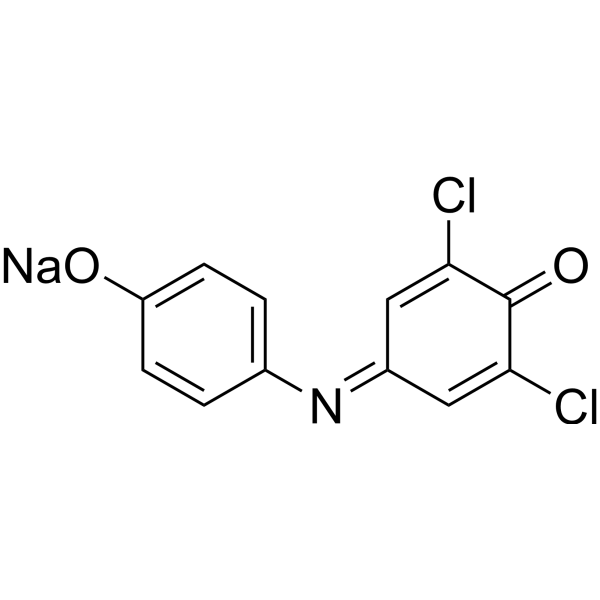
    DCIP sodium
    1 Publications Verification

    Dichlorophenylindophenol sodium; DCPIP sodium; Indochlorophenol sodium

    Biochemical Assay Reagents Others
    DCIP sodium is a blue dye commonly used in various biochemical and biotechnological applications as an indicator of redox reactions. DCIP sodium has unique chemical properties that change color according to the oxidation state of the substance being tested. It is commonly used in enzyme assays, such as measuring the activity of succinate dehydrogenase, or in protein quantification methods, such as the Lowry assay.
    DCIP sodium
  • HY-126774
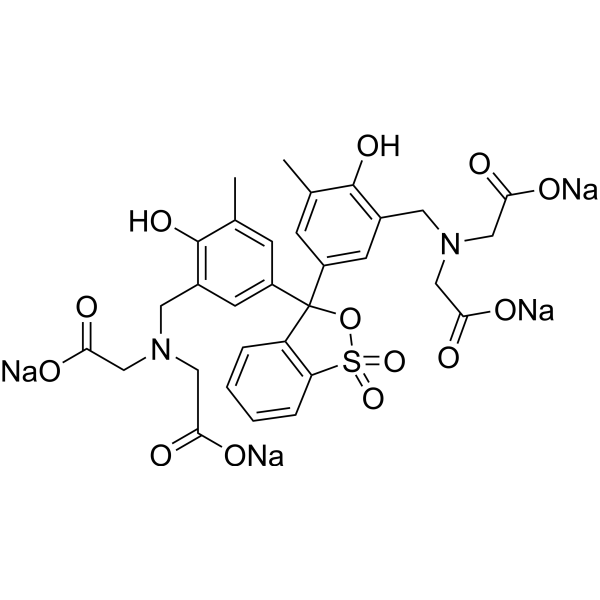
    DAF-FM
    1 Publications Verification

    Fluorescent Dye Others
    DAF-FM is a cell-impermeant diaminofluorescein, which can be used as fluorescent indicator for nitric oxide (NO) with good pH tolerance .
    DAF-FM
  • HY-B1727S

    Isotope-Labeled Compounds Inflammation/Immunology
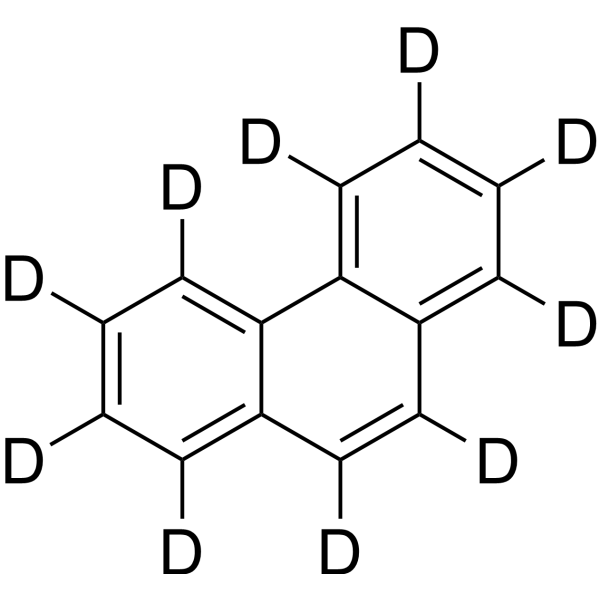
    Phenanthrene-d10 is the deuterium labeled Phenanthrene. Phenanthrene is a polycyclic aromatic hydrocarbon (PAH) and has been frequently used as an indicator for monitoring PAH contaminated matrices . Phenanthrene induces oxidative stress and inflammation .
    Phenanthrene-d10
  • HY-W324435

    Sodium 2,4-dinitrobenzenesulfonate; DNBS sodium salt; DNBSO sodium salt

    NF-κB p38 MAPK COX Inflammation/Immunology
    2,4-Dinitrobenzenesulfonic acid (DNBS; DNBSO) sodium salt (Sodium 2,4-dinitrobenzenesulfonate) is a classic colitis inducer that relies on activation of the NF-κB p65/COX-2/p38 pathway. As a hapten, 2,4-Dinitrobenzenesulfonic acid sodium salt stimulates the production of immune responses in colonic tissues, triggers oxidative stress and inflammatory reactions, and thereby leads to colonic injury. 2,4-Dinitrobenzenesulfonic acid sodium salt successfully induces models of colitis and ulcerative colitis in rats, causing pathological changes such as ulcers, edema, stenosis, shortening and organ adhesion in the distal colon, along with significant increases in the levels of inflammatory indicators and endoplasmic reticulum stress marker proteins. 2,4-Dinitrobenzenesulfonic acid sodium salt is widely used in studies on the mechanisms related to colitis and ulcerative colitis .
    2,4-Dinitrobenzenesulfonic acid sodium salt
  • HY-Y1097

    2-(Methoxycarbonyl)benzoic acid

    Endogenous Metabolite Reactive Oxygen Species (ROS) Cancer
    Monomethyl phthalate is an orally active metabolite of phthalic acid. Monomethyl phthalate, as a urine biomarker after exposure to phthalate, can be used as a detection indicator for thyroid cancer and benign nodules. Monomethyl phthalate reduces the survival rate of young frogs. Monomethyl phthalate induces oxidative damage to red blood cells in rats .
    Monomethyl phthalate
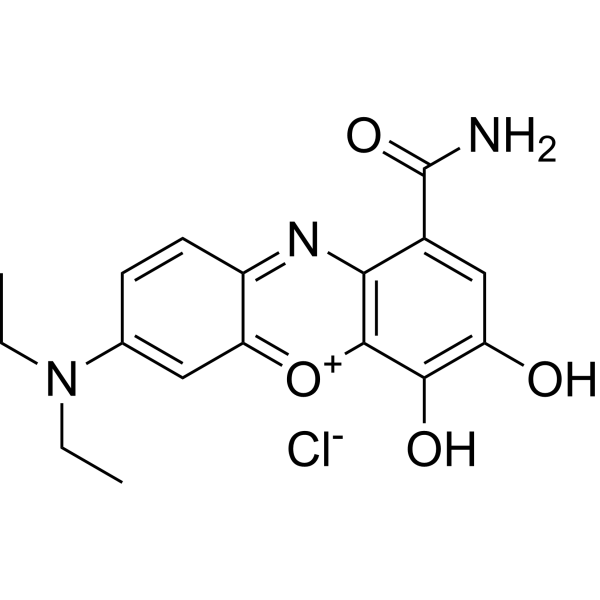
  • HY-D0948

    Fluorescent Dye Infection
    Celestine Blue is a electroactive indicator in DNA biosensors. Celestine Blue is strongly adsorbed on the spinel phases and CNT (carbon nanotubes), facilitates dispersion, acts as a capping agent and allows for the fabrication of spinel decorated CNT. Celestine Blue is an efficient charge transfer mediator, which allows for significant improvement of capacitive behavior. TiO2 nanoparticles doped with Celestine Blue can be used as a label in a sandwich immunoassay for the hepatitis C virus (HCV) core antigen .
    Celestine Blue
  • HY-W760733

    Biochemical Assay Reagents Metabolic Disease
    2,4-Decadienal is a toxic aldehyde produced by the oxidation of linoleic acid-rich oils. 2,4-decadienal can be used as an alternative oxidation indicator for linoleic acid-rich oils .
    2,4-Decadienal
  • HY-136884

    Fluorescent Dye Others
    DAR-4M is a fluorescent indicator for nitric oxide (NO) based on the rhodamine chromophore (Ex/Em= 550/572 nm) .
    DAR-4M
  • HY-W099331

    MEGX hydrochloride; Norlidocaine hydrochloride

    Drug Metabolite Metabolic Disease Inflammation/Immunology
    Monoethylglycinexylidide (MEGX) hydrochloride is a metabolite of Lidocain (HY-B0185) via oxidative N-deethylation of Lignocaine by liver cytochrome P-450 enzymes in the liver. Monoethylglycinexylidide has proven to be a highly sensitive indicator of hepatic dysfunction, especially in the field of liver transplantation .
    Monoethylglycinexylidide hydrochloride
  • HY-W016352

    Anilotic acid, 99%

    Biochemical Assay Reagents Others
    2-Hydroxy-5-nitrobenzoic acid, 99% is used as an HPLC analytical standard, pH indicator, and heavy metal detection agent, and is also used in the study of phenolic compounds oxidation.
    2-Hydroxy-5-nitrobenzoic acid, 99%
  • HY-Y1097R

    2-(Methoxycarbonyl)benzoic acid (Standard)

    Reference Standards Endogenous Metabolite Cancer
    Monomethyl phthalate (Standard) is the analytical standard of Monomethyl phthalate. This product is intended for research and analytical applications. Monomethyl phthalate is an orally active metabolite of phthalic acid. Monomethyl phthalate, as a urine biomarker after exposure to phthalate, can be used as a detection indicator for thyroid cancer and benign nodules. Monomethyl phthalate reduces the survival rate of young frogs. Monomethyl phthalate induces oxidative damage to red blood cells in rats.
    Monomethyl phthalate (Standard)
  • HY-D0018R

    Dichlorophenylindophenol sodium (Standard); DCPIP sodium (Standard); Indochlorophenol sodium (Standard)

    Biochemical Assay Reagents Reference Standards Others
    DCIP (sodium) (Standard) is the analytical standard of DCIP (sodium). This product is intended for research and analytical applications. DCIP sodium is a blue dye commonly used in various biochemical and biotechnological applications as an indicator of redox reactions. DCIP sodium has unique chemical properties that change color according to the oxidation state of the substance being tested. It is commonly used in enzyme assays, such as measuring the activity of succinate dehydrogenase, or in protein quantification methods, such as the Lowry assay.
    DCIP sodium (Standard)
  • HY-D3376

    6-Carboxy-2',7'-dichlorodihydrofluorescein

    Fluorescent Dye Reactive Oxygen Species (ROS) Others
    6-Carboxy-H2DCFDA (6-Carboxy-2',7'-dichlorodihydrofluorescein) is a non-fluorescent, cell-permeable intracellular ROS indicator. 6-Carboxy-H2DCFDA undergoes oxidation to highly fluorescent carboxy-dichlorofluorescein (Ex/Em = 488/520 nm) .
    6-Carboxy-H2DCFDA
  • HY-W016352R

    Anilotic acid, 99% (Standard)

    Biochemical Assay Reagents Reference Standards Others
    2-Hydroxy-5-nitrobenzoic acid, 99% (Standard) is the analytical standard of 2-Hydroxy-5-nitrobenzoic acid, 99%. This product is intended for research and analytical applications. 2-Hydroxy-5-nitrobenzoic acid, 99% is used as an HPLC analytical standard, pH indicator, and heavy metal detection agent, and is also used in the study of phenolic compounds oxidation.
    2-Hydroxy-5-nitrobenzoic acid, 99% (Standard)
  • HY-119578

    Cytochrome P450 Cancer
    Imiprothrin is an inducer that induces CYP1A2 and metallothionein 1a, with significant genotoxicity and cytotoxicity. In rat hepatocytes, Imiprothrin initiates detoxification responses by triggering the overexpression of these two genes. Imiprothrin induces chromosomal aberrations and micronucleus formation in rat bone marrow cells, and causes DNA damage in hepatocytes. Imiprothrin triggers oxidative stress in rats, leading to lipid peroxidation, excessive reactive oxygen species production and redox imbalance, which in turn impairs liver and kidney functions and causes tissue damage. Imiprothrin inhibits weight gain in mice, and even causes high mortality in female mice at high doses. However, it shows no carcinogenicity in rat experiments; among relevant indicators, aspartate aminotransferase and total protein are identified as sensitive toxicity biomarkers .
    Imiprothrin

Inquiry Online

Your information is safe with us. * Required Fields.

Salutation


Country or Region *

Applicant Name *


Organization Name *

Department *


Email Address *


Product Name *

Cat. No.


Requested quantity *

Phone Number *


Remarks

Inquiry Online

Inquiry Information

Product Name:
Cat. No.:
Quantity:
MCE Japan Authorized Agent:

