37 Results for "

peroxisomal

" in MedChemExpress (MCE) Product Catalog:
Products (37)

37 Results for "peroxisomal" in MCE Product Catalog:

3
3 Cited Publications
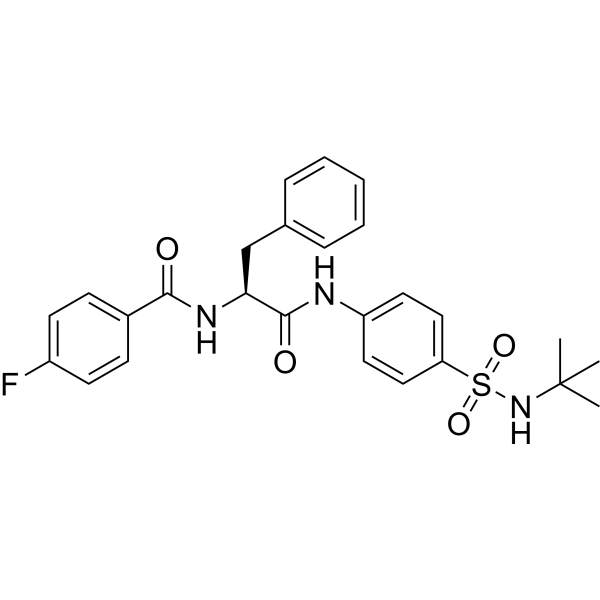
Cat. No.: HY-141659
CAS No.: 2242582-40-5
Purity:  99.74%
Research Areas:  

Neurological Disease

CMPD-39 is a selective non-covalent inhibitor of the ubiquitin-specific protease USP30 (IC50=~20 nM), with high selectivity over other DUB family members (1-100 μM). CMPD-39 inhibits the deubiquitinating activity of USP30, enhances the ubiquitination of mitochondrial proteins TOMM20 and SYNJ2BP; thus, CMPD-39 promotes phosphoubuitin accumulation, thereby accelerating mitochondrial autophagy (mitophagy) and peroxisomal autophagy (pexophagy). CMPD-39 significantly restores impaired mitochondrial function in dopaminergic neurons derived from Parkinson's disease patients .
loading...
    loading...
2
2 Cited Publications
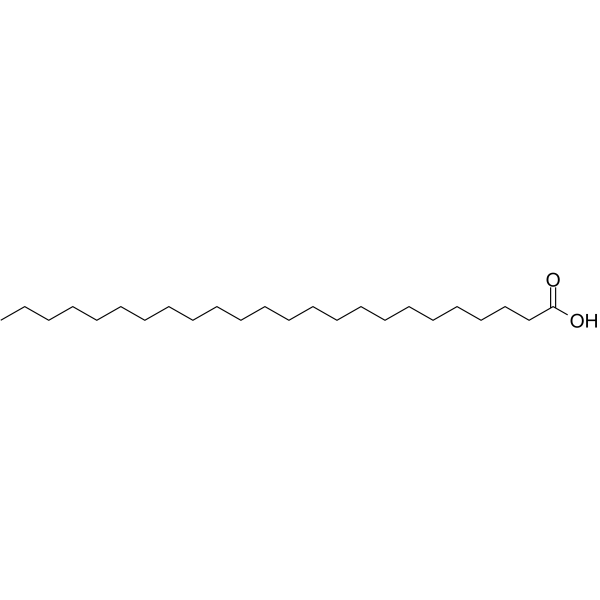
Cat. No.: HY-121883
CAS No.: 557-59-5
Purity:  ≥98.0%
Synonyms: Tetracosanoic acid
Lignoceric acid (Tetracosanoic acid) is a 24-carbon saturated (24:0) fatty acid, which is synthesized in the developing brain. Lignoceric acid is also a by-product of lignin production. Lignoceric acid can be used for Zellweger cerebro‐hepato‐renal syndrome and adrenoleukodystrophy research .
loading...
    loading...
2
2 Cited Publications
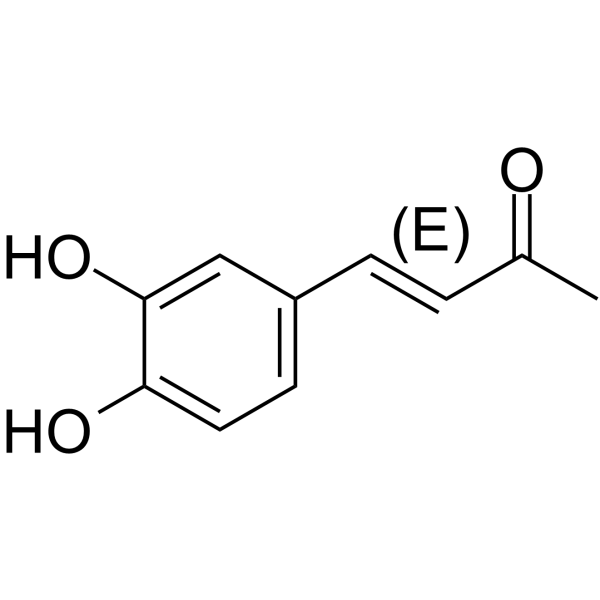
Cat. No.: HY-N1966
CAS No.: 123694-03-1
Target:  

p38 MAPK PPAR

(E)-Osmundacetone is an inhibitor of the MAPK pathway. (E)-Osmundacetone inhibits the activation of the MAPK signaling pathway and restores the expression of PPARα/ACOX1. (E)-Osmundacetone abrogates abnormal cell proliferation, migration and liver metastasis induced by PTPRO silencing in colorectal cancer cells. (E)-Osmundacetone blocks OA-RD17-mediated activation of the MAPK signaling pathway, thereby reducing macrophage proliferation and migration. (E)-Osmundacetone is applicable to relevant research on colorectal cancer .
loading...
    loading...
1
1 Cited Publications
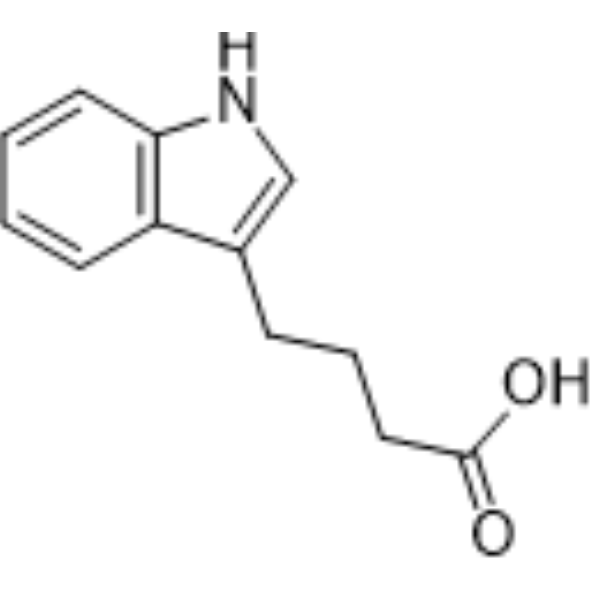
Cat. No.: HY-N0186
CAS No.: 133-32-4
Synonyms: Indolebutyric acid
Indole-3-butyric acid (3-indolebutyric acid) is a plant growth auxin and a good rooting agent. It can promote herbs and woody ornamental plant rooting and used for improving fruit rate. Indole 3-butyric acid is an auxin precursor, and is converted to indole 3-acetic acid (IAA) in a peroxisomal β-oxidation process .
loading...
    loading...
1
1 Cited Publications
Cat. No.: HY-N0186A
CAS No.: 60096-23-3
Synonyms: Indolebutyric acid potassium
Target:  

Endogenous Metabolite

Research Areas:  

Others

Indole-3-butyric acid (Indolebutyric acid) potassium is a plant growth auxin and a good rooting agent. It can promote herbs and woody ornamental plant rooting and used for improving fruit rate. Indole 3-butyric acid potassium is an auxin precursor, and is converted to indole 3-acetic acid (IAA) in a peroxisomal β-oxidation process .
loading...
    loading...
Cat. No.: HY-E70009
CAS No.: 61116-22-1
Synonyms: ACO
Research Areas:  

Others

Acyl-CoA oxidase (ACO) is a peroxisomal catalyst. Acyl-CoA oxidase acts as a key rate-limiting enzyme in the process of peroxisomal fatty acid β-oxidation. Acyl-CoA oxidase participates in lipid catabolism and phytohormone biosynthesis pathways .
loading...
    loading...
Cat. No.: HY-113335
CAS No.: 547-98-8
Purity:  99.48%
Synonyms: Coprocholic acid
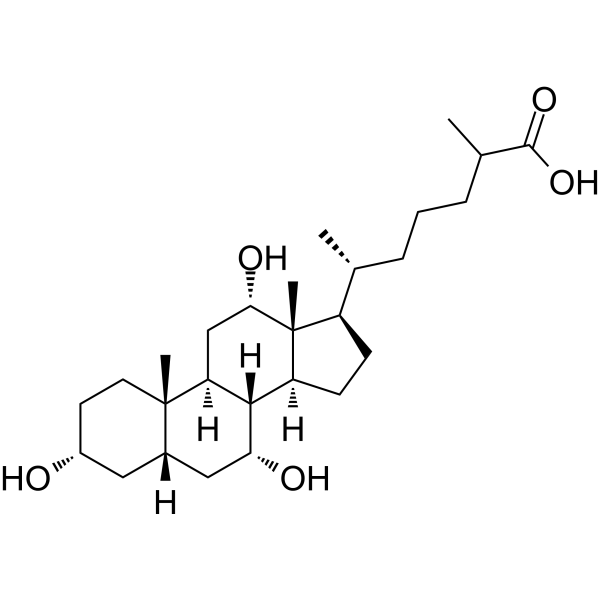
Trihydroxycholestanoic acid is an endogenous metabolite present in Blood that can be used for the research of Zellweger Syndrome, Refsum Disease, D Bifunctional Protein Deficiency and Infantile Refsum Disease .
loading...
    loading...
Cat. No.: HY-N0186R
CAS No.: 133-32-4
Synonyms: Indolebutyric acid (Standard)
Indole-3-butyric acid (Standard) is the analytical standard of Indole-3-butyric acid. This product is intended for research and analytical applications. Indole-3-butyric acid (3-indolebutyric acid) is a plant growth auxin and a good rooting agent. It can promote herbs and woody ornamental plant rooting and used for improving fruit rate. Indole 3-butyric acid is an auxin precursor, and is converted to indole 3-acetic acid (IAA) in a peroxisomal β-oxidation process .
loading...
    loading...
Cat. No.: HY-N0186B
CAS No.: 133-32-4
Synonyms: IBA
Indole-3-butyric acid,suitable for plant cell culture (IBA) is a plant auxin and a good rooting agent. Indole-3-butyric acid,suitable for plant cell culture can promote rooting of herbaceous and woody ornamental plants and is used to increase fruiting rate. Indole-3-butyric acid is an auxin precursor that is converted into indole 3-acetic acid (IAA) during peroxisomal β-oxidation. Indole-3-butyric acid,suitable for plant cell culture can be used for cell culture .
loading...
    loading...
Cat. No.: HY-141659A
Research Areas:  

Neurological Disease

(R)-CMPD-39 is the R enantiomer of CMPD-39 ( HY-141659 ). CMPD-39 is a selective non-covalent inhibitor of the ubiquitin-specific protease USP30 (IC50 =~20 nM), with high selectivity over other DUB family members (1-100 μM). CMPD-39 inhibits the deubiquitinating activity of USP30, enhances the ubiquitination of mitochondrial proteins TOMM20 and SYNJ2BP; thus, CMPD-39 promotes phosphoubuitin accumulation, thereby accelerating mitochondrial autophagy (mitophagy) and peroxisomal autophagy (pexophagy). CMPD-39 significantly restores impaired mitochondrial function in dopaminergic neurons derived from Parkinson's disease patients .
loading...
    loading...
Cat. No.: HY-130587
CAS No.: 57775-27-6
Synonyms: Piperazine sultosylate; A-585
Target:  

LDLR Apolipoprotein

Research Areas:  

Metabolic Disease

Sultosilic acid piperazine salt (Piperazine sultosylate; A-585) is a lipid-lowering agent. Sultosilic acid piperazine salt modifies the blood lipids levels, reduces platelet adhesiveness without promoting peroxisomal activity of hepatocytes or producing other adverse side-effects .
loading...
    loading...
Cat. No.: HY-121883R
CAS No.: 557-59-5
Synonyms: Tetracosanoic acid (Standard)
Lignoceric acid (Standard) is the analytical standard of Lignoceric acid. This product is intended for research and analytical applications. Lignoceric acid (Tetracosanoic acid) is a 24-carbon saturated (24:0) fatty acid, which is synthesized in the developing brain. Lignoceric acid is also a by-product of lignin production. Lignoceric acid can be used for Zellweger cerebro‐hepato‐renal syndrome and adrenoleukodystrophy research[1][2].
loading...
    loading...
Cat. No.: HY-142976
CAS No.: 121842-79-3
Target:  

Endogenous Metabolite

Research Areas:  

Inflammation/Immunology

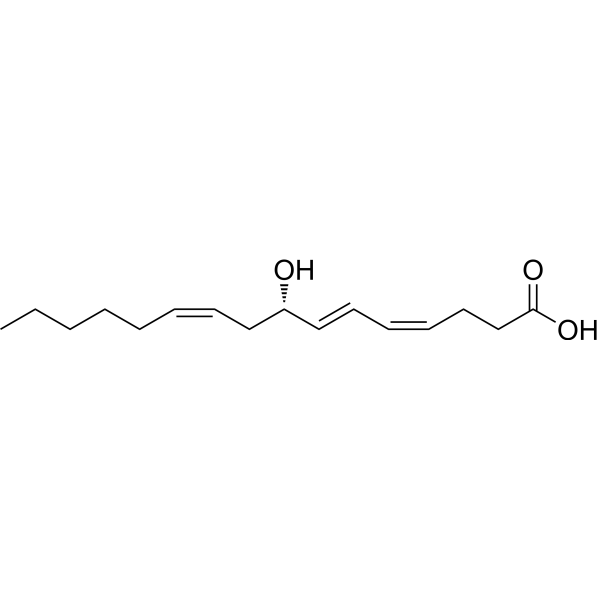
Tetranor-12(S)-HETE is the major β-oxidation product resulting from peroxisomal metabolism of 12(S)-HETE (HY-124404A) in numerous tissues. 12(S)‐HETE to tetranor‐12(S)‐HETE conversion could be a marker for psoriasis .
loading...
    loading...
Cat. No.: HY-N2021AR
CAS No.: 164204-38-0
Indole-3-butyric acid (Standard) is the analytical standard of Indole-3-butyric acid. This product is intended for research and analytical applications. Indole-3-butyric acid (3-indolebutyric acid) is a plant growth auxin and a good rooting agent. It can promote herbs and woody ornamental plant rooting and used for improving fruit rate. Indole 3-butyric acid is an auxin precursor, and is converted to indole 3-acetic acid (IAA) in a peroxisomal β-oxidation process .
loading...
    loading...
Cat. No.: HY-19109
CAS No.: 107813-63-8
Target:  

Leukotriene Receptor

Research Areas:  

Others

RG-7152 is a tetrazolyl-substituted leukotriene D4 receptor antagonist that can induce peroxisomal β-oxidation and peroxisome bifunctional enzymes (PBEs) in hepatocytes in various animal models. It has been shown to significantly increase PBE levels and β-oxidation activity in rat and mouse liver homogenates, while smaller effects were observed in guinea pigs and monkeys and no effect in dogs. In vitro studies have also shown that it can induce PBEs comparable to clofibric acid, indicating its potential as a peroxisome proliferator .
loading...
    loading...
Cat. No.: HY-159494
PROTAC sEH degrader-1 is a PROTAC degrader targeting soluble epoxide hydrolase (sEH) with a DC50 of 0.5 nM, and it also possesses sEH inhibitory activity. PROTAC sEH degrader-1 has an IC50 of 3.8 nM against human sEH and an IC50 of 210 nM against mouse sEH. PROTAC sEH degrader-1 relies on the ubiquitin-proteasome system to achieve target protein degradation, and it selectively degrades cytoplasmic sEH. PROTAC sEH degrader-1 rapidly reduces endoplasmic reticulum stress in cells, downregulates the phosphorylation levels of IRE1α, PERK and eIF2α, enhances cell viability, and alleviates Thapsigargin (HY-13433)-induced apoptosis. PROTAC sEH degrader-1 effectively degrades sEH in mouse liver and brown adipose tissue. PROTAC sEH degrader-1 can be used in studies related to metabolic disorders and inflammation .
loading...
    loading...
Cat. No.: HY-187133
CAS No.: 2222-58-4
Target:  

Epoxide Hydrolase

Research Areas:  

Inflammation/Immunology

sEH-IN-26 is a urea structure-based soluble epoxide hydrolase (sEH) inhibitor with selectivity for mammalian cytosolic and peroxisomal sEH. sEH-IN-26 can be used for the research of inflammation and epoxide hydrolase-related diseases .
loading...
    loading...
Cat. No.: HY-183008
CAS No.: 179118-06-0
BSF2 is a anti-Leishmania agent. BSF2 modulates gene expression linked to ubiquitination, chromatin remodeling, and peroxisomal membrane transport pathways in Leishmania braziliensis. BSF2 downregulates TNF, IL-17, NF-κB, and Toll-like receptor pathways in Leishmania-infected macrophages. BSF2 exerts leishmanicidal activity against intracellular Leishmania braziliensis amastigotes. BSF2 can be used for the research of american tegumentary leishmaniasis .
loading...
    loading...
Cat. No.: HY-B1520
CAS No.: 24818-79-9
Synonyms: Aluminum clofibrate
Target:  

PPAR

Research Areas:  

Cancer

Aluminium clofibrate is an orally active peroxisome proliferator. Aluminium clofibrate increases peroxisomal β-oxidation enzyme activities, elevates catalase. Aluminium clofibrate can be used in the research of cancer .
loading...
    loading...
Cat. No.: HY-183483
CAS No.: 75987-18-7
Research Areas:  

Cardiovascular Disease

OKY-1581 is a potent, orally active and selective thromboxane A2 synthase inhibitor. OKY-1581 inhibits TXA2 synthesis and reduces the generation of its stable metabolite TXB2. OKY-1581 shifts arachidonic acid (MCE HY-109590) metabolism toward the production of prostaglandin E, prostaglandin F and 6-keto-prostaglandin F. OKY-1581 modulates the TXA2 / PGI2-related eicosanoid balance and inhibits arachidonic acid-induced platelet aggregation without directly inhibiting the cyclooxygenase step. At high oral doses, OKY-1581 also enhances hepatic peroxisomal β-oxidation and reduces serum triglyceride and cholesterol levels. OKY-1581 attenuates cerebral vasospasm after experimental subarachnoid hemorrhage by reducing TXA2-related vasoconstrictive signaling. OKY-1581 can be used in studies of atherosclerosis, cerebral vasospasm after subarachnoid hemorrhage and cardiovascular diseases .
loading...
    loading...

