
1. Search Result
Search Result
Results for "

polysaccharide component

" in MedChemExpress (MCE) Product Catalog:

19

Inhibitors & Agonists

2

Fluorescent Dye

1

Biochemical Assay Reagents

6

Natural
Products

3

Oligonucleotides

Cat. No. Product Name Target Research Areas Chemical Structure
  • HY-N11287A
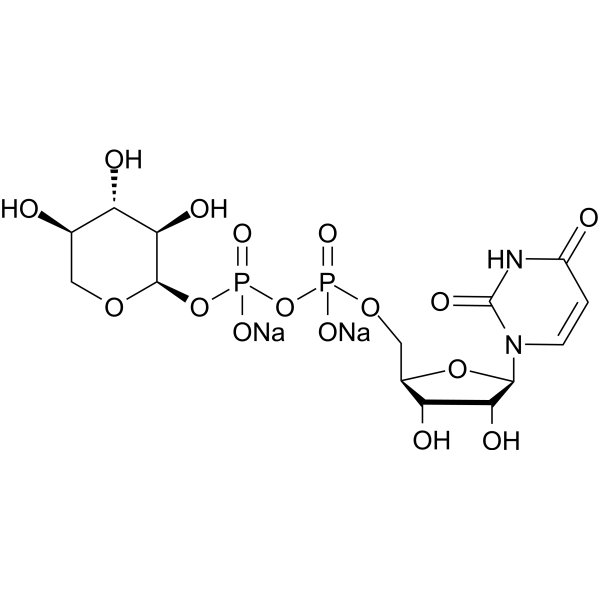
    UDP-xylose disodium
    2 Publications Verification

    Endogenous Metabolite Others
    UDP-xylose disodium is an endogenous sugar nucleotide and a catalytic substrate of UDP-xylose disodium synthase (UXS). UDP-xylose disodium is a sugar donor for the synthesis of glycoproteins, polysaccharides, various metabolites and oligosaccharides in plants, vertebrates and fungi, and participates in the synthesis of proteoglycans as a glycosyl donor. UDP-xylose disodium participates in the regulation of the synthesis of extracellular matrix components and can be used to study the mechanism of proteoglycan biosynthesis in glycobiology and related diseases (such as connective tissue diseases)[1][2].
    UDP-xylose disodium
  • HY-107846
    Xylan
    2 Publications Verification

    Endogenous Metabolite Others
    Xylan represents the main hemicellulose component in the secondary plant cell walls of flowering plants. Xylan is a polysaccharide made from units of xylose and contains predominantly β-D-xylose units linked as in cellulose .
    Xylan
  • HY-D0220
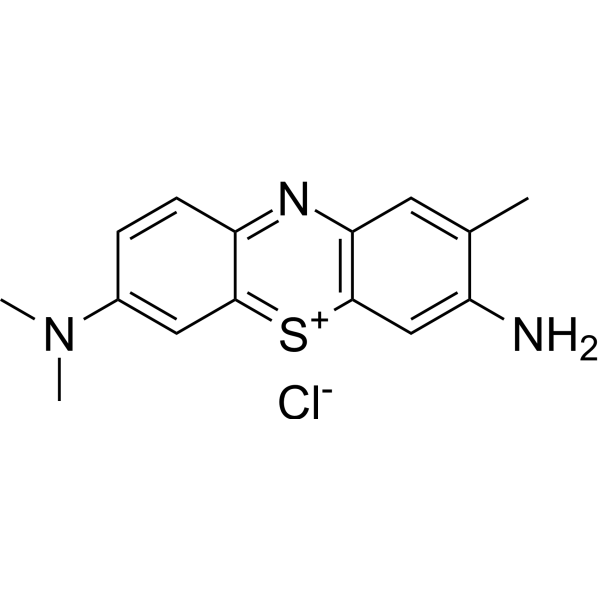
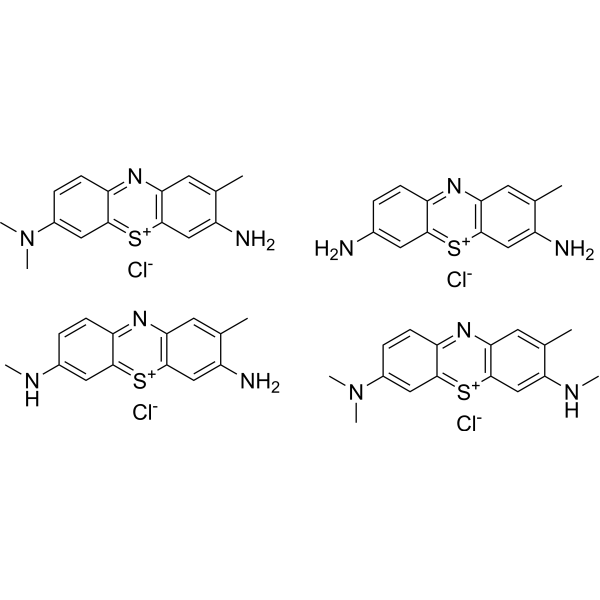
    Toluidine Blue
    3 Publications Verification

    Toluidine Blue O

    Fluorescent Dye Cancer
    Toluidine Blue (Toluidine Blue O) is an alkaline quinonimine dye (vivo dye) with high affinity for acidic tissue components, staining nuclei blue and polysaccharides purple. Toluidine Blue shows heterostaining properties for mast cells, mucins and chondrocytes. Toluidine Blue can stain different components of plant tissues and cells in different colours. Toluidine Blue is also used as a diagnostic aid to identify malignant lesions, such as cancer .
    Toluidine Blue
  • HY-CE02017

    trans-Feruloyl-coenzyme A

    Biochemical Assay Reagents Metabolic Disease
    trans-Feruloyl-CoA (trans-Feruloyl-coenzyme A) is a derivative of coenzyme A. trans-Feruloyl-CoA also acts as an activated acyl donor involved in the synthesis of cell wall components such as lignin and feruloylated polysaccharides .
    trans-Feruloyl-CoA
  • HY-N11287

    Endogenous Metabolite Others
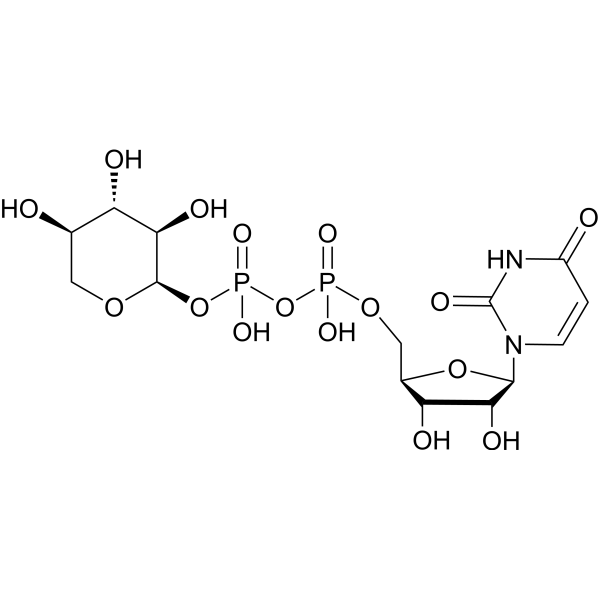
    UDP-xylose is an endogenous sugar nucleotide and a catalytic substrate of UDP-xylose synthase (UXS). UDP-xylose is a sugar donor for the synthesis of glycoproteins, polysaccharides, various metabolites and oligosaccharides in plants, vertebrates and fungi, and participates in the synthesis of proteoglycans as a glycosyl donor. UDP-xylose participates in the regulation of the synthesis of extracellular matrix components and can be used to study the mechanism of proteoglycan biosynthesis in glycobiology and related diseases (such as connective tissue diseases)[1][2].
    UDP-xylose
  • HY-D0220A
    Toluidine Blue (purity 36%)
    3 Publications Verification

    Toluidine Blue O (purity 36%)

    Fluorescent Dye Others Cancer
    Toluidine Blue (Toluidine Blue O) purity 36% is an alkaline quinonimine dye (vivo dye) with high affinity for acidic tissue components, staining nuclei blue and polysaccharides purple. Toluidine Blue purity 36% shows heterostaining properties for mast cells, mucins and chondrocytes. Toluidine Blue purity 36% can stain different components of plant tissues and cells in different colours. Toluidine Blue purity 36% is also used as a diagnostic aid to identify malignant lesions, such as cancer .
    Toluidine Blue (purity 36%)
  • HY-W001959

    Endogenous Metabolite Metabolic Disease
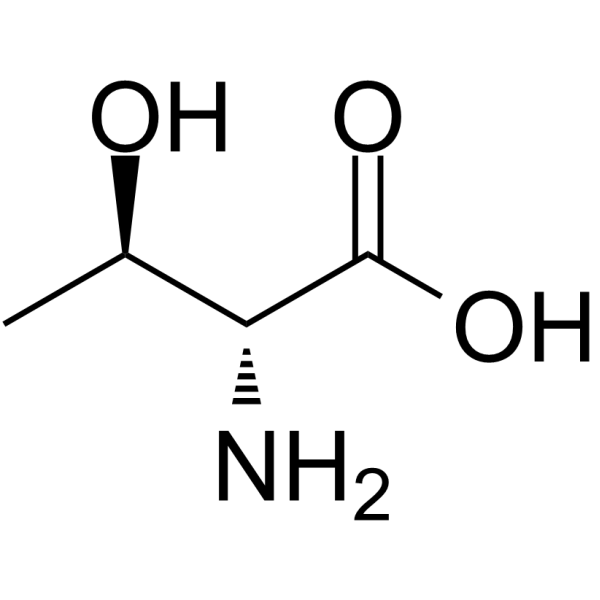
    D-Allothreonine is the D stereoisomer of Allothreonine. D-Allallreonine is a peptide lipid derived from bacteria. D-Allothreonine can be specifically oxidized by D-amino acid oxidase, while the L configuration has no reaction. D-Allallreonine is also a component of bacterial polysaccharides. D-Allallreonine can be used for researching bacterial pathogenicity, antigenic diversity and drug resistance .
    D-Allothreonine
  • HY-W250315

    pectate sodium

    Glycosidase Bacterial Endogenous Metabolite Others
    Polypectate sodium is a major component of cell wall polysaccharides (pectins) and is used as a carbon source and inducer of polygalacturonase. Polypectate sodium can also be used to evaluate alkaline active and alkaline stable pectate lyases from Streptomyces spp. and to study the optimization of polygalacturonase production from Xanthophyllum spp. and reaction conditions .
    Polypectate sodium
  • HY-W926978

    Fluorescent Dye Others
    Bromophenol red sodium is a chemical indicator. Bromophenol red sodium binds to lysozyme and inhibits its activity against the bacterial cell wall, but not the polysaccharide component of peptidoglycan .
    Bromophenol red sodium
  • HY-D0011A

    Fluorescent Dye Others
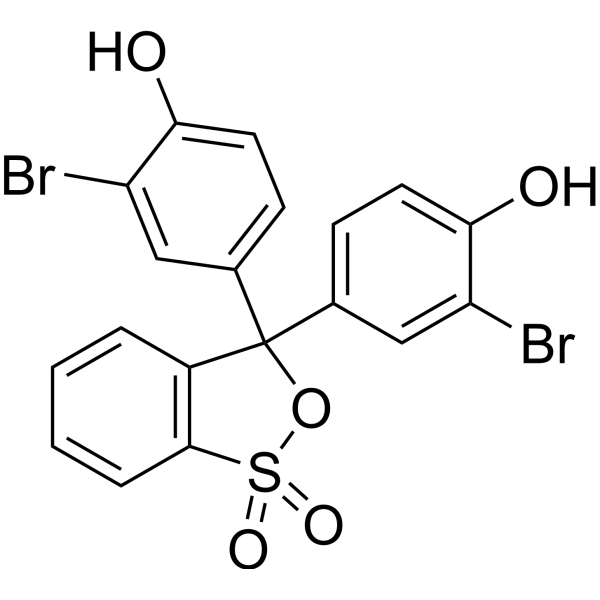
    Bromophenol red (sultone form) is a chemical indicator. Bromophenol red (sultone form) binds to lysozyme and inhibits its activity against the bacterial cell wall, but not the polysaccharide component of peptidoglycan .
    Bromophenol red (sultone form)
  • HY-N13205

    Others Metabolic Disease
    Mulberry Extract is a mulberry extract, and its components include: Anthocyanidins. Mulberry Extract regulates sugar and lipid metabolism, lowers blood sugar and increases insulin secretion. Its blood sugar regulating effect may be attributed to the phytochemicals it contains, mainly 1-deoxynojirimycin, flavonoids, phenolic compounds and polysaccharides. .
    Mulberry Extract
  • HY-W001959R

    Reference Standards Endogenous Metabolite Metabolic Disease
    D-Allothreonine (Standard) is an analytical standard for D-Allothreonine (HY-001959). This product is intended for research and analytical applications. D-Allothreonine is the D-stereoisomer of allothreonine. D-Allothreonine is a bacterial peptide lipid. D-Allothreonine is specifically oxidized by D-amino acid oxidase, while the L-form is unresponsive. D-Allothreonine is also a component of bacterial polysaccharides. D-Allothreonine can be used to study bacterial pathogenicity, antigenic diversity, and drug resistance.
    D-Allothreonine (Standard)
  • HY-125946R

    Reference Standards Drug Intermediate Metabolic Disease
    Latanoprost lactone diol (Standard) is the analytical standard of Latanoprost lactone diol (HY-125946). This product is intended for research and analytical applications. Latanoprost lactone diol is a small organic molecule derived from Prostaglandin F2α (HY-12956), and is a key synthetic intermediate and inactive metabolically related form of Latanoprost (HY-B0577). Latanoprost lactone diol is significantly upregulated in hypothyroid rats, and its levels can be reversed by the crude polysaccharide, lactone, and oligosaccharide components of the rhizome of Atractylodis macrocephalae. Latanoprost lactone diol can be used for research related to hypothyroidism.
    Latanoprost lactone diol (Standard)
  • HY-159753

    Toll-like Receptor (TLR) Inflammation/Immunology
    HS105 is a vaccine adjuvant and a key component in vaccines. Adjuvants can be divided into immunostimulants and delivery systems. Adjuvants can not only enhance the intensity and durability of immune responses, but also affect the type of immune responses. On the one hand, immunostimulants promote the production of antigen signals and co-stimulatory signals by targeting Toll-like receptors (TLRs) and other pattern recognition receptors (PRRs), leading to the maturation and activation of antigen presenting cells (APCs), thereby enhancing adaptive immune responses; on the other hand, delivery systems are carrier materials that promote antigen delivery by prolonging the bioavailability of loaded antigens and targeting antigens to lymph nodes or APCs. Several common adjuvants include: saponins, TLRs agonists, polysaccharides, nanoparticles, cytokines, and mucosal adjuvants .
    HS105
  • HY-E71320

    Biochemical Assay Reagents Others
    Terminal N-acetyl-β-D-glucosaminyl residues in polysaccharides, glycoproteins and glycopeptides can act as acceptor. High activity is shown towards such residues in branched-chain polysaccharides when these are linked by β-1,6-links to galactose residues; lower activity towards residues linked to galactose by β-1,3-links. A component of EC 2.4.1.22 (lactose synthase) .
    β-N-Acetylglucosaminylglycopeptide β-1,4-galactosyltransferase
  • HY-P2816A

    Biochemical Assay Reagents Metabolic Disease
    Xylanase, Trichoderma viride (EC 3.2.1.8) is the name given to a class of enzymes which degrade the linear polysaccharide beta-1,4-xylan into xylose, thus breaking down hemicellulose, one of the major components of plant cell walls.
    Xylanase, Trichoderma viride
  • HY-E70897

    Biochemical Assay Reagents Metabolic Disease
    Xylanase 10A, Cellvibrio japonicus (EC 3.2.1.8) is the name given to a class of enzymes which degrade the linear polysaccharide beta-1,4-xylan into xylose, thus breaking down hemicellulose, one of the major components of plant cell walls.
    Xylanase 10A, Cellvibrio japonicus
  • HY-P3017A

    Biochemical Assay Reagents Others
    Endo-1,4-β-Xylanase, Trichoderma longibrachiatum (EC 3.2.1.8) is the name given to a class of enzymes which degrade the linear polysaccharide beta-1,4-xylan into xylose, thus breaking down hemicellulose, one of the major components of plant cell walls.
    Endo-1,4-β-Xylanase, Trichoderma longibrachiatum
  • HY-159751

    Toll-like Receptor (TLR) Inflammation/Immunology
    HS101 is a vaccine adjuvant and a key component in vaccines. Adjuvants can be divided into immunostimulants and delivery systems. Adjuvants can not only enhance the intensity and durability of immune responses, but also affect the type of immune responses. On the one hand, immunostimulants promote the production of antigen signals and co-stimulatory signals by targeting Toll-like receptors (TLRs) and other pattern recognition receptors (PRRs), leading to the maturation and activation of antigen presenting cells (APCs), thereby enhancing adaptive immune responses; on the other hand, delivery systems are carrier materials that promote antigen delivery by prolonging the bioavailability of loaded antigens and targeting antigens to lymph nodes or APCs. Several common adjuvants include: saponins, TLRs agonists, polysaccharides, nanoparticles, cytokines, and mucosal adjuvants .
    HS101

Inquiry Online

Your information is safe with us. * Required Fields.

Salutation


Country or Region *

Applicant Name *


Organization Name *

Department *


Email Address *


Product Name *

Cat. No.


Requested quantity *

Phone Number *


Remarks

Inquiry Online

Inquiry Information

Product Name:
Cat. No.:
Quantity:
MCE Japan Authorized Agent:

