


22 Results for "

potassium fertilizer

" in MedChemExpress (MCE) Product Catalog:
Products (22)

22 Results for "potassium fertilizer" in MCE Product Catalog:

6
6 Publications Verification
Cat. No.: HY-Y0271
CAS No.: 57-13-6
Synonyms: Carbonyl diamide
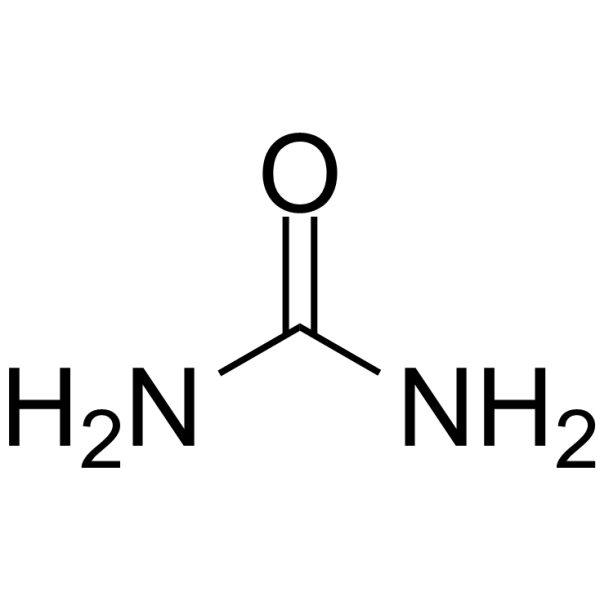
Urea is a powerful protein denaturant via both direct and indirect mechanisms . A potent emollient and keratolytic agent . Used as a diuretic agent. Blood urea nitrogen (BUN) has been utilized to evaluate renal function . Widely used in fertilizers as a source of nitrogen and is an important raw material for the chemical industry.
loading...
    loading...
4
4 Cited Publications
Cat. No.: HY-Y0537
CAS No.: 7447-40-7
Potassium chloride, AR, 99.5% is extensively used as a potassium supplement. Potassium chloride, AR, 99.5% is a readily available potassium fertilizer. Potassium chloride is promising for research of hyperkalaemia .
loading...
    loading...
1
1 Cited Publications
Cat. No.: HY-Y0271S1
CAS No.: 1433-11-0
Synonyms: Carbonyl diamide-d4
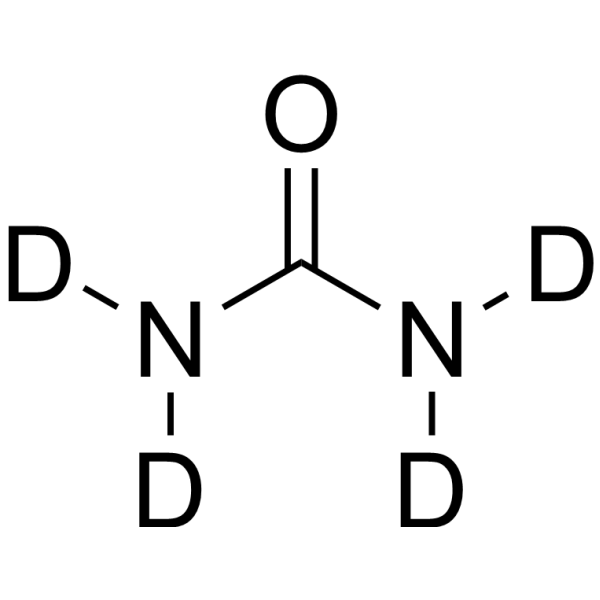
Urea-d4 is the deuterium labeled Urea . Urea is a powerful protein denaturant via both direct and indirect mechanisms . A potent emollient and keratolytic agent . Used as a diuretic agent. Blood urea nitrogen (BUN) has been utilized to evaluate renal function . Widely used in fertilizers as a source of nitrogen and is an important raw material for the chemical industry.
loading...
    loading...
Cat. No.: HY-Y0308
CAS No.: 7558-79-4
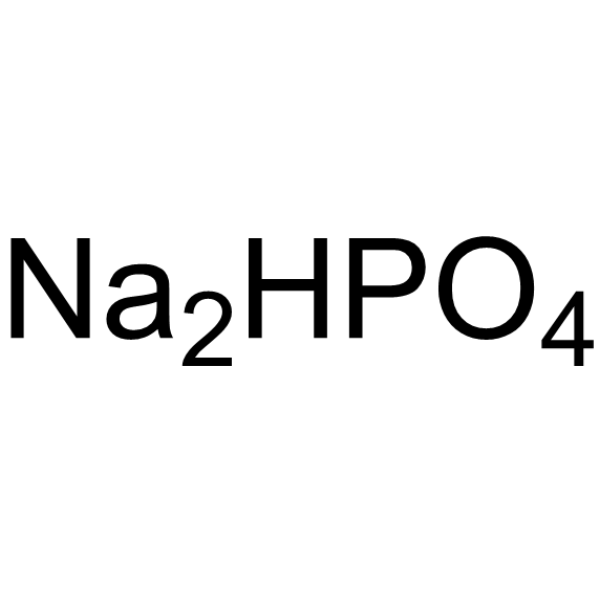
Disodium phosphate is commonly used as a food additive, buffer and laboratory reagent. Disodium phosphate has unique chemical properties that make it an important ingredient in the manufacture of fertilizers, detergents and water treatment products. Additionally, it is used in various medical applications such as osmotic laxatives and electrolyte replacement solutions.
loading...
    loading...
Cat. No.: HY-Y0261A
CAS No.: 7783-20-2
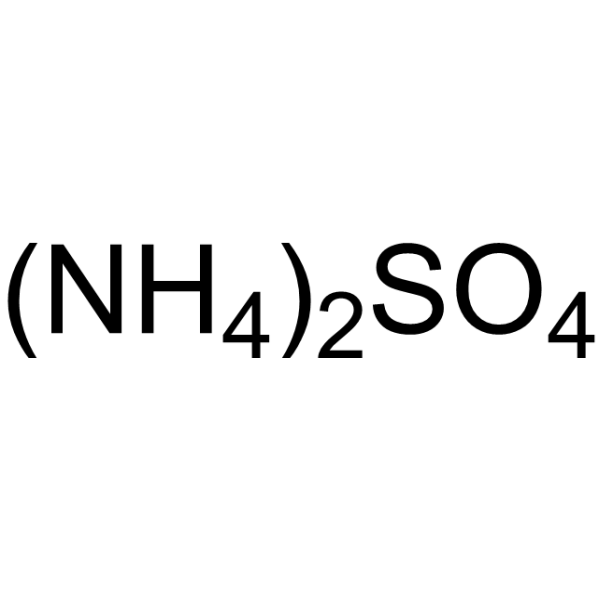
Ammonium sulphate,≥99.0%,AR is an inorganic sulfate salt used for molecular biology . Ammonium sulphate,≥99.0%,AR can be used to precipitate proteins, separate antibodies, and enhance antigen-antibody reactions. Ammonium sulphate,≥99.0%,AR can serve as a nitrogen source in plant fertilizers and has developmentally toxicity to freshwater snails, but increases the number of Anopheles africanus and Culex mosquito larvae in rice paddies. Ammonium sulphate,≥99.0%,AR also inhibits the conversion of glucose to ascorbic acid in plants .
loading...
    loading...
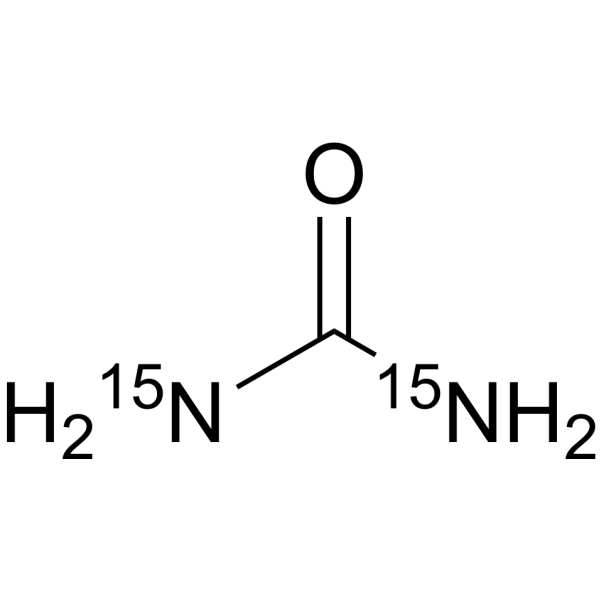
Cat. No.: HY-Y0271S
CAS No.: 2067-80-3
Synonyms: Carbonyl diamide-15N2
Urea- 15N2 is the 15N-labeled Urea. Urea is a powerful protein denaturant via both direct and indirect mechanisms . A potent emollient and keratolytic agent . Used as a diuretic agent. Blood urea nitrogen (BUN) has been utilized to evaluate renal function . Widely used in fertilizers as a source of nitrogen and is an important raw material for the chemical industry.
loading...
    loading...
Cat. No.: HY-W116336D
CAS No.: 1314-13-2
Zinc oxide, <100 nm particle size is a nitrate reductase modulator and growth promoter with plant stress resistance activity and oral toxicity. Zinc oxide, <100 nm particle size acts as a nutrient source for maize plants. By enhancing nitrate reductase activity and reducing free proline levels, it significantly improves plant height, root length and dry matter weight of maize, and its growth-promoting effect is comparable to that of traditional zinc sulfate fertilizer. Zinc oxide, <100 nm particle size induces anemia-related and persistent tissue inflammatory damage, leading to obvious histopathological adverse reactions in the stomach, pancreas, eyes and prostate of rats. Zinc oxide, <100 nm particle size acts as a non-toxic antibacterial agent and selective cytotoxin against multiple bacteria, fungi and spores .
loading...
    loading...
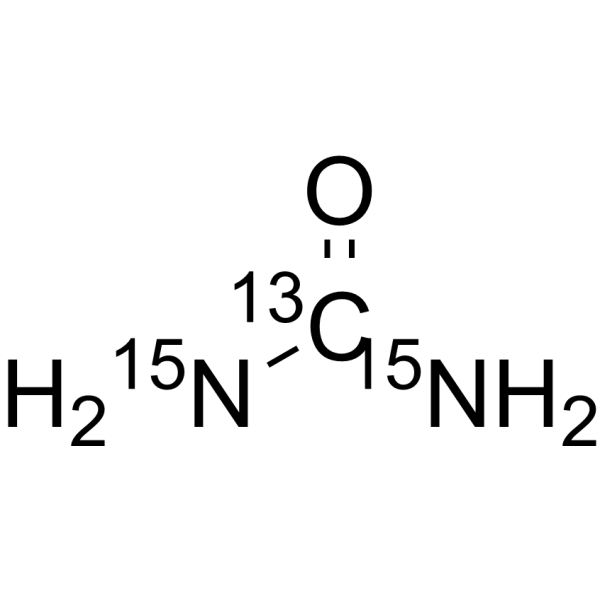
Cat. No.: HY-Y0271S2
CAS No.: 58069-83-3
Synonyms: Carbonyl diamide-13C,15N2
Urea- 13C, 15N2 is the 13C and 15N labeled Urea . Urea is a powerful protein denaturant via both direct and indirect mechanisms . A potent emollient and keratolytic agent . Used as a diuretic agent. Blood urea nitrogen (BUN) has been utilized to evaluate renal function . Widely used in fertilizers as a source of nitrogen and is an important raw material for the chemical industry.
loading...
    loading...
Cat. No.: HY-B1647
CAS No.: 10045-86-0
Ferric phosphate is used as food and feed supplement, particularly in bread enrichment. Ferric phosphate is also used as a fertilizer and as a molluscicide for a variety of slugs and snails including Deroceras reticulatum, D.laeve, Arion subfuscus .
loading...
    loading...
Cat. No.: HY-109536B
CAS No.: 68333-79-9
Ammonium polyphosphate, n<20, water solubility>90 g/100 mL, a low-polymerization-degree ammonium polyphosphate (APP), is an important raw material in chelated, and controlled-release fertilizers .
loading...
    loading...
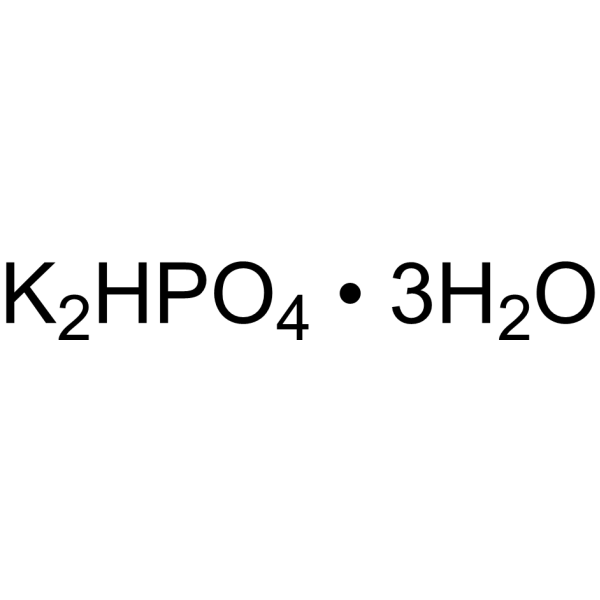
Cat. No.: HY-W088069
CAS No.: 16788-57-1
Research Areas:  

Others

Dipotassium hydrogen phosphate trihydrate, which is commonly used as a buffer and source of phosphorus and potassium in various applications, such as fertilizers, food processing, and pharmaceuticals, in biochemistry and molecular biology, Dipotassium hydrogen phosphate trihydrate is used in the preparation of cell culture media And reagent buffer system, in addition, it has been used in analytical chemistry as a reagent for the determination of calcium and magnesium ions in water samples.
loading...
    loading...
Cat. No.: HY-W019872
CAS No.: 7722-76-1
Ammonium dihydrogen phosphate is an ammonium phosphate salt with both hydrogenation and dehydration properties. Ammonium dihydrogen phosphate decomposes to form phosphoric acid and ammonia upon heating, and serves as a main component of fertilizers. Ammonium dihydrogen phosphate promotes glycosidic bond cleavage, formation of dehydrated sugars and furans, biomass carbonization, hydrogen donor reactions, and lignin bond weakening. Ammonium dihydrogen phosphate selectively promotes the production of furfural and levoglucosenone during the pyrolysis of lignocellulosic biomass. Ammonium dihydrogen phosphate can be used as a nitrogen/phosphorus source and activator for the preparation of nitrogen-phosphorus co-doped activated carbon. Ammonium dihydrogen phosphate acts as a sucrose conversion catalyst in sustainable wood adhesive formulations. Ammonium dihydrogen phosphate is applicable to related research in various fields such as agriculture and electronics .
loading...
    loading...
Cat. No.: HY-Y0537K
CAS No.: 7447-40-7
Potassium chloride, ACS, 99.0% is a metal halide salt composed of potassium and chlorine. Potassium chloride, ACS, 99.0% replenishes electrolytes, corrects water-electrolyte imbalance, and is used in hypokalemia research. Potassium chloride, ACS, 99.0% is also used to prepare buffer solutions and produce fertilizers, with applications in the fields of medicine, scientific research and food processing. Potassium chloride, ACS, 99.0% plays a key role in protein extraction and dissolution .
loading...
    loading...
Cat. No.: HY-Y0271R
CAS No.: 57-13-6
Synonyms: Carbonyl diamide (Standard)
Urea (Standard) is the analytical standard of Urea. This product is intended for research and analytical applications. Urea is a powerful protein denaturant via both direct and indirect mechanisms . A potent emollient and keratolytic agent . Used as a diuretic agent. Blood urea nitrogen (BUN) has been utilized to evaluate renal function . Widely used in fertilizers as a source of nitrogen and is an important raw material for the chemical industry.
loading...
    loading...
Cat. No.: HY-E70193
CAS No.: 37341-53-0
Synonyms: KerA
Research Areas:  

Others

Keratinase (KerA) is an orally active proteolytic enzyme that specifically degrades keratin, and it is mainly secreted by microorganisms such as bacteria, fungi and actinomycetes. Keratinase degrades keratin via reducing disulfide bond cross-links and cleaving peptide bonds, and it can also degrade infectious prion proteins. Keratinase can improve the nutritional bioavailability of keratin-based feed, and it can also be applied in various fields including depilation, proteolytic cleaning, organic fertilizer precursor preparation, cosmetics, bioenergy production, wastewater decolorization, biomolecule extraction, bioremediation, textile biopretreatment and feed processing .
loading...
    loading...
Cat. No.: HY-161998
CAS No.: 1203704-26-0
Target:  

Bacterial Urease

Research Areas:  

Others

Urease-IN-16 (compound 4e) is a urease inhibitor, with an IC50 value of 132 μmol/L. Urease-IN-16 can coordinate with the nickel atom through the oxygen atoms of carbonyl or boronic acid groups. Urease-IN-16 shows great potential as an additive in the development of efficient fertilizers and medical applications .
loading...
    loading...
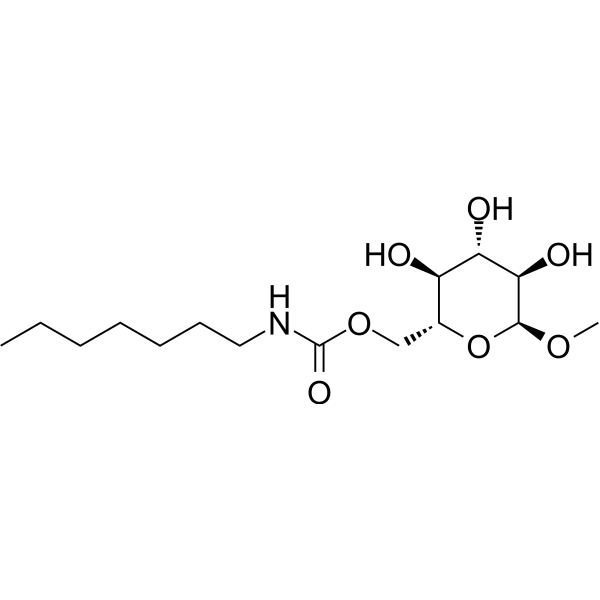
Cat. No.: HY-W250182
CAS No.: 115457-83-5
Hecameg is a natural product commonly used as a raw material for plant growth regulators and agricultural fertilizers. It can be used to improve the absorption and utilization efficiency of nutrients by plants, and to promote the growth and development of plants. In addition, this natural product is used as a growth factor for some microorganisms and animals
loading...
    loading...
Cat. No.: HY-157359
Bacterial Organophosphorus Medium can be used to determine the efficiency of phosphorus bacteria in decomposing organic phosphorus in phosphorus bacteria fertilizers. Bacterial Organophosphorus Medium ingredients include glucose, ammonium sulfate, yeast extract, sodium chloride, potassium chloride, magnesium sulfate, ferrous sulfate, manganese sulfate, lecithin, calcium carbonate, agar .
loading...
    loading...
Cat. No.: HY-W040186
CAS No.: 81012-89-7
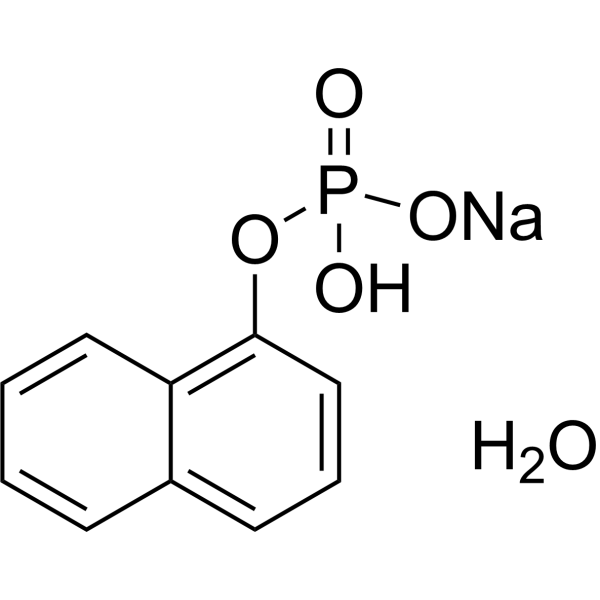
1-Naphthenyl phosphate hydrate sodium is commonly used as a flame retardant for various materials such as plastics, textiles, and construction materials. In addition, its potential use as a corrosion inhibitor and as an ingredient in fertilizers and detergents has been investigated. Its hydrated form contains variable amounts of water molecules, which affects its physical properties and applications.
loading...
    loading...
Cat. No.: HY-W094560
CAS No.: 1312-76-1
Research Areas:  

Infection

Potassium silicate acts as a silicon-containing foliar fertilizer and an inhibitor of rice blast. Foliar application of Potassium silicate to the susceptible rice cultivar 'Metica 1' reduces the incidence of rice blast caused by Pyricularia oryzae. Potassium silicate does not enhance silicon uptake or accumulation in rice plants. Potassium silicate can be used in studies related to rice blast .
loading...
    loading...

