100 Results for "

primary amino groups

" in MedChemExpress (MCE) Product Catalog:
Products (100)

100 Results for "primary amino groups" in MCE Product Catalog:

8
8 Cited Publications
Cat. No.: HY-Y0623
CAS No.: 6066-82-6
Synonyms: HOSu; 1-Hydroxy-2,5-pyrrolidinedione
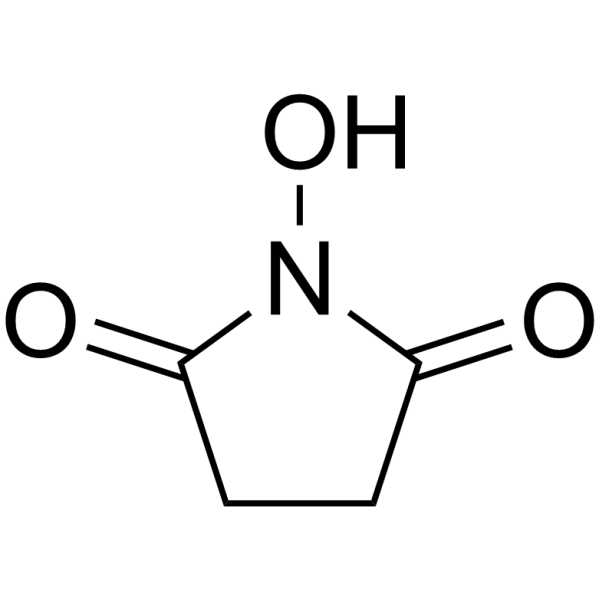
N-Hydroxysuccinimide (HOSu; 1-Hydroxy-2,5-pyrrolidinedione) is a covalent crosslinker commonly used in bioconjugation technology with a primary amine group. N-Hydroxysuccinimide reacts with amino groups (-NH2) to form a stable amide bond, which can modify amino-containing biomolecules. N-Hydroxysuccinimide can be used, for example, for protein labeling with fluorescent dyes and enzymes, surface activation of chromatography supports, microbeads, nanoparticles and microarray slides, and chemical synthesis of peptides. N-Hydroxysuccinimide has a wide range of applications in biomaterial synthesis (such as collagen, chitosan crosslinking), drug delivery systems (such as hydrogel preparation) and tissue engineering .
loading...
    loading...
1
1 Cited Publications
Cat. No.: HY-D0715
CAS No.: 38183-12-9
Synonyms: Ro 20-7234
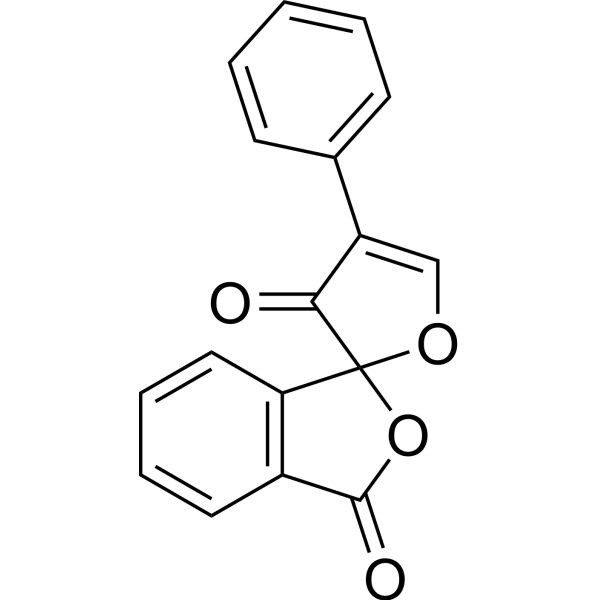
Fluorescamine is a spirocyclic compound that is non-fluorescent. Fluorescamine reacts rapidly with primary amine groups in proteins under alkaline conditions to generate products with strong fluorescence (Ex/Em: 390/475 nm). Fluorescamine can be used to detect amine-containing compounds, including amino acids, peptides, and proteins .
loading...
    loading...
Cat. No.: HY-D0017
CAS No.: 605-65-2
Synonyms: DNSCl
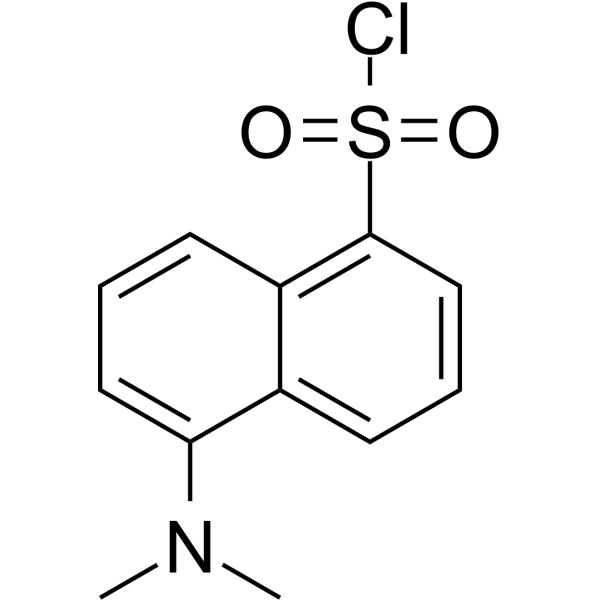
Dansyl chloride is a reagent that produces stable blue or blue-green fluorescent sulfonamide adducts in the reaction of aliphatic and aromatic amines with primary amino groups, and is widely used for modified amino acids, protein sequencing and amino acid analysis .
loading...
    loading...
Cat. No.: HY-79647
CAS No.: 82911-69-1
Synonyms: N-(Fmoc-oxy)succinimide
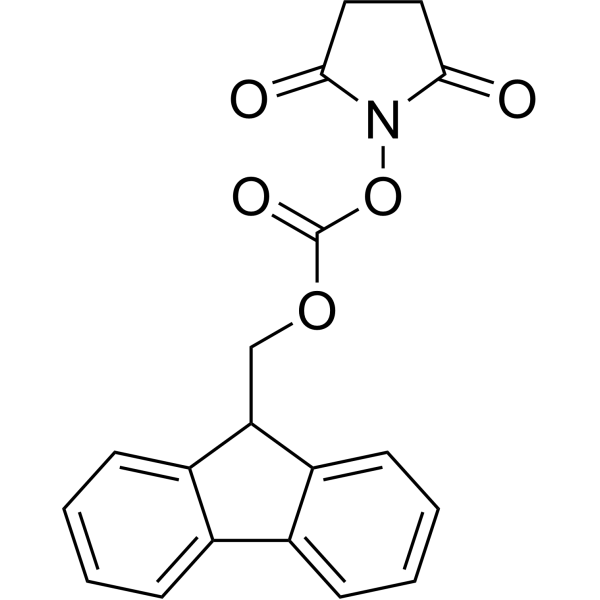
Fmoc-OSu (N-(Fmoc-oxy)succinimide) is an acylating agent that targets amino groups (-NH2). It can selectively protect the amino groups of amino acids by covalently binding with primary or secondary amines through nucleophilic substitution reactions. Fmoc-OSu forms a stable amide bond with the amino group to avoid side reactions of the amino group in peptide synthesis. It can also be used as a fluorescent labeling reagent to react with glycosylamines for efficient labeling of N-sugar chains. Fmoc-OSu can be used as an Fmoc protection strategy in peptide synthesis, and as a fluorescent labeling and analysis method for N-sugar chains .
loading...
    loading...
Cat. No.: HY-140698
CAS No.: 92451-01-9
Purity:  ≥95.0%
Synonyms: mPEG5000-SC; mPEG5000-Succinimidyl ester
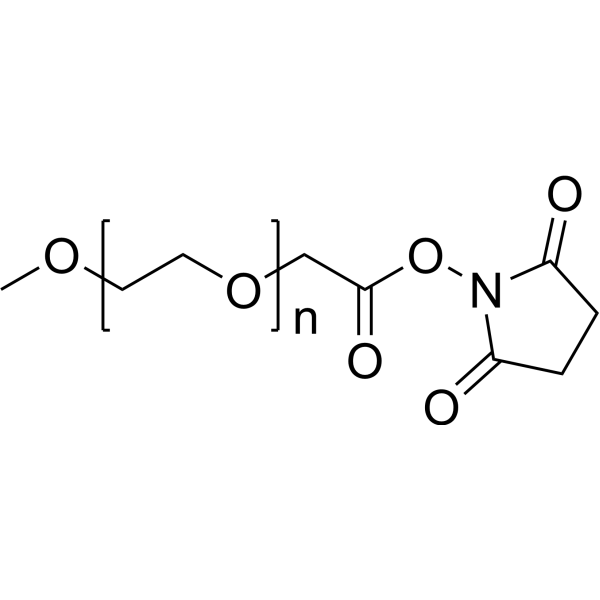
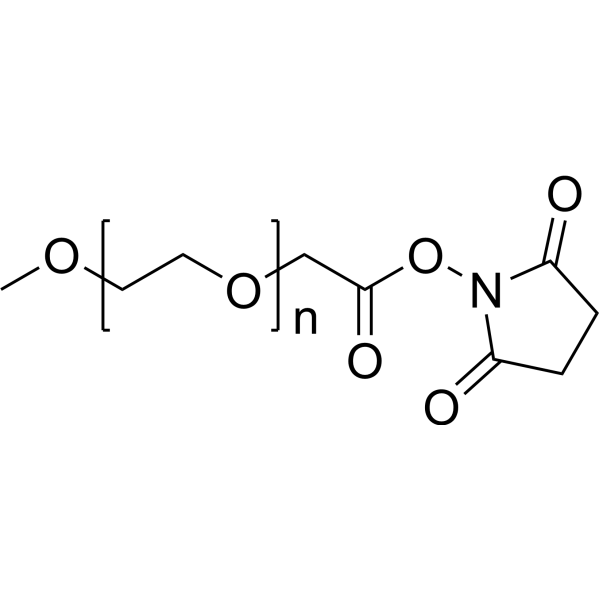
m-PEG5000-NHS ester (mPEG5000-SC) is a pegylation reagent that targets the primary amino groups of branched polyethyleneimine on gold nanoparticles. m-PEG1000-NHS ester covalently links its PEG moiety to target amino groups via amine-mediated coupling chemistry. m-PEG1000-NHS ester helps improve the biocompatibility of modified gold nanoparticles used as CT contrast agents and prolongs their blood circulation time.
loading...
    loading...
Cat. No.: HY-W041994
CAS No.: 80307-12-6
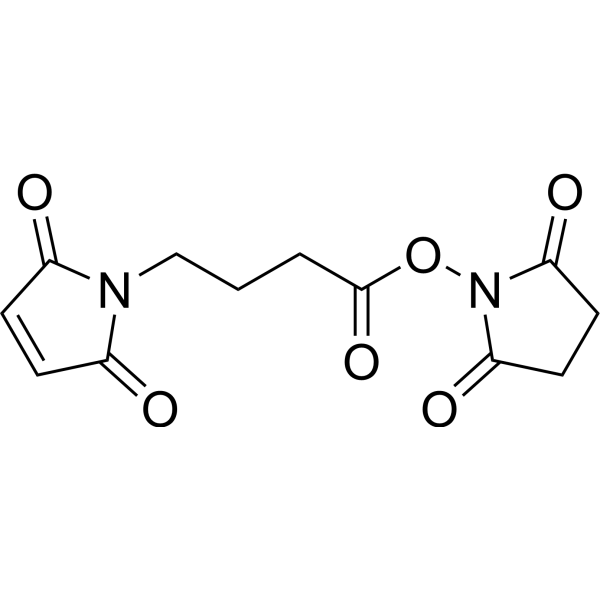
GMBS is a heterobifunctional crosslinker targeting primary amines and sulfhydryl groups. GMBS can be used for chemical crosslinking of proteins and crosslinking mass spectrometry (CXMS) to study protein folding and map interfaces between interacting proteins .
loading...
    loading...
Cat. No.: HY-D1085
CAS No.: 216309-02-3
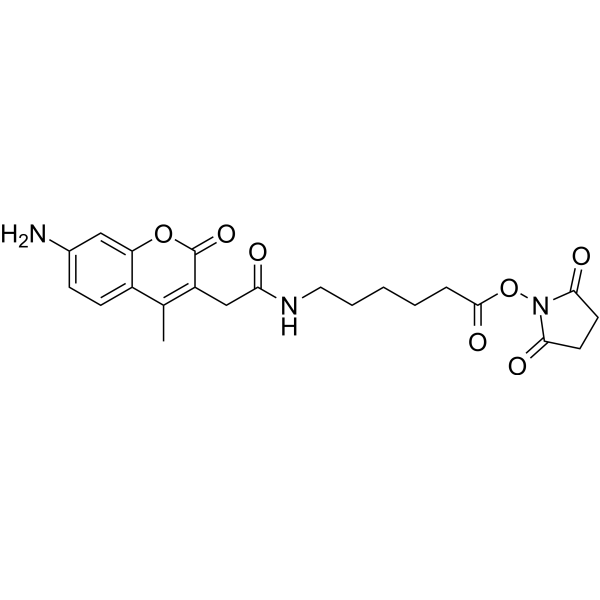
AMCA-X-SE is a coumarin derivative that generates fixed blue fluorescence and an NHS-activated ester that forms stable amide bonds with primary amine groups. It is used as a reactive dye for labeling amino groups of peptides, proteins, and oligonucleotides. Maximum excitation/emission wavelength: 354/442 nm .
loading...
    loading...
Cat. No.: HY-W012001
CAS No.: 60142-89-4
Target:  

PROTAC Linkers

Research Areas:  

Cancer

Boc-7-Aminoheptanoic acid can be used as a PROTAC linker in the synthesis of PROTACs and other conjugation applications. Boc-7-Aminoheptanoic acid is an alkane chain with terminal carboxlic acid and Boc-protected amino groups. The terminal carboxylic acid can react with primary amine groups in the presence of activators (e.g. EDC, or HATU) to form a stable amide bond. The Boc group can be deprotected under mild acidic conditions to form the free amine.
loading...
    loading...
Cat. No.: HY-D0017S
CAS No.: 1276379-68-0
Synonyms: DNSCl-d6
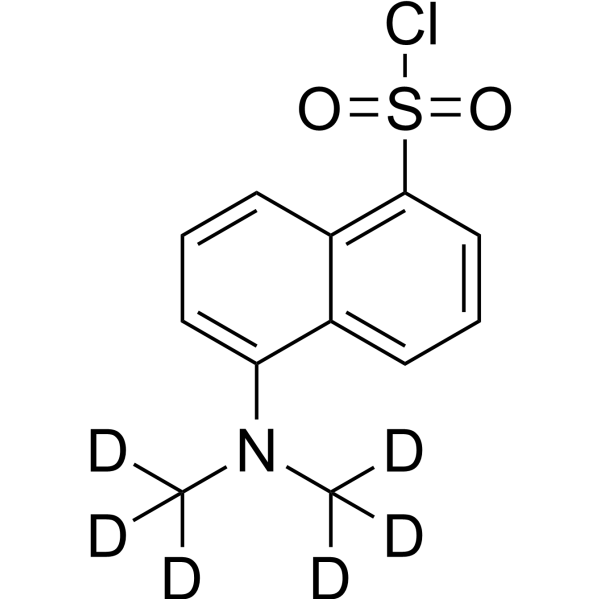
Dansyl chloride-d6 is the deuterium labeled Dansyl chloride (HY-D0017). Dansyl chloride is a reagent that produces stable blue or blue-green fluorescent sulfonamide adducts in the reaction of aliphatic and aromatic amines with primary amino groups, and is widely used for modified amino acids, protein sequencing and amino acid analysis .
loading...
    loading...
Cat. No.: HY-W250124
CAS No.: 63231-63-0
Synonyms: RNA (yeast)
Ribonucleic acid (RNA) (yeast) is a ribonucleic acid isolated from yeast, characterized as a polynucleotide containing primary and secondary phosphate groups, amino groups, and purine-pyrimidine hydroxyl groups per 4 corrected phosphorus atoms. Ribonucleic acid (yeast) is widely used in scientific research as a substrate for nuclease detection, a carrier in ethanol precipitation processes, and a standard control for molecular biology techniques .
loading...
    loading...
Cat. No.: HY-140699
CAS No.: 92451-01-9
Purity:  ≥98.0%
Synonyms: mPEG10000-SC; mPEG10000-Succinimidyl ester
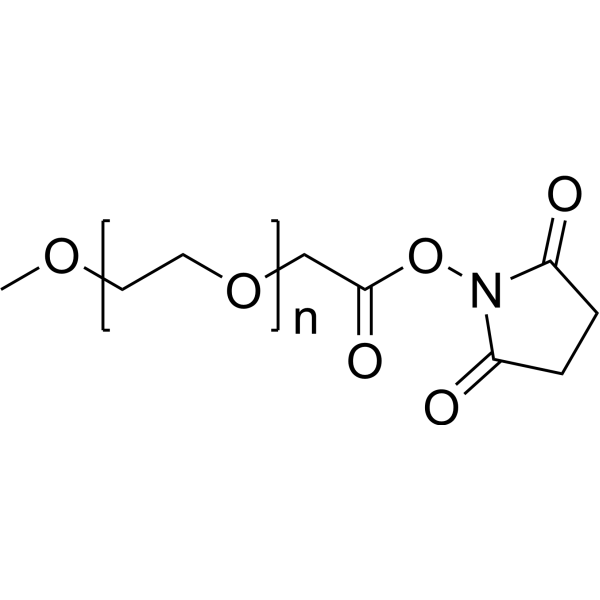
m-PEG10000-NHS ester (mPEG10000-SC) is a pegylation reagent that targets the primary amino groups of branched polyethyleneimine on gold nanoparticles. m-PEG1000-NHS ester covalently links its PEG moiety to target amino groups via amine-mediated coupling chemistry. m-PEG1000-NHS ester helps improve the biocompatibility of modified gold nanoparticles used as CT contrast agents and prolongs their blood circulation time.
loading...
    loading...
Cat. No.: HY-W043748
CAS No.: 38862-24-7
Synonyms: N-Succinimidyl acrylate
Research Areas:  

Others

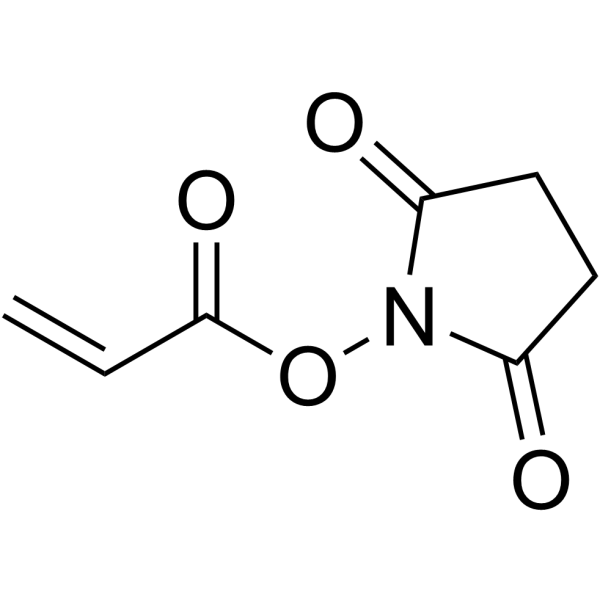
2,5-Dioxopyrrolidin-1-yl acrylate (N-Succinimidyl acrylate) is a lysine residue modifier and coupling monomer. 2,5-Dioxopyrrolidin-1-yl acrylate covalently modifies the primary amines of lysine residues on monoclonal anti-horseradish peroxidase IgG antibodies, neutralizes positive charges and replaces them with low-affinity acrylate groups. 2,5-Dioxopyrrolidin-1-yl acrylate inhibits the formation of rapid hard coronas on citrate-coated gold nanoparticles, induces antibody unfolding and loss of antigen-binding function, but does not affect the antigen-binding function of antibodies in free solution. 2,5-Dioxopyrrolidin-1-yl acrylate reacts with the ε-amino groups on lysine residues of L-asparaginase, introduces vinyl groups and generates N-hydroxysuccinimide. 2,5-Dioxopyrrolidin-1-yl acrylate regulates the activity of L-asparaginase .
loading...
    loading...
Cat. No.: HY-W041856
CAS No.: 30100-16-4
Synonyms: Boc-8-aminooctanoic acid
Target:  

PROTAC Linkers

Research Areas:  

Cancer

N-Boc-8-amino-octanoic acid (Boc-8-aminooctanoic acid) can be used as a PROTAC linker in the synthesis of PROTACs. N-Boc-8-amino-octanoic acid is an alkane chain with terminal carboxlic acid and Boc-protected amino groups. The terminal carboxylic acid can react with primary amine groups in the presence of activators (e.g. EDC, or HATU) to form a stable amide bond. The Boc group can be deprotected under mild acidic conditions to form the free amine.
loading...
    loading...
Cat. No.: HY-W105744
CAS No.: 13108-19-5
Target:  

PROTAC Linkers

Research Areas:  

Cancer

10-Aminodecanoic acid is an alkane chain with terminal carboxlic acid and amine groups. 10-Aminodecanoic acid can be used as a PROTAC linker in the synthesis of PROTACs and other conjugation applications. The amino group (NH2) is reactive with carboxylic acids, activated NHS esters, carbonyls (ketone, aldehyde) etc. The terminal carboxylic acid can react with primary amine groups of activated NHS ester to form a stable amide bond.
loading...
    loading...
Cat. No.: HY-140700
CAS No.: 92451-01-9
Purity:  ≥98.0%
Synonyms: mPEG20000-SC; mPEG20000-Succinimidyl ester
m-PEG20000-NHS ester (mPEG20000-SC) is a pegylation reagent that targets the primary amino groups of branched polyethyleneimine on gold nanoparticles. m-PEG1000-NHS ester covalently links its PEG moiety to target amino groups via amine-mediated coupling chemistry. m-PEG1000-NHS ester helps improve the biocompatibility of modified gold nanoparticles used as CT contrast agents and prolongs their blood circulation time.
loading...
    loading...
Cat. No.: HY-W1048525
Synonyms: 8-Arm PEG5000-Amine
8-Arm PEG5000-NH2 (8-Arm PEG5000-Amine) is a multi-arm PEG derivative with amino groups at each end of the eight arms. The reactive primary amine or NH2 groups can react rapidly with activated carboxylic acids such as NHS esters to form stable amide bonds .
loading...
    loading...
Cat. No.: HY-W142618
CAS No.: 13265-84-4
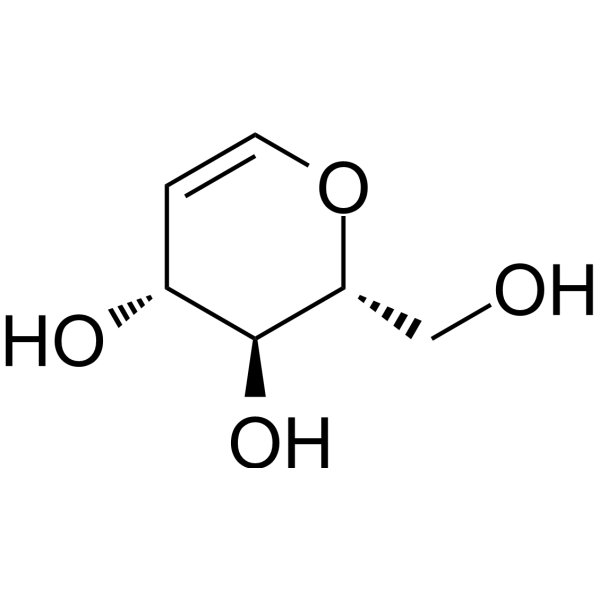
D-Glucal is an organic compound belonging to the family of aldoses, which are monosaccharides containing an aldehyde functional group. It has a six-carbon structure and is derived from glucose by oxidation of the primary alcohol group at carbon 1 to an aldehyde group. D-Glucal is a white crystalline solid that is soluble in water and has a sweet taste. It is an important intermediate in the chemical synthesis of a wide variety of compounds, including pharmaceuticals, agrochemicals, and natural products. D-Glucal can be converted into other carbohydrate derivatives such as glycosides, glycoconjugates and amino sugars. It also plays a role in the study of carbohydrate chemistry, where it is used as a chiral building block for the synthesis of complex structures.
loading...
    loading...
Cat. No.: HY-W005828
CAS No.: 173435-78-4
Target:  

PROTAC Linkers

Research Areas:  

Cancer

9-(Boc-amino)nonanoic Acid is an alkane chain with terminal carboxlic acid and Boc-protected amino groups. 9-(Boc-amino)nonanoic acid can be used as a PROTAC linker in the synthesis of PROTACs. The terminal carboxylic acid can react with primary amine groups in the presence of activators (e.g. EDC, or HATU) to form a stable amide bond. The Boc group can be deprotected under mild acidic conditions to form the free amine.
loading...
    loading...
Cat. No.: HY-W009056
CAS No.: 127582-76-7
Target:  

PROTAC Linkers

Research Areas:  

Cancer

Fmoc-7-amino-heptanoic acid is an alkane chain with terminal Fmoc-protected amine and carboxylic acid groups. Fmoc-7-amino-heptanoic acid can be used as a PROTAC linker in the synthesis of PROTACs. The Fmoc group can be deprotected under basic condition to obtain the free amine which can be used for further conjugations. The terminal carboxylic acid can react with primary amine groups in the presence of activators (e.g. EDC, or HATU) to form a stable amide bond.
loading...
    loading...
Cat. No.: HY-W105727
CAS No.: 1120-12-3
Target:  

PROTAC Linkers

Research Areas:  

Cancer

9-Aminononanoic acid can be used as a PROTAC linker and other conjugation in the synthesis of PROTACs. 9-Aminononanoic acid is an alkane chain with terminal carboxlic acid and amine groups. The amino group (NH2) is reactive with carboxylic acids, activated NHS esters, carbonyls (ketone, aldehyde) etc. The terminal carboxylic acid can react with primary amine groups of activated NHS ester to form a stable amide bond.
loading...
    loading...

