17 Results for "

quinolinol

" in MedChemExpress (MCE) Product Catalog:
Products (17)

17 Results for "quinolinol" in MCE Product Catalog:

4
4 Cited Publications
Cat. No.: HY-B1159
CAS No.: 4008-48-4
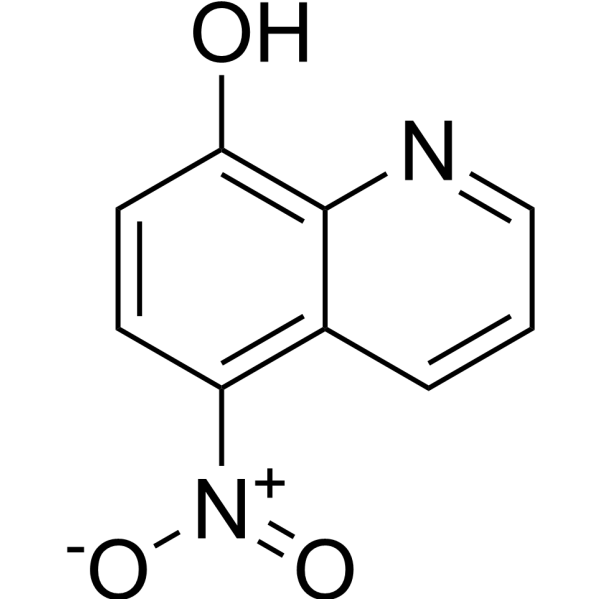
Synonyms: 8-Hydroxy-5-nitroquinoline; 5-Nitro-8-quinolinol
Research Areas:  

Infection Cancer

Nitroxoline (8-Hydroxy-5-nitroquinoline), an antibiotic, is an orally active antibiofilm agent. Nitroxoline reduces the formation and induces the dispersal of Pseudomonas aeruginosa biofilms by chelation of iron and zinc. Nitroxoline can be used for the urinary tract infections and cancer research .
loading...
    loading...
2
2 Cited Publications
Cat. No.: HY-B1400
CAS No.: 83-73-8
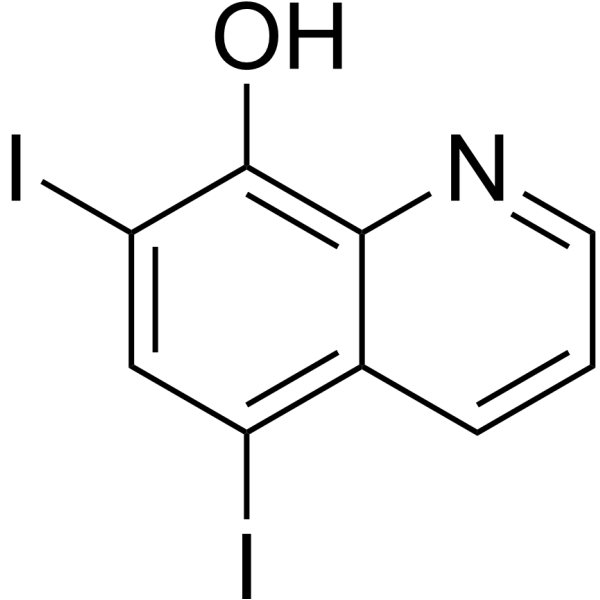
Synonyms: Iodoquinol; 5,7-Diiodo-8-hydroxyquinoline; 5,7-Diiodo-8-quinolinol
Diiodohydroxyquinoline (Iodoquinol, 5,7-Diiodo-8-hydroxyquinoline, 5,7-Diiodo-8-quinolinol) has an orally active and satisfactory antiparasitic properties. Diiodohydroxyquinoline exhibits mutagenic potential in mice and potent anti-SARS-CoV-2 activity with an EC50 value of 1.38 μM in VeroE6 cells. Diiodohydroxyquinoline's antimutagen is ascorbic acid. Diiodohydroxyquinoline is promising for research in inflammationin, testinal amebiasis, amebic liver abscess and chronic nonspecific diarrheas .
loading...
    loading...
1
1 Cited Publications
Cat. No.: HY-B1005
CAS No.: 148-24-3
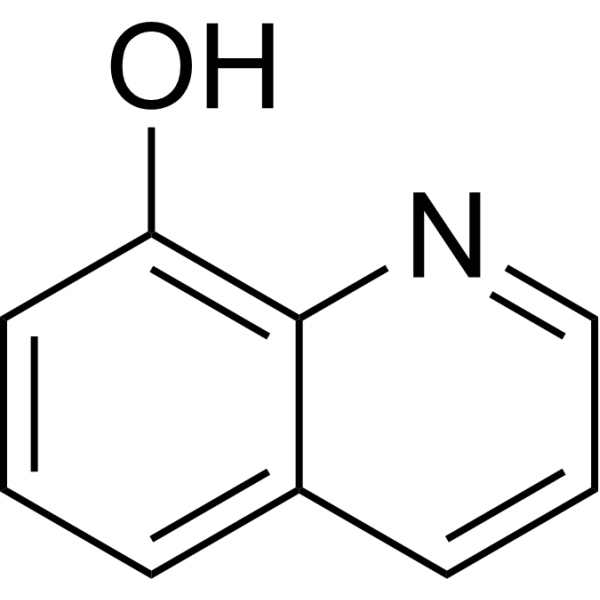
Synonyms: 8-quinolinol
Research Areas:  

Cancer

8-Hydroxyquinoline (8-Quinolinol) is a lipophilic metal chelator that can be used as a fungicide .8-Hydroxyquinoline shows the MIC range of 27.56-55.11 μM (4-8 μg/mL) against the clinical isolates of Neisseria gonorrhoeae. 8-Hydroxyquinoline can bind to copper form complexes and transport copper into cells. 8-Hydroxyquinoline increases in the number of micronucleated polychromatic erythrocytes and can also make hair depigmented in mice .
loading...
    loading...
1
1 Cited Publications
Cat. No.: HY-B0963
CAS No.: 130-16-5
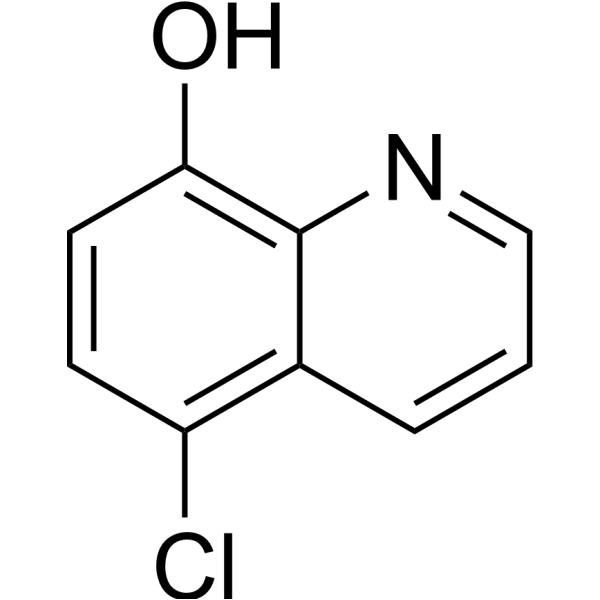
Synonyms: 5-Chloro-8-quinolinol
Research Areas:  

Infection Cancer

Cloxiquine (5-Chloro-8-quinolinol) is an antibacterial, antifungal and antiamoebic agent. Cloxiquine can be used for the research of tuberculosis and dermatoses. Cloxiquine suppresses the growth and metastasis of melanoma cells through activation of PPARγ .
loading...
    loading...
1
1 Cited Publications
Cat. No.: HY-W012037
CAS No.: 134-31-6
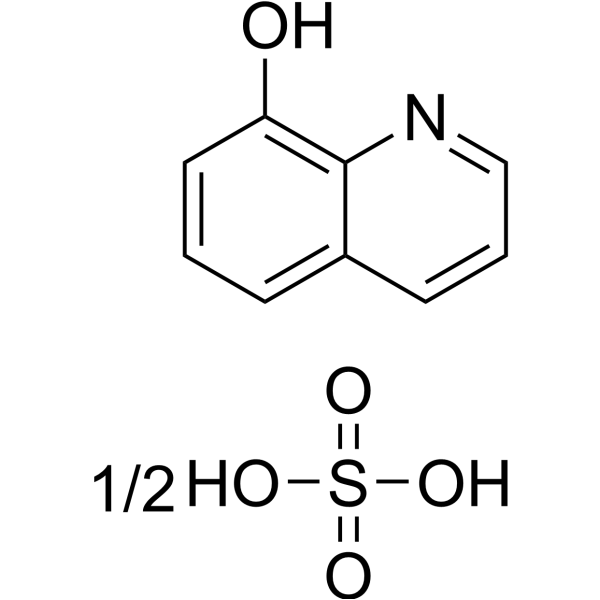
Synonyms: 8-quinolinol hemisulfate
Research Areas:  

Infection

8-Hydroxyquinoline hemisulfate (8-Quinolinol hemisulfate) is a monoprotic bidentate chelating agent, exhibits antiseptic, disinfectant, and pesticide properties, functioning as a transcription inhibitor.
loading...
    loading...
Cat. No.: HY-59208
CAS No.: 611-36-9
Synonyms: Kynurine
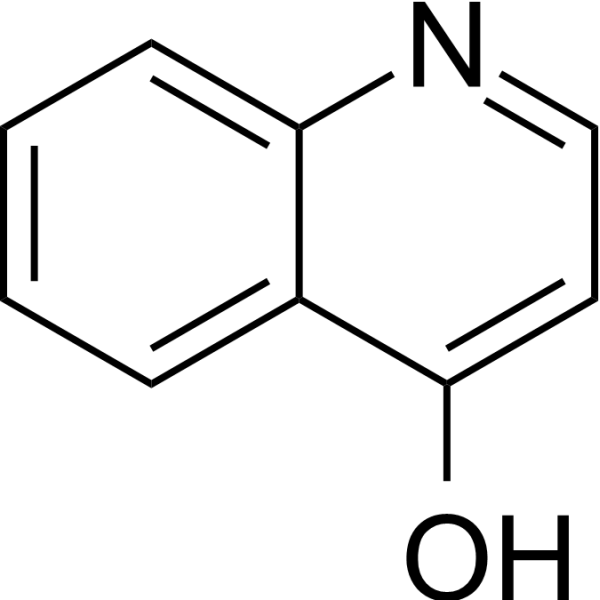
4-Quinolone (Kynurine) is a quinoline derivative. Kynurine pathway modulates tryptophan metabolism and involves in neuroprotective effect. Kynurine promotes tumor cell survival and motility by suppressing antitumor immune .
loading...
    loading...
Cat. No.: HY-W012037R
CAS No.: 134-31-6
Synonyms: 8-quinolinol hemisulfate (Standard)
Research Areas:  

Infection

8-Hydroxyquinoline (hemisulfate) (Standard) is the analytical standard of 8-Hydroxyquinoline (hemisulfate). This product is intended for research and analytical applications. 8-Hydroxyquinoline hemisulfate (8-Quinolinol hemisulfate) is a monoprotic bidentate chelating agent, exhibits antiseptic, disinfectant, and pesticide properties, functioning as a transcription inhibitor.
loading...
    loading...
Cat. No.: HY-B1005R
CAS No.: 148-24-3
Synonyms: 8-quinolinol (Standard)
Research Areas:  

Cancer

8-Hydroxyquinoline (Standard) is the analytical standard of 8-Hydroxyquinoline. This product is intended for research and analytical applications. 8-Hydroxyquinoline (8-Quinolinol) is a lipophilic metal chelator that can be used as a fungicide .8-Hydroxyquinoline shows the MIC range of 27.56-55.11 μM (4-8 μg/mL) against the clinical isolates of Neisseria gonorrhoeae. 8-Hydroxyquinoline can bind to copper form complexes and transport copper into cells. 8-Hydroxyquinoline increases in the number of micronucleated polychromatic erythrocytes and can also make hair depigmented in mice .
loading...
    loading...
Cat. No.: HY-B1400R
CAS No.: 83-73-8
Synonyms: Iodoquinol (Standard); 5,7-Diiodo-8-hydroxyquinoline (Standard); 5,7-Diiodo-8-quinolinol (Standard)
Diiodohydroxyquinoline (Standard) is the analytical standard of Diiodohydroxyquinoline. This product is intended for research and analytical applications. Diiodohydroxyquinoline (Iodoquinol, 5,7-Diiodo-8-hydroxyquinoline, 5,7-Diiodo-8-quinolinol) has an orally active and satisfactory antiparasitic properties. Diiodohydroxyquinoline exhibits mutagenic potential in mice and potent anti-SARS-CoV-2 activity with an EC50 value of 1.38 μM in VeroE6 cells. Diiodohydroxyquinoline's antimutagen is ascorbic acid. Diiodohydroxyquinoline is promising for research in inflammationin, testinal amebiasis, amebic liver abscess and chronic nonspecific diarrheas .
loading...
    loading...
Cat. No.: HY-B1159R
CAS No.: 4008-48-4
Synonyms: 8-Hydroxy-5-nitroquinoline (Standard); 5-Nitro-8-quinolinol (Standard)
Nitroxoline (Standard) is the analytical standard of Nitroxoline. This product is intended for research and analytical applications. Nitroxoline (8-Hydroxy-5-nitroquinoline), an antibiotic, is an orally active antibiofilm agent. Nitroxoline reduces the formation and induces the dispersal of Pseudomonas aeruginosa biofilms by chelation of iron and zinc. Nitroxoline can be used for the urinary tract infections and cancer research .
loading...
    loading...
Cat. No.: HY-B1159S
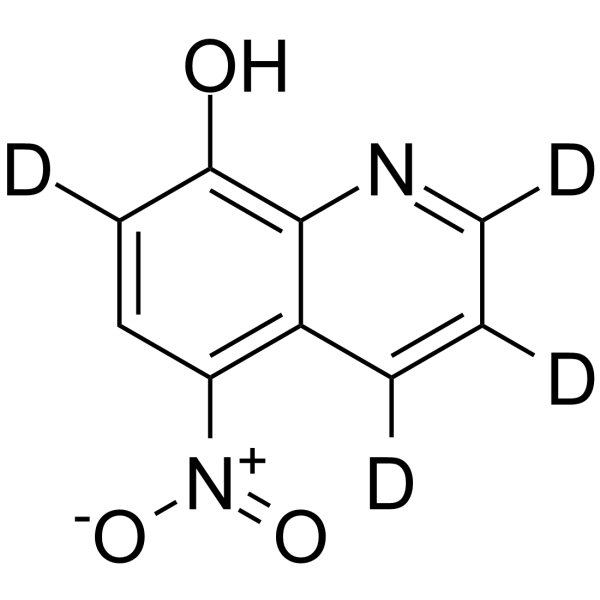
Synonyms: 8-Hydroxy-5-nitroquinoline-d4; 5-Nitro-8-quinolinol-d4
Nitroxoline-d4 is the deuterium labeled Nitroxoline. Nitroxoline is an antibiotic that has proven to be very effective at combating biofilm infections. Nitroxoline functions by chelating Fe 2+ and Zn 2+ ions from the biofilm matrix .
loading...
    loading...
Cat. No.: HY-B0963R
CAS No.: 130-16-5
Synonyms: 5-Chloro-8-quinolinol (Standard)
Cloxiquine (Standard) is the analytical standard of Cloxiquine. This product is intended for research and analytical applications. Cloxiquine (5-Chloro-8-quinolinol) is an antibacterial, antifungal and antiamoebic agent. Cloxiquine can be used for the research of tuberculosis and dermatoses. Cloxiquine suppresses the growth and metastasis of melanoma cells through activation of PPARγ .
loading...
    loading...
Cat. No.: HY-145482R
CAS No.: 21236-54-4
Research Areas:  

Neurological Disease

8-Hydroxyquinoline (hemisulfate) (Standard) is the analytical standard of 8-Hydroxyquinoline (hemisulfate). This product is intended for research and analytical applications. 8-Hydroxyquinoline hemisulfate (8-Quinolinol hemisulfate) is a monoprotic bidentate chelating agent, exhibits antiseptic, disinfectant, and pesticide properties, functioning as a transcription inhibitor.
loading...
    loading...
Cat. No.: HY-59208R
CAS No.: 611-36-9
Synonyms: Kynurine (Standard)
4-Quinolinol (Standard) is the analytical standard of 4-Quinolinol. This product is intended for research and analytical applications. 4-Quinolone (Kynurine) is a quinoline derivative. Kynurine pathway modulates tryptophan metabolism and involves in neuroprotective effect. Kynurine promotes tumor cell survival and motility by suppressing antitumor immune .
loading...
    loading...
Cat. No.: HY-W572386
CAS No.: 2503-80-2
2-n-Heptyl-4-quinolinol has activity against Candida albicans, Staphylococcus aureus, Vibrio anguillarum and V. Harveyi .
loading...
    loading...
Cat. No.: HY-131566
CAS No.: 7125-70-4
Target:  

Endogenous Metabolite

Research Areas:  

Cardiovascular Disease

Amiquinsin hydrochloride monohydrate is a compound with hypotensive activity. Amiquinsin hydrochloride monohydrate is metabolized in vivo, and the major metabolite is 4-amino-6,7-dimethoxy-3-quinolinol hydrochloride hydrate .
loading...
    loading...
Cat. No.: HY-W096561
CAS No.: 13425-92-8
Target:  

Endogenous Metabolite

Research Areas:  

Cardiovascular Disease

Amiquinsin is a compound with hypotensive activity. Amiquinsin is metabolized in vivo, and the major metabolite is 4-amino-6,7-dimethoxy-3-quinolinol hydrochloride hydrate. The pharmacological and toxicological properties of amiquinsin have been widely discussed .
loading...
    loading...
  • 1

