Search Result
Results for "
radionuclides therapy
" in MedChemExpress (MCE) Product Catalog:
1
Biochemical Assay Reagents
| Cat. No. |
Product Name |
Target |
Research Areas |
Chemical Structure |
-
- HY-106244
-
|
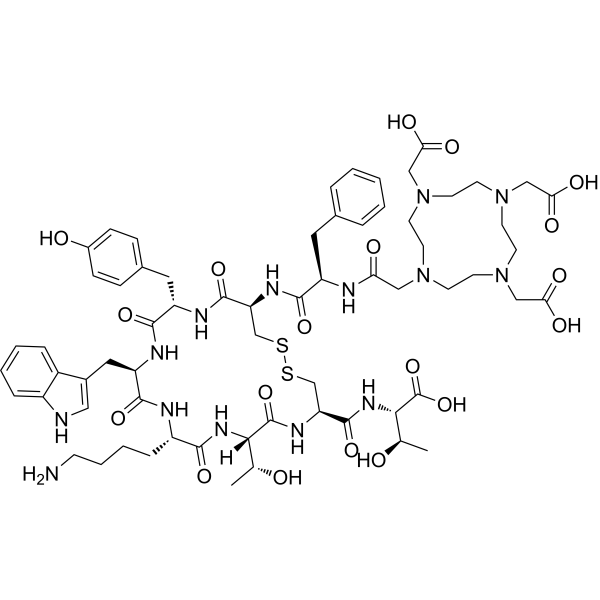
Oxodotreotide
|
Radionuclide-Drug Conjugates (RDCs)
|
Cancer
|
|
DOTATATE is a DOTA-conjugated peptide. DOTATATE can be labelled with radionuclides for positron emission tomography (PET) imaging and peptide receptor radionuclide research (PRRT) . DOTATATE can be used for the synthesis/research of Radionuclide-Drug Conjugates (RDCs).
|
-
-
- HY-147057
-
|
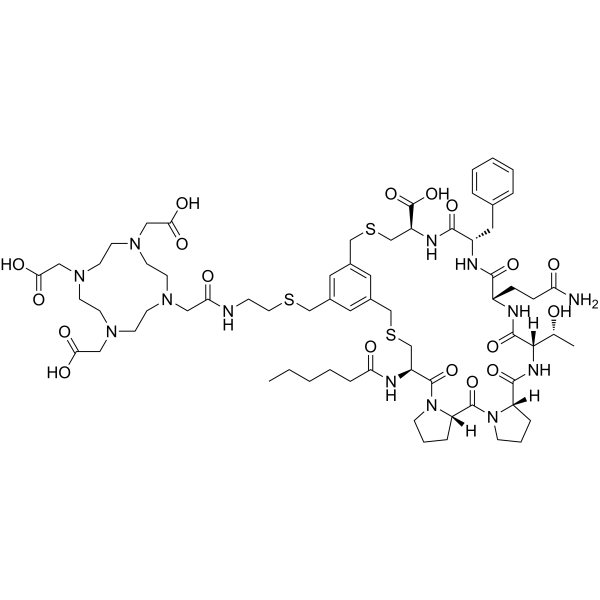
FAP-2286
|
FAP
|
Cancer
|
|
Rofapitide tetraxetan (FAP-2286) is a potent and selective FAP-binding peptide with a mean IC50 value of 2.7 nM for binding to FAP. Rofapitide tetraxetan can be labeled with radionuclides for diagnostic applications. Rofapitide tetraxetan has antitumor activity .
|
-
-
- HY-100138
-
|
|
Radionuclide-Drug Conjugates (RDCs)
ADC Linker
|
Cancer
|
|
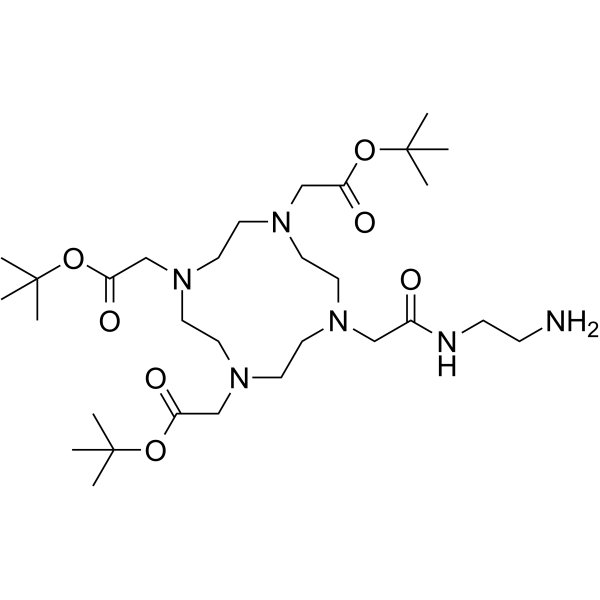
2-Aminoethyl-mono-amide-DOTA-tris(tBu ester) is a metal chelator precursor containing a DOTA macrocyclic structure. DOTA can form highly stable complexes with metal ions (such as 68Ga, 177Lu) through four nitrogen atoms and four carboxylic acid groups to mediate targeted delivery of radionuclides. The tert-butyl ester group (tBu ester) of 2-Aminoethyl-mono-amide-DOTA-tris(tBu ester) also protects the carboxylic acid group during synthesis, and forms a free carboxyl group after deprotection reaction for coupling with targeting molecules (such as antibodies, peptides). 2-Aminoethyl-mono-amide-DOTA-tris(tBu ester) may be combined with tumor pre-targeting systems through bioorthogonal reactions (such as reverse electron demand Diels-Alder reaction) to study radioactive imaging or therapy of tumor tissues, and is mainly used in tumor pre-targeting research in the field of nuclear medicine .
|
-
-
- HY-106244A
-
|
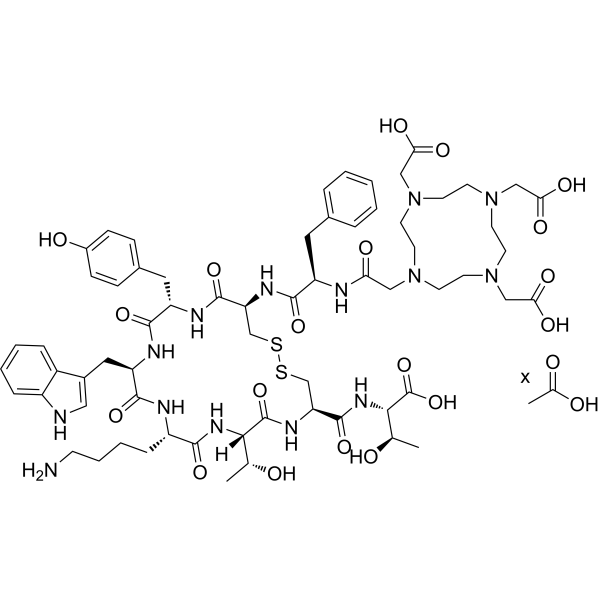
Oxodotreotide acetate
|
Radionuclide-Drug Conjugates (RDCs)
|
Cancer
|
|
DOTATATE acetate is a DOTA-conjugated peptide. DOTATATE acetate can be labelled with radionuclides for positron emission tomography (PET) imaging and peptide receptor radionuclide research (PRRT) . DOTATATE (acetate) can be used for the synthesis/research of Radionuclide-Drug Conjugates (RDCs).
|
-
-
- HY-139564
-
-
-
- HY-P10239
-
|
|
Somatostatin Receptor
Radionuclide-Drug Conjugates (RDCs)
|
Cancer
|
|
Tyr3-Octreotate is a ligand for somatostatin receptor subtype 2 (sst2), with an IC50 value of 1.3 nM against sst2 when labeled with [ 111In-DTPA], and an IC50 value of 1.6 nM against sst2 when labeled with [ 90Y-DOTA]. Radiolabeled Tyr3-Octreotate generates cell-associated radioactivity, and acts as both a tumor growth inhibitor and a tumor cytotoxic agent. When radiolabeled with 177Lu or 90Y, Tyr3-Octreotate serves as a peptide receptor radionuclide therapy (PRRT) analog. Tyr3-Octreotate can be used in studies related to pancreatic tumors .
|
-
-
- HY-173374
-
|
|
FAP
Drug Derivative
|
Cancer
|
|
DOTAGA-FAP-2286-ALB is a derivative of Rofapitide tetraxetan (HY-147057). DOTAGA-FAP-2286-ALB is a selective fibroblast activation protein (FAP) inhibitor with an IC50 value of 67.5 nM. DOTAGA-FAP-2286-ALB enhances tumor retention via albumin interaction, prolonging blood circulation and improving radiometal complex stability (e.g., with 111In and 225Ac). DOTAGA-FAP-2286-ALB is promising for research of radionuclide therapy (TRT) of FAP-positive solid tumors .
|
-
-
- HY-P10732
-
|
|
Radionuclide-Drug Conjugates (RDCs)
|
Cancer
|
|
DOTA-cyclo(RGDfK) is a radionuclide conjugate (RDC), which is capable of binding to a radionuclide. RDC has the ability to specifically target biomolecules and can be used in medical imaging or therapy .
|
-
-
- HY-175744
-
|
|
PSMA
|
Cancer
|
|
PSMA-MAL-5 is a PSMA ligand. PSMA-MAL-5 covalently binds to Cys466 of PSMA. PSMA-MAL-5 labeled with 177Lu and 225Ac has high radiostability and tumor uptake. PSMA-MAL-5 also effectively inhibits tumor growth. PSMA-MAL-5 can be used for SPECT/CT imaging and radionuclide therapy of prostate cancer .
|
-
-
- HY-170779
-
|
|
FAP
|
Cancer
|
|
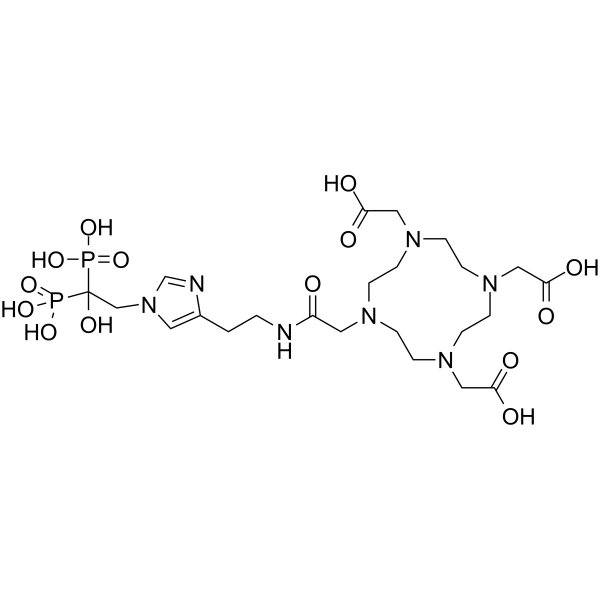
DOTA-NI-FAPI-04 is a FAP inhibitor (IC50 = 7.44 nM). By integrating FAP targeting with hypoxia-sensitive groups (nitroimidazole), DOTA-NI-FAPI-04 significantly enhances tumor uptake and retention capabilities. DOTA-NI-FAPI-04 chelates metallic isotopes (such as 68Ga and 177Lu) through DOTA to produce radioactive probes ([68Ga]Ga/DOTA-NI-FAPI-04 and [177Lu]Lu/DOTA-NI-FAPI-04), which can be used for research in tumor diagnostics and therapeutic agents. DOTA-NI-FAPI-04 holds dual targeting potential in the fields of cancer imaging, tumor microenvironment analysis, and radionuclide therapy, particularly suitable for scenarios where the tumor stroma and hypoxic regions synergistically interact .
|
-
-
- HY-W873634
-
|
TRAP-Pr
|
Radionuclide-Drug Conjugates (RDCs)
|
Cancer
|
|
TRAP-Pr is a radionuclide conjugate (RDC) that can bind to the radionuclide [68]Ga. RDCs have the ability to specifically target biomolecules and can be used in medical imaging or therapy. TRAP-Pr can be further functionalized with acetone and used in click chemistry CuAAC reactions to conjugate other labeled molecules.
|
-
-
- HY-164725
-
|
|
Radionuclide-Drug Conjugates (RDCs)
FAP
|
Cancer
|
|
FAPI-mFS is an irreversible fibroblast activation protein (FAP) inhibitor, that enhances the uptake and retention time in cancer cells through its covalent binding property for FAP. FAPI-mFS can be used for cancer imaging the therapy, when labeled with radioactive 68Ga or 177Lu . FAPI-mFS can be used for the synthesis/research of Radionuclide-Drug Conjugates (RDCs).
|
-
-
- HY-158118
-
|
|
DNA-PK
|
Cancer
|
|
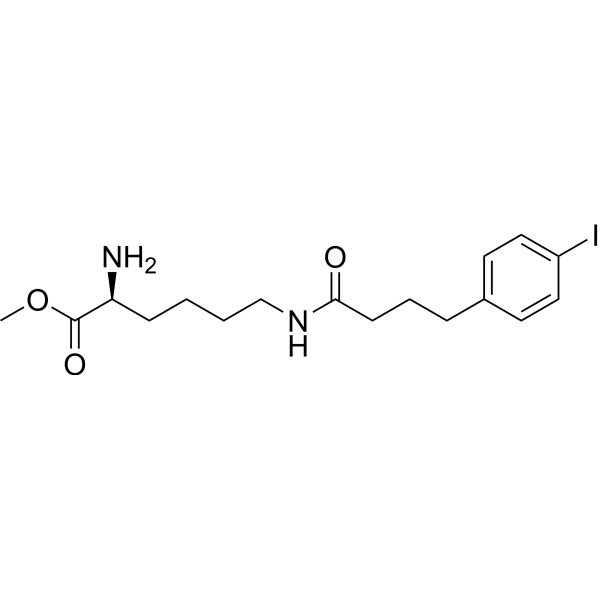
Lys(CO-C3-p-I-Ph)-OMe is a pharmacokinetic modifier (PK modifier) that can improve the PK properties of PSMA ligand molecules (such as Ac-PSMA-trillium). Lys(CO-C3-p-I-Ph)-OMe can increase the residence time of Ac-PSMA-trillium in plasma by increasing its binding capacity to albumin. Lys(CO-C3-p-I-Ph)-OMe also reduces salivary gland absorption of Ac-PSMA-trillium, potentially extending its half-life. Ac-PSMA-trillium is a suitable PSMA-targeting compound that has different biological applications after modification with different radioactive isotopes. If labeled with 111In, it can be used as DOTA chelating agent and imaging agent. Or labeled with 225Ac as a Macropa chelator for targeted radionuclide therapy (TRT) in the study of metastatic castration-resistant prostate cancer (mCRPC) .
|
-
-
- HY-175685
-
|
|
FAP
|
Cancer
|
|
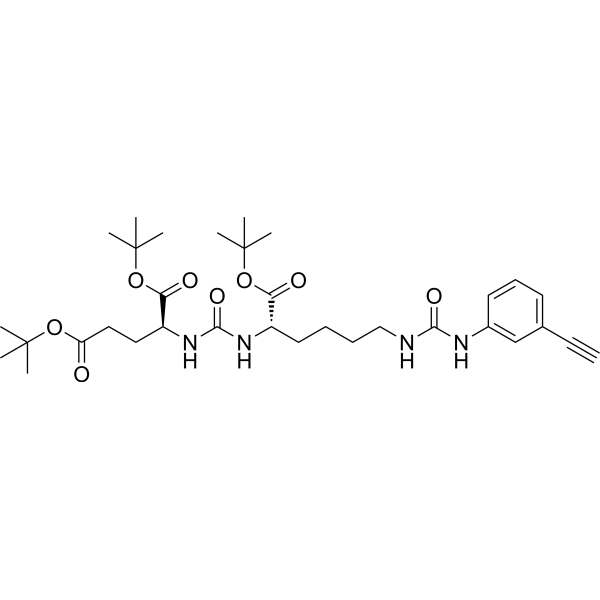
FAP-IN-7 (Compound 5b) is a FAPradionuclide therapy of cancers research .
|
-
-
- HY-W011118
-
|
|
Radionuclide-Drug Conjugates (RDCs)
|
Cancer
|
|
DTPA anhydride is a bifunctional chelator whose anhydride can react with amino groups in proteins (such as lysine residues) to form stable amide bonds. DTPA anhydride can also bind to radionuclides to synthesize radionuclide-labeled drug conjugates (RDCs). RDCs have the ability to specifically target biomolecules and can be used in medical imaging or therapy.
|
-
-
- HY-158125
-
|
|
PSMA
|
Cancer
|
|
PSMA binder-2 is a ligand for PSMA and can be used to synthesize Ac-PSMA-trillium. Ac-PSMA-trillium is a suitable PSMA-targeting compound with improved PSMA binding properties and pharmacokinetic properties. PSMA ligands have different biological applications after being modified with different radioactive isotopes. If labeled with 111In, it can be used as DOTA chelating agent and imaging agent. Or labeled with 225Ac as a Macropa chelator for targeted radionuclide therapy (TRT) in the study of metastatic castration-resistant prostate cancer (mCRPC) .
|
-
-
- HY-164653
-
|
|
Radionuclide-Drug Conjugates (RDCs)
|
Cancer
|
|
DOTAEt is a radionuclide conjugate (RDC), which is capable of binding to a radionuclide. RDC has the ability to specifically target biomolecules and can be used in medical imaging or therapy .
|
-
-
- HY-164590
-
|
|
Radionuclide-Drug Conjugates (RDCs)
|
Cancer
|
|
BCN-NODAGA is a radionuclide conjugate (RDC), which is capable of binding to a radionuclide. RDC has the ability to specifically target biomolecules and can be used in medical imaging or therapy .
|
-
-
- HY-P10730
-
|
|
Radionuclide-Drug Conjugates (RDCs)
|
Cancer
|
|
DOTA-Lanreotide is a radionuclide conjugate (RDC), which is capable of binding to a radionuclide. RDC has the ability to specifically target biomolecules and can be used in medical imaging or therapy .
|
-
-
- HY-164594
-
|
|
Radionuclide-Drug Conjugates (RDCs)
|
Cancer
|
|
TA-DOTA-GA is a radionuclide conjugate (RDC), which is capable of binding to a radionuclide. RDC has the ability to specifically target biomolecules and can be used in medical imaging or therapy .
|
-
-
- HY-W087187G
-
|
|
Radionuclide-Drug Conjugates (RDCs)
|
Cancer
|
|
DOTAGA-anhydride (GMP) is DOTAGA-anhydride (HY-W087187) produced by using GMP guidelines. GMP small molecules works appropriately as an auxiliary reagent for cell therapy manufacture. DOTAGA-anhydride is a DOTA-based metal chelator that can bind to radionuclides and is used to prepare radionuclide drug conjugates (RDCs). DOTAGA-anhydride has been successfully used for labeling antibodies (e.g., Trastuzumab (HY-P9907)). DOTAGA-anhydride can be used for the synthesis of a bimodal tag for Single-photon emission computed tomography (SPECT) or PET/optical imaging .
|
-
-
- HY-159771
-
|
|
FAP
|
Cancer
|
|
FAP6-19 is a fibroblast activation protein (FAP) targeting radioligand with a Kd of 18.2 nM. FAP6-19 selectively delivers therapeutic radioactive nuclides (such as 177Lu) to the tumor site by targeting the overexpressed FAP protein in the tumor microenvironment, achieving precise killing of cancer cells while minimizing radiation damage to healthy tissues. FAP6-19 exhibits extremely high total cellular uptake and good intracellular retention ability in HT1080 cells. After being labeled with 111In, FAP6-19 produced extremely high tumor/kidney and tumor/liver dose ratios in the mouse model with 4T1 tumors. FAP6-19 can be used in the research of solid tumors expressing FAP.
|
-
-
- HY-164589
-
|
|
Radionuclide-Drug Conjugates (RDCs)
|
Cancer
|
|
NOPO is a radionuclide conjugate (RDC), which is capable of binding to a radionuclide. RDC has the ability to specifically target biomolecules and can be used in medical imaging or therapy .
|
-
-
- HY-164599
-
|
|
Radionuclide-Drug Conjugates (RDCs)
|
Cancer
|
|
TA-DOTA is a radionuclide conjugate (RDC), which is capable of binding to a radionuclide. RDC has the ability to specifically target biomolecules and can be used in medical imaging or therapy .
|
-
-
- HY-P10731
-
|
|
Radionuclide-Drug Conjugates (RDCs)
|
Cancer
|
|
DOTA-NAPamide is a radionuclide conjugate (RDC), which is capable of binding to a radionuclide. RDC has the ability to specifically target biomolecules and can be used in medical imaging or therapy .
|
-
-
- HY-164592
-
|
|
Radionuclide-Drug Conjugates (RDCs)
|
Cancer
|
|
DTPA-tetra(tBu)ester is a radionuclide conjugate (RDC), which is capable of binding to a radionuclide. RDC has the ability to specifically target biomolecules and can be used in medical imaging or therapy .
|
-
-
- HY-164603
-
|
|
Radionuclide-Drug Conjugates (RDCs)
|
Cancer
|
|
3p-C-NOTA is a radionuclide conjugate (RDC), which is capable of binding to a radionuclide. RDC has the ability to specifically target biomolecules and can be used in medical imaging or therapy .
|
-
-
- HY-164596
-
|
|
Radionuclide-Drug Conjugates (RDCs)
|
Cancer
|
|
THP(Bz3)-Glu is a radionuclide conjugate (RDC), which is capable of binding to a radionuclide. RDC has the ability to specifically target biomolecules and can be used in medical imaging or therapy .
|
-
-
- HY-164654
-
|
|
Radionuclide-Drug Conjugates (RDCs)
|
Cancer
|
|
DOTA-PEG10-azide is a radionuclide conjugate (RDC), which is capable of binding to a radionuclide. RDC has the ability to specifically target biomolecules and can be used in medical imaging or therapy .
|
-
-
- HY-W586475
-
|
|
Radionuclide-Drug Conjugates (RDCs)
|
Cancer
|
|
Fluorescein-triazole-PEG5-DOTA is a radionuclide conjugate (RDC), which is capable of binding to a radionuclide. RDC has the ability to specifically target biomolecules and can be used in medical imaging or therapy .
|
-
-
- HY-164593
-
|
|
Radionuclide-Drug Conjugates (RDCs)
|
Cancer
|
|
NH-CH2-CH2-DOTAM is a radionuclide conjugate (RDC), which is capable of binding to a radionuclide. RDC has the ability to specifically target biomolecules and can be used in medical imaging or therapy .
|
-
-
- HY-164656
-
|
|
Drug-Linker Conjugates for ADC
|
Cancer
|
|
DOTA-tris(acid)-amido-PEG24-amido-PEG24-DSPE is a radionuclide conjugate (RDC), which is capable of binding to a radionuclide. RDC has the ability to specifically target biomolecules and can be used in medical imaging or therapy .
|
-
-
- HY-164588
-
|
|
Radionuclide-Drug Conjugates (RDCs)
|
Cancer
|
|
NH2-PEG4-NODA-GA is a NODA-type metal chelator that can bind to radionuclides to prepare radionuclide drug conjugates (RDCs). RDCs have the ability to specifically target biomolecules and can be used in medical imaging or therapy.
|
-
-
- HY-185167
-
|
|
|
Cancer
|
|
PSMA-1-DOTA is a prostate-specific membrane antigen (PSMA) binder with high affinity, enables targeted radionuclide delivery for imaging and therapy. PSMA-1-DOTA acts as a tumor growth inhibitor that reduces growth of PSMA-expressing prostate cancer tumors .
|
-
-
- HY-153709
-
|
IPN-01087
|
Neurokinin Receptor
|
Cancer
|
|
Zalsenertant tetraxetan (IPN-01087) is a DOTA-conjugated antagonist of the neurohypophyseal hormone receptor subtype 1 (NTSR1). Zalsenertant tetraxetan is labeled with the radioactive isotope Lu-177 (177Lu), which can be used for molecular imaging to identify potential responders. Zalsenertant tetraxetan can be used in the radiotherapy research of solid tumors .
|
-
-
- HY-100138R
-
|
|
Radionuclide-Drug Conjugates (RDCs)
ADC Linker
Reference Standards
|
Cancer
|
|
2-Aminoethyl-mono-amide-DOTA-tris(tBu ester) (Standard) is the analytical standard of 2-Aminoethyl-mono-amide-DOTA-tris(tBu ester) (HY-100138). This product is intended for research and analytical applications. 2-Aminoethyl-mono-amide-DOTA-tris(tBu ester) is a metal chelator precursor containing a DOTA macrocyclic structure. DOTA can form highly stable complexes with metal ions (such as 68Ga, 177Lu) through four nitrogen atoms and four carboxylic acid groups to mediate targeted delivery of radionuclides. The tert-butyl ester group (tBu ester) of 2-Aminoethyl-mono-amide-DOTA-tris(tBu ester) also protects the carboxylic acid group during synthesis, and forms a free carboxyl group after deprotection reaction for coupling with targeting molecules (such as antibodies, peptides). 2-Aminoethyl-mono-amide-DOTA-tris(tBu ester) may be combined with tumor pre-targeting systems through bioorthogonal reactions (such as reverse electron demand Diels-Alder reaction) to study radioactive imaging or therapy of tumor tissues, and is mainly used in tumor pre-targeting research in the field of nuclear medicine .
|
-
-
- HY-P11591
-
|
PSMA-DOTA-PEI2
|
Radionuclide-Drug Conjugates (RDCs)
PSMA
|
Cancer
|
|
PDI2 (PSMA-DOTA-PEI2) is a prostate-specific membrane antigen (PSMA) ligand that acts as a tumor retention agent, renal uptake reducer, imaging agent and antitumor agent, applicable in SPECT diagnostic imaging and radiotheranostics. PDI2 specifically binds to PSMA on prostate cancer cells, enters cells via clathrin-dependent endocytosis, and exhibits higher tumor retention rate and lower renal uptake level. PDI2 is applicable in research related to prostate cancer and castration-resistant metastatic prostate cancer .
|
-
| Cat. No. |
Product Name |
Type |
-
- HY-W087187G
-
|
|
Fluorescent Dyes
|
|
DOTAGA-anhydride (GMP) is DOTAGA-anhydride (HY-W087187) produced by using GMP guidelines. GMP small molecules works appropriately as an auxiliary reagent for cell therapy manufacture. DOTAGA-anhydride is a DOTA-based metal chelator that can bind to radionuclides and is used to prepare radionuclide drug conjugates (RDCs). DOTAGA-anhydride has been successfully used for labeling antibodies (e.g., Trastuzumab (HY-P9907)). DOTAGA-anhydride can be used for the synthesis of a bimodal tag for Single-photon emission computed tomography (SPECT) or PET/optical imaging .
|
| Cat. No. |
Product Name |
Type |
-
- HY-W087187G
-
|
|
Biochemical Assay Reagents
|
|
DOTAGA-anhydride (GMP) is DOTAGA-anhydride (HY-W087187) produced by using GMP guidelines. GMP small molecules works appropriately as an auxiliary reagent for cell therapy manufacture. DOTAGA-anhydride is a DOTA-based metal chelator that can bind to radionuclides and is used to prepare radionuclide drug conjugates (RDCs). DOTAGA-anhydride has been successfully used for labeling antibodies (e.g., Trastuzumab (HY-P9907)). DOTAGA-anhydride can be used for the synthesis of a bimodal tag for Single-photon emission computed tomography (SPECT) or PET/optical imaging .
|
| Cat. No. |
Product Name |
Target |
Research Area |
-
- HY-106244
-
|
Oxodotreotide
|
Radionuclide-Drug Conjugates (RDCs)
|
Cancer
|
|
DOTATATE is a DOTA-conjugated peptide. DOTATATE can be labelled with radionuclides for positron emission tomography (PET) imaging and peptide receptor radionuclide research (PRRT) . DOTATATE can be used for the synthesis/research of Radionuclide-Drug Conjugates (RDCs).
|
-
- HY-106244A
-
|
Oxodotreotide acetate
|
Radionuclide-Drug Conjugates (RDCs)
|
Cancer
|
|
DOTATATE acetate is a DOTA-conjugated peptide. DOTATATE acetate can be labelled with radionuclides for positron emission tomography (PET) imaging and peptide receptor radionuclide research (PRRT) . DOTATATE (acetate) can be used for the synthesis/research of Radionuclide-Drug Conjugates (RDCs).
|
-
- HY-P10239
-
|
|
Somatostatin Receptor
Radionuclide-Drug Conjugates (RDCs)
|
Cancer
|
|
Tyr3-Octreotate is a ligand for somatostatin receptor subtype 2 (sst2), with an IC50 value of 1.3 nM against sst2 when labeled with [ 111In-DTPA], and an IC50 value of 1.6 nM against sst2 when labeled with [ 90Y-DOTA]. Radiolabeled Tyr3-Octreotate generates cell-associated radioactivity, and acts as both a tumor growth inhibitor and a tumor cytotoxic agent. When radiolabeled with 177Lu or 90Y, Tyr3-Octreotate serves as a peptide receptor radionuclide therapy (PRRT) analog. Tyr3-Octreotate can be used in studies related to pancreatic tumors .
|
-
- HY-164725
-
|
|
Radionuclide-Drug Conjugates (RDCs)
FAP
|
Cancer
|
|
FAPI-mFS is an irreversible fibroblast activation protein (FAP) inhibitor, that enhances the uptake and retention time in cancer cells through its covalent binding property for FAP. FAPI-mFS can be used for cancer imaging the therapy, when labeled with radioactive 68Ga or 177Lu . FAPI-mFS can be used for the synthesis/research of Radionuclide-Drug Conjugates (RDCs).
|
-
- HY-159771
-
|
|
FAP
|
Cancer
|
|
FAP6-19 is a fibroblast activation protein (FAP) targeting radioligand with a Kd of 18.2 nM. FAP6-19 selectively delivers therapeutic radioactive nuclides (such as 177Lu) to the tumor site by targeting the overexpressed FAP protein in the tumor microenvironment, achieving precise killing of cancer cells while minimizing radiation damage to healthy tissues. FAP6-19 exhibits extremely high total cellular uptake and good intracellular retention ability in HT1080 cells. After being labeled with 111In, FAP6-19 produced extremely high tumor/kidney and tumor/liver dose ratios in the mouse model with 4T1 tumors. FAP6-19 can be used in the research of solid tumors expressing FAP.
|
-
- HY-P11591
-
|
PSMA-DOTA-PEI2
|
Radionuclide-Drug Conjugates (RDCs)
PSMA
|
Cancer
|
|
PDI2 (PSMA-DOTA-PEI2) is a prostate-specific membrane antigen (PSMA) ligand that acts as a tumor retention agent, renal uptake reducer, imaging agent and antitumor agent, applicable in SPECT diagnostic imaging and radiotheranostics. PDI2 specifically binds to PSMA on prostate cancer cells, enters cells via clathrin-dependent endocytosis, and exhibits higher tumor retention rate and lower renal uptake level. PDI2 is applicable in research related to prostate cancer and castration-resistant metastatic prostate cancer .
|
| Cat. No. |
Product Name |
Target |
Research Areas |
Chemical Structure |
-
- HY-W087187G
-
|
|
Radionuclide-Drug Conjugates (RDCs)
|
Cancer
|
|
DOTAGA-anhydride (GMP) is DOTAGA-anhydride (HY-W087187) produced by using GMP guidelines. GMP small molecules works appropriately as an auxiliary reagent for cell therapy manufacture. DOTAGA-anhydride is a DOTA-based metal chelator that can bind to radionuclides and is used to prepare radionuclide drug conjugates (RDCs). DOTAGA-anhydride has been successfully used for labeling antibodies (e.g., Trastuzumab (HY-P9907)). DOTAGA-anhydride can be used for the synthesis of a bimodal tag for Single-photon emission computed tomography (SPECT) or PET/optical imaging .
|
-
Your information is safe with us. * Required Fields.
Inquiry Information
- Product Name:
- Cat. No.:
- Quantity:
- MCE Japan Authorized Agent:

