29 Results for "

rat nAChR

" in MedChemExpress (MCE) Product Catalog:
Products (29)

29 Results for "rat nAChR" in MCE Product Catalog:

  • Targets Recommended:
1
1 Cited Publications
Cat. No.: HY-13225B
Purity:  ≥95.0%
Synonyms: RJR-2403 hemioxalate; (E)-Metanicotine hemioxalate
Target:  

nAChR

Research Areas:  

Neurological Disease

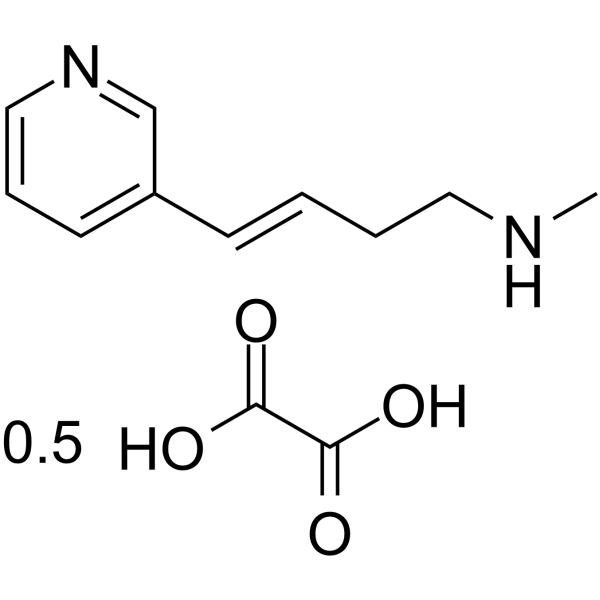
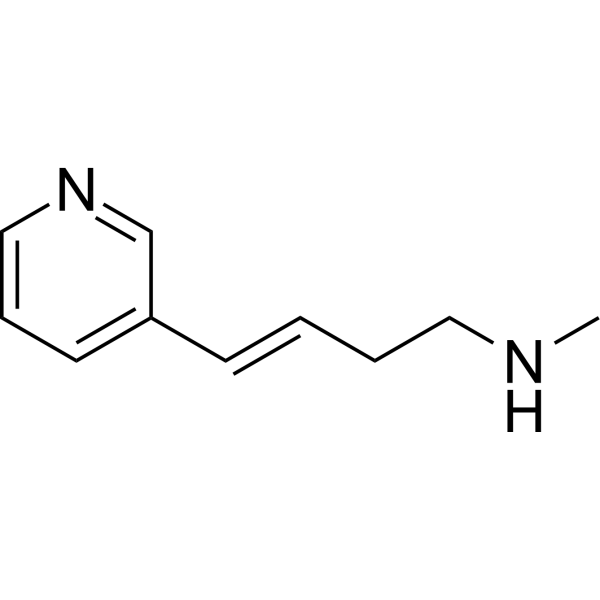
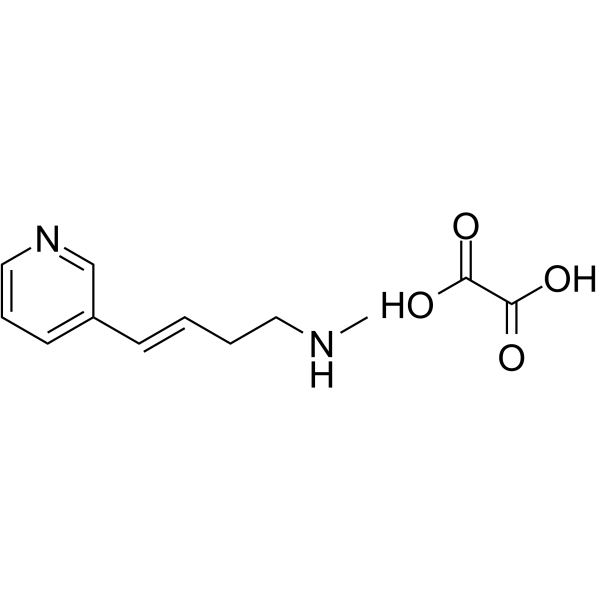
Rivanicline (RJR-2403) hemioxalate is a neuronal nicotinic receptor agonist. Rivanicline hemioxalate is highly selective for the rat brain cortex nAChRs (Ki = 26 nM, EC50 of 732 nM) and α4β2 subtype (Ki = 26 nM, EC50 = 16 μM). Rivanicline hemioxalate can significantly restore the learning impairment and cognitive dysfunction. Rivanicline hemioxalate can be used for the study of neurodegenerative diseases (such as schizophrenia or Alzheimer's disease) .
loading...
    loading...
Cat. No.: HY-172236
CAS No.: 1020634-41-6
Synonyms: BNC210; IW-2143
Target:  

nAChR

Research Areas:  

Neurological Disease

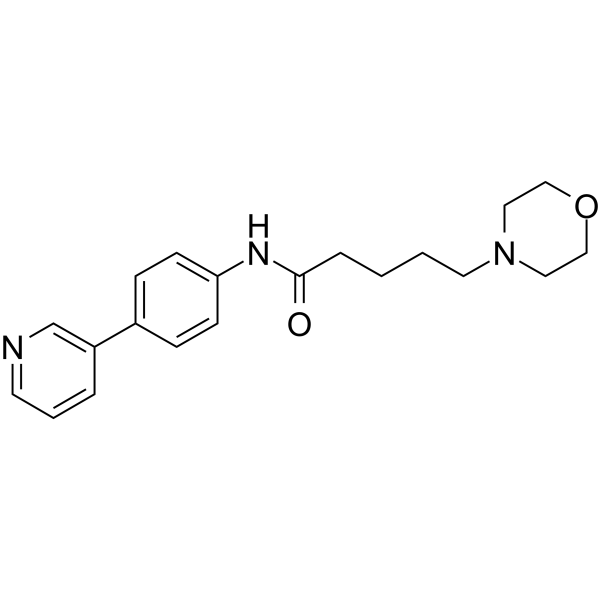
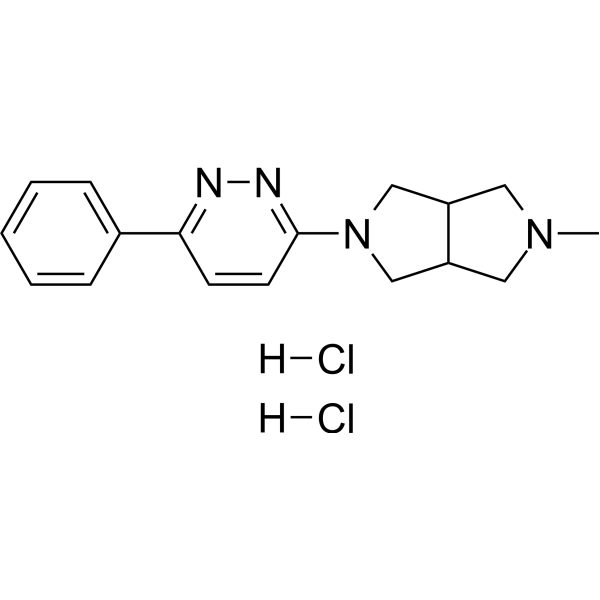
Soclenicant (BNC210) is an orally active α7 nAChR negative alteration modulator (NAM) with no apparent side effects. Soclenicant exhibits acute anxiolytic activity in rodent models of anxiety. Soclenicant inhibits rat and human α7 nAChR currents (in stably transfected cell lines) induced by acetylcholine, nicotine, choline, and the a7-specific agonist PNU-282987 (HY-12560A) with IC50 values in the range of 1.2 to 3 μM. Soclenicant can be used in studies of anxiety, trauma, and stressor-related disorders .
loading...
    loading...
Cat. No.: HY-110160
CAS No.: 161416-61-1
Purity:  99.06%
Synonyms: ABT-089 dihydrochloride
Target:  

nAChR

Research Areas:  

Neurological Disease

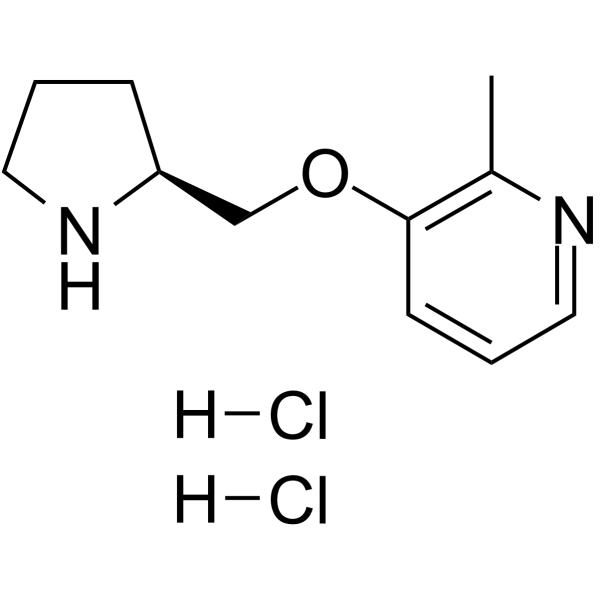
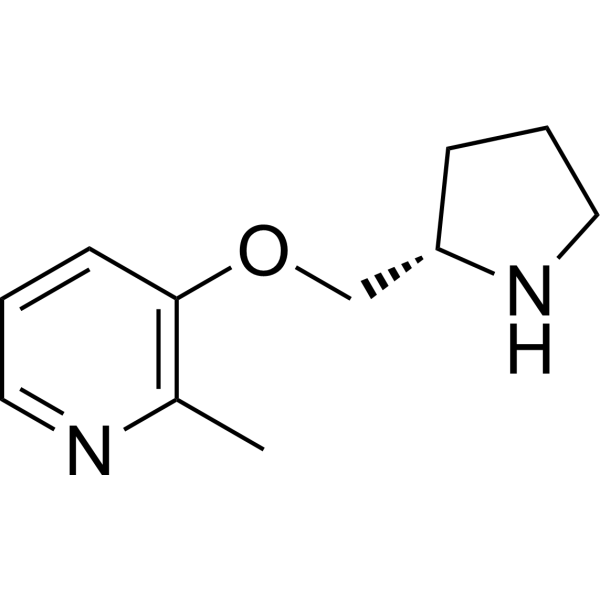
Pozanicline dihydrochloride (ABT-089 dihydrochloride) is an orally bioavailable nicotinic acetylcholine receptor (nAChR) agonist with a Ki of 16.7 nM for binding to [ 3H]cytisine sites . Pozanicline is an α4β2-selective nAChR agonist, which binds to rat brain α4β2 nAChR with a Ki of 17 nM while binding to α7 nAChR is insignificant .
loading...
    loading...
Cat. No.: HY-N8249
CAS No.: 168706-29-4
Cynandione A is an acetophenone that can be isolated from Cynanchum Wilfordii Radix. Cynandione A protects hepatocytes and cortical neurons from toxicity and improves neurological deficits in a rat model of cerebral ischemia. On the other hand, cynandione A has significant anti-inflammatory effects and inhibits inflammation by activating macrophage α7 nAChR and IL-10 expression .
loading...
    loading...
Cat. No.: HY-160959
CAS No.: 946074-35-7
Target:  

nAChR

Research Areas:  

Neurological Disease

AN317 is a selective agonist for α6β2-containing nicotinic acetylcholine receptor (nAChR) with Ki of 6.2 nM and 4.1 nM, for α6/α3β2β3 receptor and α4β2 receptor, respectively. AN317 induces dopamine release in the synaptosomes of the rat striatum, enhances dopaminergic neuronal activity in substantia nigra, and exhibits protective efficacy to rat neurons against dopamine neurotoxin MPP +. AN317 exhibits good pharmacokinetic characteristics in rats. AN317 penetrates the blood-brain barrier (BB) .
loading...
    loading...
Cat. No.: HY-W013113
CAS No.: 52829-07-9
Research Areas:  

Neurological Disease

BTMPS is a nicotine receptor (nAChR) antagonist that can lessen the negative effects of morphine on rats .
loading...
    loading...
Cat. No.: HY-107686
CAS No.: 1217837-17-6
Purity:  98.97%
Synonyms: 5-I A-85380 dihydrochloride
Target:  

nAChR

Research Areas:  

Neurological Disease

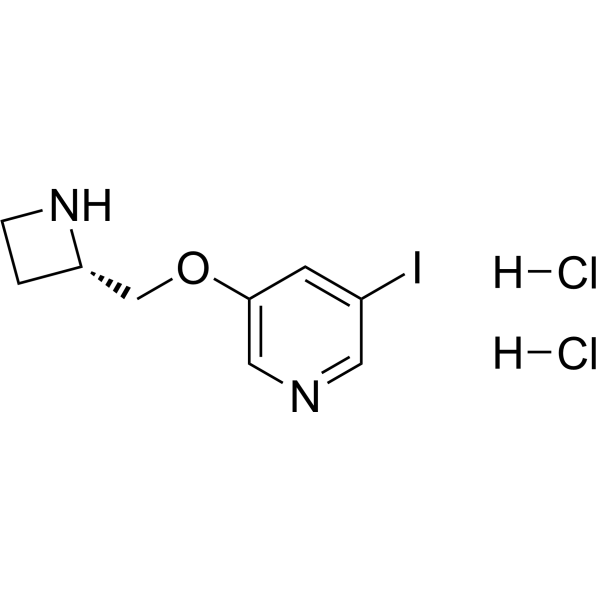
5-Iodo-A-85380 dihydrochloride is a selective ligand of nAChR. 5-Iodo-A-85380 dihydrochloride binds to α4β2 nAChRs in rat and human brain with Kds of 12 and 14 pM,respectively .
loading...
    loading...
Cat. No.: HY-19411
CAS No.: 446031-79-4
Target:  

nAChR

Research Areas:  

Neurological Disease

SSR180711 hydrochloride is an orally active, selective and reversible α7 acetylcholine nicotinic receptor (n-AChRs) partial agonist. SSR180711 hydrochloride can act on rat α7 n-AChR (Ki=22 nM; IC50=30 nM) and human α7 n-AChR (Ki=14 nM; IC50=18 nM). SSR180711 hydrochloride increases glutamatergic neurotransmission, ACh release and long-term potentiation (LTP) in the hippocampus .
loading...
    loading...
Cat. No.: HY-138953
CAS No.: 188895-96-7
Target:  

nAChR

Research Areas:  

Neurological Disease

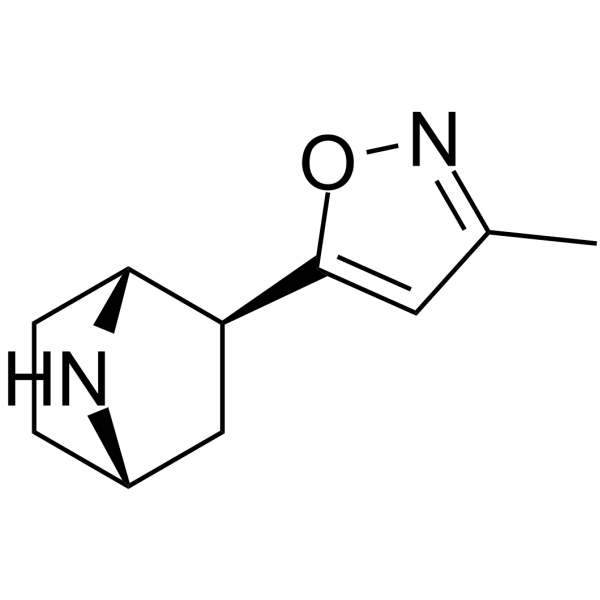
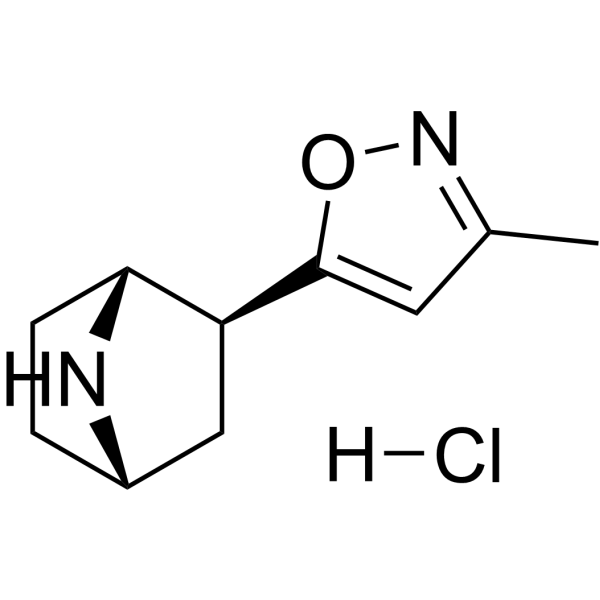
Epiboxidine is a potent and selective neural nAChR agonist with Kis of 0.46 nM and 1.2 nM for rat and human α4β2 nAChRs, respectively. Epiboxidine is a methylisoxazole analog of the alkaloid Epibatidine, and is also an analog of another nAChR agonist, ABT 418 .
loading...
    loading...
Cat. No.: HY-107678
CAS No.: 874450-44-9
Purity:  98.45%
Synonyms: WAY-317538
Target:  

nAChR

Research Areas:  

Neurological Disease

SEN 12333 (WAY-317538) is a potent, selective and orally active α7 nAChR agonist. SEN12333 displays high affinity for the rat α7 nAChRs expressed in GH4C1 cells (K>i=260 nM) and acts as full agonist in functional Ca 2+ flux studies (EC50=1.6 μM). SEN 12333 is used for AD and schizophrenia research .
loading...
    loading...
Cat. No.: HY-13225A
CAS No.: 15585-43-0
Synonyms: RJR-2403; (E)-Metanicotine
Target:  

nAChR

Research Areas:  

Neurological Disease

Rivanicline (RJR-2403) is a neuronal nicotinic receptor agonist. Rivanicline is highly selective for the rat brain cortex nAChRs (Ki = 26 nM, EC50 of 732 nM) and α4β2 subtype (Ki = 26 nM, EC50 = 16 μM). Rivanicline can significantly restore the learning impairment and cognitive dysfunction. Rivanicline can be used for the study of neurodegenerative diseases (such as schizophrenia or Alzheimer's disease) .
loading...
    loading...
Cat. No.: HY-169742
CAS No.: 140111-52-0
Target:  

nAChR mAChR

Research Areas:  

Neurological Disease

Epibatidine is a nicotinic acetylcholine receptor (nAChR) agonist, with an IC50 of 70 pM, a Ki of 43 pM for rat nAChR, a Kd range of 1.5-60 nM for human α7 nAChR, a Kd of 15 nM for rat α4β2 nAChR, and a Kd of 0.5 μM for rat α3β4 nAChR. Epibatidine selectively activates central nAChRs and binds to muscarinic acetylcholine receptors (mAChR). It is used in research on pain, Alzheimer's disease, Parkinson's disease, and schizophrenia-related pain .
loading...
    loading...
Cat. No.: HY-10554
CAS No.: 1204607-09-9
Target:  

nAChR

Research Areas:  

Neurological Disease

WYE-103914 is an orally active α7 nAChR (EC50 = 0.49 µM for rat α7 nAChR, EC50 = 0.57 µM for human α7 nAChR) agonist. WYE-103914 exhibits the ability to enhance memory in multiple cognitive models. WYE-103914 is used in combination with antipsychotic drugs. WYE-103914 can be used for research on schizophrenia .
loading...
    loading...
Cat. No.: HY-14565
CAS No.: 161417-03-4
Synonyms: ABT-089
Target:  

nAChR

Research Areas:  

Neurological Disease

Pozanicline (ABT-089) selectively activate neuronal nicotinic acetylcholine receptor (nAChR) subtypes, is a novel cholinergic agent that is a partial agonist at α4β2* nAChRs (Ki=16 nM) and shows high selectivity for α6β2* and α4α5β2 nAChR subtypes, the binding affinity (Ki, rat) for Pozanicline to [ 3H] cytisine sites is 16.7 nM. Pozanicline reverses nicotine withdrawal-induced cognitive deficits, may be an effective component of novel therapeutic strategies for nicotine addiction .
loading...
    loading...
Cat. No.: HY-P10898
CAS No.: 2900996-95-2
Research Areas:  

Neurological Disease

GeX-2 is a truncated analogue of αO-conotoxin. GeX-2 activates GABAB receptor. GeX-2 inhibits α9α10 nAChR and CaV2.2 channels. GeX-2 alleviates pain in the rat model of chronic constriction injury .
loading...
    loading...
Cat. No.: HY-13225
CAS No.: 220662-95-3
Synonyms: RJR-2403 oxalate; (E)-Metanicotine oxalate
Target:  

nAChR

Research Areas:  

Neurological Disease

Rivanicline (RJR-2403) oxalate is a neuronal nicotinic receptor agonist. Rivanicline oxalate is highly selective for the rat brain cortex nAChRs (Ki = 26 nM, EC50 of 732 nM) and α4β2 subtype (Ki = 26 nM, EC50 = 16 μM). Rivanicline oxalate can significantly restore the learning impairment and cognitive dysfunction. Rivanicline oxalate can be used for the study of neurodegenerative diseases (such as schizophrenia or Alzheimer's disease) .
loading...
    loading...
Cat. No.: HY-59201A
CAS No.: 848591-90-2
A-582941 dihydrochloride is a selective, orally active, blood-brain barrier-permeable α7 nAChR agonist, with Ki values of 10.8 nM and 17 nM in rat brain and human frontal cortex, respectively. A-582941 dihydrochloride exhibits agonistic activity at 5-HT3 receptors, with a Ki of 150 nM. A-582941 dihydrochloride triggers phosphorylation of ERK1/2 and CREB, inhibits GSK-3β via Ser-9 phosphorylation, increases acetylcholine release, induces the expression of Arc and c-Fos, activates brain regions associated with working memory and attention, and reduces cell death caused by nerve growth factor (NGF) deprivation. A-582941 dihydrochloride is applicable for the research of Alzheimer's disease and schizophrenia .
loading...
    loading...
Cat. No.: HY-138953A
CAS No.: 862909-67-9
Target:  

nAChR

Research Areas:  

Neurological Disease

Epiboxidine hydrochloride is a potent and selective neural nAChR agonist with Kis of 0.46 nM and 1.2 nM for rat and human α4β2 nAChRs, respectively. Epiboxidine hydrochloride is a methylisoxazole analog of the alkaloid Epibatidine, and is also an analog of another nAChR agonist, ABT 418 .
loading...
    loading...
Cat. No.: HY-118751
CAS No.: 17606-31-4
Synonyms: Bancol
Target:  

nAChR

Research Areas:  

Others Neurological Disease

Bensultap (Bancol) is an insecticide, which can control Colorado beetle and some other insect pests. Bensultap is a modulator for nicotinic acetylcholine receptor (nAChR), and exhibits mild and temporary neuromodulatory efficacy on rat nervous system .
loading...
    loading...
Cat. No.: HY-13225H
Synonyms: RJR-2403 hydrochloride; Metanicotine hydrochloride
Target:  

nAChR

Research Areas:  

Neurological Disease

Rivanicline (RJR-2403) hydrochloride is a neuronal nicotinic receptor agonist. Rivanicline hydrochloride is highly selective for the rat brain cortex nAChRs (Ki = 26 nM, EC50 of 732 nM) and α4β2 subtype (Ki = 26 nM, EC50 = 16 μM). Rivanicline hydrochloride can significantly restore the learning impairment and cognitive dysfunction. Rivanicline hydrochloride can be used for the study of neurodegenerative diseases (such as schizophrenia or Alzheimer's disease) .
loading...
    loading...

