

1. Search Result
Search Result
Results for "

rat striatal

" in MedChemExpress (MCE) Product Catalog:

24

Inhibitors & Agonists

3

Peptides

Cat. No. Product Name Target Research Areas Chemical Structure
  • HY-10435A
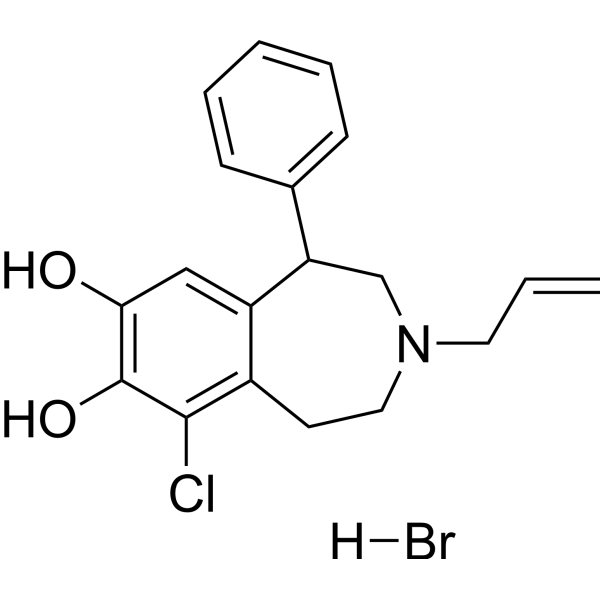
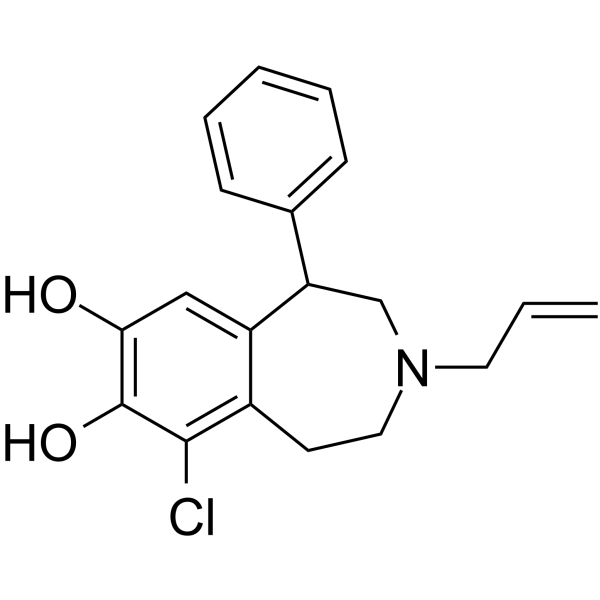
    SKF-82958 hydrobromide
    4 Publications Verification

    (±)-SKF-82958 hydrobromide; Chloro-APB hydrobromide

    Dopamine Receptor Neurological Disease
    SKF-82958 ((±)-SKF 82958) hydrobromide is a dopamine D1 receptor full agonist (K0.5=4 nM), displays selective for D1 over D2 receptors (K0.5=73 nM). SKF-82958 hydrobromide induces dopamine D1 receptor-dependent adenylate cyclase activity in rat striatal membranes (EC50=491 nM) .
    SKF-82958 hydrobromide
  • HY-B0188
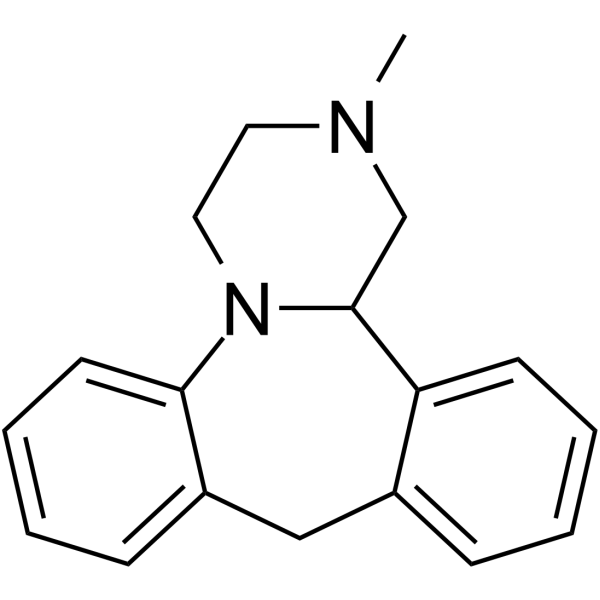
    Mianserin
    1 Publications Verification

    Mianserine

    Histamine Receptor Opioid Receptor ERK p38 MAPK Neurological Disease
    Mianserin (Mianserine) is an orally active H1 receptor antagonist. Mianserin can activate κ-opioid receptor and octopamine receptor. Mianserin increases ERK1/2 and CREB phosphorylation, and antagonizes full κ-opioid agonist and Dynorphin A (HY-P1333)-induced MAPK phosphorylation. Mianserin modulates social and exploratory behaviour, raises electroconvulsive thresholds. Mianserin can be used for the research of neurological disease, such as depression and epilepsy .
    Mianserin
  • HY-145512

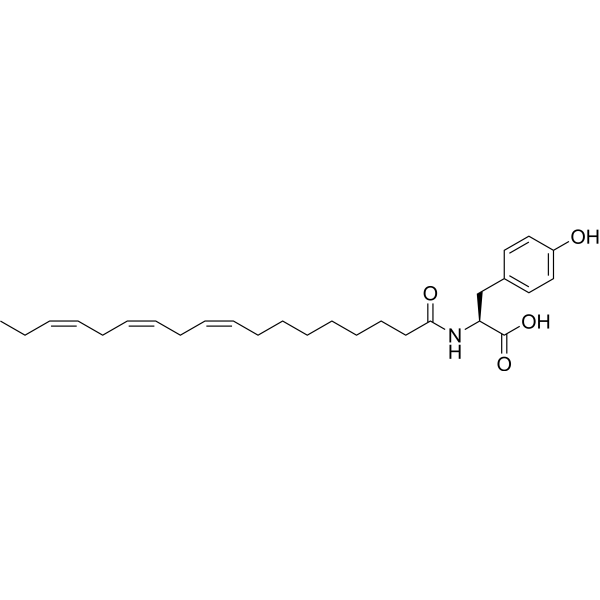
    NLT

    Dopamine Receptor Neurological Disease
    N-(α-Linolenoyl) tyrosine (NLT) is a dopaminergic agonist capable of crossing the blood-brain barrier. N-(α-Linolenoyl) tyrosine increases the level, turnover rate and release amount of dopamine in the striatum. N-(α-Linolenoyl) tyrosine modulates rotational behavior in a rat model with unilateral striatal injury and alleviates excessive blinking symptoms in models induced by dopamine-depleting agents. N-(α-Linolenoyl) tyrosine can be used for research on Parkinson's disease and idiopathic blepharospasm .
    N-(α-Linolenoyl) tyrosine
  • HY-107969

    Dopamine Receptor COX NO Synthase Neurological Disease Cancer
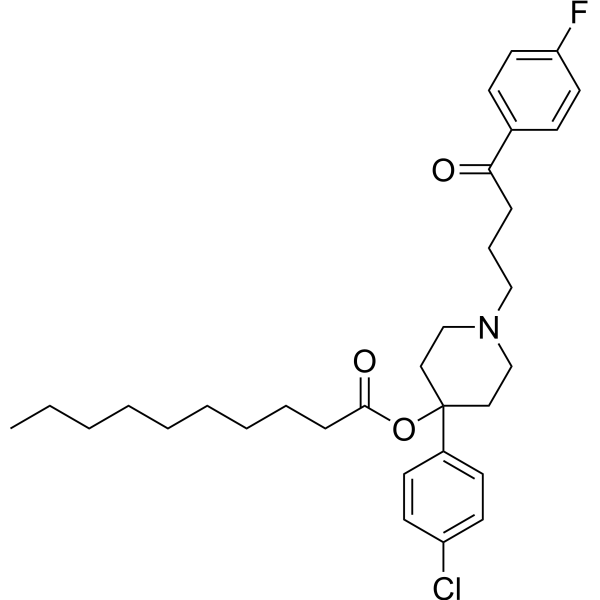
    Haloperidol decanoate is a depot preparation of haloperidol, a commonly used butyrophenone derivative with antipsychotic activity. Haloperidol decanoate can increase the striatal D2 receptor in rat. Haloperidol decanoate can improve conditions of psychoses (mainly schizophrenia). Haloperidol decanoate can lead to increased accumulation of the dopamine metabolites homo-vanillic acid. Haloperidol decanoate can reduce intestinal transport, increase gastric emptying and reduce acid output in rat model .
    Haloperidol decanoate
  • HY-106584

    Clospipramine

    Drug Derivative Dopamine Receptor 5-HT Receptor Neurological Disease
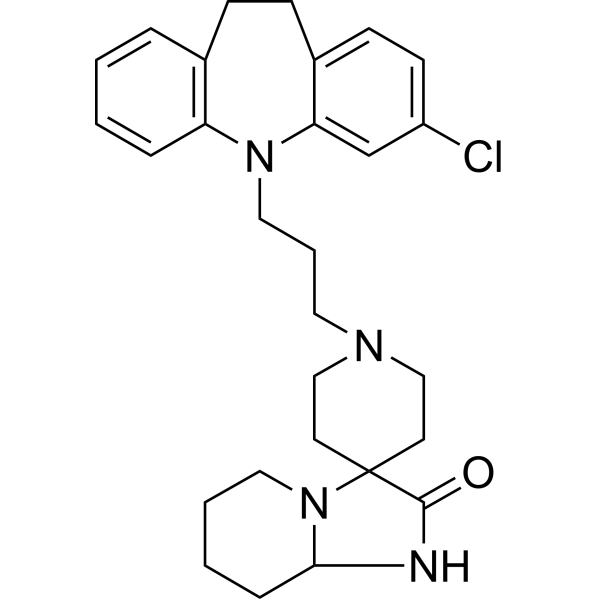
    Mosapramine (Clospipramine) is an orally active antipsychotic agent and one of the metabolites of Clocapramine (HY-B2073) after oral absorption. Mosapramine exerts its effects by specifically binding to striatal dopamine D2 receptors and frontal lobe 5-HT2 receptors, with a D2/5-HT2 receptor occupancy ratio of 7.4. Mosapramine induces typical neuropharmacological responses in rat brain regions, including extrapyramidal symptoms, hyperprolactinemia, increased salivation, constipation, and upregulated Fos protein expression. Mosapramine also features a reduced incidence of weight loss. Mosapramine is applicable to research related to schizophrenia .
    Mosapramine
  • HY-100968

    Dopamine Receptor Neurological Disease
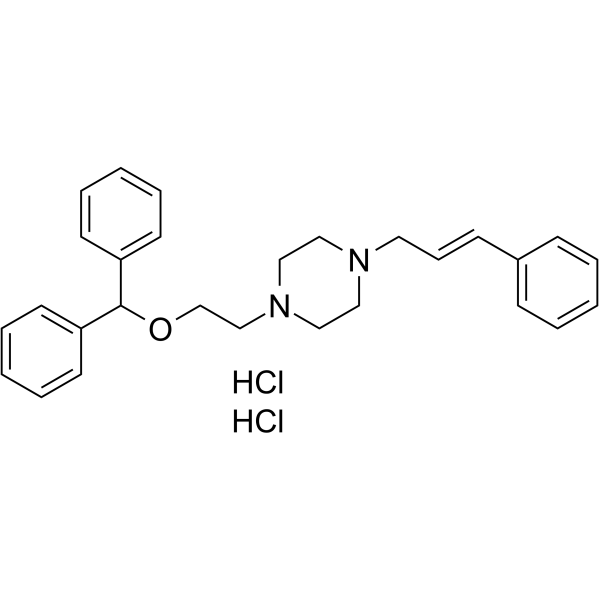
    GBR 12783 dihydrochloride is a specific, potent and selective dopamine uptake inhibitor that inhibits the [ 3H]dopamine uptake by rat and mice striatal synaptosomes with IC50s of 1.8 nM and 1.2 nM, respectively. GBR 12783 dihydrochloride can improve memory performance and increase hippocampal acetylcholine release in rats .
    GBR 12783 dihydrochloride
  • HY-156331

    mGluR Neurological Disease
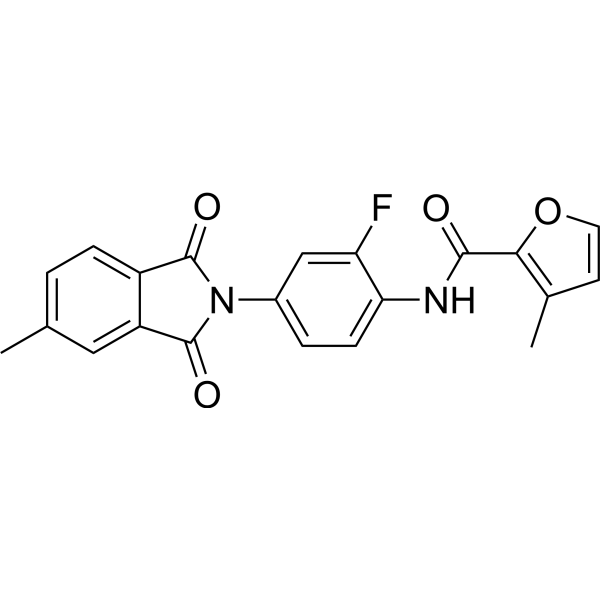
    VU6004909 is a blood-brain barrier penetrated mGlu1 positive allosteric modulator (PAM), with the EC50s of 25.7 nM and 31 nM for human mGlu1 and rat mGlu1, respectively. VU6004909 reduces dorsolateral striatal dopamine (DA) release in vivo and displays antipsychotic efficacy .
    VU6004909
  • HY-P1303

    5-HT Receptor Neurological Disease
    CART(62-76)(human,rat) is a neuropeptide (62-76 residues of the CART peptide) with neurotransmitter-like effects. CART(62-76)(human,rat) can modulate the activity of striatal noradrenergic and corticostriatal and hypothalamic serotoninergic (5-HT) system in the rat brain .
    CART(62-76)(human,rat)
  • HY-N2326

    nAChR Neurological Disease Metabolic Disease
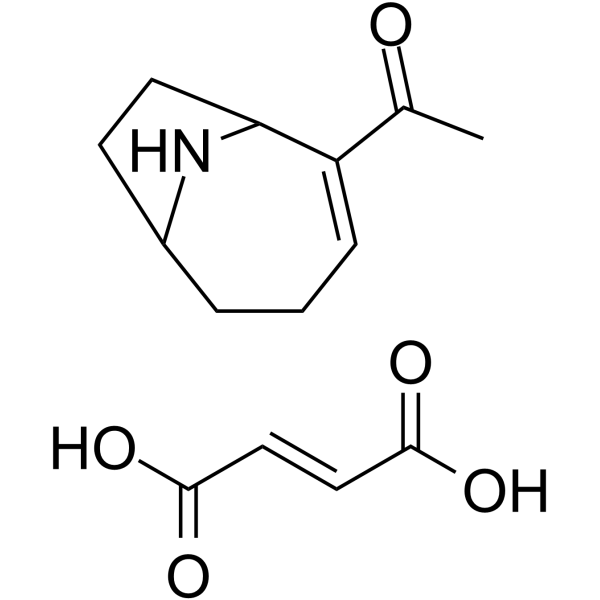
    (±)-Anatoxin A fumarate is a natural alkaloid isolated from freshwater cyanobacterium.(±)-Anatoxin A fumarate is a potent nicotinic receptor agonist and exhibits Ki values of 1.25 nM and 1.84 μM for binding to α4β2- and α7-type nicotinic receptors in rat brain membranes, respectively. (±)-Anatoxin A fumarate stimulates [ 3H]-dopamine release from rat striatal synaptosomes (EC50=134 nM). (±)-Anatoxin A fumarate has toxic effect on fish .
    (±)-Anatoxin A fumarate
  • HY-10435

    (±)-SKF-82958; Chloro-APB

    Dopamine Receptor Neurological Disease
    SKF-82958 ((±)-SKF 82958) is a dopamine D1 receptor full agonist (K0.5=4 nM), displays selective for D1 over D2 receptors (K0.5=73 nM). SKF-82958 induces dopamine D1 receptor-dependent adenylate cyclase activity in rat striatal membranes (EC50=491 nM) .
    SKF-82958
  • HY-117838

    Phosphodiesterase (PDE) Neurological Disease
    Phosphodiesterase 10-IN-2 (THPP-4) is an oral active phosphodiesterase 10A (PDE10A) inhibitor with the Ki of 4.5 nM. Phosphodiesterase 10-IN-2 can be used for study of schizophrenia .
    Phosphodiesterase 10-IN-2
  • HY-P1303A

    5-HT Receptor Neurological Disease
    CART(62-76)(human,rat) TFA is a neuropeptide (62-76 residues of the CART peptide) with neurotransmitter-like effects. CART(62-76)(human,rat) TFA can modulate the activity of striatal noradrenergic and corticostriatal and hypothalamic serotoninergic (5-HT) system in the rat brain .
    CART(62-76)(human,rat) TFA
  • HY-W008610

    Dopamine Receptor Neurological Disease
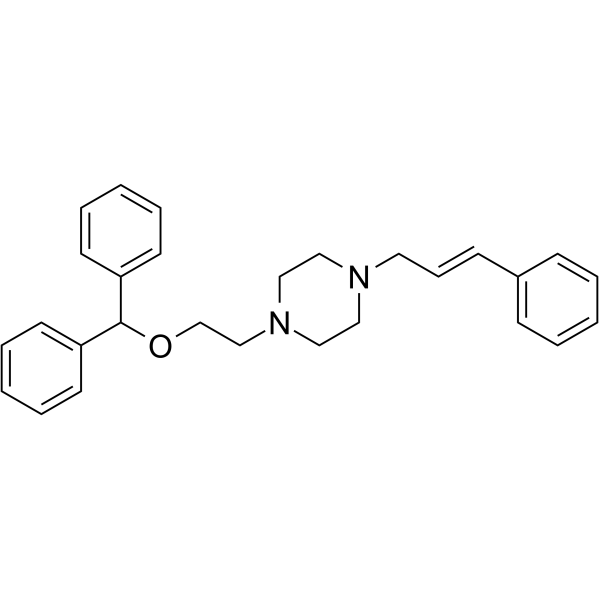
    GBR 12783 is a specific, potent and selective dopamine uptake inhibitor that inhibits the [ 3H]dopamine uptake by rat and mice striatal synaptosomes with IC50s of 1.8 nM and 1.2 nM, respectively. GBR 12783 can improve memory performance and increase hippocampal acetylcholine release in rats .
    GBR 12783
  • HY-107969R

    Dopamine Receptor Reference Standards COX NO Synthase Neurological Disease
    Haloperidol decanoate (Standard) is the analytical standard of Haloperidol decanoate. This product is intended for research and analytical applications. Haloperidol decanoate is a depot preparation of haloperidol, a commonly used butyrophenone derivative with antipsychotic activity. Haloperidol decanoate can increase the striatal D2 receptor in rat. Haloperidol decanoate can improve conditions of psychoses (mainly schizophrenia). Haloperidol decanoate can lead to increased accumulation of the dopamine metabolites homo-vanillic acid. Haloperidol decanoate can reduce intestinal transport, increase gastric emptying and reduce acid output in rat model .
    Haloperidol decanoate (Standard)
  • HY-10435AR

    (±)-SKF-82958 hydrobromide (Standard); Chloro-APB hydrobromide (Standard)

    Reference Standards Dopamine Receptor Neurological Disease
    SKF-82958 (hydrobromide) (Standard) is the analytical standard of SKF-82958 (hydrobromide). This product is intended for research and analytical applications. SKF-82958 ((±)-SKF 82958) hydrobromide is a dopamine D1 receptor full agonist (K0.5=4 nM), displays selective for D1 over D2 receptors (K0.5=73 nM). SKF-82958 hydrobromide induces dopamine D1 receptor-dependent adenylate cyclase activity in rat striatal membranes (EC50=491 nM) .
    SKF-82958 hydrobromide (Standard)
  • HY-116450

    Dopamine Receptor Neurological Disease
    TISCH is a potent and selective iodinated ligand with high affinity and selectivity for CNS D1 dopamine receptors. TISCH showed a Kd value of 0.205 nM in rat striatal tissue, indicating its effectiveness in biological activity. TISCH is able to easily cross the blood-brain barrier and show distribution in specific areas with D1 receptor density. TISCH is considered to be useful as a pharmacological tool for characterizing D1 dopamine receptors. When labeled with I-123, TISCH has the potential to be used as an in vivo imaging agent for CNS D1 dopamine receptors .
    TISCH
  • HY-171328

    Dopamine Receptor Neurological Disease
    RG-15 is the orally active antagonist for dopamine receptor that exhibits goof affinity to human D2 receptor and human D3 receptor with pKi of 8.23 and 10.49. RG-15 inhibits dopamine-stimulated [ 35S]GTPγS binding with IC50 of 21.2 nM (rat striatal membranes), 36.7 nM (mouse A9 cells expressing human D2L receptors) and 7.2 nM (CHO cells expressing human D3 receptors). RG-15 increases the turnover and biosynthesis of dopamine in mouse striatum and olfactory bulb, exhibiting antipsychotic activity .
    RG-15
  • HY-138232

    LTNAM

    Aminopeptidase Neurological Disease
    Lys-psi(CH2NH)-Trp(Nps)-OMe is a lysine-tryptophan (Nps) pseudodipeptide analog. It is obtained by replacing the peptide bond in the Lys-Trp(Nps) molecule with an aminomethylene bond and has analgesic activity. Lys-psi(CH2NH)-Trp(Nps)-OMe induces a dose-dependent and naloxone-reversible analgesia after intracerebroventricular administration in mice, and its analgesic effect lasts longer than that of the original compound. It protects methionine enkephalin from degradation in rat striatal slices and binds to low-dose opioid peptides to produce analgesia. Lys-psi(CH2NH)-Trp(Nps)-OMe effectively inhibits brain aminopeptidase activity both in vitro and in vivo. The enhanced resistance of this pseudodipeptide to proteolysis may explain its prolonged analgesic activity.
    Lys-psi(CH2NH)-Trp(Nps)-OMe
  • HY-W700204

    Dopamine Receptor Neurological Disease
    N-(p-Aminophenethyl) spiperone is a selective D2-like dopamine receptor antagonist. N-(p-Aminophenethyl) spiperone binds to the ligand recognition sites of functional D2 and D3 dopamine receptors. N-(p-Aminophenethyl) spiperone serves as a research tool compound for labeling, localizing and identifying D2 and D3 dopamine receptors .
    N-(p-Aminophenethyl)spiperone
  • HY-124186

    Dopamine Receptor 5-HT Receptor Neurological Disease
    LR1143 is a dopamine transporter (DAT) and 5-HT uptake inhibitor, with IC50 values of 3.4 nM and 112 nM in rats, respectively. LR1143 binds to DAT labeled with the dopamine reuptake inhibitor GBR 12935 (HY-12242A), with an IC50 of 4.4 nM. LR1143 shows lower selectivity for DAT than for serotonin reuptake sites. LR1143 can be used in studies related to cocaine abuse .
    LR1143
  • HY-182381

    Dopamine Receptor Neurological Disease
    FLA-797 is a brain-penetrant dopamine D2 receptor blocker and very low affinity for dopamine D1 receptors. FLA-797 selectively binds to and blocks postsynaptic dopamine D2 receptors. FLA-797 induces catalepsy in male rats. FLA-797 blocks dopamine agonist-induced hypothermia in male rats. FLA-797 contributes marginally to the dopamine D2 receptor-blocking activity of Remoxipride (HY-101313) in male rats. FLA-797 does not mimic the atypical antipsychotic profile of Remoxipride. FLA-797 can be used for research on mental disorders .
    FLA-797
  • HY-182600

    Kallikrein Plasminogen/Plasmin Neurological Disease Inflammation/Immunology
    KLK6-IN-1 is a reversible small‑molecule inhibitor of KLK6, KLK1, and plasmin. KLK6-IN-1 shows IC50 values of 1.57 μM (KLK6), 5.1 μM (KLK1), 7.4 μM (plasmin), and Ki values of 0.8 μM (KLK6), 2.4 μM (KLK1), 1.3 μM (plasmin). KLK6-IN-1 is highly selective for KLK6 and its proteolytic network. KLK6-IN-1 induces oligodendrocyte differentiation by promoting oligodendrocyte precursor cell maturation. KLK6-IN-1 can be used for the research of multiple sclerosis .
    KLK6-IN-1
  • HY-183927

    Dopamine Receptor Neurological Disease
    Spectramide is a blood-brain barrier-permeable, reversible, and selective dopamine D2 receptor ligand. Spectramide shows no strong interactions with dopamine D1 receptors, dopamine uptake sites, adrenergic receptor systems, cholinergic receptor systems, or 5-HTR systems. Spectramide can be labeled with 11C or 123I isotopes for use in PET or SPECT. Spectramide preferentially accumulates in the striatum with low uptake in other brain regions, and its accumulation can be blocked by pre-administration of Haloperidol (HY-14538) .
    Spectramide
  • HY-182456

    KMO Neurological Disease
    CHDI-340246 is an orally active kynurenine monooxygenase (KMO) inhibitor. CHDI-340246 blocks KMO activity, alters the metabolic flux of the kynurenine pathway, inhibits the production of 3-hydroxykynurenine and quinolinic acid, elevates the levels of kynurenine and kynurenic acid, and restores electrophysiological abnormalities in transgenic mouse models of Huntington's disease. CHDI-340246 can be used in studies related to Huntington's disease .
    CHDI-340246

Inquiry Online

Your information is safe with us. * Required Fields.

Salutation


Country or Region *

Applicant Name *


Organization Name *

Department *


Email Address *


Product Name *

Cat. No.


Requested quantity *

Phone Number *


Remarks

Inquiry Online

Inquiry Information

Product Name:
Cat. No.:
Quantity:
MCE Japan Authorized Agent:

