
1. Search Result
Search Result
Results for "

retinal permeability

" in MedChemExpress (MCE) Product Catalog:

14

Inhibitors & Agonists

1

Fluorescent Dyes

2

Biochemical Assay Reagents

1

Inhibitory Antibodies

1

Oligonucleotides

Targets Recommended:
Cat. No. Nombre del producto Target Áreas de investigación Chemical Structure
  • HY-D0799
    Sulfo-NHS-LC-Biotin sodium
    5+ Cited Publications

    Fluorescent Dye Others
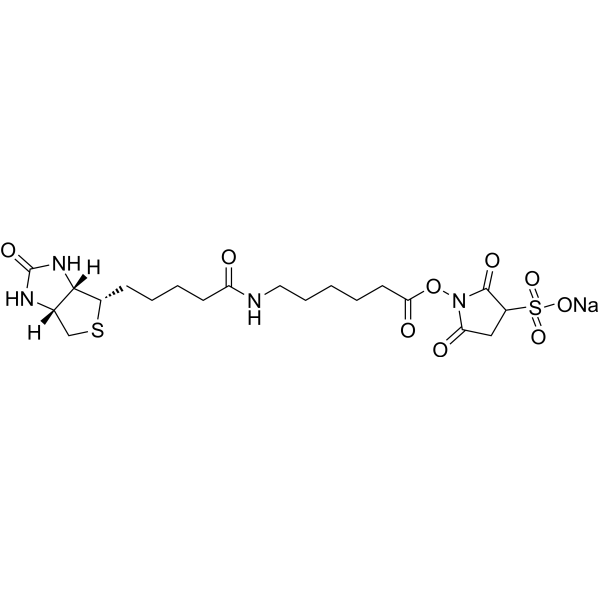
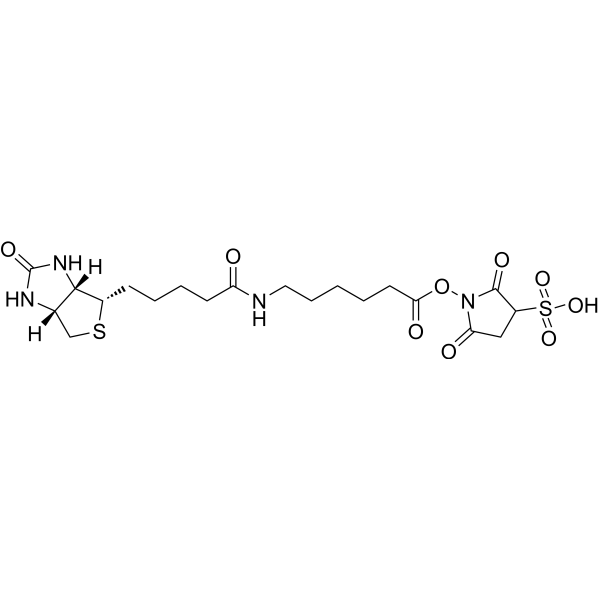
    Sulfo-NHS-LC-Biotin sodium is an amine-reactive ester derivative of biotin and cannot pass the intact blood-retinal barrier. It can be used to assess vascular permeability of the brain and retinal vasculature.
    Sulfo-NHS-LC-Biotin sodium
  • HY-Y0669
    Pipecolic acid
    2 Publications Verification

    Endogenous Metabolite YAP Glutathione Peroxidase Ferroptosis Neurological Disease Metabolic Disease Inflammation/Immunology
    Pipecolic acid is an orally bioavailable, blood-brain barrier-permeable metabolite of lysine with antioxidant, inhibitor, and inducer activity. Pipecolic acid modulates the YAP-GPX4 signaling pathway, reduces retinal vascular tube formation, and mitigates ferroptosis. Pipecolic acid potentiates voltage-sensitive Ca 2+ channel currents and induces neuronal apoptosis. Pipecolic acid can be used for the research of diabetic retinopathy .
    Pipecolic acid
  • HY-117661
    SPHINX31
    Maximum Cited Publications
    13 Publications Verification

    SRPK VEGFR Cardiovascular Disease Cancer
    SPHINX31 is a potent and selective SRPK1 inhibitor, with an IC50 of 5.9 nM. SPHINX31 inhibits phosphorylation of serine/arginine-rich splicing factor 1 (SRSF1). SPHINX31 also decreases the mRNA expression of pro-angiogenic VEGF-A165a isoform. SPHINX31 can be used to research neovascular eye disease .
    SPHINX31
  • HY-112624I

    Dextran 3; Dextran D3; Dextran T3(MW 2400-3600)

    Bacterial Others
    Dextran T3 (Dextran 3; Dextran T3(MW 2400-3600)) is a neural tracer and intestinal permeability probe that can move anterogradely and retrogradely in neuronal axons by passive diffusion. Dextran T3 (MW 3,000) is able to permeate across the intestinal epithelial cell membrane in the presence of cholera toxin-induced cytoskeletal disturbance. Dextran T3 (MW 3,000) is used as a fluorescent marker to rapidly label developing neurons (such as Xenopus retinal ganglion cells) and to assess intestinal barrier function. It can be used to study axonal transport in neuroanatomy and permeability changes in intestinal pathophysiology. The Dextran series of compounds are also natural polysaccharide drug carriers that can be connected to drugs through covalent bonding methods such as ester bonds, amide bonds or click chemistry, or self-assembled to form carriers such as nanoparticles and hydrogels. Dextran is biodegradable and biocompatible, and can achieve targeted delivery and controlled release of drugs. Dextran derivatives can prolong the half-life of drugs, increase local concentrations, and reduce the activity of immune clearance .
    Dextran T3 (MW 3,000)
  • HY-W009123

    cis-13-Docosenamide

    Endogenous Metabolite Bacterial Infection Neurological Disease
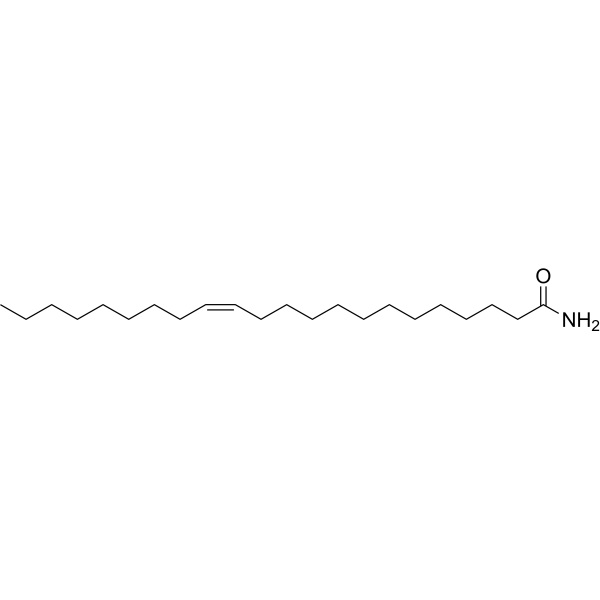
    Erucamide is an orally active, blood-brain barrier-permeable TMEM19 ligand and T3SS inhibitor. Erucamide exerts retinal neuroprotective effects in mouse models of retinal degeneration. Erucamide attenuates depression- and anxiety-like behaviors in mice.\n\nErucamide binds to the conserved hydrophobic pocket in HrcC, disrupts its outer membrane localization, and blocks T3SS-mediated effector protein secretion in Gram-negative pathogenic bacteria. Erucamide enhances the antimicrobial immunity of plants against pathogenic bacteria. Erucamide can be used in research related to retinitis pigmentosa, anxiety and depression, bacterial wilt, and bacterial blight .
    Erucamide
  • HY-138649

    Influenza Virus Neurological Disease
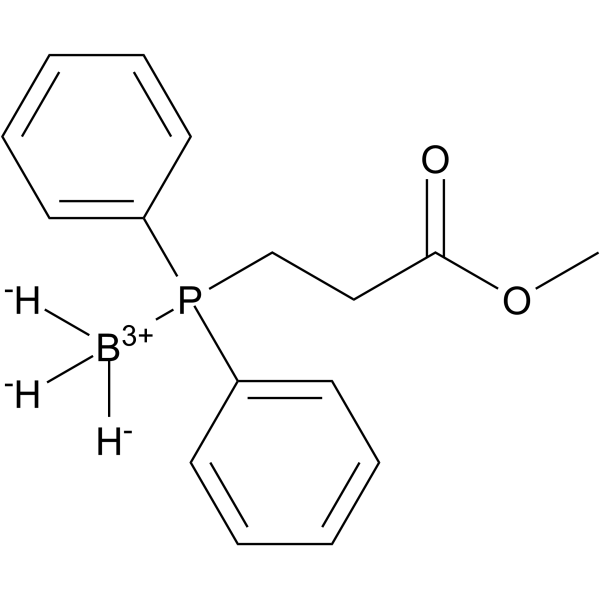
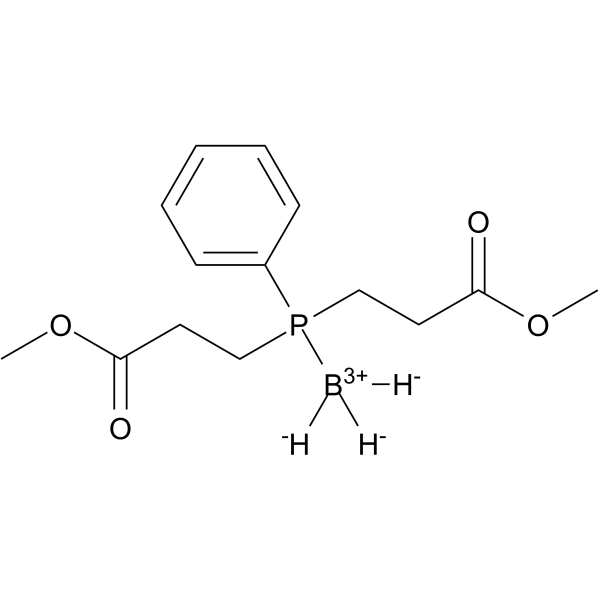
    PB2 is a tris(2-carboxyethyl)phosphine (TCEP) analogue increasing retinal ganglion (RGCs) cells survival after axotomy in vitro at nanomolar and picomolar concentrations. PB2 is substantially more permeable than TCEP. PB2, as a reducing agent, is highly neuroprotective for RGCs .
    PB2
  • HY-125639

    (rac)-AR-13324 M1 metabolite

    PKC ROCK Cardiovascular Disease
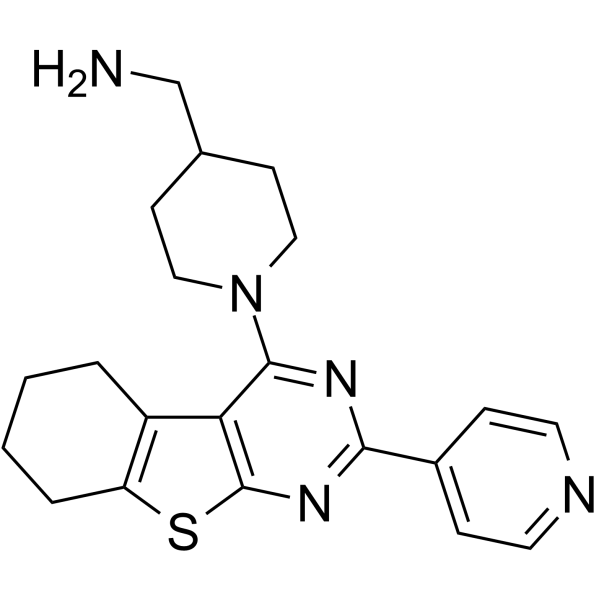
    (rac)-AR-13503 ((rac)-AR-13324 M1 metabolite) is the isoform of AR-13503 (HY-12798C). AR-13503 a ROCK/PKC inhibitor, inhibiting angiogenesis and enhancing retinal pigment epithelium (RPE) permeability. AR-13503 also inhibits the formation of aberrant neovascularization (NV) in oxygen-induced retinopathy (OIR) model in mice .
    (rac)-AR-13503
  • HY-D0799A

    Fluorescent Dye Others
    Sulfo-NHS-LC-Biotin is an amine-reactive ester derivative of biotin and cannot pass the intact blood-retinal barrier. It can be used to assess vascular permeability of the brain and retinal vasculature.
    Sulfo-NHS-LC-Biotin
  • HY-138648

    ERK Neurological Disease
    PB1 is a potent intracellular disulfide reducing agent with several advantages including good cell permeability, the ability to form a high intracellular concentration gradient, and stability. PB1 is a borane-protected TCEP (tris(2-carboxyethyl)phosphine) analogue. PB1 increases retinal ganglion cells survival after axotomy in vitro at nanomolar and picomolar concentrations. PB1 can be used for the research of neuroprotective .
    PB1
  • HY-116030

    Integrin Metabolic Disease
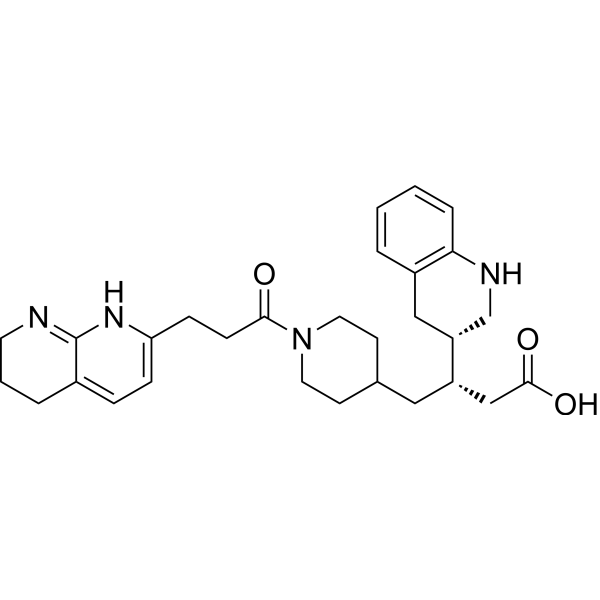
    JNJ-26076713 is a potent and orally active alpha V integrin antagonist with IC50 values of 2.3 nM and 6.3 nM for alpha(V)beta(3) and alpha(V)beta(5), respectively. JNJ-26076713 inhibits retinal neovascularization .
    JNJ-26076713
  • HY-P991886

    Complement System Neurological Disease
    ANX-M1 is a blood-brain barrier-permeable anti-C1q antibody. ANX-M1 can slow down the progression of retinal degeneration following photo-oxidative damage. ANX-M1 has been incorporated into nanocarriers to evaluate its brain delivery efficacy in a mouse model of Alzheimer's disease. ANX-M1 is applicable for research on age-related macular degeneration and Alzheimer's disease [1] .
    ANX-M1 (Human IgG1)
  • HY-174773

    mRNA Metabolic Disease
    Human BTC mRNA encodes the human betacellulin (BTC) protein, a member of the epidermal growth factor family. BTC promotes pancreatic cell proliferation and insulin secretion, as well as retinal vascular permeability.
    Human BTC mRNA
  • HY-147712

    PKC Inflammation/Immunology
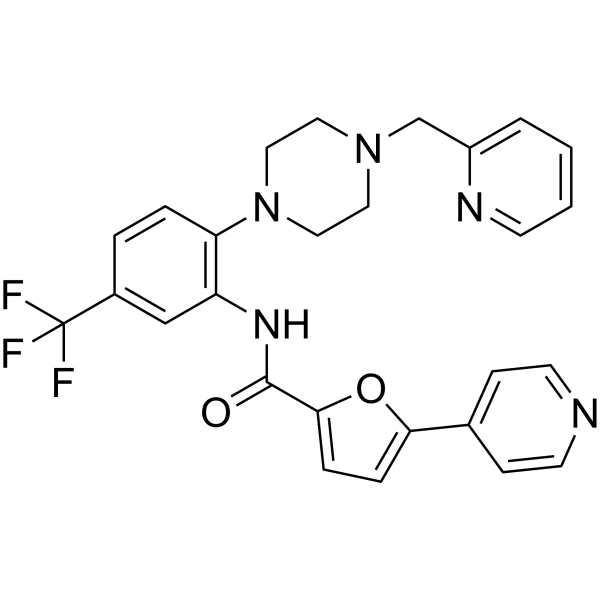
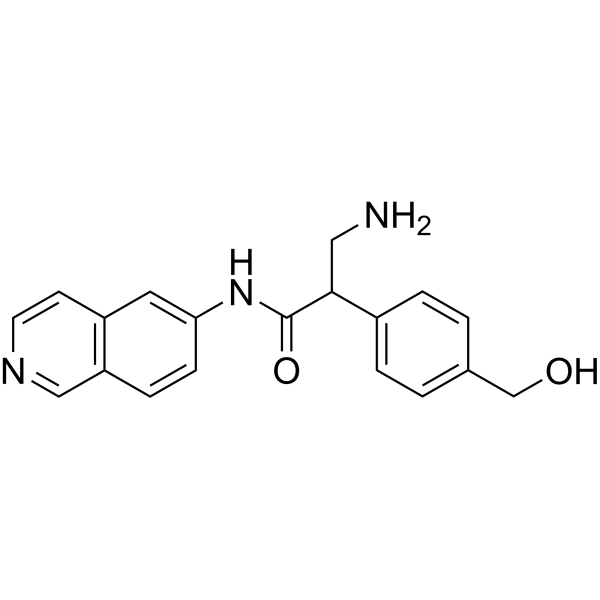
    PKC-IN-4 (compound 7l) is a potent and orally active aPKC inhibitor with an IC50 of 0.52 µM. PKC-IN-4 inhibits TNF-α induced NF-κB activity in vitro. PKC-IN-4 blocks VEGF- and TNFα-induced permeability across the retinal vasculature .
    PKC-IN-4
  • HY-137633

    PKG Neurological Disease
    Sp-8-Br-PET-cGMPS is a membrane-permeable PKG agonist and a membrane-permeable inhibitor of retinal-type cGMP-gated ion channels, as well as an activator of cGMP-dependent protein kinases I α and I β. Sp-8-Br-PET-cGMPS is resistant to mammalian cyclic nucleotide-dependent phosphodiesterases, has no metabolic side effects, and is more lipophilic and permeable than Sp-8-pCPT-cGMPS. Sp-8-Br-PET-cGMPS can be used to study the role of cGMP signaling pathways in the nervous system .
    Sp-8-Br-PET-cGMPS

Consulta en línea

Your information is safe with us. * Required Fields.

Saludo


Country or Region *

Nombre del solicitante *


Nombre de la Organizaciòn *

Department *


Direcciòn del E-mail *


Nombre del producto *

Cat. No.


Requested quantity *

Número de teléfono *


Observaciones

Consulta en línea

Inquiry Information

Nombre del producto:
Cat. No.:
Cantidad:
MCE Japan Authorized Agent:

