



PKC-IN-4
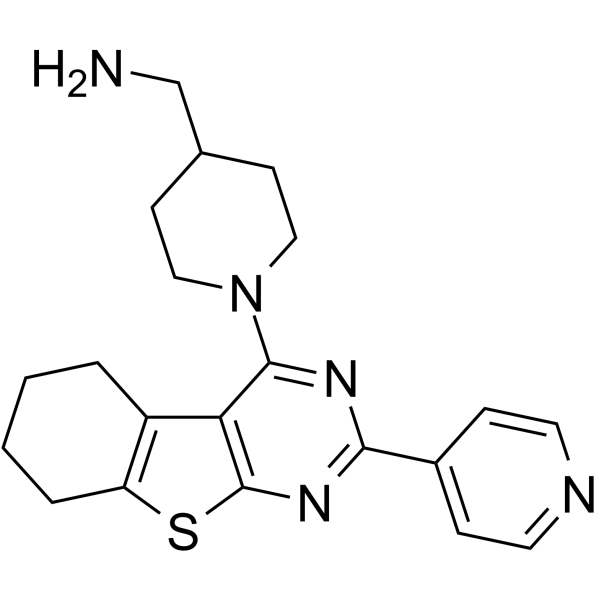
PKC-IN-4 (compound 7l) is a potent and orally active aPKC inhibitor with an IC50 of 0.52 µM. PKC-IN-4 inhibits TNF-α induced NF-κB activity in vitro. PKC-IN-4 blocks VEGF- and TNFα-induced permeability across the retinal vasculature.
商品は「研究用試薬」です。人や動物の医療用・臨床診断用・食品用の製品ではありません。
研究用途以外に使用した場合、当社は一切の責任を負いかねます。
- CAS 番号: 2636771-29-2
- 分子式: C21H25N5S
- 分子量:379.52
-
保管条件:
Please store the product under the recommended conditions in the Certificate of Analysis.

To place orders, for customer services and technical support, please contact: MedChemExpress USA
Tel: 609-228-6898 E-mail: [email protected] [email protected]


-
 生物活性
生物活性
-
化学情報
- プロトコル
- 純度とドキュメンテーション
- 参考文献
-
 Help & FAQs




生物活性
製品説明
IC50 & Target
[1]|
PKC 0.52 μM (IC50) |
Cellular Effect
|
Cell Line

|
Type | Value | Description | References |
|---|---|---|---|---|
| HEK293 | EC50 |
6.65 μM
Compound: 7l
|
Inhibition of TNFalpha-induced NFkappaB activation in HEK293 cells preincubated for 2 hrs followed by TNFalpha stimulation by luciferase assay
Inhibition of TNFalpha-induced NFkappaB activation in HEK293 cells preincubated for 2 hrs followed by TNFalpha stimulation by luciferase assay
|
[PMID: 32327351] |
体外実験
体内実験
MedChemExpress (MCE) has not independently confirmed the accuracy of these methods. They are for reference only.
-
Animal Model:Animal Model: CD-1 mice[1]
-
Dosage:10, 20 mg/kg
-
Administration:10 mg/kg for i.v.; 20 mg/kg for p.o.
-
Result:Showed good PK parameters with oral bioavailability of 81.7%.


化学情報
-
CAS 番号 2636771-29-2
-
分子量 379.52
-
分子式 C21H25N5S
-
SMILES
NCC1CCN(CC1)C2=NC(C3=CC=NC=C3)=NC4=C2C5=C(S4)CCCC5
-
輸送条件
Room temperature in continental US; may vary elsewhere.
-
保管条件
Please store the product under the recommended conditions in the Certificate of Analysis.


純度とドキュメンテーション
参考文献

Calculators
濃度 (開始) × 体積 (開始) = 濃度 (終了) × 体積 (終了)


PKC-IN-4 関連分類
HY-147712 関連分類
 Powered by Bioz