540 Results for "

schizophrenia

" in MedChemExpress (MCE) Product Catalog:
Products (540)

540 Results for "schizophrenia" in MCE Product Catalog:

147
147 Publications Verification
Cat. No.: HY-12708
CAS No.: 50-53-3
Purity:  99.75%
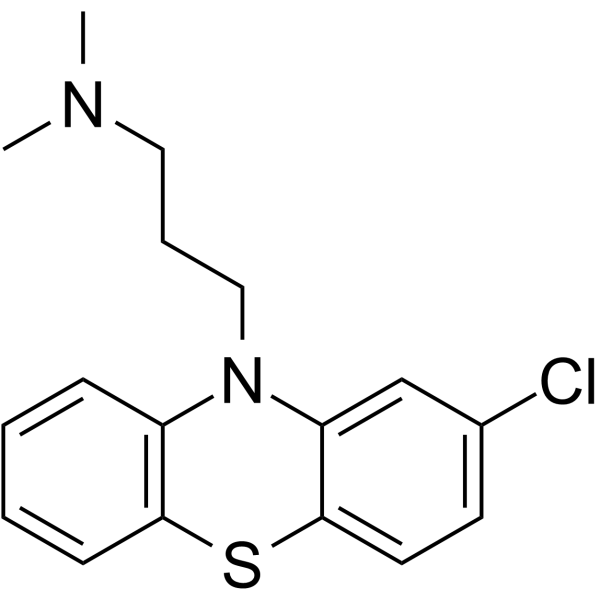
Chlorpromazine is an orally active, blood-brain barrier-transparent antipsychotic agent that effectively antagonises D2 dopamine receptors and 5-HT2A, which is widely used in schizophrenia and other psychiatric disorders. Chlorpromazine exerts anti-cancer activity through a variety of pathways, including anti-proliferation, induction of autophagy and cycle arrest (G2-M phase), inhibition of cytochrome c oxidase (CcO), inhibition of tumour growth and metastasis, and inhibition of tumour immune escape. Chlorpromazine also blocks hNav1.7 channels (IC50=25.9 μM; concentration-dependent) and HERG potassium channels (IC50=21.6 μM), which has potential for analgesic and cardiac arrhythmic studies. Chlorpromazine also can inhibit clathrin-mediated endocytosis .
loading...
    loading...
147
147 Publications Verification
Cat. No.: HY-B0407A
CAS No.: 69-09-0
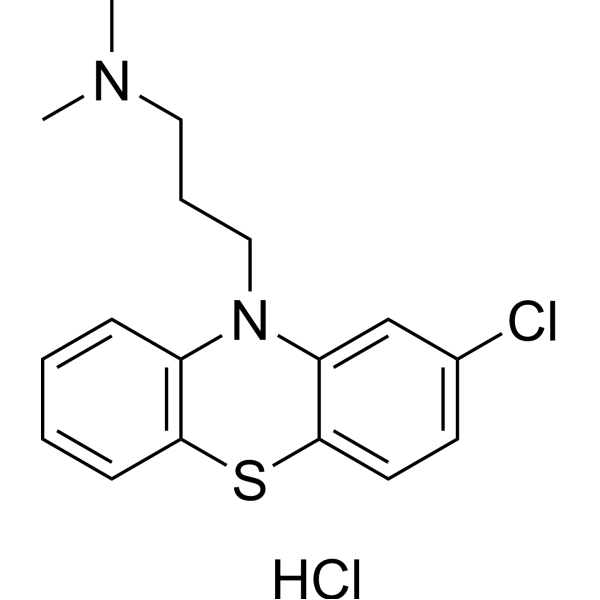
Chlorpromazine hydrochloride is an orally active, blood-brain barrier-transparent antipsychotic agent that effectively antagonises D2 dopamine receptors and 5-HT2A, which is widely used in schizophrenia and other psychiatric disorders. Chlorpromazine hydrochloride exerts anti-cancer activity through a variety of pathways, including anti-proliferation, induction of autophagy and cycle arrest (G2-M phase), inhibition of cytochrome c oxidase (CcO), inhibition of tumour growth and metastasis, and inhibition of tumour immune escape. Chlorpromazine hydrochloride also blocks hNav1.7 channels (IC50=25.9 μM; concentration-dependent) and HERG potassium channels (IC50=21.6 μM), which has potential for analgesic and cardiac arrhythmic studies. Chlorpromazine hydrochloride also can inhibit clathrin-mediated endocytosis .
loading...
    loading...
48
48 Cited Publications
Cat. No.: HY-N2332A
CAS No.: 351344-10-0
Synonyms: MLA citrate
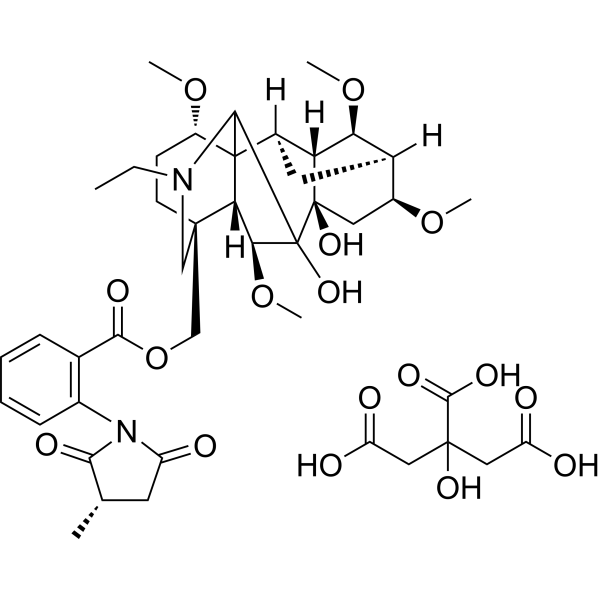
Methyllycaconitine (MLA) citrate is a blood-brain barrier-permeable antagonist of α7 nicotinic acetylcholine receptor (α7nAChR) with an IC50 of 2 nM. Methyllycaconitine citrate inhibits Aβ25-35-induced autophagy by restoring the mTOR pathway, and prevents reactive oxygen species (ROS) production, microglial activation, reduced dopamine uptake, loss of dopaminergic terminals and catecholamine secretion. Methyllycaconitine citrate induces hippocampal glutamate efflux, enhances long-term potentiation, and improves memory acquisition. Methyllycaconitine citrate can be used in research related to Alzheimer's disease, cerebral palsy, Parkinson's disease and schizophrenia .
loading...
    loading...
22
22 Cited Publications
Cat. No.: HY-14538B
CAS No.: 53515-91-6
Target:  

Dopamine Receptor

Research Areas:  

Neurological Disease Cancer

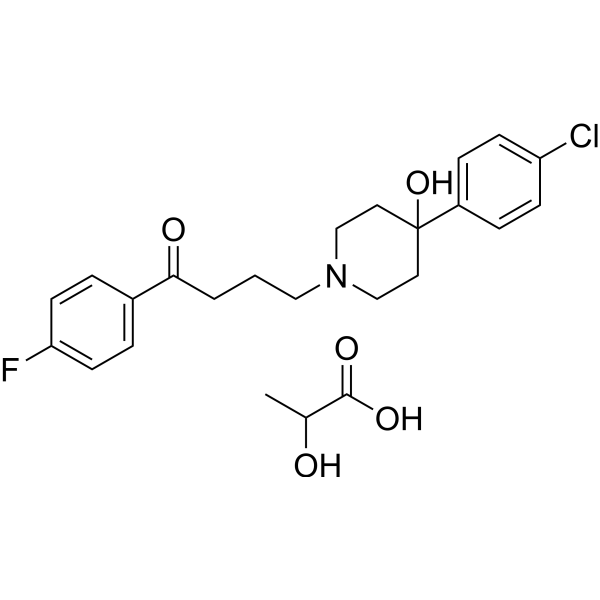
Haloperidol lactate is a potent antipsychotic agent. Haloperidol lactate can be used in acute and chronic schizophrenia and gilles de la tourette's syndrome. Haloperidol lactate has the potential for the research of psychotic disorders .
loading...
    loading...
22
22 Cited Publications
Cat. No.: HY-14538
CAS No.: 52-86-8
Purity:  99.73%
Target:  

Dopamine Receptor

Research Areas:  

Neurological Disease Cancer

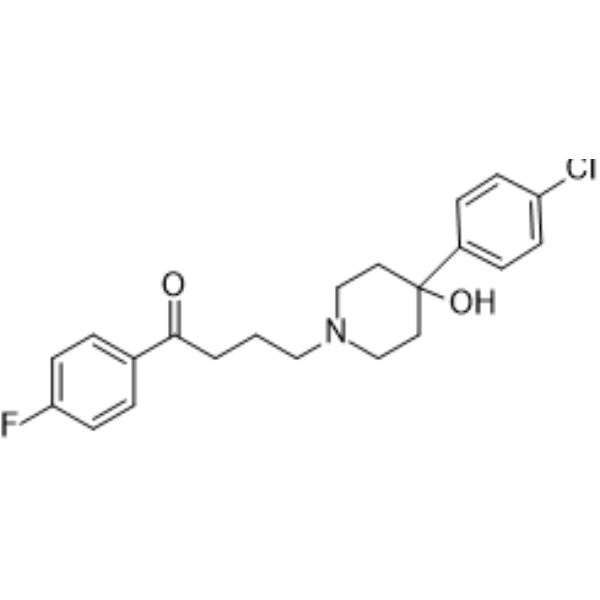
Haloperidol is a potent dopamine D2 receptor antagonist, widely used as an antipsychotic agent. Haloperidol can be used in the study of schizophrenia, tics in Tourette syndrome, mania in bipolar disorder, delirium, agitation, acute psychosis, and hallucinations from alcohol withdrawal.
loading...
    loading...
22
22 Cited Publications
Cat. No.: HY-14538A
CAS No.: 1511-16-6
Target:  

Dopamine Receptor

Research Areas:  

Neurological Disease Cancer

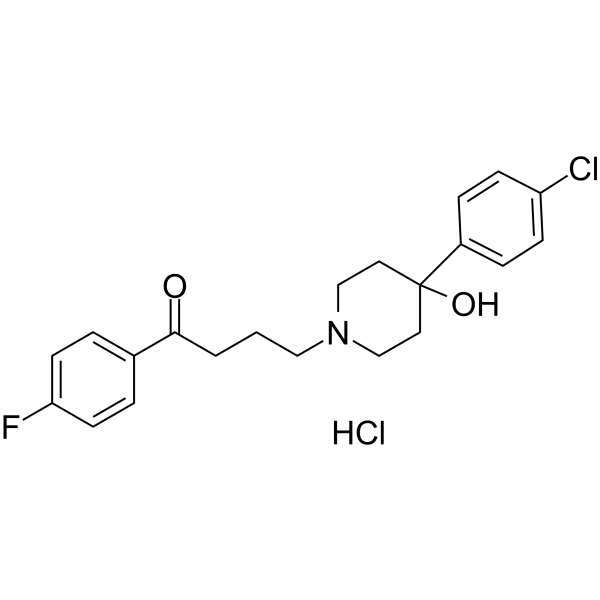
Haloperidol hydrochloride is a potent dopamine D2 receptor antagonist, widely used as an antipsychotic agent. Haloperidol hydrochloride can be used in the study of schizophrenia, tics in Tourette syndrome, mania in bipolar disorder, delirium, agitation, acute psychosis, and hallucinations from alcohol withdrawal.
loading...
    loading...
13
13 Cited Publications
Cat. No.: HY-14539
CAS No.: 5786-21-0
Purity:  99.84%
Synonyms: HF 1854; ZINC000019796155
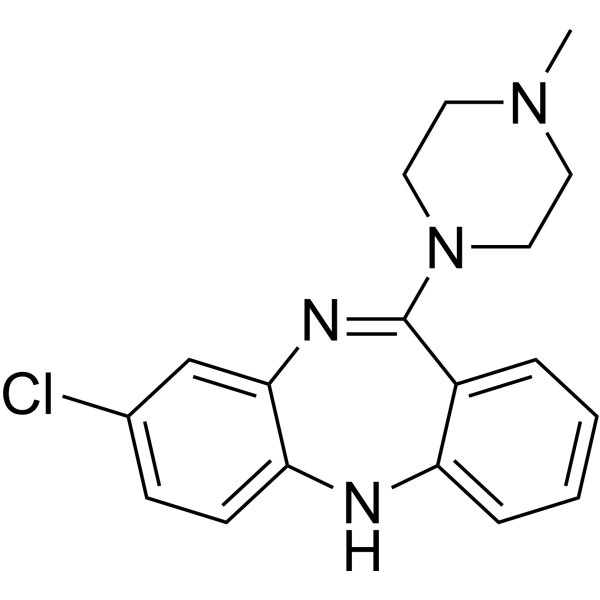
Clozapine (HF 1854) is an antipsychotic used for the research of schizophrenia. Clozapine has high affinity for a number of neuroreceptors. Clozapine is a potent antagonist of dopamine D2 with a Ki of 75 nM. Clozapine inhibits the muscarinic M1 receptor and serotonin 5HT2A receptor with Kis of 9.5 nM and 4 nM, respectively . Clozapine is also a potent and selective agonist at the muscarinic M4 receptor (EC50=11 nM) .
loading...
    loading...
13
13 Cited Publications
Cat. No.: HY-14539A
CAS No.: 54241-01-9
Synonyms: HF 1854 hydrochloride
Clozapine hydrochloride (HF 1854 hydrochloride) is an antipsychotic used for the research of schizophrenia. Clozapine hydrochloride has high affinity for a number of neuroreceptors. Clozapine hydrochloride is a potent antagonist of dopamine D2 with a Ki of 75 nM. Clozapine hydrochloride inhibits the muscarinic M1 receptor and serotonin 5HT2A receptor with Kis of 9.5 nM and 4 nM, respectively . Clozapine hydrochloride is also a potent and selective agonist at the muscarinic M4 receptor (EC50=11 nM) .
loading...
    loading...
11
11 Cited Publications
Cat. No.: HY-136109
CAS No.: 1310422-41-3
Purity:  99.89%
Synonyms: SEP-363856 hydrochloride; SEP-856 hydrochloride
Target:  

5-HT Receptor

Research Areas:  

Neurological Disease

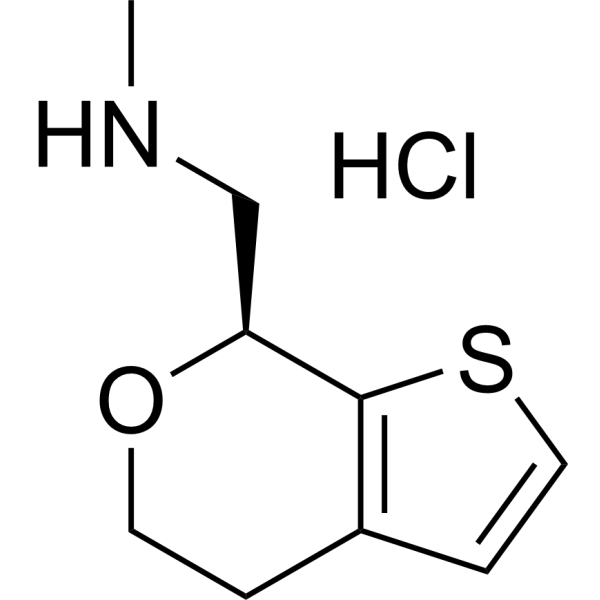
SEP-363856 (SEP-856) hydrochloride, an orally active TAAR1 and 5-HT1A agonist and CNS active psychotropic agent with a unique, non-D2/5-HT2A mechanism of action, exerts its antipsychotic-like effects. SEP-363856 hydrochloride has the potential for the study of schizophrenia .
loading...
    loading...
11
11 Cited Publications
Cat. No.: HY-14546
CAS No.: 129722-12-9
Purity:  99.95%
Synonyms: OPC-14597
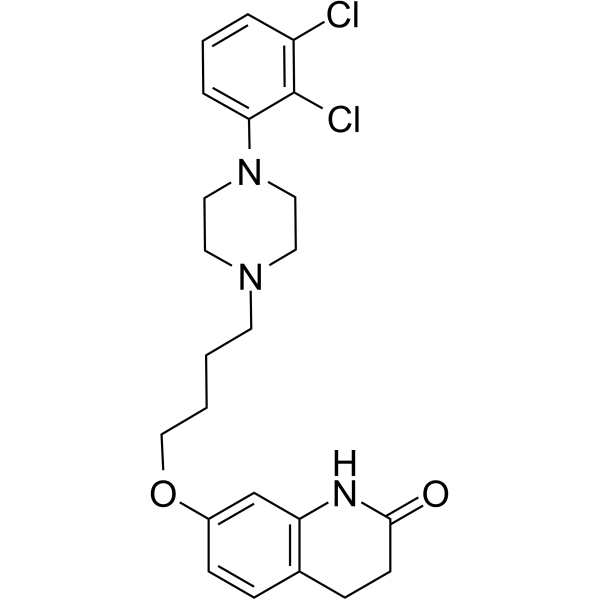
Aripiprazole (OPC-14597), an atypical antipsychotic, is a potent and high-affinity dopamine D2 receptor partial agonist. Aripiprazole is an inverse agonist at 5-HT2B and 5-HT2A receptors and displays partial agonist actions at 5-HT1A, 5-HT2C, D3, and D4 receptors. Aripiprazole can be used for the research of schizophrenia and COVID19 .
loading...
    loading...
11
11 Cited Publications
Cat. No.: HY-14546A
CAS No.: 851220-85-4
Synonyms: OPC-14597 monohydrate
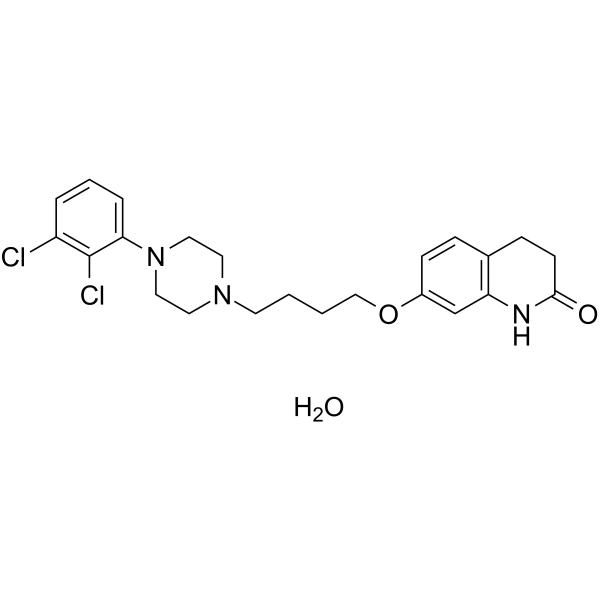
Aripiprazole (OPC-14597) monohydrate, an atypical antipsychotic, is a potent and high-affinity dopamine D2 receptor partial agonist. Aripiprazole monohydrate is an inverse agonist at 5-HT2B and 5-HT2A receptors and displays partial agonist actions at 5-HT1A, 5-HT2C, D3, and D4 receptors. Aripiprazole monohydrate can be used for the research of schizophrenia and COVID19 .
loading...
    loading...
10
10 Cited Publications
Cat. No.: HY-B0532
CAS No.: 117-89-5
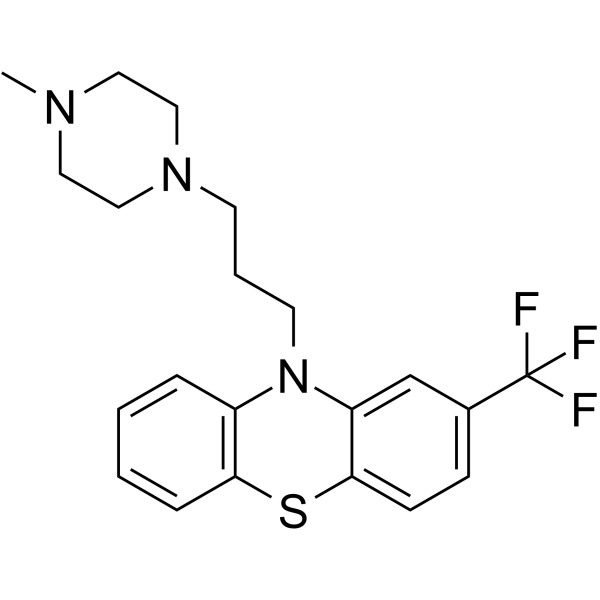
Trifluoperazine, an antipsychotic agent, acts by blocking central dopamine receptors. Trifluoperazine is a potent α1-adrenergic receptor antagonist. Trifluoperazine is a potent NUPR1 inhibitor exerting anticancer activity. Trifluoperazine is a calmodulin inhibitor, and also inhibits P-glycoprotein. Trifluoperazine can be used for the research of schizophrenia. Trifluoperazine acts as a reversible inhibitor of influenza virus morphogenesis .
loading...
    loading...
10
10 Cited Publications
Cat. No.: HY-B0532A
CAS No.: 440-17-5
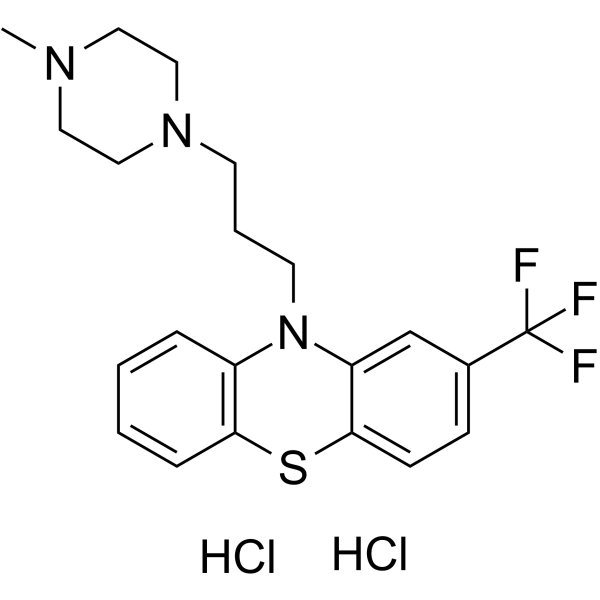
Trifluoperazine dihydrochloride, an antipsychotic agent, acts by blocking central dopamine receptors. Trifluoperazine dihydrochloride is a potent α1-adrenergic receptor antagonist. Trifluoperazine dihydrochloride is a potent NUPR1 inhibitor exerting anticancer activity. Trifluoperazine dihydrochloride is a calmodulin inhibitor, and also inhibits P-glycoprotein. Trifluoperazine dihydrochloride can be used for the research of schizophrenia. Trifluoperazine dihydrochloride acts as a reversible inhibitor of influenza virus morphogenesis .
loading...
    loading...
9
9 Cited Publications
Cat. No.: HY-B1077
CAS No.: 26864-56-2
Synonyms: R-16341
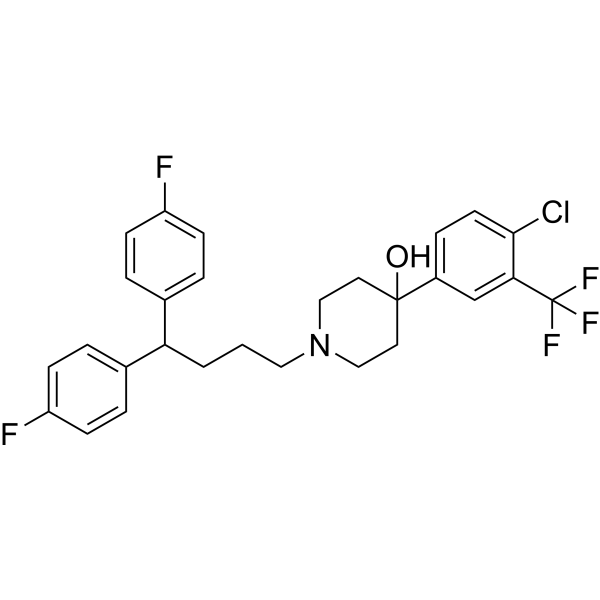
Penfluridol (R-16341) is a potent, long-acting, first-generation, oral diphenylbutylpiperidine antipsychotic agent by targeting D2-like dopamine receptor. Penfluridol effectively inhibits TNFα-induced NF-κB activation and alleviates the severity of arthritis and colitis in vivo. Penfluridol is a Ca2+-calmodulin inhibitor. Penfluridol induces apoptosis and autophagy. Penfluridol is used for chronic schizophrenia, acute psychosis, Tourette syndrome and autoimmune diseases. Penfluridol inhibites the growth of E. faecalis planktonic cells with the MIC of 7.81 μg/ml .
loading...
    loading...
7
7 Cited Publications
Cat. No.: HY-105182
CAS No.: 131986-45-3
Purity:  99.52%
Synonyms: LY-246708
Target:  

mAChR

Research Areas:  

Neurological Disease

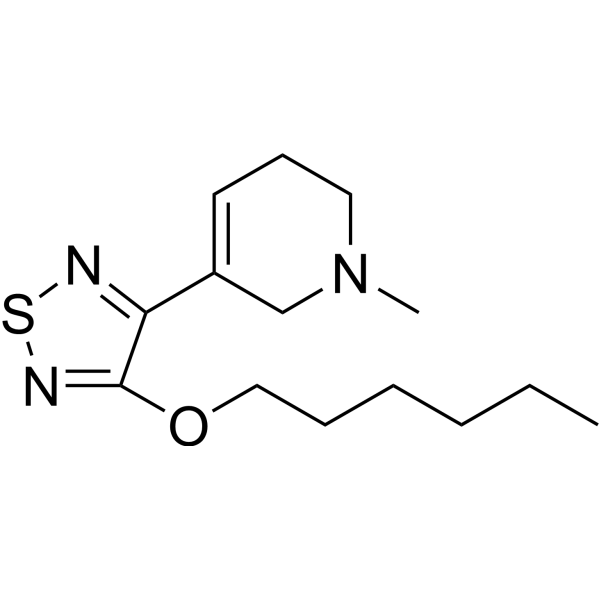
Xanomeline, as an effective and selective muscarinic type 1 and type 4 (M1/M4) receptor agonist, increases neuronal excitability. Xanomeline can be used for the research of neurological disorders, such as schizophrenia .
loading...
    loading...
6
6 Cited Publications
Cat. No.: HY-105182A
CAS No.: 152854-19-8
Purity:  99.93%
Synonyms: LY 246708 tartrate
Target:  

mAChR

Research Areas:  

Neurological Disease

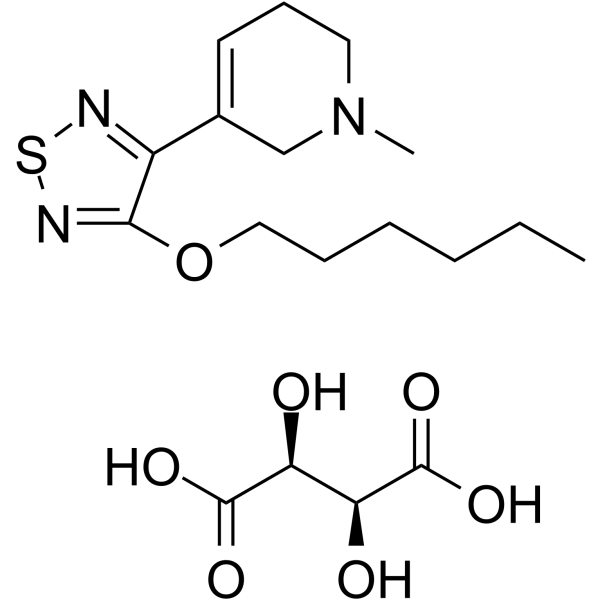
Xanomeline (LY 246708) is the potent agonist of muscarinic M1/M4 receptor with antipsychotic-like activity. Xanomeline (LY 246708) increases neuronal excitability. Xanomeline (LY 246708) can be used for the research of schizophrenia .
loading...
    loading...
6
6 Cited Publications
Cat. No.: HY-13409
CAS No.: 181632-25-7
Purity:  99.96%
Target:  

5-HT Receptor

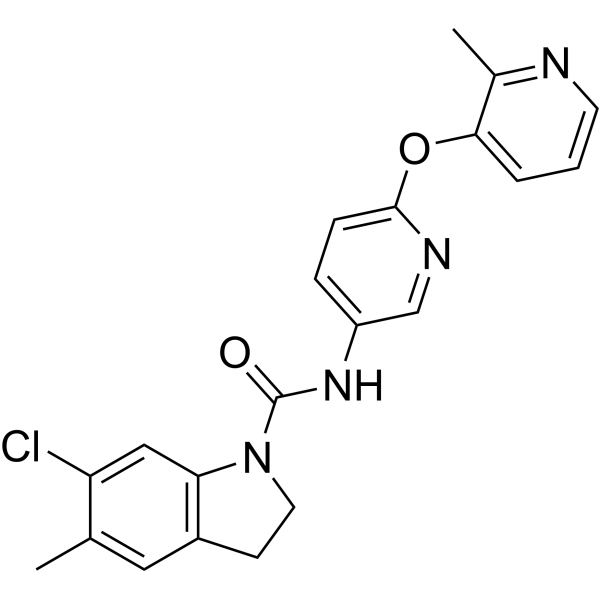
SB 242084 is a selective, competitive and high-affinity (pKi=9.0) 5-HT2C receptor antagonist (crosses the blood-brain barrier). SB 242084 increases basal activity of dopaminergic neurons in the ventral tegmental area (VTA) of the midbrain and dopamine release in the vomeronasal nucleus. SB 242084 also increases mitochondrial gene expression and oxidative metabolism via 5-HT2A receptor. SB 242084 has good research potential in the negative symptoms of anxiety, depression and schizophrenia, as well as in acute organ damage .
loading...
    loading...
6
6 Cited Publications
Cat. No.: HY-13409A
CAS No.: 1049747-87-6
Purity:  98.12%
Target:  

5-HT Receptor

SB 242084 dihydrochloride is a selective, competitive and high-affinity (pKi=9.0) 5-HT2C receptor antagonist (crosses the blood-brain barrier). SB 242084 dihydrochloride increases basal activity of dopaminergic neurons in the ventral tegmental area (VTA) of the midbrain and dopamine release in the vomeronasal nucleus. SB 242084 dihydrochloride also increases mitochondrial gene expression and oxidative metabolism via 5-HT2A receptor. SB 242084 dihydrochloride has good research potential in the negative symptoms of anxiety, depression and schizophrenia, as well as in acute organ damage .
loading...
    loading...
4
4 Cited Publications
Cat. No.: HY-W115718
CAS No.: 370-81-0
Research Areas:  

Neurological Disease

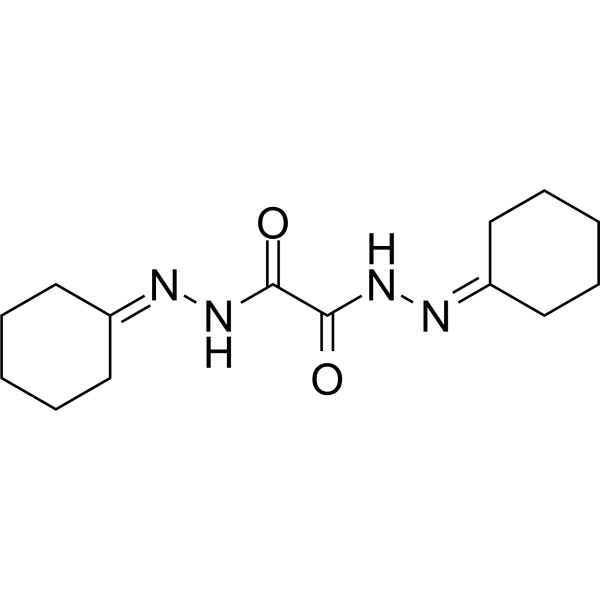
Cuprizone is a copper chelating agent that forms a deep blue copper ketone complex with copper (II). The copper ketone reaction can be used in colorimetric tests for the presence of trace copper. Cuprizone can be used to induce some schizophrenia-like behavior in mice. Cuprizone acts on copper enzymes, including SOD1, cytochrome oxidase, and DβH, thereby causing oxidative stress and increasing DA levels in certain brain regions such as the medial prefrontal cortex (PFC) .
loading...
    loading...
4
4 Cited Publications
Cat. No.: HY-B1752
CAS No.: 80373-22-4
Synonyms: LY 171555; (-)-LY 141865
Quinpirole (LY 171555; (-)-LY 141865) is a D2/D3 dopamine receptor agonist and a CaV1.3 calcium channel modulator. Quinpirole normalizes dendritic spine density in dopamine-depleted striatum, upregulates the protein expression of BCL2 and GluR2, downregulates the protein expression of BAX, and delays the onset of seizures. Quinpirole enhances learning and memory, inhibits neuronal apoptosis (apoptosis), and induces anxiety-like, stereotyped, and compulsive behaviors. Quinpirole disrupts prepulse inhibition in rhesus monkeys, enhances the activity of paraventricular thalamic neurons to promote recovery from Isoflurane anesthesia, and alters the composition of the gut microbiota in rats. Quinpirole can be used in research related to dyskinesia, pain, epilepsy, and neurological disorders including anxiety disorder, obsessive-compulsive disorder, and schizophrenia .
loading...
    loading...

