

1. Search Result
Search Result
Results for "

secondary structure

" in MedChemExpress (MCE) Product Catalog:

29

Inhibitors & Agonists

5

Screening Libraries

2

Biochemical Assay Reagents

4

Peptides

10

Natural
Products

5

Oligonucleotides

Cat. No. Product Name Target Research Areas Chemical Structure
  • HY-108477
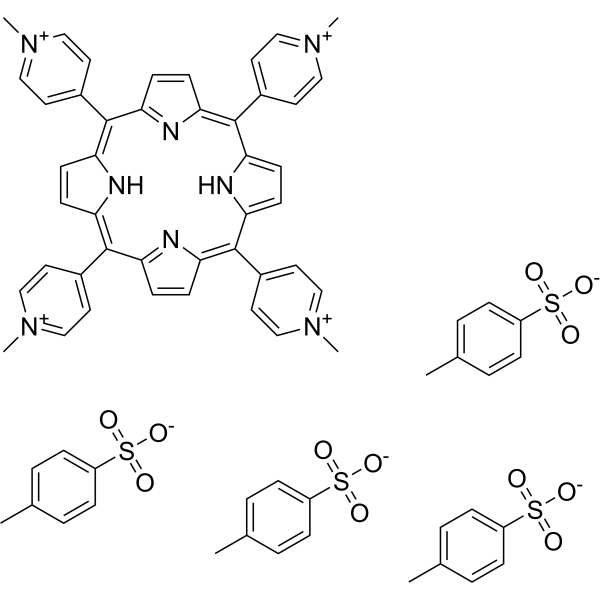
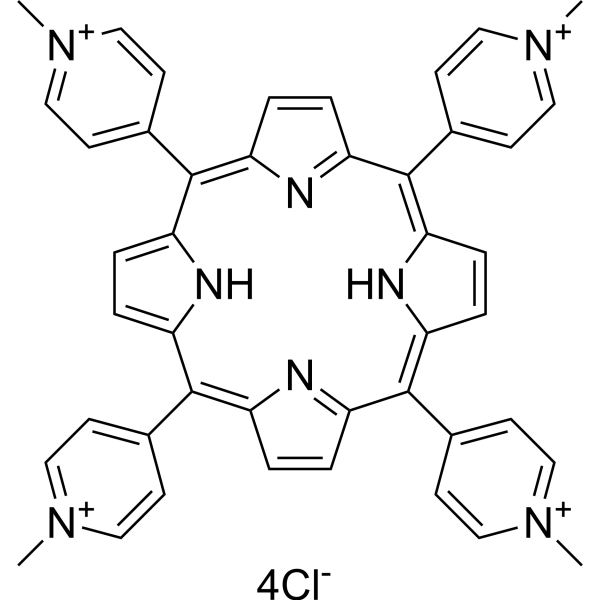
    TMPyP4 tosylate
    Maximum Cited Publications
    10 Publications Verification

    TMP 1363

    G-quadruplex Telomerase Cholinesterase (ChE) SARS-CoV Cancer
    TMPyP4 tosylate (TMP 1363) is a quadruplex-specific ligand. TMPyP4 tosylate inhibits the interaction between G-quadruplexes and IGF-1. TMPyP4 tosylate is a telomerase inhibitor and inhibits cancer cells proliferation. TMPyP4 tosylate is also a stabilizer of nucleic acid secondary structure and an acetylcholinesterase inhibitor. Besides, TMPyP4 tosylate has antiviral activity against SARS-CoV-2 .
    TMPyP4 tosylate
  • HY-W020780

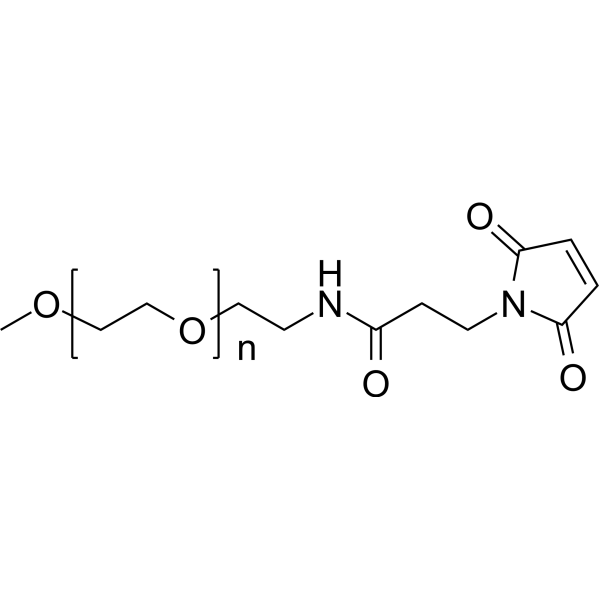
    mPEG5000-Maleimide

    Biochemical Assay Reagents Cancer
    mPEG5000-Mal (mPEG5000-Maleimide) is a PEG-derived selective covalent binding agent for sulfhydryl groups (RSGs), which can form irreversible thioether bonds with sulfhydryl groups under near-neutral conditions via the maleimide group. The mechanism of action of mPEG5000-Mal can be divided into two categories: firstly, as an enzyme modifier, it binds to target proteins through hydrophobic interactions, hydrogen bonds, and van der Waals forces, altering the protein's secondary structure; secondly, as a nanoparticle surface modifier, it covalently binds to sulfhydryl groups on the surface of red blood cells, changing the surface properties and morphology of the red blood cells, leading to their phagocytosis by macrophages of the reticuloendothelial system. mPEG5000-Mal can react with free cysteine in proteins, increasing the apparent molecular weight of the modified protein by 10-15 kDa for detection purposes. mPEG5000-Mal can enhance the thermal stability and catalytic activity of enzymes, and improve the macrophage targeting of nanoparticles, enabling targeted drug delivery. mPEG5000-Mal can be applied in enzyme engineering research in the food industry and in oncology, assisting radiotherapy by inhibiting tumor-associated macrophage infiltration and enhancing anti-tumor immune responses .
    mPEG5000-Mal
  • HY-164899

    2-aminopyridine-3-carboxylic acid imidazolide

    Transmembrane Glycoprotein Cancer
    2A3 (2-aminopyridine-3-carboxylic acid imidazolide) is a T cell activator that specifically binds to CEACAM6 and CEACAM5. 2A3 exhibits enzymatic activity that catalyzes the glucuronidation of specific substrates (e.g., 1-naphthol), and possesses significant cytotoxic activity. When integrated into CAR T cells or used alone, 2A3 acts by inducing cytokine release, degranulation, and direct cytotoxicity. 2A3 kills pancreatic and breast cancer cells with high target antigen expression in vitro, and significantly inhibits the growth of pancreatic cancer xenografts in vivo. 2A3 broadly targets malignant tumors with overexpressed CEACAM5, CEACAM6, or co-expressed both, and shows high expression mainly in tissues such as the liver and colon. 2A3 serves as an important research tool for the immunotherapy of pancreatic and breast cancer . 2A3 is a novel SHAPE reagent, which can be used for the analysis of RNA structure both in vitro and in vivo . 2A3 is an electrophilic chemical probe that acylates the 2'-OH in the RNA backbone. 2A3 can be used for RNA SHAPE-MaP experiments and is capable of analyzing the RNA secondary structures at single nucleotide resolution.
    2A3
  • HY-W009444
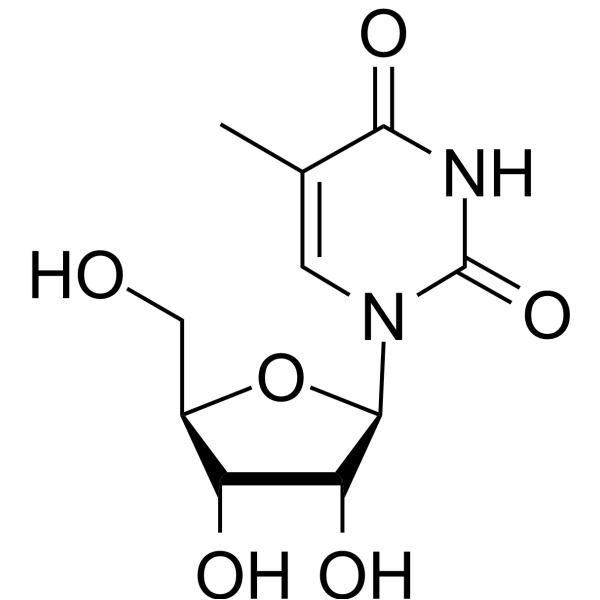
    5-Methyluridine
    1 Publications Verification

    Endogenous Metabolite Others
    5-Methyluridine (m 5U) is an RNA modified nucleotide generated by RNA methyltransferases (such as TrmA and RumA), which mainly targets specific uracil sites in RNA molecules such as the T arm of tRNA and rRNA. 5-Methyluridine relies on enzyme recognition of RNA secondary/tertiary structures (such as the T loop of tRNA or the specific stem-loop structure of rRNA) and participates in physiological processes such as translation accuracy and ribosome function by stabilizing RNA folding or regulating base pairing .
    5-Methyluridine
  • HY-137265

    Flavivirus Infection
    Aminomethyltrioxsalen hydrochloride is a psoralen derivative and nucleic acid intercalator. Aminomethyltrioxsalen hydrochloride can penetrate intact cells and react with nucleic acid secondary structures in vivo without disrupting the tissue structure of natural nucleoproteins. Aminomethyltrioxsalen hydrochloride inactivates viruses by crosslinking nucleic acid pyrimidine residues after exposure to UV-A radiation. Aminomethyltrioxsalen hydrochloride can be used in research related to dengue virus infection .
    Aminomethyltrioxsalen hydrochloride
  • HY-113138
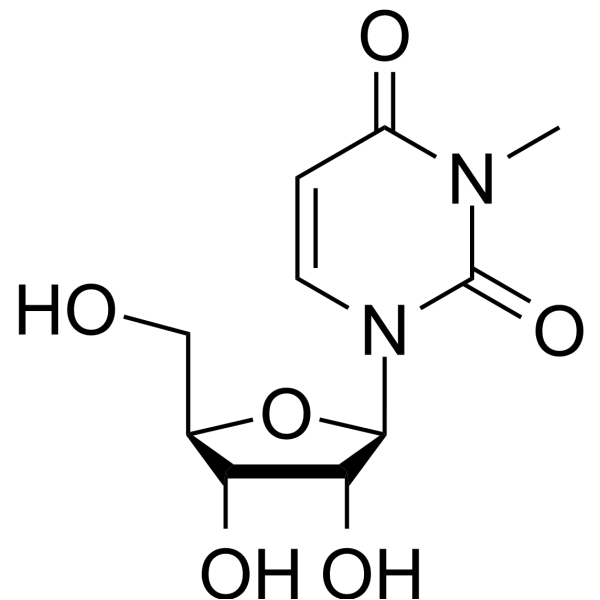
    3-Methyluridine
    1 Publications Verification

    N3-Methyluridine

    Endogenous Metabolite Metabolic Disease
    3-Methyluridine (m 3U; N3-Methyluridine) is a methylated nucleotide present in ribosomal RNA (rRNA), mainly targeting specific base sites of RNA molecules such as 23S rRNA. 3-Methyluridine can introduce a methyl group at the N3 position of uracil, affecting the secondary structure stability and base pairing ability of RNA, and regulating ribosome function. For example, it affects ribosomal subunit binding and tRNA interaction. 3-Methyluridine is often used as a key raw material for the synthesis of modified nucleotides, and is used to construct RNA oligonucleotides containing methylation modifications to study the effects of RNA methylation on gene expression and drug resistance .
    3-Methyluridine
  • HY-W004864

    Amino Acid Derivatives Others
    Fmoc-(S)-2-(4-pentenyl) Ala-OH is an Fmoc-protected unnatural amino acid. Fmoc-(S)-2-(4-pentenyl) Ala-OH can be used for polypeptide synthesis, such as NYAD-13 (HY-P10834) .
    Fmoc-(S)-2-(4-pentenyl)Ala-OH
  • HY-W012908

    Biochemical Assay Reagents Infection Cancer
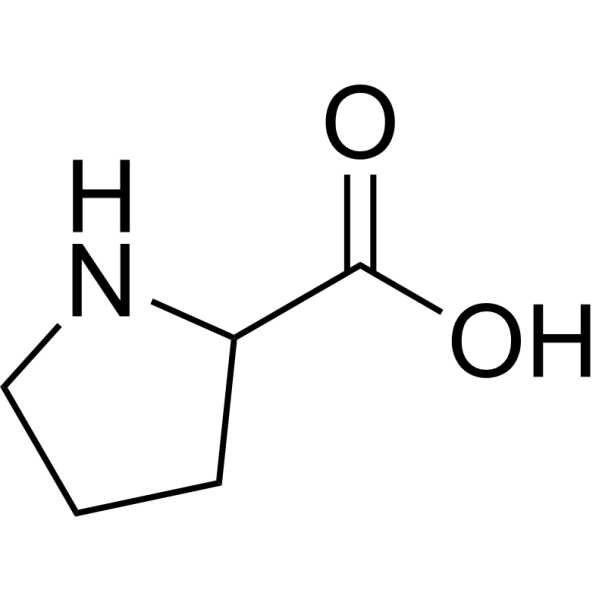
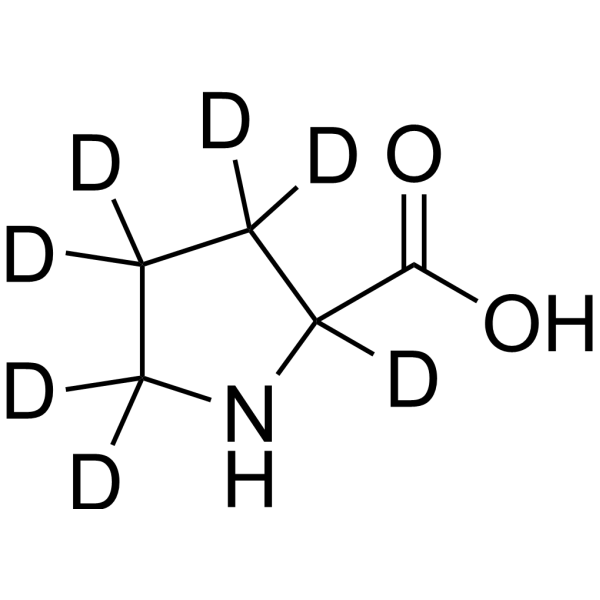
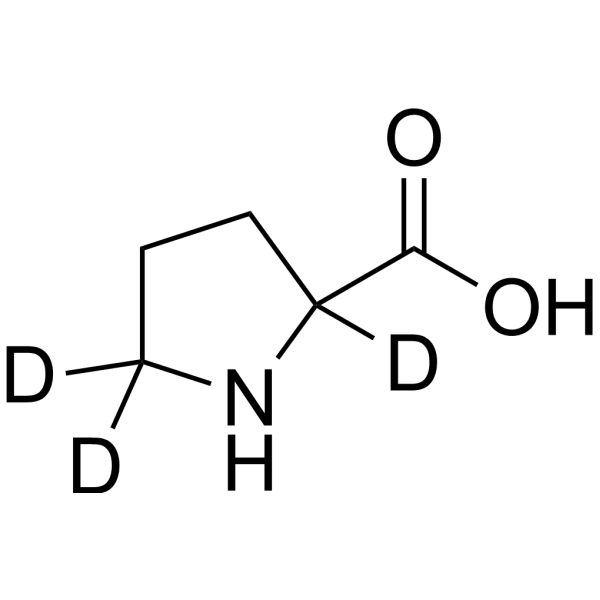
    DL-Proline is a racemic mixture of D-Proline and L-Prolin. DL-Proline is a cyclic imino acid with a five-membered ring structure. DL-Proline is a key structural unit in peptide synthesis. DL-Proline can stabilize the β-turn conformation and affect the secondary structure of the peptide. DL-Proline has biological activities such as regulating peptide conformation and enhancing the stability of cyclic peptides. DL-Proline can be used to study diseases related to peptide structure and function, such as cancer and bacterial infection .
    DL-Proline
  • HY-W004812

    (1S,3S)-3-[(tert-Butoxycarbonyl)amino]cyclopentanecarboxylic acid

    Drug Intermediate SARS-CoV Infection
    BOC-(1R,3S)-3-aminocyclopentane carboxylic acid ((1S,3S)-3-[(tert-Butoxycarbonyl)amino]cyclopentanecarboxylic acid) is a conformationally constrained peptide building block and a key component of SARS-CoV-2 main protease (Mpro) inhibitors. When incorporated into macrocyclic peptides, BOC-(1R,3S)-3-aminocyclopentane carboxylic acid not only helps generate high-affinity Mpro inhibitors by preorganizing the secondary structure of peptides, but also exerts sequence-dependent functional inhibition on the hydrolytic activity of Mpro. BOC-(1R,3S)-3-aminocyclopentane carboxylic is widely used in COVID-19-related research .
    BOC-(1R,3S)-3-aminocyclopentane carboxylic acid
  • HY-153840A

    Toll-like Receptor (TLR) Inflammation/Immunology
    ODN INH-18 sodium is a linear 24-mer class B INH-ODN in which the 5' INH-ODN 4084-F sequence was followed by a random stretch of 12 nucleotides lacking the ability to form significant secondary structures. ODN INH-18 sodium showes inhibitory potency for TLR9 ligand-induced IFN-α production.
    ODN INH 18 sodium
  • HY-N8671

    Amyloid-β Apoptosis Reactive Oxygen Species (ROS) SARS-CoV Infection Neurological Disease
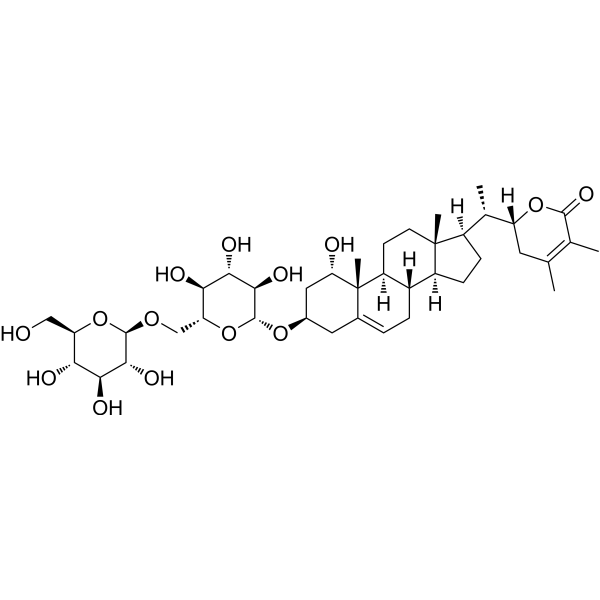
    Withanoside V is a blood-brain barrier-permeable withanolide derivative . Withanoside V binds strongly to Sudlow I (domain IIA) of human serum albumin (HSA) to form a stable complex and alter the secondary structure of albumin, thereby increasing helix content and reducing β-sheet and random coil. Withanoside V binds to Aβ (1-42) to block the interaction between monomers and subsequent aggregation. Withanoside V inhibits the viability of neuroblastoma cells, reduces the number of apoptotic cells induced by Aβ (1-42), and decreases ROS production. Withanoside V inhibits SARS-CoV-2 Mpro. Withanoside V can be used for research on Alzheimer's disease and coronavirus disease 2019 .
    Withanoside V
  • HY-142981

    DODA

    Liposome Others
    Dioctadecylamine (DODA) is a secondary amine that has been shown to self-organize in plate-like structures in aqueous solution. Dioctadecylamine exhibits sufficiently hydrophobic properties of nanoparticles and good dispersibility in nonpolar solvent. Dioctadecylamine does not form a monolayer above pH 3.9 .
    Dioctadecylamine
  • HY-153840

    Toll-like Receptor (TLR) Inflammation/Immunology
    ODN INH-18 is a linear 24-mer class B INH-ODN in which the 5' INH-ODN 4084-F sequence was followed by a random stretch of 12 nucleotides lacking the ability to form significant secondary structures. ODN INH-18 showes inhibitory potency for TLR9 ligand-induced IFN-α production.
    ODN INH 18
  • HY-N5158B

    Antibiotic Endogenous Metabolite Infection
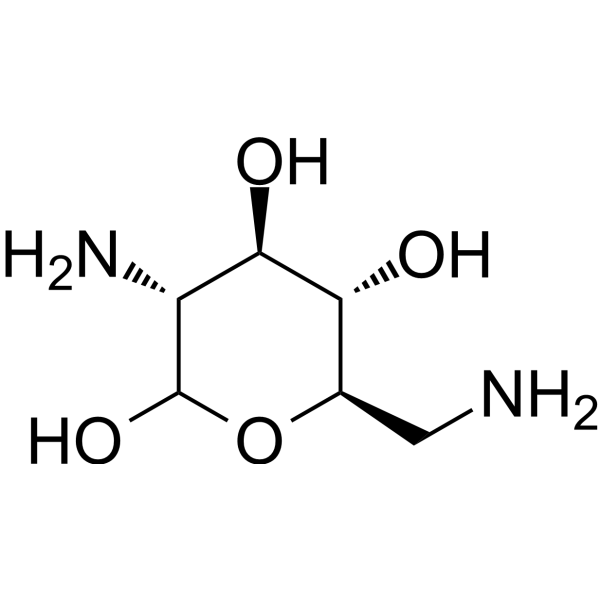
    (5S)-Neosamine C is an aminocyclic alcohol antibiotic derived from microbial secondary metabolites. (5S)-Neosamine C has a cyclized structure and can be used for biosynthesis of Neomycins (HY-B0470).
    (5S)-Neosamine C
  • HY-155247

    Tyrosinase Others
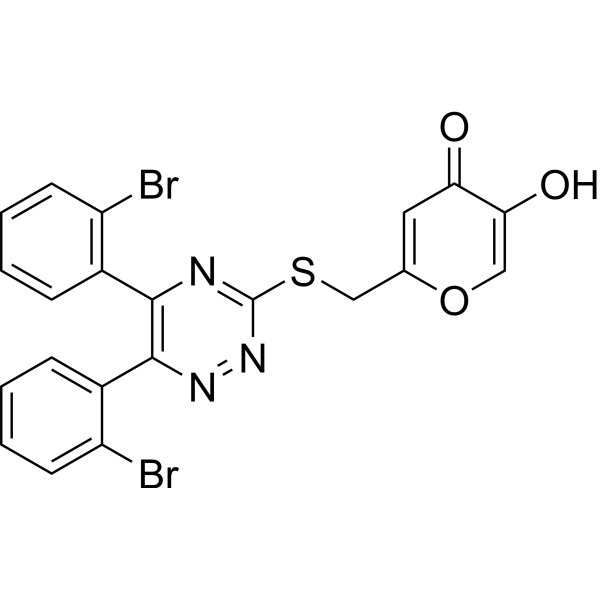
    Tyrosinase-IN-14 (compound 7m) is a tyrosinase inhibitor that reduces the catalytic activity of tyrosinase by changing its secondary structure. Tyrosinase-IN-14 has low cytotoxicity and anti-browning activity in fruits. Tyrosinase-IN-14 effectively inhibits banana browning during storage .
    Tyrosinase-IN-14
  • HY-149668

    Glycosidase Metabolic Disease
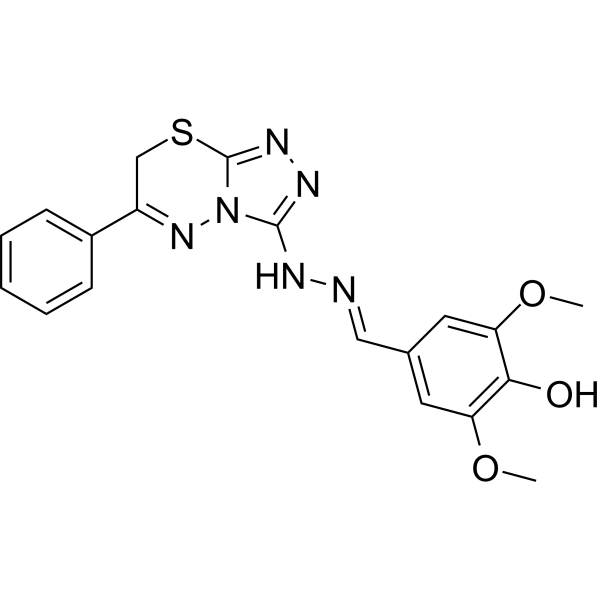
    α-Glucosidase-IN-41 (compound 5o) is a potent α-glucosidase inhibitor. α-Glucosidase-IN-41 can arise the changed secondary structure of α-Glu to hinder enzyme catalytic activity. α-Glucosidase-IN-41 can be used for diabetes mellitus research .
    α-Glucosidase-IN-41
  • HY-153840B

    Toll-like Receptor (TLR) Inflammation/Immunology
    ODN INH-18 triethylamine is a linear 24-mer class B INH-ODN in which the 5' INH-ODN 4084-F sequence was followed by a random stretch of 12 nucleotides lacking the ability to form significant secondary structures. ODN INH-18 triethylamine showes inhibitory potency for TLR9 ligand-induced IFN-α production.
    ODN INH 18 triethylamine
  • HY-158235

    Tyrosinase Others
    Tyrosinase-IN-27 (compound 6f) is a tyrosinase (TYR) inhibitor (IC50: 0.88 μM) that statically quenches TYR. Tyrosinase-IN-27 increases the hydrophobicity of the enzyme microenvironment by binding to TYR, reducing the content of α-helices in the enzyme and changing its secondary structure. Tyrosinase-IN-27 can be used in the food industry to effectively inhibit the browning of lotus root slices. .
    Tyrosinase-IN-27
  • HY-P10035

    Amyloid-β Neurological Disease
    β Amyloid(28-35) human is a β-amyloid peptide (Abeta), a lipid-induced amyloid core fragment. β Amyloid oligomers are neurotoxic, and β Amyloid(28-35) human can interact with neuronal membranes, regulate secondary structure and neurotoxicity, and cause Alzheimer's disease. β Amyloid(28-35) human has anisotropic effects on the acidic phospholipid DPH, resulting in enhanced internal fluidity of lipid membrane bilayers .
    β Amyloid(28-35) human
  • HY-149579

    Glycosidase Metabolic Disease
    α-Glucosidase-IN-36 (compound 5g) is a potent α-glucosidase inhibitor, with an IC50 of 6.69 ± 0.18 μM, Ki and Kis of 1.65 μM and 4.54 μM, respectively. α-Glucosidase-IN-36 may inhibit α-glucosidase activity by binding with its active site as well as changing the secondary structure of α-glucosidase. α-Glucosidase-IN-36 can be used for type 2 diabetes mellitus (T2DM) research .
    α-Glucosidase-IN-36
  • HY-168326

    DNA/RNA Synthesis Microtubule/Tubulin Cancer
    Antiproliferative agent-64 (Compound 76) is an inhibitor for eukaryotic translation initiation factor 4E (eIF4E), that block the secondary structure of mRNA, thereby inhibiting protein translation. Antiproliferative agent-64 inhibits the 5' untranslated region (5'UTR) of c-Myc (c-myc 5'UTR) with an EC50 of 1.2 nM, inhibits 5'UTR encoding tubulin (tub 5'UTR) with an EC50 of 40 nM. Antiproliferative agent-64 inhibits the proliferation of MDA-MB-231 with an EC50 of 7 nM .
    Antiproliferative agent-64
  • HY-N12476

    Drug Derivative Others
    Tenaxin II (Compound 3) is a flavonoid compound found in the Scutellaria baicalensis Georgi. Flavonoids are a class of plant secondary metabolites with polyphenol structures, possessing antioxidant, anti-inflammatory, antimutagenic and anticarcinogenic properties, as well as the ability to regulate the function of key cellular enzymes .
    Tenaxin II
  • HY-W401062

    1,2-Epoxytridecane

    Biochemical Assay Reagents Others
    2-Undecyloxirane (1,2-Epoxytridecane) is a chemical reagent featuring an epoxy group on a C11 chain. The epoxy group undergoes ring opening in the presence of nucleophiles to form a branched structure containing a secondary alcohol. Compounds such as this may be used as intermediates in building lipids for use in lipid nanoparticles.
    2-Undecyloxirane
  • HY-163113

    Endogenous Metabolite Cancer
    Anticancer agent 180 (compound 4) is a secondary metabolite present in fungal strains and extracted through physical interaction with Streptomyces sp. Anticancer agent 180 has potential anti-tumor activity and can inhibit the migration of MDA-MB-231 breast cancer cells .
    Anticancer agent 180
  • HY-126563

    Others Others
    Phyllospadine (Compound I) is a flavonoidal alkaloid found in the sea-grass Phyllospadix iwatensis. Flavonoids constitute a class of plant secondary metabolites characterized by a polyphenolic structure; they possess antioxidant, anti-inflammatory, anti-mutagenic, and anti-carcinogenic properties, as well as the capacity to modulate the functions of key cellular enzymes, finding application in the treatment of diseases such as cancer, Alzheimer's disease, and atherosclerosis .
    Phyllospadine
  • HY-N12639

    TRP Channel Others
    β-Sanshool is found in Zanthoxylum bungeanum and has a unique pungent taste. β-Sanshool is a TRPV1 activator that activates TRPV1 to increase intracellular calcium concentration. β-Sanshool has antioxidant effects and enhances free radical scavenging activity. β-Sanshool increases the thermal denaturation temperature and stabilizes protein structures. β-Sanshool induces sensory experiences of numbness and bitterness .
    β-Sanshool
  • HY-178383

    Glycosidase Metabolic Disease
    α-Glucosidase-IN-98 is a potent orally active α-Glucosidase inhibitor with an IC50 of 18.1 μM. α-Glucosidase-IN-98 reversibly binds with α-Glucosidase via hydrogen bonds, electrostatic interactions and hydrophobic effects, which induces significant conformational alterations in the secondary structure of α-Glucosidase. α-Glucosidase-IN-98 decreases postprandial hyperglycemia in Starch (HY-B2225B)/Sucrose (HY-B1779)-challenged mice. α-Glucosidase-IN-98 can be used for type 2 diabetes mellitus (T2DM) research .
    α-Glucosidase-IN-98
  • HY-113138R

    N3-Methyluridine (Standard)

    Endogenous Metabolite Reference Standards Metabolic Disease
    3-Methyluridine (Standard) is the analytical standard of 3-Methyluridine. This product is intended for research and analytical applications. 3-Methyluridine (m3U; N3-Methyluridine) is a methylated nucleotide present in ribosomal RNA (rRNA), mainly targeting specific base sites of RNA molecules such as 23S rRNA. 3-Methyluridine can introduce a methyl group at the N3 position of uracil, affecting the secondary structure stability and base pairing ability of RNA, and regulating ribosome function. For example, it affects ribosomal subunit binding and tRNA interaction. 3-Methyluridine is often used as a key raw material for the synthesis of modified nucleotides, and is used to construct RNA oligonucleotides containing methylation modifications to study the effects of RNA methylation on gene expression and drug resistance .
    3-Methyluridine (Standard)
  • HY-N18262

    Biochemical Assay Reagents Others
    Humulinone is a foam-enhancing agent. Humulinone interacts with Protein Z, with a binding constant of 1.64 × 10 5 M -1. Humulinone improves the foamability, foam stability and foam texture of Protein Z. Humulinone can be used in beer research .
    Humulinone

Inquiry Online

Your information is safe with us. * Required Fields.

Salutation


Country or Region *

Applicant Name *


Organization Name *

Department *


Email Address *


Product Name *

Cat. No.


Requested quantity *

Phone Number *


Remarks

Inquiry Online

Inquiry Information

Product Name:
Cat. No.:
Quantity:
MCE Japan Authorized Agent:

