8 Results for "

sequence homology

" in MedChemExpress (MCE) Product Catalog:
Products (8)

8 Results for "sequence homology" in MCE Product Catalog:

27
27 Cited Publications
Cat. No.: HY-150150
Purity:  96.40%
Research Areas:  

Inflammation/Immunology

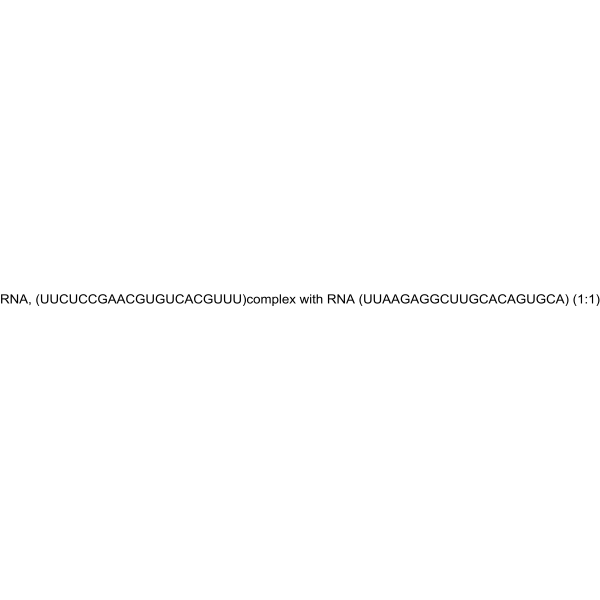
SiRNA Negative Control is a siRNA of 21 nucleotides, and can be used as a negative control. SiRNA Negative Control has no homology to most known gene sequence. SiRNA Negative Control can be used in human, mouse and rat cells in vitro. SiRNA Negative Control can be used as experimental control benchmark, verification of experimental reliability and standardization reference. SiRNA Negative Control is a common negative control used in most research articles.
loading...
    loading...
7
7 Cited Publications
Cat. No.: HY-P0139
CAS No.: 198284-64-9
Target:  

Gap Junction Protein

Research Areas:  

Cardiovascular Disease

Gap 27, a synthetic connexin43 mimetic peptide, is a gap junction inhibitor. Gap 27 possesses conserved sequence homology to a portion of the second extracellular loop leading into the fourth transmembrane connexin segment .
loading...
    loading...
Cat. No.: HY-P1183
CAS No.: 126985-97-5
Target:  

Peptides

Research Areas:  

Neurological Disease Endocrinology

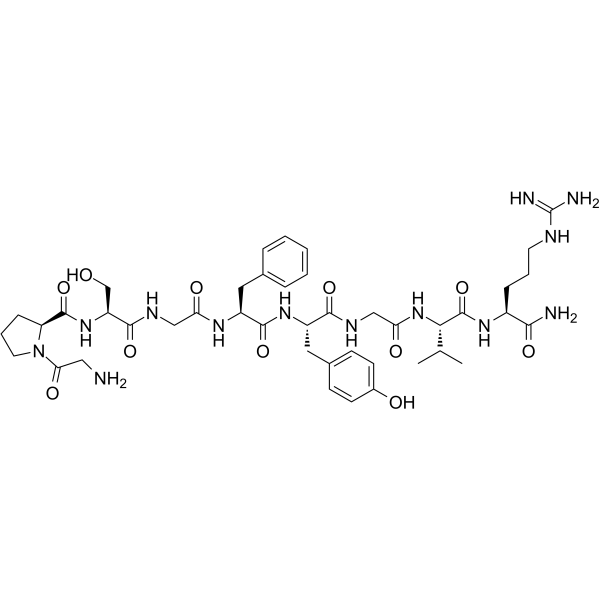
Locustatachykinin I is a insect tachykinin-related peptide isolated from Locusta migratoria. Locustatachykinin I exhibits sequence homologies with the vertebrate tachykinins. In Lacanobia, Locustatachykinin I is also a substrate for a deamidase .
loading...
    loading...
Cat. No.: HY-174499
Target:  

mRNA

Research Areas:  

Others

Cas9 Nickase D10A mRNA expresses a version of the Streptococcus pyogenes SF370 Cas9 protein (CRISPR Associated Protein 9) that contains a D10A amino acid substitution. This mRNA also contains a C-terminal nuclear localization signal followed by a HA tag.Cas9 functions as part of the CRISPR (clustered regularly interspaced short palindromic repeats) genome editing system. In the CRISPR system, an RNA guide sequence targets the site of interest and the Cas9 protein is employed to perform the DNA cleavage. While wild-type Cas9 creates a double-stranded break at the target site, Cas9 nickase creates a single-stranded break. This favors homology-directed repair and decreases the occurrence of non-homologous end joining.
loading...
    loading...
Cat. No.: HY-P10544
CAS No.: 223744-37-4
Target:  

Interleukin Related

Research Areas:  

Others

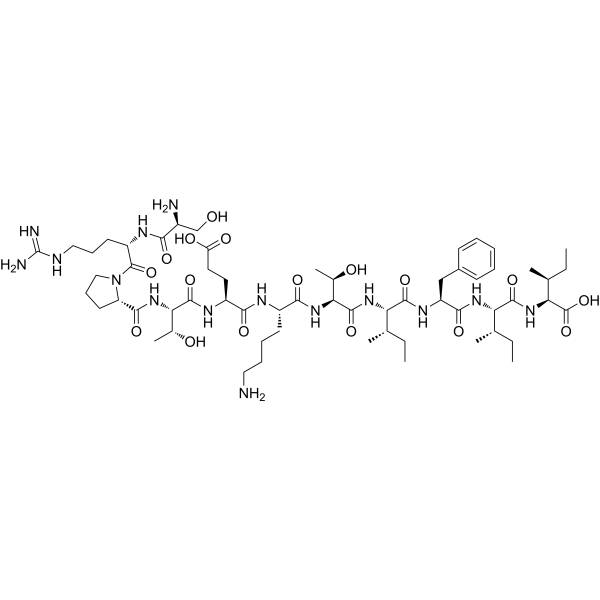
Humanized anti-tac (HAT) binding peptide is a peptide that can specifically bind to the Fc region of HAT. HAT is a humanized monoclonal antibody against the low affinity p55 subunit of the interleukin IL-2 receptor. Humanized anti-tac (HAT) binding peptide can be used to develop affinity chromatography media to purify specific monoclonal antibodies .
loading...
    loading...
Cat. No.: HY-P3284
CAS No.: 79396-78-4
Target:  

Peptides

Research Areas:  

Cancer

Mastoparan M tetraacetate is a tetrapeptide amide isolated from the Chinese giant hornet (Vespa mandarinia). The amino acid sequence of Mastoparan M tetraacetate shares some structural homology with Mastoparan X, a wasp venom isolated from the Chinese giant hornet as well .
loading...
    loading...
Cat. No.: HY-P1183A
Target:  

Peptides

Research Areas:  

Neurological Disease Endocrinology

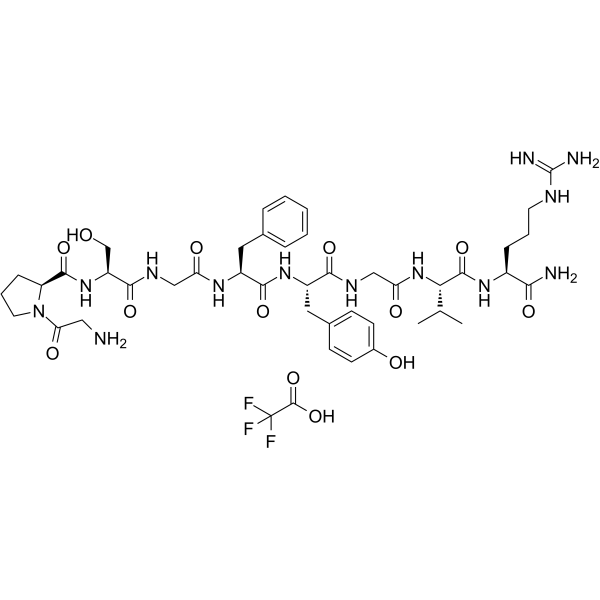
Locustatachykinin I TFA is a insect tachykinin-related peptide isolated from Locusta migratoria. Locustatachykinin I TFA exhibits sequence homologies with the vertebrate tachykinins. In Lacanobia, Locustatachykinin I TFA is also a substrate for a deamidase .
loading...
    loading...
Cat. No.: HY-187252S
[U- 15N]-β-Synuclein is the 15N-labeled β-Synuclein. Although β-synuclein shares sequence homology with α-synuclein, it inhibits the latter's abnormal aggregation and is implicated in the pathogenesis of neurodegenerative diseases like Parkinson's disease. This isotope can be used in NMR studies to investigate disease mechanisms and in mass spectrometry analysis.
loading...
    loading...

