

31 Results for "

sequence-specificity

" in MedChemExpress (MCE) Product Catalog:
Products (31)

31 Results for "sequence-specificity" in MCE Product Catalog:

4
4 Cited Publications
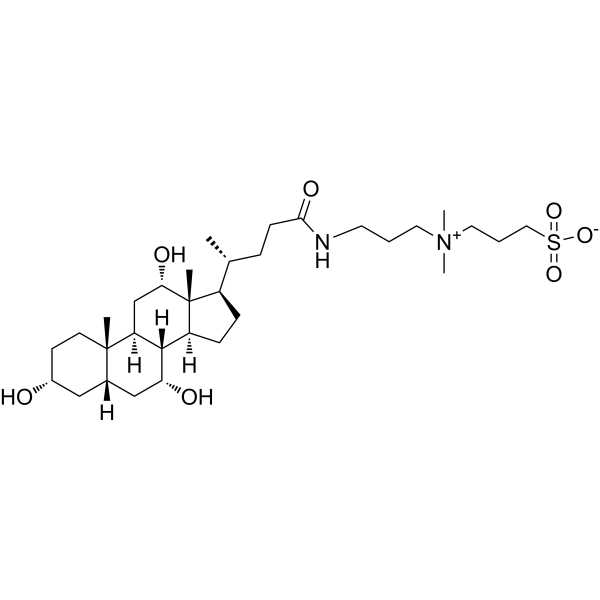
Cat. No.: HY-15435
CAS No.: 75621-03-3
Purity:  99.91%
Research Areas:  

Others

CHAPS is a cholic acid-derived, sulfobetaine-type zwitterionic detergent and micelle-forming agent. CHAPS exhibits properties of weak cationic or nonionic surfactants in different solution systems, undergoes micellization, and forms small, loose hydrophilic aggregates that are temperature-dependent. CHAPS stabilizes mononucleosomes under different ionic strengths, reduces nucleosome sequence specificity, promotes sliding of histone cores along DNA, solubilizes Tamm-Horsfall protein to reduce its interference with urinary exosome isolation, and maintains vesicle structure and the activity of related proteins at the same time. CHAPS is used to recover native folded fusion proteins, enhance the binding capacity of GST fusion proteins, and restore GST enzyme activity. However, CHAPS cannot refold proteins denatured by urea, guanidine hydrochloride or heat, nor can it construct the structure of intrinsically disordered proteins. CHAPS is commonly used in research on the separation and purification of membrane proteins .
loading...
    loading...
4
4 Cited Publications
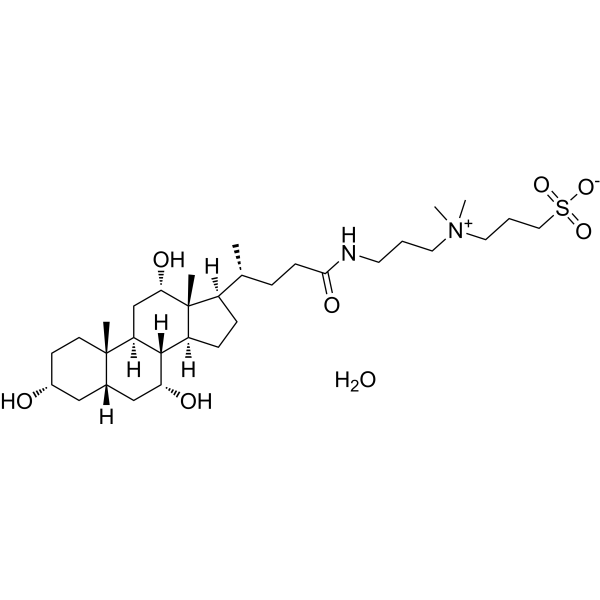
Cat. No.: HY-15435A
CAS No.: 331717-45-4
Purity:  ≥98.0%
CHAPS hydrate is a cholic acid-derived, sulfobetaine-type zwitterionic detergent and micelle-forming agent. CHAPS hydrate exhibits properties of weak cationic or nonionic surfactants in different solution systems, undergoes micellization, and forms small, loose hydrophilic aggregates that are temperature-dependent. CHAPS hydrate stabilizes mononucleosomes under different ionic strengths, reduces nucleosome sequence specificity, promotes sliding of histone cores along DNA, solubilizes Tamm‑Horsfall protein to reduce its interference with urinary exosome isolation, and maintains vesicle structure and the activity of related proteins at the same time. CHAPS hydrate is used to recover native folded fusion proteins, enhance the binding capacity of GST fusion proteins, and restore GST enzyme activity. However, CHAPS hydrate cannot refold proteins denatured by urea, guanidine hydrochloride or heat, nor can it construct the structure of intrinsically disordered proteins. CHAPS hydrate is commonly used in research on the separation and purification of membrane proteins .
loading...
    loading...
4
4 Cited Publications
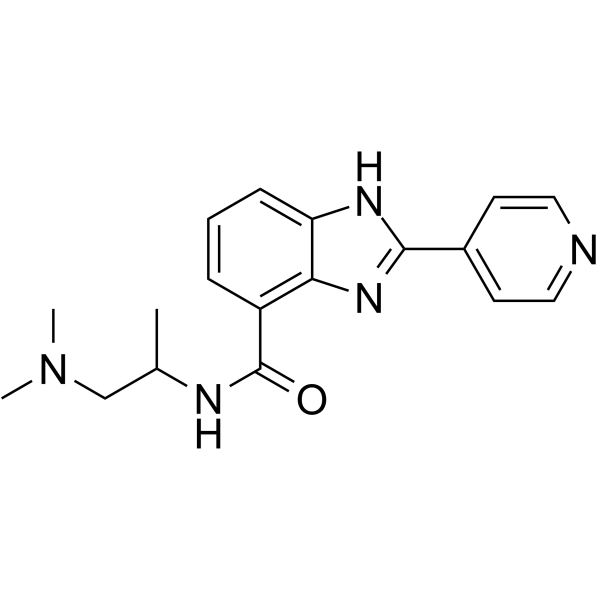
Cat. No.: HY-112951
CAS No.: 2438721-44-7
Purity:  99.91%
Target:  

STING

Research Areas:  

Cancer

ChX710 could prime the type I interferon response to cytosolic DNA, which induces the ISRE promoter sequence, specific cellular Interferon-Stimulated Genes (ISGs), and the phosphorylation of Interferon Regulatory Factor (IRF) 3.
loading...
    loading...
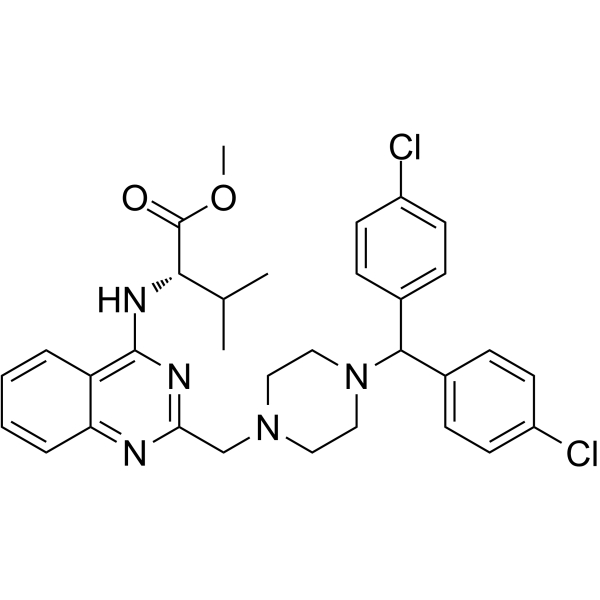
3
3 Cited Publications
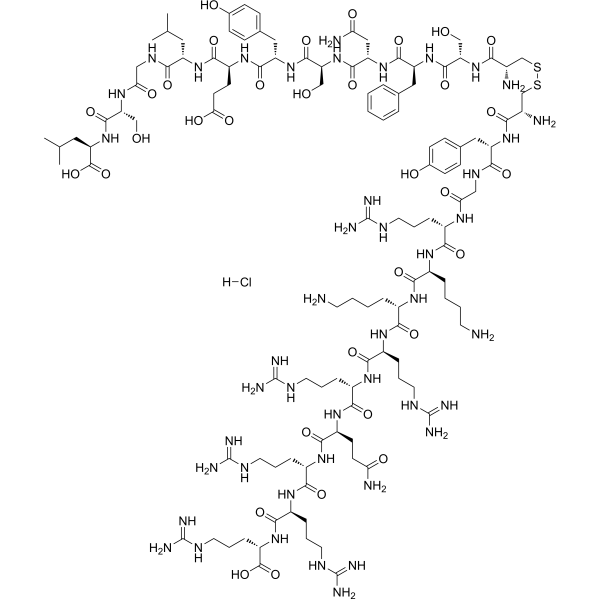
Cat. No.: HY-106262B
Purity:  99.73%
Synonyms: KAI-9803 hydrochloride; BMS-875944 hydrochloride
Target:  

PKC

Delcasertib (KAI-9803) hydrochloride is a potent and selective δ-protein kinase C (δPKC) inhibitor. Delcasertib (KAI-9803) hydrochloride could ameliorate injury associated with ischemia and reperfusion in animal models of acute myocardial infarction (MI) .
loading...
    loading...
1
1 Cited Publications
Cat. No.: HY-P1103
CAS No.: 1030384-98-5
Target:  

CXCR

Research Areas:  

Cancer

CTCE-9908 is a potent and selective CXCR4 antagonist. CTCE-9908 induces mitotic catastrophe, cytotoxicity and inhibits migration in CXCR4-expressing ovarian cancer cells .
loading...
    loading...
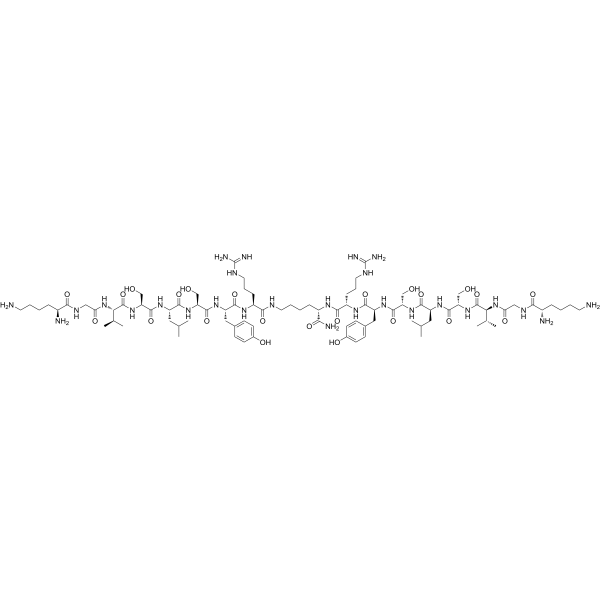
Cat. No.: HY-132590A
Purity:  93.16%
Synonyms: ALN-TTRSC sodium
Revusiran (ALN-TTRSC) sodium is an RNA interference agent targeting the mRNA of transthyretin (Transthyretin, TTR). Revusiran sodium mediates sequence-specific degradation of TTR mRNA through RNA interference, reduces the synthesis of TTR protein, binds to GalNAc ligands, and is taken up by hepatocytes via the asialoglycoprotein receptor. Revusiran sodium exhibits favorable nonclinical safety profiles. Revusiran sodium can be used in studies related to transthyretin-mediated amyloidosis .
loading...
    loading...
Cat. No.: HY-122578
CAS No.: 922150-12-7
Purity:  99.93%
Target:  

MDM-2/p53

Research Areas:  

Cancer

P53R3 is a potent p53 reactivator and restores sequence-specific DNA binding of p53 hot spot mutants, including p53 R175H, p53 R248W and p53 R273H. P53R3 induces p53-dependent antiproliferative effects with much higher specificity than PRIMA-1. P53R3 enhances the recruitment of wild-type p53 and p53 M237I to several target gene promoters. P53R3 strongly enhances the mRNA, total protein and cell surface expression of the death receptor death receptor 5 (DR5). P53R3 is used for cancer research .
loading...
    loading...
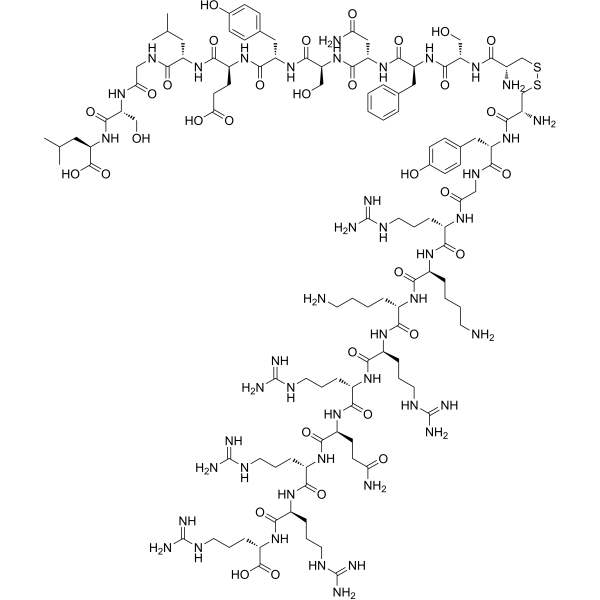
Cat. No.: HY-106262
CAS No.: 949100-39-4
Synonyms: KAI-9803; BMS-875944
Target:  

PKC

Delcasertib (KAI-9803) is a potent and selective δ-protein kinase C (δPKC) inhibitor. Delcasertib (KAI-9803) could ameliorate injury associated with ischemia and reperfusion in animal models of acute myocardial infarction (MI) .
loading...
    loading...
Cat. No.: HY-P3215
CAS No.: 19645-28-4
Target:  

Oxytocin Receptor

Research Areas:  

Endocrinology

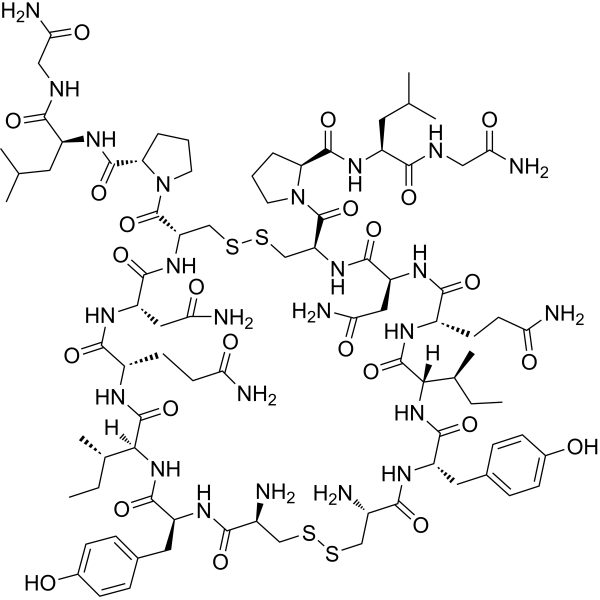
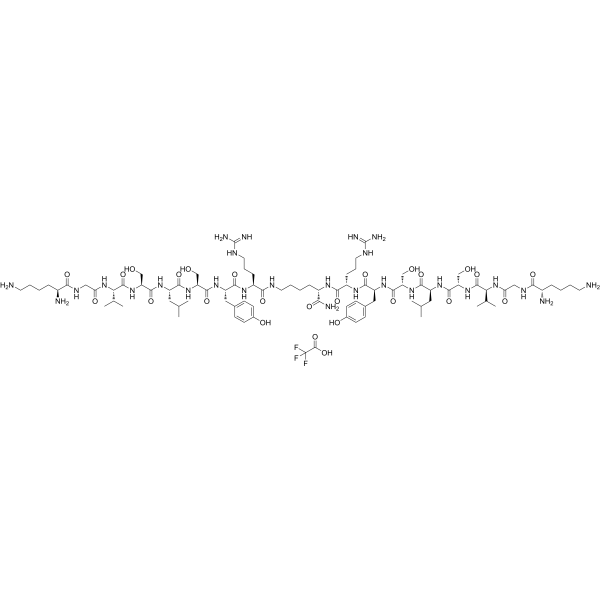
Oxytocin parallel dimer is the disulfide-bridged homo peptide dimer. Oxytocin dimer has oxytocin and vasopressin-like activity with less toxic than oxytocin .
loading...
    loading...
Cat. No.: HY-P3222
CAS No.: 20054-93-7
Target:  

Peptides

Research Areas:  

Endocrinology

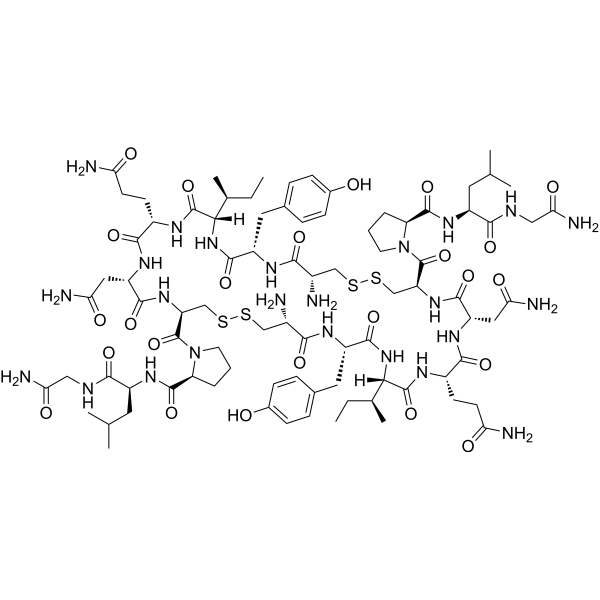
Oxytocin antiparallel dimer is the disulfide-bridged homo peptide dimer. Oxytocin dimer has oxytocin and vasopressin-like activity with less toxic than oxytocin .
loading...
    loading...
Cat. No.: HY-P1286
CAS No.: 172308-76-8
Target:  

PKC

Research Areas:  

Neurological Disease

PKC β pseudosubstrate is a selective cell-permeable inhibitor of PKC .
loading...
    loading...
Cat. No.: HY-132590
CAS No.: 1438322-82-7
Synonyms: ALN-TTRSC
Revusiran (ALN-TTRSC) is an RNA interference agent targeting the mRNA of transthyretin (Transthyretin, TTR). Revusiran mediates sequence-specific degradation of TTR mRNA through RNA interference, reduces the synthesis of TTR protein, binds to GalNAc ligands, and is taken up by hepatocytes via the asialoglycoprotein receptor. Revusiran exhibits favorable nonclinical safety profiles. Revusiran can be used in studies related to transthyretin-mediated amyloidosis .
loading...
    loading...
Cat. No.: HY-177646
CAS No.: 2572991-83-2
Synonyms: ALN-APP
Mivelsiran (ALN-APP) is an siRNA targeting the β-amyloid precursor protein (APP). Mivelsiran induces sequence-specific degradation of APP mRNA via RNA interference, thereby reducing the levels of APP protein and downstream amyloid cleavage products. Mivelsiran reduces β-amyloid protein levels in the brain, alleviates neuroinflammation, and attenuates microglial proliferation. Mivelsiran can be used for research on early-onset Alzheimer's disease .
loading...
    loading...
Cat. No.: HY-135900
CAS No.: 2412923-79-4
Target:  

ADC Payloads Bacterial

Research Areas:  

Cancer

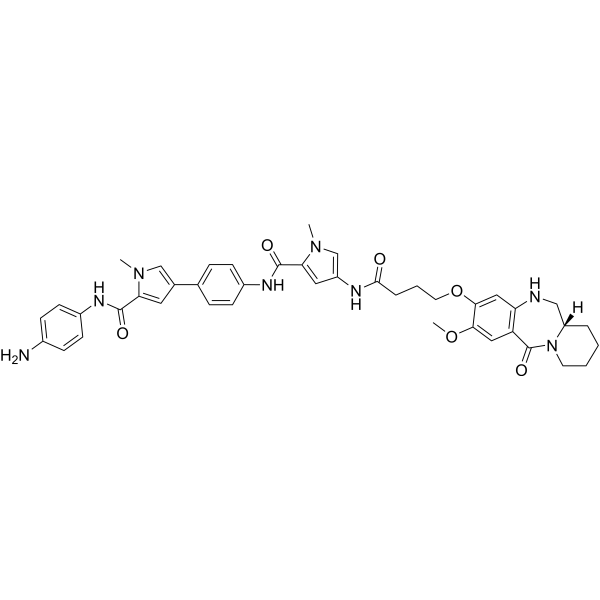
Aniline-MPB-amino-C3-PBD is a cytotoxic agent comprised non-alkylating group. Aniline-MPB-amino-C3-PBD is a sequence-selective DNA minor-groove binding agent. Aniline-MPB-amino-C3-PBD acts as the payload for ADCs. Antimicrobial activity .
loading...
    loading...
Cat. No.: HY-177646A
Synonyms: ALN-APP sodium
Mivelsiran (ALN-APP) sodium is an siRNA targeting the β-amyloid precursor protein (APP). Mivelsiran sodium induces sequence-specific degradation of APP mRNA via RNA interference, thereby reducing the levels of APP protein and downstream amyloid cleavage products. Mivelsiran sodium reduces β-amyloid protein levels in the brain, alleviates neuroinflammation, and attenuates microglial proliferation. Mivelsiran sodium can be used for research on early-onset Alzheimer's disease .
loading...
    loading...
Cat. No.: HY-P1103A
Target:  

CXCR

Research Areas:  

Cancer

CTCE-9908 TFA is a potent and selective CXCR4 antagonist. CTCE-9908 TFA induces mitotic catastrophe, cytotoxicity and inhibits migration in CXCR4-expressing ovarian cancer cells .
loading...
    loading...
Cat. No.: HY-P1321
CAS No.: 158859-98-4
Synonyms: 1229U91; GW1229
Research Areas:  

Neurological Disease

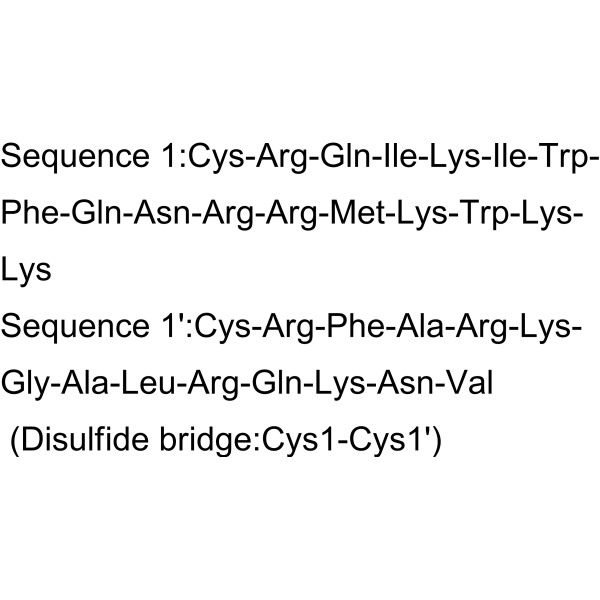
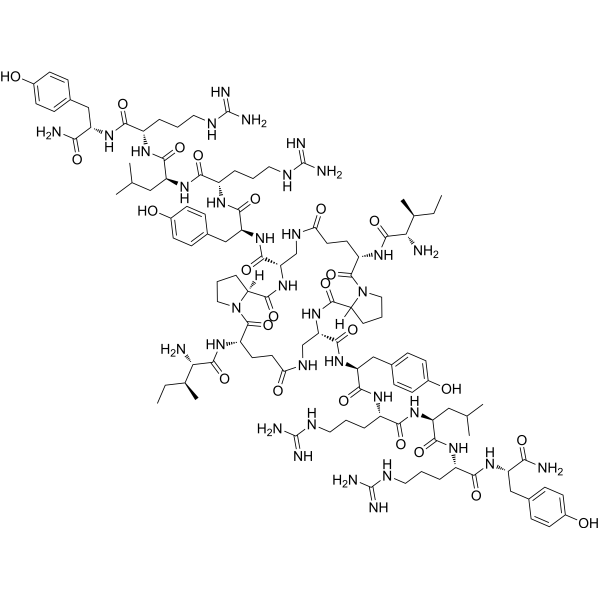
GR231118, an analogue of the C-terminus of neuropeptide Y, is a potent , competitive and relative seletive antagonist at human neuropeptide Y Y receptor with a pKi of 10.4. GR231118 a potent agonist at the human neuropeptide Y Y4 receptor (pEC50=8.6; pKi=9.6) and a weak agonist at the human and rat neuropeptide YY2 and Y5 receptors. GR231118 also has high affinity for the mouse neuropeptide Y Y6 receptor (pKi= 8.8) .
loading...
    loading...
Cat. No.: HY-E70209
CAS No.: 81458-00-6
Target:  

DNA Methyltransferase

Research Areas:  

Cancer

EcoRI Methyltransferase is a bacterial sequence-specific S-adenosyl-L-methionine-dependent DNA methyltransferase. EcoRI Methyltransferase relies on a complex conformational mechanism to achieve its remarkable specificity, including DNA bending, base flipping and intercalation into the DNA .
loading...
    loading...
Cat. No.: HY-P1286A
Target:  

PKC

Research Areas:  

Neurological Disease

PKC β pseudosubstrate TFA is a selective cell-permeable inhibitor of PKC .
loading...
    loading...
Cat. No.: HY-P1321A
Synonyms: 1229U91 TFA; GW1229 TFA
Research Areas:  

Neurological Disease

GR231118 TFA, an analogue of the C-terminus of neuropeptide Y, is a potent , competitive and relative seletive antagonist at human neuropeptide YY receptor with a pKi of 10.4. GR231118 a potent agonist at the human neuropeptide YY4 receptor (pEC50=8.6; pKi=9.6) and a weak agonist at the human and rat neuropeptide Y Y2 and Y5 receptors. GR231118 also has high affinity for the mouse neuropeptide YY6 receptor (pKi= 8.8) .
loading...
    loading...

