
1. Search Result
Search Result
Results for "

side

" in MedChemExpress (MCE) Product Catalog:

300

Inhibitors & Agonists

13

Screening Libraries

4

Fluorescent Dye

12

Biochemical Assay Reagents

23

Peptides

2

MCE Kits

2

Inhibitory Antibodies

24

Natural
Products

1

Recombinant Proteins

8

Isotope-Labeled Compounds

1

Antibodies

13

Click Chemistry

3

Oligonucleotides

Cat. No. Product Name Target Research Areas Chemical Structure
  • HY-138171
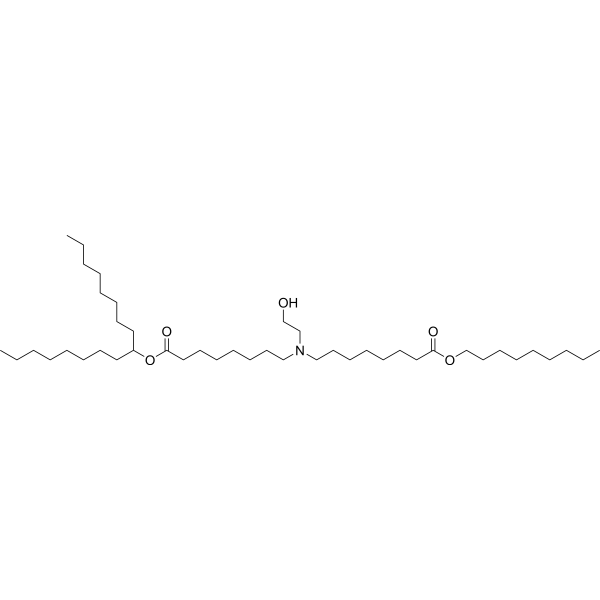
    Lipid 5
    3 Publications Verification

    Liposome Others
    Lipid 5 is an amino lipid that affords efficient mRNA delivery in rodent and primate models. Lipid 5 shows optimal pharmacokinetics and non-toxic side effects .
    Lipid 5
  • HY-P3208
    Endoproteinase Lys-C
    2 Publications Verification

    Biochemical Assay Reagents Others
    Endoproteinase Lys-C is a protease that cleaves proteins on the C-terminal side of lysine residues and is commonly used for protein sequencing .
    Endoproteinase Lys-C
  • HY-109017

    VBP15

    Glucocorticoid Receptor Mineralocorticoid Receptor NF-κB Inflammation/Immunology
    Vamorolone (VBP15) is a first-in-class, orally active dissociative steroidal anti-inflammatory agent and membrane-stabilizer. Vamorolone improves muscular dystrophy without side effects. Vamorolone shows potent NF-κB inhibition and substantially reduces hormonal effects .
    Vamorolone
  • HY-101737
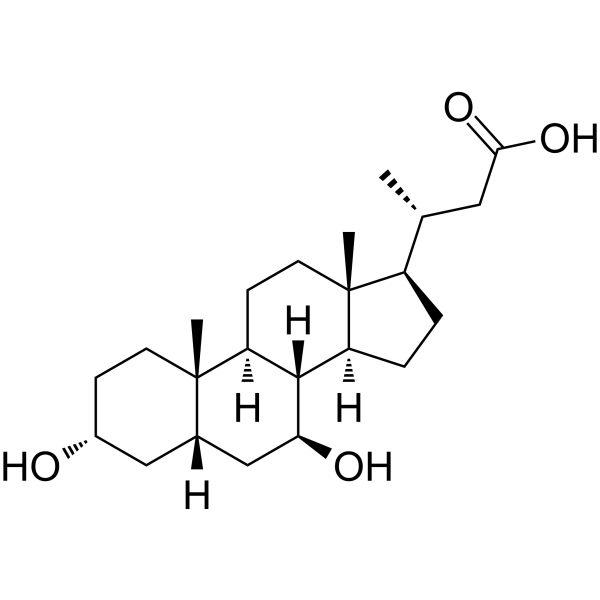
    24-Norursodeoxycholic acid
    1 Publications Verification

    Norucholic acid; nor-UDCA

    Biochemical Assay Reagents Inflammation/Immunology
    24-norursodeoxycholic acid (Norucholic acid) is a side chain-shortened C23 homologue of UDCA and has shown potent anti-cholestatic, anti-inflammatory and anti-fibrotic properties.
    24-Norursodeoxycholic acid
  • HY-N9457
    Norcholic acid
    1 Publications Verification

    Others Metabolic Disease Endocrinology
    Norcholic acid is a normal minorbile C23 bile acid having four side chain and exsits in human urine and meconium. Norcholic acid can become prominent under certain pathological conditions. Norcholic acid is efficiently absorbed from intestine and quickly excreted into the bile but not into urine .
    Norcholic acid
  • HY-P3208A
    Endoproteinase Lys-C (Tag-free)
    1 Publications Verification

    Biochemical Assay Reagents Others
    Endoproteinase Lys-C (Tag-free) is a protease that cleaves proteins on the C-terminal side of lysine residues and is commonly used for protein sequencing .
    Endoproteinase Lys-C (Tag-free)
  • HY-108910B
    TLCK-treated Chymotrypsin
    1 Publications Verification

    Ser/Thr Protease Others
    TLCK-treated Chymotrypsin is a serine protease. Chymotrypsin cleaves protein chains at the carboxyl side of aromatic amino acids. TLCK treated to inactivate residual tryspin activity .
    TLCK-treated Chymotrypsin
  • HY-110080

    Dopamine Receptor Neurological Disease
    Lisuride (maleate) is a potent agonist of dopamine with a probably direct action on dopaminergic receptors. Lisuride (maleate) is an ergot derivative. Lisuride (maleate) releases the premenstrual mastalgia without significant side effects .
    Lisuride maleate
  • HY-119809

    Apoptosis Endogenous Metabolite Cancer
    Violacein, a secondary metabolite produced by several microorganisms, possesses potent anticancer and low side effects. Violacein possesses antioxidant properties. Apoptosis inducer .
    Violacein
  • HY-107486

    Multhiomycin; RP 9671

    Bacterial Antibiotic Infection
    Nosiheptide (Multhiomycin), a thiopeptide antibiotic produced by Streptomyces actuosus, inhibits bacterial protein synthesis and bears a unique indole side ring system and regiospecific hydroxyl groups on the characteristic macrocyclic core. Nosiheptide has been widely used as a feed additive for animal growth .
    Nosiheptide
  • HY-E70196

    Asp-N

    MMP Others
    Endoproteinase Asp-N (MS grade) is a metalloprotease that can specifically cleave the N-terminal side of aspartyl and cysteic acid residues .
    Endoproteinase Asp-N (MS grade)
  • HY-B0237

    DL-Aminoglutethimide

    Cytochrome P450 Neurological Disease Endocrinology Cancer
    Aminoglutethimide (DL-Aminoglutethimide) is an orally active anticonvulsant with various endocrine-related side effects. Aminoglutethimide blocks multiple steroid hormone synthesis pathways by inhibiting several cytochrome P-450-dependent hydroxylases, such as aromatase, cholesterol side-chain cleavage enzyme, 11-hydroxylase, and 18-hydroxylase, with IC50 values of 0.3, 3.5, 120, and 20 μM, respectively. Aminoglutethimide reduces cortisol levels. Aminoglutethimide can be used in research on Cushing's syndrome, breast cancer, and other conditions .
    Aminoglutethimide
  • HY-103413

    Dopamine Receptor Neurological Disease
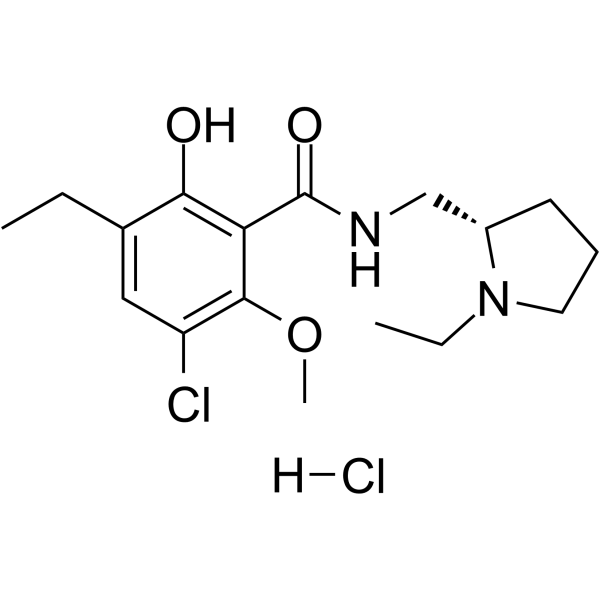
    Eticlopride hydrochloride, a selective dopamine D2‐like receptor antagonist, exhibits high affinity for dopamine D2, α1-adrenergic, α2-adrenergic, 5HT1, 5HT2 receptors with Kis of 0.09, 112, 699, 6220, and 830 nM, respectively. Eticlopride hydrochloride is an antipsychotic agent .
    Eticlopride hydrochloride
  • HY-D0807
    5-IAF
    1 Publications Verification

    5-Iodoacetamidofluorescein

    Fluorescent Dye Cancer
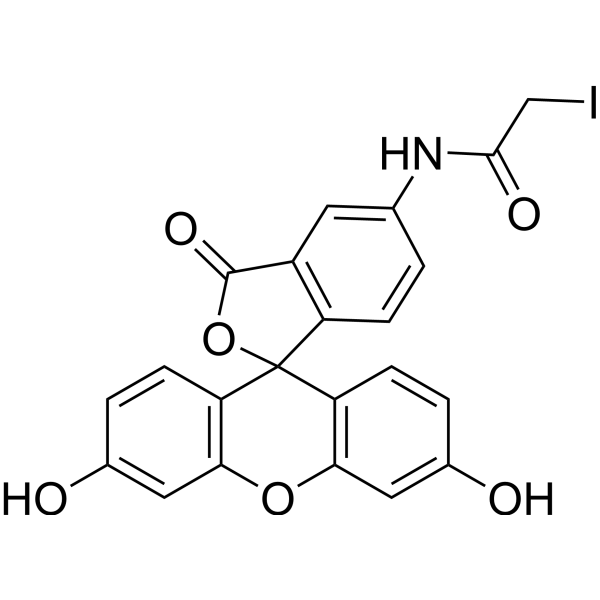
    5-IAF (5-Iodoacetamidofluorescein) is an idoacetamide derivate of fluoresceine. 5-IAF can be used as fluorescent probe that labels proteins and other molecules having free thiols (cysteine side chains) .
    5-IAF
  • HY-45894

    Semaglutide side chain

    GLP Receptor Metabolic Disease Inflammation/Immunology
    tBuO-Ste-Glu(AEEA-AEEA-OH)-OtBu is an intermediate in the synthesis of the glucagon-like peptide 1 receptor (GLP-1R) agonist Semaglutide (HY-114118). tBuO-Ste-Glu(AEEA-AEEA-OH)-OtBu exhibits a strong binding affinity to albumin and can be used to modify SN38 prodrugs to improve tumor distribution .
    tBuO-Ste-Glu(AEEA-AEEA-OH)-OtBu
  • HY-W061674

    (E)-Pent-2-enoic acid

    Biochemical Assay Reagents Others
    (2E)-Pent-2-enoic acid is an unsaturated carboxylic acid, it is also known as 2-pentenoic acid or crotonic acid, the "2E" designation indicates that the molecule has a trans double bond configuration, where the double bond The two carbon atoms on both sides are located on opposite sides, (2E)-Pent-2-enoic acid has a pungent odor, is miscible with water and most organic solvents, it is commonly used in organic synthesis as a variety of chemical reactions, including esterification, oxidation, and reduction, and in addition, its potential use as a flavoring agent in the food industry was investigated.
    trans-2-Pentenoic acid
  • HY-137002

    Amino Acid Derivatives Biochemical Assay Reagents Others
    Fmoc-N-Me-Arg(Pbf)-OH is an amino acid derivative containing a guanidinium protecting group on the arginine side chain. Fmoc-N-Me-Arg(Pbf)-OH is used in the synthesis of neurotensin-derived NTS1 ligands for PET imaging .
    Fmoc-N-Me-Arg(Pbf)-OH
  • HY-P3208B

    Biochemical Assay Reagents Others
    Endoproteinase Lys-C (MS grade) is a hydrolase that cleaves peptide bonds at the carboxyl side of lysine residues. Endoproteinase Lys-C (MS grade) causes non-specific hydrolysis of peptide bonds linked to the carboxyl groups of non-lysine residues, resulting in partial cleavage at these sites .
    Endoproteinase Lys-C (MS grade)
  • HY-W017189

    Endogenous Metabolite Metabolic Disease
    3-Phenylbutyric acid is metabolized by initial oxidation of the benzene ring and by initial oxidation of the side chain. 3-Phenylbutyric acid can be used to isolate Rhodococcus rhodochrous PB1 from compost soil .
    3-Phenylbutyric acid
  • HY-139276

    GLP Receptor Others
    Pal-Glu(OSu)-OH is a side chain of Liraglutide. Liraglutide is a glucagon-like peptide-1 (GLP-1) receptor agonist that can be used for type 2 diabetes mellitus research .
    Pal-Glu(OSu)-OH
  • HY-123352

    (+)-ZK 216348

    Glucocorticoid Receptor Inflammation/Immunology Endocrinology
    ZK 216348 ((+)-ZK 216348) is a nonsteroidal selective glucocorticoid receptor agonist with an IC50 of 20.3 nM. ZK 216348 also binds to Progesterone and mineralocorticoid receptors with IC50s of 20.4 nM and 79.9 nM, respectively. ZK 216348 has antiinflammatory activity similar to Prednisolone and induces less transactivation-mediated side effects .
    ZK 216348
  • HY-131618

    Bz-Gly-Arg

    Amino Acid Derivatives Others
    Hippuryl-Arg (Bz-Gly-Arg) is a substrate used for fluorescence detection and is commonly used in biochemical studies, especially in studying enzyme activity. The phenylalanine portion of Hippuryl-Arg is connected by an aromatic side chain, which allows it to be detected under ultraviolet light. Hippuryl-Arg is used to detect enzymes that recognize and cut peptide bonds containing arginine .
    Hippuryl-Arg
  • HY-B2112

    mAChR Neurological Disease
    Valethamate bromide is an ester, serving as an effective rapidly acting anticholinergic antispasmodic and muscle relaxant. Valethamate bromide accelerates labor by improving cervical dilation. Valethamate bromide can significantly shorten the labor process and have fewer side effects .
    Valethamate bromide
  • HY-N1077

    Cholinesterase (ChE) Endogenous Metabolite Others
    Vomifoliol, a compound related to abscisie acid (ABA), has a modified 2,4-pentadiene side chain and has activity equal to that displayed by ABA. Vomifoliol exhibits antiacetylcholinesterase activity and displays moderate antileishmanial activity .
    Vomifoliol
  • HY-E70103

    Glycosidase Others
    α-L-Arabinofuranosidase is a kind of glycoside hydrolase. It hydrolyzes the non-reducing ends of α-L-arabinofuranosyl residues to form the side chains of arabinoxylan, arabinogalactan and arabinan .
    α-L-Arabinofuranosidase
  • HY-122106

    MMP Others
    RS-104966 is a potent collagenase-1 (MMP-1) inhibitor. RS-104966 induces a conformational change in the side chains of the S10 pocket of MMP-1 .
    RS-104966
  • HY-N2380

    Others Cancer
    N-Benzoyl-(2R,3S)-3-phenylisoserine is a Taxol C-13 Side Chain and crucial for the strong antitumor activity of Taxol .
    N-Benzoyl-(2R,3S)-3-phenylisoserine
  • HY-W012166

    NHS-Bromoacetate

    Biochemical Assay Reagents Infection
    N-Succinimidyl bromoacetate (NHS-Bromoacetate) is a heterobifunctional crosslinking reagent, mainly used to modify the ɛ-amino group of lysine side chains. By covalently linking its bromoacetyl moiety to the ɛ-amino group of lysine in peptidomimetics, N-Succinimidyl bromoacetate enables their conjugation with thiol-modified nanoparticles via thioether bonds. N-Succinimidyl bromoacetate also performs bromoacetylation modification on carrier proteins, which then forms stable thioether bonds with the thiol groups of cysteine in peptides, thus efficiently preparing soluble peptide-protein conjugates with high substitution ratios. N-Succinimidyl bromoacetate can be used to prepare activated Sepharose derivatives for affinity chromatography, protein affinity labeling reagents, and peptide-protein immunogen conjugates with non-immunogenic linkages. N-Succinimidyl bromoacetate is applicable to studies related to HIV-1 infection and glioblastoma multiforme .
    N-Succinimidyl bromoacetate
  • HY-100976

    Hydroxycarboxylic Acid Receptor (HCAR) Metabolic Disease
    LUF6283 is a potent and orally active HCA(2) partial agonist, with a Ki of 0.55 µM. LUF6283 can achieve the beneficial lipid lowering effect of niacin without producing the unwanted cutaneous flushing side effect .
    LUF6283
  • HY-133994

    Drug Intermediate Others
    Octakis-(6-bromo-6-deoxy)-γ-cyclodextrin is a perbrominated γ-cyclodextrin at the primary side. Octakis-(6-bromo-6-deoxy)-γ-cyclodextrin is also a commonly used intermediate in the modification of cyclodextrin .
    Octakis-(6-bromo-6-deoxy)-γ-cyclodextrin
  • HY-179477

    Amino Acid Derivatives Drug Intermediate Others
    Fmoc-β-Ala-Asp(OMpe)-OH is a specialized amino acid derivative used in solid-phase peptide synthesis (SPPS). Fmoc-β-Ala-Asp(OMpe)-OH consists of a beta-alanine spacer linked to an aspartic acid residue, where the beta-carboxyl group is protected with a 3-methylpentyl ester (OMpe) to prevent aspartimide formation during synthesis. Fmoc-β-Ala-Asp(OMpe)-OH a useful building block for creating peptides that contain aspartic acid, as the OMpe group is designed to minimize unwanted side reactions .
    Fmoc-β-Ala-Asp(OMpe)-OH
  • HY-145736A

    Drug-Linker Conjugates for ADC Apoptosis Cancer
    β-Glucuronide-dPBD-PEG5-NH2 TFA is the β-glucuronide-linked pyrrolobenzodiazepine dimer, which binds to the prenylated antibody for synthesis of antibody-drug conjugate (ADC) cIRCR201-dPBD.β-glucuronide-linkage as a cleavable linker. β-Glucuronide-dPBD-PEG5-NH2 TFA, as a proagent of cIRCR201-dPBD, reduces side effects. β-Glucuronide-dPBD-PEG5-NH2 TFA can induce apoptosis and arrest cell cycle. β-Glucuronide-dPBD-PEG5-NH2 TFA has antitumor activity .
    β-Glucuronide-dPBD-PEG5-NH2 TFA
  • HY-E70392

    Ser/Thr Protease Others
    Recombinant Trypsin is a serine protease enzyme, and hydrolyzes proteins at the carboxyl side of the Lysine or Arginine .
    Recombinant Trypsin
  • HY-16103

    Win 32784; Bitolterol methanesulfonate; S-1540 mesylate

    Drug Derivative Infection
    Bitolterol mesylate (WIN 37284) is a diester-type agonist amine bronchodilator without significant cardiac side effects .
    Bitolterol mesylate
  • HY-120128

    Biochemical Assay Reagents Neurological Disease
    MTSEA hydrobromide is a sulfhydryl-reactive compound that modifies free cysteine residues to produce a positively charged side chain approximately the size of lysine .
    MTSEA hydrobromide
  • HY-121242

    VEL-5026

    Photosystem II Others
    Buthidazole is a selective herbicide for weed control in corn. Buthidazole inhibits photosynthetic electron transport at two distinct sites in the photosynthetic electron transport chain. The major site of inhibition was on the reducing side of photosystem II. Another site of electron transport inhibition is on the oxidizing side of photosystem II. Buthidazole inhibits corn photosynthesis and prevents starch accumulation in bundle sheath chloroplasts and some ultrastructural disruption of mesophyl chloroplasts of corn plants .
    Buthidazole
  • HY-104031

    Notch Neurological Disease
    tCFA15 is a trimethyl cyclohexenonic long chain fatty alcohol containing 15 carbon atoms on the side chain, promotes the differentiation of neurons, and may regulates Notch signaling.
    tCFA15
  • HY-115709

    Drug Derivative Cancer
    4,6-O-Benzylidene-D-glucose is a benzaldehyde derivative. 4,6-O-Benzylidene-D-glucose exerts anticancer effects without causing side effects .
    4,6-O-Benzylidene-D-glucose
  • HY-P2405

    Biochemical Assay Reagents Amino Acid Derivatives Others
    Fmoc-Gly-Ser(psi(Me,Me)pro)-OH is a side-chain protected amino acid building block. Fmoc-Gly-Ser(psi(Me,Me)pro)-OH can be used for peptide synthesis .
    Fmoc-Gly-Ser(psi(Me,Me)pro)-OH
  • HY-151781

    ADC Linker Others
    Fmoc-L-Dap(Poc)-OH is a click chemistry reagent containing an azide group. Amino acid building block suitable for side chain Click conjugation with standard protocols and together with tetrazine linkers in copper-free Click conjugation (Diels-Alder) .
    Fmoc-L-Dap(Poc)-OH
  • HY-45200

    Drug Intermediate Others
    (S)-5-(tert-Butoxy)-4-(18-(tert-butoxy)-18-oxooctadecanamido)-5-oxopentanoic acid is a pharmaceutical intermediate that can be used to synthesize the key intermediate of the smegglutinin side chain .
    (S)-5-(tert-Butoxy)-4-(18-(tert-butoxy)-18-oxooctadecanamido)-5-oxopentanoic acid
  • HY-13556

    LY353381; SERM III

    Estrogen Receptor/ERR Metabolic Disease Cancer
    Arzoxifene (LY353381) is an orally active selective estrogen receptor modulator with a fixed ring structure similar to raloxifene. Arzoxifene has minimal side effects with powerful antiestrogenic effects on breast cancer and endometrium, with equally strong favorable estrogenic effects on bone and lipid profile .
    Arzoxifene
  • HY-145736

    Drug-Linker Conjugates for ADC Apoptosis Cancer
    β-Glucuronide-dPBD-PEG5-NH2 is the β-glucuronide-linked pyrrolobenzodiazepine dimer, which binds to the prenylated antibody for synthesis of antibody-drug conjugate (ADC) cIRCR201-dPBD. β-glucuronide-linkage as a cleavable linker. β-Glucuronide-dPBD-PEG5-NH2, as a proagent of cIRCR201-dPBD, reduces side effects. β-Glucuronide-dPBD-PEG5-NH2 can induce apoptosis and arrest cell cycle. β-Glucuronide-dPBD-PEG5-NH2 has antitumor activity .
    β-Glucuronide-dPBD-PEG5-NH2
  • HY-W848699

    Fluorescent Dye Others
    FAM NHS ester, 6-isomer is a hydrophilic fluorophore. The NHS ester can react specifically and efficiently with primary amines such as the side chain of lysine residue or aminosilane-coated surfaces at neutral or slight basic conditions to form a covalent bond.
    FAM NHS ester, 6-isomer
  • HY-14753

    Cannabinoid Receptor Cardiovascular Disease Metabolic Disease
    Rosonabant is a selective antagonist for cannabinoid receptor (CB1 receptor), which reduces body weight and improves improves the risk of obesity-related cardiovascular metabolic diseases. Rosonabant exhibits adverse side effect, such as nausea and mental disorder .
    Rosonabant
  • HY-116917

    PAK Cancer
    G-9791, a poyridone side chain analogue, is a potent PAK inhibitor with Ki values of 0.95 nM and 2.0 nM for PAK1 and PAK2, respectively .
    G-9791
  • HY-165527

    Dopamine Receptor 5-HT Receptor Neurological Disease
    S18327 is a multi-target antipsychotic agent. S18327 exerts its efficacy by acting on multiple neurotransmitter systems in the brain, and it has antagonistic effects on dopamine receptors (particularly the D2 receptor) and 5-hydroxytryptamine 2A receptors (5-HT2A receptor). S18327 can counteract excessive dopamine activity and hypo-function of glutamate. S18327 exhibits a multi-parameter pharmacological profile that is highly similar to that of Clozapine (HY-14539). S18327 can produce the same discriminative stimulus as Clozapine, improve cognitive filtering deficits associated with schizophrenia, and display anxiolytic properties. S18327 has relatively weak affinity for histaminergic receptors and muscarinic receptors, which avoids the side effects of Clozapine .
    S18327
  • HY-106605

    LY 120363

    Dopamine Receptor 5-HT Receptor Neurological Disease
    Flumezapine (LY 120363) is a potent and balanced antagonist of the dopamine D2 receptor and the 5-hydroxytryptamine receptor (5-HT receptor). Flumezapine does not alter the increase in serum cortisol caused by κ-opioid receptor agonists. Flumezapine inhibits the conditioned avoidance response in rats and has a low risk of extrapyramidal side effects. Flumezapine can be used in antipsychotic research .
    Flumezapine
  • HY-148614

    4-Methylpentanal; 4-Methylvaleraldehyde

    Others Metabolic Disease
    Isocaproaldehyde is a product of side-chain cleavage of cholesterol. Isocaproaldehyde is an endogenous specific substrate of mouse vas deferens protein (MVDP) .
    Isocaproaldehyde
  • HY-W352408

    Trilinolenin

    Biochemical Assay Reagents Metabolic Disease
    1,2,3-Tri-α-linolenoyl glycerol (Trilinolenin) is a polyunsaturated triacylglycerol with α-linolenoyl (18:3) side-chains that is useful in lipid research.
    1,2,3-Tri-α-linolenoyl glycerol

Inquiry Online

Your information is safe with us. * Required Fields.

Salutation


Country or Region *

Applicant Name *


Organization Name *

Department *


Email Address *


Product Name *

Cat. No.


Requested quantity *

Phone Number *


Remarks

Inquiry Online

Inquiry Information

Product Name:
Cat. No.:
Quantity:
MCE Japan Authorized Agent:

