



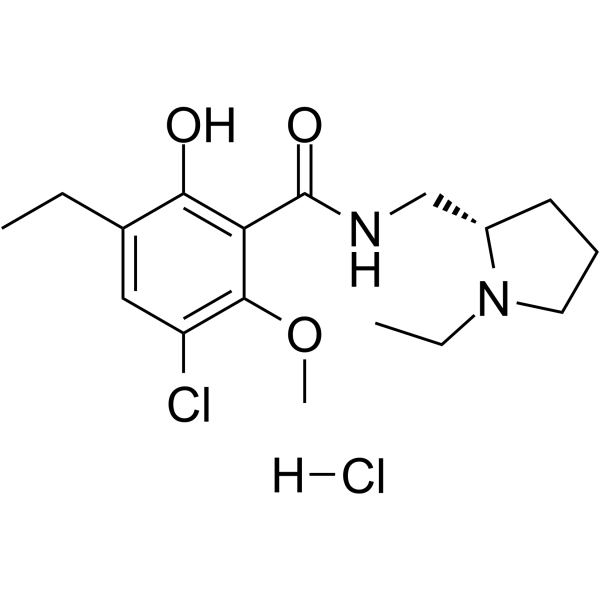
Eticlopride hydrochloride
Based on 1 publication(s) in Google Scholar
Eticlopride hydrochloride, a selective dopamine D2‐like receptor antagonist, exhibits high affinity for dopamine D2, α1-adrenergic, α2-adrenergic, 5HT1, 5HT2 receptors with Kis of 0.09, 112, 699, 6220, and 830 nM, respectively. Eticlopride hydrochloride is an antipsychotic agent.
For research use only. We do not sell to patients.
- Purity : 99.45%
- CAS No.: 97612-24-3
- Formula: C17H26Cl2N2O3
- Molecular Weight:377.31
-
Storage:
4°C, sealed storage, away from moisture
* In solvent : -80°C, 6 months; -20°C, 1 month (sealed storage, away from moisture)

To place orders, for customer services and technical support, please contact: MedChemExpress USA
Tel: 609-228-6898 E-mail: [email protected] [email protected]


-
 Biological Activity
-
Chemical Information
-
Solvent & Solubility
- Purity & Documentation
- References
-
 Help & FAQs


-
HY-B1752A
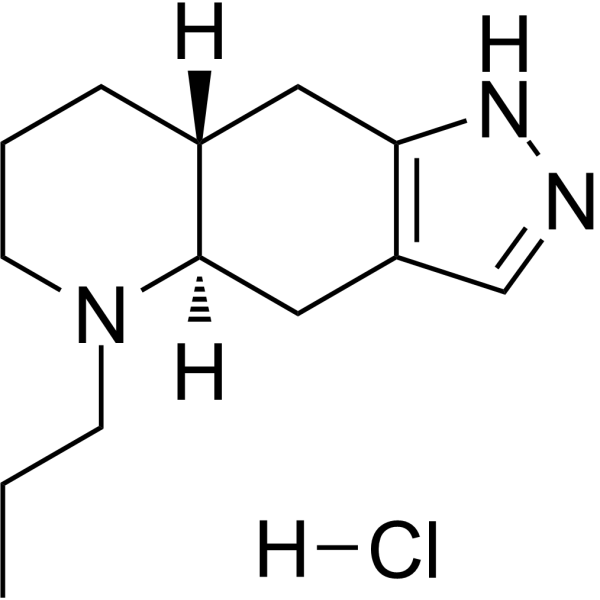
Quinpirole hydrochloride -
HY-19545A
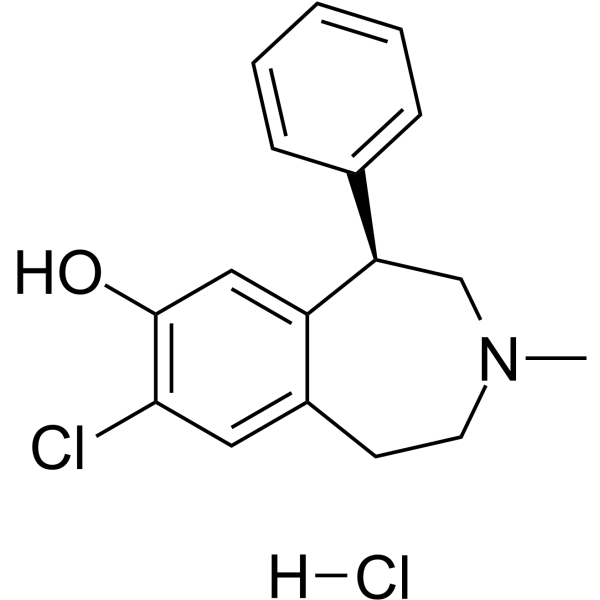
SCH-23390 hydrochloride -
HY-14538
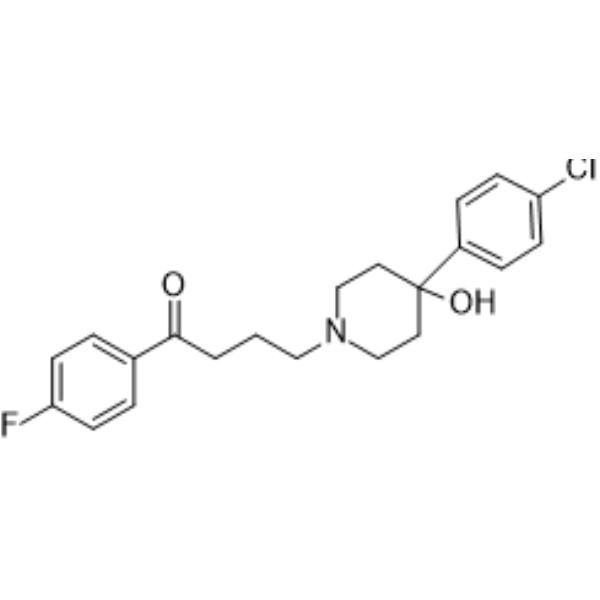
Haloperidol -
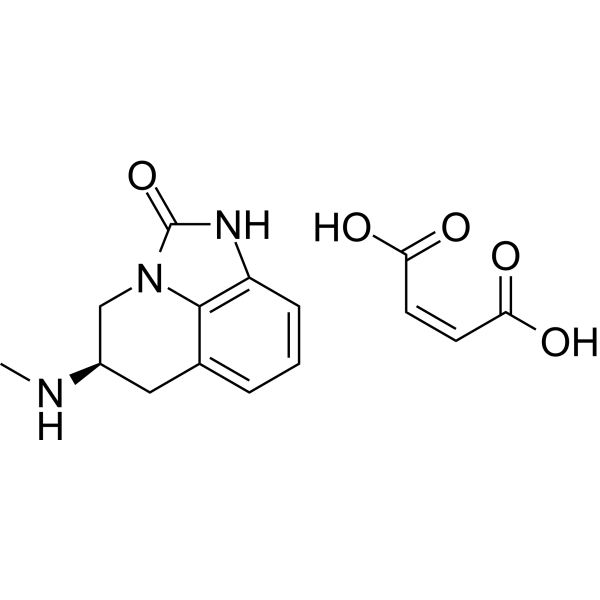
HY-70081A
Sumanirole maleate -
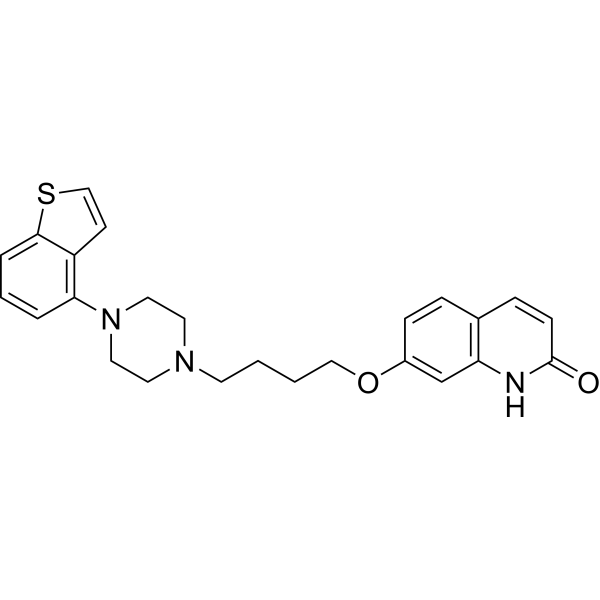
HY-15780
Brexpiprazole -
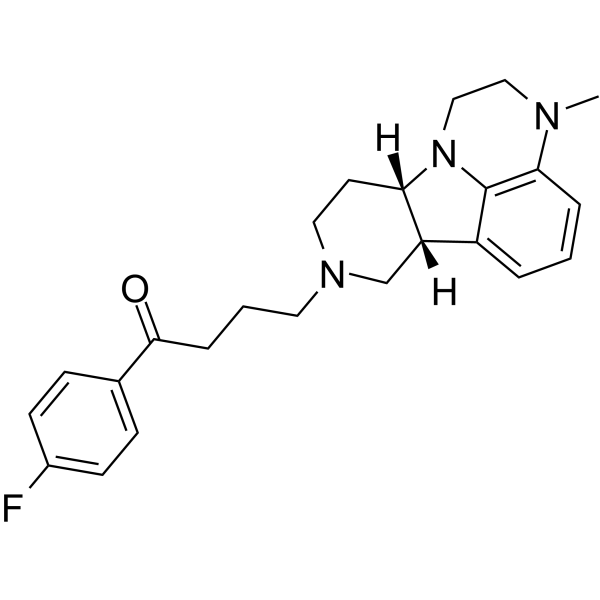
HY-17637
Lumateperone -

HY-14538R
Haloperidol (Standard) -

HY-15780R
Brexpiprazole (Standard) -

HY-17637R
Lumateperone (Standard) -
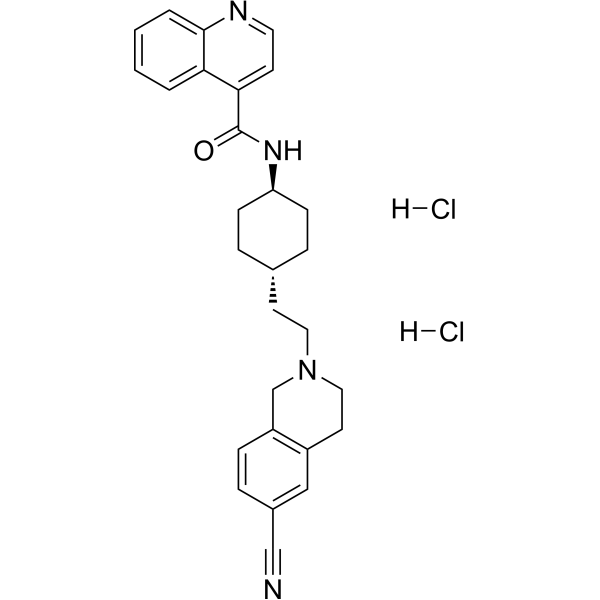
HY-10847A
SB-277011 dihydrochloride
Publications Citing Use of MedChemExpress (MCE) Eticlopride hydrochloride
MoreAll Dopamine Receptor Isoforms
More

Biological Activity
Description
IC50 & Target
|
D2 Receptor 0.09 nM (Ki) |
In Vitro
Eticlopride (1 μM, 6 h) hydrochloride abrogates the action of DA, where DA increases KLF2 expression in HUVEC cells[2].
Eticlopride (1 μM, 15 min) hydrochloride abolishes heterodimerization of D2R/SSTR2 in rat striatal neurons[3].
MedChemExpress (MCE) has not independently confirmed the accuracy of these methods. They are for reference only.
In Vivo
Eticlopride (0.01 or 0.02 mg/kg, i.p.) hydrochloride alleviates cognitive deficits produced by Quinpirole (HY-B1752) in rats[4].
MedChemExpress (MCE) has not independently confirmed the accuracy of these methods. They are for reference only.
-
Animal Model:Sprague-Dawley rats treated with Ruinpirole (1 mg/kg) from postnatal days 1 to 21[4]
-
Dosage:0.01 or 0.02 mg/kg
-
Administration:i.p.
-
Result:Alleviated cognitive deficits produced by neonatal quinpirole treatment in both male and female rats on the place version of the MWT, as well as in males tested on the match-to-place version of the MWT (MWT tested on P22 to P28).


Chemical Information
-
CAS No. 97612-24-3
-
Appearance Solid
-
Molecular Weight 377.31
-
Formula C17H26Cl2N2O3
-
Color White to off-white
-
SMILES
O=C(NC[C@H]1N(CC)CCC1)C2=C(O)C(CC)=CC(Cl)=C2OC.[H]Cl
-
Shipping
Room temperature in continental US; may vary elsewhere.
-
Storage
4°C, sealed storage, away from moisture
* In solvent : -80°C, 6 months; -20°C, 1 month (sealed storage, away from moisture)


Publications (1)
-
Journal Impact Factor
-
Most Recent
-
Glia
Sustained Neuronal Stimulation Activates Paraventricular Thalamus Astrocytes for Chronicity of Neuropathic Pain in Mice. [Abstract]2026 Aug;74(8):e70183. PMID: 42231639


Solvent & Solubility
In Vitro:
H2O : 50 mg/mL (132.52 mM; Need ultrasonic)
DMSO : 50 mg/mL (132.52 mM; Need ultrasonic; Hygroscopic DMSO has a significant impact on the solubility of product, please use newly opened DMSO)
Please refer to the solubility information to select the appropriate solvent. Once prepared, please aliquot and store the solution to prevent product inactivation from repeated freeze-thaw cycles.
Storage method and period of stock solution: -80°C, 6 months; -20°C, 1 month (sealed storage, away from moisture). When stored at -80°C, please use it within 6 months. When stored at -20°C, please use it within 1 month.
* Note: If you choose water as the stock solution, please dilute it to the working solution, then filter and sterilize it with a 0.22 μm filter before use.
Please refer to the solubility information to select the appropriate solvent. Once prepared, please aliquot and store the solution to prevent product inactivation from repeated freeze-thaw cycles.
Storage method and period of stock solution: -80°C, 6 months; -20°C, 1 month (sealed storage, away from moisture). When stored at -80°C, please use it within 6 months. When stored at -20°C, please use it within 1 month.
* Note: If you choose water as the stock solution, please dilute it to the working solution, then filter and sterilize it with a 0.22 μm filter before use.
Concentration (start) × Volume (start) = Concentration (final) × Volume (final)
In Vivo:
Select the appropriate dissolution method based on your experimental animal and administration route.
- For the following dissolution methods, please ensure to first prepare a clear stock solution using an In Vitro approach and then sequentially add co-solvents:
- To ensure reliable experimental results, the clarified stock solution can be appropriately stored based on storage conditions. As for the working solution for In Vivo experiments, it is recommended to prepare freshly and use it on the same day.
- The percentages shown for the solvents indicate their volumetric ratio in the final prepared solution. If precipitation or phase separation occurs during preparation, heat and/or sonication can be used to aid dissolution.
Add each solvent one by one: 10% DMSO 40% PEG300 5% Tween-80 45% Saline
Solubility: ≥ 2.5 mg/mL (6.63 mM); Clear solution
This protocol yields a clear solution of ≥ 2.5 mg/mL (saturation unknown).
Taking 1 mL working solution as an example, add 100 μL DMSO stock solution (25.0 mg/mL) to 400 μL PEG300, and mix evenly; then add 50 μL Tween-80 and mix evenly; then add 450 μL Saline to adjust the volume to 1 mL.
Preparation of Saline: Dissolve 0.9 g sodium chloride in ddH₂O and dilute to 100 mL to obtain a clear Saline solution.
Add each solvent one by one: 10% DMSO 90% (20% SBE-β-CD in Saline)
Solubility: ≥ 2.5 mg/mL (6.63 mM); Clear solution
This protocol yields a clear solution of ≥ 2.5 mg/mL (saturation unknown).
Taking 1 mL working solution as an example, add 100 μL DMSO stock solution (25.0 mg/mL) to 900 μL 20% SBE-β-CD in Saline, and mix evenly.
Preparation of 20% SBE-β-CD in Saline (4°C, storage for one week): 2 g SBE-β-CD powder is dissolved in 10 mL Saline, completely dissolve until clear.
In Vivo Dissolution Calculator
Please enter the basic information of animal experiments:
-
-
-
-
Recommended: Prepare an additional quantity of animals to account for potential losses during experiments.
Working solution concentration: 0.22 mg/mL
This product has good water solubility, please refer to the measured solubility data in water/PBS/Saline for details.


Purity & Documentation
-
Data Sheet (277 KB)
-
SDS (252 KB)
- English - EN (252 KB)
- Français - FR (252 KB)
- Deutsch - DE (252 KB)
- Norwegian - NO (252 KB)
- Español - ES (252 KB)
- Swedish - SV (252 KB)
- Italian - IT (252 KB)
- Korean - KR (252 KB)
- Portuguese - PT (252 KB)
-
Handling Instructions (2659 KB)
References
[1]. Jennifer L Martelle, et al. A review of the discovery, pharmacological characterization, and behavioral effects of the dopamine D2-like receptor antagonist eticlopride. CNS Neurosci Ther. Fall 2008;14(3):248-62. [Content Brief]
[2]. Chakroborty D, et al. Dopamine stabilizes tumor blood vessels by up-regulating angiopoietin 1 expression in pericytes and Kruppel-like factor-2 expression in tumor endothelial cells. Proc Natl Acad Sci U S A. 2011 Dec 20;108(51):20730-5. [Content Brief]
[3]. Baragli A, et al. Heterooligomerization of human dopamine receptor 2 and somatostatin receptor 2 Co-immunoprecipitation and fluorescence resonance energy transfer analysis. Cell Signal. 2007 Nov;19(11):2304-16. [Content Brief]
[4]. Brown RW, et al. The effects of eticlopride on Morris water task performance in male and female rats neonatally treated with quinpirole. Psychopharmacology (Berl). 2005 Jul;180(2):234-40. [Content Brief]


Complete Stock Solution Preparation Table
Please refer to the solubility information to select the appropriate solvent. Once prepared, please aliquot and store the solution to prevent product inactivation from repeated freeze-thaw cycles.
Storage method and period of stock solution: -80°C, 6 months; -20°C, 1 month (sealed storage, away from moisture). When stored at -80°C, please use it within 6 months. When stored at -20°C, please use it within 1 month.
| Optional Solvent | Concentration Solvent Mass | 1 mg | 5 mg | 10 mg | 25 mg |
|---|---|---|---|---|---|
| H2O / DMSO | 1 mM | 2.6503 mL | 13.2517 mL | 26.5034 mL | 66.2585 mL |
| 5 mM | 0.5301 mL | 2.6503 mL | 5.3007 mL | 13.2517 mL | |
| 10 mM | 0.2650 mL | 1.3252 mL | 2.6503 mL | 6.6259 mL | |
| 15 mM | 0.1767 mL | 0.8834 mL | 1.7669 mL | 4.4172 mL | |
| 20 mM | 0.1325 mL | 0.6626 mL | 1.3252 mL | 3.3129 mL | |
| 25 mM | 0.1060 mL | 0.5301 mL | 1.0601 mL | 2.6503 mL | |
| 30 mM | 0.0883 mL | 0.4417 mL | 0.8834 mL | 2.2086 mL | |
| 40 mM | 0.0663 mL | 0.3313 mL | 0.6626 mL | 1.6565 mL | |
| 50 mM | 0.0530 mL | 0.2650 mL | 0.5301 mL | 1.3252 mL | |
| 60 mM | 0.0442 mL | 0.2209 mL | 0.4417 mL | 1.1043 mL | |
| 80 mM | 0.0331 mL | 0.1656 mL | 0.3313 mL | 0.8282 mL | |
| 100 mM | 0.0265 mL | 0.1325 mL | 0.2650 mL | 0.6626 mL |
* Note: If you choose water as the stock solution, please dilute it to the working solution, then filter and sterilize it with a 0.22 μm filter before use.


Eticlopride hydrochloride Related Classifications
HY-103413 Related Classifications
 Powered by Bioz