From 11:00 pm to 12:00 pm EST ( 8:00 pm to 9:00 pm PST ) on January 6th, the website will be under maintenance. We are sorry for the inconvenience. Please arrange your schedule properly.
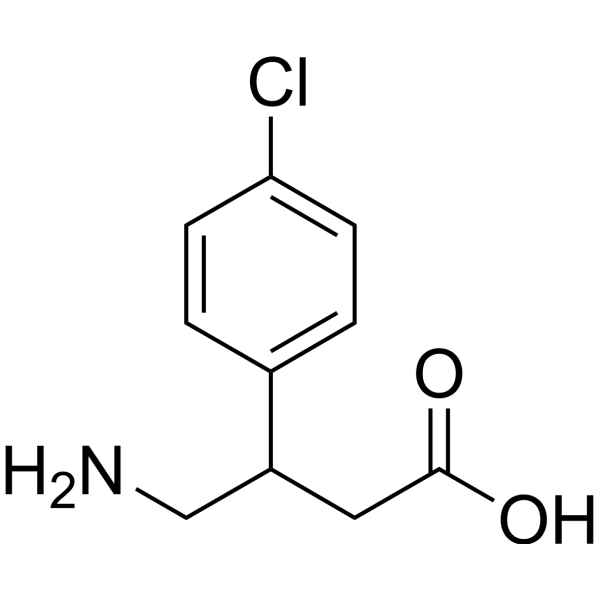
Baclofen, a lipophilic derivative of γ-aminobutyric acid (GABA), is an orally active, selective metabotropic GABAB receptor (GABABR) agonist with blood-brain barrier permeability. Baclofen mimics the action of GABA and produces slow presynaptic inhibition through the GABAB receptor. Baclofen has high blood brain barrier penetrance. Baclofen has the potential for muscle spasticity research .
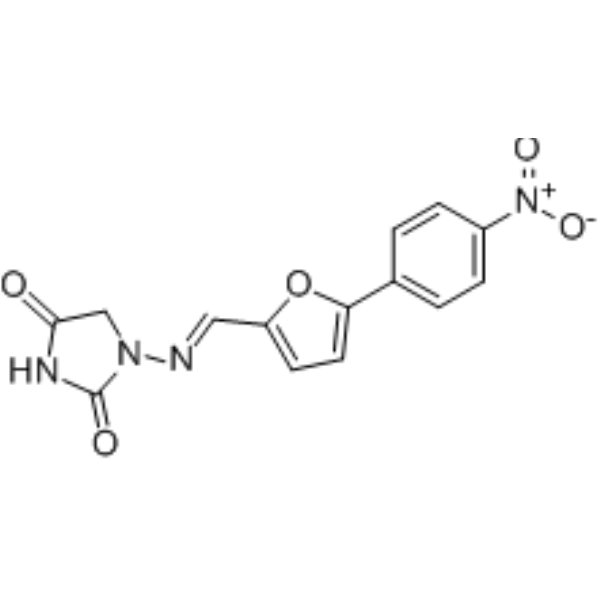
Dantrolene is an orally active, non-competitive glutathione reductase inhibitor with a Ki of 111.6 μM and an IC50 of 52.3 μM. Dantrolene is also a calcium channel protein inhibitor. Dantrolene inhibits the release of Ca 2+ from RyR1 and RyR3, which can be beneficial in a variety of pathologies caused by disruptions in calcium homeostasis (e.g., stroke, ischemia/reperfusion injury, and neurodegenerative diseases). Dantrolene offers relief of muscle spasms, malignant hyperthermia, and antitoxic, antipyretic, and anti-inflammatory properties .
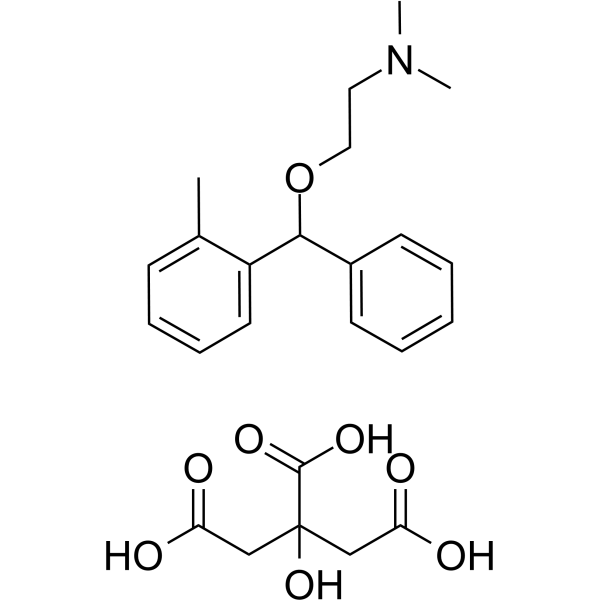
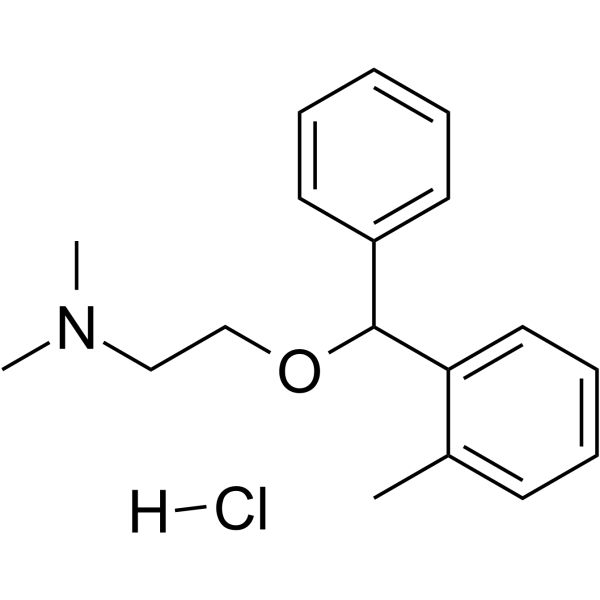
Orphenadrine citrate is an orally active and non-competitive NMDA receptor antagonist (crosses the blood-brain barrier) with a Ki of 6.0 μM. Orphenadrine citrate relieves stiffness, pain and discomfort due to muscle strains, sprains or other injuries. Orphenadrine citrate is also used to relieve tremors associated with parkinson's disease. Orphenadrine citrate has good neuroprotective properties, can be used in studies of neurodegenerative diseases .
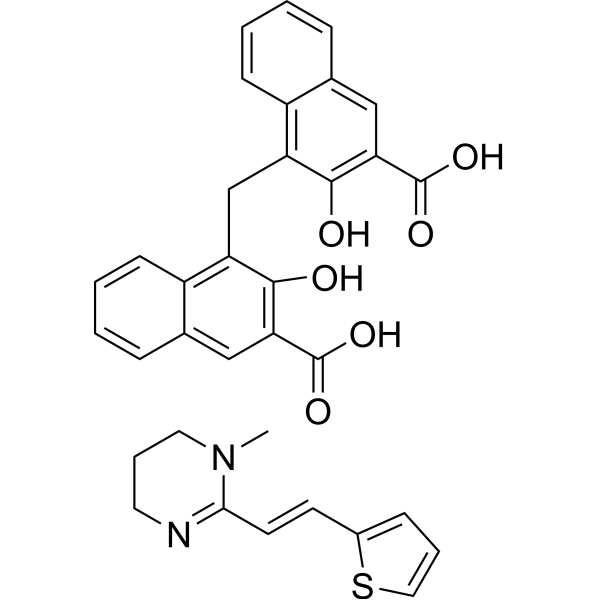
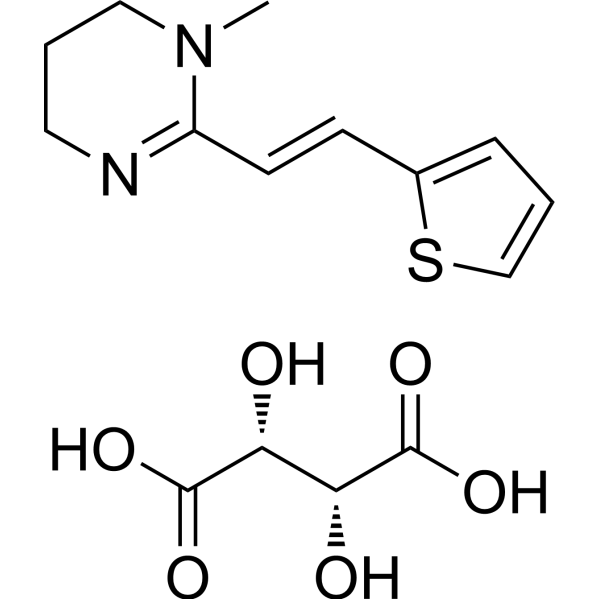
Zolmitriptan (BW-311C90; 311C90) is a 5-HT1B/1D receptor partial agonist that can cross the blood-brain barrier, with Kis of 5.01 nM, 0.63 nM, and 63.09 nM for 5-HT1B, 5-HT1D, 5-HT1F receptor, respectively. Zolmitriptan can be used for the research of migraine .
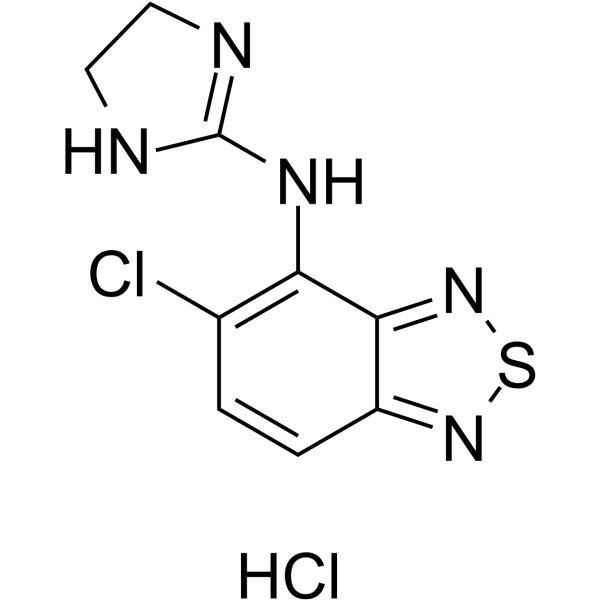
Tizanidine hydrochloride, a skeletal muscle relaxant, is an orally effective central α2-adrenoceptor agonist (IC50 = 6.9 nmol). Tizanidine hydrochloride primarily exerts muscle relaxation effects by inhibiting the release of excitatory amino acids (glutamate and aspartate) from the presynaptic terminals of spinal cord interneurons. Tizanidine hydrochloride has anti-injury activity and can inhibit gastrointestinal (GI) transport. Tizanidine hydrochloride can inhibit the proliferation, migration, and invasion of lung cancer cells and induce cell apoptosis by upregulating Nischarin and inhibiting the AKT and Wnt3a/β-catenin signaling pathways. Tizanidine hydrochloride can be used to treat spasticity caused by diseases such as multiple sclerosis (MS), stroke, and spinal cord injury (SCI) .
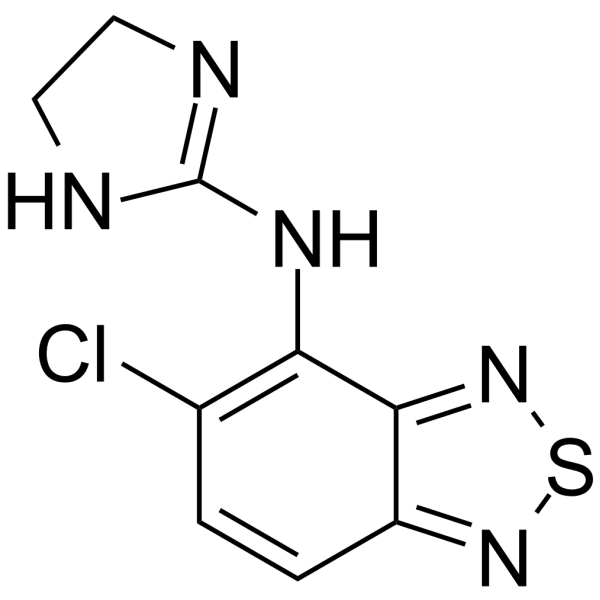
Tizanidine, a skeletal muscle relaxant, is an orally effective central α2-adrenoceptor agonist (IC50 = 6.9 nmol). Tizanidine primarily exerts muscle relaxation effects by inhibiting the release of excitatory amino acids (glutamate and aspartate) from the presynaptic terminals of spinal cord interneurons. Tizanidine has anti-injury activity and can inhibit gastrointestinal (GI) transport. Tizanidine can inhibit the proliferation, migration, and invasion of lung cancer cells and induce cell apoptosis by upregulating Nischarin and inhibiting the AKT and Wnt3a/β-catenin signaling pathways. Tizanidine can be used to treat spasticity caused by diseases such as multiple sclerosis (MS), stroke, and spinal cord injury (SCI) .
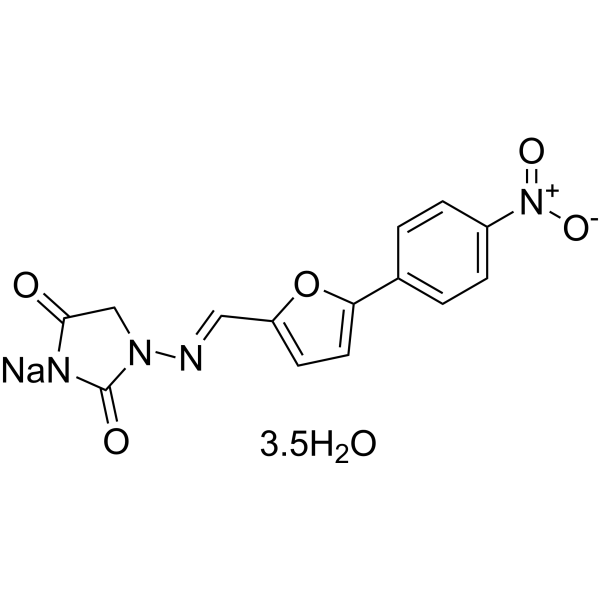
Dantrolene sodium hemiheptahydrate is an orally active, non-competitive glutathione reductase inhibitor with a Ki of 111.6 μM and an IC50 of 52.3 μM. Dantrolene sodium hemiheptahydrate is also a calcium channel protein inhibitor. Dantrolene sodium hemiheptahydrate inhibits the release of Ca 2+ from RyR1 and RyR3, which can be beneficial in a variety of pathologies caused by disruptions in calcium homeostasis (e.g., stroke, ischemia/reperfusion injury, and neurodegenerative diseases). Dantrolene sodium hemiheptahydrate offers relief of muscle spasms, malignant hyperthermia, and antitoxic, antipyretic, and anti-inflammatory properties .
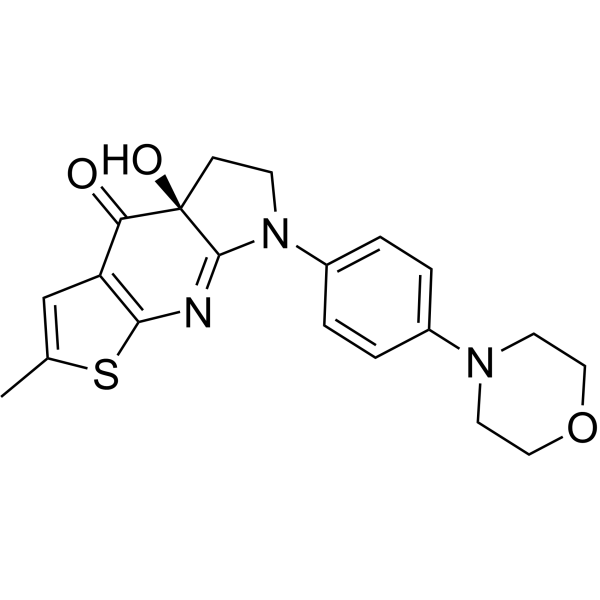
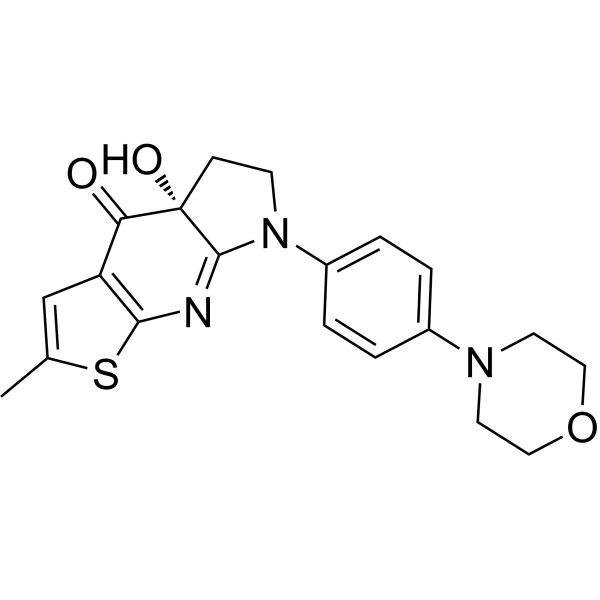
MPH-220 is a selective and orally active inhibitor of skeletal muscle myosin-2. MPH-220 enables muscle relaxation. MPH-220 is anti-spastic agent that can be used in the research of spasticity and muscle stiffness .
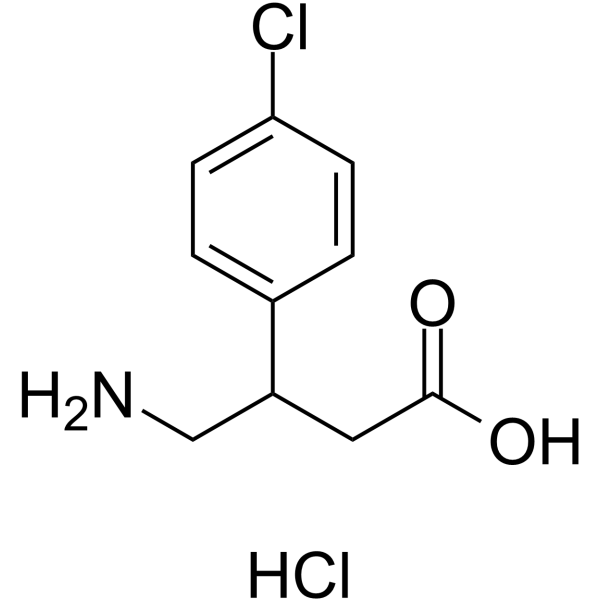
Baclofen hydrochloride, a lipophilic derivative of γ-aminobutyric acid (GABA), is an orally active, selective metabotropic GABAB receptor (GABABR) agonist. Baclofen hydrochloride mimics the action of GABA and produces slow presynaptic inhibition through the GABAB receptor. Baclofen hydrochloride has high blood brain barrier penetrance. Baclofen hydrochloride has the potential for muscle spasticity research .
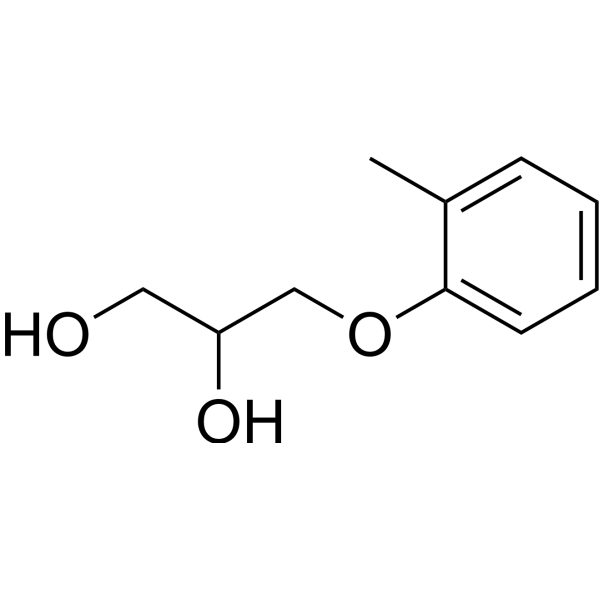
Mephenesin is an NMDA receptor antagonist. Mephenesin is also a central muscle relaxant with antianxiety, muscle-paralyzing and anticonvulsant effects. Mephenesin acts directly on the skeletal muscle fibres to produce skeletal muscle relaxation. Mephenesin is promising for research of spasticity or painful muscle spasm .
CPP-115 is a GABA transaminase inactivator with higher affinity and lower retinal toxicity than Vigabatrin (HY-15399). CPP-115 increases brain GABA levels by inhibiting GABA transaminase catabolism. CPP-115 can be used in the study of drug addiction and infantile spasms .
Orphenadrine hydrochloride is an orally active and non-competitive NMDA receptor antagonist (crosses the blood-brain barrier) with a Ki of 6.0 μM. Orphenadrine hydrochloride relieves stiffness, pain and discomfort due to muscle strains, sprains or other injuries. Orphenadrine hydrochloride is also used to relieve tremors associated with parkinson's disease. Orphenadrine citrate has good neuroprotective properties, can be used in studies of neurodegenerative diseases .
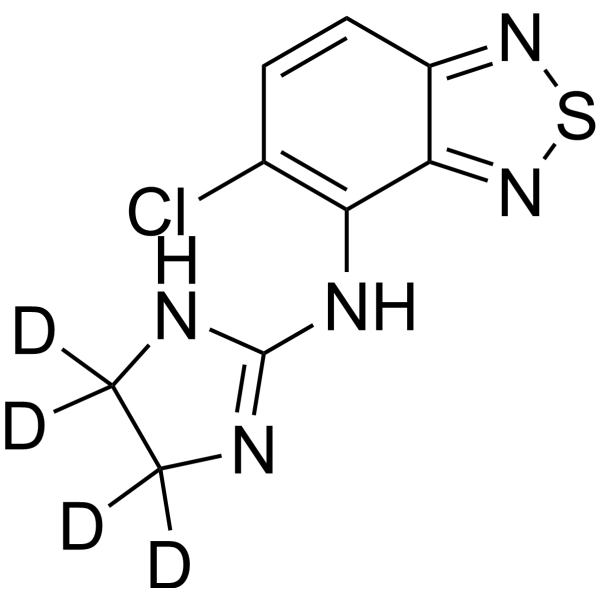
Tizanidine-d4 is the deuterium labeled Tizanidine (HY-B0194). Tizanidine, a skeletal muscle relaxant, is an orally effective central α2-adrenoceptor agonist (IC50 = 6.9 nmol). Tizanidine primarily exerts muscle relaxation effects by inhibiting the release of excitatory amino acids (glutamate and aspartate) from the presynaptic terminals of spinal cord interneurons. Tizanidine has anti-injury activity and can inhibit gastrointestinal (GI) transport. Tizanidine can inhibit the proliferation, migration, and invasion of lung cancer cells and induce cell apoptosis by upregulating Nischarin and inhibiting the AKT and Wnt3a/β-catenin signaling pathways. Tizanidine can be used to treat spasticity caused by diseases such as multiple sclerosis (MS), stroke, and spinal cord injury (SCI).
(R)-MPH-220 is the R isomer of MPH-220 (HY-148516). MPH-220 is a selective and orally active inhibitor of skeletal muscle myosin-2. MPH-220 enables muscle relaxation. MPH-220 is anti-spastic agent that can be used in the research of spasticity and muscle stiffness .
Chlorproethazine hydrochloride is an orally active phenothiazine compound. Chlorproethazine hydrochloride can eliminate spasticity when administered intravenously and also effectively reduce rigidity in decerebrate cats. Chlorproethazine hydrochloride can be used in the research of neurological diseases .
Baclofen-d5 hydrochloride is deuterated labeled Baclofen (HY-B0007). Baclofen, a lipophilic derivative of γ-aminobutyric acid (GABA), is an orally active, selective metabotropic GABAB receptor (GABABR) agonist. Baclofen mimics the action of GABA and produces slow presynaptic inhibition through the GABAB receptor. Baclofen has high blood brain barrier penetrance. Baclofen has the potential for muscle spasticity research .
(S)-Baclofen hydrochloride is a GABAB receptor agonist that crosses the blood-brain barrier and is orally active, with IC50 values of 1.77 μM for GABAB and 1564 μM for GABAA. (S)-Baclofen hydrochloride can be used in research on muscle disorders such as spasticity .
Baclofen (Standard) is the analytical standard of Baclofen. This product is intended for research and analytical applications. Baclofen, a lipophilic derivative of γ-aminobutyric acid (GABA), is an orally active, selective metabotropic GABAB receptor (GABABR) agonist. Baclofen mimics the action of GABA and produces slow presynaptic inhibition through the GABAB receptor. Baclofen has high blood brain barrier penetrance. Baclofen has the potential for muscle spasticity research .
Dimethothiazine mesylate is an orally active tricyclic anti-histamine, anti-5-HT agent with a high activity against decerebrate rigidity, a little sedative activity and little soporific action. Dimethothiazine mesylate can reduce or abolish the effects of both static and dynamic fusimotor activity on the muscle spindle in decerebrate cat. Dimethothiazine mesylate can be used to research hemicrania and spasticity .
Dimethothiazine hydrochloride is an orally active tricyclic anti-histamine, anti-5-HT agent with a high activity against decerebrate rigidity, a little sedative activity and little soporific action. Dimethothiazine hydrochloride can reduce or abolish the effects of both static and dynamic fusimotor activity on the muscle spindle in decerebrate cat. Dimethothiazine hydrochloride can be used to research hemicrania and spasticity .
Dimethothiazine (Dimetotiazine; Fonazine) is an orally active tricyclic anti-histamine, anti-5-HT agent with a high activity against decerebrate rigidity, a little sedative activity and little soporific action. Dimethothiazine can reduce or abolish the effects of both static and dynamic fusimotor activity on the muscle spindle in decerebrate cat. Dimethothiazine can be used to research hemicrania and spasticity .
JB002 is a myosin II inhibitor, with an IC50 of ≤10 μM. JB002 can be used for the research of muscle spasticity, chronic musculoskeletal pain, and hypertrophic cardiomyopathy .
BCH-HSP-C01 is a lead compound that restores AP-4-dependent protein trafficking in neuronal models of adapter protein complex 4 (AP-4)-associated hereditary spastic paraplegia. BCH-HSP-C01 can be used for the research of autophagy-associated diseases .
JB062 is a nonmuscle myosin inhibitor with IC50 values of 1.6, 5.4, and >100 μM for Skeletal muscle myosin, Cardiac muscle myosin, and Smooth muscle myosin II, respectively. JB062 has cytotoxic to human cancer cells but not normal cells. JB062 can be used in research of muscle spasticity, chronic musculoskeletal pain, and hypertrophic cardiomyopathy .
Baclofen-d4 is the deuterium labeled Baclofen. Baclofen, a lipophilic derivative of γ-aminobutyric acid (GABA), is an orally active, selective metabotropic GABAB receptor (GABABR) agonist. Baclofen mimics the action of GABA and produces slow presynaptic inhibition through the GABAB receptor. Baclofen has high blood brain barrier penetrance. Baclofen has the potential for muscle spasticity research .
Glrb Mouse Pre-designed siRNA Set A contains three designed siRNAs for Glrb gene (Mouse), as well as a negative control, a positive control, and a FAM-labeled negative control.
Dantrolene (Standard) is the analytical standard of Dantrolene. This product is intended for research and analytical applications. Dantrolene is an orally active, non-competitive glutathione reductase inhibitor with a Ki of 111.6 μM and an IC50 of 52.3 μM. Dantrolene is a ryanodine receptor (RyR) antagonist and Ca2+ signaling stabilizer. Dantrolene is a direct-acting skeletal muscle relaxant. Dantrolene can be used for the research of muscle spasticity, malignant hyperthermia, Huntington's disease and other neuroleptic malignant syndrome .
Dantrolene (sodium hemiheptahydrate) (Standard) is the analytical standard of Dantrolene (sodium hemiheptahydrate). This product is intended for research and analytical applications. Dantrolene sodium hemiheptahydrate is an orally active, non-competitive glutathione reductase inhibitor with a Ki of 111.6 μM and an IC50 of 52.3 μM. Dantrolene sodium hemiheptahydrate is a ryanodine receptor (RyR) antagonist and Ca2+ signaling stabilizer. Dantrolene sodium hemiheptahydrate is a direct-acting skeletal muscle relaxant. Dantrolene sodium hemiheptahydrate can be used for the research of muscle spasticity, malignant hyperthermia, Huntington's disease and other neuroleptic malignant syndrome .
(S)-Baclofen is a GABAB receptor agonist that crosses the blood-brain barrier and is orally active, with IC50 values of 1.77 μM for GABAB and 1564 μM for GABAA. (S)-Baclofen can be used in research on muscle disorders such as spasticity .
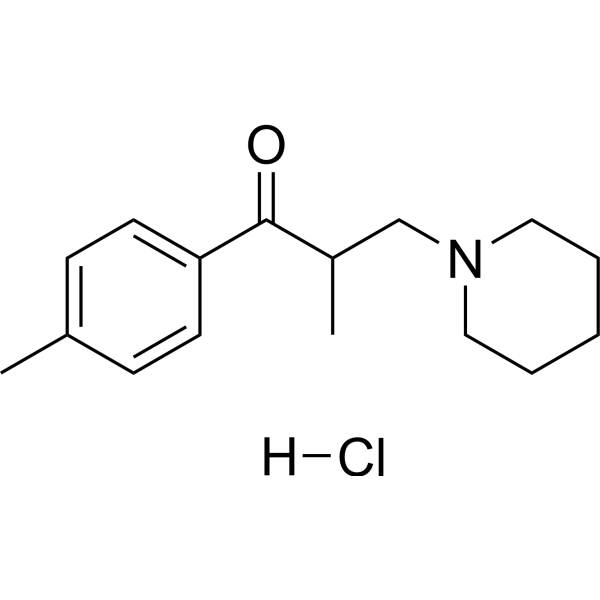
Tolperisone (hydrochloride) (Standard) is the analytical standard of Tolperisone (hydrochloride). This product is intended for research and analytical applications. Tolperisone hydrochloride is a centrally acting muscle relaxant studied in neurological disorders causing pathological rhabdomyosclerosis (pyramidal tract injury, multiple sclerosis, myelopathy, encephalomyelitis), spastic paralysis, and other muscle dystonia-related Encephalopathy. Tolperisone hydrochloride also has antiviral activity .
Prosultiamine is an allithiamine homolog. Prosultiamine can disrupt intracellular redox reactions, inducing caspase-dependent apoptosis in HTLV-1 infected cells. Prosultiamine can be used in studies involving lower urinary tract dysfunction associated with human T-lymphotropic virus type 1-related myelopathy/tropical spastic paraparesis .
Mephenesin-d3 is deuterium labeled Mephenesin. Mephenesin is an NMDA receptor antagonist. Mephenesin is also a central muscle relaxant with antianxiety, muscle-paralyzing and anticonvulsant effects. Mephenesin acts directly on the skeletal muscle fibres to produce skeletal muscle relaxation. Mephenesin is promising for research of spasticity or painful muscle spasm .
Dantrolene- 13C3 is the 13C3 labeled Dantrolene. Dantrolene (F368), a muscle relaxant, non-competitively inhibits human erythrocyte glutathione reductase. Ki and IC50 values are 111.6 μM and 52.3 μM, respectively. Dantrolene is a ryanodine receptor antagonist and Ca2+ signaling stabilizer. Dantrolene can be used for the research of muscle spasticity, malignant hyperthermia, Huntington's disease and other neuroleptic malignant syndrome.
Baclofen-d4-1 is the deuterium labeled Baclofen (HY-B0007). Baclofen, a lipophilic derivative of γ-aminobutyric acid (GABA), is an orally active, selective metabotropic GABAB receptor (GABABR) agonist. Baclofen mimics the action of GABA and produces slow presynaptic inhibition through the GABAB receptor. Baclofen has high blood brain barrier penetrance. Baclofen has the potential for muscle spasticity research .
Orphenadrine (hydrochloride) (Standard) is the analytical standard of Orphenadrine (hydrochloride). This product is intended for research and analytical applications. Orphenadrine hydrochloride is an orally active and non-competitive NMDA receptor antagonist (crosses the blood-brain barrier) with a Ki of 6.0 μM. Orphenadrine hydrochloride relieves stiffness, pain and discomfort due to muscle strains, sprains or other injuries. Orphenadrine hydrochloride is also used to relieve tremors associated with parkinson's disease. Orphenadrine citrate has good neuroprotective properties, can be used in studies of neurodegenerative diseases .
Orphenadrine (citrate) (Standard) is the analytical standard of Orphenadrine (citrate). This product is intended for research and analytical applications. Orphenadrine citrate is an orally active and non-competitive NMDA receptor antagonist (crosses the blood-brain barrier) with a Ki of 6.0 μM. Orphenadrine citrate relieves stiffness, pain and discomfort due to muscle strains, sprains or other injuries. Orphenadrine citrate is also used to relieve tremors associated with parkinson's disease. Orphenadrine citrate has good neuroprotective properties, can be used in studies of neurodegenerative diseases .
TAS-4 is a potent and selective mGluR4 positive allosteric modulator with significant anti-Parkinson's disease activity. TAS-4 is able to show efficacy when used alone or in combination with l-DOPA. TAS-4 is able to reverse haloperidol-induced spasticity when administered alone. TAS-4 enhances the contralateral rotation behavior induced by l-DOPA in a dose-dependent manner. TAS-4 combined with low-dose l-DOPA shows anti-Parkinson's effects similar to full-dose l-DOPA without exacerbating abnormal motor side effects .
Tizanidine-d4 hydrochloride is deuterium labeled Tizanidine hydrochloride (HY-B0194A). Tizanidine hydrochloride, a skeletal muscle relaxant, is an orally effective central α2-adrenoceptor agonist (IC50 = 6.9 nmol). Tizanidine hydrochloride primarily exerts muscle relaxation effects by inhibiting the release of excitatory amino acids (glutamate and aspartate) from the presynaptic terminals of spinal cord interneurons. Tizanidine hydrochloride has anti-injury activity and can inhibit gastrointestinal (GI) transport. Tizanidine hydrochloride can inhibit the proliferation, migration, and invasion of lung cancer cells and induce cell apoptosis by upregulating Nischarin and inhibiting the AKT and Wnt3a/β-catenin signaling pathways. Tizanidine hydrochloride can be used to treat spasticity caused by diseases such as multiple sclerosis (MS), stroke, and spinal cord injury (SCI).
Tizanidine (Standard) is the analytical standard of Tizanidine (HY-B0194). This product is intended for research and analytical applications. Tizanidine, a skeletal muscle relaxant, is an orally effective central α2-adrenoceptor agonist (IC50 = 6.9 nmol). Tizanidine primarily exerts muscle relaxation effects by inhibiting the release of excitatory amino acids (glutamate and aspartate) from the presynaptic terminals of spinal cord interneurons. Tizanidine has anti-injury activity and can inhibit gastrointestinal (GI) transport. Tizanidine can inhibit the proliferation, migration, and invasion of lung cancer cells and induce cell apoptosis by upregulating Nischarin and inhibiting the AKT and Wnt3a/β-catenin signaling pathways. Tizanidine can be used to treat spasticity caused by diseases such as multiple sclerosis (MS), stroke, and spinal cord injury (SCI).
Tizanidine hydrochloride (Standard) is the analytical standard of Tizanidine hydrochloride (HY-B0194A). This product is intended for research and analytical applications. Tizanidine hydrochloride, a skeletal muscle relaxant, is an orally effective central α2-adrenoceptor agonist (IC50 = 6.9 nmol). Tizanidine hydrochloride primarily exerts muscle relaxation effects by inhibiting the release of excitatory amino acids (glutamate and aspartate) from the presynaptic terminals of spinal cord interneurons. Tizanidine hydrochloride has anti-injury activity and can inhibit gastrointestinal (GI) transport. Tizanidine hydrochloride can inhibit the proliferation, migration, and invasion of lung cancer cells and induce cell apoptosis by upregulating Nischarin and inhibiting the AKT and Wnt3a/β-catenin signaling pathways. Tizanidine hydrochloride can be used to treat spasticity caused by diseases such as multiple sclerosis (MS), stroke, and spinal cord injury (SCI).
Tolperisone-d10 (hydrochloride) is the deuterium labeled Tolperisone hydrochloride. Tolperisone hydrochloride is a centrally acting muscle relaxant, is indicated for use in the treatment of pathologically increased tone of the cross-striated muscle caused by neurological diseases (damage of the pyramidal tract, multiple sclerosis, myelopathy, encephalomyelitis) and of spastic paralysis and other encephalopathies manifested with muscular dystonia.
Zolmitriptan (BW-311C90; 311C90) is a 5-HT1B/1D receptor partial agonist that can cross the blood-brain barrier, with Kis of 5.01 nM, 0.63 nM, and 63.09 nM for 5-HT1B, 5-HT1D, 5-HT1F receptor, respectively. Zolmitriptan can be used for the research of migraine .
The SPG21 protein may act as a negative regulator in CD4-dependent T cell activation, suggesting its role in regulating immune responses. Its interaction with CD4 suggests a molecular link affecting CD4-mediated T cell activation pathways. SPG21 Protein, Human (sf9, His) is the recombinant human-derived SPG21 protein, expressed by Sf9 insect cells , with N-His labeled tag.
The SPG21 protein acts as a negative regulator in CD4-dependent T cell activation, suggesting a potential role in the regulation of immune responses. By interacting directly with CD4, it affects key components of the T cell activation pathway. SPG21 Protein, Mouse (sf9, His) is the recombinant mouse-derived SPG21 protein, expressed by Sf9 insect cells , with N-His labeled tag.
Tizanidine-d4 is the deuterium labeled Tizanidine (HY-B0194). Tizanidine, a skeletal muscle relaxant, is an orally effective central α2-adrenoceptor agonist (IC50 = 6.9 nmol). Tizanidine primarily exerts muscle relaxation effects by inhibiting the release of excitatory amino acids (glutamate and aspartate) from the presynaptic terminals of spinal cord interneurons. Tizanidine has anti-injury activity and can inhibit gastrointestinal (GI) transport. Tizanidine can inhibit the proliferation, migration, and invasion of lung cancer cells and induce cell apoptosis by upregulating Nischarin and inhibiting the AKT and Wnt3a/β-catenin signaling pathways. Tizanidine can be used to treat spasticity caused by diseases such as multiple sclerosis (MS), stroke, and spinal cord injury (SCI).
Baclofen-d5 hydrochloride is deuterated labeled Baclofen (HY-B0007). Baclofen, a lipophilic derivative of γ-aminobutyric acid (GABA), is an orally active, selective metabotropic GABAB receptor (GABABR) agonist. Baclofen mimics the action of GABA and produces slow presynaptic inhibition through the GABAB receptor. Baclofen has high blood brain barrier penetrance. Baclofen has the potential for muscle spasticity research .
Baclofen-d4 is the deuterium labeled Baclofen. Baclofen, a lipophilic derivative of γ-aminobutyric acid (GABA), is an orally active, selective metabotropic GABAB receptor (GABABR) agonist. Baclofen mimics the action of GABA and produces slow presynaptic inhibition through the GABAB receptor. Baclofen has high blood brain barrier penetrance. Baclofen has the potential for muscle spasticity research .
Mephenesin-d3 is deuterium labeled Mephenesin. Mephenesin is an NMDA receptor antagonist. Mephenesin is also a central muscle relaxant with antianxiety, muscle-paralyzing and anticonvulsant effects. Mephenesin acts directly on the skeletal muscle fibres to produce skeletal muscle relaxation. Mephenesin is promising for research of spasticity or painful muscle spasm .
Dantrolene- 13C3 is the 13C3 labeled Dantrolene. Dantrolene (F368), a muscle relaxant, non-competitively inhibits human erythrocyte glutathione reductase. Ki and IC50 values are 111.6 μM and 52.3 μM, respectively. Dantrolene is a ryanodine receptor antagonist and Ca2+ signaling stabilizer. Dantrolene can be used for the research of muscle spasticity, malignant hyperthermia, Huntington's disease and other neuroleptic malignant syndrome.
Baclofen-d4-1 is the deuterium labeled Baclofen (HY-B0007). Baclofen, a lipophilic derivative of γ-aminobutyric acid (GABA), is an orally active, selective metabotropic GABAB receptor (GABABR) agonist. Baclofen mimics the action of GABA and produces slow presynaptic inhibition through the GABAB receptor. Baclofen has high blood brain barrier penetrance. Baclofen has the potential for muscle spasticity research .
Tizanidine-d4 hydrochloride is deuterium labeled Tizanidine hydrochloride (HY-B0194A). Tizanidine hydrochloride, a skeletal muscle relaxant, is an orally effective central α2-adrenoceptor agonist (IC50 = 6.9 nmol). Tizanidine hydrochloride primarily exerts muscle relaxation effects by inhibiting the release of excitatory amino acids (glutamate and aspartate) from the presynaptic terminals of spinal cord interneurons. Tizanidine hydrochloride has anti-injury activity and can inhibit gastrointestinal (GI) transport. Tizanidine hydrochloride can inhibit the proliferation, migration, and invasion of lung cancer cells and induce cell apoptosis by upregulating Nischarin and inhibiting the AKT and Wnt3a/β-catenin signaling pathways. Tizanidine hydrochloride can be used to treat spasticity caused by diseases such as multiple sclerosis (MS), stroke, and spinal cord injury (SCI).
Tolperisone-d10 (hydrochloride) is the deuterium labeled Tolperisone hydrochloride. Tolperisone hydrochloride is a centrally acting muscle relaxant, is indicated for use in the treatment of pathologically increased tone of the cross-striated muscle caused by neurological diseases (damage of the pyramidal tract, multiple sclerosis, myelopathy, encephalomyelitis) and of spastic paralysis and other encephalopathies manifested with muscular dystonia.
Glrb Mouse Pre-designed siRNA Set A contains three designed siRNAs for Glrb gene (Mouse), as well as a negative control, a positive control, and a FAM-labeled negative control.
Inquiry Online
Your information is safe with us. * Required Fields.
Western blot analysis of extracts from THP-1(lane 2(20μg), Jurkat (lane 3(20μg) and NIH3T3(lane 4(20μg) using FOXO1A (HY-P80132) Rabbit mAb. Proteins were transferred
to a PVDF membrane and blocked with 5% non-fat milk in TBST for 2 hour at room temperature. The primary antibody (1/1000) and Loading control antibody (Beta Actin, HY-P80438, 1/10000) was
used in 5% non-fat milk in TBST at 4°C overnight. Goat Anti-Mouse/Rabbit IgG-HRP Secondary Antibody (1/10000) was used for 1 hour at room temperature.
Western blot analysis of extracts from THP-1(lane 2(20μg), Jurkat (lane 3(20μg) and NIH3T3(lane 4(20μg) using FOXO1A (HY-P80132) Rabbit mAb. Proteins were transferred
to a PVDF membrane and blocked with 5% non-fat milk in TBST for 2 hour at room temperature. The primary antibody (1/1000) and Loading control antibody (Beta Actin, HY-P80438, 1/10000) was
used in 5% non-fat milk in TBST at 4°C overnight. Goat Anti-Mouse/Rabbit IgG-HRP Secondary Antibody (1/10000) was used for 1 hour at room temperature.
Western blot analysis of extracts from THP-1(lane 2(20μg), Jurkat (lane 3(20μg) and NIH3T3(lane 4(20μg) using FOXO1A (HY-P80132) Rabbit mAb. Proteins were transferred
to a PVDF membrane and blocked with 5% non-fat milk in TBST for 2 hour at room temperature. The primary antibody (1/1000) and Loading control antibody (Beta Actin, HY-P80438, 1/10000) was
used in 5% non-fat milk in TBST at 4°C overnight. Goat Anti-Mouse/Rabbit IgG-HRP Secondary Antibody (1/10000) was used for 1 hour at room temperature.
Western blot analysis of extracts from THP-1(lane 2(20μg), Jurkat (lane 3(20μg) and NIH3T3(lane 4(20μg) using FOXO1A (HY-P80132) Rabbit mAb. Proteins were transferred
to a PVDF membrane and blocked with 5% non-fat milk in TBST for 2 hour at room temperature. The primary antibody (1/1000) and Loading control antibody (Beta Actin, HY-P80438, 1/10000) was
MedchemExpress Validation 03
Western blot analysis of extracts from THP-1(lane 2(20μg), Jurkat (lane 3(20μg) and NIH3T3(lane 4(20μg) using FOXO1A (HY-P80132) Rabbit mAb. Proteins were transferred
MedchemExpress Validation 04
Western blot analysis of extracts from THP-1(lane 2(20μg), Jurkat (lane 3(20μg) and NIH3T3(lane 4(20μg) using FOXO1A (HY-P80132) Rabbit mAb. Proteins were transferred
to a PVDF membrane and blocked with 5% non-fat milk in TBST for 2 hour at room temperature. The primary antibody (1/1000) and Loading control antibody (Beta Actin, HY-P80438, 1/10000) was
used in 5% non-fat milk in TBST at 4°C overnight. Goat Anti-Mouse/Rabbit IgG-HRP Secondary Antibody (1/10000) was used for 1 hour at room temperature.
MedchemExpress Validation
Western blot analysis of extracts from THP-1(lane 2(20μg), Jurkat (lane 3(20μg) and NIH3T3(lane 4(20μg) using FOXO1A (HY-P80132) Rabbit mAb. Proteins were transferred
to a PVDF membrane and blocked with 5% non-fat milk in TBST for 2 hour at room temperature. The primary antibody (1/1000) and Loading control antibody (Beta Actin, HY-P80438, 1/10000) was
used in 5% non-fat milk in TBST at 4°C overnight. Goat Anti-Mouse/Rabbit IgG-HRP Secondary Antibody (1/10000) was used for 1 hour at room temperature.
Western blot analysis of extracts from THP-1(lane 2(20μg), Jurkat (lane 3(20μg) and NIH3T3(lane 4(20μg) using FOXO1A (HY-P80132) Rabbit mAb. Proteins were transferred
to a PVDF membrane and blocked with 5% non-fat milk in TBST for 2 hour at room temperature. The primary antibody (1/1000) and Loading control antibody (Beta Actin, HY-P80438, 1/10000) was
used in 5% non-fat milk in TBST at 4°C overnight. Goat Anti-Mouse/Rabbit IgG-HRP Secondary Antibody (1/10000) was used for 1 hour at room temperature.
MedchemExpress Validation
Western blot analysis of extracts from THP-1(lane 2(20μg), Jurkat (lane 3(20μg) and NIH3T3(lane 4(20μg) using FOXO1A (HY-P80132) Rabbit mAb. Proteins were transferred
to a PVDF membrane and blocked with 5% non-fat milk in TBST for 2 hour at room temperature. The primary antibody (1/1000) and Loading control antibody (Beta Actin, HY-P80438, 1/10000) was
used in 5% non-fat milk in TBST at 4°C overnight. Goat Anti-Mouse/Rabbit IgG-HRP Secondary Antibody (1/10000) was used for 1 hour at room temperature.
MedchemExpress Validation
Western blot analysis of extracts from THP-1(lane 2(20μg), Jurkat (lane 3(20μg) and NIH3T3(lane 4(20μg) using FOXO1A (HY-P80132) Rabbit mAb. Proteins were transferred
to a PVDF membrane and blocked with 5% non-fat milk in TBST for 2 hour at room temperature. The primary antibody (1/1000) and Loading control antibody (Beta Actin, HY-P80438, 1/10000) was
used in 5% non-fat milk in TBST at 4°C overnight. Goat Anti-Mouse/Rabbit IgG-HRP Secondary Antibody (1/10000) was used for 1 hour at room temperature.
MedchemExpress Validation
Western blot analysis of extracts from THP-1(lane 2(20μg), Jurkat (lane 3(20μg) and NIH3T3(lane 4(20μg) using FOXO1A (HY-P80132) Rabbit mAb. Proteins were transferred
to a PVDF membrane and blocked with 5% non-fat milk in TBST for 2 hour at room temperature. The primary antibody (1/1000) and Loading control antibody (Beta Actin, HY-P80438, 1/10000) was
used in 5% non-fat milk in TBST at 4°C overnight. Goat Anti-Mouse/Rabbit IgG-HRP Secondary Antibody (1/10000) was used for 1 hour at room temperature.
MedchemExpress Validation
Western blot analysis of extracts from THP-1(lane 2(20μg), Jurkat (lane 3(20μg) and NIH3T3(lane 4(20μg) using FOXO1A (HY-P80132) Rabbit mAb. Proteins were transferred
to a PVDF membrane and blocked with 5% non-fat milk in TBST for 2 hour at room temperature. The primary antibody (1/1000) and Loading control antibody (Beta Actin, HY-P80438, 1/10000) was
used in 5% non-fat milk in TBST at 4°C overnight. Goat Anti-Mouse/Rabbit IgG-HRP Secondary Antibody (1/10000) was used for 1 hour at room temperature.
MedchemExpress Validation
Western blot analysis of extracts from THP-1(lane 2(20μg), Jurkat (lane 3(20μg) and NIH3T3(lane 4(20μg) using FOXO1A (HY-P80132) Rabbit mAb. Proteins were transferred
to a PVDF membrane and blocked with 5% non-fat milk in TBST for 2 hour at room temperature. The primary antibody (1/1000) and Loading control antibody (Beta Actin, HY-P80438, 1/10000) was
used in 5% non-fat milk in TBST at 4°C overnight. Goat Anti-Mouse/Rabbit IgG-HRP Secondary Antibody (1/10000) was used for 1 hour at room temperature.
MedchemExpress Validation
Western blot analysis of extracts from THP-1(lane 2(20μg), Jurkat (lane 3(20μg) and NIH3T3(lane 4(20μg) using FOXO1A (HY-P80132) Rabbit mAb. Proteins were transferred
to a PVDF membrane and blocked with 5% non-fat milk in TBST for 2 hour at room temperature. The primary antibody (1/1000) and Loading control antibody (Beta Actin, HY-P80438, 1/10000) was
used in 5% non-fat milk in TBST at 4°C overnight. Goat Anti-Mouse/Rabbit IgG-HRP Secondary Antibody (1/10000) was used for 1 hour at room temperature.
MedChemExpress values your privacy and your trust is important to us. We use cookies to enhance your website experience. Some cookies are necessary to run the website.
Privacy and Cookie Policy

