

Search Result
Results for "
spinach
" in MedChemExpress (MCE) Product Catalog:
2
Biochemical Assay Reagents
3
Isotope-Labeled Compounds
| Cat. No. |
Product Name |
Target |
Research Areas |
Chemical Structure |
-
- HY-B0710
-
Betaine
5 Publications Verification
Trimethylglycine; carboxy-N,N,N-trimethylmethanaminium
|
Environmental Pollutants
Endogenous Metabolite
|
Metabolic Disease
|
|
Betaine (Trimethylglycine) is a natural compound found in many foods and also an active methyl-donor which can maintain normal DNA methylation patterns [1,2]. Betaine is found ubiquitously in plants, animals, microorganisms, and rich dietary sources including seafood, spinach, and wheat bran. Betaine also acts as an osmolyte, to maintain the avian’s cellular water and ion balance to improve the avian’s capacity against heat stress via preventing dehydration and osmotic inactivation. It helps in maintaining the protective osmolytic activity, especially in heat-stressed birds. Betaine may promote various intestinal microbes against osmotic variations and thus improve microbial fermentation activity .
|
-
-
- HY-110251
-
|
|
DNA Stain
|
Others
|
|
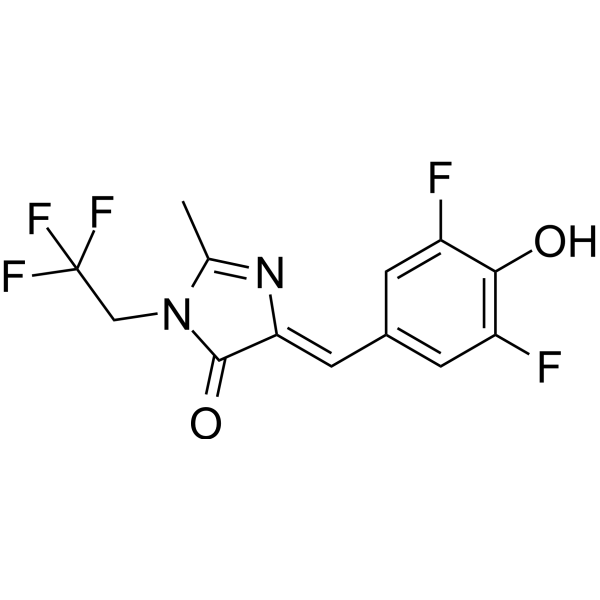
DFHBI-1T is a membrane-permeable RNA aptamers-activated fluorescence probe (ex/em=472 nm/507 nm). DFHBI-1T binds to RNA aptamers (Spinach, Spinach2, iSpinach, and Broccoli) and causes specific fluorescence and lower background fluorescence. DFHBI-1T is used to image RNA in live cells .
|
-
-
- HY-110250
-
|
|
Fluorescent Dye
|
Others
|
|
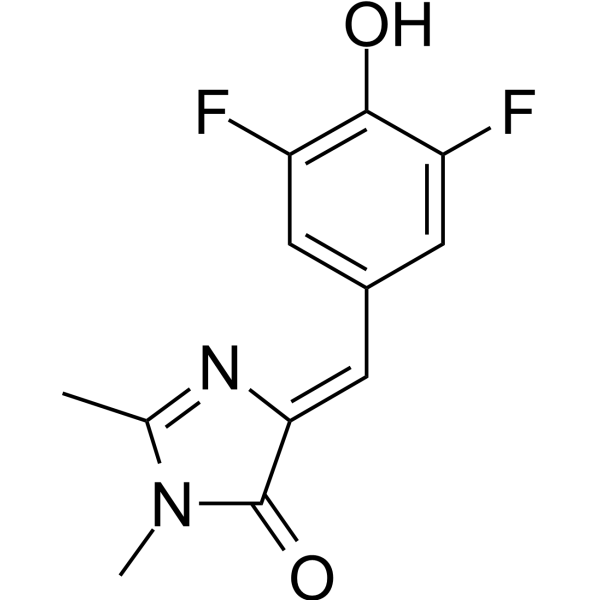
DFHBI is a small molecule that resembles the chromophore of green fluorescent protein (GFP). DFHBI can be used for imaging RNA in living cells. . Spinach and DFHBI are essentially nonfluorescent when unbound, whereas the Spinach-DFHBI complex is brightly fluorescent both in vitro and in living cells (Ex/Em = 469/501 nm).
|
-
-
- HY-W015816
-
|
2,6-DMBQ
|
Photosystem II
|
Others
|
|
2,6-Dimethylbenzoquinone (2,6-DMBQ) is a benzoquinone derivative. 2,6-Dimethylbenzoquinone promotes Photosystem II-mediated photoelectrochemical water oxidation via electron transfer between spinach chloroplast Photosystem II membranes and carbon paste electrodes, and accepts electrons from Photosystem II during oxygen evolution assays. 2,6-Dimethylbenzoquinone undergoes direct photolysis in aqueous solution under 365 nm conditions, producing 2,6-dimethylhydroquinone and 3-hydroxy-2,6-dimethylbenzoquinone .
|
-
-
- HY-153845
-
|
|
Biochemical Assay Reagents
|
Others
|
|
RNA Aptamer Broccoli sodium is a 49-nucleotide nucleic acid aptamer that is much shorter than Spinach and Spinach2. It exhibits bright green fluorescence when binding to DFHBI or DFHBI-1T (a soluble analog of the green fluorescent protein label). RNA Aptamer Broccoli sodium can be used for RNA expression or localization in living cells .
|
-
-
- HY-164642
-
|
RuBP
|
Endogenous Metabolite
|
Metabolic Disease
|
|
Ribulose 1,5-bisphosphate (RUBP) is a vital photosynthetic intermediate and substrate. Ribulose 1,5-bisphosphate acts as both product and substrate for Thermococcus kodakarensis KOD1 R15Pi. Ribulose 1,5-bisphosphate tightly binds to inactive RuBP carboxylase sites in plant leaves.Ribulose 1,5-bisphosphate serves as the key substrate for CO2 fixation in photosynthesis. Ribulose 1,5-bisphosphate supports carboxylation and regeneration processes in photosynthesis. Ribulose 1,5-bisphosphate determines the dynamic transition temperature of photosynthetic control. Ribulose 1,5-bisphosphate can be used for photosynthesis and enzyme mechanism research .
|
-
-
- HY-DY1047
-
|
|
DNA Stain
|
Others
|
DFHBI-1T (solution) is a membrane-permeable RNA aptamers-activated fluorescence probe (ex/em=472 nm/507 nm). DFHBI-1T binds to RNA aptamers (Spinach, Spinach2, iSpinach, and Broccoli) and causes specific fluorescence and lower background fluorescence. DFHBI-1T is used to image RNA in live cells . Solvent and concentration: DMSO: 20 mM
|
-
-
- HY-153843
-
|
|
Biochemical Assay Reagents
|
Others
|
|
RNA Aptamer Corn (sodium) is a 28-nt-long aptamer that is substantially shorter than Spinach and Spinach2 and exhibits bright red fluorescence upon binding DFHO (a soluble analog of the intrinsic fluorophore of red fluorescent protein), RNA Aptamer Corn (sodium) can be used to visualize RNA expression or localization in live cells which have been soaked with chromophores. The Corn-DFHO does not become appreciably cytotoxic when illuminated. And most importantly, Corn-DFHO exhibits markedly increased photostability compared to other aptamer-chromophore complexes both in vitro and in vivo. (36 nt Corn construct: 5'-GGCGCGAGGAAGGAGGUCUGAGGAGGUCACUGCGCC-3'; A 36-nt RNA construct, comprised of the 28-nt minimal Corn sequence extended proximally with a 4 base-pair stem.)
|
-
-
- HY-B0710R
-
|
Trimethylglycine (Standard); carboxy-N,N,N-trimethylmethanaminium (Standard)
|
Endogenous Metabolite
|
Metabolic Disease
|
|
Betaine (Standard) is the analytical standard of Betaine. This product is intended for research and analytical applications. Betaine (Trimethylglycine) is a natural compound found in many foods and also an active methyl-donor which can maintain normal DNA methylation patterns [1,2]. Betaine is found ubiquitously in plants, animals, microorganisms, and rich dietary sources including seafood, spinach, and wheat bran. Betaine also acts as an osmolyte, to maintain the avian’s cellular water and ion balance to improve the avian’s capacity against heat stress via preventing dehydration and osmotic inactivation. It helps in maintaining the protective osmolytic activity, especially in heat-stressed birds. Betaine may promote various intestinal microbes against osmotic variations and thus improve microbial fermentation activity .
|
-
-
- HY-N10419
-
|
|
Others
|
Others
|
|
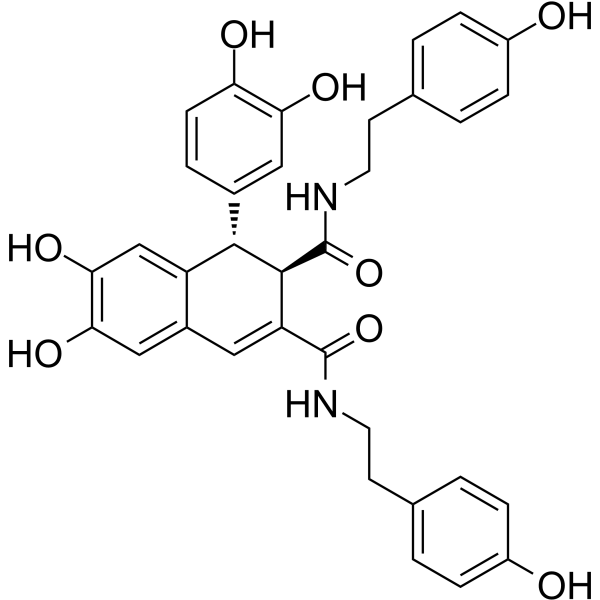
Cannabisin B (Compound 7) is a compound isolated from the aerial part of Tetragonia tetragonioides (New Zealand spinach) .
|
-
-
- HY-N11913
-
|
|
Biochemical Assay Reagents
|
Others
|
|
Siderin is a Photosystem II inhibitor that effectively inhibits ATP synthesis and chloroplast electron transport during photosynthesis in isolated spinach. Siderin can be used in the study of plant photosynthesis .
|
-
-
- HY-B2020
-
|
|
Environmental Pollutants
Herbicide
|
Others
|
|
Fenuron is a water-soluble herbicide used to control annual broad-leaved weeds and woody plants, which is widely applied in the fields of beans, spinach, sugar beet, and other fruits .
|
-
-
- HY-B0710S
-
|
Trimethylglycine-13C3; Carboxy-N,N,N-trimethylmethanaminium-13C3
|
Isotope-Labeled Compounds
|
Metabolic Disease
|
|
Betaine- 13C3 (Trimethylglycine- 13C3) is the 13C labeled isotope of Betaine (HY-B0710). Betaine (Trimethylglycine) is a natural compound found in many foods and also an active methyl-donor which can maintain normal DNA methylation patterns [1,2]. Betaine is found ubiquitously in plants, animals, microorganisms, and rich dietary sources including seafood, spinach, and wheat bran. Betaine also acts as an osmolyte, to maintain the avian’s cellular water and ion balance to improve the avian’s capacity against heat stress via preventing dehydration and osmotic inactivation. It helps in maintaining the protective osmolytic activity, especially in heat-stressed birds. Betaine may promote various intestinal microbes against osmotic variations and thus improve microbial fermentation activity .
|
-
-
- HY-N8488A
-
|
|
Others
|
Others
|
|
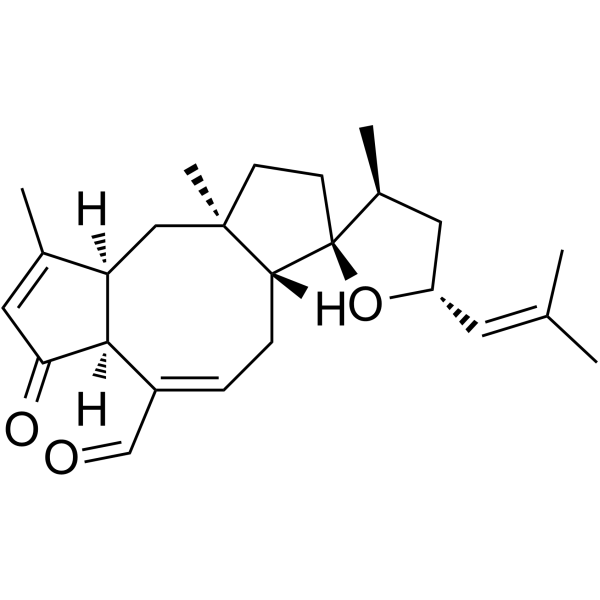
Anhydroophiobolin A is a potent inhibitor of photosynthesis with IC50s of 77 and 14 mM in the photosynthesis of chlorella and spinach, respectively. Anhydroophiobolin A is an analog of Ophiobolin A .
|
-
-
- HY-B1838
-
Asulam
1 Publications Verification
|
Herbicide
|
Others
|
|
Asulam is a herbicide with control activity against wild oats. Asulam can be used for bulb production in spinach, tulips, daffodils and lilies. Maximum residue limits (MRLs) for Asulam were evaluated in spinach. The review of Asulam took into account its endocrine disrupting properties .
|
-
-
- HY-W708304
-
|
|
Isotope-Labeled Compounds
Herbicide
|
Others
|
|
Asulam-d3 is the deuterium labeled Asulam (HY-B1838). Asulam is a herbicide with control activity against wild oats. Asulam can be used for bulb production in spinach, tulips, daffodils and lilies. Maximum residue limits (MRLs) for Asulam were evaluated in spinach. The review of Asulam took into account its endocrine disrupting properties .
|
-
-
- HY-N8488
-
|
|
Others
|
Others
|
|
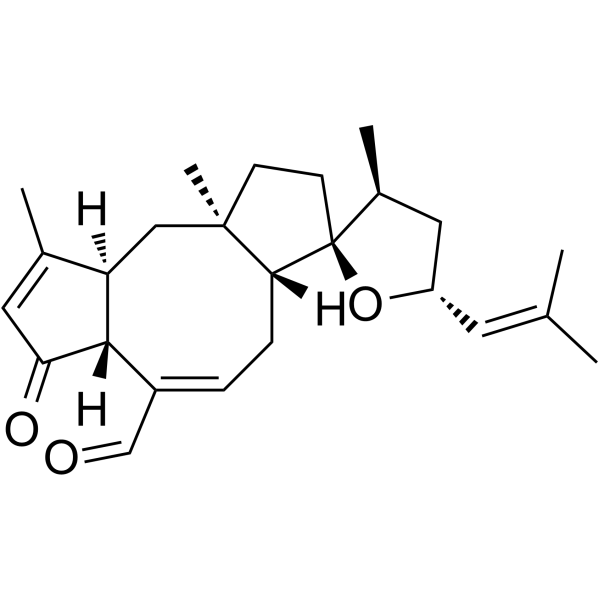
Anhydro-6-epiophiobolin A, an analog of Ophiobolin A, is a potent inhibitor of photosynthesis (I50s of 6.1 and 1 mM for photosynthesis in Chlorella and Spinach, respectively) .
|
-
-
- HY-N10094
-
|
|
Others
|
Others
|
|
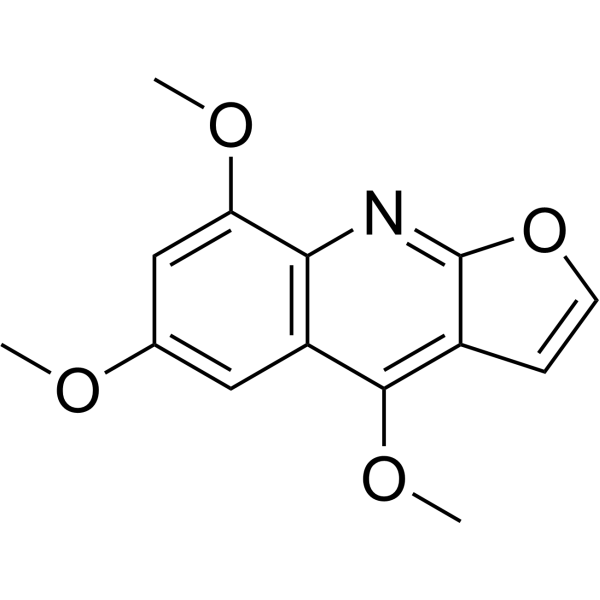
Maculosidine is a furoquinoline alkaloid that can be isolated from Balfourodendron riedelianum. Maculosidine inhibits ATP synthesis, basal, phosphorylating and uncoupled electron transport in plants. Maculosidine inhibits Hill reaction on spinach chloroplasts .
|
-
-
- HY-B2020R
-
|
|
Herbicide
Reference Standards
|
Others
|
|
Fenuron (Standard) is the analytical standard of Fenuron. This product is intended for research and analytical applications. Fenuron is a water-soluble herbicide used to control annual broad-leaved weeds and woody plants, which is widely applied in the fields of beans, spinach, sugar beet, and other fruits .
|
-
-
- HY-N8357R
-
|
|
Reference Standards
Endogenous Metabolite
|
Others
|
|
Fenuron (Standard) is the analytical standard of Fenuron. This product is intended for research and analytical applications. Fenuron is a water-soluble herbicide used to control annual broad-leaved weeds and woody plants, which is widely applied in the fields of beans, spinach, sugar beet, and other fruits .
|
-
-
- HY-B1838A
-
|
|
Fungal
|
Infection
|
|
Asulam (potassium salt) is a chitin synthase inhibitor against plant pathogenic fungi. Asulam (potassium salt) interferes with the biosynthesis of chitin in the fungal cell wall to destroy the integrity and normal growth and reproduction of fungal cells, thereby exerting bacteriostatic activity. Asulam (potassium salt) is promising for research of fungal diseases such as downy mildew and gray mold in spinach, tulips, daffodils and lilies .
|
-
-
- HY-E70941
-
-
-
- HY-W778649
-
|
|
Isotope-Labeled Compounds
Herbicide
Photosystem II
|
Others
|
|
Sarmentine-d8 is the deuterium labeled Sarmentine. Sarmentine is a broad-spectrum contact herbicide and PSII inhibitor, with an IC50 of 3.0 μM and a Ki of 1.5 μM against spinach, an IC50 of 1.72 μM against wild-type Amaranthus retroflexus, and an IC50 of 0.97 μM against triazine-resistant Amaranthus retroflexus. Sarmentine competitively binds to the QB binding site of plastoquinone on PSII, thereby blocking photosynthetic electron transport. Sarmentine inhibits enoyl-ACP reductase in Arabidopsis thaliana by targeting the early fatty acid synthesis process, with an IC50 of 18.3 μM. Sarmentine induces light-independent loss of plasma membrane integrity and electrolyte leakage. Sarmentine also exhibits antiplasmodial, antimycobacterial, antituberculous, and antiplatelet aggregation activities .
|
-
-
- HY-P2726A
-
|
|
Endogenous Metabolite
Fructose-1,6-bisphosphate aldolase
|
Metabolic Disease
|
|
Aldolase, Spinach (EC 4.1.2.13) is an enzyme catalyzing a reversible reaction that splits the aldol, fructose 1,6-bisphosphate, into the triose phosphates dihydroxyacetone phosphate (DHAP) and glyceraldehyde 3-phosphate (G3P). Aldolase, Spinach (EC 4.1.2.13) can also produce DHAP from other (3S,4R)-ketose 1-phosphates such as fructose 1-phosphate and sedoheptulose 1,7-bisphosphate.
|
-
-
- HY-E70942
-
|
|
Biochemical Assay Reagents
|
Metabolic Disease
|
|
D-Ribulose 1,5-Diphosphate Carboxylase, Spinach (EC 4.1.1.39) is an enzyme involved in the first step of carbon fixation, catalyzing the carboxylation of ribulose-1,5-diphosphate (also known as RuBP).
|
-
-
- HY-N17574
-
|
|
|
Others
|
|
3-(1,1-Dimethylallyl) xanthyletin (compound 2) is a pyranocoumarin present in the roots of Stauranthus perforatus. 3-(1,1-Dimethylallyl) xanthyletin inhibits the uncoupled electron transport from water to ferricyanide in spinach thylakoids. 3-(1,1-Dimethylallyl) xanthyletin act as a Hill reaction inhibitor. 3-(1,1-Dimethylallyl) xanthyletin interferes with plant energy metabolism at the photosynthetic level .
|
-
-
- HY-125862B
-
|
|
Glutathione Reductase (GR)
|
Metabolic Disease
|
|
Glutathione Reductase,Wheat germ (EC 1.6.4.2) is a crucial flavoenzyme in the antioxidant defense system. Reduced glutathione (GSH) is used by glutathione peroxidase to detoxify hydrogen peroxide and in the precess is converted to oxidized glutathione (GSSG). The GSSG is then recycled back to GSH by glutathione reductase (GR) using NADPH that is then converted to NADP+. The regenerated GSH is then available to detoxify more hydrogen peroxide. Glutathione Reductase uses FAD as a cofactor.
|
-
-
- HY-W686479
-
-
-
- HY-W099725
-
|
|
Herbicide
Photosystem II
|
Cardiovascular Disease
Infection
|
|
Sarmentine is a broad-spectrum contact herbicide and PSII inhibitor, with an IC50 of 3.0 μM and a Ki of 1.5 μM against spinach, an IC50 of 1.72 μM against wild-type Amaranthus retroflexus, and an IC50 of 0.97 μM against triazine-resistant Amaranthus retroflexus. Sarmentine competitively binds to the QB binding site of plastoquinone on PSII, thereby blocking photosynthetic electron transport. Sarmentine inhibits enoyl-ACP reductase in Arabidopsis thaliana by targeting the early fatty acid synthesis process, with an IC50 of 18.3 μM. Sarmentine induces light-independent loss of plasma membrane integrity and electrolyte leakage. Sarmentine also exhibits antiplasmodial, antimycobacterial, antituberculous, and antiplatelet aggregation activities .
|
-
-
- HY-150033
-
|
|
Photosystem II
Herbicide
|
Others
|
|
Sorgoleone is a photosystem II inhibitor found in sorghum. Sorgoleone binds to the QB niche of the D1 protein, inhibits photosynthetic electron transport, and does not affect photosystem I reactions. Sorgoleone reduces radicle elongation and stunts growth. Sorgoleone inhibits CO2-dependent oxygen evolution, photosynthetic O2 evolution, and mitochondrial respiration. Sorgoleone can be used as a herbicide .
|
-
-
- HY-183972
-
|
|
Oxidative Phosphorylation
|
Infection
Others
|
|
Desaspidin is an oxidative phosphorylation inhibitor and photophosphorylation inhibitor. Desaspidin uncouples mitochondrial oxidative phosphorylation, multiple chloroplast photophosphorylation pathways, and ATP synthesis linked to non-cyclic NADP reduction. Desaspidin can be used for the research of anthelmintic agent .
|
-
-
- HY-W727532
-
|
|
HPPD
Herbicide
|
Others
|
|
Fenpyrazone is a 4-hydroxyphenylpyruvate dioxygenase (HPPD) inhibitor as well as a post-emergence herbicide. By inhibiting the activity of HPPD, Fenpyrazone indirectly blocks carotenoid biosynthesis in plants, causing bleaching of new tissues in sensitive plants, followed by necrosis and eventual death. Fenpyrazone is used in studies on controlling annual monocotyledonous and dicotyledonous weeds in summer maize fields .
|
-
| Cat. No. |
Product Name |
Type |
-
- HY-110251
-
|
|
Fluorescent Dye
|
|
DFHBI-1T is a membrane-permeable RNA aptamers-activated fluorescence probe (ex/em=472 nm/507 nm). DFHBI-1T binds to RNA aptamers (Spinach, Spinach2, iSpinach, and Broccoli) and causes specific fluorescence and lower background fluorescence. DFHBI-1T is used to image RNA in live cells .
|
-
- HY-110250
-
|
|
Fluorescent Dye
|
|
DFHBI is a small molecule that resembles the chromophore of green fluorescent protein (GFP). DFHBI can be used for imaging RNA in living cells. . Spinach and DFHBI are essentially nonfluorescent when unbound, whereas the Spinach-DFHBI complex is brightly fluorescent both in vitro and in living cells (Ex/Em = 469/501 nm).
|
-
- HY-DY1047
-
|
|
Fluorescent Dye
|
DFHBI-1T (solution) is a membrane-permeable RNA aptamers-activated fluorescence probe (ex/em=472 nm/507 nm). DFHBI-1T binds to RNA aptamers (Spinach, Spinach2, iSpinach, and Broccoli) and causes specific fluorescence and lower background fluorescence. DFHBI-1T is used to image RNA in live cells . Solvent and concentration: DMSO: 20 mM
|
| Cat. No. |
Product Name |
Type |
-
- HY-B2020
-
|
|
Biochemical Assay Reagents
|
|
Fenuron is a water-soluble herbicide used to control annual broad-leaved weeds and woody plants, which is widely applied in the fields of beans, spinach, sugar beet, and other fruits .
|
-
- HY-B2020R
-
|
|
Biochemical Assay Reagents
|
|
Fenuron (Standard) is the analytical standard of Fenuron. This product is intended for research and analytical applications. Fenuron is a water-soluble herbicide used to control annual broad-leaved weeds and woody plants, which is widely applied in the fields of beans, spinach, sugar beet, and other fruits .
|
| Cat. No. |
Product Name |
Category |
Target |
Chemical Structure |
-
- HY-B0710
-
Betaine
5 Publications Verification
Trimethylglycine; carboxy-N,N,N-trimethylmethanaminium
|
Structural Classification
Natural Products
Microorganisms
other families
Animals
Classification of Application Fields
Disease markers
Metabolic Disease
Plants
Endogenous metabolite
Disease Research Fields
Cancer
|
Environmental Pollutants
Endogenous Metabolite
|
|
Betaine (Trimethylglycine) is a natural compound found in many foods and also an active methyl-donor which can maintain normal DNA methylation patterns [1,2]. Betaine is found ubiquitously in plants, animals, microorganisms, and rich dietary sources including seafood, spinach, and wheat bran. Betaine also acts as an osmolyte, to maintain the avian’s cellular water and ion balance to improve the avian’s capacity against heat stress via preventing dehydration and osmotic inactivation. It helps in maintaining the protective osmolytic activity, especially in heat-stressed birds. Betaine may promote various intestinal microbes against osmotic variations and thus improve microbial fermentation activity .
|
-
-
- HY-164642
-
|
RuBP
|
Structural Classification
Natural Products
Endogenous metabolite
Source Classification
|
Endogenous Metabolite
|
|
Ribulose 1,5-bisphosphate (RUBP) is a vital photosynthetic intermediate and substrate. Ribulose 1,5-bisphosphate acts as both product and substrate for Thermococcus kodakarensis KOD1 R15Pi. Ribulose 1,5-bisphosphate tightly binds to inactive RuBP carboxylase sites in plant leaves.Ribulose 1,5-bisphosphate serves as the key substrate for CO2 fixation in photosynthesis. Ribulose 1,5-bisphosphate supports carboxylation and regeneration processes in photosynthesis. Ribulose 1,5-bisphosphate determines the dynamic transition temperature of photosynthetic control. Ribulose 1,5-bisphosphate can be used for photosynthesis and enzyme mechanism research .
|
-
-
- HY-B0710R
-
|
Trimethylglycine (Standard); carboxy-N,N,N-trimethylmethanaminium (Standard)
|
Natural Products
Microorganisms
other families
Animals
Disease markers
Plants
Endogenous metabolite
Cancer
|
Endogenous Metabolite
|
|
Betaine (Standard) is the analytical standard of Betaine. This product is intended for research and analytical applications. Betaine (Trimethylglycine) is a natural compound found in many foods and also an active methyl-donor which can maintain normal DNA methylation patterns [1,2]. Betaine is found ubiquitously in plants, animals, microorganisms, and rich dietary sources including seafood, spinach, and wheat bran. Betaine also acts as an osmolyte, to maintain the avian’s cellular water and ion balance to improve the avian’s capacity against heat stress via preventing dehydration and osmotic inactivation. It helps in maintaining the protective osmolytic activity, especially in heat-stressed birds. Betaine may promote various intestinal microbes against osmotic variations and thus improve microbial fermentation activity .
|
-
-
- HY-N10419
-
-
-
- HY-N11913
-
-
-
- HY-N8488A
-
-
-
- HY-N8488
-
-
-
- HY-N10094
-
-
-
- HY-N8357R
-
-
-
- HY-N17574
-
-
-
- HY-W099725
-
|
|
Piper longum Linn.
Structural Classification
Alkaloids
Pyrrole Alkaloids
Piperaceae
Plants
Source Classification
|
Herbicide
Photosystem II
|
|
Sarmentine is a broad-spectrum contact herbicide and PSII inhibitor, with an IC50 of 3.0 μM and a Ki of 1.5 μM against spinach, an IC50 of 1.72 μM against wild-type Amaranthus retroflexus, and an IC50 of 0.97 μM against triazine-resistant Amaranthus retroflexus. Sarmentine competitively binds to the QB binding site of plastoquinone on PSII, thereby blocking photosynthetic electron transport. Sarmentine inhibits enoyl-ACP reductase in Arabidopsis thaliana by targeting the early fatty acid synthesis process, with an IC50 of 18.3 μM. Sarmentine induces light-independent loss of plasma membrane integrity and electrolyte leakage. Sarmentine also exhibits antiplasmodial, antimycobacterial, antituberculous, and antiplatelet aggregation activities .
|
-
-
- HY-150033
-
-
-
- HY-183972
-
-
| Cat. No. |
Product Name |
Chemical Structure |
-
- HY-B0710S
-
|
|
|
Betaine- 13C3 (Trimethylglycine- 13C3) is the 13C labeled isotope of Betaine (HY-B0710). Betaine (Trimethylglycine) is a natural compound found in many foods and also an active methyl-donor which can maintain normal DNA methylation patterns [1,2]. Betaine is found ubiquitously in plants, animals, microorganisms, and rich dietary sources including seafood, spinach, and wheat bran. Betaine also acts as an osmolyte, to maintain the avian’s cellular water and ion balance to improve the avian’s capacity against heat stress via preventing dehydration and osmotic inactivation. It helps in maintaining the protective osmolytic activity, especially in heat-stressed birds. Betaine may promote various intestinal microbes against osmotic variations and thus improve microbial fermentation activity .
|
-
-
- HY-W708304
-
|
|
|
Asulam-d3 is the deuterium labeled Asulam (HY-B1838). Asulam is a herbicide with control activity against wild oats. Asulam can be used for bulb production in spinach, tulips, daffodils and lilies. Maximum residue limits (MRLs) for Asulam were evaluated in spinach. The review of Asulam took into account its endocrine disrupting properties .
|
-
-
- HY-W778649
-
|
|
|
Sarmentine-d8 is the deuterium labeled Sarmentine. Sarmentine is a broad-spectrum contact herbicide and PSII inhibitor, with an IC50 of 3.0 μM and a Ki of 1.5 μM against spinach, an IC50 of 1.72 μM against wild-type Amaranthus retroflexus, and an IC50 of 0.97 μM against triazine-resistant Amaranthus retroflexus. Sarmentine competitively binds to the QB binding site of plastoquinone on PSII, thereby blocking photosynthetic electron transport. Sarmentine inhibits enoyl-ACP reductase in Arabidopsis thaliana by targeting the early fatty acid synthesis process, with an IC50 of 18.3 μM. Sarmentine induces light-independent loss of plasma membrane integrity and electrolyte leakage. Sarmentine also exhibits antiplasmodial, antimycobacterial, antituberculous, and antiplatelet aggregation activities .
|
-
| Cat. No. |
Product Name |
|
Classification |
-
- HY-153845
-
|
|
|
Aptamers
|
|
RNA Aptamer Broccoli sodium is a 49-nucleotide nucleic acid aptamer that is much shorter than Spinach and Spinach2. It exhibits bright green fluorescence when binding to DFHBI or DFHBI-1T (a soluble analog of the green fluorescent protein label). RNA Aptamer Broccoli sodium can be used for RNA expression or localization in living cells .
|
-
- HY-153843
-
|
|
|
Aptamers
|
|
RNA Aptamer Corn (sodium) is a 28-nt-long aptamer that is substantially shorter than Spinach and Spinach2 and exhibits bright red fluorescence upon binding DFHO (a soluble analog of the intrinsic fluorophore of red fluorescent protein), RNA Aptamer Corn (sodium) can be used to visualize RNA expression or localization in live cells which have been soaked with chromophores. The Corn-DFHO does not become appreciably cytotoxic when illuminated. And most importantly, Corn-DFHO exhibits markedly increased photostability compared to other aptamer-chromophore complexes both in vitro and in vivo. (36 nt Corn construct: 5'-GGCGCGAGGAAGGAGGUCUGAGGAGGUCACUGCGCC-3'; A 36-nt RNA construct, comprised of the 28-nt minimal Corn sequence extended proximally with a 4 base-pair stem.)
|
Your information is safe with us. * Required Fields.
Inquiry Information
- Product Name:
- Cat. No.:
- Quantity:
- MCE Japan Authorized Agent:

