15 Results for "

spontaneous release

" in MedChemExpress (MCE) Product Catalog:
Products (15)

15 Results for "spontaneous release" in MCE Product Catalog:

19
19 Publications Verification
Cat. No.: HY-B0564
CAS No.: 14402-89-2
Synonyms: Ro 21-2498
Target:  

Angiotensin Receptor

Research Areas:  

Cardiovascular Disease Cancer

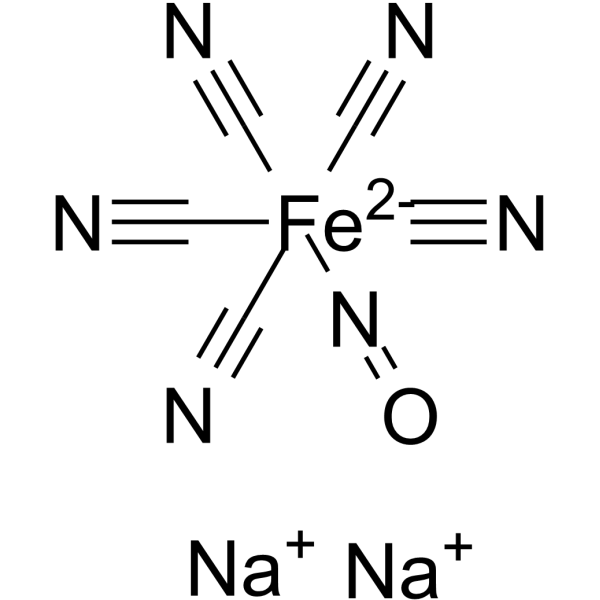
Sodium nitroprusside (Ro 21-2498) is a potent vasodilator working through releasing NO spontaneously in blood.
loading...
    loading...
1
1 Cited Publications
Cat. No.: HY-A0079
CAS No.: 94-24-6
Synonyms: Amethocaine
Research Areas:  

Neurological Disease

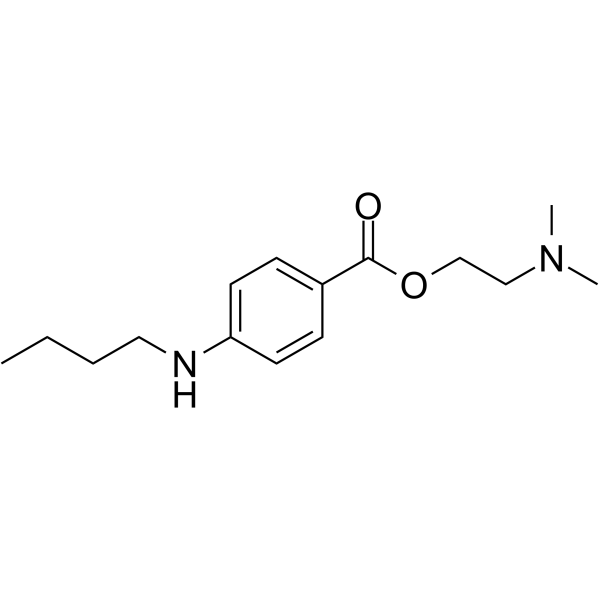
Tetracaine (Amethocaine) is a sodium channel inhibitor and ryanodine receptor (RyR) inhibitor. Tetracaine blocks sodium conduction across nerve cell membranes, preventing rapid sodium ion influx and depolarization. Tetracaine exhibits biphasic effects on spontaneous sarcoplasmic reticulum Ca 2+ release in Ca 2+-overloaded ventricular myocytes, and increases sarcoplasmic reticulum Ca 2+ load. Tetracaine can be used in research related to eye diseases .
loading...
    loading...
1
1 Cited Publications
Cat. No.: HY-W032848
CAS No.: 24237-54-5
Synonyms: Y-3642
Target:  

COX

Research Areas:  

Inflammation/Immunology

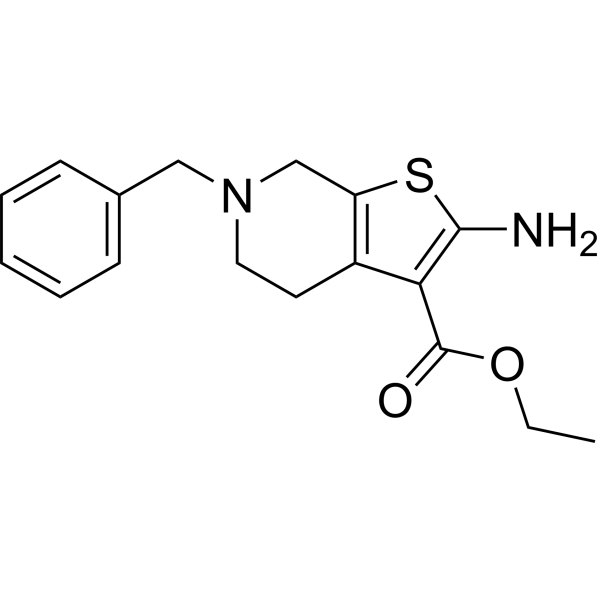
Tinoridine (Y-3642) is an orally active non-steroidal anti-inflammatory agent with potent antiperoxidative ability and radical scavenger activity. Tinoridine acts function by inhibiting COX enzyme, involves in hepatotoxicity inhibition. .
loading...
    loading...
Cat. No.: HY-W005255
CAS No.: 621-54-5
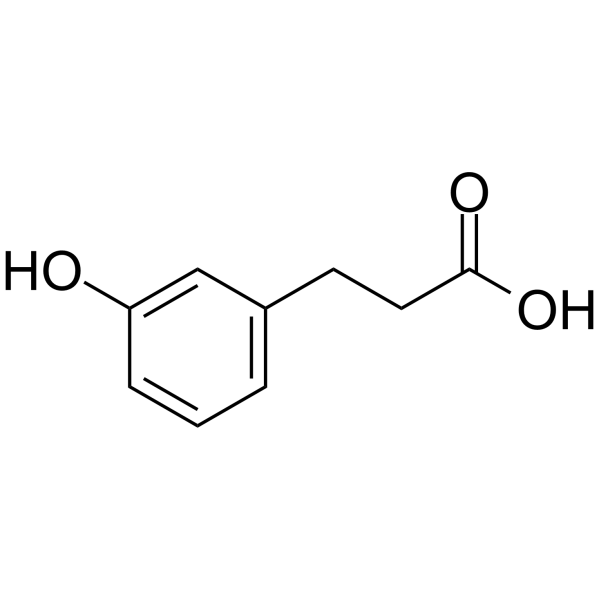
3-(3-Hydroxyphenyl)propionic acid (3HPPA) is an endothelium-dependent nitric oxide (NO) release promoter and endothelial nitric oxide synthase (eNOS) activator. 3-(3-Hydroxyphenyl)propionic acid activates eNOS to mediate vascular smooth muscle relaxation and enhances endothelial cell NO synthesis, inducing vasodilation and reducing peripheral vascular resistance. 3-(3-Hydroxyphenyl)propionic acid can dose-dependently reduce systolic and diastolic blood pressure in spontaneously hypertensive rats (SHR) without affecting cardiac contractility or heart rate. 3-(3-Hydroxyphenyl)propionic acid has antihypertensive and vascular protective effects and can be used in the prevention and treatment of cardiovascular diseases .
loading...
    loading...
Cat. No.: HY-12783A
CAS No.: 733717-87-8
Purity:  ≥98.0%
Target:  

GABA Receptor

Research Areas:  

Neurological Disease

SCH 50911 is a selective, orally active, blood-brain barrier permeable GABA-B receptor (GABA-B Receptor) antagonist with an IC50 of 1.1 μM in rats. SCH 50911 blocks baclofen-induced antitussive effects, regulates neuronal firing and GABA release. SCH 50911 promotes spontaneous seizures during withdrawal in ethanol-dependent rats, alters reward-related neurotransmission, and reduces or suppresses lever responding and self-administration behaviors of alcohol and sucrose in rats. SCH 50911 is applicable to research related to ethanol withdrawal syndrome, absence epilepsy and alcohol use disorder .
loading...
    loading...
Cat. No.: HY-106865
CAS No.: 125472-02-8
Mivazerol is a selective α2-adrenoceptor agonist. Mivazerol decreases the spontaneous release of serotonin (5-HT) and significantly inhibits the immobilization stress-induced enhancement of norepinephrine (NE), dopamine (DA) and dihydroxyphenylacetic acid (DOPAC). Mivazerol inhibits intrathecal release of glutamate evoked by halothane withdrawal in rats, and exerts neuroprotective effects in forebrain ischemia rats. Mivazerol can be used for myocardial ischemia research .
loading...
    loading...
Cat. No.: HY-N6776
CAS No.: 12627-35-9
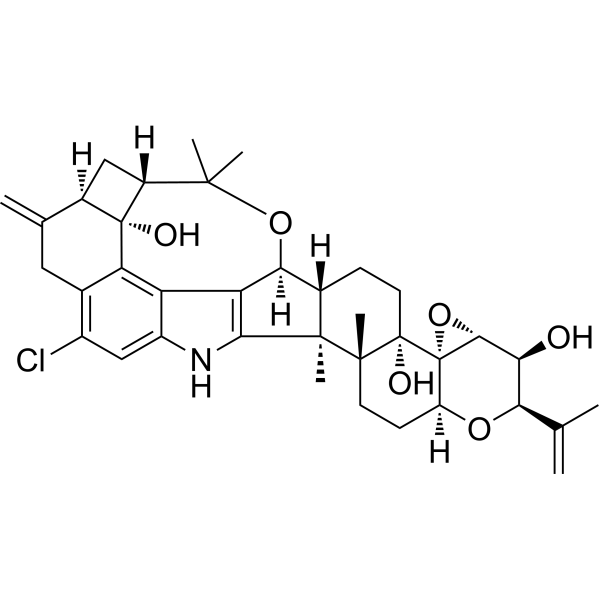
Penitrem A is an indole diterpene neurotoxic alkaloid produced by Penicillium, acts as a selective BK channel antagonist with antiproliferative and anti-invasive activities against multiple malignancies. Penitrem A increases the spontaneous release of endogenous glutamate, gamma-aminobutyric acid (GABA) and aspartate from cerebrocortical synaptosomes, and induces tremorgenic syndromes in animals .
loading...
    loading...
Cat. No.: HY-101013
CAS No.: 79032-48-7
Synonyms: S-Nitroso-N-acetylpenicillamine
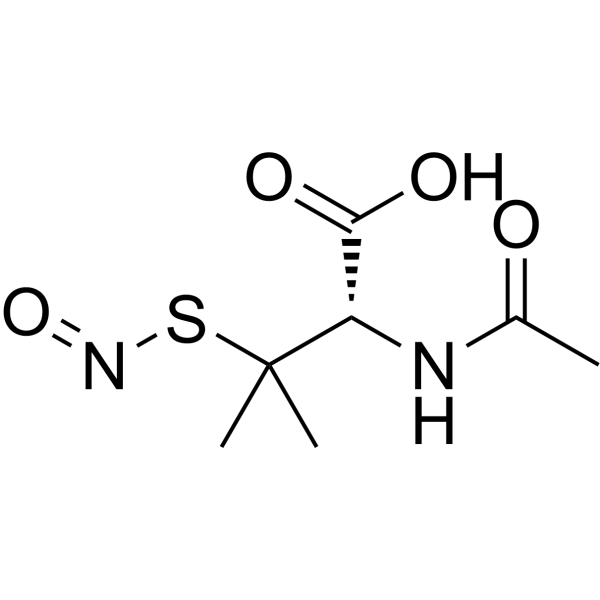
D-SNAP (S-Nitroso-N-acetylpenicillamine) can Generate nitric oxide and form superoxides spontaneously under physiological conditions and is often used to probe the cell stress response and stimulate calcium-independent synaptic vesicle release.
loading...
    loading...
Cat. No.: HY-116680
CAS No.: 60634-51-7
LY53857 is a potent antagonist of vasoconstriction and serotonin-mediated 5-HT2 receptors. LY53857 did not reduce mean arterial blood pressure in spontaneously hypertensive rats (SHR) at doses that blocked the depressor response to serotonin and blocked central serotonin receptors. In addition, LY53857 was able to enhance neurotransmitter release in rat vas deferens and guinea pig ileal nerves .
loading...
    loading...
Cat. No.: HY-W739302
CAS No.: 13826-64-7
Synonyms: Sodium α-oxyhyponitrite
Research Areas:  

Others

Sodium Oxyhyponitrite Angeli (Angeli) is a nitroxyl (NO-) donor, but under certain conditions NO release has also been observed. Sodium Oxyhyponitrite Angeli spontaneously dissociates in a pH-dependent first-order process with a half-life of 2.3 minutes at 37°C (pH 7.4), releasing 0.54 mol NO per mole.
loading...
    loading...
Cat. No.: HY-106832
CAS No.: 116308-55-5
Synonyms: Watanidipine; AE0047 free base
Vatanidipine (Watanidipine) is an orally active dihydropyridine (DHP)-type calcium channel blocker and a useful antihypertensive agent. Vatanidipine shows vasodilatory effects and also suppresses noradrenaline release from sympathetic nerve endings .
loading...
    loading...
Cat. No.: HY-12783
CAS No.: 160415-07-6
Target:  

GABA Receptor

Research Areas:  

Neurological Disease

SCH 50911 dihydrochloride is a selective, orally active, blood-brain barrier permeable GABA-B receptor (GABA-B Receptor) antagonist with an IC50 of 1.1 μM in rats. SCH 50911 dihydrochloride blocks baclofen-induced antitussive effects, regulates neuronal firing and GABA release. SCH 50911 dihydrochloride promotes spontaneous seizures during withdrawal in ethanol-dependent rats, alters reward-related neurotransmission, and reduces or suppresses lever responding and self-administration behaviors of alcohol and sucrose in rats. SCH 50911 dihydrochloride is applicable to research related to ethanol withdrawal syndrome, absence epilepsy and alcohol use disorder .
loading...
    loading...
Cat. No.: HY-E71434
Research Areas:  

Others

2,4-Dinitrotoluene dioxygenase (EC 1.14.12.24) belongs to the family of bacterial Rieske non-heme iron dioxygenases involved in naphthalene degradation. 2,4-Dinitrotoluene dioxygenase produces a cis-dihydroxylated product that spontaneously rearranges to form catechol, accompanied by the release of nitrite.
loading...
    loading...
Cat. No.: HY-N19145
CAS No.: 19870-30-5
Tuliposide A is a glycoside precursor compound derived from Tulipa gesneriana L. Tuliposide A exists in two spontaneously interconvertible isomers, and can release glucose via hydrolysis or enzymatic decomposition to generate the active intermediate Tulipaline A. Tuliposide A produces hydrolysates that suppress infection and expansion of Fusarium oxysporum, trigger cutaneous contact irritation, and lower the viability of in vitro plant calli. Tuliposide A can be used in studies related to fungal infections and dermatitis .
loading...
    loading...
Cat. No.: HY-182091
CAS No.: 2220235-94-7
CYD-1-79 is a selective positive allosteric modulator of 5-HT2C receptor. CYD-1-79 potentiates 5-HT-evoked intracellular calcium release via a topographically distinct allosteric site. CYD-1-79 shows significant inhibition of binding at dopamine D3 receptor, DAT, and α2A/α2B adrenergic receptors. CYD-1-79 modulates 5-HT2C receptor-mediated spontaneous ambulation in rodents and synergizes with a low dose of a 5-HT2C receptor agonist. CYD-1-79 attenuates relapse vulnerability of psychoactive substance in a rodent self-administration model. CYD-1-79 can be used for the research of neurological disease .
loading...
    loading...
  • 1

