1. Search Result
Search Result
Results for "

thiazide

" in MedChemExpress (MCE) Product Catalog:

38

Inhibitors & Agonists

2

Peptides

3

Natural
Products

8

Isotope-Labeled Compounds

1

Click Chemistry

Cat. No. Product Name Target Research Areas Chemical Structure
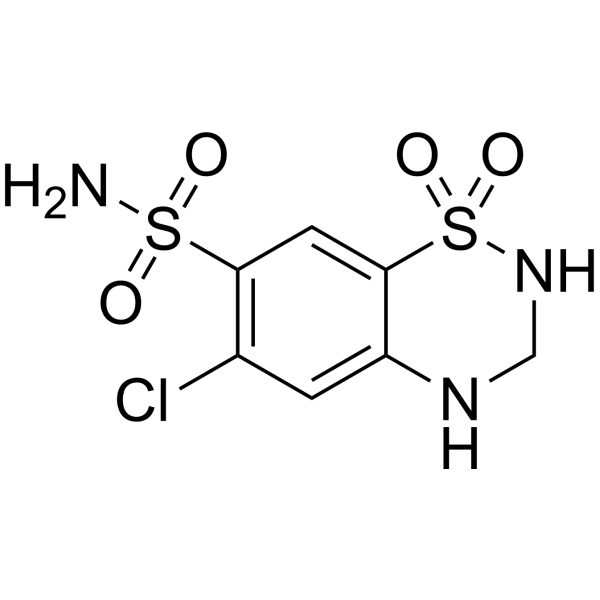
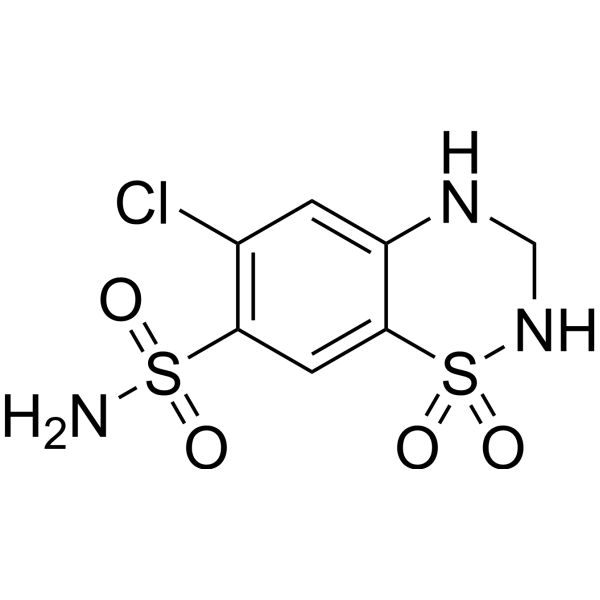
  • HY-B0252
    Hydrochlorothiazide
    5+ Cited Publications

    HCTZ

    TGF-beta/Smad Potassium Channel Cardiovascular Disease Metabolic Disease Cancer
    Hydrochlorothiazide (HCTZ), an orally active diuretic agent of the thiazide class, inhibits transforming TGF-β/Smad signaling pathway. Hydrochlorothiazide has direct vascular relaxant effects via opening of the calcium-activated potassium (KCA) channel. Hydrochlorothiazide improves cardiac function, reduces fibrosis and has antihypertensive effect .
    Hydrochlorothiazide
  • HY-15833
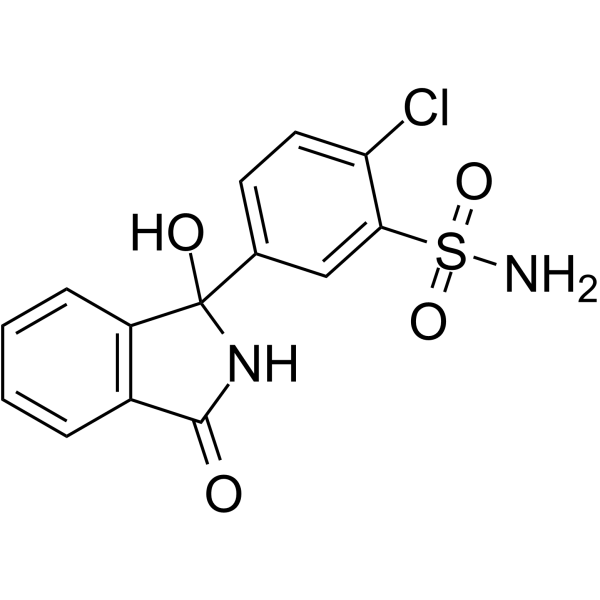
    Chlorthalidone
    1 Publications Verification

    Sodium Chloride Cotransporter (NCC) Cardiovascular Disease
    Chlorthalidone is a thiazide-like diuretic used to treat hypertension.
    Chlorthalidone
  • HY-108896
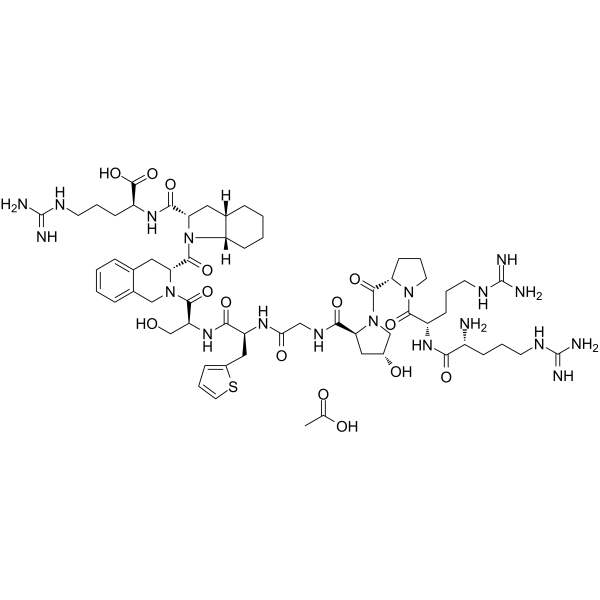
    Icatibant acetate
    10+ Cited Publications

    HOE 140 acetate

    Bradykinin Receptor Inflammation/Immunology
    Icatibant acetate (HOE-140 acetate) is a potent and specific peptide antagonist of bradykinin B2 receptor with an IC50 and Ki of 1.07 nM and 0.798 nM respectively .
    Icatibant acetate
  • HY-118472

    CGS 14831

    Drug Metabolite Endogenous Metabolite Angiotensin-converting Enzyme (ACE) Cardiovascular Disease
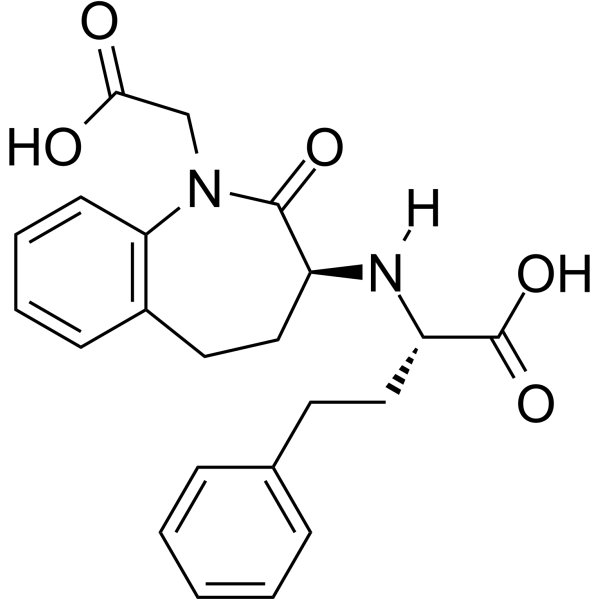
    Benazeprilat is an orally active and the active metabolite of benazepril, a carboxyl-containing ACE inhibitor with antihypertensive activity. Benazepril is a well-established antihypertensive agent, both in monoresearch and in combination with other classes of drugs including thiazide diuretics and calcium channel blockers. Benazepril is a first-line research in reducing various pathologies associated with CV risk and secondary end-organ damage .
    Benazeprilat
  • HY-P10303

    Cyclo[RGDfK(Azide)]

    Biochemical Assay Reagents Others
    Cyclo[Arg-Gly-Asp-D-Phe-Lys(Azide)] is the derivative of Cyclo(-RGDfK) (HY-P0023). Cyclo[Arg-Gly-Asp-D-Phe-Lys(Azide)] is a click chemistry reagent containing an azide group. Click chemistry has great potential for use in binding between nucleic acids, lipids, proteins, and other molecules, and has been used in many research fields because of its beneficial characteristics, including high yield, high specificity, and simplicity .
    Cyclo[Arg-Gly-Asp-D-Phe-Lys(Azide)]
  • HY-B1477
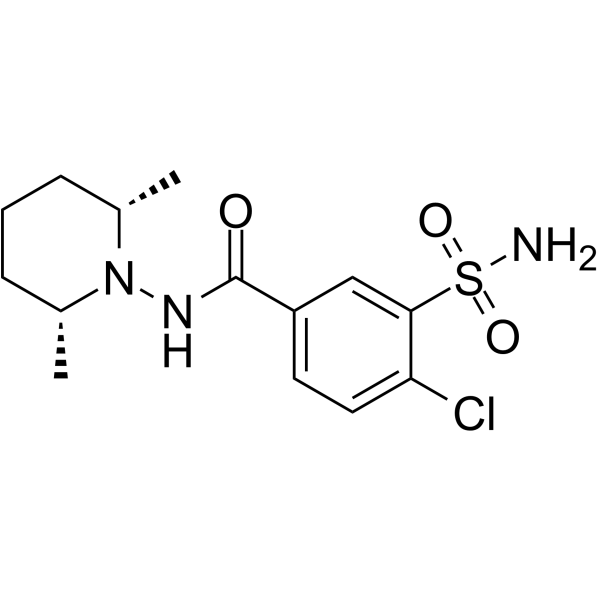
    Clopamide
    1 Publications Verification

    Sodium Chloride Cotransporter (NCC) Cardiovascular Disease Metabolic Disease
    Clopamide is an orally active thiazide-like diuretic agent that inhibits the sodium-coupled chloride cotransporter SLC12A3. Clopamide has the potential for hypertension and cardiac failure research .
    Clopamide
  • HY-B0235
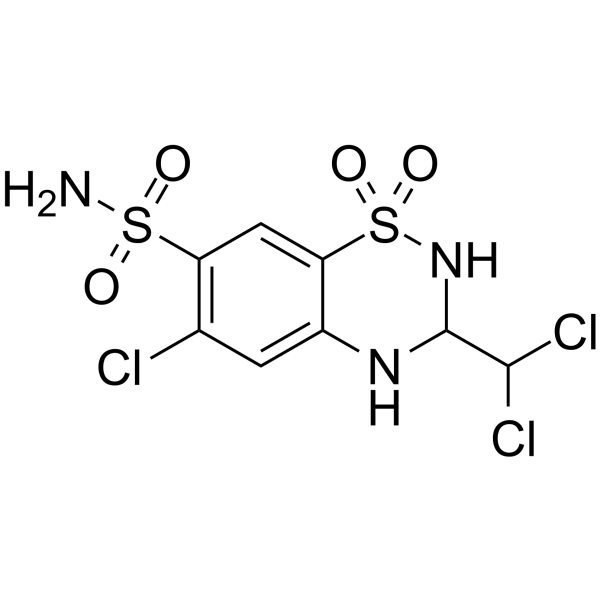
    Trichlormethiazide
    2 Publications Verification

    Carbonic Anhydrase Metabolic Disease
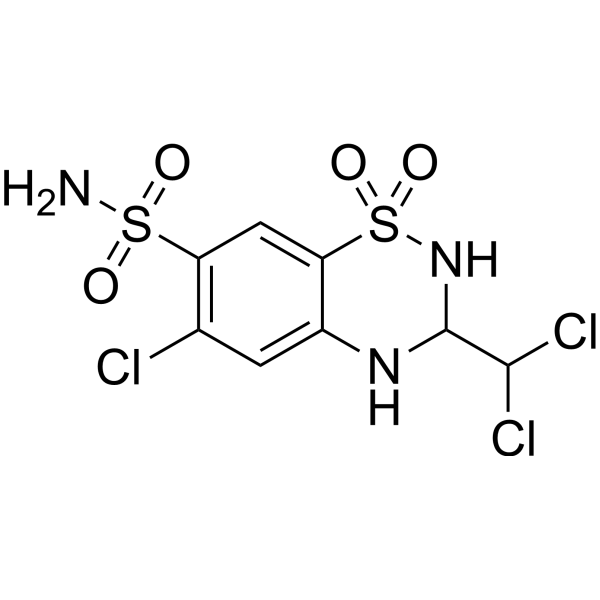
    Trichlormethiazide is an orally active thiazide diuretic, with antihypertensive effect. Trichlormethiazide increases urine volume (UV), Na and K excretion and tends to improve the depressed creatinine clearance (CCRE) in acute renal failure rats model .
    Trichlormethiazide
  • HY-W011240

    Methforylthiazidine; Rontyl

    Sodium Channel Chloride Channel Metabolic Disease Endocrinology
    Hydroflumethiazide (Methforylthiazidine) is an orally active and potent thiazide diuretic. Hydroflumethiazide possesses the ability to directly stimulate A cell secretion in the normal and alloxan diabetic pancreas .
    Hydroflumethiazide
  • HY-B0252S1

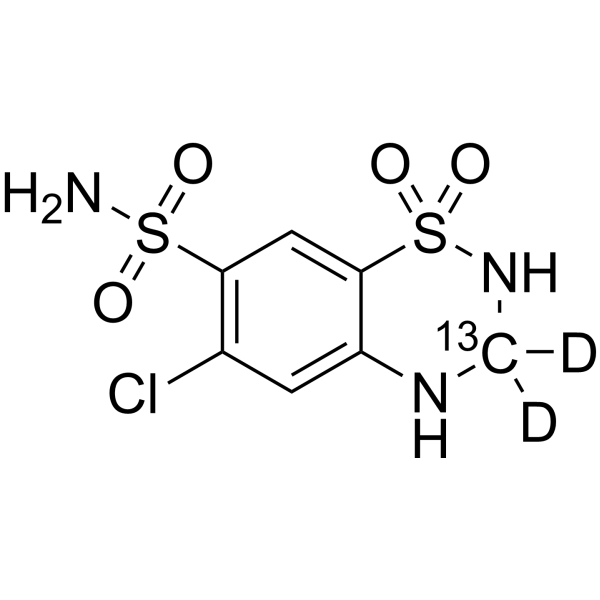
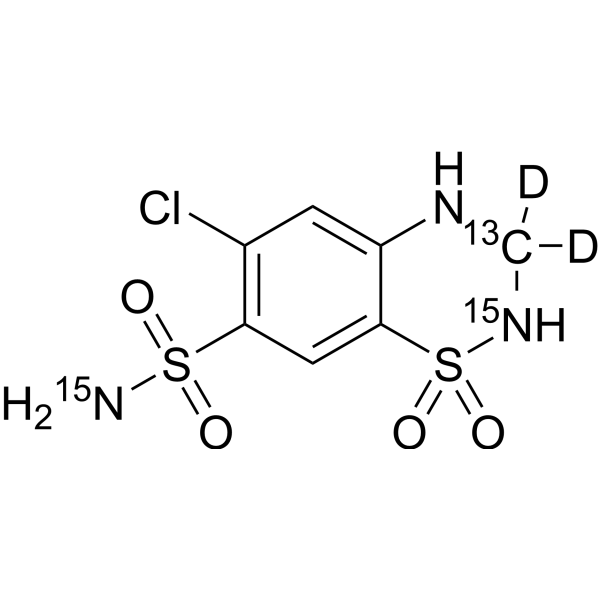
    HCTZ-13C,d2

    Isotope-Labeled Compounds TGF-beta/Smad Potassium Channel Cardiovascular Disease Metabolic Disease
    Hydrochlorothiazid- 13C,d2 is the 13C- and deuterium labeled Hydrochlorothiazide. Hydrochlorothiazide (HCTZ), an orally active diuretic agent of the thiazide class, inhibits transforming TGF-β/Smad signaling pathway. Hydrochlorothiazide has direct vascular relaxant effects via opening of the calcium-activated potassium (KCA) channel. Hydrochlorothiazide improves cardiac function, reduces fibrosis and has antihypertensive effect .
    Hydrochlorothiazid-13C,d2
  • HY-B1254

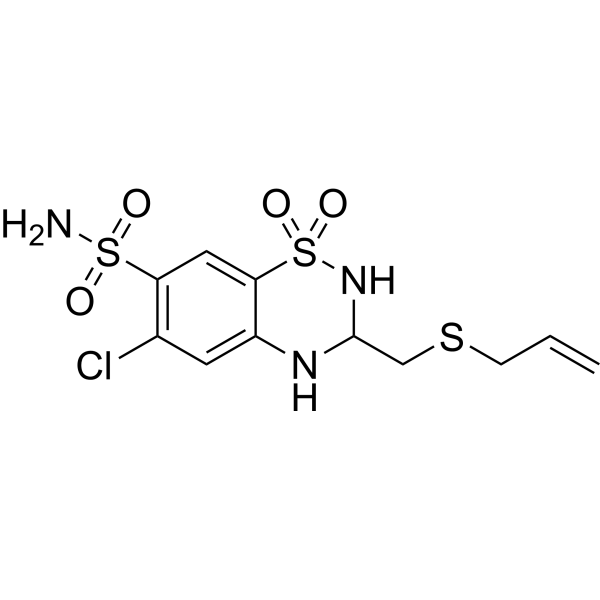
    Althiazide

    Others Cardiovascular Disease
    Altizide (Althiazide) is an orally active diuretic. Altizide can be used in studies of oedema and hypertension .
    Altizide
  • HY-B0252R
    Hydrochlorothiazide (Standard)
    5+ Cited Publications

    HCTZ (Standard)

    Reference Standards TGF-beta/Smad Potassium Channel Cardiovascular Disease Metabolic Disease Cancer
    Hydrochlorothiazide (Standard) is the analytical standard of Hydrochlorothiazide. This product is intended for research and analytical applications. Hydrochlorothiazide (HCTZ), an orally active diuretic agent of the thiazide class, inhibits transforming TGF-β/Smad signaling pathway. Hydrochlorothiazide has direct vascular relaxant effects via opening of the calcium-activated potassium (KCA) channel. Hydrochlorothiazide improves cardiac function, reduces fibrosis and has antihypertensive effect .
    Hydrochlorothiazide (Standard)
  • HY-15833S

    Isotope-Labeled Compounds Cardiovascular Disease
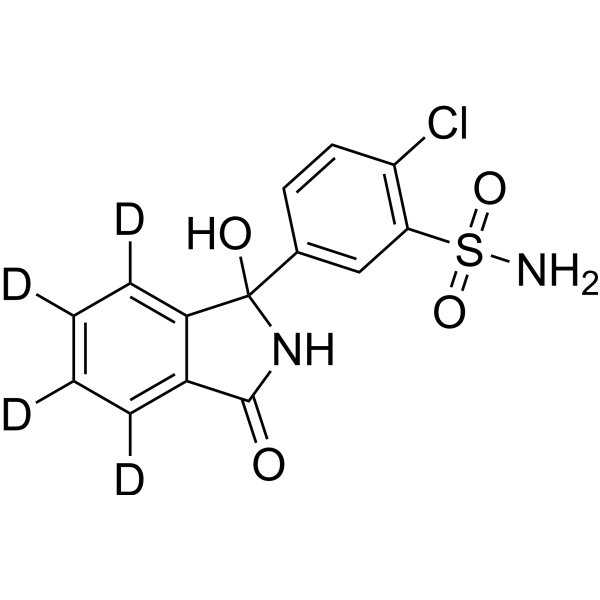
    Chlorthalidone-d4 is the deuterium labeled Chlorthalidone. Chlorthalidone is a thiazide-like diuretic used to treat hypertension.
    Chlorthalidone-d4
  • HY-B0252S

    HCTZ-d2

    TGF-beta/Smad Potassium Channel Cardiovascular Disease Metabolic Disease
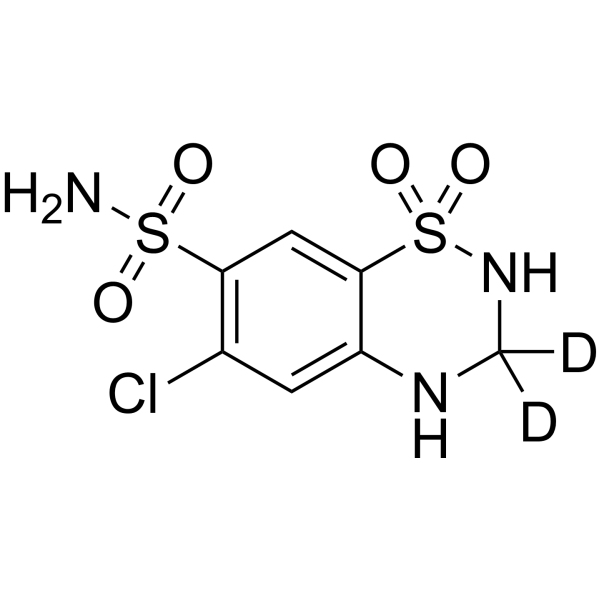
    Hydrochlorothiazid-d2 is the deuterium labeled Hydrochlorothiazide. Hydrochlorothiazide (HCTZ), an orally active diuretic agent of the thiazide class, inhibits transforming TGF-β/Smad signaling pathway. Hydrochlorothiazide has direct vascular relaxant effects via opening of the calcium-activated potassium (KCA) channel. Hydrochlorothiazide improves cardiac function, reduces fibrosis and has antihypertensive effect .
    Hydrochlorothiazid-d2
  • HY-W663740

    MNP; MeNP; N-Methyl-N'-nitrosopiperazine

    Biochemical Assay Reagents Others
    1-Methyl-4-nitrosopiperazine (MNP; MeNP;N-Methyl-N'-nitrosopiperazine) is a potential impurity in sartans, non-steroidal anti-inflammatory drugs (NSAIDs), and thiazide diuretics .
    1-Methyl-4-nitrosopiperazine
  • HY-B0235R

    Carbonic Anhydrase Reference Standards Metabolic Disease
    Trichlormethiazide (Standard) is the analytical standard of Trichlormethiazide. This product is intended for research and analytical applications. Trichlormethiazide is an orally active thiazide diuretic, with antihypertensive effect. Trichlormethiazide increases urine volume (UV), Na and K excretion and tends to improve the depressed creatinine clearance (CCRE) in acute renal failure rats model .
    Trichlormethiazide (Standard)
  • HY-B0562

    Carbonic Anhydrase Cardiovascular Disease Metabolic Disease
    Methyclothiazide is an orally active antihypertensive agent and a diuretic agent. Methyclothiazide leads to a reduction of the vascular response to the action of endogenous vasoconstricting stimuli, such as Norepinephrine (HY-13715). Methyclothiazide is against voltage-dependent Ca-channel (VDCC) activity in vitro .
    Methyclothiazide
  • HY-B0252S3

    HCTZ-15N2,13C,d2

    Potassium Channel TGF-beta/Smad Isotope-Labeled Compounds Cardiovascular Disease Metabolic Disease Cancer
    Hydrochlorothiazide- 15N2, 13C,d2 is 15N and deuterated labeled Hydrochlorothiazide (HY-B0252). Hydrochlorothiazide (HCTZ), an orally active diuretic agent of the thiazide class, inhibits transforming TGF-β/Smad signaling pathway. Hydrochlorothiazide has direct vascular relaxant effects via opening of the calcium-activated potassium (KCA) channel. Hydrochlorothiazide improves cardiac function, reduces fibrosis and has antihypertensive effect .
    Hydrochlorothiazide-15N2,13C,d2
  • HY-Z8643

    TGF-β Receptor Drug Intermediate Others
    HCTZ-CH2-HCTZ is an isomer of HCTZ (HY-B0252). Hydrochlorothiazide (HCTZ), an orally active diuretic agent of the thiazide class, inhibits transforming TGF-β/Smad signaling pathway .
    HCTZ-CH2-HCTZ
  • HY-126179

    MG-13054

    Potassium Channel Cardiovascular Disease Metabolic Disease
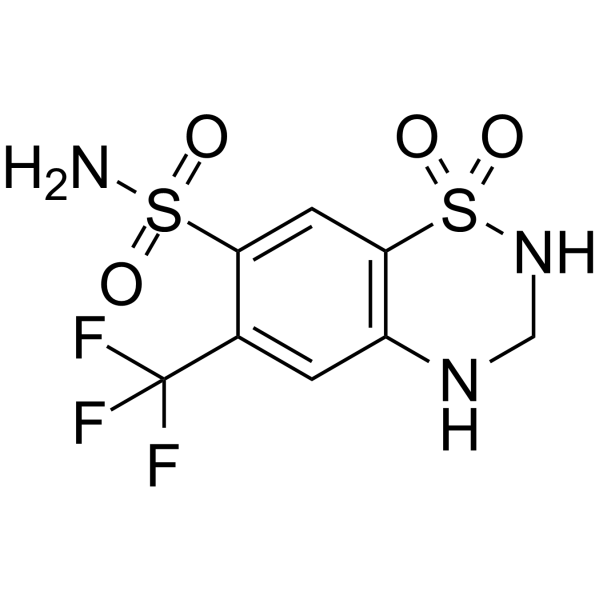
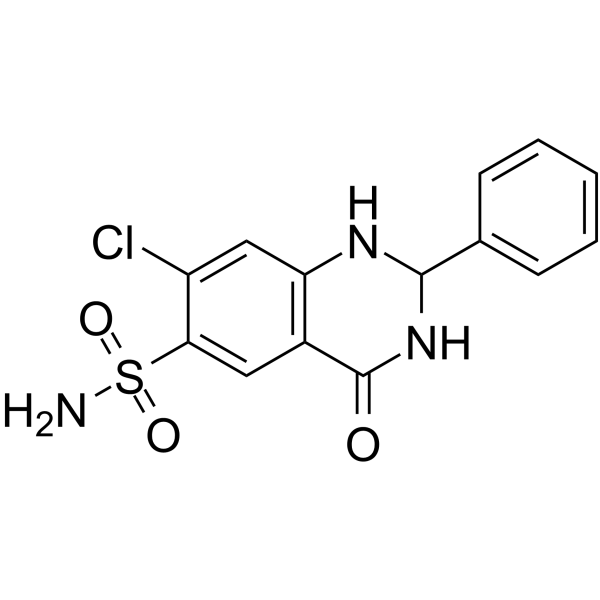
    Fenquizone (MG-13054) is an orally active diuretic. Fenquizone acts primarily on the diluting segment of the nephron cortex, similar to thiazide diuretics. Fenquizone demonstrates diuretic and natriuretic potency and duration of action comparable to thiazide diuretics but weaker than loop diuretics.​ Fenquizone reduces CH₂O without affecting TCH₂O, does not increase calcium/phosphate excretion, and has no loop or collecting duct effects. Fenquizone is used in the study of edema and hypertension .
    Fenquizone
  • HY-B0235A

    Carbonic Anhydrase Metabolic Disease
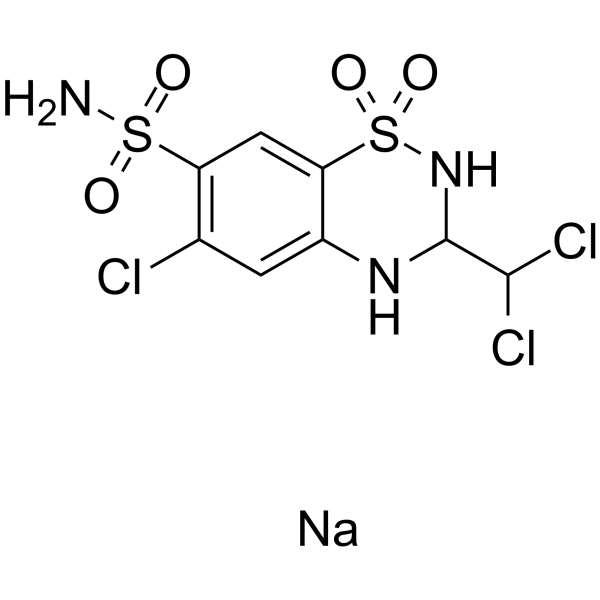
    Trichlormethiazide sodium is an orally active thiazide diuretic, with antihypertensive effect. Trichlormethiazide sodium increases urine volume (UV), Na and K excretion and tends to improve the depressed creatinine clearance (CCRE) in acute renal failure rats model .
    Trichlormethiazide sodium
  • HY-43670

    Drug Metabolite Cardiovascular Disease
    Chlorthalidone impurity is a metabolite of Chlorthalidone (HY-15833). Chlorthalidone is a thiazide-like diuretic used to treat hypertension .
    Chlorthalidone impurity
  • HY-15833R

    NKCC Reference Standards Cardiovascular Disease
    Chlorthalidone (Standard) is the analytical standard of Chlorthalidone. This product is intended for research and analytical applications. Chlorthalidone is a thiazide-like diuretic used to treat hypertension.
    Chlorthalidone (Standard)
  • HY-43670A

    Drug Metabolite Cardiovascular Disease
    Chlorthalidone impurity (ammonium) is the ammonium salt form of the metabolite of Chlorthalidone (HY-15833).Chlorthalidone is a thiazide diuretic used in the study of hypertension .
    Chlorthalidone impurity ammonium
  • HY-16403

    Sodium Channel Cardiovascular Disease
    Polythiazide is a potent and orally active thiazide diuretic agent that has antihypertensive effect. Polythiazide can decrease edema and decrease blood pressure. Polythiazide also has phototoxicity .
    Polythiazide
  • HY-43670R

    Drug Metabolite Reference Standards Cardiovascular Disease
    Chlorthalidone impurity (Standard) is the analytical standard of Chlorthalidone impurity. This product is intended for research and analytical applications. Chlorthalidone impurity is a metabolite of Chlorthalidone (HY-15833). Chlorthalidone is a thiazide-like diuretic used to treat hypertension .
    Chlorthalidone impurity (Standard)
  • HY-W011240R

    Methforylthiazidine (Standard); Rontyl (Standard)

    Sodium Channel Chloride Channel Reference Standards Metabolic Disease Endocrinology
    Hydroflumethiazide (Standard) is the analytical standard of Hydroflumethiazide. This product is intended for research and analytical applications. Hydroflumethiazide (Methforylthiazidine) is an orally active and potent thiazide diuretic. Hydroflumethiazide possesses the ability to directly stimulate A cell secretion in the normal and alloxan diabetic pancreas .
    Hydroflumethiazide (Standard)
  • HY-B1477R

    Reference Standards Sodium Channel Cardiovascular Disease Metabolic Disease
    Clopamide (Standard) is the analytical standard of Clopamide. This product is intended for research and analytical applications. Clopamide is an orally active thiazide-like diuretic agent that inhibits the sodium-coupled chloride cotransporter SLC12A3. Clopamide has the potential for hypertension and cardiac failure research .
    Clopamide (Standard)
  • HY-B0562R

    Reference Standards Carbonic Anhydrase Cardiovascular Disease Metabolic Disease
    Methyclothiazide (Standard) is the analytical standard of Methyclothiazide. This product is intended for research and analytical applications. Methyclothiazide is an orally active antihypertensive agent and a diuretic agent. Methyclothiazide leads to a reduction of the vascular response to the action of endogenous vasoconstricting stimuli, such as Norepinephrine (HY-13715). Methyclothiazide is against voltage-dependent Ca-channel (VDCC) activity in vitro .
    Methyclothiazide (Standard)
  • HY-W700581

    Isotope-Labeled Compounds Biochemical Assay Reagents Others
    1-(Methyl-d3)-4-nitrosopiperazine is the deuterium labeled 1-Methyl-4-nitrosopiperazine (HY-W663740). 1-Methyl-4-nitrosopiperazine (MNP; MeNP;N-Methyl-N'-nitrosopiperazine) is a potential impurity in sartans, non-steroidal anti-inflammatory drugs (NSAIDs), and thiazide diuretics .
    1-(Methyl-d3)-4-nitrosopiperazine
  • HY-B0252S2

    HCTZ-13C6

    TGF-beta/Smad Potassium Channel Metabolic Disease
    Hydrochlorothiazide- 13C6 is the 13C labeled Hydrochlorothiazide . Hydrochlorothiazide (HCTZ), an orally active diuretic agent of the thiazide class, inhibits transforming TGF-β/Smad signaling pathway. Hydrochlorothiazide has direct vascular relaxant effects via opening of the calcium-activated potassium (KCA) channel. Hydrochlorothiazide improves cardiac function, reduces fibrosis and has antihypertensive effect .
    Hydrochlorothiazide-13C6
  • HY-118472R

    CGS 14831 (Standard)

    Drug Metabolite Reference Standards Endogenous Metabolite Angiotensin-converting Enzyme (ACE) Cardiovascular Disease
    Benazeprilat (Standard) is the analytical standard of Benazeprilat. This product is intended for research and analytical applications. Benazeprilat is an orally active and the active metabolite of benazepril, a carboxyl-containing ACE inhibitor with antihypertensive activity. Benazepril is a well-established antihypertensive agent, both in monoresearch and in combination with other classes of drugs including thiazide diuretics and calcium channel blockers. Benazepril is a first-line research in reducing various pathologies associated with CV risk and secondary end-organ damage .
    Benazeprilat (Standard)
  • HY-N3103R

    Ethyl (E)-p-hydroxycinnamate (Standard); Ethyl trans-4-hydroxycinnamate (Standard)

    Reference Standards Drug Metabolite Inflammation/Immunology
    Benazeprilat (Standard) is the analytical standard of Benazeprilat. This product is intended for research and analytical applications. Benazeprilat is an orally active and the active metabolite of benazepril, a carboxyl-containing ACE inhibitor with antihypertensive activity. Benazepril is a well-established antihypertensive agent, both in monoresearch and in combination with other classes of drugs including thiazide diuretics and calcium channel blockers. Benazepril is a first-line research in reducing various pathologies associated with CV risk and secondary end-organ damage .
    p-Coumaric Acid Ethyl Ester (Standard)
  • HY-134043

    Chlorthalidone EP Impurity G

    Carbonic Anhydrase Cardiovascular Disease
    Chlorthalidone Impurity G (Chlorthalidone EP Impurity G) is a potential impurity found in commercial preparations of chlorthalidone with moderate antihypertensive effects. Chlorthalidone is a thiazide diuretic that inhibits the Na+/Cl- cotransporter in the distal tubule of the kidney, thereby preventing sodium and chloride reabsorption, resulting in decreased plasma volume and cardiac output. It also inhibits carbonic anhydrase (CA), including isoenzymes CAVB, VII, IX, XII, and XIII (Kis=2.8-23 nM) and to a lesser extent CAI, CAII, IV, VA, and VI (Ki=138-1,347 nM), mediating vasodilatory activity.
    Chlorthalidone Impurity G
  • HY-126179R

    MG-13054 (Standard)

    Reference Standards Potassium Channel Cardiovascular Disease Metabolic Disease
    Fenquizone (MG-13054) (Standard) is the analytical standard of Fenquizone (HY-126179). This product is intended for research and analytical applications. Fenquizone is an orally active diuretic. Fenquizone acts primarily on the diluting segment of the nephron cortex, similar to thiazide diuretics. Fenquizone demonstrates diuretic and natriuretic potency and duration of action comparable to thiazide diuretics but weaker than loop diuretics.​ Fenquizone reduces CH₂O without affecting TCH₂O, does not increase calcium/phosphate excretion, and has no loop or collecting duct effects. Fenquizone is used in the study of edema and hypertension.
    Fenquizone (Standard)
  • HY-W587755

    Sodium Channel Cardiovascular Disease
    Benzylhydrochlorothiazide is an orally active thiazide diuretic. Benzylhydrochlorothiazide acts on the distal convoluted tubules of the kidneys, inhibiting the reabsorption of sodium chloride, thereby increasing urine output and reducing the body's fluid volume. Benzylhydrochlorothiazide has phototoxicity and a potential risk of skin reactions. Benzylhydrochlorothiazide can cause cell death when exposed to UVA radiation. Benzylhydrochlorothiazide is used in research on hypertension and edema .
    Benzylhydrochlorothiazide
  • HY-W416548S

    Isotope-Labeled Compounds Biochemical Assay Reagents Others
    1-Methyl-4-nitro piperazine-d11 is the deuterium labeled 1-Methyl-4-nitro piperazine. 1-Methyl-4-nitrosopiperazine (MNP; MeNP;N-Methyl-N'-nitrosopiperazine) is a potential impurity in sartans, non-steroidal anti-inflammatory drugs (NSAIDs), and thiazide diuretics .
    1-Methyl-4-nitro piperazine-d11
  • HY-W726845

    MNP-d11; MeNP-d11; N-Methyl-N'-nitrosopiperazine-d11

    Isotope-Labeled Compounds Biochemical Assay Reagents Others
    1-Methyl-4-nitrosopiperazine-d11 (MNP-d11) is the deuterium labeled 1-Methyl-4-nitrosopiperazine (HY-W663740). 1-Methyl-4-nitrosopiperazine (MNP; MeNP;N-Methyl-N'-nitrosopiperazine) is a potential impurity in sartans, non-steroidal anti-inflammatory drugs (NSAIDs), and thiazide diuretics .
    1-Methyl-4-nitrosopiperazine-d11
  • HY-W343043

    PZG

    Drug Derivative Cardiovascular Disease Metabolic Disease
    Pyrazinoylguanidine (PZG) is an analogue of the potassium sparing diuretic, Amiloride (HY-B0285). Pyrazinoylguanidine can lower the systolic and diastolic blood pressure of patients with primary hypertension, has a certain effect on reducing heart rate, and does not affect the concentrations of electrolytes such as sodium, potassium, and chloride in the blood serum. Pyrazinoylguanidine can reduce the hyperglycemia and hyperinsulinemia in type 2 diabetes, reduce the levels of triglycerides, cholesterol, and free fatty acids, and reverse the hyperglycemia and hyperlipidemia induced by thiazide diuretics, such as Hydrochlorothiazide (HY-B0252). Pyrazinoylguanidine ican nhibit the reabsorption of urea by the renal tubules, thereby increasing the clearance rate and excretion volume of urea, reducing the serum urea concentration, and minimizing its toxic accumulation .
    Pyrazinoylguanidine

Inquiry Online

Your information is safe with us. * Required Fields.

Salutation


Country or Region *

Applicant Name *


Organization Name *

Department *


Email Address *


Product Name *

Cat. No.


Requested quantity *

Phone Number *


Remarks

Inquiry Online

Inquiry Information

Product Name:
Cat. No.:
Quantity:
MCE Japan Authorized Agent: