39 Results for "

thiourea

" in MedChemExpress (MCE) Product Catalog:
Products (39)

39 Results for "thiourea" in MCE Product Catalog:

2
2 Cited Publications
Cat. No.: HY-13769A
CAS No.: 2076-91-7
Purity:  ≥98.0%
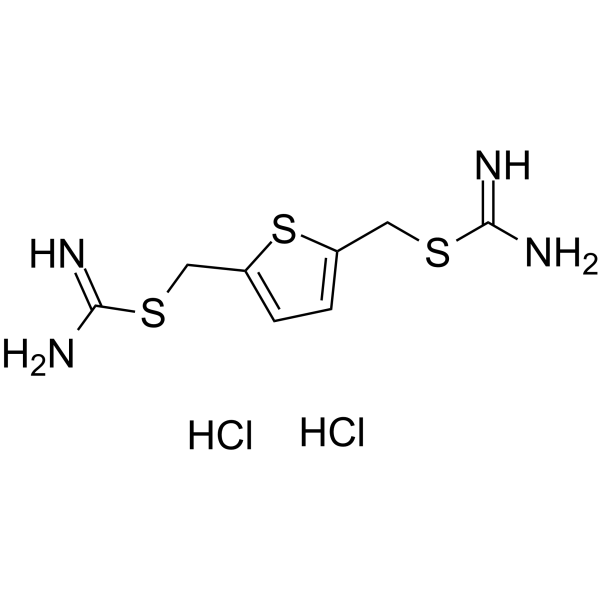
Synonyms: NSC55712; TPU-260 Dihydrochloride
TPT-260 Dihydrochloride (NSC55712), a thiophene thiourea derivative, is a retromer complex stabilizer against thermal denaturation (Kd = ~5 µM). TPT-260 Dihydrochloride increases the levels of retromer proteins, shifts amyloid-precursor protein (APP) away from the endosome, and decreases the pathogenic processing of APP. TPT-260 Dihydrochloride inhibits TLR4 upregulation, IKKβ phosphorylation, NF-κB p65 nuclear translocation, and NLRP3 inflammasome formation. TPT-260 Dihydrochloride improves retromer-mediated cargo trafficking, reduces brain infarct area, and decreases amyloid plaque deposition. TPT-260 Dihydrochloride exhibits minimal cytotoxicity to primary microglia at tested concentrations. TPT-260 Dihydrochloride can be used for the research of inflammatory bowel disease, ischemic stroke and Alzheimer's disease .
loading...
    loading...
2
2 Cited Publications
Cat. No.: HY-136394
CAS No.: 80060-09-9
Purity:  98.29%
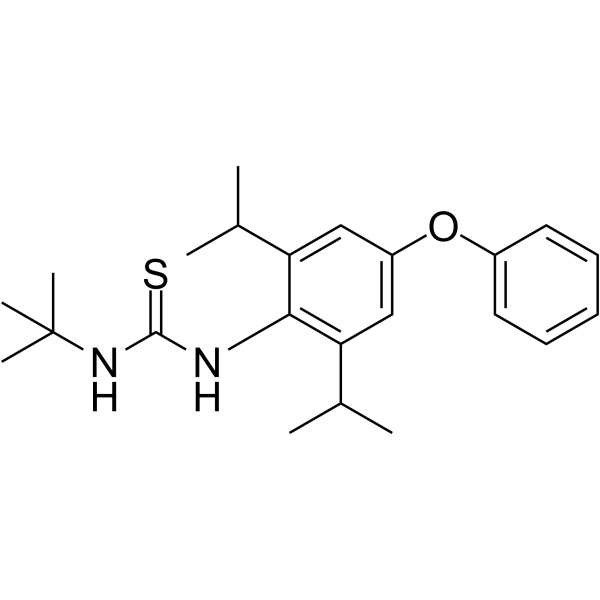
Diafenthiuron is a thiourea compound commonly used a broad-spectrum insecticide and acaricide. Diafenthiuron disturbs the insect respiratory system by inhibiting the oxidative phosphorylation and mitochondrial ATP synthesis .
loading...
    loading...
1
1 Cited Publications
Cat. No.: HY-169703
CAS No.: 1251839-15-2
Research Areas:  

Inflammation/Immunology

SPA0355 is a thiourea derivative that has antioxidant and anti-inflammatory properties. SPA0355 inhibits the RANKL (receptor activator of nuclear factor κB ligand) induced osteoclast formation in primary bone marrow-derived macrophages. SPA0355 also suppresses the activation of the MAPKs, Akt, and NF-κB pathways. Additionally, SPA0355 promotes osteoblast differentiation, increases alkaline phosphatase activity, and enhances mineral nodule formation. SPA0355 can protect ovariectomized mice from bone loss by stimulating osteoblast differentiation and inhibiting osteoclast resorption, making it useful for studying postmenopausal osteoporosis .
loading...
    loading...
Cat. No.: HY-B1526
CAS No.: 104-06-3
Synonyms: Thioacetazone; Amithiozone
Target:  

Bacterial Antibiotic

Research Areas:  

Infection

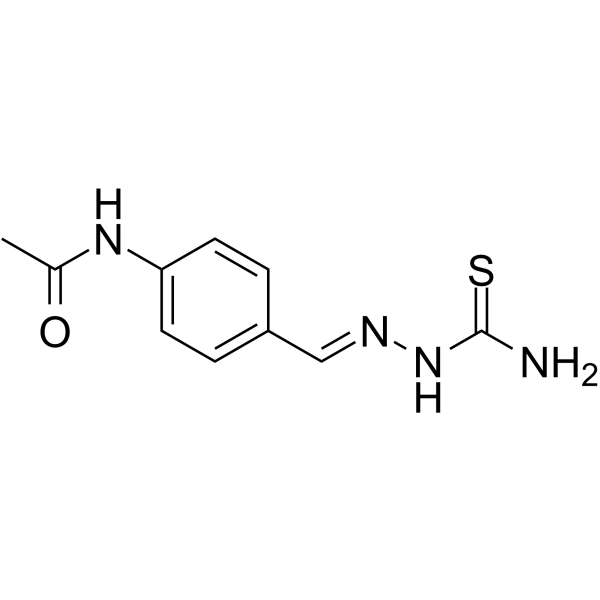
Thiacetazone (Thioacetazone) is a thiourea-containing antitubercular agent and is an orally active antibiotic. Thiacetazone has antibacterial action, which inhibits growth of Mycobacterium tuberculosis H37Rv with a MIC value of 0.1 μg/mL .
loading...
    loading...
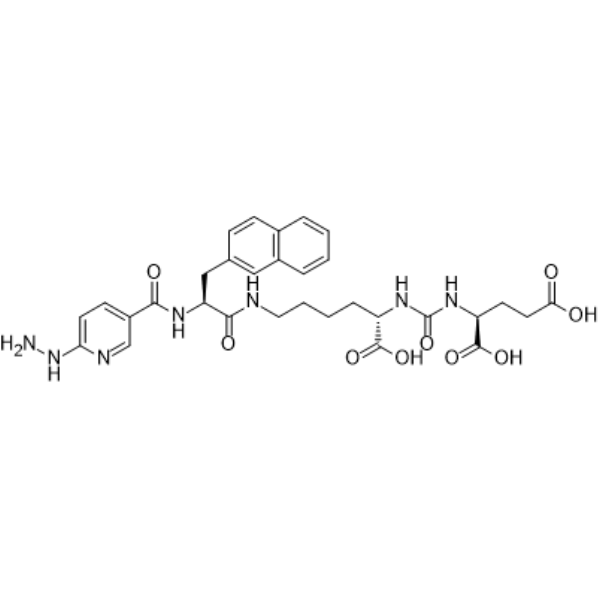
Cat. No.: HY-P5290
CAS No.: 2213408-17-2
Research Areas:  

Cancer

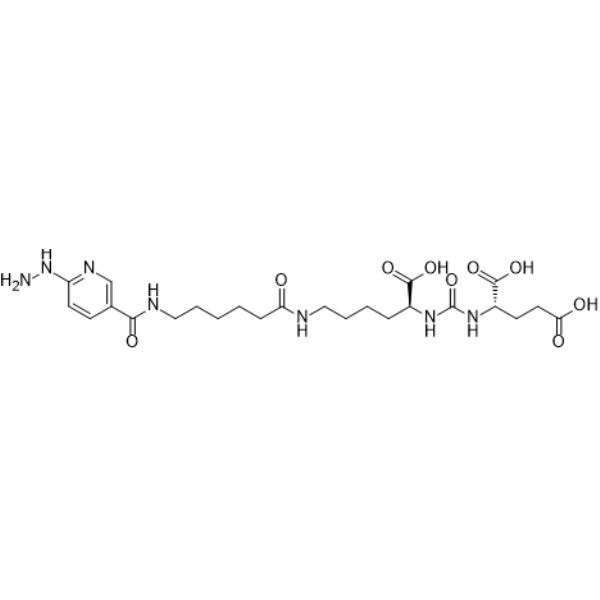
HYNIC-PSMA is a ligand for molecular imaging of tumors. Hynic-psma consists of two components: HYNIC (6-hydrazinonicotinamide) and PSMA (Prostate-Specific Membrane Antigen). HYNIC is a compound used to attach radioactive isotopes to targeted molecules, such as 188Re-HYNIC-PSMA. PSMA is a membrane antigen that is specifically expressed on the surface of prostate cancer cells. HYNIC-PSMA can be used in prostate cancer research . HYNIC-PSMA can be used for the synthesis/research of Radionuclide-Drug Conjugates (RDCs).
loading...
    loading...
Cat. No.: HY-W015915
CAS No.: 1758-73-2
Synonyms: thiourea dioxide
Aminoiminomethanesulphinic acid (Thiourea dioxide) is a biological material or organic compound that can be used in life science research .
loading...
    loading...
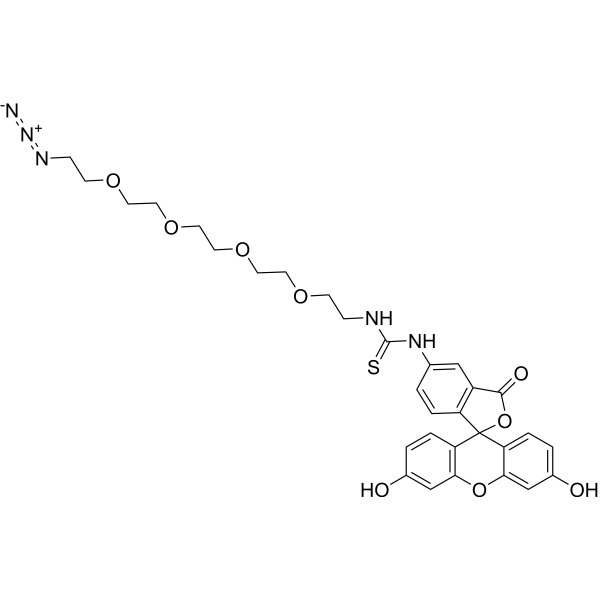
Cat. No.: HY-120781
CAS No.: 1454662-54-4
Target:  

PROTAC Linkers

Research Areas:  

Cancer

Fluorescein-thiourea-PEG4-azide is a PEG-based PROTAC linker can be used in the synthesis of PROTACs. Fluorescein-thiourea-PEG4-azide is a click chemistry reagent, it contains an Azide group and can undergo copper-catalyzed azide-alkyne cycloaddition reaction (CuAAc) with molecules containing Alkyne groups. It can also undergo strain-promoted alkyne-azide cycloaddition (SPAAC) reactions with molecules containing DBCO or BCN groups.
loading...
    loading...
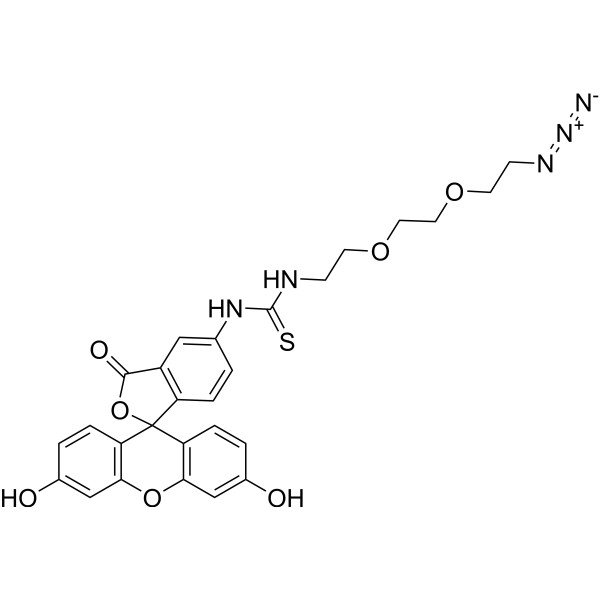
Cat. No.: HY-130160
CAS No.: 1146195-72-3
Target:  

PROTAC Linkers

Research Areas:  

Cancer

Fluorescein-thiourea-PEG2-azide is a PEG-based PROTAC linker that can be used in the synthesis of PROTACs . Fluorescein-thiourea-PEG2-azide is a click chemistry reagent, it contains an Azide group and can undergo copper-catalyzed azide-alkyne cycloaddition reaction (CuAAc) with molecules containing Alkyne groups. It can also undergo strain-promoted alkyne-azide cycloaddition (SPAAC) reactions with molecules containing DBCO or BCN groups.
loading...
    loading...
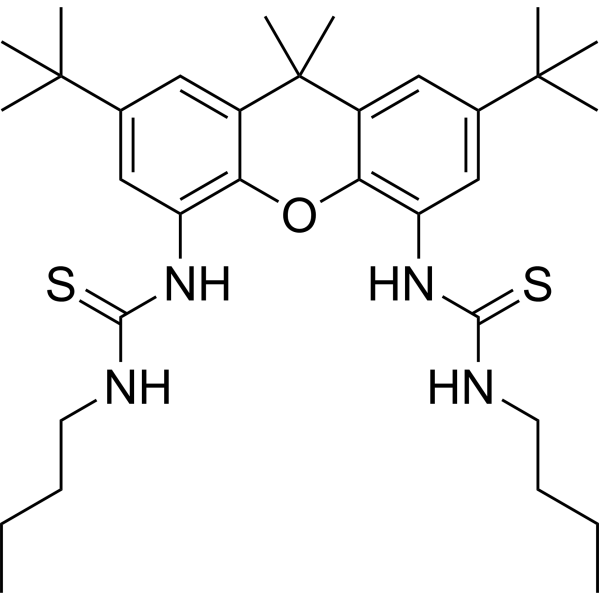
Cat. No.: HY-D1896
CAS No.: 187404-67-7
Chloride Ionophore IV is a thiourea type hydrogen bonding-based receptor. Chloride Ionophore IV is a chloride ionophore .
loading...
    loading...
Cat. No.: HY-P5292A
CAS No.: 2375849-11-7
Research Areas:  

Cancer

HYNIC-iPSMA TFA is a PSMA-targeted ligand for tumor molecular imaging, with a Ki value of 3.11 nM. HYNIC-iPSMA TFA consists of two components: HYNIC (6-hydrazinonicotinamide) and iPSMA (Inhibitor of Prostate-Specific Membrane Antigen). HYNIC serves as a chelating moiety to link radionuclides to the targeting molecule; iPSMA is a specific inhibitor that targets Prostate-Specific Membrane Antigen (PSMA). 68Ga-labeled iPSMA is used for prostate cancer detection via PET imaging, while the further developed 99mTc-EDDA/HYNIC-iPSMA TFA exhibits excellent specificity and sensitivity. HYNIC-iPSMA TFA can be used for the synthesis and research of radionuclide-conjugated drugs (RDC) .
loading...
    loading...
Cat. No.: HY-136952
CAS No.: 1822331-55-4
p-SCN-Bn-HOPO is a bifunctional chelator that forms stable octadentate complexes with Zr (IV) and 89Zr 4+ via four 1,2-hydroxypyridone groups. p-SCN-Bn-HOPO conjugates with antibodies through the formation of thiourea bonds with lysine residues, and enables efficient 89Zr radiolabeling under mild conditions. p-SCN-Bn-HOPO inhibits bone uptake of free radiometals, stabilizes radiometal-antibody conjugates, and achieves PET imaging with low background and enhanced tumor-to-organ contrast. p-SCN-Bn-HOPO can be used in breast cancer-related research .
loading...
    loading...
Cat. No.: HY-P5292
CAS No.: 2192215-74-8
Research Areas:  

Cancer

HYNIC-iPSMA is a PSMA-targeted ligand for tumor molecular imaging, with a Ki value of 3.11 nM. HYNIC-iPSMA consists of two components: HYNIC (6-hydrazinonicotinamide) and iPSMA (Inhibitor of Prostate-Specific Membrane Antigen). HYNIC acts as a chelating moiety to link radionuclides to the targeting molecule; iPSMA is a specific inhibitor that targets Prostate-Specific Membrane Antigen (PSMA). 68Ga-labeled iPSMA is used for prostate cancer detection via PET imaging, while the further developed 99mTc-EDDA/HYNIC-iPSMA TFA exhibits excellent specificity and sensitivity. HYNIC-iPSMA can be used for the synthesis and research of radionuclide-conjugated drugs (RDC) .
loading...
    loading...
Cat. No.: HY-139174
CAS No.: 2301865-01-8
Target:  

MAGL

Research Areas:  

Inflammation/Immunology

(S)-DO271 is a non-active control probe targeting ABHD12, and it has almost no inhibitory activity against ABHD12 (IC50 > 100 μM). (S)-DO271 does not cause the upregulation of inflammatory factors and has no cytotoxicity. (S)-DO271 is suitable as a negative control for validating the functional studies of ABHD12 .
loading...
    loading...
Cat. No.: HY-114747
CAS No.: 25444-85-3
Synonyms: 1-(1-Adamantyl)-3-propyl-2-thiourea
Research Areas:  

Infection

1-(Adamantan-1-yl)-3-propylthiourea (1-(1-Adamantyl)-3-propyl-2-thiourea) is a member of the virus-inhibitory N--thiourea class .
loading...
    loading...
Cat. No.: HY-144727
CAS No.: 63932-07-0
Target:  

Bacterial TNF Receptor

Research Areas:  

Infection Inflammation/Immunology

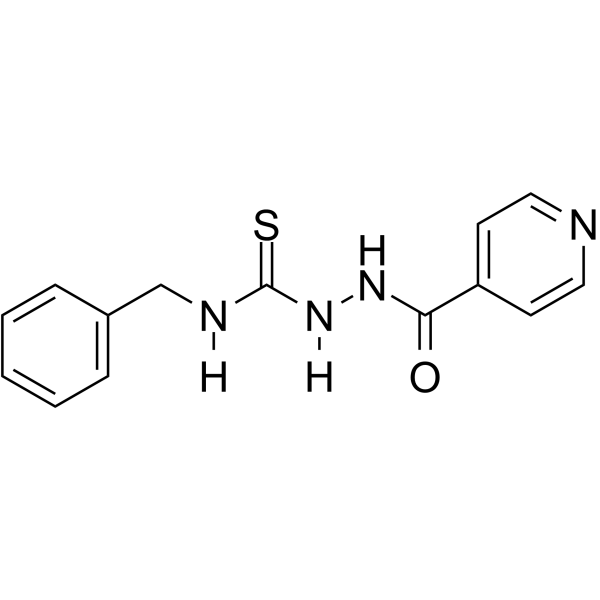
Anti-inflammatory agent 11 (compound 16) is a potent antimycobacterial and anti-inflammatory agent. Anti-inflammatory agent 11 inhibits Mtb H37Rv and M299 growth, with MIC50 (minimum inhibitory concentration 50%) of 1.3 and 6.9 μM, respectively. Anti-inflammatory agent 11 inhibits NO through the suppression of iNOS expression, and also inhibited the production of TNF-α and IL-1β. Anti-inflammatory agent 11 can be used for tuberculosis (TB) research .
loading...
    loading...
Cat. No.: HY-140943
CAS No.: 2353409-59-1
Target:  

PROTAC Linkers

Research Areas:  

Cancer

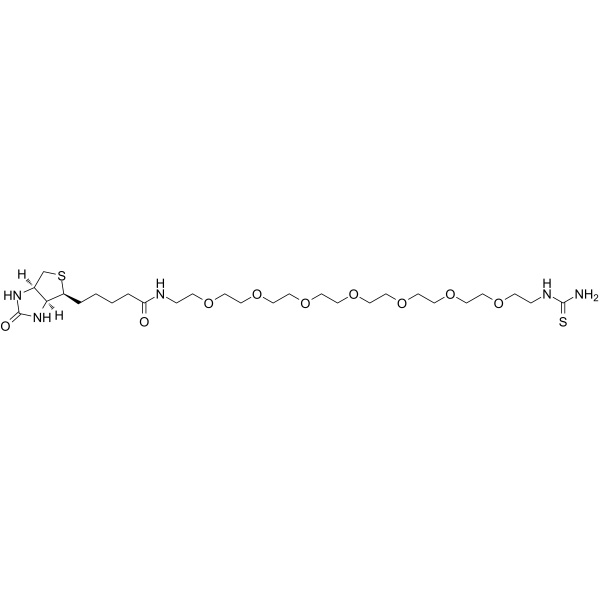
Biotin-PEG7-thiourea is a biotin-labeled, PEG-based PROTAC linker that can be used in the synthesis of PROTACs .
loading...
    loading...
Cat. No.: HY-118711
CAS No.: 149486-68-0
Research Areas:  

Infection

HI-346 is a non-nucleoside reverse transcriptase inhibitor (NNRTI) for HIV-1 with an IC50 value against the HIV-1 virus strain (HTLV-IIIB) of 3 nM. HI-346 is a vaginal bactericidal contraceptive agent, with its sperm-killing activity having an EC50 value of 42 μM. HI-346 shows no cytotoxicity to normal cells at effective concentrations. HI-346 can be used in anti-HIV-1 and contraceptive research .
loading...
    loading...
Cat. No.: HY-13769
CAS No.: 769856-81-7
Synonyms: TPU260
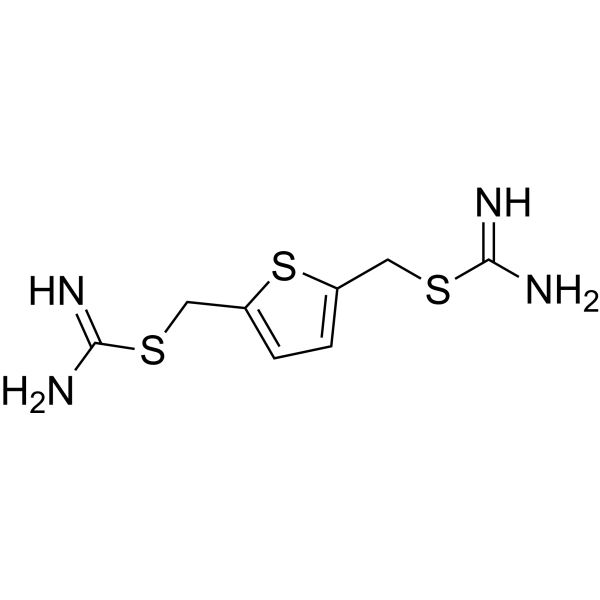
TPT-260 (TPU260), a thiophene thiourea derivative, is a retromer complex stabilizer against thermal denaturation (Kd = ~5 µM). TPT-260 increases the levels of retromer proteins, shifts amyloid-precursor protein (APP) away from the endosome, and decreases the pathogenic processing of APP. TPT-260 inhibits TLR4 upregulation, IKKβ phosphorylation, NF-κB p65 nuclear translocation, and NLRP3 inflammasome formation. TPT-260 improves retromer-mediated cargo trafficking, reduces brain infarct area, and decreases amyloid plaque deposition. TPT-260 exhibits minimal cytotoxicity to primary microglia at tested concentrations. TPT-260 can be used for the research of inflammatory bowel disease, ischemic stroke and Alzheimer's disease .
loading...
    loading...
Cat. No.: HY-133061
CAS No.: 2055014-69-0
Target:  

PROTAC Linkers

Research Areas:  

Cancer

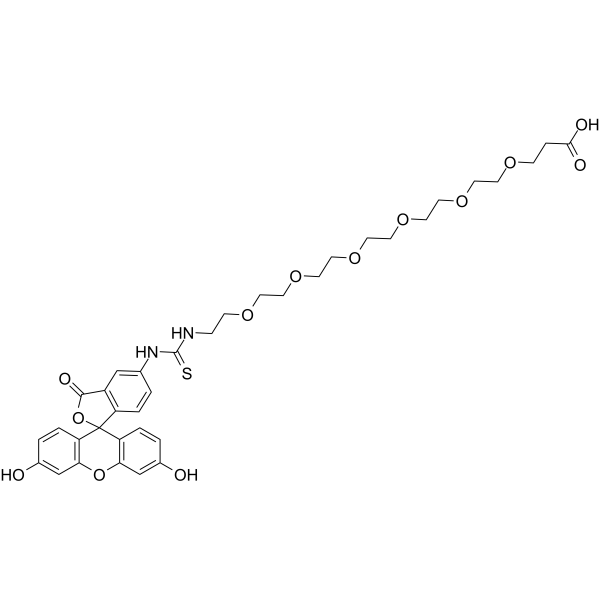
Fluorescein-thiourea-PEG6-acid is a PEG-based PROTAC linker that can be used in the synthesis of PROTACs .
loading...
    loading...
Cat. No.: HY-W015915R
CAS No.: 1758-73-2
Synonyms: thiourea dioxide (Standard)
Aminoiminomethanesulphinic acid (Thiourea dioxide) (Standard) is the analytical standard of Aminoiminomethanesulphinic acid. This product is intended for research and analytical applications. Aminoiminomethanesulphinic acid is a solid formaldehyde substitute with both electrophilic and reductive properties. Aminoiminomethanesulphinic acid is commonly used in bleaching processes in the textile industry .
loading...
    loading...

