1. Search Result
Search Result
Results for "

tinnitus

" in MedChemExpress (MCE) Product Catalog:
Cat. No. Product Name Target Research Areas Chemical Structure
  • HY-106467B

    iGluR Neurological Disease
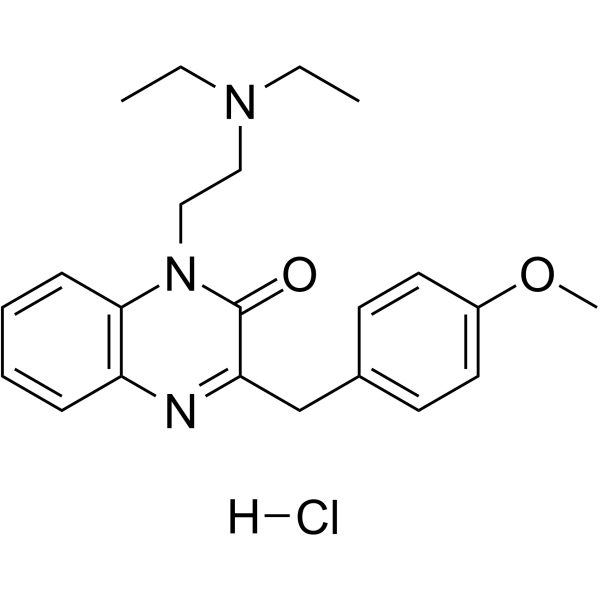
    Caroverine hydrochloride is a potent, competitive and reversible antagonist of NMDA and AMPA glutamate receptor. Caroverine hydrochloride is also an antioxidant and calcium-blocking agent that exhibits vasorelaxant action. Caroverine hydrochloride can be used for the research of inner ear tinnitus .
    Caroverine hydrochloride
  • HY-145250

    Neurokinin Receptor Neurological Disease
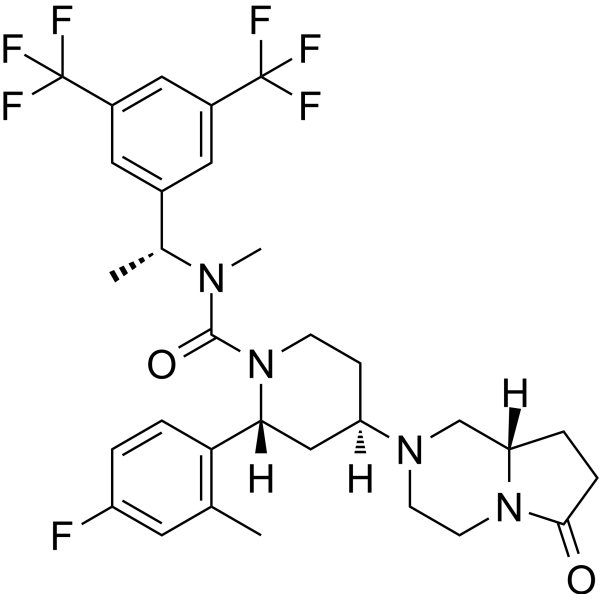
    NK1 receptor antagonist 2 is a NK1 receptor antagonist. NK1 receptor antagonist 2 can be used for the research of tinnitus and hearing loss .
    NK1 receptor antagonist 2
  • HY-B1798

    Sodium Channel Cardiovascular Disease
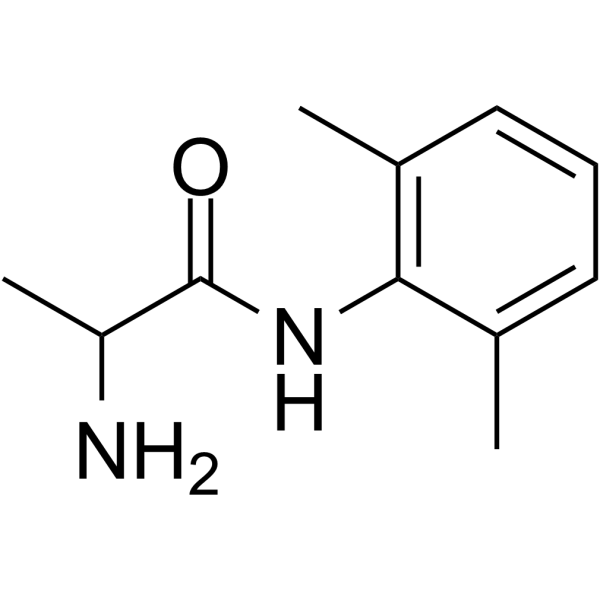
    Tocainide hydrochloride is an orally activesodium channel blocker, it blocks the sodium channels in the pain-producing foci in the nerve membranes. Tocainide hydrochloride is a primary amine analog of lidocaine, can be used for the treatment of tinnitus .
    Tocainide
  • HY-B1798A

    Sodium Channel Inflammation/Immunology
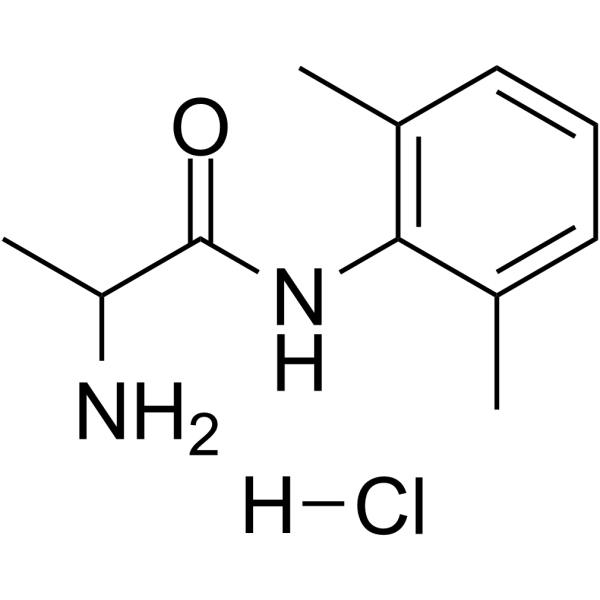
    Tocainide hydrochloride is a sodium channel blocker, it blocks the sodium channels in the pain-producing foci in the nerve membranes. Tocainide hydrochloride is a primary amine analog of lidocaine, can be used for the treatment of tinnitus .
    Tocainide hydrochloride
  • HY-138973A

    iGluR nAChR Neurological Disease
    Neramexane mesylate is an α9α10 cholinergic nicotinic receptors and N-methyl-D-aspartate receptors(NMDA) antagonist. Neramexane mesylate can improve moderate to severe tinnitus, and also shows neuroprotective effects .
    Neramexane mesylate
  • HY-106467

    iGluR Neurological Disease
    Caroverine is a potent, competitive and reversible antagonist of NMDA and AMPA glutamate receptor. Caroverine is also an antioxidant and calcium-blocking agent that exhibits vasorelaxant action. Caroverine can be used for the research of inner ear tinnitus .
    Caroverine
  • HY-106467BR

    Reference Standards iGluR Neurological Disease
    Caroverine (hydrochloride) (Standard) is the analytical standard of Caroverine (hydrochloride). This product is intended for research and analytical applications. Caroverine hydrochloride is a potent, competitive and reversible antagonist of NMDA and AMPA glutamate receptor. Caroverine hydrochloride is also an antioxidant and calcium-blocking agent that exhibits vasorelaxant action. Caroverine hydrochloride can be used for the research of inner ear tinnitus .
    Caroverine hydrochloride (Standard)
  • HY-110304

    mGluR Neurological Disease
    NPEC-caged-LY379268 is a type II mGluR agonist .
    NPEC-caged-LY379268
  • HY-18941B

    (rel)-LY354740; (rel)-Eglumetad

    mGluR Neurological Disease
    (rel)-Eglumegad ((rel)-LY354740) is a relative configuration of Eglumegad (HY-18941). Eglumegad is a highly potent and selective group II (mGlu2/3) receptor agonist with EC50s of 5 and 24 nM for transfected human mGlu2 and mGlu3 receptors, respectively .
    (rel)-Eglumegad
  • HY-12140

    GW597599

    Neurokinin Receptor Neurological Disease
    Vestipitant (GW597599) is a neurokinin-1 receptor antagonist (pKi: 9.4, hNK1) with hypnotic effects and the ability to suppress primary insomnia. Vestipitant can effectively block substance P-mediated extracellular regulated kinase phosphorylation and relieve anxiety and possible depression induced by the agonist GR73632 (HY-P1192) in gerbils. Vestipitant can also improve functional dyspnea, anxiety, insomnia, irritable bowel disease, gastroesophageal reflux disease, tinnitus and antiemetic effects .
    Vestipitant
  • HY-B1798R

    Sodium Channel Reference Standards Cardiovascular Disease
    Tocainide (Standard) is the analytical standard of Tocainide. This product is intended for research and analytical applications. Tocainide hydrochloride is an orally activesodium channel blocker, it blocks the sodium channels in the pain-producing foci in the nerve membranes. Tocainide hydrochloride is a primary amine analog of lidocaine, can be used for the treatment of tinnitus .
    Tocainide (Standard)
  • HY-186061

    HCN Channel Neurological Disease
    HCN2-IN-4 is an orally active HCN2 ion channel inhibitor, with an IC50 of 3 nM. HCN2-IN-4 inhibits the activity of HCN2 ion channels. HCN2-IN-4 can be used in the research of pain, tinnitus and central nervous system diseases .
    HCN2-IN-4
  • HY-186061A

    Potassium Channel Neurological Disease
    HCN2 modulator-8 is a pyrazolopyridine derivative and selective HCN2 inhibitor. HCN2 modulator-8 can be used for the research of pain, tinnitus, central nervous system disorders, psychiatric disorders, mood disorders .
    HCN2 modulator-8
  • HY-186056

    HCN Channel Neurological Disease
    HCN2-IN-3 is an orally active HCN2 inhibitor. HCN2-IN-3 inhibits the activity of HCN2 ion channels. HCN2-IN-3 is applicable to research related to pain, tinnitus, central nervous system diseases, mental illnesses and mood disorders .
    HCN2-IN-3
  • HY-186059

    Potassium Channel Neurological Disease
    HCN2 modulator-4 is a HCN2 ion channel inhibitor. HCN2 modulator-4 inhibits HCN2 ion channel activity. HCN2 modulator-4 can be used for the research of pain, inflammatory pain, neuropathic pain, tinnitus, central nervous system disorders, psychiatric disorders, mood disorders .
    HCN2 modulator-4
  • HY-186059A

    Potassium Channel Neurological Disease
    HCN2 modulator-5 (S-configuration 39) is a HCN2 ion channel inhibitor. HCN2 modulator-5 inhibits HCN2 ion channel activity. HCN2 modulator-5 can be used for the research of pain, inflammatory pain, neuropathic pain, tinnitus, central nervous system disorders, psychiatric disorders, mood disorders .
    HCN2 modulator-5
  • HY-186060

    HCN Channel Neurological Disease
    HCN2 modulator-6 is a HCN2 ion channel inhibitor has an IC50 of 7 nM. HCN2 modulator-6 inhibits HCN2 ion channel activity. HCN2 modulator-6 can be used for the research of pain, inflammatory pain, neuropathic pain, tinnitus, central nervous system disorders, psychiatric disorders, mood disorders .
    HCN2 modulator-6
  • HY-124470

    Others Cardiovascular Disease
    Amisometradine is an orally active aminouracil diuretic with a diuretic potency approximately 40% that of Mersalyl (HY-108868) (when administered intramuscularly). Amisometradine exerts its effects by promoting the excretion of sodium, chloride and a small amount of potassium, exhibits significant therapeutic effects in heart failure models, and has good tolerance with long-term administration. Compared with drugs of the same class, Amisometradine causes fewer gastrointestinal reactions; its minor side effects mainly include nausea, vomiting, diarrhea, tinnitus and deafness, and are usually not accompanied by proteinuria or abnormalities in blood and urine indicators. Amisometradine is an important tool for the study of heart failure and related diuretic mechanisms .
    Amisometradine
  • HY-186058

    HCN Channel Neurological Disease Inflammation/Immunology
    HCN2-IN-6 is a HCN2 ion channel inhibitor with an IC50 of 7 nM. HCN2-IN-6 shows weak inhibitory activity for HCN4. HCN2-IN-6 can be used for the research of inflammatory disease and neurological disorders .
    HCN2-IN-6
  • HY-186057

    HCN Channel
    HCN2-IN-5 is a HCN2 ion channel inhibitor with an IC50 of 9 nM. HCN2-IN-5 shows weak inhibitory activity for HCN4. HCN2-IN-5 can be used for the research of inflammatory disease and neurological disorders .
    HCN2-IN-5

Inquiry Online

Your information is safe with us. * Required Fields.

Salutation


Country or Region *

Applicant Name *


Organization Name *

Department *


Email Address *


Product Name *

Cat. No.


Requested quantity *

Phone Number *


Remarks

Inquiry Online

Inquiry Information

Product Name:
Cat. No.:
Quantity:
MCE Japan Authorized Agent:

