


1. Search Result
Search Result
Results for "

type I interferons (IFNs)

" in MedChemExpress (MCE) Product Catalog:

19

Inhibitors & Agonists

3

Inhibitory Antibodies

1

Natural
Products

1

Isotope-Labeled Compounds

1

Oligonucleotides

Cat. No. Product Name Target Research Areas Chemical Structure
  • HY-10964
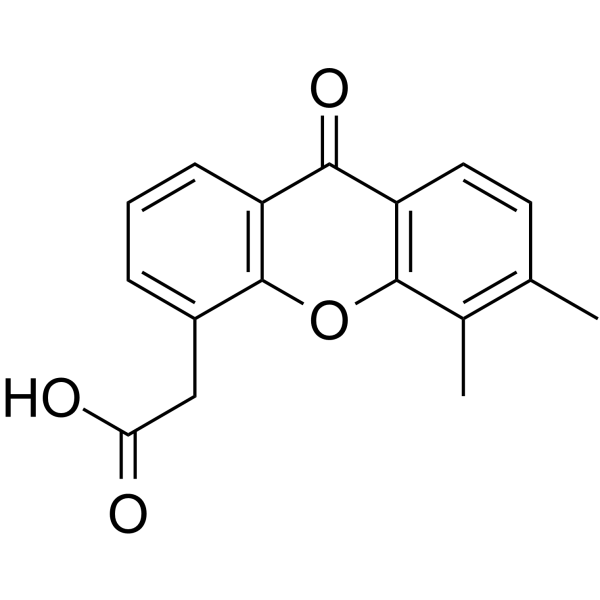
    Vadimezan
    Maximum Cited Publications
    71 Publications Verification

    DMXAA; ASA-404

    STING IFNAR Influenza Virus Infection Cancer
    Vadimezan (DMXAA), the tumor vascular disrupting agent (tumor-VDA), is a murine agonist of the stimulator of interferon genes (STING) and also a potent inducer of type I IFNs and other cytokines. Vadimezan is unable to activate human STING. Vadimezan has anti-influenza virus H1N1-PR8 activities.
    Vadimezan
  • HY-P99168
    Anifrolumab
    3 Publications Verification

    MDX-1333; MEDI-546

    IFNAR Inflammation/Immunology
    Anifrolumab is a type I interferon (IFN) receptor antagonist, a human monoclonal antibody. Anifrolumab blocks the activity of type I interferon. Anifrolumab can be used in systemic lupus erythematosus (SLE) research .
    Anifrolumab
  • HY-148029

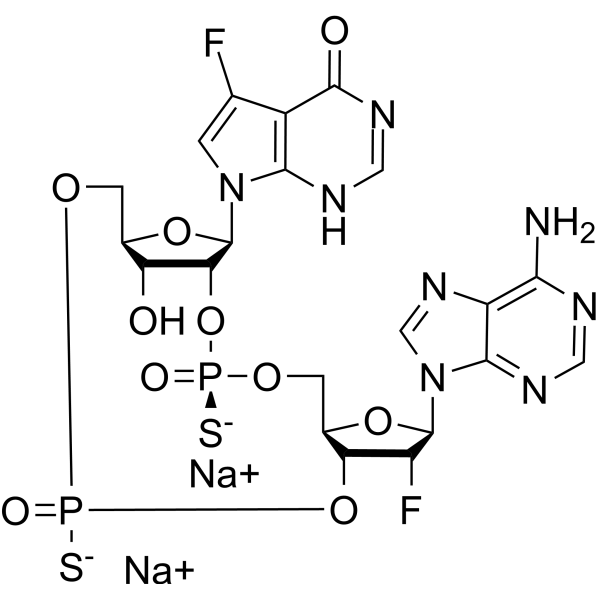
    TAK-676

    STING Cancer
    Dazostinag disodium (TAK-676) is an agonist of STING, triggering the activation of STING signaling pathway and type I interferons. Dazostinag disodium is also a modulator of immune system, resulting complete regressions and durable memory T-cell immunity. Dazostinag disodium promotes durable IFN-dependent antitumor immunity .
    Dazostinag disodium
  • HY-152955
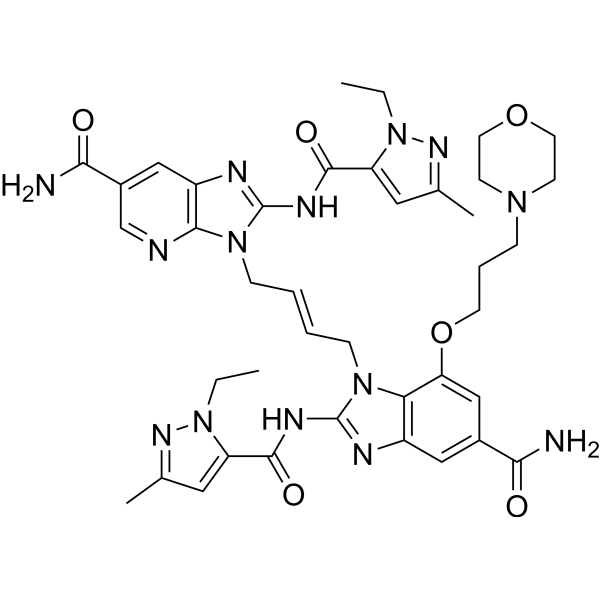
    STING agonist-22
    1 Publications Verification

    STING Infection Inflammation/Immunology
    STING agonist-22 (CF501) is a potent non-nucleotide STING agonist. STING agonist-22 is a adjuvant by activating STING to induce the type I interferon (IFN-I) response and proinflammatory cytokine production. STING agonist-22 can be used as an adjuvant to boost the original protein vaccine, producing potent, broad, and long-term immune protection. STING agonist-22 can be used for SARS-CoV-2 variants and sarbecovirus diseases research .
    STING agonist-22
  • HY-153701S

    Envudeucitinib; ESK-001

    JAK Interleukin Related IFNAR Isotope-Labeled Compounds Inflammation/Immunology
    Envudeucitinibum (Envudeucitinib) is a highly selective, allosteric and orally active TYK2 inhibitor binding to the JH2 domain of TYK2. Envudeucitinibum has no off-target effects on other kinases (JAK1-3). Envudeucitinibum reduces signaling and production of proinflammatory cytokines including IL-12, IL-23, IL-17, and type I interferons (IFNs). Envudeucitinibum can be used for the research of plaque psoriasis, systemic lupus erythematosus (SLE), and other immune-mediated diseases .
    Envudeucitinibum
  • HY-117066
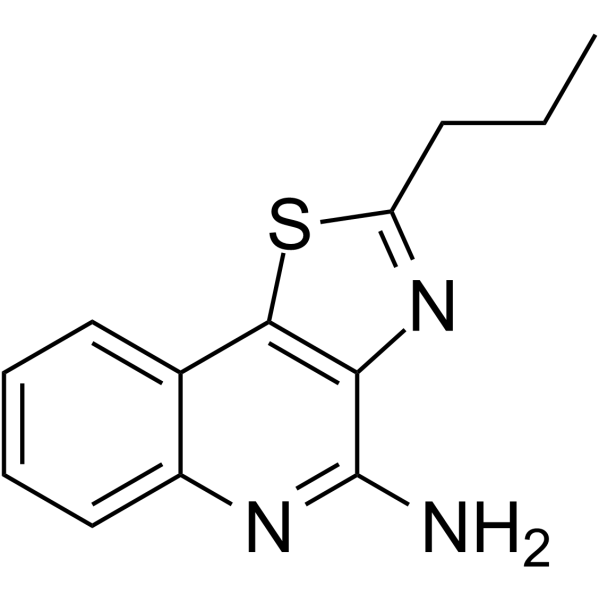
    CL075
    3 Publications Verification

    3M002

    Toll-like Receptor (TLR) Inflammation/Immunology
    CL075 (3M002) is a selective TLR8 agonist with immunomodulating properties. CL075 triggers a MyD88-dependent signaling pathway to elicit production of inflammatory cytokines and type I interferons (IFNs) via activation of NF-κB and IRF7, respectively .
    CL075
  • HY-160406

    STING IFNAR Interleukin Related Inflammation/Immunology Cancer
    SNX281 is a selective STING agonist, with IC50 values of 4.1, 4.5, 10.7, and 3.7 μM against human, mouse, rat, and monkey STING, respectively. SNX281 undergoes homodimerization at the STING binding site, triggering a conformational shift of STING from an inactive open state to an active closed state, thereby driving downstream STING-dependent signaling pathways. SNX281 induces type I interferons, IFN-β, TNF-α, IL-6, cytokine release, T cell responses, and long-lasting immune memory. SNX281 exhibits anti-tumor activity and is applicable to research related to colorectal cancer, melanoma, advanced solid tumors, lymphoma, and ovarian cancer .
    SNX281
  • HY-177338

    STING Cyclic GMP-AMP Synthase IFNAR TNF Receptor Interleukin Related Inflammation/Immunology Cancer
    STING agonist-45 is a selective STING agonist (EC50 = 0.28 μM). STING agonist-45 activates the innate immune response through the cGAS-STING pathway, upregulating key markers such as p-TBK1 and IRF3. STING agonist-45 exhibits robust STING activation in human peripheral blood mononuclear cells (PBMCs), inducing the production of type I interferons (such as IFN-β) and downstream cytokines (such as TNF-α and IL-6). STING agonist-45 enhances anti-tumor immunity, inhibits tumor growth, and increases CD8 + T cell infiltration in mouse models. STING agonist-45 is promising for the study of STING-related diseases .
    STING agonist-45
  • HY-P99666

    IFNAR Infection Cancer
    Interferon alfa-2b is a type I interferon that activates novel genes and exerts potent antiviral and antiproliferative activity on target cells. Signaling by Interferon alfa-2b requires receptor-dependent activation of Stat1 and Stat2 to form a heterodimeric STAT that binds to the DNA-binding protein IRF-9 (p48) and forms ISGF-3 (IFN-stimulated gene factor 3). The driver genes are then further activated by ISGF-3 to achieve antiviral function .
    Interferon alfa-2b
  • HY-163561

    Histone Methyltransferase Estrogen Receptor/ERR IFNAR Cancer
    CARM1-IN-6 is a potent CARM1 inhibitor that inhibits CARM1 enzymatic activity with an IC50 of 12.3 μM and a Kd of 0.6785 μM. CARM1-IN-6 suppresses oncogenic estrogen/ERα-target gene expression, activates type I interferon (IFN) and IFN-induced genes (ISGs), induces cell cycle arrest, and inhibits breast cancer cell proliferation both in vitro and in vivo. CARM1-IN-6 can be used for the research of breast cancer .
    CARM1-IN-6
  • HY-N16021

    Toll-like Receptor (TLR) Cdc42-binding kinase Galectin Inflammation/Immunology
    4A-MPLA ammonium is an orally active TLR4 agonist. 4A-MPLA ammonium induces TLR4 endocytosis dependent on Cdc42 and galectin-3, triggering TRIF-mediated signaling and sustained IFN-β production. 4A-MPLA ammonium promotes lipid droplet formation, upregulates interferon-stimulated genes and type I IFN signaling genes, downregulates lysosome/phagosome function genes, and modulates tolerogenic dendritic cell function. 4A-MPLA ammonium can be used for the research of colitis .
    4A-MPLA ammonium
  • HY-10964R

    DMXAA (Standard); ASA-404 (Standard)

    STING IFNAR Influenza Virus Reference Standards Infection Cancer
    Vadimezan (Standard) (DMXAA (Standard)) is the analytical standard of Vadimezan (HY-10964). This product is intended for research and analytical applications. Vadimezan (DMXAA; ASA-404), the tumor vascular disrupting agent (tumor-VDA), is a murine agonist of the stimulator of interferon genes (STING) and also a potent inducer of type I IFNs and other cytokines. Vadimezan is unable to activate human STING. Vadimezan has anti-influenza virus H1N1-PR8 activities.
    Vadimezan (Standard)
  • HY-P99478

    IFNAR Inflammation/Immunology
    Bifarcept is an interferon receptor type I (IFN-RI) fusion protein. Bifarcept can bind interferon receptors and prolong its serum half-life .
    Bifarcept
  • HY-136945

    IFNAR Cancer
    StA-IFN-1 is an inhibitor for type I interferon (IFN), that inhibits the activation of IFNβ with an IC50 of 4.1 μM .
    StA-IFN-1
  • HY-E70834

    JAK Cancer
    JAK1 is a non-receptor tyrosine kinase that plays a critical role in cell signaling via type I/II cytokines and interferons (IFNs). JAK1(JH1) is a kinase domain. JAK1(JH1) Recombinant Human Active Protein Kinase is a recombinant JAK1(JH1) protein that can be used to study JAK1(JH1)-related functions .
    JAK1(JH1) Recombinant Human Active Protein Kinase
  • HY-174663

    mRNA Inflammation/Immunology
    Human IFNE mRNA encodes the human interferon epsilon (IFNE) protein, a cytokine that belongs to the type I class of interferons. IFNE is required for maintaining basal levels of IFN-regulated genes, including 2''-5''-oligoadenylate synthetase, IRF7 and ISG15.
    Human IFNE mRNA
  • HY-181129

    DNA/RNA Synthesis IFNAR Apoptosis Necroptosis Cancer
    ADAR1i-124 is an A-to-I RNA editing inhibitor by inhibiting the catalytic activities of both ADAR1p150 and ADAR1p110. ADAR1i-124 activates type I interferon (IFN) and ZBP1 pathways and dose-dependently inhibits viability across different types of cancer cell lines. ADAR1i-124 can induce cells apoptosis and necroptosis. ADAR1i-124 can be used for the research of cancer, such as cutaneous melanoma and ovarian cancer .
    ADAR1i-124
  • HY-162844

    Drug Derivative IFNAR NF-κB Interleukin Related TNF Receptor Cancer
    CDN-3 (Compound 10) is a cyclic dideoxy nucleotide derivative. CDN-3 can stimulate the production of IFN-β, activate the IRF-3 and NF-κB pathways, and induce the production of type I interferons as well as pro-inflammatory factors such as IL-6 and TNF-α. CDN-3 can inhibit cancer cells proliferation. CDN-3 can be used for research of colon cancer .
    CDN-3
  • HY-181165

    PKC SARS-CoV IFNAR Infection
    SB2960 is a receptor for activated protein C kinase 1 (RACK1) binder with a human KD of 5.65 μM. SB2960 can promote stress granule (SG) formation and exhibit potent antiviral activity across diverse viral species. SB2960 suppresses viral replication with minimal cytotoxicity by modulating host antiviral immune responses. SB2960 increases the thermal stability of RACK1 and reduces SARS-CoV-2 N protein levels. SB2960 enhances type I interferon (IFN-β) expression and inhibits RIG-I, ISG56, and RANTES expression. SB2960 can be used for the research of virus infection .
    SB2960

Inquiry Online

Your information is safe with us. * Required Fields.

Salutation


Country or Region *

Applicant Name *


Organization Name *

Department *


Email Address *


Product Name *

Cat. No.


Requested quantity *

Phone Number *


Remarks

Inquiry Online

Inquiry Information

Product Name:
Cat. No.:
Quantity:
MCE Japan Authorized Agent:

