Search Result
Results for "
weeds
" in MedChemExpress (MCE) Product Catalog:
6
Biochemical Assay Reagents
39
Isotope-Labeled Compounds
| Cat. No. |
Product Name |
Target |
Research Areas |
Chemical Structure |
-
- HY-N7091
-
|
|
Environmental Pollutants
Herbicide
|
Metabolic Disease
Cancer
|
|
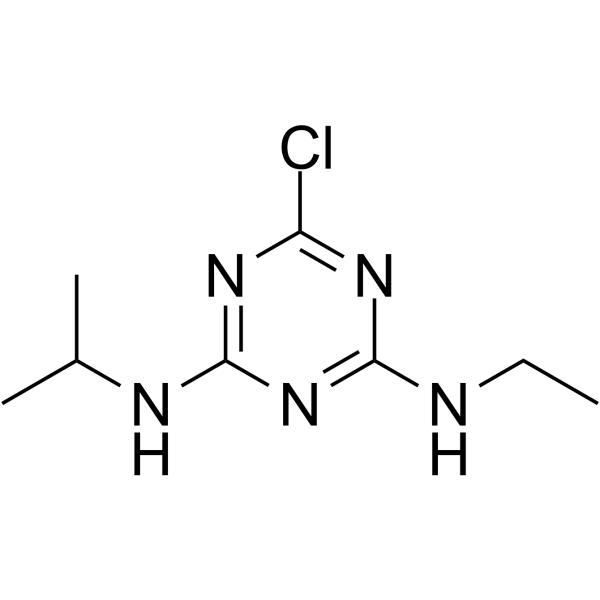
Atrazine, a triazine herbicide, is principally used for control of certain annual broadleaf and grass weeds. Atrazine inhibits photophosphorylation but typically does not result in lethality or permanent cell damage in the short term .
|
-
-
- HY-118742
-
|
|
Environmental Pollutants
HPPD
|
Others
|
|
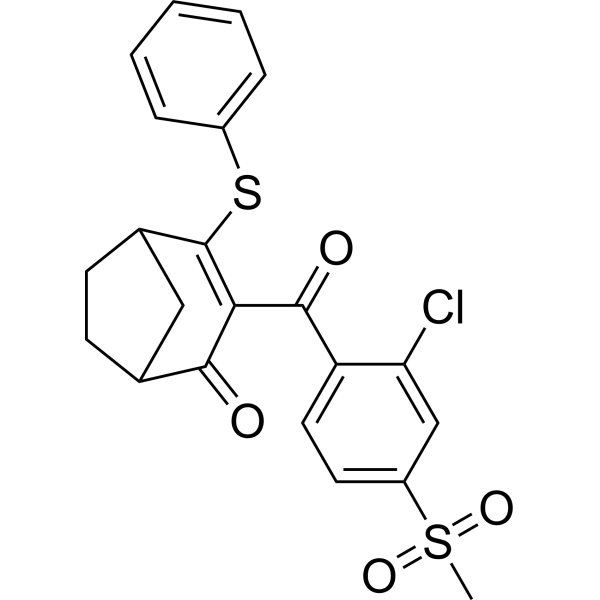
Benzobicyclon is a 4-HPPD inhibitor and herbicide that reacts with water to form a hydrolysate of the active herbicide benzobicycline, causing bleaching and death of weeds. Benzobicyclon is effective against grass, sedge and broadleaf weeds. Benzobicyclon effectively targets sulfonylurea herbicide-resistant biotypes as well as wild-type weeds .
|
-
-
- HY-B0859
-
MCPA
1 Publications Verification
|
Environmental Pollutants
Cytochrome P450
Herbicide
|
Metabolic Disease
|
|
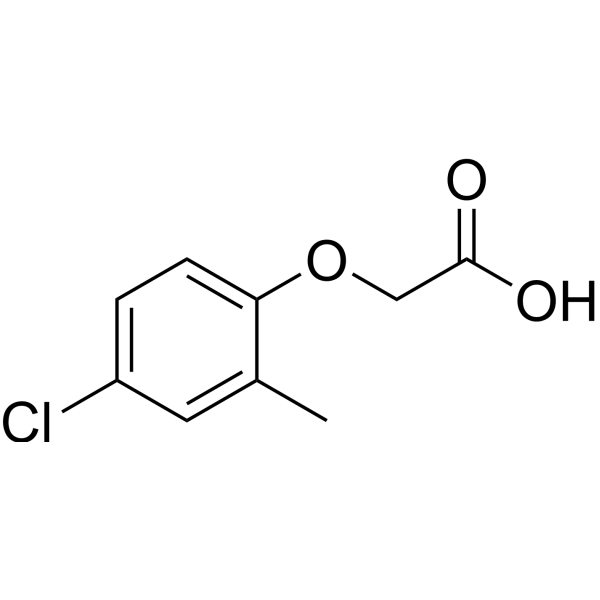
MCPA is an orally active phenoxyacetic acid herbicide. MCPA interferes with membrane integrity, energy metabolism (decreases ATP levels), and redox balance in plant cells. MCPA increases hepatic cytochrome P-450 levels and increases aniline hydroxylase and 7-ethoxycoumarin O-deethylase activities. MCPA can be used to control broadleaf weeds .
|
-
-
- HY-122984
-
-
-
- HY-B0869A
-
|
|
Environmental Pollutants
SOD
Acetolactate Synthase (ALS)
Herbicide
|
Metabolic Disease
|
|
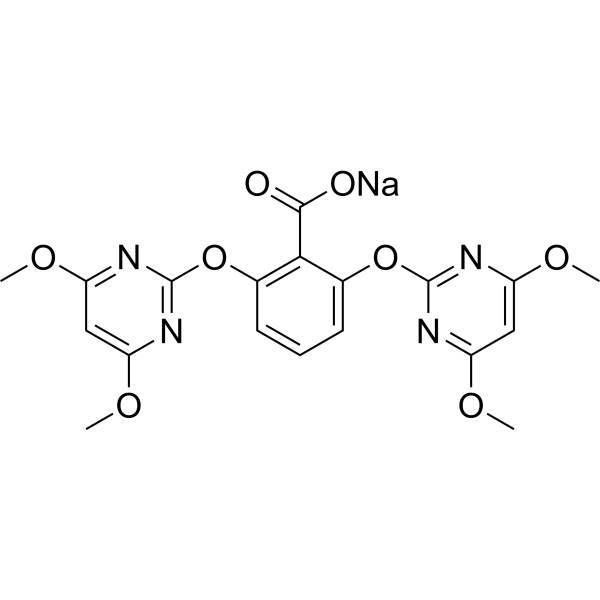
Bispyribac sodium is a selective, orally active, systemic and post-emergence herbicide. Bispyribac sodium reduces SOD levels and inhibits ALS activity. Bispyribac sodium blocks the biosynthesis of branched-chain amino acids, resulting in growth retardation, chlorosis and necrosis of weeds. Bispyribac sodium exerts herbicidal activity against grass, sedge and broadleaf weeds in rice fields. Bispyribac sodium is hepatotoxic and genotoxic .
|
-
-
- HY-B1972
-
|
Napropamid
|
Environmental Pollutants
DNA/RNA Synthesis
Herbicide
|
Others
|
|
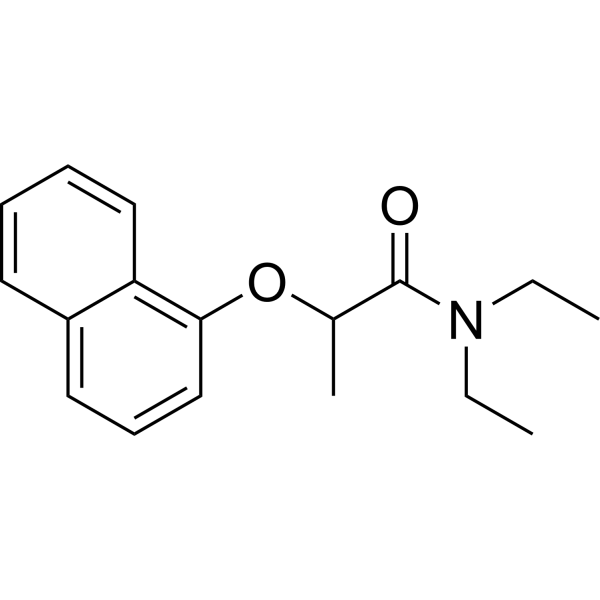
Napropamide (Napropamid) is an amide herbicide that can be used to control weeds in fruits, vegetables, tobacco, and ornamental plants. Napropamide mainly exerts its effect by inhibiting DNA synthesis and cell division. Napropamide has moderate to high persistence in the field, with a half-life of 24-131 days, and is prone to photodegradation .
|
-
-
- HY-116954
-
|
|
DNA/RNA Synthesis
|
Others
|
|
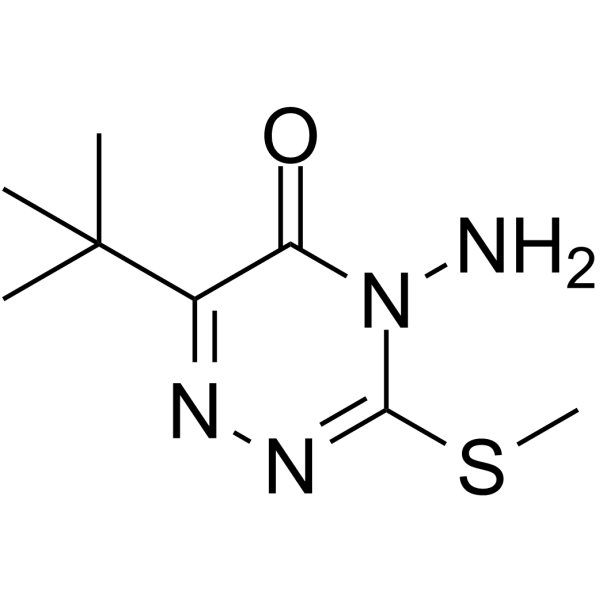
Metribuzin is a low-cost non-selective herbicide belonging to the chemical class of triazinones. Metribuzin inhibits plant DNA synthesis and acts on photosystem II, ultimately suppressing photosynthesis. Metribuzin provides excellent control of important annual grass and broadleaf weeds .
|
-
-
- HY-136372
-
-
-
- HY-B0862
-
-
-
- HY-B1950
-
|
(R)-Quizalofop ethyl; Quinofop-ethyl
|
Environmental Pollutants
SOD
Herbicide
|
Infection
|
|
Quizalofop-P-ethyl is a low-toxicity herbicide, a highly selective new type of post-emergence herbicide for dryland crops, with high selectivity between gramineous weeds and dicotyledonous crops, and it has good control efficacy against gramineous weeds in broadleaf crop fields.
|
-
-
- HY-136633
-
|
|
Environmental Pollutants
Herbicide
|
Others
|
|
Pyroxasulfone is a broad-spectrum pyrazole Herbicide. Pyroxasulfone is effective against a variety of annual grass weeds and some broadleaf weeds. Pyroxasulfone causes reduced plant height, decreased above-ground dry weight and yield loss in pinto beans and red Mexican beans .
|
-
-
- HY-136426
-
|
|
Environmental Pollutants
Reactive Oxygen Species (ROS)
Herbicide
|
Others
|
|
Trifludimoxazin is a click chemistry reagent, a protoporphyrinogen oxidase (PPO) inhibitor and herbicide. Trifludimoxazin inhibits PPO, accumulates reactive oxygen species, damages cell membranes, and thereby causes weed death. Trifludimoxazin exhibits high-efficiency activity in controlling broadleaf weeds and grassy weeds .
|
-
-
- HY-12853
-
|
|
Environmental Pollutants
Reactive Oxygen Species (ROS)
|
Others
|
|
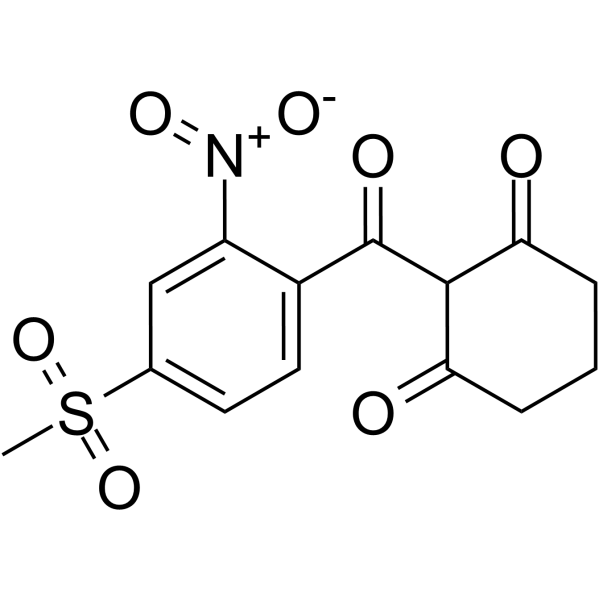
Mesotrione is a herbicide belongs to the benzoylcyclohexanedione family. Mesotrione is a potent and competitive and reversible inhibitor of HPPD enzyme. Mesotrione is selective to maize due to rapid metabolism and relative high tolerance by the susceptible crop plant .
|
-
-
- HY-126922
-
|
|
Environmental Pollutants
Herbicide
|
Others
|
|
Pyraflufen-ethyl is a phenylpyrazole herbicide for control of annual and perennial broadleaf weeds. Pyraflufen-ethyl inhibits protoporphyrinogen oxidase (PPO). Pyraflufen-ethyl controls rosette Parthenium hysterophorus .
|
-
-
- HY-119176
-
|
|
Environmental Pollutants
Protoporphyrinogen IX oxidase
Herbicide
|
Others
|
|
Oxyfluorfen is a pre- and post-emergence diphenyl ether herbicide to control annual broad-leaved and grass weeds. Oxyfluorfen is a protoporphyrinogen oxidase inhibitor and inhibits photosynthesis by blocking chlorophyll synthesis. Oxyfluorfen can inhibit cell growth. Oxyfluorfen induces DNA damage and exhibits toxicity toward aquatic organisms such as Paramisgurnus dabryanus. Oxyfluorfen has genome-level deleterious effects on fish that can lead to stunted skeletal growth. Oxyfluorfen induces transverse limb deficiency or craniosynostosis .
|
-
-
- HY-W040206
-
|
|
Environmental Pollutants
Acetolactate Synthase (ALS)
Herbicide
|
Others
|
|
Diflufenican is a Herbicide. Diflufenican inhibits phytoene desaturase (PDS) in the carotenoid synthesis pathway. Diflufenican suppresses the production of PDS, blocks carotenoid biosynthesis, thereby inducing chlorophyll destruction and cell membrane rupture, and ultimately causes the death of broadleaf weeds. The combination of Diflufenican and Flufenacet can be used to control Lolium rigidum populations resistant to ALS/ACCase .
|
-
-
- HY-144900
-
-
-
- HY-B1859
-
|
|
Environmental Pollutants
Herbicide
|
Others
|
|
Isoproturon belongs to the phenylurea herbicide family and is a systemic and selective herbicide. Isoproturon is widely applied for killing weeds in farmland, which can be used in the control of annual grasses and broad-leaved weeds in spring and winter wheat, winter rye and spring and winter barley .
|
-
-
- HY-W004643
-
|
AK-II
|
Fungal
Herbicide
|
Infection
|
|
Akardite II (AK-II) is a stabilizer for nitrocellulose (NC) propellants as it scavenges NOx. Akardite II helps control a variety of plant pathogens and weeds, which can be used as fungicides and herbicides .
|
-
-
- HY-19698
-
|
4-CPA; p-Chlorophenoxyacetic acid
|
Environmental Pollutants
Biochemical Assay Reagents
Herbicide
|
Others
|
|
4-Chlorophenoxyacetic acid (4-CPA) is a widely used herbicide and plant growth regulator. 4-Chlorophenoxyacetic acid (4-CPA) mimics endogenous auxin and regulates plant cell division, differentiation and gene expression. 4-Chlorophenoxyacetic acid (4-CPA) is used to control weeds and promote fruit growth .
|
-
-
- HY-B1860
-
-
-
- HY-B2035
-
|
|
Herbicide
|
Others
|
|
Pretilachlor is a herbicide used to control the the most common weeds found in paddy rice crops .
|
-
-
- HY-W425676
-
|
|
Herbicide
|
Others
|
|
Pinoxaden, a member of the phenylpyrazolines class, is a selective post-emergence herbicide extensively utilized to control various annual grass weeds.
|
-
-
- HY-116139
-
|
Merlin; RP-201772
|
Environmental Pollutants
HPPD
Herbicide
|
Others
|
|
Isoxaflutole (Merlin) is the inhibitor for HPPD that blocks benzoquinone biosynthesis, and results in the bleaching of weeds. Isoxaflutole can be used as herbicide .
|
-
-
- HY-136375
-
-
-
- HY-W014793
-
|
|
Herbicide
|
Others
|
|
Metamitron is a triazone herbicide that can be used for pre- and post-emergence weed control of broadleaf weeds and grasses in sugar beet .
|
-
-
- HY-126176
-
|
|
Acetolactate Synthase (ALS)
|
Others
|
|
Cloransulam-methyl is a triazolopyrimidine sulfonanilide herbicide. Cloransulam-methyl can be used to control broadleaf weeds in soybean by acetolactate synthase (ALS) inhibition .
|
-
-
- HY-B1842
-
|
|
Herbicide
|
Others
|
|
Fluroxypyr is an auxin herbicide to control annual or perennial weeds. Fluroxypyr icauses auxin overdose or excessive endogenous auxin concentrations, thereby resulting in an imbalance of auxin homeostasis and interaction with other hormones in tissues .
|
-
-
- HY-B1869
-
|
|
Environmental Pollutants
Herbicide
|
Others
|
|
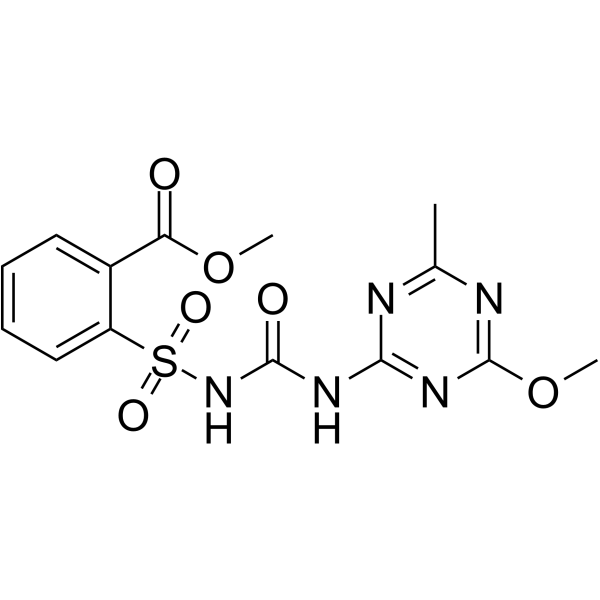
Metsulfuron-methyl is a systemic sulfonylurea herbicide that has been widely used to control broadleaf weeds and annual grasses in rice, corn, wheat, and barley. Metsulfuron-methyl exhibits high herbicidal activity and low mammalian toxicity, with an LD50 for rats exceeding 5000 mg/kg .
|
-
-
- HY-155135
-
|
|
HPPD
|
Others
|
|
HPPD-IN-1 (compound II-3) is a HPPD inhibitor. HPPD-IN-1 shows inhibitory activity of Arabidopsis thaliana HPPD (AtHPPD) with an IC50 value of 0.248 μM, which was superior to that of mesotrione (HY-12853) (0.283 μM) in vitro. HPPD-IN-1 shows excellent herbicidal activity against broadleaf and monocotyledonous weeds .
|
-
-
- HY-17515
-
|
|
Herbicide
|
Others
|
|
Ipfencarbazone is a herbicide used to control weeds such as water grass in rice.
|
-
-
- HY-W726600
-
|
|
Herbicide
|
Infection
|
|
Florpyrauxifen-benzyl is an auxin herbicide. Florpyrauxifen-benzyl is promising for research of agricultural weeds, such as Echinochloa crusgalli in rice paddies .
|
-
-
- HY-116706
-
|
|
Environmental Pollutants
Herbicide
|
Others
|
|
Lenacil is a selective uracil substituted herbicide used for control of both annual grasses, broad leafed weeds and some perennial weeds in sugarcane, apples, alfalfa, peaches, peacans, peppermints (Mentha piperita) and sugar beets. Lenacil can inhibit photosynthesis .
|
-
-
- HY-116489
-
|
LGC-40863
|
Herbicide
|
Others
|
|
Pyribenzoxim (LGC-40863) is a broad-spectrum herbicide. Pyribenzoxim has a higher safety level in bentgrass and a stronger herbicidal activity on grass weeds .
|
-
-
- HY-178977
-
|
|
Herbicide
|
Others
|
|
PPO-IN-23 is a potent protoporphyrinogen IX oxidase (PPO) inhibitor with a Ki of 12.4 nM. PPO-IN-23 forms two hydrogen bonds with the Arg98 residue of Nicotiana tabacum PPO (NtPPO). PPO-IN-23 exhibits potent herbicidal activity and good crop safety. PPO-IN-23 can be used for weeds management .
|
-
-
- HY-121079
-
-
-
- HY-B1912
-
|
|
Herbicide
|
Others
|
|
Amidosulfuron is a herbicide. Amidosulfuron targets acetohydroxyacid synthase (AHAS), is highly effective against dicot broad-leaf weeds .
|
-
-
- HY-W020020
-
-
-
- HY-B0870
-
-
-
- HY-161951
-
|
|
Protoporphyrinogen IX oxidase
|
Others
|
|
PPO-IN-15 (compound (R)-I-5) is a protoporphyrinogen IX oxidase (PPO) inhibitor that is effective against resistant weeds and safer in wheat and rice .
|
-
-
- HY-116954R
-
|
|
Reference Standards
DNA/RNA Synthesis
|
Others
|
|
Metribuzin (Standard) is the analytical standard of Metribuzin. This product is intended for research and analytical applications. Metribuzin is a low-cost non-selective herbicide that belongs to the chemical class of triazinones. Metribuzin hinders DNA synthesis in treated plants and acts on photosystem II, ultimately inhibiting photosynthesis. Metribuzin provides good control of important annual grass and broad-leaf weeds .
|
-
-
- HY-144900R
-
|
|
Reference Standards
Reactive Oxygen Species (ROS)
|
Others
|
|
Topramezone (Standard) is the analytical standard of Topramezone. This product is intended for research and analytical applications. Topramezone is a potent 4-hydroxyphenylpyruvate dioxygenase (4-HPPD) inhibitor. Topramezone is a herbicide, used for the post-emergence control of broadleaf and grass weeds in corn .
|
-
-
- HY-N7928
-
-
-
- HY-B1859S1
-
|
|
Isotope-Labeled Compounds
|
Others
|
|
Isoproturon-d3 is the deuterium labeled Isoproturon . Isoproturon belongs to the phenylurea herbicide family and is a systemic and selective herbicide. Isoproturon is widely applied for killing weeds in farmland, which can be used in the control of annual grasses and broad-leaved weeds in spring and winter wheat, winter rye and spring and winter barley .
|
-
-
- HY-B1882
-
|
|
Endogenous Metabolite
|
Others
|
|
Propazine is a triazine herbicide that effectively manages broad-leaved weeds and annual grasses in sweet sorghum cultivation.
|
-
-
- HY-B1874
-
|
Dosanex; Purivel; SAN 6602; SAN 7102
|
Endogenous Metabolite
|
Others
|
|
Metoxuron (Dosanex) is a phenylurea herbicide that effectively targets and controls annual grasses and broadleaf weeds in wheat, barley, and carrot crops.
|
-
-
- HY-118742R
-
|
|
HPPD
Reference Standards
|
Others
|
|
Benzobicyclon (Standard) is the analytical standard of Benzobicyclon. This product is intended for research and analytical applications. Benzobicyclon is a 4-HPPD inhibitor and herbicide that reacts with water to form a hydrolysate of the active herbicide benzobicycline, causing bleaching and death of weeds. Benzobicyclon is effective against grass, sedge and broadleaf weeds. Benzobicyclon effectively targets sulfonylurea herbicide-resistant biotypes as well as wild-type weeds .
|
-
-
- HY-121220
-
|
Legurame
|
Herbicide
|
Others
|
|
Carbetamide (Legurame) is a soil active herbicide which controls annual grasses and suppresses some broadleaf weeds in a range of dicotyledonous crops .
|
-
-
- HY-162337
-
|
|
Protoporphyrinogen IX oxidase
|
Others
|
|
PPO-IN-8 (Compound D4) is a phenyltriazolinone PPO inhibitor with an IC50 of 33 μg/L. PPO-IN-8 is a herbicide with a wide herbicidal spectrum and has good growth inhibition effect on dicotyledonous weeds .
|
-
-
- HY-B1859R
-
|
|
Herbicide
Reference Standards
|
Others
|
|
Isoproturon (Standard) is the analytical standard of Isoproturon. This product is intended for research and analytical applications. Isoproturon belongs to the phenylurea herbicide family and is a systemic and selective herbicide. Isoproturon is widely applied for killing weeds in farmland, which can be used in the control of annual grasses and broad-leaved weeds in spring and winter wheat, winter rye and spring and winter barley .
|
-
- HY-116706R
-
|
|
Herbicide
Reference Standards
|
Others
|
|
Lenacil (Standard) is the analytical standard of Lenacil. This product is intended for research and analytical applications. Lenacil is a selective uracil substituted herbicide used for control of both annual grasses, broad leafed weeds and some perennial weeds in sugarcane, apples, alfalfa, peaches, peacans, peppermints (Mentha piperita) and sugar beets. Lenacil can inhibit photosynthesis .
|
-
- HY-178165
-
|
|
Drug Derivative
|
Others
|
|
PPO-IN-22 (Compound B-04) is a benzothiazol-2(3H)-one derivative. PPO-IN-22 is a herbicide. PPO-IN-22 exhibits excellent post-emergence herbicidal activity against broadleaf weeds. PPO-IN-22 demonstrates potent pre-emergence activity against both dicotyledonous and monocotyledonous weeds. PPO-IN-22 exhibits favorable crop safety as a selective pre-emergence herbicide in soybean, peanut, and cotton cultivation systems .
|
-
- HY-B0869AR
-
|
|
Reference Standards
Acetolactate Synthase (ALS)
SOD
|
Metabolic Disease
|
|
Bispyribac (sodium) (Standard) is the analytical standard of Bispyribac sodium (HY-B0869A). This product is intended for research and analytical applications. Bispyribac sodium is a selective, orally active, systemic and post-emergence herbicide. Bispyribac sodium reduces SOD levels and inhibits ALS activity. Bispyribac sodium blocks the biosynthesis of branched-chain amino acids, resulting in growth retardation, chlorosis and necrosis of weeds. Bispyribac sodium exerts herbicidal activity against grass, sedge and broadleaf weeds in rice fields. Bispyribac sodium is hepatotoxic and genotoxic .
|
-
- HY-126176R
-
|
|
Acetolactate Synthase (ALS)
Reference Standards
|
Others
|
|
Cloransulam-methyl (Standard) is the analytical standard of Cloransulam-methyl. This product is intended for research and analytical applications. Cloransulam-methyl is a triazolopyrimidine sulfonanilide herbicide. Cloransulam-methyl can be used to control broadleaf weeds in soybean by acetolactate synthase (ALS) inhibition .
|
-
- HY-B0870R
-
|
|
Herbicide
Reference Standards
|
Others
|
|
Bensulfuron-methyl (Standard) is the analytical standard of Bensulfuron-methyl (HY-B0870). This product is intended for research and analytical applications. Bensulfuron-methyl is a kind of sulfonylurea herbicide widely used to control broad-leaf weeds in rice paddies .
|
-
- HY-174804
-
|
|
Herbicide
|
Infection
|
|
DHAD-IN-1 (Compound I-6e) is a potent dihydroxyacid dehydratase (DHAD) inhibitor with a Ki value of 1 μM for Arabidopsis thaliana DHAD. DHAD-IN-1 exhibits 100% efficacy against weeds like Avena fatua and Setaria viridis. DHAD-IN-1 is promising for research of herbicides .
|
-
- HY-121220R
-
|
Legurame (Standard)
|
Herbicide
Reference Standards
|
Others
|
|
Carbetamide (Standard) is the analytical standard of Carbetamide. This product is intended for research and analytical applications. Carbetamide (Legurame) is a soil active herbicide which controls annual grasses and suppresses some broadleaf weeds in a range of dicotyledonous crops .
|
-
- HY-148968
-
|
Carbathion
|
Fungal
|
Infection
|
|
Metham sodium (Carbathion) is a broad-spectrum soil microbial suppressant. Metham sodium controls soil-borne pests and weeds. Metham sodium inhibits weed seeds, plant-parasitic nematodes, plant pathogenic fungi and soil insects .
|
-
- HY-B1842R
-
|
|
Herbicide
Reference Standards
|
Others
|
|
Fluroxypyr (Standard) is the analytical standard of Fluroxypyr. This product is intended for research and analytical applications. Fluroxypyr is an auxin herbicide to control annual or perennial weeds. Fluroxypyr icauses auxin overdose or excessive endogenous auxin concentrations, thereby resulting in an imbalance of auxin homeostasis and interaction with other hormones in tissues .
|
-
- HY-122984R
-
|
|
Herbicide
Reference Standards
|
Others
|
|
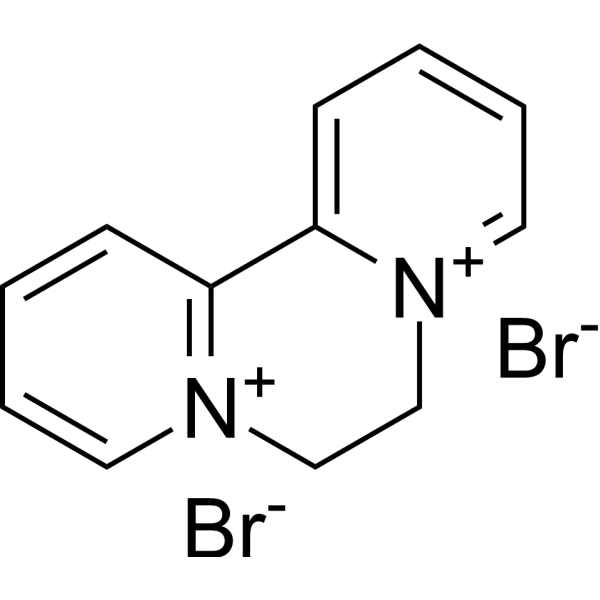
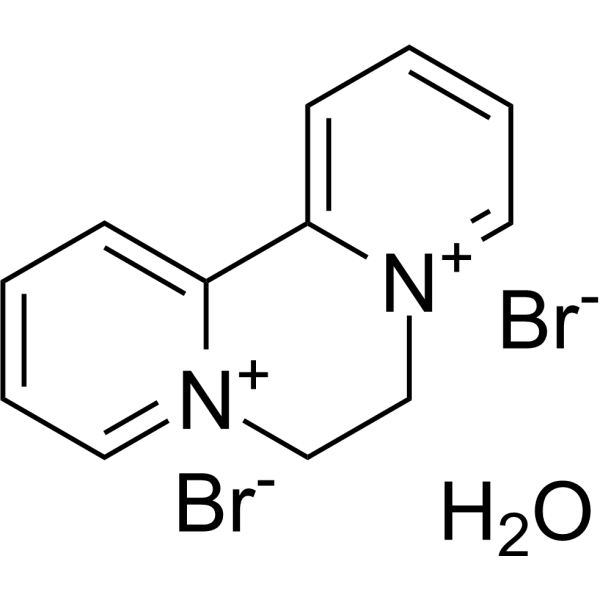
Diquat (dibromide) (Standard) is the analytical standard of Diquat (dibromide). This product is intended for research and analytical applications. Diquat dibromide is a comprehensive herbicide commonly used in the cultivation of cotton, soybeans, and other crops to combat unwanted weeds. Diquat dibromide has an IC50 of 60 mg/L in the Allium root growth inhibition test .
|
-
- HY-B1869R
-
|
|
Herbicide
Reference Standards
|
Others
|
|
Metsulfuron-methyl (Standard) is the analytical standard of Metsulfuron-methyl. This product is intended for research and analytical applications. Metsulfuron-methyl is a systemic sulfonylurea herbicide that has been widely used to control broadleaf weeds and annual grasses in rice, corn, wheat, and barley. Metsulfuron-methyl exhibits high herbicidal activity and low mammalian toxicity, with an LD50 for rats exceeding 5000 mg/kg .
|
-
- HY-B0867R
-
|
|
Herbicide
Reference Standards
Environmental Pollutants
|
Others
|
|
2,4-D Butyl ester (Standard) is the analytical standard of 2,4-D Butyl ester (HY-B0867). This product is intended for research and analytical applications. 2,4-D Butyl ester is a phenoxyacetic acid herbicide used to control woody broadleaf weeds. 2,4-D Butyl ester shows high toxicity to fish and aquatic invertebrates. In animals, 2,4-D Butyl ester hydrolyzes to produce n-butanol, which further induces neurobehavioral toxicity such as ataxia in rats .
|
-
- HY-119176R
-
|
|
Herbicide
Reference Standards
Protoporphyrinogen IX oxidase
|
Others
|
|
Oxyfluorfen (Standard) is the analytical standard of Oxyfluorfen. This product is intended for research and analytical applications. Oxyfluorfen is a pre- and post-emergence diphenyl ether herbicide to control annual broad-leaved and grass weeds. Oxyfluorfen is a protoporphyrinogen oxidase inhibitor and inhibits photosynthesis by blocking chlorophyll synthesis. Oxyfluorfen can inhibit cell growth. Oxyfluorfen induces DNA damage and exhibits toxicity toward aquatic organisms such as Paramisgurnus dabryanus. Oxyfluorfen has genome-level deleterious effects on fish that can lead to stunted skeletal growth. Oxyfluorfen induces transverse limb deficiency or craniosynostosis .
|
-
- HY-112785
-
|
|
Herbicide
Acetolactate Synthase (ALS)
|
Others
|
|
Pyriftalid is one of the most commonly used herbicides that inhibits the synthesis of acetyl lactate synthase (ALS). Pyriftalid is mainly used to prevent poaceae weeds and some broadleaf weeds in paddy fields .
|
-
- HY-117142
-
|
|
Acetyl-CoA Carboxylase
|
Others
|
|
Quizalofop-P is absorbed through weed stems and leaves, conducts upward and downward in plants, accumulates at the top and intermediate meristems, inhibits cellular fatty acid synthesis, and makes weeds necrotic. Quizalofop-P is highly selective between grass weeds and dicotyledonous crops .
|
-
- HY-114769
-
|
UBH 820
|
Herbicide
|
Others
|
|
Beflubutamid is a chiral soil herbicide against dicotyledonous weeds in cereals .
|
-
- HY-W714210
-
|
Aminophon
|
Herbicide
|
Others
|
|
Buminafos (Aminophon) is an organophosphate herbicide used in agriculture to control weeds .
|
-
- HY-161503
-
|
|
Protoporphyrinogen IX oxidase
|
Others
|
|
PPO-IN-10 (Compound 4) is a 2-phenylpyridine derivative of pyrrolidone. PPO-IN-10 inhibits protoporphyrinogen IX oxidase (PPO). PPO-IN-10 leads to the formation of photosensitive protoporphyrin IX and the death of weed leaves. PPO-IN-10 can be used in the research of developing new PPO herbicides .
|
-
- HY-112785R
-
|
|
Reference Standards
Herbicide
Acetolactate Synthase (ALS)
|
Others
|
|
Pyriftalid (Standard) is the analytical standard of Pyriftalid (HY-112785). This product is intended for research and analytical applications. Pyriftalid is one of the most commonly used herbicides that inhibits the synthesis of acetyl lactate synthase (ALS). Pyriftalid is mainly used to prevent poaceae weeds and some broadleaf weeds in paddy fields .
|
-
- HY-W874850
-
|
|
Herbicide
|
|
|
Fluorodifen is a selective herbicide with the activity of inhibiting weed growth. Fluorodifen can effectively control the growth of various annual and perennial broadleaf weeds and some grass weeds, and is widely used in the field management of various crops. By acting on the photosynthesis of plants and the regulation of their growth hormones, Fluorodifen ensures the healthy growth and harvest of crops.
|
-
- HY-B2005
-
|
|
Herbicide
|
Others
|
|
Terbumeton is a methoxytriazine herbicide, which inhibits sensitive weeds' growth through inhibition of photosynthesis .
|
-
- HY-168496
-
|
|
Herbicide
Phytohormone
|
Others
|
|
Herbicidal agent 8 (Compound 9w) targets the auxin indole-3-acetic acid (IAA, IC50=4.389 μM), disrupting the physiological activities of plant cells and eventually causing plant death. Herbicidal agent 8 exhibits herbicidal activity against broadleaf weeds and grass weeds .
|
-
- HY-118085
-
|
Isopropazol; JV-485
|
Herbicide
|
Others
|
|
Fluazolate is a herbicide that inhibits protoporphyrinogen-IX-oxidase (Protox) and targets glyphosate-resistant weeds . .
|
-
- HY-12853R
-
|
|
Reference Standards
Reactive Oxygen Species (ROS)
|
Others
|
|
Mesotrione (Standard) is the analytical standard of Mesotrione. This product is intended for research and analytical applications. Mesotrione is a herbicide belongs to the benzoylcyclohexanedione family. Mesotrione is a potent and competitive and reversible inhibitor of HPPD enzyme. Mesotrione is selective to maize due to rapid metabolism and relative high tolerance by the susceptible crop plant .
|
-
- HY-117142R
-
|
|
Acetyl-CoA Carboxylase
Reference Standards
|
Others
|
|
Quizalofop-P (Standard) is the analytical standard of Quizalofop-P. This product is intended for research and analytical applications. Quizalofop-P is absorbed through weed stems and leaves, conducts upward and downward in plants, accumulates at the top and intermediate meristems, inhibits cellular fatty acid synthesis, and makes weeds necrotic. Quizalofop-P is highly selective between grass weeds and dicotyledonous crops .
|
-
- HY-B1859S2
-
|
|
Isotope-Labeled Compounds
Herbicide
|
Others
|
|
Isoproturon-d6-1 is the deuterium labeled Isoproturon (HY-B1859). Isoproturon belongs to the phenylurea herbicide family and is a systemic and selective herbicide. Isoproturon is widely applied for killing weeds in farmland, which can be used in the control of annual grasses and broad-leaved weeds in spring and winter wheat, winter rye and spring and winter barley .
|
-
- HY-W020804
-
|
|
Herbicide
|
Others
|
|
Dithiopyr is a selective herbicide. Dithiopyr targets major grassy weeds and small-seeded broadleaf weeds through pre-emergence or early post-emergence application .
|
-
- HY-W714191
-
|
|
Herbicide
|
Others
|
|
Flamprop-isopropyl is a selective herbicide mainly used for controlling grassy weeds in farmland .
|
-
- HY-W151441
-
|
|
Herbicide
|
Others
|
|
Iprymidam is a pyrimidinediamine herbicide that can be used for weed control. Iprymidam has a good control effect on annual broad-leaved weeds .
|
-
- HY-W142497
-
|
|
Drug Intermediate
|
Others
|
|
3-Methyl-2(5H)-furanone is the common structural unit in natural and several synthetic strigolactones, which are germination stimulants for seeds of the parasitic weeds Striga and Orobanche spp. .
|
-
- HY-W020020R
-
|
|
Herbicide
Reference Standards
|
Others
|
|
Thifensulfuron-methyl (Standard) is the analytical standard of Thifensulfuron-methyl. This product is intended for research and analytical applications. Thifensulfuron-methyl is a sulfonylurea herbicide and mainly used for control of broadleaved weeds in wheat, corn, and soybean fields .
|
-
- HY-167959
-
|
|
Herbicide
|
Infection
|
|
MCPA-isooctyl is a selective conductive phenoxycarboxylate herbicide and an alternative to 2,4-D Butyl ester (HY-B0867). MCPA-isooctyl effectively controls broadleaf weeds in various crop fields via post-emergence foliar or soil treatment. MCPA-isooctyl is absorbed by the roots, stems and leaves of plants; it is easily metabolized and detoxified in gramineous crops, but difficult to metabolize in dicotyledonous weeds, causing stem and leaf distortion, root deformation, and eventually weed death. When formulated into chitosan nanoparticles, MCPA-isooctyl still significantly inhibits the growth of weeds in wheat fields, and reduces their chlorophyll content and biomass at low doses .
|
-
- HY-121487
-
|
|
Herbicide
|
Others
|
|
Etobenzanid is a herbicide for control of weeds in rice. Etobenzanid can be used for the research of rice weed management .
|
-
- HY-126922R
-
|
|
Herbicide
Reference Standards
|
Others
|
|
Pyraflufen-ethyl (Standard) is the analytical standard of Pyraflufen-ethyl (HY-126922). This product is intended for research and analytical applications. Pyraflufen-ethyl is a phenylpyrazole herbicide for control of annual and perennial broadleaf weeds. Pyraflufen-ethyl inhibits protoporphyrinogen oxidase (PPO). Pyraflufen-ethyl controls rosette Parthenium hysterophorus .
|
-
- HY-W841955
-
|
SSH-41
|
Herbicide
|
Others
|
|
Monisouron (SSH-41) is a herbicide. Monisouron shows post-emergence control effects on various broad-leaved and grass weeds, and selectivity for barley, pea and maize. Monisouron is promising for research of weed control .
|
-
- HY-179280
-
|
|
Herbicide
Reactive Oxygen Species (ROS)
|
Others
|
|
Herbicidal agent 13 (Compound II-13) is a herbicidal agent. Herbicidal agent 13 retains the dual-target binding capabilities for PDS and ZDS, with Kd values of 71.8 μM and 0.586 mM against SynPDS and AtZDS, respectively. Herbicidal agent 13 increases ROS. Herbicidal agent 13 exhibits postemergence herbicidal activity against dicotyledonous weeds and monocotyledonous weed POLFU .
|
-
- HY-W721333
-
|
|
Herbicide
Acetolactate Synthase (ALS)
|
Others
|
|
Pyrimisulfan is a potent acetolactate synthase (ALS) inhibitor and a broad‑spectrum herbicide. Pyrimisulfan selectively inhibits plant acetolactate synthase. Pyrimisulfan controls a wide spectrum of paddy weeds including annual grasses, sedges, broadleaf weeds, and sulfonylurea‑resistant biotypes pre‑ and postemergence, with long residual activity and excellent rice safety. Pyrimisulfan can be used for research on paddy herbicides .
|
-
- HY-W727532
-
|
|
HPPD
Herbicide
|
Others
|
|
Fenpyrazone is a 4-hydroxyphenylpyruvate dioxygenase (HPPD) inhibitor as well as a post-emergence herbicide. By inhibiting the activity of HPPD, Fenpyrazone indirectly blocks carotenoid biosynthesis in plants, causing bleaching of new tissues in sensitive plants, followed by necrosis and eventual death. Fenpyrazone is used in studies on controlling annual monocotyledonous and dicotyledonous weeds in summer maize fields .
|
-
- HY-W714178
-
|
|
Herbicide
|
Others
|
|
Aziprotryne is a post-emergence selective herbicide active against broadleaf weeds. When tank-mixed with Alachlor (HY-B2014), Aziprotryne provides longer-term weed control in field-grown cabbage plots .
|
-
- HY-W714973
-
|
|
Herbicide
|
Others
|
|
Halauxifen-methyl is a 6-arylpicolinic acid herbicide. As a synthetic auxin, Halauxifen-methyl interferes with the normal growth and development of sensitive weeds by mimicking the action of endogenous plant auxins, causing malformation, uncontrolled growth and eventual death .
|
-
- HY-182897
-
|
|
Herbicide
|
Others
|
|
PPO-IN-25 (Compound B2) is a PPO inhibitor and Herbicide, with a Ki value of 9.50 nM against NtPPO. PPO-IN-25 exhibits control efficacy against broadleaf weeds and shows broad-spectrum herbicidal activity. PPO-IN-25 can be used in studies related to weed damage .
|
-
- HY-136377
-
|
|
Herbicide
|
Others
|
|
Fluoroglycofen is a herbicide used in vineyards to eradicate weeds .
|
-
- HY-173026
-
|
|
Herbicide
|
Others
|
|
Herbicidal agent 7 (Compound 15c) is the inhibitor for protoporphyrinogen IX oxidase (PPO). Herbicidal agent 7 blocks the plant pigment synthesis, exhibiting herbicidal activity against broadleaf weeds (such as Z. elegans and A. theophrasti) and grass weeds (such as S. glauca and E. crusgalli) .
|
-
- HY-121576
-
|
|
Endogenous Metabolite
|
Others
|
|
Butenachlor is a selective herbicide that is applied to soil for the effective control of grass and certain broad-leaved weeds.
|
-
- HY-W019880
-
|
|
Herbicide
|
Others
|
|
Lactofen is a herbicide that targets dicotyledonous weeds and causes oxidative stress, activating the expression of chalcone synthase and chalcone reductase .
|
-
- HY-138156
-
|
|
Herbicide
|
Others
|
|
Iodosulfuron-methyl sodium is a sulfonylurea herbicide. Iodosulfuron-methyl sodium controls grass weeds in winter wheat and winter barley .
|
-
- HY-N14728
-
|
|
Herbicide
|
Others
|
|
Homoalanosine is a substance with herbicidal activity. Homoalanosine has the activity of removing a variety of weeds, but does not damage rice plants .
|
-
- HY-185169
-
|
Quicaotong; Quinotrione; Y 13161
|
Herbicide
|
Others
|
|
Benquitrione (Quicaotong) is a highly selective herbicide. Benquitrione is used to control several common harmful weeds in sorghum fields .
|
-
- HY-175844
-
|
|
Herbicide
|
Others
|
|
Herbicidal agent 12 (compound 6q) is a potent pyrimidinedione herbicide with strong herbicidal activity against broadleaf weeds .
|
-
- HY-W714195
-
|
|
Herbicide
|
Others
|
|
MCPA-2-ethylhexyl ester is a herbicide used for the control of broad-spectrum broadleaf weeds in winter cereal crops .
|
-
- HY-W705846
-
|
|
Herbicide
|
Infection
|
|
Pyraflufen is a pyrazolylphenyl herbicide that can be used for selective control of broadleaf weeds. Pyraflufen can inhibit plant enzyme protoporphyrinogen oxidase.
|
-
- HY-W747607
-
|
|
Herbicide
|
Others
|
|
Alloxydim sodium is a cyclohexenone oxime herbicide. Alloxydim sodium exhibits cytotoxicity. Alloxydim sodium can be used to control grassy weeds in broadleaf crops .
|
-
- HY-133188
-
-
- HY-W874850R
-
|
|
Endogenous Metabolite
Reference Standards
|
|
|
Fluorodifen (Standard) is the analytical standard of Fluorodifen. This product is intended for research and analytical applications. Fluorodifen is a selective herbicide with the activity of inhibiting weed growth. Fluorodifen can effectively control the growth of various annual and perennial broadleaf weeds and some grass weeds, and is widely used in the field management of various crops. By acting on the photosynthesis of plants and the regulation of their growth hormones, Fluorodifen ensures the healthy growth and harvest of crops.
|
-
- HY-163570
-
|
|
Protoporphyrinogen IX oxidase
|
Others
|
|
PPO-IN-11 (Compound 10bh) is an inhibitor for protoporphyrinogen IX oxidase (PPO), that inhibits nicotiana tabacum PPO (NtPPO) with Ki of 0.0603 μM. PPO-IN-11 exhibits herbicidal activities against dicot weeds Leaf mustard, Chickweed, Chenopodium serotinum and monocot weeds Alopecurus aequalis, Poa annua, and Polypogon fugax with a dose of 150 g a.i./ha .
|
-
- HY-W703578
-
|
|
Herbicide
|
Others
|
|
Cinmethylin is a herbicide. Cinmethylin inhibits plant fatty acid biosynthesis. Cinmethylin reduces the emergence rate and above-ground biomass of rigid ryegrass. Cinmethylin kills weeds by inhibiting cell division at root meristems. Cinmethylin exhibits activity against paddy field weeds including Echinochloa crus-galli (L.) var. formosensis and Scirpus juncoides var. ohwianus. Cinmethylin is applicable to agricultural herbicide research .
|
-
- HY-185138
-
|
|
Herbicide
|
Others
|
|
Herbicidal agent 14 (compound 17) is a herbicide with an excellent herbicidal effect when controlling broadleaf weeds before/after emergence .
|
-
- HY-W753723
-
|
|
Herbicide
HPPD
|
Others
|
|
Biscarfentrazone is a HPPD-inhibiting herbicide for wheat fields, which can effectively control ALS-resistant broadleaf weeds and is safe to wheat .
|
-
- HY-133085
-
-
- HY-136377R
-
|
|
Herbicide
Reference Standards
|
Others
|
|
Fluoroglycofen (Standard) is the analytical standard of Fluoroglycofen. This product is intended for research and analytical applications. Fluoroglycofen is a herbicide used in vineyards to eradicate weeds .
|
-
- HY-19698R
-
|
4-CPA (Standard); p-Chlorophenoxyacetic acid (Standard)
|
Biochemical Assay Reagents
Reference Standards
|
Others
|
|
4-Chlorophenoxyacetic acid (4-CPA) (Standard) is the analytical standard of 4-Chlorophenoxyacetic acid (4-CPA). This product is intended for research and analytical applications. 4-Chlorophenoxyacetic acid (4-CPA) is a widely used herbicide for weed control in agriculture. 4-Chlorophenoxyacetic acid can be degraded in aqueous media through an electrochemical oxidation process. The end products of 4-Chlorophenoxyacetic acid degradation are harmless, such as carbon dioxide, water, and chloride ions .
|
-
- HY-N7928R
-
|
|
Herbicide
Reference Standards
|
Others
|
|
Nonadecane (Standard) is the analytical standard of Nonadecane. This product is intended for research and analytical applications. Nonadecane is a herbicide that can be used for the control of weeds in Dendrobium orchids .
|
-
- HY-W018749
-
|
|
Environmental Pollutants
Herbicide
|
Others
|
|
Clopyralid is a toxic and biorefractory herbicide. Clopyralid can form ionic liquids with increased efficacy against weeds and reduced leaching from soils .
|
-
- HY-114769R
-
|
UBH 820 (Standard)
|
Herbicide
Reference Standards
|
Others
|
|
Beflubutamid (Standard) is the analytical standard of Beflubutamid. This product is intended for research and analytical applications. Beflubutamid is a chiral soil herbicide against dicotyledonous weeds in cereals .
|
-
- HY-B0860
-
Diuron
2 Publications Verification
|
Environmental Pollutants
Reactive Oxygen Species (ROS)
Herbicide
MDM-2/p53
|
Cancer
|
|
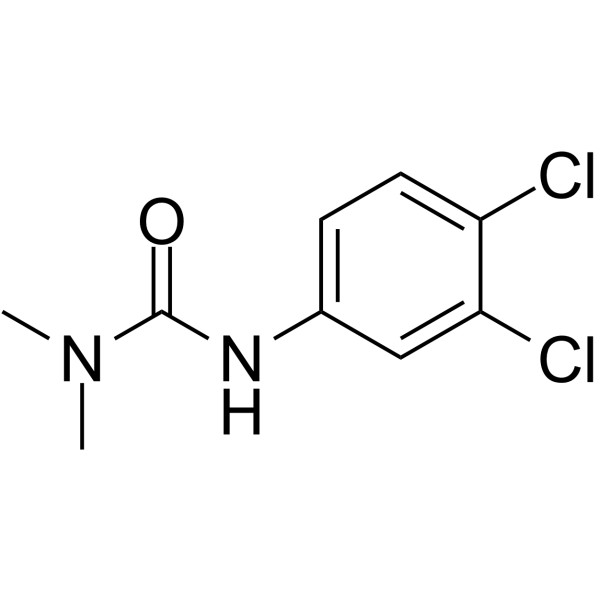
Diuron is an orally active phenylurea herbicide. Diuron inhibits photosynthesis in plants by blocking the formation of ATP and NADH. Diuron increases the production of ROS. Diuron increases expression of p53 in certain cell lines. Diuron has herbicidal activity against annual and perennial broadleaf weeds and grass weeds. Diuron promotes DMBA/BBN-induced bladder cancer. Diuron can be used in breast cancer research .
|
-
- HY-119417
-
-
- HY-B0866
-
-
- HY-B2045
-
|
|
Environmental Pollutants
Herbicide
|
Others
|
|
Benfluralin is a kind of herbicide and an agrochemical which can be used as a pre-emergence herbicide used for the control of grass and other weeds in a range of food and non-food crops.
|
-
- HY-B2034R
-
|
|
Herbicide
Reference Standards
|
Others
|
|
Picloram (Standard) is the analytical standard of Picloram. This product is intended for research and analytical applications. Picloram is an auxinic herbicide that is widely used for controlling broad leaf weeds .
|
-
- HY-144177S
-
|
|
Isotope-Labeled Compounds
|
Infection
|
|
Benzthiazuron-d3 is deuterium labeled Benzthiazuron. Benzthiazuron is a selective herbicide that is used mainly to control annual broad-leaved weeds in a variety of crops .
|
-
- HY-B2039
-
|
|
Herbicide
|
Others
|
|
Bentazone is a post-emergence herbicide used for selective control of broadleaf weeds and sedges in beans, rice, corn, peanuts, mint and others. It acts by interfering with photosynthesis .
|
-
- HY-W040206S
-
|
|
Isotope-Labeled Compounds
|
Others
|
|
Diflufenican-d3 is the deuterium labeled Diflufenican . Diflufenican is a contact, selective herbicide used to specifically control some broad leaved weeds .
|
-
- HY-111912
-
|
|
Environmental Pollutants
Fungal
|
Infection
|
|
Tribenuron-methyl, a sulfonylurea herbicide agent, can be used as the fungicide agent. Tribenuron-methyl plays an important role in controlling the weeds and diseases in wheat field .
|
-
- HY-W040194
-
|
|
Environmental Pollutants
Herbicide
|
Metabolic Disease
|
|
Clomazone is a broad spectrum herbicide, mainly used to control annual broadleaf weeds and grass weeds in various crops such as rice, soybeans, and peanuts. Clomazone inhibits carotenoid biosynthesis, and treated plants show typical "albinism" symptoms due to the destruction of chloroplast membrane structure leading to chlorophyll degradation. Clomazone exhibits multiple toxic effects on non-target organisms, including aquatic lethality, developmental malformations, liver damage, mitochondrial dysfunction, and hematotoxicity .
|
-
- HY-W747602
-
|
|
Herbicide
Reactive Oxygen Species (ROS)
|
Others
|
|
Cinidon-ethyl is a herbicide . Cinidon-ethyl blocks the conversion of protoporphyrinogen IX to protoporphyrin IX, disrupts the tetrapyrrole biosynthetic process, and leads to the accumulation of protoporphyrin IX and the generation of ROS. Cinidon-ethyl induces the expression of peroxidase and defense-related genes in wheat. Cinidon-ethyl triggers light-dependent ethylene and ethane release, tissue dehydration and necrosis in sensitive broadleaf weeds. Cinidon-ethyl is applicable to research related to the control of broadleaf weeds in wheat fields .
|
-
- HY-N14757
-
|
|
Endogenous Metabolite
|
Others
|
|
Hydantocidin is an adenylosuccinate synthetase inhibitor and a spiroribofuranose. Hydantocidin can be produced by Streptomyces hygroscopicus. Hydantocidin has strong herbicidal activity toward annual, biennial and perennial weeds .
|
-
- HY-116139R
-
|
Merlin (Standard); RP-201772 (Standard)
|
Herbicide
Reference Standards
HPPD
|
Others
|
|
Isoxaflutole (Standard) is the analytical standard of Isoxaflutole. This product is intended for research and analytical applications. Isoxaflutole (Merlin) is the inhibitor for HPPD that blocks benzoquinone biosynthesis, and results in the bleaching of weeds .
|
-
- HY-W040206R
-
|
|
Herbicide
Reference Standards
|
Others
|
|
Diflufenican (Standard) is the analytical standard of Diflufenican. This product is intended for research and analytical applications. Diflufenican is a contact, selective herbicide used to specifically control some broad leaved weeds .
|
-
- HY-B2035R
-
|
|
Herbicide
Reference Standards
|
Others
|
|
Pretilachlor (Standard) is the analytical standard of Pretilachlor. This product is intended for research and analytical applications. Pretilachlor is a herbicide used to control the the most common weeds found in paddy rice crops .
|
-
- HY-N15443
-
|
|
Herbicide
|
Others
|
|
Mevalocidin is a phytotoxin. Mevalocidin can inhibit the growth of many broadleaf and grass plants, showing significant herbicidal activity against weeds. Mevalocidin is promising for research of bioherbicides .
|
-
- HY-163298
-
|
|
Protoporphyrinogen IX oxidase
|
Others
|
|
Herbicidal agent 2 (compound 8d), a herbicide, is a protoporphyrinogen oxidase (PPO) inhibitor. Herbicidal agent 2 exhibits herbicidal activities against broadleaf and monocotyledon weeds .
|
-
- HY-121362R
-
-
- HY-121079R
-
|
DPX-A8947 (Standard)
|
Herbicide
Reference Standards
|
Others
|
|
Azimsulfuron (Standard) is the analytical standard of Azimsulfuron. This product is intended for research and analytical applications. Azimsulfuron (DPX-A8947) is a sulfonylurea herbicide useful in controlling weeds in paddy fields .
|
-
- HY-B0862S
-
|
|
Isotope-Labeled Compounds
|
Others
|
|
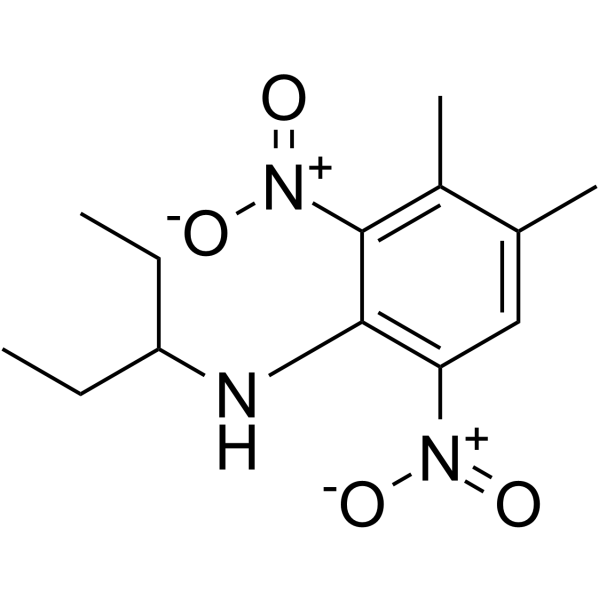
Pendimethalin-d5 is the deuterium labeled Pendimethalin . Pendimethalin is an herbicide that controls annual grasses and certain broadleaf weeds. Pendimethalin inhibits cell division and cell elongation .
|
-
- HY-136375S
-
|
|
Isotope-Labeled Compounds
|
Others
|
|
Cyanazine-d5 is deuterium labeled Cyanazine. Cyanazine, a triazine herbicide cyanazine, is used to control a variety of grass weeds and broadleaf weed. Cyanazine is proved non-genotoxic .
|
-
- HY-B2020
-
|
|
Environmental Pollutants
Herbicide
|
Others
|
|
Fenuron is a water-soluble herbicide used to control annual broad-leaved weeds and woody plants, which is widely applied in the fields of beans, spinach, sugar beet, and other fruits .
|
-
- HY-B1882R
-
|
|
Endogenous Metabolite
Reference Standards
|
Others
|
|
Propazine (Standard) is the analytical standard of Propazine. This product is intended for research and analytical applications. Propazine is a triazine herbicide that effectively manages broad-leaved weeds and annual grasses in sweet sorghum cultivation.
|
-
- HY-B1871
-
|
|
Environmental Pollutants
Herbicide
|
Others
|
|
Metolachlor is a pre-emergent selective, chloroacetanilide herbicide for the control of a variety of annual grass and broad leaf weeds in corn and other crops. Metolachlor is a chiral herbicide consisting of four stereoisomers .
|
-
- HY-W669241
-
|
|
Herbicide
|
Others
|
|
Dimethenamide-P is an amide herbicide effective for the pre-emergence management of annual grasses, small-seeded broadleaf weeds, and sedges in ornamental plants, functioning by inhibiting the synthesis of long-chain fatty acids.
|
-
- HY-133085S
-
|
DPX-E9636-d6
|
Isotope-Labeled Compounds
|
Others
|
|
Rimsulfuron-d6 is deuterium labeled Rimsulfuron. Rimsulfuron (DPX-E9636) is a sulfonylurea herbicide for postemergence use in maize to control grasses and some broadleaf weeds .
|
-
- HY-B0860S
-
|
|
Isotope-Labeled Compounds
Herbicide
Reactive Oxygen Species (ROS)
MDM-2/p53
|
Cancer
|
|
Diuron-d6 is the deuterium labeled Diuron (HY-B0860). Diuron is an orally active phenylurea herbicide. Diuron inhibits photosynthesis in plants by blocking the formation of ATP and NADH. Diuron increases the production of ROS. Diuron increases expression of p53 in certain cell lines. Diuron has herbicidal activity against annual and perennial broadleaf weeds and grass weeds. Diuron promotes DMBA/BBN-induced bladder cancer. Diuron can be used in breast cancer research .
|
-
- HY-W040194R
-
|
|
Herbicide
Reference Standards
|
Metabolic Disease
|
|
Clomazone (Standard) is the analytical standard of Clomazone (HY-W040194). This product is intended for research and analytical applications. Clomazone is a broad spectrum herbicide, mainly used to control annual broadleaf weeds and grass weeds in various crops such as rice, soybeans, and peanuts. Clomazone inhibits carotenoid biosynthesis, and treated plants show typical "albinism" symptoms due to the destruction of chloroplast membrane structure leading to chlorophyll degradation. Clomazone exhibits multiple toxic effects on non-target organisms, including aquatic lethality, developmental malformations, liver damage, mitochondrial dysfunction, and hematotoxicity.
|
-
- HY-B0862R
-
|
|
Herbicide
Reference Standards
|
Others
|
|
Pendimethalin (Standard) is the analytical standard of Pendimethalin. This product is intended for research and analytical applications. Pendimethalin is an herbicide that controls annual grasses and certain broadleaf weeds. Pendimethalin inhibits cell division and cell elongation .
|
-
- HY-121423
-
|
|
Apoptosis
Reactive Oxygen Species (ROS)
|
Metabolic Disease
|
|
Dimethachlor, a synthetic herbicide, inhibits the undesirable growth of weeds via the suppression of very long-chain fatty acid synthesis. Dimethachlor disrupts normal developmental processes via the induction of apoptosis and ROS production .
|
-
- HY-W425676R
-
|
|
Endogenous Metabolite
Reference Standards
|
Others
|
|
Pinoxaden (Standard) is the analytical standard of Pinoxaden. This product is intended for research and analytical applications. Pinoxaden, a member of the phenylpyrazolines class, is a selective post-emergence herbicide extensively utilized to control various annual grass weeds.
|
-
- HY-B0869
-
|
|
Acetolactate Synthase (ALS)
Herbicide
|
Others
|
|
Bispyribac is an acetolactate synthase inhibitor that can be used as a systemic post-emergence herbicide for control of weeds in agriculture. Bispyribac blocks the amino acid synthesis. Bispyribac has low acute toxicity in animal models .
|
-
- HY-66011BR
-
|
(Rac)-BAY 12-8039 free base (Standard)
|
Bacterial
Antibiotic
Reference Standards
|
Infection
|
|
Pinoxaden (Standard) is the analytical standard of Pinoxaden. This product is intended for research and analytical applications. Pinoxaden, a member of the phenylpyrazolines class, is a selective post-emergence herbicide extensively utilized to control various annual grass weeds.
|
-
- HY-136375R
-
|
|
Herbicide
Reference Standards
|
Others
|
|
Cyanazine (Standard) is the analytical standard of Cyanazine. This product is intended for research and analytical applications. Cyanazine, a triazine herbicide cyanazine, is used to control a variety of grass weeds and broadleaf weed. Cyanazine is proved non-genotoxic .
|
-
- HY-B1912R
-
|
|
Herbicide
Reference Standards
|
Others
|
|
Amidosulfuron (Standard) is the analytical standard of Amidosulfuron. This product is intended for research and analytical applications. Amidosulfuron is a herbicide. Amidosulfuron targets acetohydroxyacid synthase (AHAS), is highly effective against dicot broad-leaf weeds .
|
-
- HY-121727
-
|
AE 1887196; BCS-BX60309
|
Acetolactate Synthase (ALS)
|
Others
|
|
Triafamone (AE 1887196) is a paddy field pre-emergence and post-emergence sulfonamide herbicide. Triafamone weeds by
inhibiting the acetolactate synthase (ALS) enzyme, thereby blocking the biosynthesis of branched-chain amino acids .
|
-
- HY-133188R
-
|
|
Herbicide
Reference Standards
|
Others
|
|
Imazethapyr (Standard) is the analytical standard of Imazethapyr. This product is intended for research and analytical applications. Imazethapyr is an imidazolinone herbicide used in crops. Imazethapyr can protect crops from damage by weeds and annual grasses .
|
-
- HY-B0870S
-
|
|
Isotope-Labeled Compounds
Herbicide
|
Others
|
|
Bensulfuron-methyl-d6 is a deuterated Bensulfuron-methyl (HY-B0870). Bensulfuron-methyl is a kind of sulfonylurea herbicide widely used to control broad-leaf weeds in rice paddies .
|
-
- HY-W753209
-
|
|
Herbicide
HPPD
|
Others
|
|
Tolpyralate is a selective post-emergence herbicide and corn Herbicide. Tolpyralate inhibits 4-HPPD. Tolpyralate exhibits herbicidal activity against a variety of weeds, including the glyphosate-resistant weed Amaranthus tuberculatus .
|
-
- HY-121158
-
|
S-2846
|
Herbicide
|
Others
|
|
Butamifos (S-2846) is an organophosphoramidate herbicide used to control annual weeds with low toxicity to mammals. Butamifos acts on the growing points of susceptible plants, causing severe radial enlargement of the affected tissues .
|
-
- HY-B0860R
-
|
|
Herbicide
Reference Standards
Reactive Oxygen Species (ROS)
MDM-2/p53
|
Cancer
|
|
Diuron (Standard) is the analytical standard of Diuron (HY-B0860). This product is intended for research and analytical applications. Diuron is an orally active phenylurea herbicide. Diuron inhibits photosynthesis in plants by blocking the formation of ATP and NADH. Diuron increases the production of ROS. Diuron increases expression of p53 in certain cell lines. Diuron has herbicidal activity against annual and perennial broadleaf weeds and grass weeds. Diuron promotes DMBA/BBN-induced bladder cancer. Diuron can be used in breast cancer research .
|
-
- HY-162417
-
|
|
Herbicide
|
Others
|
|
PPO-IN-12 (Compound E-Ic) an inhibitor for nicotiana tabacum protoporphyrinogen IX oxidase (NtPPO), with the Ki of 3 nM. Antibacterial agent 208 exhibits a board herbicide spectrum, with good inhibitory activity against broadleaf weeds .
|
-
- HY-133085R
-
|
DPX-E9636 (Standard)
|
Herbicide
Reference Standards
|
Others
|
|
Rimsulfuron (Standard) is the analytical standard of Rimsulfuron. This product is intended for research and analytical applications. Rimsulfuron (DPX-E9636) is a sulfonylurea herbicide for postemergence use in maize to control grasses and some broadleaf weeds .
|
-
- HY-159488
-
|
|
Protoporphyrinogen IX oxidase
|
Others
|
|
PPO-IN-14 (compound B11) is a Nicotiana tobacco Protoporphyrinogen oxidase (NtPPO) inhibitor, with a Ki value of 9.05 nM. PPO-IN-14 (compound B11) could help control weeds in agricultural production .
|
-
- HY-W726600S
-
|
|
Isotope-Labeled Compounds
Herbicide
|
Others
|
|
Florpyrauxifen-benzyl-d5 is the deuterium labeled Florpyrauxifen-benzyl (HY-W726600). Florpyrauxifen-benzyl is an auxin herbicide. Florpyrauxifen-benzyl is promising for research of agricultural weeds, such as Echinochloa crusgalli in rice paddies .
|
-
- HY-B2039S1
-
|
|
Isotope-Labeled Compounds
|
Others
|
|
Bentazone-d7 is the deuterium labeled Bentazone . Bentazone is a post-emergence herbicide used for selective control of broadleaf weeds and sedges in beans, rice, corn, peanuts, mint and others. It acts by interfering with photosynthesis .
|
-
- HY-W018749R
-
|
|
Herbicide
Reference Standards
|
Others
|
|
Clopyralid (Standard) is the analytical standard of Clopyralid. This product is intended for research and analytical applications. Clopyralid is a toxic and biorefractory herbicide. Clopyralid can form ionic liquids with increased efficacy against weeds and reduced leaching from soils .
|
-
- HY-N7091S2
-
|
|
Isotope-Labeled Compounds
|
Metabolic Disease
|
|
Atrazine-d5 is deuterium labeled Atrazine. Atrazine is principally used for control of certain annual broadleaf and grass weeds. Atrazine inhibits photophosphorylation but typically does not result in lethality or permanent cell damage in the short term .
|
-
- HY-B0866R
-
|
|
Herbicide
Reference Standards
|
Metabolic Disease
|
Ametryn (Standard) is the analytical standard of Ametryn. This product is intended for research and analytical applications. Ametryn, a member of the Triazine chemical family, is a herbicide which inhibits photosynthesis and other enzymatic processes. Ametryn is effective against annual broadleaf weeds and grasses .
|
-
- HY-B2039R
-
|
|
Herbicide
Reference Standards
|
Others
|
|
Bentazone (Standard) is the analytical standard of Bentazone. This product is intended for research and analytical applications. Bentazone is a post-emergence herbicide used for selective control of broadleaf weeds and sedges in beans, rice, corn, peanuts, mint and others. It acts by interfering with photosynthesis .
|
-
- HY-119417R
-
|
|
Herbicide
Reference Standards
|
Others
|
|
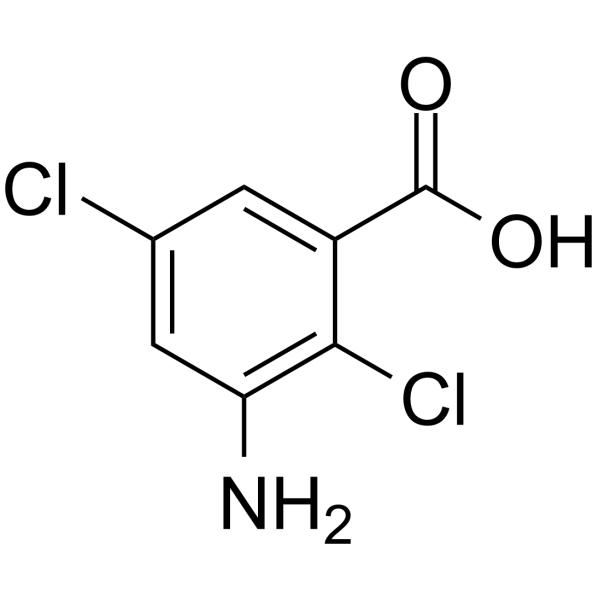
Chloramben (Standard) is the analytical standard of Chloramben. This product is intended for research and analytical applications. Chloramben (3-Amino-2,5-dichlorobenzoic acid) is a pre-emergence herbicide used to control the seedlings of annual grasses and broadleaf weeds .
|
-
- HY-B2045R
-
|
|
Herbicide
Reference Standards
|
Others
|
|
Benfluralin (Standard) is the analytical standard of Benfluralin. This product is intended for research and analytical applications. Benfluralin is a kind of herbicide and an agrochemical which can be used as a pre-emergence herbicide used for the control of grass and other weeds in a range of food and non-food crops.
|
-
- HY-N7091S
-
|
|
Isotope-Labeled Compounds
|
Metabolic Disease
|
|
Atrazine- 15N is the 15N-labeled Atrazine. Atrazine is principally used for control of certain annual broadleaf and grass weeds. Atrazine inhibits photophosphorylation but typically does not result in lethality or permanent cell damage in the short term .
|
-
- HY-W351546
-
|
|
Herbicide
Protoporphyrinogen IX oxidase
|
Others
|
|
Carfentrazone-ethyl is a selective post-emergence herbicide and protoporphyrinogen oxidase (Protox) inhibitor, with an I50 value of 18 nM against soybean Protox. Carfentrazone-ethyl causes severe damage to target weeds (ivy-leaved morning glory, velvetleaf) .
|
-
- HY-W014793R
-
|
|
Herbicide
Reference Standards
|
Others
|
|
Metamitron (Standard) is the analytical standard of Metamitron (HY-W014793). This product is intended for research and analytical applications. Metamitron is a triazone herbicide that can be used for pre- and post-emergence weed control of broadleaf weeds and grasses in sugar beet .
|
-
- HY-174388
-
|
|
Fungal
Herbicide
Reactive Oxygen Species (ROS)
|
Infection
|
|
Antifungal agent 134 (Compound B13) is an antifungal agent with EC50s of 3.24, 1.89, 1.70, 0.36, 4.27, and 1.50 μg/mL for Botrytis cinerea, Alternaria solani, Fusarium graminearum, Rhizoctonia solani, Colletotrichum orbiculare, and Alternaria alternata, respectively. Antifungal agent 134 can disrupt the cell membrane and mitochondria of the hyphae, leading to significant ROS accumulation. Antifungal agent 134 also has significant herbicidal activities against field weeds, such as Amaranthus retroflexus L and Abutilon theophrasti Medicus. Antifungal agent 134 can be used for crop diseases and field weeds research .
|
-
- HY-W714182
-
|
|
Herbicide
|
Others
|
|
Dimethametryn is a methylthio-triazine herbicide mainly used for controlling broadleaf weeds in paddy fields. Dimethametryn blocks plant photosynthesis by inhibiting electron transport and non-cyclic photophosphorylation of photosystem II, ultimately causing chlorosis, necrosis and death of sensitive plants .
|
-
- HY-B0866S
-
|
|
Isotope-Labeled Compounds
|
Metabolic Disease
|
Ametryn- 13C,d3 is the 13C- and deuterium labeled Ametryn. Ametryn, a member of the Triazine chemical family, is a herbicide which inhibits photosynthesis and other enzymatic processes. Ametryn is effective against annual broadleaf weeds and grasses .
|
-
- HY-B1871S
-
|
|
Isotope-Labeled Compounds
|
Others
|
|
Metolachlor-d6 is the deuterium labeled Metolachlor . Metolachlor is a pre-emergent selective, chloroacetanilide herbicide for the control of a variety of annual grass and broad leaf weeds in corn and other crops. Metolachlor is a chiral herbicide consisting of four stereoisomers .
|
-
- HY-N7091R
-
|
|
Herbicide
Reference Standards
|
Metabolic Disease
|
|
Atrazine (Standard) is the analytical standard of Atrazine. This product is intended for research and analytical applications. Atrazine is principally used for control of certain annual broadleaf and grass weeds. Atrazine inhibits photophosphorylation but typically does not result in lethality or permanent cell damage in the short term .
|
-
- HY-111912R
-
|
|
Reference Standards
Fungal
|
Infection
|
|
Tribenuron-methyl (Standard) is the analytical standard of Tribenuron-methyl. This product is intended for research and analytical applications. Tribenuron-methyl, a sulfonylurea herbicide agent, can be used as the fungicide agent. Tribenuron-methyl plays an important role in controlling the weeds and diseases in wheat field .
|
-
- HY-W422402
-
|
|
Acetolactate Synthase (ALS)
Herbicide
|
Others
|
|
Foramsulfuron is a postemergence herbicide used for selective control of grass and some broadleaved weeds in maize (Zea mays L.). Foramsulfuron is a sulfonylurea herbicide that exerts its herbicidal activity by inhibiting acetolactate synthase (ALS), a key enzyme in the biosynthesis of branched chain amino acids .
|
-
- HY-W725473
-
|
|
Isotope-Labeled Compounds
|
Others
|
|
Oxyfluorfen-d5 is deuterated labeled Oxyfluorfen (HY-119176) Oxyfluorfen is a pre- and post-emergence diphenyl ether herbicide to control annual broad-leaved and grass weeds. Oxyfluorfen is a protoporphyrinogen oxidase inhibitor and inhibits photosynthesis by blocking chlorophyll synthesis.
|
-
- HY-B2020R
-
|
|
Herbicide
Reference Standards
|
Others
|
|
Fenuron (Standard) is the analytical standard of Fenuron. This product is intended for research and analytical applications. Fenuron is a water-soluble herbicide used to control annual broad-leaved weeds and woody plants, which is widely applied in the fields of beans, spinach, sugar beet, and other fruits .
|
-
- HY-N8357R
-
|
|
Reference Standards
Endogenous Metabolite
|
Others
|
|
Fenuron (Standard) is the analytical standard of Fenuron. This product is intended for research and analytical applications. Fenuron is a water-soluble herbicide used to control annual broad-leaved weeds and woody plants, which is widely applied in the fields of beans, spinach, sugar beet, and other fruits .
|
-
- HY-B1876S
-
|
|
Acetolactate Synthase (ALS)
|
Others
|
|
Nicosulfuron-d6 is the deuterium labeled Nicosulfuron . Nicosulfuron is a selective herbicide belonging to the sulfonylurea family. Nicosulfuron is commonly used as a post-emergence herbicide to protect maize crops from weeds. Nicosulfuron inhibits acetolactate synthase (ALS) enzyme activity .
|
-
- HY-B1856
-
|
|
Environmental Pollutants
Acetyl-CoA Carboxylase
|
Cancer
|
|
Haloxyfop is an aryloxyphenoxypropionic acid herbicide and is widely used in grass weeds in broad-leaf crops . Haloxyfop inhibits the acetyl coenzyme A carboxylase (EC 6.4.1.2) from corn seedling chloroplasts with an IC50 of 0.5 μM, but has no effect on this enzyme in pea .
|
-
- HY-111957
-
|
|
HPPD
|
Others
|
|
Fenquinotrione is a 4-hydroxyphenylpyruvate dioxygenase (HPPD) inhibitor with IC50s of 27.2 and 44.7nM against rice and Arabidopsis thaliana HPPD, respectively. Fenquinotrione is an herbicide that can control a wide range of broadleaf and sedge weeds with excellent rice selectivity .
|
-
- HY-116802
-
|
|
Drug Derivative
Herbicide
|
Others
|
|
Bromobutide is an active ingredient in herbicides that kill weeds. Bromobutide has the highest control effect on Scirpus juncoides and Monochloa vaginalis, but has no inhibitory effect on weed seed germination. The main metabolites of bromobutide in rats are alcohol or phenol glucuronides, which enter the enterohepatic circulation .
|
-
- HY-B1871R
-
|
|
Herbicide
Reference Standards
|
Others
|
|
Metolachlor (Standard) is the analytical standard of Metolachlor. This product is intended for research and analytical applications. Metolachlor is a pre-emergent selective, chloroacetanilide herbicide for the control of a variety of annual grass and broad leaf weeds in corn and other crops. Metolachlor is a chiral herbicide consisting of four stereoisomers .
|
-
- HY-W052234
-
|
|
Insecticide
|
Others
|
|
4-Fluorophenoxyacetic acid is a herbicide and plant defense inducer. 4-Fluorophenoxyacetic can inhibit the heading of monocotyledonous weeds and induce their sterility. Additionally, 4-Fluorophenoxyacetic acid can induce the defense mechanism of cereals to suppress pest populations and increase the yield of field crops .
|
-
- HY-B1876R
-
|
|
Reference Standards
Acetolactate Synthase (ALS)
|
Others
|
|
Nicosulfuron (Standard) is the analytical standard of Nicosulfuron. This product is intended for research and analytical applications. Nicosulfuron is a selective herbicide belonging to the sulfonylurea family. Nicosulfuron is commonly used as a post-emergence herbicide to protect maize crops from weeds. Nicosulfuron inhibits acetolactate synthase (ALS) enzyme activity .
|
-
- HY-W713975
-
|
|
Isotope-Labeled Compounds
Herbicide
|
Others
|
|
Metolachlor-d11 is the deuterium labeled Metolachlor (HY-B1871). Metolachlor is a pre-emergent selective, chloroacetanilide herbicide for the control of a variety of annual grass and broad leaf weeds in corn and other crops. Metolachlor is a chiral herbicide consisting of four stereoisomers .
|
-
- HY-178107
-
|
|
Protoporphyrinogen IX oxidase
Herbicide
|
Others
|
|
PPO-IN-21 (Compound A20) is a protoporphyrinogen IX oxidase (PPO) inhibitor with a Ki of 15.2 nM for Nicotiana tabacum PPO. PPO-IN-21 has inhibitory activity against various weeds (including monocots and dicots). PPO-IN-21 can be used as herbicide .
|
-
- HY-W714225
-
|
Monosodium methylarsonate
|
Environmental Pollutants
Herbicide
|
Others
|
|
Sodium methylarsonate (Monosodium methylarsonate) is an organoarsenic compound with environmental toxicity that can be used as a herbicide to control weeds. Sodium methylarsonate interferes with plant metabolic processes, particularly by hindering photosynthesis and protein synthesis, ultimately leading to plant death. Additionally, sodium methylarsonate can induce the production of metallothioneins (MTs) in fish .
|
-
- HY-121423R
-
|
|
Reference Standards
Apoptosis
Reactive Oxygen Species (ROS)
|
Metabolic Disease
|
|
Dimethachlor (Standard) is the analytical standard of Dimethachlor. This product is intended for research and analytical applications. Dimethachlor, a synthetic herbicide, inhibits the undesirable growth of weeds via the suppression of very long-chain fatty acid synthesis. Dimethachlor disrupts normal developmental processes via the induction of apoptosis and ROS production .
|
-
- HY-136373
-
|
BAS 479H
|
Herbicide
Cytochrome P450
DNA/RNA Synthesis
|
Others
|
|
Metazachlor (BAS 479H) is a herbicide belonging to the chloroacetamides class. Metazachlor can inhibit the synthesis of very long chain fatty acids during the germination and emergence of weed seeds, thereby interfering with cell division and tissue differentiation, and thus hindering the normal growth and development of weeds .
|
-
- HY-W033687
-
|
|
Herbicide
|
Others
|
|
Triclopyr triethylamine is a herbicide. Triclopyr triethylamine causes lethargy in metamorphic northern red-legged frogs during exposure, and delays the completion time of metamorphosis in northern red-legged frogs. Triclopyr triethylamine is used to control broadleaf emergent aquatic weeds, such as the invasive species Lythrum salicaria .
|
-
- HY-19698A
-
|
4-CPA sodium; p-Chlorophenoxyacetic acid sodium
|
Biochemical Assay Reagents
Herbicide
|
Others
|
|
4-Chlorophenoxyacetic acid sodium is a widely used herbicide and plant growth regulator. 4-Chlorophenoxyacetic acid sodium mimics endogenous auxin and regulates plant cell division, differentiation and gene expression. 4-Chlorophenoxyacetic acid sodium is used to control weeds and promote fruit growth .
|
-
- HY-W720961
-
|
|
Reactive Oxygen Species (ROS)
|
Metabolic Disease
|
|
Dimethachlor-d6 is the deuterium labeled Dimethachlor (HY-121423). Dimethachlor, a synthetic herbicide, inhibits the undesirable growth of weeds via the suppression of very long-chain fatty acid synthesis. Dimethachlor disrupts normal developmental processes via the induction of apoptosis and ROS production .
|
-
- HY-B2039S
-
|
|
Isotope-Labeled Compounds
|
Others
|
|
Bentazone- 13C10, 15N is the 13C-labeled and 15N-labeled Bentazone. Bentazone is a post-emergence herbicide used for selective control of broadleaf weeds and sedges in beans, rice, corn, peanuts, mint and others. It acts by interfering with photosynthesis .
|
-
- HY-W264306
-
|
|
Herbicide
|
|
|
(2,4,6-Trimethyl-phenoxy)-acetic acid is an organic compound with excellent herbicide activity. This compound can effectively inhibit weed growth and help increase crop yields. (2,4,6-Trimethyl-phenoxy)-acetic acid shows strong selectivity against specific types of weeds.
|
-
- HY-B1842S1
-
|
|
Isotope-Labeled Compounds
Herbicide
|
Others
|
|
Fluroxypyr-d2 is the deuterium labeled Fluroxypyr (HY-B1842). Fluroxypyr is an auxin herbicide to control annual or perennial weeds. Fluroxypyr icauses auxin overdose or excessive endogenous auxin concentrations, thereby resulting in an imbalance of auxin homeostasis and interaction with other hormones in tissues .
|
-
- HY-14397AR
-
|
Indometacin sodium hydrate (Standard)
|
Reference Standards
COX
Bacterial
Influenza Virus
Antibiotic
|
Inflammation/Immunology
Cancer
|
|
Dimethenamide-P (Standard) is the analytical standard of Dimethenamide-P. This product is intended for research and analytical applications. Dimethenamide-P is an amide herbicide effective for the pre-emergence management of annual grasses, small-seeded broadleaf weeds, and sedges in ornamental plants, functioning by inhibiting the synthesis of long-chain fatty acids.
|
-
- HY-W669241R
-
|
|
Endogenous Metabolite
Reference Standards
|
Others
|
|
Dimethenamide-P (Standard) is the analytical standard of Dimethenamide-P. This product is intended for research and analytical applications. Dimethenamide-P is an amide herbicide effective for the pre-emergence management of annual grasses, small-seeded broadleaf weeds, and sedges in ornamental plants, functioning by inhibiting the synthesis of long-chain fatty acids.
|
-
- HY-135713
-
|
|
Herbicide
Acetolactate Synthase (ALS)
Fungal
|
Infection
|
|
Penoxsulam is an acetolactate synthase (ALS) inhibitor herbicide. Penoxsulam inhibits Candida auris acetohydroxyacid synthase (AHAS) with a Ki value of <32 nM. Penoxsulam can be used for postemergence control of annual grasses, sedges, and broadleaf weeds in rice culture. Penoxsulam can be used for the study of Candida auris infections .
|
-
- HY-121158R
-
|
S-2846 (Standard)
|
Herbicide
Reference Standards
|
Others
|
|
Butamifos (Standard) is the analytical standard of Butamifos. This product is intended for research and analytical applications. Butamifos (S-2846) is an organophosphoramidate herbicide used to control annual weeds with low toxicity to mammals. Butamifos acts on the growing points of susceptible plants, causing severe radial enlargement of the affected tissues .
|
-
- HY-W714212
-
|
|
Herbicide
Microtubule/Tubulin
DNA/RNA Synthesis
Apoptosis
|
Others
|
|
Fluchloralin is a dinitroaniline herbicide that effectively controls annual gramineous and broadleaf weeds primarily by inhibiting tubulin synthesis and cell division . Fluchloralin exhibits cytotoxicity and genotoxicity, and promotes cell apoptosis by activating apoptotic signaling proteins, forming DNA ladder bands, inducing cell shrinkage and nuclear fragmentation .
|
-
- HY-N9715
-
|
|
Herbicide
|
Others
|
|
4-Chloropinselin is a chlorine-containing xanthone herbicide that can be isolated from Alternaria sonchi. 4-Chloropinselin is a biosynthetic precursor or degradation product of chloromonilicin and exhibits phytotoxic and antimicrobial activity. 4-Chloropinselin can inhibit the growth of weeds such as field sowthistle and suppress the proliferation of certain microorganisms .
|
-
- HY-W040286
-
|
|
Herbicide
Endogenous Metabolite
|
|
|
Cinosulfuron is a selective herbicide with excellent inhibitory activity against a variety of broadleaf weeds and is widely used in crop fields to protect the growth of crops. Cinosulfuron can effectively manage weed problems by inhibiting specific enzyme activity. Cinosulfuron is used in agriculture to increase crop yield and quality and ensure efficient use of farmland.
|
-
- HY-N7091S1
-
|
|
Isotope-Labeled Compounds
|
Metabolic Disease
|
|
Atrazine- 13C3, 15N3 is the 13C-labeled and 15N-labeled Atrazine. Atrazine is principally used for control of certain annual broadleaf and grass weeds. Atrazine inhibits photophosphorylation but typically does not result in lethality or permanent cell damage in the short term .
|
-
- HY-122984S
-
|
|
Isotope-Labeled Compounds
Herbicide
|
Others
|
|
Diquat-d4 (dibromide) is the deuterium labeled Diquat dibromide (HY-122984) . Diquat dibromide is a comprehensive herbicide commonly used in the cultivation of cotton, soybeans, and other crops to combat unwanted weeds. Diquat dibromide has an IC50 of 60 mg/L in the Allium root growth inhibition test .
|
-
- HY-W681876
-
|
|
Herbicide
Acetolactate Synthase (ALS)
|
Others
|
|
(E)-Pyriminobac-methyl is an Acetolactate synthase inhibitor and a pyrimidinylbenzoate Herbicide. (E)-Pyriminobac-methyl inhibits acetolactate synthase and blocks the biosynthesis of branched-chain amino acids. The herbicidal activity of (E)-Pyriminobac-methyl against Echinochloa crus-galli and Leptochloa chinensis is 1.5-2 times higher than that of Bensulfuron-methyl (HY-B0870) .
|
-
- HY-18572A
-
|
2,4-Dichlorophenoxyacetic acid sodium
|
Environmental Pollutants
Apoptosis
Herbicide
DNA/RNA Synthesis
|
Cancer
|
|
2,4-D (2,4-Dichlorophenoxyacetate) sodium is a selective herbicide that can be used for the control of broad-leaved weeds. 2,4-D sodium salt can induce < b>apoptosis. 2,4-D sodium salt inhibits DNA and protein synthesis, thereby preventing normal plant growth and development .
|
-
- HY-18572
-
2,4-D
1 Publications Verification
2,4-Dichlorophenoxyacetic acid
|
Environmental Pollutants
Herbicide
Apoptosis
DNA/RNA Synthesis
|
Cancer
|
|
2,4-D (2, 4-dichlorophenoxyacetic acid) is a selective herbicide that can be used for the control of broad-leaved weeds. 2,4-D can induce apoptosis. 2,4-D inhibits DNA and protein synthesis, thereby preventing normal plant growth and development .
|
-
- HY-B1880
-
|
|
Environmental Pollutants
Cytochrome P450
Herbicide
|
Neurological Disease
Metabolic Disease
|
|
Oxadiazon is an orally active herbicide. Oxadiazon reduces hepatic cytochrome P450 levels. Oxadiazon increases palmitoyl CoA oxidase, acetyl carnitine transferase, and hepatic ALAS activity. Oxadiazon induces hepatomegaly and experimental porphyria. Oxadiazon controls weeds. Oxadiazon may be used in neurodegenerative disease research .
|
-
- HY-B1856S
-
|
|
Isotope-Labeled Compounds
Acetyl-CoA Carboxylase
|
Cancer
|
|
Haloxyfop-d4 is deuterium labeled Haloxyfop. Haloxyfop is an aryloxyphenoxypropionic acid herbicide and is widely used in grass weeds in broad-leaf crops . Haloxyfop inhibits the acetyl coenzyme A carboxylase (EC 6.4.1.2) from corn seedling chloroplasts with an IC50 of 0.5 μM, but has no effect on this enzyme in pea .
|
-
- HY-W422402R
-
|
|
Reference Standards
Acetolactate Synthase (ALS)
|
Others
|
|
Foramsulfuron (Standard) is the analytical standard of Foramsulfuron. This product is intended for research and analytical applications. Foramsulfuron is a postemergence herbicide used for selective control of grass and some broadleaved weeds in maize (Zea mays L.). Foramsulfuron is a sulfonylurea herbicide that exerts its herbicidal activity by inhibiting acetolactate synthase (ALS), a key enzyme in the biosynthesis of branched chain amino acids .
|
-
- HY-W750858
-
|
|
Drug Derivative
Herbicide
|
Others
|
|
DIBOA-Glucoside is a glycoside derivative that can be found in cereal crops like rye, wheat, and maize. DIBOA-Glucoside is a stable, less toxic glucoside form of DIBOA. DIBOA-Glucoside, upon pest or pathogen attack, is hydrolyzed by an enzyme, releasing the toxic aglycone DIBOA and glucose, thereby deterring insects and suppressing weeds through an allelopathic effect .
|
-
- HY-B1856R
-
|
|
Reference Standards
Acetyl-CoA Carboxylase
|
Cancer
|
|
Haloxyfop (Standard) is the analytical standard of Haloxyfop. This product is intended for research and analytical applications. Haloxyfop is an aryloxyphenoxypropionic acid herbicide and is widely used in grass weeds in broad-leaf crops . Haloxyfop inhibits the acetyl coenzyme A carboxylase (EC 6.4.1.2) from corn seedling chloroplasts with an IC50 of 0.5 μM, but has no effect on this enzyme in pea .
|
-
- HY-W547534
-
|
2,4-Dichlorophenoxyacetic acid ammonium
|
Herbicide
DNA/RNA Synthesis
Apoptosis
|
Cancer
|
|
2,4-D (2, 4-dichlorophenoxyacetic acid) ammonium is a selective herbicide that can be used for the control of broad-leaved weeds. 2,4-D ammonium can induce apoptosis. 2,4-D ammonium inhibits DNA and protein synthesis, thereby preventing normal plant growth and development .
|
-
- HY-174423
-
|
NC-656
|
Herbicide
|
Others
|
|
Iptriazopyrid (NC-656) is an azole carboxamide herbicide targeting 4-hydroxyphenylpyruvate dioxygenase (HPPD) with a Ki value of 24.3 nM for Arabidopsis HPPD and 33.3 nM for rice HPPD. Iptriazopyrid blocks plastoquinone and carotenoid synthesis, leading to weed chlorosis and death. Iptriazopyrid is promising for research of controlling weeds such as Echinochloa crus-galli in paddy fields .
|
-
- HY-B0867
-
|
|
Environmental Pollutants
Herbicide
|
Others
|
|
2,4-D Butyl ester is a phenoxyacetic acid herbicide used to control woody broadleaf weeds. 2,4-D Butyl ester shows high toxicity to fish and aquatic invertebrates. In animals, 2,4-D Butyl ester hydrolyzes to produce n-butanol, which further induces neurobehavioral toxicity such as ataxia in rats .
|
-
- HY-B2010
-
-
- HY-W721637
-
|
|
Isotope-Labeled Compounds
Acetolactate Synthase (ALS)
|
Others
|
|
Foramsulfuron-d6-1 is the deuterium labeled Foramsulfuron (HY-W422402). Foramsulfuron is a postemergence herbicide used for selective control of grass and some broadleaved weeds in maize (Zea mays L.). Foramsulfuron is a sulfonylurea herbicide that exerts its herbicidal activity by inhibiting acetolactate synthase (ALS), a key enzyme in the biosynthesis of branched chain amino acids .
|
-
- HY-176729
-
|
|
Phytohormone
|
Others
|
|
KeIKK5 is a strigolactone (SL) biosynthesis inhibitor. KeIKK5 significantly reduces the level of 4-deoxystrigolactone (4-DO) in rice by inhibiting the activity of CYP711A enzyme. KeIKK5 can effectively inhibit the germination of root parasitic weeds. KeIKK5 can be used in the research of plant hormone regulation and new agricultural herbicides .
|
-
- HY-W768772
-
|
|
Isotope-Labeled Compounds
Herbicide
|
Others
|
|
Fluroxypyr- 13C2,d2 is the deuterium labeled and 13C-labeled Fluroxypyr (HY-B1842). Fluroxypyr is an auxin herbicide to control annual or perennial weeds. Fluroxypyr icauses auxin overdose or excessive endogenous auxin concentrations, thereby resulting in an imbalance of auxin homeostasis and interaction with other hormones in tissues .
|
-
- HY-W052988
-
|
|
Herbicide
|
Others
|
|
Aminocyclopyrachlor-methyl is a herbicide that acts as an indole-3-acetic acid (IAA) mimic. Aminocyclopyrachlor-methyl targets the IAA signaling pathway and is readily absorbed through both the leaves and roots of susceptible plants. Aminocyclopyrachlor-methyl markedly inhibits the growth and biomass of trumpetcreeper (Campsis radicans) and the growth and regrowth of mugwort (Artemisia vulgaris), thereby effectively controlling both weeds .
|
-
- HY-B0859A
-
|
|
Herbicide
Cytochrome P450
|
Metabolic Disease
|
|
MCPA sodium is an orally active phenoxyacetic acid herbicide. MCPA sodium interferes with membrane integrity, energy metabolism (decreases ATP levels), and redox balance in plant cells. MCPA sodium increases hepatic cytochrome P-450 levels and increases aniline hydroxylase and 7-ethoxycoumarin O-deethylase activities. MCPA sodium can be used to control broadleaf weeds .
|
-
- HY-B1866R
-
|
|
Reference Standards
Androgen Receptor
|
Endocrinology
|
|
Linuron (Standard) is the analytical standard of Linuron. This product is intended for research and analytical applications. Linuron is a phenylurea herbicide that is widely used to control the growth of grass and weeds in various agriculture crops and in orchards. Linuron is a photosystem II inhibitor. Linuron is also a competitive androgen receptor (AR) antagonist with a Ki of 100 μM. Linuron shows reproductive toxicity in animals that acts as an endocrine disruptor .
|
-
- HY-W040286R
-
|
|
Endogenous Metabolite
Reference Standards
|
|
|
Cinosulfuron (Standard) is the analytical standard of Cinosulfuron. This product is intended for research and analytical applications. Cinosulfuron is a selective herbicide with excellent inhibitory activity against a variety of broadleaf weeds and is widely used in crop fields to protect the growth of crops. Cinosulfuron can effectively manage weed problems by inhibiting specific enzyme activity. Cinosulfuron is used in agriculture to increase crop yield and quality and ensure efficient use of farmland.
|
-
- HY-B1866S
-
|
|
Androgen Receptor
Isotope-Labeled Compounds
|
Others
|
|
Linuron-d6 is the deuterium labeled Linuron (HY-B1866). Linuron is a phenylurea herbicide that is widely used to control the growth of grass and weeds in various agriculture crops and in orchards. Linuron is a photosystem II inhibitor. Linuron is also a competitive androgen receptor (AR) antagonist with a Ki of 100 μM. Linuron shows reproductive toxicity in animals that acts as an endocrine disruptor .
|
-
- HY-W008484
-
|
|
Environmental Pollutants
Herbicide
|
Infection
|
|
Aminopyralid is a synthetic auxin herbicide. Aminopyralid provides foliar and soil residual weed control, and also increases forage yield in bahiagrass pastures. When present as a soil residue, Aminopyralid causes phytotoxicity, reduced plant height, decreased flower number and fruit yield loss in rotated vegetable crops. Aminopyralid is registered for the control of annual and perennial broadleaf weeds in pastures, permanent grasslands and non-cropped areas .
|
-
- HY-136373S
-
|
BAS 479H-d6
|
Isotope-Labeled Compounds
Herbicide
Cytochrome P450
DNA/RNA Synthesis
|
Others
|
|
Metazachlor-d6 (BAS 479H-d6) is a deuterium labeled Metazachlor (HY-136373). Metazachlor (BAS 479H) is a herbicide belonging to the chloroacetamides class. Metazachlor can inhibit the synthesis of very long chain fatty acids during the germination and emergence of weed seeds, thereby interfering with cell division and tissue differentiation, and thus hindering the normal growth and development of weeds .
|
-
- HY-B1972R
-
|
Napropamid (Standard)
|
Herbicide
Reference Standards
DNA/RNA Synthesis
|
Others
|
|
Napropamide (Standard) (Napropamid (Standard)) is the analytical standard of Napropamide (HY-B1972). This product is intended for research and analytical applications. Napropamide (Napropamid) is an amide herbicide that can be used to control weeds in fruits, vegetables, tobacco, and ornamental plants. Napropamide mainly exerts its effect by inhibiting DNA synthesis and cell division. Napropamide has moderate to high persistence in the field, with a half-life of 24-131 days, and is prone to photodegradation.
|
-
- HY-B1866
-
Linuron
1 Publications Verification
|
Environmental Pollutants
Androgen Receptor
Herbicide
|
Infection
Metabolic Disease
Cancer
|
|
Linuron is a phenylurea herbicide widely used to control the growth of grasses and weeds in various crops and orchards. Linuron acts as a photosystem II inhibitor. It also functions as a competitive androgen receptor (AR) antagonist, with an EC50 of 200 μM and a Ki of 100 μM against rat AR, and an EC50 of 20 μM against human AR. Linuron exhibits reproductive toxicity in animals and acts as an endocrine disruptor .\n
|
-
- HY-W724357
-
|
Napropamid-d10
|
Isotope-Labeled Compounds
DNA/RNA Synthesis
Herbicide
|
Others
|
|
Napropamide-d10 (Napropamid-d10) is the deuterium labeled Napropamide (HY-B1972). Napropamide (Napropamid) is an amide herbicide that can be used to control weeds in fruits, vegetables, tobacco, and ornamental plants. Napropamide mainly exerts its effect by inhibiting DNA synthesis and cell division. Napropamide has moderate to high persistence in the field, with a half-life of 24-131 days, and is prone to photodegradation .
|
-
- HY-136373R
-
|
BAS 479H (Standard)
|
Herbicide
Reference Standards
Cytochrome P450
DNA/RNA Synthesis
|
Others
|
|
Metazachlor (Standard) (BAS 479H (Standard)) is the analytical standard of Metazachlor (HY-136373). This product is intended for research and analytical applications. Metazachlor (BAS 479H) is a herbicide belonging to the chloroacetamides class. Metazachlor can inhibit the synthesis of very long chain fatty acids during the germination and emergence of weed seeds, thereby interfering with cell division and tissue differentiation, and thus hindering the normal growth and development of weeds .
|
-
- HY-B2010S
-
-
- HY-136633R
-
|
|
Herbicide
Reference Standards
|
Others
|
|
Pyroxasulfone (Standard) is the analytical standard of Pyroxasulfone. This product is intended for research and analytical applications. Pyroxasulfone is a broad-spectrum pyrazole herbicide used primarily for all-season residual weed control in corn and soybeans. Pyroxasulfone is active against a variety of annual grasses and some broad-leaved weeds, and can be absorbed through roots and stems to inhibit early seedling growth of sensitive plants. Pyroxasulfone can be used to study herbicide effects and weed resistance .
|
-
- HY-18572AR
-
|
2,4-Dichlorophenoxyacetic acid sodium (Standard)
|
Reference Standards
Herbicide
DNA/RNA Synthesis
Apoptosis
|
Cancer
|
|
2,4-D sodium (Standard) is the analytical standard of 2,4-D sodium (HY-18572A). This product is intended for research and analytical applications. 2,4-D sodium is a selective herbicide that can be used for the control of broad-leaved weeds. 2,4-D sodium can induce < b>apoptosis. 2,4-D sodium inhibits DNA and protein synthesis, thereby preventing normal plant growth and development .
|
-
- HY-B1853
-
|
|
Environmental Pollutants
Apoptosis
ERK
Herbicide
MEK
|
Cardiovascular Disease
|
|
Simetryn is a triazine herbicide that exerts teratogenicity. Simetryn inhibits photosynthesis by blocking electron transfer in the chloroplast photosystem II and activates the MEK/Erk signaling pathway. Simetryn triggers vascular and developmental abnormalities in zebrafish and tadpoles, suppresses proliferation, enhances apoptosis, and induces malformations. Simetryn serves as a tool to establish a zebrafish model for studying arteriovenous malformations and related pathogenesis. Simetryn controls paddy weeds and can be used for research on developmental and vascular disorders .
|
-
- HY-133813AR
-
|
|
Reference Standards
Drug Metabolite
|
Neurological Disease
|
|
2,4-D Butyl ester (Standard) is the analytical standard of 2,4-D Butyl ester. This product is intended for research and analytical applications. 2,4-D Butyl ester is an organic phenoxy herbicide and used to control woody broad-leaf weeds. 2,4-D butyl ester produces its herbicidal effect by mimicking natural plant growth hormones causing plants to grow too rapidly to survive .
|
-
- HY-178026
-
|
|
HPPD
Protoporphyrinogen IX oxidase
|
Others
|
|
HPPD/PPO-IN-1 (Compound B14) is dual-functional inhibitor of HPPD and PPO with IC50s of 0.12 μM and 0.51 μM for Arabidopsis thaliana HPPD and Nicotiana tabacum PPO, respectively. HPPD/PPO-IN-1 has broad-spectrum herbicidal activity against weeds with a crop safety to peanuts and cotton. HPPD/PPO-IN-1 can be used for the development of environmentally friendly herbicides .
|
-
- HY-B1880R
-
|
|
Herbicide
Reference Standards
Cytochrome P450
|
Neurological Disease
Metabolic Disease
|
|
Oxadiazon (Standard) is the analytical standard of Oxadiazon (HY-B1880). This product is intended for research and analytical applications. Oxadiazon is an orally active herbicide. Oxadiazon reduces hepatic cytochrome P450 levels. Oxadiazon increases palmitoyl CoA oxidase, acetyl carnitine transferase, and hepatic ALAS activity. Oxadiazon induces hepatomegaly and experimental porphyria. Oxadiazon controls weeds. Oxadiazon may be used in neurodegenerative disease research .
|
-
- HY-129300
-
|
|
Endogenous Metabolite
|
Others
|
|
Prosulfocarb is a herbicide with a rapidly growing use trend. Prosulfocarb is used in winter cereals to help address the problem of increasing biotic resistance of weeds to certain pesticides. Environmental and food effects of prosulfocarb have been observed, and its transfer pattern from target crops to non-target areas has been studied. The volatility effect of prosulfocarb is an important factor explaining the inefficiency of isolated area contamination and marginal protection against residue spread .
|
-
- HY-170505
-
|
|
Microtubule/Tubulin
Herbicide
|
Others
|
|
Icafolin-methyl is a herbicide and plant β-tubulin (Microtubule/Tubulin) inhibitor. Icafolin-methyl binds to the β-tubulin region of the Colchicine (HY-16569) binding site, thereby blocking the polymerization of plant tubulin. As a non-selective herbicide, Icafolin-methyl exhibits post-emergence activity against weeds in both cool-season and warm-season cropping systems, including resistant ryegrass and darnel biotypes. Icafolin-methyl can be used for herbicide research .
|
-
- HY-175641
-
|
|
HPPD
|
Others
|
|
HPPD-IN-6 (Compound IIy) is a HPPD inhibitor with high rice selectivity. HPPD-IN-6 has potent herbicidal activities against Echinochloa crus-galli and Leymus chinensis, including the herbicide-resistant biotypes with EC50s of 19.62-33.26 g of ai/ha. HPPD-IN-6 effectively controls the weeds in rice fields at 90-150 g of ai/ha. HPPD-IN-6 can be used for the development of herbicide .
|
-
- HY-W713900
-
|
|
Isotope-Labeled Compounds
Herbicide
Cytochrome P450
|
Metabolic Disease
|
|
MCPA-d3-1 is the deuterium labeled MCPA (HY-B0859). MCPA is an orally active phenoxyacetic acid herbicide. MCPA interferes with membrane integrity, energy metabolism (decreases ATP levels), and redox balance in plant cells. MCPA increases hepatic cytochrome P-450 levels and increases aniline hydroxylase and 7-ethoxycoumarin O-deethylase activities. MCPA can be used to control broadleaf weeds .
|
-
- HY-B2010R
-
-
- HY-18572S1
-
|
|
Isotope-Labeled Compounds
Herbicide
DNA/RNA Synthesis
Apoptosis
|
Cancer
|
|
2,4-D-d3 is the deuterium labeled 2,4-D (HY-18572) . 2,4-D (2,4-Dichlorophenoxyacetic acid) is a selective systemic herbicide for the control of broad-leaved weeds. 2,4-D acts as a plant hormone, causing uncontrolled growth in the meristematic tissues. 2,4-D inhibits DNA and protein synthesis and thereby prevents normal plant growth and development .
|
-
- HY-18572R
-
|
2,4-Dichlorophenoxyacetic acid (Standard)
|
Reference Standards
Herbicide
DNA/RNA Synthesis
Apoptosis
|
Cancer
|
|
2,4-D (Standard) is the analytical standard of 2,4-D (HY-18572). This product is intended for research and analytical applications. 2,4-D (2, 4-dichlorophenoxyacetic acid) is a selective herbicide that can be used for the control of broad-leaved weeds. 2,4-D can induce apoptosis. 2,4-D inhibits DNA and protein synthesis, thereby preventing normal plant growth and development .
|
-
- HY-B0859S1
-
|
|
Isotope-Labeled Compounds
Herbicide
Cytochrome P450
|
Metabolic Disease
|
|
MCPA-d3 is the deuterium labeled MCPA (HY-B0859). MCPA is an orally active phenoxyacetic acid herbicide. MCPA interferes with membrane integrity, energy metabolism (decreases ATP levels), and redox balance in plant cells. MCPA increases hepatic cytochrome P-450 levels and increases aniline hydroxylase and 7-ethoxycoumarin O-deethylase activities. MCPA can be used to control broadleaf weeds .
|
-
- HY-W758421
-
-
- HY-136372R
-
|
|
Herbicide
Reference Standards
|
Others
|
|
Diquat (dibromide hydrate) (Standard) is the analytical standard of Diquat (dibromide hydrate). This product is intended for research and analytical applications. Diquat dibromide hydrate is a comprehensive herbicide. Diquat dibromide hydrate increases the production of ROS and triggers mitophagy. Diquat dibromide hydrate generates free radicals such as superoxide anions through redox cycles, which induce oxidative stress. Diquat dibromide hydrate is cytotoxic, reproductive, and neurotoxic. Diquat dibromide hydrate is used in cotton, soybean, and other crops to combat noxious weeds .
|
-
- HY-B0859S
-
|
4-Chloro-2-Methylphenoxyacetic acid-13C8
|
Isotope-Labeled Compounds
Herbicide
Cytochrome P450
|
Metabolic Disease
|
|
MCPA- 13C8 is the 13C-labeled MCPA (HY-B0859). MCPA is an orally active phenoxyacetic acid herbicide. MCPA interferes with membrane integrity, energy metabolism (decreases ATP levels), and redox balance in plant cells. MCPA increases hepatic cytochrome P-450 levels and increases aniline hydroxylase and 7-ethoxycoumarin O-deethylase activities. MCPA can be used to control broadleaf weeds .
|
-
- HY-B0859R
-
|
|
Herbicide
Reference Standards
Cytochrome P450
|
Metabolic Disease
|
|
MCPA (Standard) is the analytical standard of MCPA (HY-B0859). This product is intended for research and analytical applications. MCPA is an orally active phenoxyacetic acid herbicide. MCPA interferes with membrane integrity, energy metabolism (decreases ATP levels), and redox balance in plant cells. MCPA increases hepatic cytochrome P-450 levels and increases aniline hydroxylase and 7-ethoxycoumarin O-deethylase activities. MCPA can be used to control broadleaf weeds .
|
-
- HY-18572S
-
|
2,4-Dichlorophenoxyacetic acid-13C6
|
Isotope-Labeled Compounds
Herbicide
DNA/RNA Synthesis
Apoptosis
|
Cancer
|
|
2,4-D- 13C6 is the 13C-labeled 2,4-D (HY-18572). 2,4-D (2,4-Dichlorophenoxyacetic acid) is a selective systemic herbicide for the control of broad-leaved weeds. 2,4-D acts as a plant hormone, causing uncontrolled growth in the meristematic tissues. 2,4-D inhibits DNA and protein synthesis and thereby prevents normal plant growth and development .
|
-
- HY-122984S1
-
-
- HY-N7176R
-
|
Kaempferol-3-glucuronide (Standard); Kaempferol-3-O-glucuronide (Standard)
|
Reference Standards
Interleukin Related
|
Metabolic Disease
Inflammation/Immunology
Cancer
|
|
Prosulfocarb (Standard) is the analytical standard of Prosulfocarb. This product is intended for research and analytical applications. Prosulfocarb is a herbicide with a rapidly growing use trend. Prosulfocarb is used in winter cereals to help address the problem of increasing biotic resistance of weeds to certain pesticides. Environmental and food effects of prosulfocarb have been observed, and its transfer pattern from target crops to non-target areas has been studied. The volatility effect of prosulfocarb is an important factor explaining the inefficiency of isolated area contamination and marginal protection against residue spread .
|
-
- HY-B0868
-
|
|
Herbicide
|
Others
|
|
2,4-D isooctyl ester, a synthetic auxin herbicide, is a TIR1 protein transport inhibitor. 2,4-D isooctyl ester interacts with TIR1 to facilitate auxin signal transduction, activating auxin-mediated growth responses. 2,4-D isooctyl ester functions as a pro-herbicide bio-transformed into phytotoxic 2,4-D post-plant absorption, disrupting normal plant growth. 2,4-D isooctyl ester can be used to control broadleaf weeds .
|
-
- HY-129300R
-
|
|
Endogenous Metabolite
Reference Standards
|
Others
|
|
Prosulfocarb (Standard) is the analytical standard of Prosulfocarb. This product is intended for research and analytical applications. Prosulfocarb is a herbicide with a rapidly growing use trend. Prosulfocarb is used in winter cereals to help address the problem of increasing biotic resistance of weeds to certain pesticides. Environmental and food effects of prosulfocarb have been observed, and its transfer pattern from target crops to non-target areas has been studied. The volatility effect of prosulfocarb is an important factor explaining the inefficiency of isolated area contamination and marginal protection against residue spread .
|
-
- HY-18572S2
-
|
|
Isotope-Labeled Compounds
Herbicide
DNA/RNA Synthesis
Apoptosis
|
Cancer
|
|
2,4-D-d5 (2,4-Dichlorophenoxyacetic acid-d5) is the deuterium labeled 2,4-D (HY-18572) . 2,4-D (2,4-Dichlorophenoxyacetic acid) is a selective systemic herbicide for the control of broad-leaved weeds. 2,4-D acts as a plant hormone, causing uncontrolled growth in the meristematic tissues. 2,4-D inhibits DNA and protein synthesis and thereby prevents normal plant growth and development .
|
-
- HY-B1853R
-
|
|
Herbicide
Reference Standards
ERK
MEK
Apoptosis
|
Cardiovascular Disease
|
|
Simetryn (Standard) is the analytical standard of Simetryn (HY-B1853). This product is intended for research and analytical applications. Simetryn is a triazine herbicide that exerts teratogenicity. Simetryn inhibits photosynthesis by blocking electron transfer in the chloroplast photosystem II and activates the MEK/Erk signaling pathway. Simetryn triggers vascular and developmental abnormalities in zebrafish and tadpoles, suppresses proliferation, enhances apoptosis, and induces malformations. Simetryn serves as a tool to establish a zebrafish model for studying arteriovenous malformations and related pathogenesis. Simetryn controls paddy weeds and can be used for research on developmental and vascular disorders .
|
-
- HY-129300S
-
|
S-Benzyl dipropylthiocarbamate-d7
|
Isotope-Labeled Compounds
Endogenous Metabolite
|
Others
|
|
Prosulfocarb-d7 (S-Benzyl dipropylthiocarbamate-d7) is deuterium labeled Prosulfocarb. Prosulfocarb is a herbicide with a rapidly growing use trend. Prosulfocarb is used in winter cereals to help address the problem of increasing biotic resistance of weeds to certain pesticides. Environmental and food effects of prosulfocarb have been observed, and its transfer pattern from target crops to non-target areas has been studied. The volatility effect of prosulfocarb is an important factor explaining the inefficiency of isolated area contamination and marginal protection against residue spread .
|
-
- HY-137910
-
|
|
Environmental Pollutants
HPPD
Herbicide
|
Infection
|
|
Tembotrione is a herbicide belonging to the HPPD (dioxygenase) inhibitor class with crop selectivity. Tembotrione effectively controls a variety of weeds including broadleaf and gramineous species by disrupting carotenoid synthesis, which leads to chlorophyll degradation and leaf whitening. Mixing Tembotrione with isoxaflutole or adding surfactants optimizes its efficacy and reduces phytotoxicity, with no residual impact on subsequent cruciferous crops, thus helping to increase maize grain yield. The activity of Tembotrione decreases under drought conditions, and under specific conditions (such as double-dose treatment), it may cause reversible yellowing and even yield reduction in crops such as poppy .
|
-
- HY-W711035
-
|
AC 900001
|
p38 MAPK
PI3K
Calcium Channel
Reactive Oxygen Species (ROS)
Apoptosis
Cytochrome P450
|
Inflammation/Immunology
|
|
Picolinafen is a pyridine-class herbicide that acts as a phytoene desaturase (PDS) inhibitor. Picolinafen effectively controls broadleaf weeds and disrupts carotenoid biosynthesis. Picolinafen exhibits cytotoxicity to porcine trophectoderm (pTr) and luminal epithelial (pLE) cells. Picolinafen induces (ROS accumulation, calcium depletion, and activates (MAPK and PI3K signaling pathways, leading to decreased cell viability, increased apoptosis, impaired migration, and altered expression of implantation-related genes. Picolinafen has an LD50 value of 2.7 mg/kg in mammals and 7 μg/L in fish. Picolinafen exhibits toxic effects during zebrafish embryogenesis [1][2].
|
-
- HY-139838
-
|
|
Herbicide
|
Others
Cancer
|
|
Epyrifenacil is a protoporphyrinogen oxidase (PPO) inhibiting herbicide, potently targeting the PPO2 isoform from weeds such as Amaranthus palmeri with an IC50 of 0.637 nM. Epyrifenacil also inhibits liver mitochondrial PPO across species, with IC50 values of 2.2 nM (mouse), 2.6 nM (rat), 12.1 nM (rabbit), 7.6 nM (dog), and 10.2 nM (human). Epyrifenacil induces liver tumor development in mice. Epyrifenacil can be used for weed control, and also used as a tool compound in toxicological research to study the mechanism of PPO inhibition, chemical-induced hepatotoxicity, and the mode of action of non-genotoxic carcinogens in rodents [3].
|
-
- HY-121139
-
|
2,2,3,3-Tetrafluoropropionic acid; 3H-Tetrafluoropropionic acid
|
Herbicide
|
Others
|
|
Flupropanate (2,2,3,3-Tetrafluoropropionic acid; 3H-Tetrafluoropropionic acid) is a soil-active selective herbicide and plant growth inhibitor that acts by inhibiting radicle growth and lipid biosynthesis in sensitive plants. Flupropanate exhibits high-efficiency control of Stipa weeds (such as Nassella neesiana and N. trichotoma) in pastures, and reduces the coverage of the invasive species Eragrostis curvula. Meanwhile, Flupropanate is sensitive to gramineous plants like ryegrass, but shows good selective tolerance to plantain, chicory and some leguminous plants. Studies show that in the protected area with Mediterranean climate in southwestern Australia, Flupropanate produces no significant non-target effects on native plant communities, functional groups or the endangered species Grevillea curviloba, indicating high ecological safety .
|
-
- HY-137910R
-
|
|
Reference Standards
Herbicide
HPPD
|
Others
|
|
Tembotrione (Standard) is the analytical standard of Tembotrione. This product is intended for research and analytical applications. Tembotrione is a drug that may reduce the
productivity of carrots. Tembotrione has the activity of reducing carrot stem
mass. Tembotrione can be used to study the total productivity of carrot
. Tembotrione is a herbicide belonging to the HPPD (dioxygenase) inhibitor class with crop selectivity. Tembotrione effectively controls a variety of weeds including broadleaf and gramineous species by disrupting carotenoid synthesis, which leads to chlorophyll degradation and leaf whitening. Mixing Tembotrione with isoxaflutole or adding surfactants optimizes its efficacy and reduces phytotoxicity, with no residual impact on subsequent cruciferous crops, thus helping to increase maize grain yield. The activity of Tembotrione decreases under drought conditions, and under specific conditions (such as double-dose treatment), it may cause reversible yellowing and even yield reduction in crops such as poppy .
|
-
| Cat. No. |
Product Name |
Type |
-
- HY-19698
-
|
4-CPA; p-Chlorophenoxyacetic acid
|
Biochemical Assay Reagents
|
|
4-Chlorophenoxyacetic acid (4-CPA) is a widely used herbicide and plant growth regulator. 4-Chlorophenoxyacetic acid (4-CPA) mimics endogenous auxin and regulates plant cell division, differentiation and gene expression. 4-Chlorophenoxyacetic acid (4-CPA) is used to control weeds and promote fruit growth .
|
-
- HY-B2020
-
|
|
Biochemical Assay Reagents
|
|
Fenuron is a water-soluble herbicide used to control annual broad-leaved weeds and woody plants, which is widely applied in the fields of beans, spinach, sugar beet, and other fruits .
|
-
- HY-19698A
-
|
4-CPA sodium; p-Chlorophenoxyacetic acid sodium
|
Biochemical Assay Reagents
|
|
4-Chlorophenoxyacetic acid sodium is a widely used herbicide and plant growth regulator. 4-Chlorophenoxyacetic acid sodium mimics endogenous auxin and regulates plant cell division, differentiation and gene expression. 4-Chlorophenoxyacetic acid sodium is used to control weeds and promote fruit growth .
|
-
- HY-W264306
-
|
|
Biochemical Assay Reagents
|
|
(2,4,6-Trimethyl-phenoxy)-acetic acid is an organic compound with excellent herbicide activity. This compound can effectively inhibit weed growth and help increase crop yields. (2,4,6-Trimethyl-phenoxy)-acetic acid shows strong selectivity against specific types of weeds.
|
-
- HY-19698R
-
|
4-CPA (Standard); p-Chlorophenoxyacetic acid (Standard)
|
Biochemical Assay Reagents
|
|
4-Chlorophenoxyacetic acid (4-CPA) (Standard) is the analytical standard of 4-Chlorophenoxyacetic acid (4-CPA). This product is intended for research and analytical applications. 4-Chlorophenoxyacetic acid (4-CPA) is a widely used herbicide for weed control in agriculture. 4-Chlorophenoxyacetic acid can be degraded in aqueous media through an electrochemical oxidation process. The end products of 4-Chlorophenoxyacetic acid degradation are harmless, such as carbon dioxide, water, and chloride ions .
|
-
- HY-B2020R
-
|
|
Biochemical Assay Reagents
|
|
Fenuron (Standard) is the analytical standard of Fenuron. This product is intended for research and analytical applications. Fenuron is a water-soluble herbicide used to control annual broad-leaved weeds and woody plants, which is widely applied in the fields of beans, spinach, sugar beet, and other fruits .
|
| Cat. No. |
Product Name |
Category |
Target |
Chemical Structure |
-
- HY-18572
-
-
-
- HY-18572R
-
|
2,4-Dichlorophenoxyacetic acid (Standard)
|
Ketones, Aldehydes, Acids
Endogenous metabolite
Source Classification
|
Reference Standards
Herbicide
DNA/RNA Synthesis
Apoptosis
|
|
2,4-D (Standard) is the analytical standard of 2,4-D (HY-18572). This product is intended for research and analytical applications. 2,4-D (2, 4-dichlorophenoxyacetic acid) is a selective herbicide that can be used for the control of broad-leaved weeds. 2,4-D can induce apoptosis. 2,4-D inhibits DNA and protein synthesis, thereby preventing normal plant growth and development .
|
-
-
- HY-N7928R
-
-
-
- HY-N7928
-
-
-
- HY-N14757
-
-
-
- HY-121362R
-
-
-
- HY-N8357R
-
-
-
- HY-N7176R
-
|
Kaempferol-3-glucuronide (Standard); Kaempferol-3-O-glucuronide (Standard)
|
Flavonols
Structural Classification
Flavonoids
Microorganisms
other families
Phenols
Polyphenols
Plants
Source Classification
|
Reference Standards
Interleukin Related
|
|
Prosulfocarb (Standard) is the analytical standard of Prosulfocarb. This product is intended for research and analytical applications. Prosulfocarb is a herbicide with a rapidly growing use trend. Prosulfocarb is used in winter cereals to help address the problem of increasing biotic resistance of weeds to certain pesticides. Environmental and food effects of prosulfocarb have been observed, and its transfer pattern from target crops to non-target areas has been studied. The volatility effect of prosulfocarb is an important factor explaining the inefficiency of isolated area contamination and marginal protection against residue spread .
|
-
-
- HY-W142497
-
-
-
- HY-N14728
-
-
-
- HY-N15443
-
-
-
- HY-N9715
-
|
|
Structural Classification
Microorganisms
Ketones, Aldehydes, Acids
Source Classification
|
Herbicide
|
|
4-Chloropinselin is a chlorine-containing xanthone herbicide that can be isolated from Alternaria sonchi. 4-Chloropinselin is a biosynthetic precursor or degradation product of chloromonilicin and exhibits phytotoxic and antimicrobial activity. 4-Chloropinselin can inhibit the growth of weeds such as field sowthistle and suppress the proliferation of certain microorganisms .
|
-
-
- HY-W750858
-
-
| Cat. No. |
Product Name |
Chemical Structure |
-
- HY-B1871S
-
|
|
|
Metolachlor-d6 is the deuterium labeled Metolachlor . Metolachlor is a pre-emergent selective, chloroacetanilide herbicide for the control of a variety of annual grass and broad leaf weeds in corn and other crops. Metolachlor is a chiral herbicide consisting of four stereoisomers .
|
-
-
- HY-N7091S2
-
|
|
|
Atrazine-d5 is deuterium labeled Atrazine. Atrazine is principally used for control of certain annual broadleaf and grass weeds. Atrazine inhibits photophosphorylation but typically does not result in lethality or permanent cell damage in the short term .
|
-
-
- HY-18572S2
-
|
|
|
2,4-D-d5 (2,4-Dichlorophenoxyacetic acid-d5) is the deuterium labeled 2,4-D (HY-18572) . 2,4-D (2,4-Dichlorophenoxyacetic acid) is a selective systemic herbicide for the control of broad-leaved weeds. 2,4-D acts as a plant hormone, causing uncontrolled growth in the meristematic tissues. 2,4-D inhibits DNA and protein synthesis and thereby prevents normal plant growth and development .
|
-
-
- HY-B0860S
-
|
|
|
Diuron-d6 is the deuterium labeled Diuron (HY-B0860). Diuron is an orally active phenylurea herbicide. Diuron inhibits photosynthesis in plants by blocking the formation of ATP and NADH. Diuron increases the production of ROS. Diuron increases expression of p53 in certain cell lines. Diuron has herbicidal activity against annual and perennial broadleaf weeds and grass weeds. Diuron promotes DMBA/BBN-induced bladder cancer. Diuron can be used in breast cancer research .
|
-
-
- HY-B1866S
-
|
|
|
Linuron-d6 is the deuterium labeled Linuron (HY-B1866). Linuron is a phenylurea herbicide that is widely used to control the growth of grass and weeds in various agriculture crops and in orchards. Linuron is a photosystem II inhibitor. Linuron is also a competitive androgen receptor (AR) antagonist with a Ki of 100 μM. Linuron shows reproductive toxicity in animals that acts as an endocrine disruptor .
|
-
-
- HY-136373S
-
|
|
|
Metazachlor-d6 (BAS 479H-d6) is a deuterium labeled Metazachlor (HY-136373). Metazachlor (BAS 479H) is a herbicide belonging to the chloroacetamides class. Metazachlor can inhibit the synthesis of very long chain fatty acids during the germination and emergence of weed seeds, thereby interfering with cell division and tissue differentiation, and thus hindering the normal growth and development of weeds .
|
-
-
- HY-18572S
-
|
|
|
2,4-D- 13C6 is the 13C-labeled 2,4-D (HY-18572). 2,4-D (2,4-Dichlorophenoxyacetic acid) is a selective systemic herbicide for the control of broad-leaved weeds. 2,4-D acts as a plant hormone, causing uncontrolled growth in the meristematic tissues. 2,4-D inhibits DNA and protein synthesis and thereby prevents normal plant growth and development .
|
-
-
- HY-B0862S
-
|
|
|
Pendimethalin-d5 is the deuterium labeled Pendimethalin . Pendimethalin is an herbicide that controls annual grasses and certain broadleaf weeds. Pendimethalin inhibits cell division and cell elongation .
|
-
-
- HY-B0870S
-
|
|
|
Bensulfuron-methyl-d6 is a deuterated Bensulfuron-methyl (HY-B0870). Bensulfuron-methyl is a kind of sulfonylurea herbicide widely used to control broad-leaf weeds in rice paddies .
|
-
-
- HY-W725473
-
|
|
|
Oxyfluorfen-d5 is deuterated labeled Oxyfluorfen (HY-119176) Oxyfluorfen is a pre- and post-emergence diphenyl ether herbicide to control annual broad-leaved and grass weeds. Oxyfluorfen is a protoporphyrinogen oxidase inhibitor and inhibits photosynthesis by blocking chlorophyll synthesis.
|
-
-
- HY-B1876S
-
|
|
|
Nicosulfuron-d6 is the deuterium labeled Nicosulfuron . Nicosulfuron is a selective herbicide belonging to the sulfonylurea family. Nicosulfuron is commonly used as a post-emergence herbicide to protect maize crops from weeds. Nicosulfuron inhibits acetolactate synthase (ALS) enzyme activity .
|
-
-
- HY-B0859S1
-
|
|
|
MCPA-d3 is the deuterium labeled MCPA (HY-B0859). MCPA is an orally active phenoxyacetic acid herbicide. MCPA interferes with membrane integrity, energy metabolism (decreases ATP levels), and redox balance in plant cells. MCPA increases hepatic cytochrome P-450 levels and increases aniline hydroxylase and 7-ethoxycoumarin O-deethylase activities. MCPA can be used to control broadleaf weeds .
|
-
-
- HY-B1859S1
-
|
|
|
Isoproturon-d3 is the deuterium labeled Isoproturon . Isoproturon belongs to the phenylurea herbicide family and is a systemic and selective herbicide. Isoproturon is widely applied for killing weeds in farmland, which can be used in the control of annual grasses and broad-leaved weeds in spring and winter wheat, winter rye and spring and winter barley .
|
-
-
- HY-B1859S2
-
|
|
|
Isoproturon-d6-1 is the deuterium labeled Isoproturon (HY-B1859). Isoproturon belongs to the phenylurea herbicide family and is a systemic and selective herbicide. Isoproturon is widely applied for killing weeds in farmland, which can be used in the control of annual grasses and broad-leaved weeds in spring and winter wheat, winter rye and spring and winter barley .
|
-
-
- HY-W040206S
-
|
|
|
Diflufenican-d3 is the deuterium labeled Diflufenican . Diflufenican is a contact, selective herbicide used to specifically control some broad leaved weeds .
|
-
-
- HY-144177S
-
|
|
|
Benzthiazuron-d3 is deuterium labeled Benzthiazuron. Benzthiazuron is a selective herbicide that is used mainly to control annual broad-leaved weeds in a variety of crops .
|
-
-
- HY-136375S
-
|
|
|
Cyanazine-d5 is deuterium labeled Cyanazine. Cyanazine, a triazine herbicide cyanazine, is used to control a variety of grass weeds and broadleaf weed. Cyanazine is proved non-genotoxic .
|
-
-
- HY-133085S
-
|
|
|
Rimsulfuron-d6 is deuterium labeled Rimsulfuron. Rimsulfuron (DPX-E9636) is a sulfonylurea herbicide for postemergence use in maize to control grasses and some broadleaf weeds .
|
-
-
- HY-B2039S1
-
|
|
|
Bentazone-d7 is the deuterium labeled Bentazone . Bentazone is a post-emergence herbicide used for selective control of broadleaf weeds and sedges in beans, rice, corn, peanuts, mint and others. It acts by interfering with photosynthesis .
|
-
-
- HY-N7091S
-
|
|
|
Atrazine- 15N is the 15N-labeled Atrazine. Atrazine is principally used for control of certain annual broadleaf and grass weeds. Atrazine inhibits photophosphorylation but typically does not result in lethality or permanent cell damage in the short term .
|
-
-
- HY-B0866S
-
|
|
Ametryn- 13C,d3 is the 13C- and deuterium labeled Ametryn. Ametryn, a member of the Triazine chemical family, is a herbicide which inhibits photosynthesis and other enzymatic processes. Ametryn is effective against annual broadleaf weeds and grasses .
|
-
-
- HY-W713975
-
|
|
|
Metolachlor-d11 is the deuterium labeled Metolachlor (HY-B1871). Metolachlor is a pre-emergent selective, chloroacetanilide herbicide for the control of a variety of annual grass and broad leaf weeds in corn and other crops. Metolachlor is a chiral herbicide consisting of four stereoisomers .
|
-
-
- HY-W720961
-
|
|
|
Dimethachlor-d6 is the deuterium labeled Dimethachlor (HY-121423). Dimethachlor, a synthetic herbicide, inhibits the undesirable growth of weeds via the suppression of very long-chain fatty acid synthesis. Dimethachlor disrupts normal developmental processes via the induction of apoptosis and ROS production .
|
-
-
- HY-B2039S
-
|
|
|
Bentazone- 13C10, 15N is the 13C-labeled and 15N-labeled Bentazone. Bentazone is a post-emergence herbicide used for selective control of broadleaf weeds and sedges in beans, rice, corn, peanuts, mint and others. It acts by interfering with photosynthesis .
|
-
-
- HY-N7091S1
-
|
|
|
Atrazine- 13C3, 15N3 is the 13C-labeled and 15N-labeled Atrazine. Atrazine is principally used for control of certain annual broadleaf and grass weeds. Atrazine inhibits photophosphorylation but typically does not result in lethality or permanent cell damage in the short term .
|
-
-
- HY-122984S
-
|
|
|
Diquat-d4 (dibromide) is the deuterium labeled Diquat dibromide (HY-122984) . Diquat dibromide is a comprehensive herbicide commonly used in the cultivation of cotton, soybeans, and other crops to combat unwanted weeds. Diquat dibromide has an IC50 of 60 mg/L in the Allium root growth inhibition test .
|
-
-
- HY-B1856S
-
|
|
|
Haloxyfop-d4 is deuterium labeled Haloxyfop. Haloxyfop is an aryloxyphenoxypropionic acid herbicide and is widely used in grass weeds in broad-leaf crops . Haloxyfop inhibits the acetyl coenzyme A carboxylase (EC 6.4.1.2) from corn seedling chloroplasts with an IC50 of 0.5 μM, but has no effect on this enzyme in pea .
|
-
-
- HY-W721637
-
|
|
|
Foramsulfuron-d6-1 is the deuterium labeled Foramsulfuron (HY-W422402). Foramsulfuron is a postemergence herbicide used for selective control of grass and some broadleaved weeds in maize (Zea mays L.). Foramsulfuron is a sulfonylurea herbicide that exerts its herbicidal activity by inhibiting acetolactate synthase (ALS), a key enzyme in the biosynthesis of branched chain amino acids .
|
-
-
- HY-W768772
-
|
|
|
Fluroxypyr- 13C2,d2 is the deuterium labeled and 13C-labeled Fluroxypyr (HY-B1842). Fluroxypyr is an auxin herbicide to control annual or perennial weeds. Fluroxypyr icauses auxin overdose or excessive endogenous auxin concentrations, thereby resulting in an imbalance of auxin homeostasis and interaction with other hormones in tissues .
|
-
-
- HY-B2010S
-
|
|
|
Fomesafen-d3 is the deuterium-labeled Fomesafen (HY-B2010). Fomesafen is an orally active herbicide. Fomesafen inhibits protoporphyrinogen oxidase (PPO). Fomesafen induces Apoptosis and increases ROS. Fomesafen exhibits developmental toxicity, immunotoxicity, and neurotoxicity. It induces precancerous lesions in the liver and hepaturoporphyria in mice. Fomesafen is used to control broadleaf weeds in soybean fields, rubber plantations, and orchards .
|
-
-
- HY-18572S1
-
|
|
|
2,4-D-d3 is the deuterium labeled 2,4-D (HY-18572) . 2,4-D (2,4-Dichlorophenoxyacetic acid) is a selective systemic herbicide for the control of broad-leaved weeds. 2,4-D acts as a plant hormone, causing uncontrolled growth in the meristematic tissues. 2,4-D inhibits DNA and protein synthesis and thereby prevents normal plant growth and development .
|
-
-
- HY-W713900
-
|
|
|
MCPA-d3-1 is the deuterium labeled MCPA (HY-B0859). MCPA is an orally active phenoxyacetic acid herbicide. MCPA interferes with membrane integrity, energy metabolism (decreases ATP levels), and redox balance in plant cells. MCPA increases hepatic cytochrome P-450 levels and increases aniline hydroxylase and 7-ethoxycoumarin O-deethylase activities. MCPA can be used to control broadleaf weeds .
|
-
-
- HY-W758421
-
|
|
|
Diquat-d8 dibromide is a deuterium labeled Diquat dibromide (HY-122984). Diquat dibromide is a comprehensive herbicide. Diquat dibromide increases the production of ROS and triggers mitochondrial Autophagy. Diquat dibromide generates free radicals such as superoxide anions through redox cycles, which induce oxidative stress. Diquat dibromide is cytotoxic, reproductive, and neurotoxic. Diquat dibromide is used in cotton, soybean, and other crops to combat noxious weeds .
|
-
-
- HY-B0859S
-
|
|
|
MCPA- 13C8 is the 13C-labeled MCPA (HY-B0859). MCPA is an orally active phenoxyacetic acid herbicide. MCPA interferes with membrane integrity, energy metabolism (decreases ATP levels), and redox balance in plant cells. MCPA increases hepatic cytochrome P-450 levels and increases aniline hydroxylase and 7-ethoxycoumarin O-deethylase activities. MCPA can be used to control broadleaf weeds .
|
-
-
- HY-129300S
-
|
|
|
Prosulfocarb-d7 (S-Benzyl dipropylthiocarbamate-d7) is deuterium labeled Prosulfocarb. Prosulfocarb is a herbicide with a rapidly growing use trend. Prosulfocarb is used in winter cereals to help address the problem of increasing biotic resistance of weeds to certain pesticides. Environmental and food effects of prosulfocarb have been observed, and its transfer pattern from target crops to non-target areas has been studied. The volatility effect of prosulfocarb is an important factor explaining the inefficiency of isolated area contamination and marginal protection against residue spread .
|
-
-
- HY-W726600S
-
|
|
|
Florpyrauxifen-benzyl-d5 is the deuterium labeled Florpyrauxifen-benzyl (HY-W726600). Florpyrauxifen-benzyl is an auxin herbicide. Florpyrauxifen-benzyl is promising for research of agricultural weeds, such as Echinochloa crusgalli in rice paddies .
|
-
-
- HY-B1842S1
-
|
|
|
Fluroxypyr-d2 is the deuterium labeled Fluroxypyr (HY-B1842). Fluroxypyr is an auxin herbicide to control annual or perennial weeds. Fluroxypyr icauses auxin overdose or excessive endogenous auxin concentrations, thereby resulting in an imbalance of auxin homeostasis and interaction with other hormones in tissues .
|
-
-
- HY-W724357
-
|
|
|
Napropamide-d10 (Napropamid-d10) is the deuterium labeled Napropamide (HY-B1972). Napropamide (Napropamid) is an amide herbicide that can be used to control weeds in fruits, vegetables, tobacco, and ornamental plants. Napropamide mainly exerts its effect by inhibiting DNA synthesis and cell division. Napropamide has moderate to high persistence in the field, with a half-life of 24-131 days, and is prone to photodegradation .
|
-
-
- HY-122984S1
-
|
|
|
Diquat-d12 dibromide 1 is the deuterium labeled Diquat dibromide (HY-122984). Diquat dibromide is a comprehensive herbicide. Diquat dibromide increases the production of ROS and triggers mitochondrial Autophagy. Diquat dibromide generates free radicals such as superoxide anions through redox cycles, which induce oxidative stress. Diquat dibromide is cytotoxic, reproductive, and neurotoxic. Diquat dibromide is used in cotton, soybean, and other crops to combat noxious weeds .
|
-
| Cat. No. |
Product Name |
|
Classification |
-
- HY-136426
-
|
|
|
Alkynes
|
|
Trifludimoxazin is a click chemistry reagent, a protoporphyrinogen oxidase (PPO) inhibitor and herbicide. Trifludimoxazin inhibits PPO, accumulates reactive oxygen species, damages cell membranes, and thereby causes weed death. Trifludimoxazin exhibits high-efficiency activity in controlling broadleaf weeds and grassy weeds .
|
-
- HY-W714178
-
|
|
|
Azide
|
|
Aziprotryne is a post-emergence selective herbicide active against broadleaf weeds. When tank-mixed with Alachlor (HY-B2014), Aziprotryne provides longer-term weed control in field-grown cabbage plots .
|
-
- HY-182897
-
|
|
|
Alkynes
|
|
PPO-IN-25 (Compound B2) is a PPO inhibitor and Herbicide, with a Ki value of 9.50 nM against NtPPO. PPO-IN-25 exhibits control efficacy against broadleaf weeds and shows broad-spectrum herbicidal activity. PPO-IN-25 can be used in studies related to weed damage .
|
Your information is safe with us. * Required Fields.
Inquiry Information
- Product Name:
- Cat. No.:
- Quantity:
- MCE Japan Authorized Agent:

