



Tienilic acid
Based on 2 publication(s) in Google Scholar
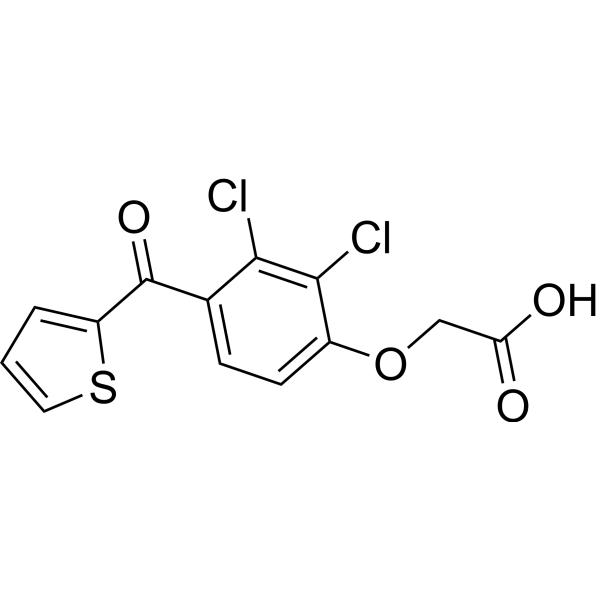
Tienilic acid (Ticrynafen; ANP 3624) acts as a diuretic hypotensive agent. However, Tienilic acid induces hepatotoxicity. Tienilic acid is converted into electrophilic metabolites by cytochrome P450 (CYP) in vitro.
Para uso exclusivo en investigación. No vendemos a pacientes.
- Pureza : 99.69%
- No. CAS: 40180-04-9
- Fòrmula: C13H8Cl2O4S
- Peso molecular:331.18
-
Almacenamiento:
4°C, protect from light
* In solvent : -80°C, 6 months; -20°C, 1 month (protect from light)

To place orders, for customer services and technical support, please contact: MedChemExpress USA
Tel: 609-228-6898 E-mail: [email protected] [email protected]


-
 Actividad biológica
-
Chemical Information
-
Solvente y solubilidad
- Protocolo
- Pureza y Documentación
- Referencias
-
 Help & FAQs


-
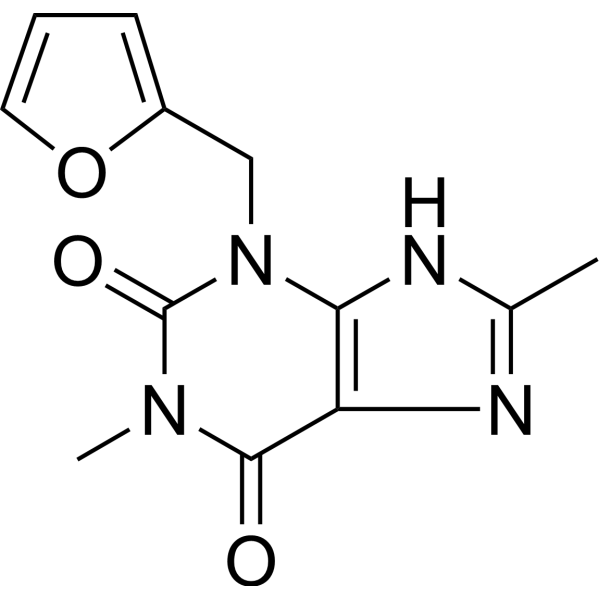
HY-107204
FurafyllineCytochrome P450 Inhibitor -
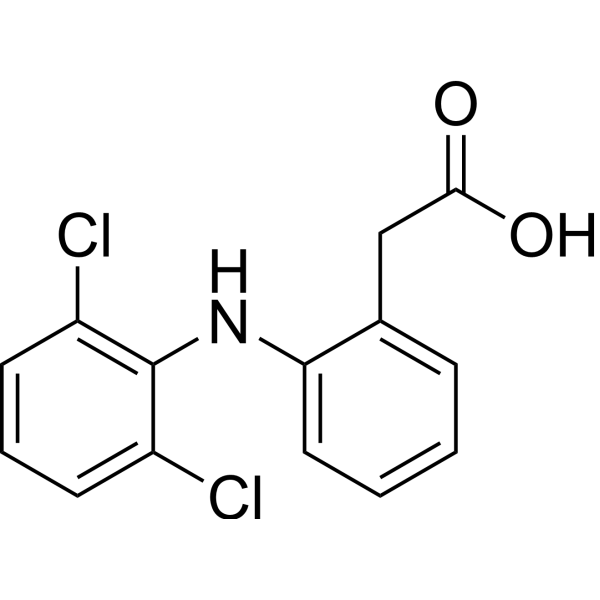
HY-15036
DiclofenacCOX Inhibitor -
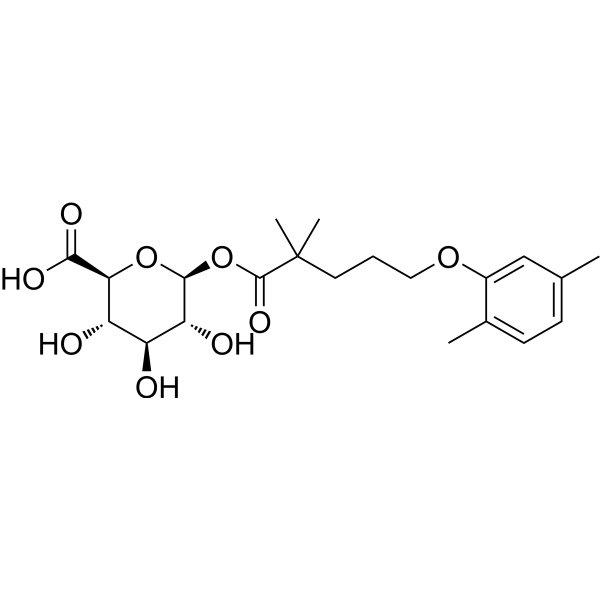
HY-129993
Gemfibrozil 1-O-β-glucuronideCYP2C8 Inhibitor -
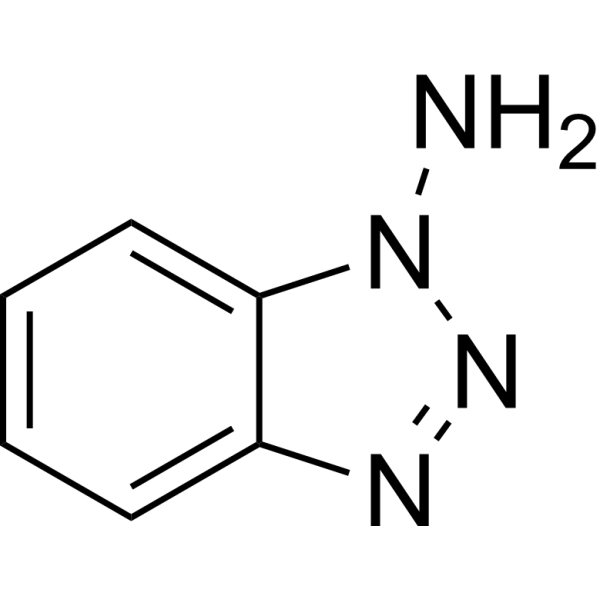
HY-103389
1-AminobenzotriazoleCytochrome P450 Inhibitor -
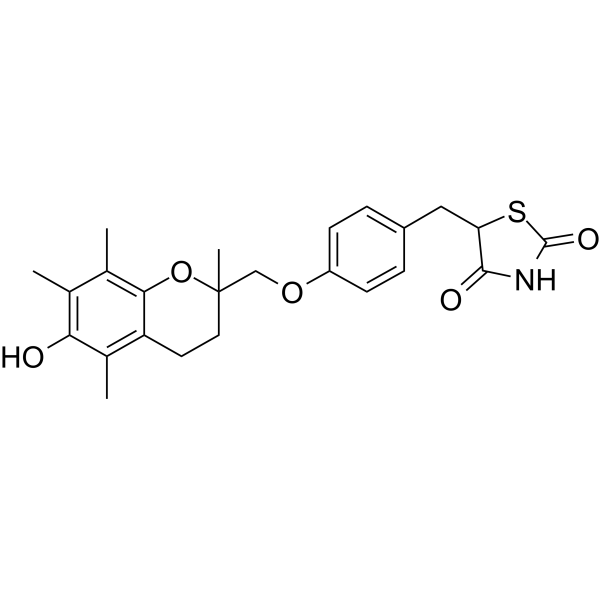
HY-50935
TroglitazonePPARγ Agonist -
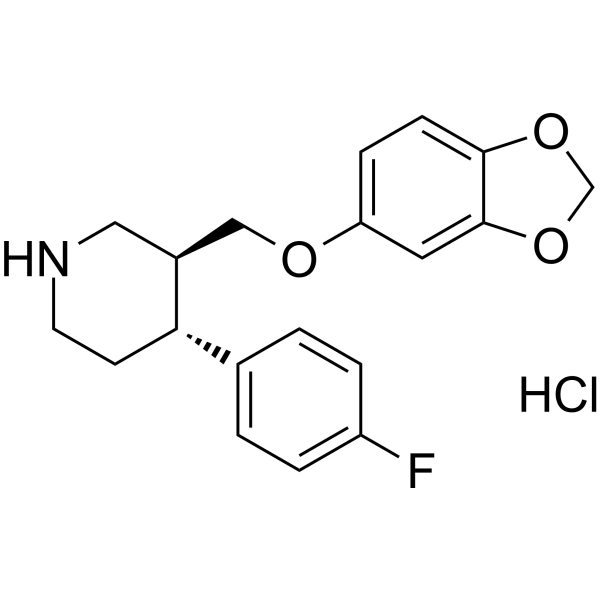
HY-B0492
Paroxetine hydrochloride5-HT Inhibitor -
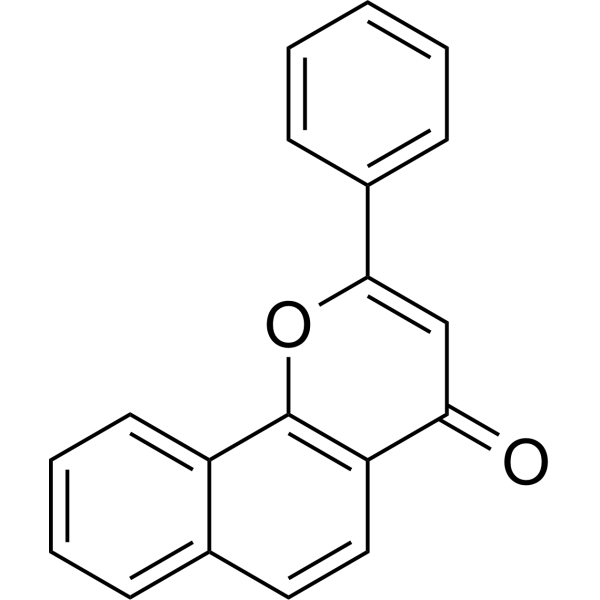
HY-125833
Alpha-NaphthoflavoneAromatase Inhibitor -
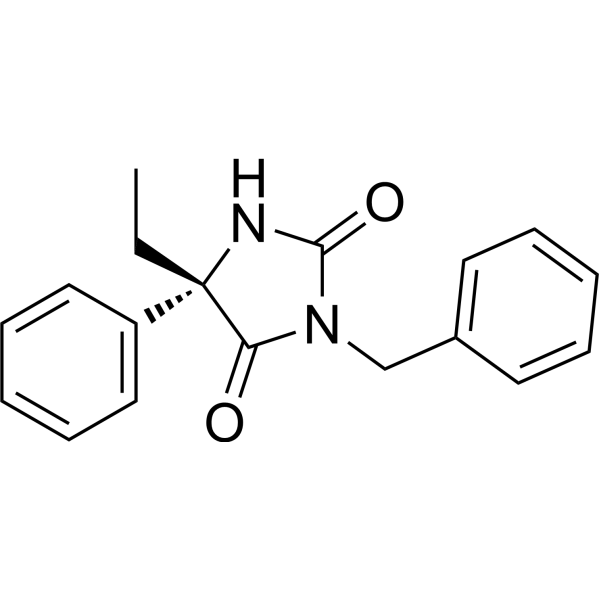
HY-W013268
(S)-(+)-N-3-BenzylnirvanolCYP2C19 Inhibitor -
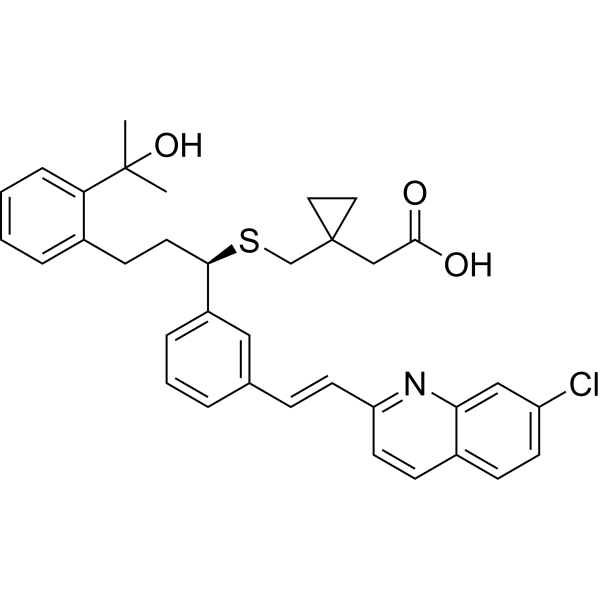
HY-13315A
MontelukastCysLT1 Antagonist -
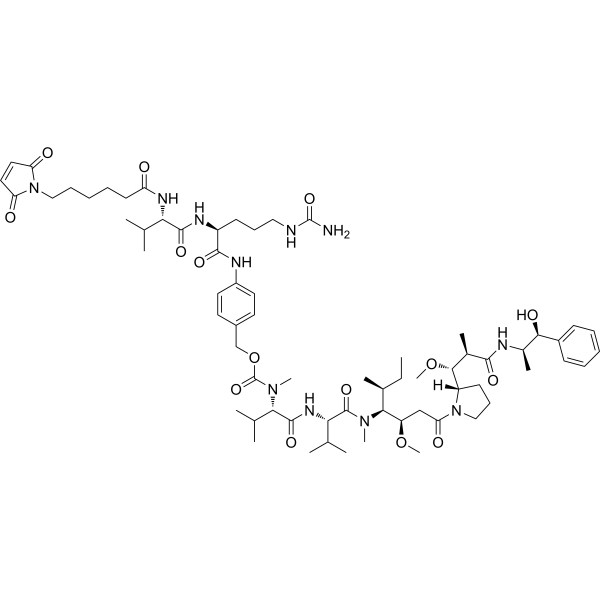
HY-15575
VcMMAEDrug-Linker Conjugate for ADC -
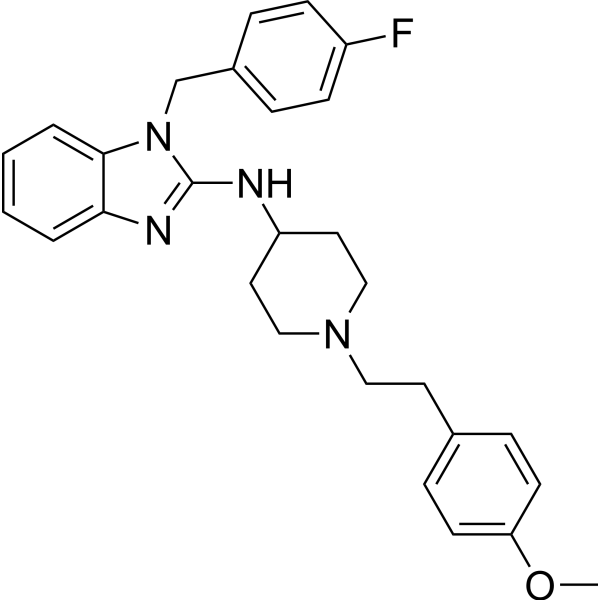
HY-12532
AstemizoleH1 Receptor Antagonist -
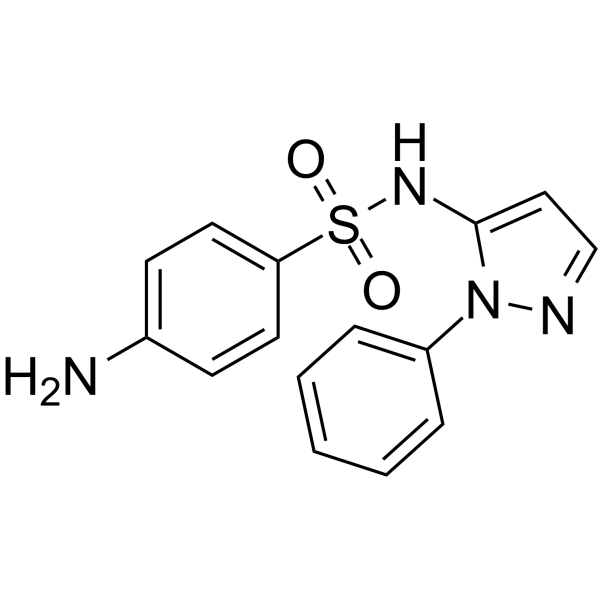
HY-B1218
SulfaphenazoleCYP2C9 Inhibitor
Publications Citing Use of MedChemExpress (MCE) Tienilic acid
More

Actividad biológica
Descripciòn
In Vivo
Tienilic acid (0-480 mg/kg; PO; for 28 days) decreases blood pressure, serum, uric acid hemoglobin, and increased S-GPT; induces unicellular necrosis of small groups of liver cells[3].
MedChemExpress (MCE) has not independently confirmed the accuracy of these methods. They are for reference only.
-
Animal Model:Rats, mice, pigs and dogs[2]
-
Dosage:100 mg/lg in rats and mice, 5 mg/kg in pigs and dogs
-
Administration:PO and IV; single dosage
-
Result:Only found in plasma with important bindings to the plasma proteins at the blood level; pharmacological action for several hours; eliminated by the biliary and particularly the urinary fast, practically total in the first 48 hours after administration; only small differences were observed for the parameters measured in the different species.
-
Animal Model:Female and male Sprague-Dawley rats[3]
-
Dosage:0, 30, 120 and 480 mg/kg
-
Administration:PO; for 28 days
-
Result:Decreased blood pressure and serum uric acid at 30 mg/kg; decreased slightly hemoglobin and increased S-GPT at 120 and 480 mg/kg; significantly increase the liver weight and serum magnesium concentration in male rats, while the liver weight of female rats increased only slightly; besides, induced unicellular necrosis of small groups of liver cells.


Chemical Information
-
No. CAS 40180-04-9
-
Appearance Solid
-
Peso molecular 331.18
-
Fòrmula C13H8Cl2O4S
-
Color Off-white to light brown
-
SMILES
O=C(O)COC1=CC=C(C(C2=CC=CS2)=O)C(Cl)=C1Cl
-
Synonyms
Ticrynafen; ANP 3624
-
Envío
Room temperature in continental US; may vary elsewhere.
-
Almacenamiento
4°C, protect from light
* In solvent : -80°C, 6 months; -20°C, 1 month (protect from light)


Publications (2)
-
Journal Impact Factor
-
Most Recent
-
ACS Environ Au
Machine Learning-Assisted Recognition of Environmental Sulfur-Containing Chemicals in Nontargeted Mass Spectrometry Analysis of Inadequate Mass Resolution. [Abstract]2025 Aug 5;5(6):573-582. PMID: 41277996 -
Anal Chem
Exposome-Scale Investigation of Cl-/Br-Containing Chemicals Using High-Resolution Mass Spectrometry, Multistage Machine Learning, and Cloud Computing. [Abstract]2025 Jun 3;97(21):11099-11109. PMID: 40401576


Solvente y solubilidad
In Vitro:
DMSO : 100 mg/mL (301.95 mM; Need ultrasonic; Hygroscopic DMSO has a significant impact on the solubility of product, please use newly opened DMSO)
Please refer to the solubility information to select the appropriate solvent. Once prepared, please aliquot and store the solution to prevent product inactivation from repeated freeze-thaw cycles.
Storage method and period of stock solution: -80°C, 6 months; -20°C, 1 month (protect from light). When stored at -80°C, please use it within 6 months. When stored at -20°C, please use it within 1 month.
Please refer to the solubility information to select the appropriate solvent. Once prepared, please aliquot and store the solution to prevent product inactivation from repeated freeze-thaw cycles.
Storage method and period of stock solution: -80°C, 6 months; -20°C, 1 month (protect from light). When stored at -80°C, please use it within 6 months. When stored at -20°C, please use it within 1 month.
Concentration (start) × Volume (start) = Concentration (final) × Volume (final)
In Vivo:
Select the appropriate dissolution method based on your experimental animal and administration route.
- For the following dissolution methods, please ensure to first prepare a clear stock solution using an In Vitro approach and then sequentially add co-solvents:
- To ensure reliable experimental results, the clarified stock solution can be appropriately stored based on storage conditions. As for the working solution for In Vivo experiments, it is recommended to prepare freshly and use it on the same day.
- The percentages shown for the solvents indicate their volumetric ratio in the final prepared solution. If precipitation or phase separation occurs during preparation, heat and/or sonication can be used to aid dissolution.
Add each solvent one by one: 10% DMSO 90% (20% SBE-β-CD in Saline)
Solubility: 5 mg/mL (15.10 mM); Suspended solution; Need ultrasonic
This protocol yields a suspended solution of 5 mg/mL. Suspended solution can be used for oral and intraperitoneal injection.
Taking 1 mL working solution as an example, add 100 μL DMSO stock solution (50.0 mg/mL) to 900 μL 20% SBE-β-CD in Saline, and mix evenly.
Preparation of 20% SBE-β-CD in Saline (4°C, storage for one week): 2 g SBE-β-CD powder is dissolved in 10 mL Saline, completely dissolve until clear.
In Vivo Dissolution Calculator
Please enter the basic information of animal experiments:
-
-
-
-
Recommended: Prepare an additional quantity of animals to account for potential losses during experiments.
Please enter your animal formula composition:
-
%DMSO +
Recommended: Keep the proportion of DMSO in working solution below 2% if your animal is weak.
-
%+
-
+%Tween-80 + +
-
%Saline +
The co-solvents required include: DMSO, . All of co-solvents are available by MedChemExpress (MCE). , Tween 80. All of co-solvents are available by MedChemExpress (MCE).
Working solution concentration: 0.22 mg/mL
Method for preparing stock solution: mg drug dissolved in μL DMSO. Stock solution concentration: mg/mL. * In solvent : -80°C, 6 months; -20°C, 1 month (protect from light)
1. Take μL DMSO stock solution;
2. Add μL .
μL , mix evenly;
3. Then add μL Tween 80, mix evenly;
4. Then add μL
Please ensure that the stock solution in the first step is dissolved to a clear state, and add co-solvents in sequence. You can use ultrasonic heating (ultrasonic cleaner, recommended frequency 20-40 kHz), vortexing, etc. to assist dissolution.


Pureza y Documentación
-
Ficha de datos (286 KB)
-
SDS (396 KB)
- English - EN (396 KB)
- Français - FR (396 KB)
- Deutsch - DE (396 KB)
- Norwegian - NO (396 KB)
- Español - ES (396 KB)
- Swedish - SV (396 KB)
- Italian - IT (396 KB)
- Korean - KR (396 KB)
- Portuguese - PT (396 KB)
-
Instrucciones de manejo (2659 KB)
Referencias


Complete Stock Solution Preparation Table
Please refer to the solubility information to select the appropriate solvent. Once prepared, please aliquot and store the solution to prevent product inactivation from repeated freeze-thaw cycles.
Storage method and period of stock solution: -80°C, 6 months; -20°C, 1 month (protect from light). When stored at -80°C, please use it within 6 months. When stored at -20°C, please use it within 1 month.
| Optional Solvent | Concentration Solvent Mass | 1 mg | 5 mg | 10 mg | 25 mg |
|---|---|---|---|---|---|
| DMSO | 1 mM | 3.0195 mL | 15.0975 mL | 30.1951 mL | 75.4877 mL |
| 5 mM | 0.6039 mL | 3.0195 mL | 6.0390 mL | 15.0975 mL | |
| 10 mM | 0.3020 mL | 1.5098 mL | 3.0195 mL | 7.5488 mL | |
| 15 mM | 0.2013 mL | 1.0065 mL | 2.0130 mL | 5.0325 mL | |
| 20 mM | 0.1510 mL | 0.7549 mL | 1.5098 mL | 3.7744 mL | |
| 25 mM | 0.1208 mL | 0.6039 mL | 1.2078 mL | 3.0195 mL | |
| 30 mM | 0.1007 mL | 0.5033 mL | 1.0065 mL | 2.5163 mL | |
| 40 mM | 0.0755 mL | 0.3774 mL | 0.7549 mL | 1.8872 mL | |
| 50 mM | 0.0604 mL | 0.3020 mL | 0.6039 mL | 1.5098 mL | |
| 60 mM | 0.0503 mL | 0.2516 mL | 0.5033 mL | 1.2581 mL | |
| 80 mM | 0.0377 mL | 0.1887 mL | 0.3774 mL | 0.9436 mL | |
| 100 mM | 0.0302 mL | 0.1510 mL | 0.3020 mL | 0.7549 mL |


Tienilic acid Related Classifications
HY-21065 Related Classifications
 Powered by Bioz