



β-Naphthoflavone
Based on 1 publication(s) in Google Scholar
β-Naphthoflavone is an exogenous aryl hydrocarbon receptor (AHR) ligand. β-Naphthoflavone can activate AHR to participate in various biological processes, including cell growth, differentiation, apoptosis, and metabolism. β-Naphthoflavone has antioxidant activity and can exert its antioxidant function by regulating the activity of antioxidant enzymes. β-Naphthoflavone is also a non-carcinogenic CYP1A inducer and can be used to study aristolochic acid (AAI) induced renal injury.
Nur für Forschungszwecke. Wir verkaufen nicht an Patienten.
- Reinheit : 99.86%
- CAS. Nr.: 6051-87-2
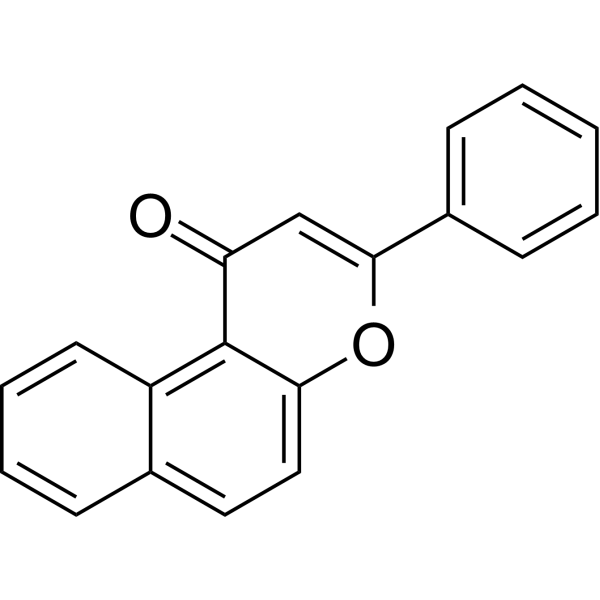
- Formel: C19H12O2
- Molecular Weight:272.30
-
Speicherung:Powder -20°C, 3 years , 4°C, 2 years ; In solvent -80°C, 6 months , -20°C, 1 month

To place orders, for customer services and technical support, please contact: MedChemExpress USA
Tel: 609-228-6898 E-mail: [email protected] [email protected]


-
 Biologische Aktivität
-
Chemical Information
-
Lösungsmittel & Löslichkeit
- Protokoll
- Reinheit & Dokumentation
- Verweise
-
 Help & FAQs


-
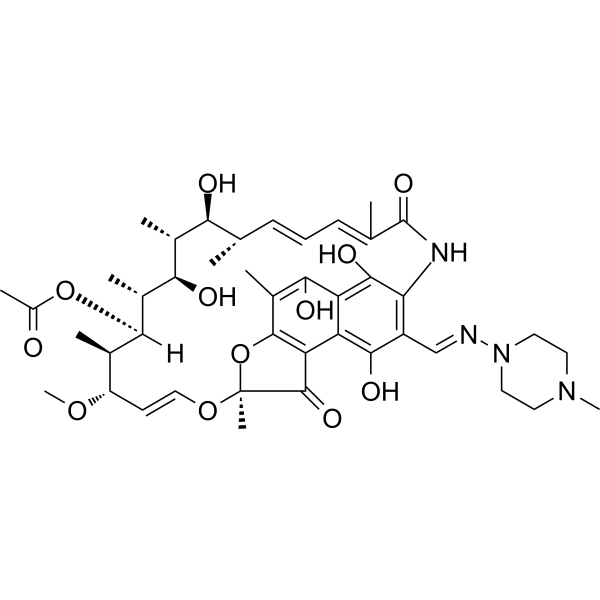
HY-B0272
RifampicinAntivirus Agent -
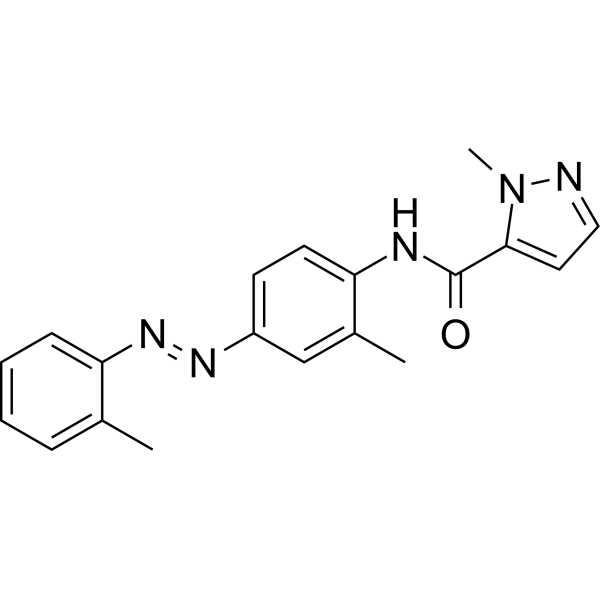
HY-12684
CH-223191AhR Antagonist -
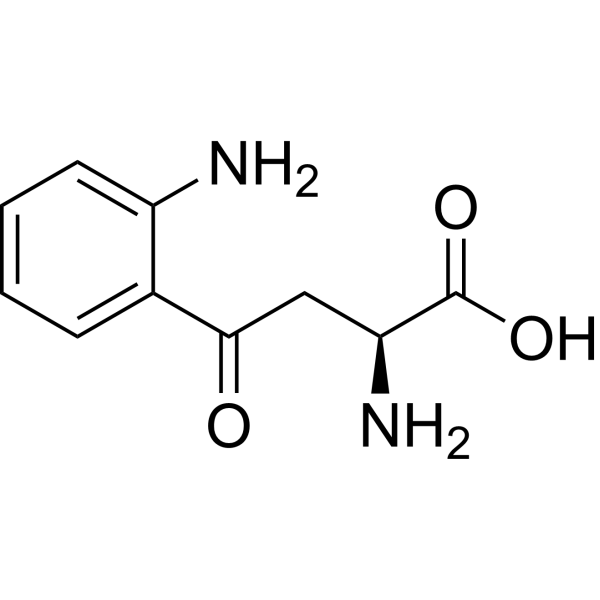
HY-104026
L-KynurenineAryl Hydrocarbon Receptor Agonist -
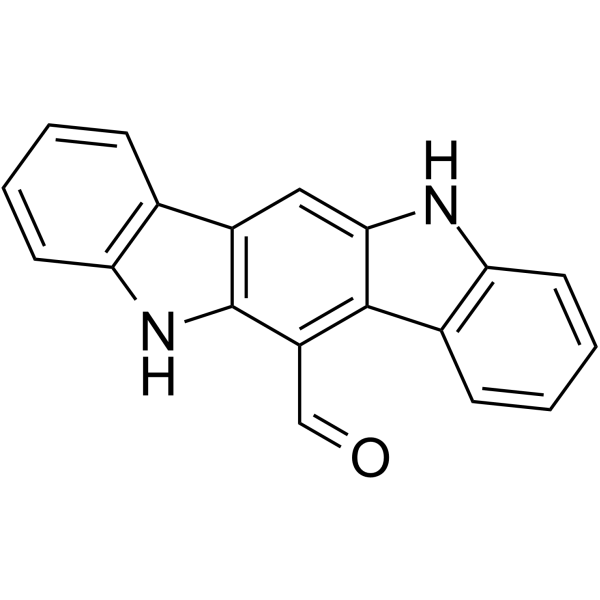
HY-12451
FICZAhR Agonist -
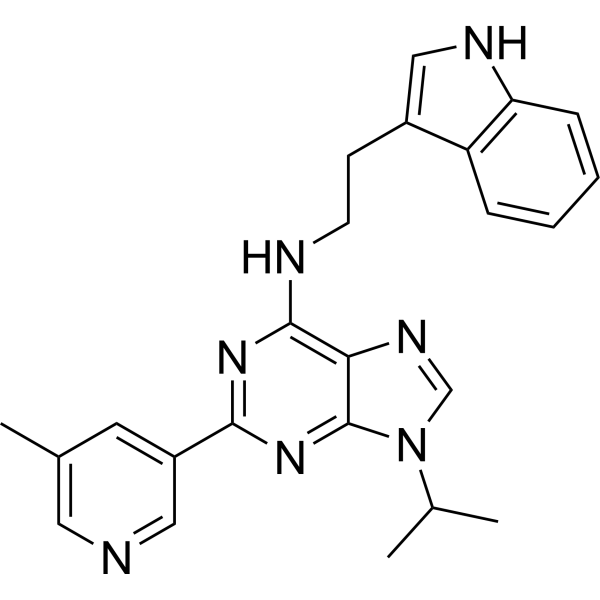
HY-102023
GNF351AHR Antagonist -
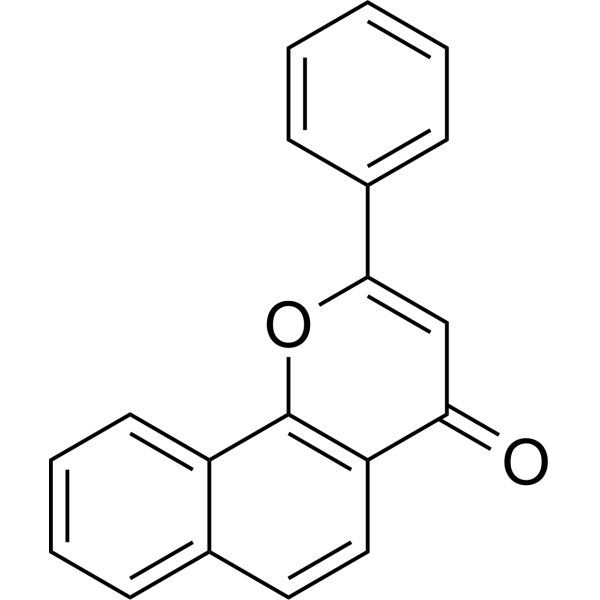
HY-125833
Alpha-NaphthoflavoneAromatase Inhibitor -
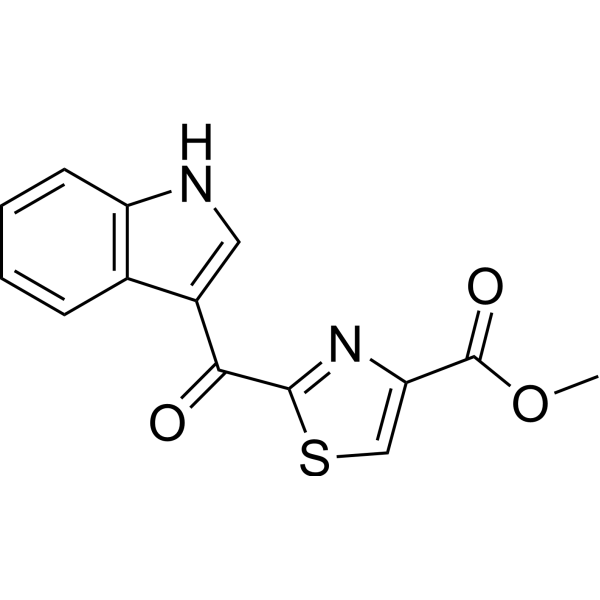
HY-19317
ITEAryl Hydrocarbon Receptor Agonist -

HY-114740R
β-Naphthoflavone (Standard)AhR agonist -
HY-109590
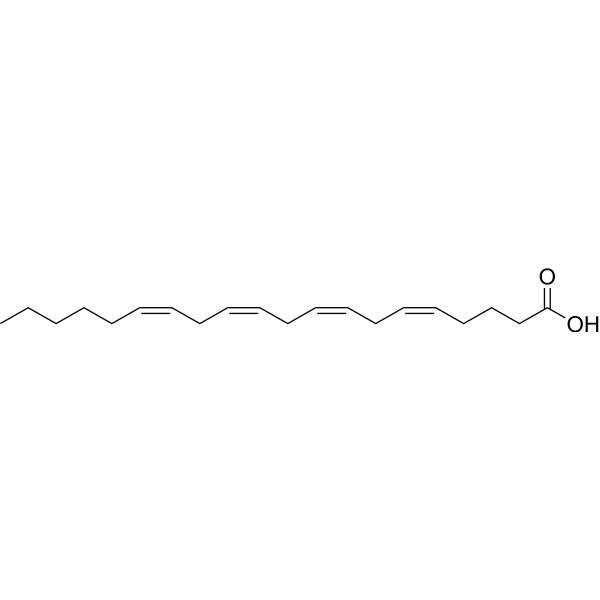
Arachidonic acidPolyunsaturated Fatty Acid -
HY-18739
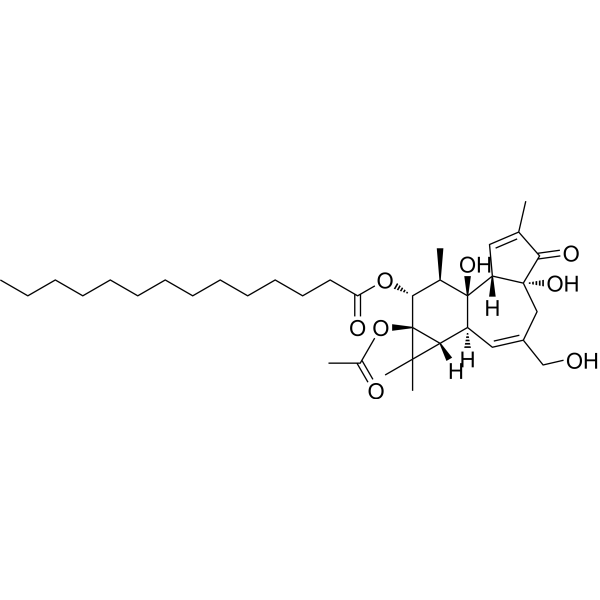
Phorbol 12-myristate 13-acetatePKC Activator -
HY-17386
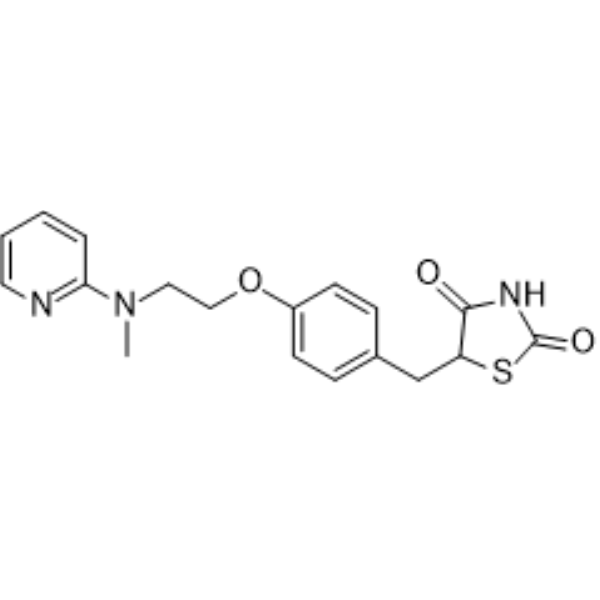
RosiglitazonePPARγ Agonist -
HY-100410
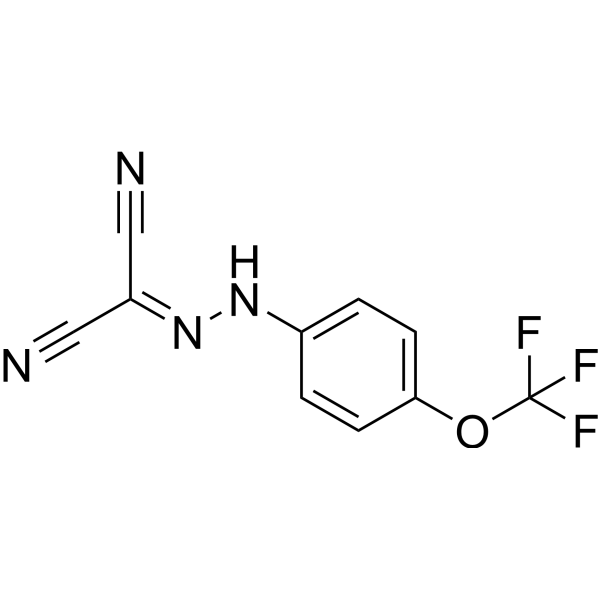
FCCPOXPHOS Uncoupler
Publications Citing Use of MedChemExpress (MCE) β-Naphthoflavone
More

Biologische Aktivität
Beschreibung
Cellular Effect
|
Cell Line

|
Type | Value | Description | References |
|---|---|---|---|---|
| HepG2 | EC50 |
8 μM
Compound: beta-naphthoflavone
|
Induction of ARE in human HepG2 cells by luciferase assay
Induction of ARE in human HepG2 cells by luciferase assay
|
[PMID: 16562850] |
| MCF7 | EC50 |
1.4 μM
Compound: 1a
|
Agonist activity at aryl hydrocarbon receptor in human MCF7 cells after 24 hrs CYP1A1-dependent EROD assay
Agonist activity at aryl hydrocarbon receptor in human MCF7 cells after 24 hrs CYP1A1-dependent EROD assay
|
[PMID: 20060304] |
| MCF7 | EC50 |
1.4 μM
Compound: 14
|
Agonist activity at AhR in human MCF-7 cells assessed as increase of CYP1A1-dependent 7-ethoxyresorufin O-deethylase activity
Agonist activity at AhR in human MCF-7 cells assessed as increase of CYP1A1-dependent 7-ethoxyresorufin O-deethylase activity
|
[PMID: 21344906] |
| MDCK-II | IC50 |
6.05 μM
Compound: 26
|
Inhibition of human BCRP expressed in MDCK2 cells assessed as accumulation of pheophorbide-A preincubated for 30 mins before pheophorbide-A addition measured after 120 mins by flow cytometry
Inhibition of human BCRP expressed in MDCK2 cells assessed as accumulation of pheophorbide-A preincubated for 30 mins before pheophorbide-A addition measured after 120 mins by flow cytometry
|
[PMID: 23851114] |
| MDCK-II | IC50 |
8.32 μM
Compound: 26
|
Inhibition of human BCRP expressed in MDCK2 cells assessed as accumulation of Hoechst 33342 preincubated for 30 mins before Hoechst 33342 addition measured after 120 mins by fluorescence assay
Inhibition of human BCRP expressed in MDCK2 cells assessed as accumulation of Hoechst 33342 preincubated for 30 mins before Hoechst 33342 addition measured after 120 mins by fluorescence assay
|
[PMID: 23851114] |
In Vitro
β-Naphthoflavone (0.1, 1 and 10 µM; 3 days) increases CYP1A1 mRNA levels in HepG2 cells in a dose-dependent manner and decreases the level of labile zinc in HepG2 cells by approximately 5%, 10% and 17%, respectively[1]. β-Naphthoflavone (0-50 µM; 24 h) attenuats the decreased viability and increases apoptosis of neuronal SH-SY5Y cells induced by H2O2[2]. β-Naphthoflavone (10 µM) significantly increases the activities of CAT and SOD enzymes in neuronal SH-SY5Y cells and inhibites p38MAPK to attenuate H2O2 induced damage[2].
MedChemExpress (MCE) has not independently confirmed the accuracy of these methods. They are for reference only.
-
Cell Line:human neuron SH‑SY5Y cells
-
Concentration:0-50 µM
-
Incubation Time:24 h
-
Result:Restored SH‑SY5Y cell viability from 0-10 µM, followed by a slight decrease.
-
Cell Line:PC cells
-
Concentration:10 µM
-
Incubation Time:15 min
-
Result:Reduced the apoptosis rate of PC cells.
-
Cell Line:human neuron SH‑SY5Y cells
-
Concentration:10 µM
-
Incubation Time:24 h
-
Result:Reduced the expression of Bax and Cyt-C and the cleavage rate of caspase-3.
In Vivo
MedChemExpress (MCE) has not independently confirmed the accuracy of these methods. They are for reference only.
-
Animal Model:Male C57BL/6 mice [3]
-
Dosage:80 mg/kg
-
Administration:Intraperitoneal injection (i.p.), once a day for 3 days
-
Result:Prevented AAI-induced tubulointerstitial fibrosis by inhibiting the expression of α-SMA, a marker of myofibroblast phenotype induced by AAI.
Reduced the formation of AAI metabolite ALI in liver and kidney and induced the expression of CYP1A1 and CYP1A2 in liver and only CYP1A1 in kidney.
- Detection of Apoptosis
- TUNEL staining for apoptotic DNA fragmentation
- Nephrotoxicity Study
- Annexin V plus membrane-impermeant dye apoptosis staining
- Protocol for Cell Counting and Cell Density Analysis
- Somatic Cell Culture
- Apoptosis Solutions
- CCK-8/WST-8 Cell Proliferation Assay
- Cell Counting-Based Growth Curve Assay
- MTT Cell Proliferation Assay
- Cell Viability Determination by MTT Colorimetric Assay


Chemical Information
-
CAS. Nr. 6051-87-2
-
Appearance Solid
-
Molecular Weight 272.30
-
Formel C19H12O2
-
Color White to light yellow
-
SMILES
O=C1C2=C3C=CC=CC3=CC=C2OC(C4=CC=CC=C4)=C1
-
Synonyms
5,6-Benzoflavone; beta-NF
-
Versand
Room temperature in continental US; may vary elsewhere.
-
Speicherung
Powder -20°C 3 years 4°C 2 years In solvent -80°C 6 months -20°C 1 month


Publications (1)
-
Journal Impact Factor
-
Most Recent
-
Phytomedicine
Effect of allyl isothiocyanate on oxidative stress in COPD via the AhR / CYP1A1 and Nrf2 / NQO1 pathways and the underlying mechanism. [Abstract]2023 Jun:114:154774. PMID: 36996530


Lösungsmittel & Löslichkeit
In Vitro:
DMSO : 25 mg/mL (91.81 mM; ultrasonic and warming and heat to 60°C; Hygroscopic DMSO has a significant impact on the solubility of product, please use newly opened DMSO)
Please refer to the solubility information to select the appropriate solvent. Once prepared, please aliquot and store the solution to prevent product inactivation from repeated freeze-thaw cycles.
Storage method and period of stock solution: -80°C, 6 months; -20°C, 1 month. When stored at -80°C, please use it within 6 months. When stored at -20°C, please use it within 1 month.
Please refer to the solubility information to select the appropriate solvent. Once prepared, please aliquot and store the solution to prevent product inactivation from repeated freeze-thaw cycles.
Storage method and period of stock solution: -80°C, 6 months; -20°C, 1 month. When stored at -80°C, please use it within 6 months. When stored at -20°C, please use it within 1 month.
Konzentration (Stammlösung) × Volumen (Stammlösung) = Konzentration (Ziellösung) × Volumen (Ziellösung)
In Vivo:
Select the appropriate dissolution method based on your experimental animal and administration route.
- For the following dissolution methods, please ensure to first prepare a clear stock solution using an In Vitro approach and then sequentially add co-solvents:
- To ensure reliable experimental results, the clarified stock solution can be appropriately stored based on storage conditions. As for the working solution for In Vivo experiments, it is recommended to prepare freshly and use it on the same day.
- The percentages shown for the solvents indicate their volumetric ratio in the final prepared solution. If precipitation or phase separation occurs during preparation, heat and/or sonication can be used to aid dissolution.
Add each solvent one by one: 10% DMSO 40% PEG300 5% Tween-80 45% Saline
Solubility: 1 mg/mL (3.67 mM); Suspended solution; Need ultrasonic
This protocol yields a suspended solution of 1 mg/mL. Suspended solution can be used for oral and intraperitoneal injection.
Taking 1 mL working solution as an example, add 100 μL DMSO stock solution (10.0 mg/mL) to 400 μL PEG300, and mix evenly; then add 50 μL Tween-80 and mix evenly; then add 450 μL Saline to adjust the volume to 1 mL.
Preparation of Saline: Dissolve 0.9 g sodium chloride in ddH₂O and dilute to 100 mL to obtain a clear Saline solution.
In Vivo Dissolution Calculator
Please enter the basic information of animal experiments:
-
-
-
-
Recommended: Prepare an additional quantity of animals to account for potential losses during experiments.
Please enter your animal formula composition:
-
%DMSO +
Recommended: Keep the proportion of DMSO in working solution below 2% if your animal is weak.
-
%+
-
+%Tween-80 + +
-
%Saline +
The co-solvents required include: DMSO, . All of co-solvents are available by MedChemExpress (MCE). , Tween 80. All of co-solvents are available by MedChemExpress (MCE).
Working solution concentration: 0.22 mg/mL
Method for preparing stock solution: mg drug dissolved in μL DMSO. Stock solution concentration: mg/mL.
1. Take μL DMSO stock solution;
2. Add μL .
μL , mix evenly;
3. Then add μL Tween 80, mix evenly;
4. Then add μL
Please ensure that the stock solution in the first step is dissolved to a clear state, and add co-solvents in sequence. You can use ultrasonic heating (ultrasonic cleaner, recommended frequency 20-40 kHz), vortexing, etc. to assist dissolution.


Reinheit & Dokumentation
-
Data Sheet (295 KB)
-
SDS (393 KB)
- English - EN (393 KB)
- Français - FR (393 KB)
- Deutsch - DE (393 KB)
- Norwegian - NO (393 KB)
- Español - ES (393 KB)
- Swedish - SV (393 KB)
- Italian - IT (393 KB)
- Korean - KR (393 KB)
- Portuguese - PT (393 KB)
-
Handling Instructions (2659 KB)
Verweise
[1]. Ishida T, Takechi S. β-Naphthoflavone, an exogenous ligand of aryl hydrocarbon receptor, disrupts zinc homeostasis in human hepatoma HepG2 cells. J Toxicol Sci. 2019;44(10):711-720. [Content Brief]
[2]. Zhu Y, et al. α- and β-Naphthoflavone synergistically attenuate H2O2-induced neuron SH-SY5Y cell damage. Exp Ther Med. 2017 Mar;13(3):1143-1150. [Content Brief]
[3]. Ying Xiao, et al. β-Naphthoflavone protects mice from aristolochic acid-I-induced acute kidney injury in a CYP1A dependent mechanism. Acta Pharmacologica Sinica 30.11 (2009): 1559-1565. [Content Brief]


Complete Stock Solution Preparation Table
Please refer to the solubility information to select the appropriate solvent. Once prepared, please aliquot and store the solution to prevent product inactivation from repeated freeze-thaw cycles.
Storage method and period of stock solution: -80°C, 6 months; -20°C, 1 month. When stored at -80°C, please use it within 6 months. When stored at -20°C, please use it within 1 month.
| Optional Solvent | Concentration Solvent Mass | 1 mg | 5 mg | 10 mg | 25 mg |
|---|---|---|---|---|---|
| DMSO | 1 mM | 3.6724 mL | 18.3621 mL | 36.7242 mL | 91.8105 mL |
| 5 mM | 0.7345 mL | 3.6724 mL | 7.3448 mL | 18.3621 mL | |
| 10 mM | 0.3672 mL | 1.8362 mL | 3.6724 mL | 9.1811 mL | |
| 15 mM | 0.2448 mL | 1.2241 mL | 2.4483 mL | 6.1207 mL | |
| 20 mM | 0.1836 mL | 0.9181 mL | 1.8362 mL | 4.5905 mL | |
| 25 mM | 0.1469 mL | 0.7345 mL | 1.4690 mL | 3.6724 mL | |
| 30 mM | 0.1224 mL | 0.6121 mL | 1.2241 mL | 3.0604 mL | |
| 40 mM | 0.0918 mL | 0.4591 mL | 0.9181 mL | 2.2953 mL | |
| 50 mM | 0.0734 mL | 0.3672 mL | 0.7345 mL | 1.8362 mL | |
| 60 mM | 0.0612 mL | 0.3060 mL | 0.6121 mL | 1.5302 mL | |
| 80 mM | 0.0459 mL | 0.2295 mL | 0.4591 mL | 1.1476 mL |


β-Naphthoflavone Related Classifications
HY-114740 Related Classifications
 Powered by Bioz