



Pelitrexol
Based on 3 publication(s) in Google Scholar
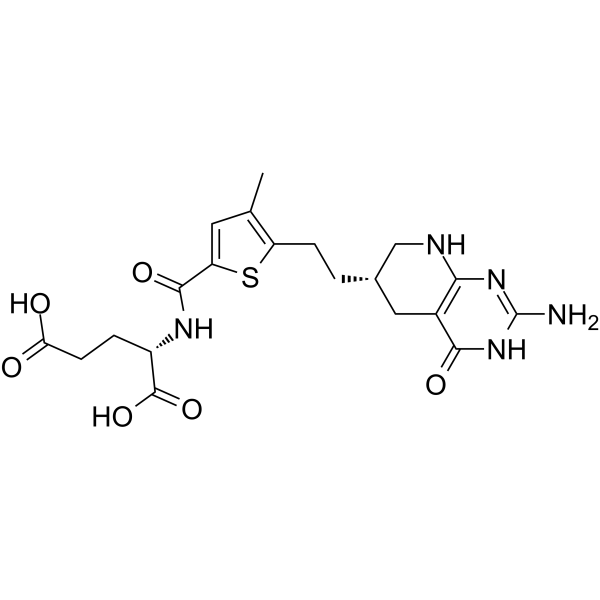
Pelitrexol (AG 2037) is an inhibitor of glycinamide ribonucleotide formyltransferase (GARFT), a purine biosynthetic enzyme. Pelitrexol also inhibits mTORC1 by reducing GTP-bound Rheb level, a mTORC1 obligate activator. Pelitrexol shows robust tumor growth suppression in mice.
Nur für Forschungszwecke. Wir verkaufen nicht an Patienten.
- Reinheit : 98.07%
- CAS. Nr.: 446022-33-9
- Formel: C20H25N5O6S
- Molecular Weight:463.51
-
Speicherung:Powder -20°C, 3 years , 4°C, 2 years ; In solvent -80°C, 2 years , -20°C, 1 year

To place orders, for customer services and technical support, please contact: MedChemExpress USA
Tel: 609-228-6898 E-mail: [email protected] [email protected]


-
 Biologische Aktivität
-
Chemical Information
-
Lösungsmittel & Löslichkeit
- Protokoll
- Reinheit & Dokumentation
- Verweise
-
 Help & FAQs


-
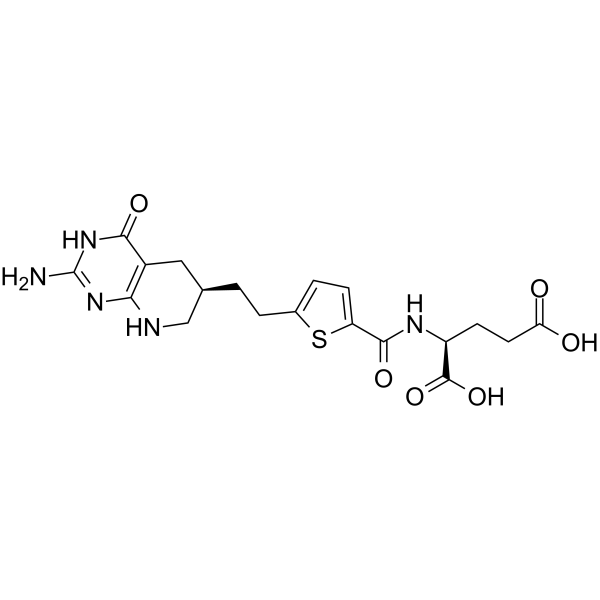
HY-10818
LY309887 -
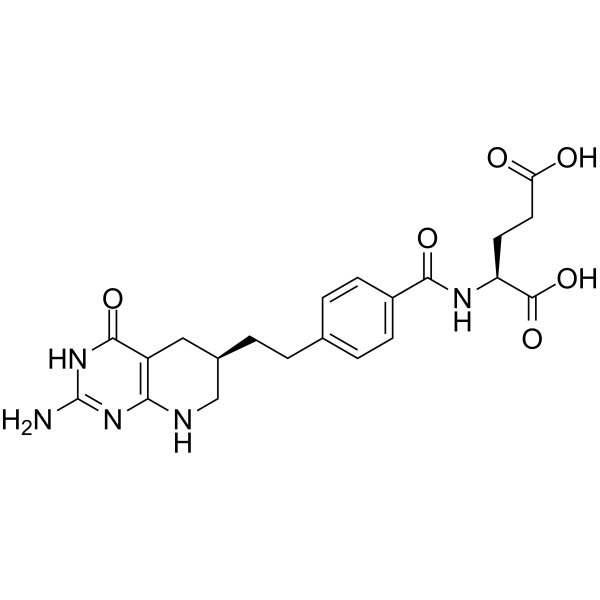
HY-14521
LometrexolGARFT Inhibitor -
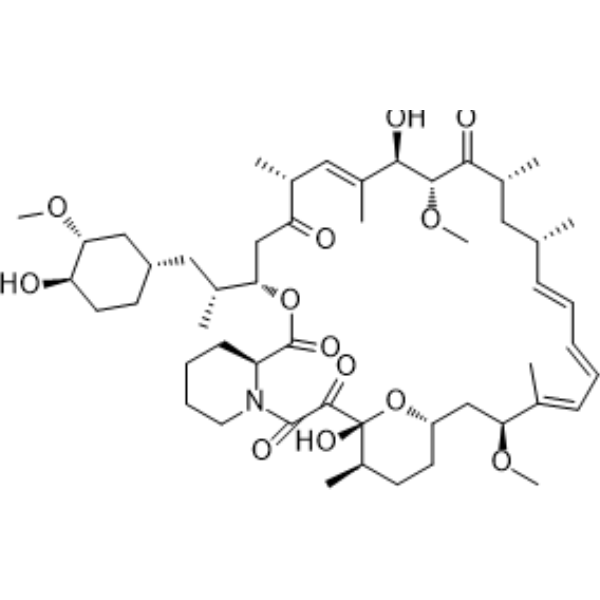
HY-10219
RapamycinmTOR Inhibitor -
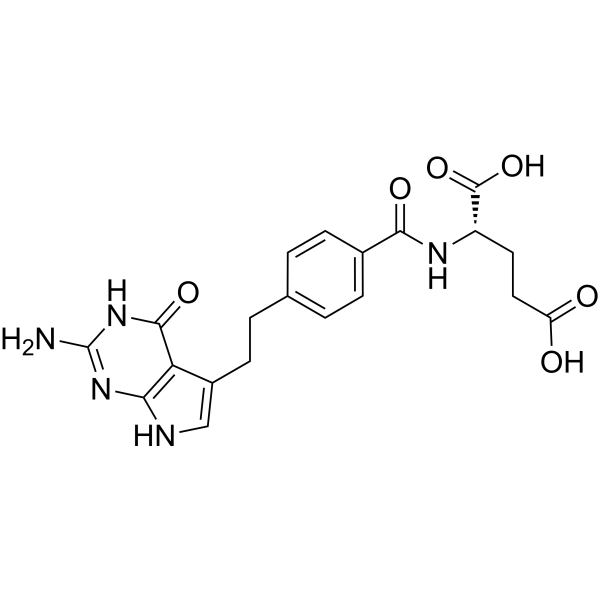
HY-10820
Pemetrexed -
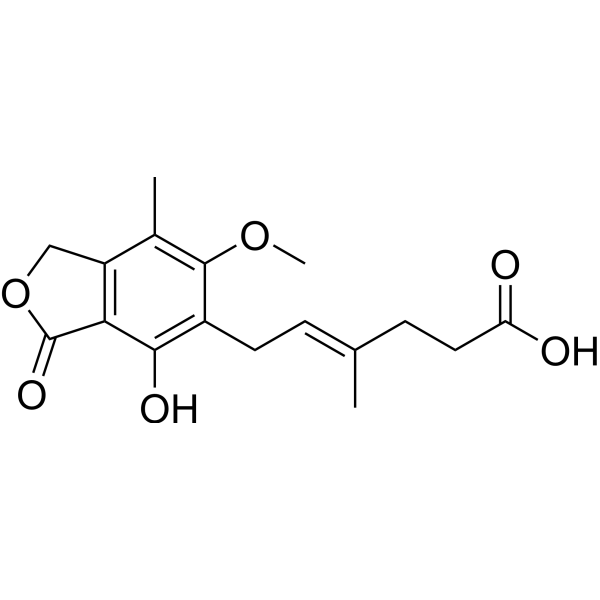
HY-B0421
Mycophenolic acidIMPDH Inhibitor -
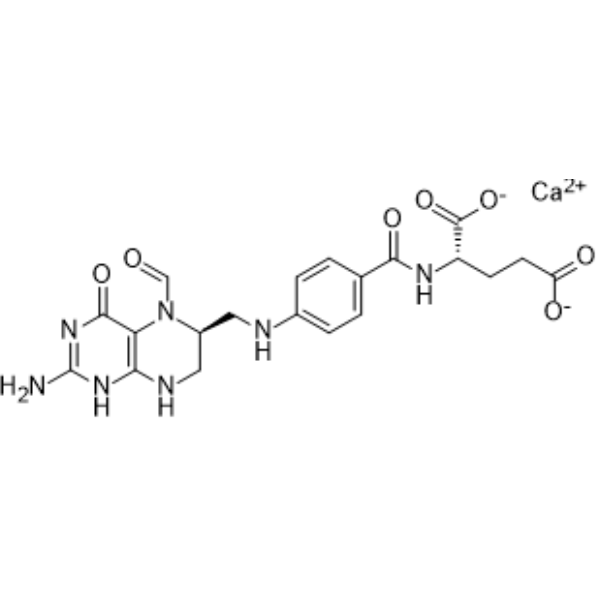
HY-13667
Levoleucovorin CalciumAntineoplastic Agent -
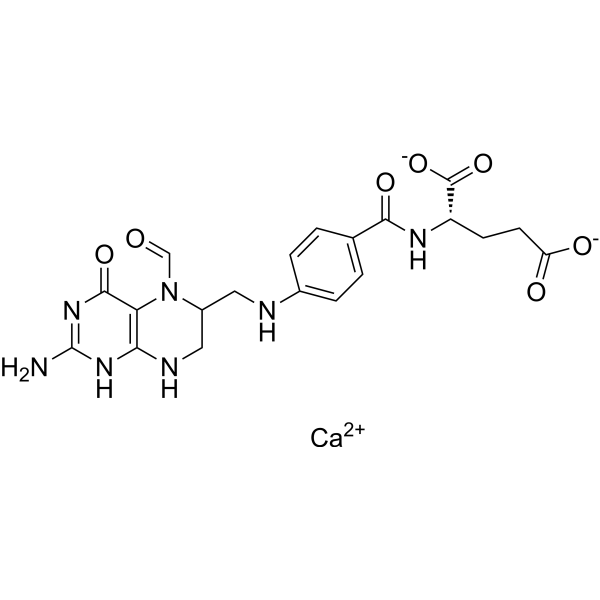
HY-13664
Folinic acid calciumBiological Folic Acid -
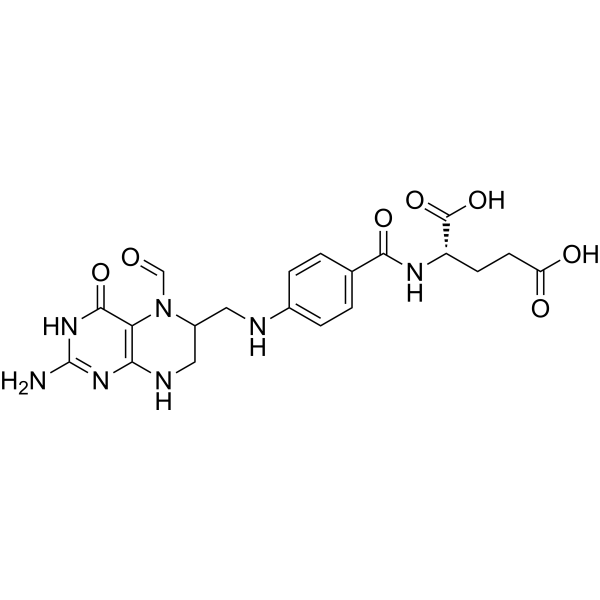
HY-17556
Folinic acidBiological Folic Acid -
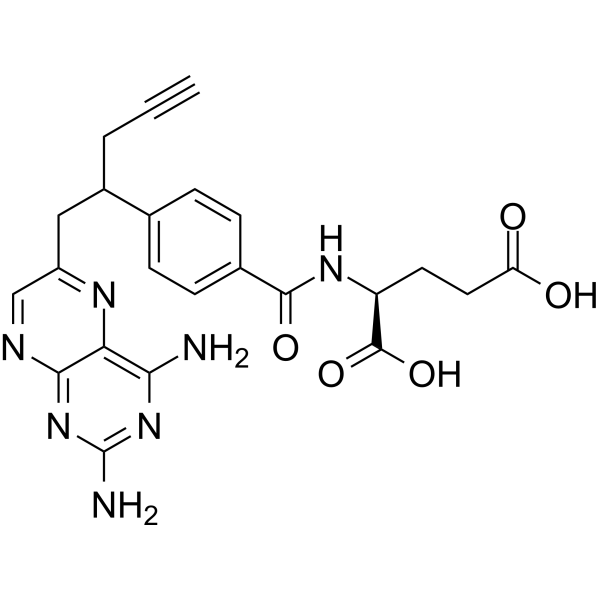
HY-10446
PralatrexateDihydrofolate Reductasean Inhibitor -
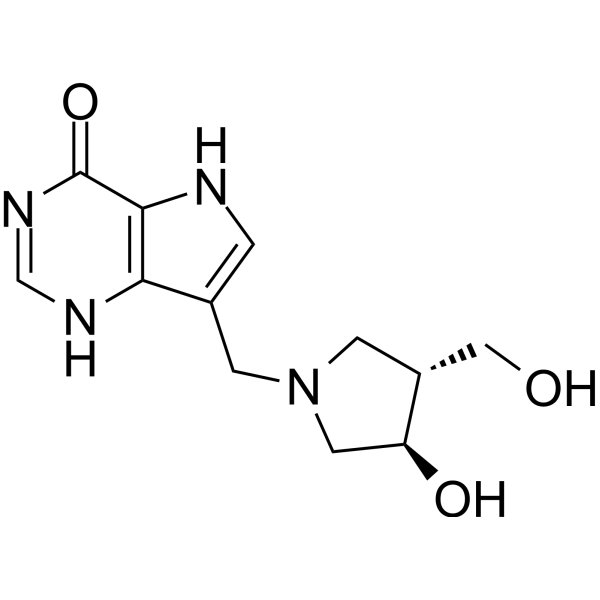
HY-19480
UlodesinePNP Inhibitor -

HY-10820R
Pemetrexed (Standard) -
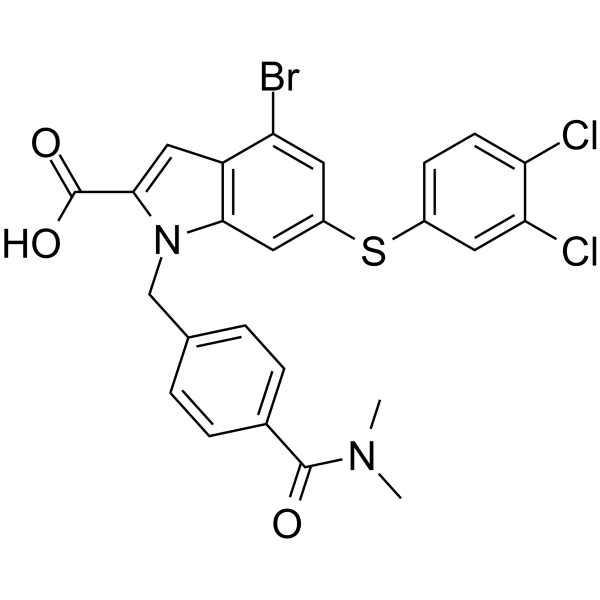
HY-124798
Rheb inhibitor NR1Rheb/mTORC1 Inhibitor
Publications Citing Use of MedChemExpress (MCE) Pelitrexol
More

Biologische Aktivität
Beschreibung
IC50 & Target
GARFT[1]
In Vitro
Pelitrexo (150 nM; 24 h) profoundly inhibits mTORC1 activity by reducing intracellular guanine nucleotides level as well as GTP-bound Rheb protein level in A549 cells[1].
Pelitrexo (0-1000 mM; 16 h) strongly inhibits the phosphorylation level of ribosomal protein S6 (S6RP), S6K1, and Chk1 in a dose-dependent manner in NCI-H460 cells[1].
Pelitrexo (100 nM; 48 h) arrests cell cycle at G1 phase in NCI-H460 cells[1].
MedChemExpress (MCE) has not independently confirmed the accuracy of these methods. They are for reference only.
-
Cell Line:NCI-H460 NSCLC
-
Concentration:100 nM
-
Incubation Time:4, 8, 24, 48 hours
-
Result:Resulted 63% cells accumulation in G1 phase of the cell cycle.
-
Cell Line:NCI-H460 NSCLC
-
Concentration:0, 10, 30, 100, 300, 1000 nM
-
Incubation Time:16 hours
-
Result:Inhibits the level of p-S6RP, p-S6K1, and p-Chk1.
In Vivo
Pelitrexo (20 mg/kg; i.p.; every 4 days for 3 weeks) inhibits GARFT-dependent purine biosynthesis and blocks mTORC1 function[1].
MedChemExpress (MCE) has not independently confirmed the accuracy of these methods. They are for reference only.
-
Animal Model:Xenograft model of nonsmall-cell lung cancer (NSCLC) in mice[1]
-
Dosage:10 mg/kg, 20 mg/kg
-
Administration:Intraperitoneal injection; every 4 days for 3 weeks for group 1; administrated at 1, 4, 7 days for group 2
-
Result:Inhibited tumor growth by 64% and 69% at 10 mg/kg and 20 mg/kg, respectively in group 1.
Inhibited mTORC1-dependent phosphorylation of S6K1, S6RP and CAD at 20 mg/kg in group 2.
Clinical Trial
| NCT Number | Sponsor | Condition | Start Date |
Phase

|
|---|---|---|---|---|
| NCT01329991 | 2011-05 | PHASE1 |


Chemical Information
-
CAS. Nr. 446022-33-9
-
Appearance Solid
-
Molecular Weight 463.51
-
Formel C20H25N5O6S
-
Color Off-white to light yellow
-
SMILES
O=C(O)CC[C@@H](C(O)=O)NC(C1=CC(C)=C(CC[C@H](CN2)CC3=C2N=C(N)NC3=O)S1)=O
-
Synonyms
AG 2037
-
Versand
Room temperature in continental US; may vary elsewhere.
-
Speicherung
Powder -20°C 3 years 4°C 2 years In solvent -80°C 2 years -20°C 1 year


Publications (3)
-
Journal Impact Factor
-
Most Recent
-
Nat Commun
Identification of purine biosynthesis as an NADH-sensing pathway to mediate energy stress. [Abstract]2022 Nov 17;13(1):7031. PMID: 36396642 -
Sci Signal
Coordination between the eIF2 kinase GCN2 and p53 signaling supports purine metabolism and the progression of prostate cancer. [Abstract]2024 Nov 26;17(864):eadp1375. PMID: 39591412 -


Lösungsmittel & Löslichkeit
In Vitro:
DMSO : 25 mg/mL (53.94 mM; Need ultrasonic; Hygroscopic DMSO has a significant impact on the solubility of product, please use newly opened DMSO)
Please refer to the solubility information to select the appropriate solvent. Once prepared, please aliquot and store the solution to prevent product inactivation from repeated freeze-thaw cycles.
Storage method and period of stock solution: -80°C, 2 years; -20°C, 1 year. When stored at -80°C, please use it within 2 years. When stored at -20°C, please use it within 1 year.
Please refer to the solubility information to select the appropriate solvent. Once prepared, please aliquot and store the solution to prevent product inactivation from repeated freeze-thaw cycles.
Storage method and period of stock solution: -80°C, 2 years; -20°C, 1 year. When stored at -80°C, please use it within 2 years. When stored at -20°C, please use it within 1 year.
Konzentration (Stammlösung) × Volumen (Stammlösung) = Konzentration (Ziellösung) × Volumen (Ziellösung)
In Vivo:
Select the appropriate dissolution method based on your experimental animal and administration route.
- For the following dissolution methods, please ensure to first prepare a clear stock solution using an In Vitro approach and then sequentially add co-solvents:
- To ensure reliable experimental results, the clarified stock solution can be appropriately stored based on storage conditions. As for the working solution for In Vivo experiments, it is recommended to prepare freshly and use it on the same day.
- The percentages shown for the solvents indicate their volumetric ratio in the final prepared solution. If precipitation or phase separation occurs during preparation, heat and/or sonication can be used to aid dissolution.
Add each solvent one by one: 10% DMSO 40% PEG300 5% Tween-80 45% Saline
Solubility: ≥ 2.08 mg/mL (4.49 mM); Clear solution
This protocol yields a clear solution of ≥ 2.08 mg/mL (saturation unknown).
Taking 1 mL working solution as an example, add 100 μL DMSO stock solution (20.8 mg/mL) to 400 μL PEG300, and mix evenly; then add 50 μL Tween-80 and mix evenly; then add 450 μL Saline to adjust the volume to 1 mL.
Preparation of Saline: Dissolve 0.9 g sodium chloride in ddH₂O and dilute to 100 mL to obtain a clear Saline solution.
Add each solvent one by one: 10% DMSO 90% (20% SBE-β-CD in Saline)
Solubility: ≥ 2.08 mg/mL (4.49 mM); Clear solution
This protocol yields a clear solution of ≥ 2.08 mg/mL (saturation unknown).
Taking 1 mL working solution as an example, add 100 μL DMSO stock solution (20.8 mg/mL) to 900 μL 20% SBE-β-CD in Saline, and mix evenly.
Preparation of 20% SBE-β-CD in Saline (4°C, storage for one week): 2 g SBE-β-CD powder is dissolved in 10 mL Saline, completely dissolve until clear.
In Vivo Dissolution Calculator
Please enter the basic information of animal experiments:
-
-
-
-
Recommended: Prepare an additional quantity of animals to account for potential losses during experiments.
Please enter your animal formula composition:
-
%DMSO +
Recommended: Keep the proportion of DMSO in working solution below 2% if your animal is weak.
-
%+
-
+%Tween-80 + +
-
%Saline +
The co-solvents required include: DMSO, . All of co-solvents are available by MedChemExpress (MCE). , Tween 80. All of co-solvents are available by MedChemExpress (MCE).
Working solution concentration: 0.22 mg/mL
Method for preparing stock solution: mg drug dissolved in μL DMSO. Stock solution concentration: mg/mL.
1. Take μL DMSO stock solution;
2. Add μL .
μL , mix evenly;
3. Then add μL Tween 80, mix evenly;
4. Then add μL
Please ensure that the stock solution in the first step is dissolved to a clear state, and add co-solvents in sequence. You can use ultrasonic heating (ultrasonic cleaner, recommended frequency 20-40 kHz), vortexing, etc. to assist dissolution.


Reinheit & Dokumentation
-
Data Sheet (276 KB)
-
SDS (252 KB)
- English - EN (252 KB)
- Français - FR (252 KB)
- Deutsch - DE (252 KB)
- Norwegian - NO (252 KB)
- Español - ES (252 KB)
- Swedish - SV (252 KB)
- Italian - IT (252 KB)
- Korean - KR (252 KB)
- Portuguese - PT (252 KB)
-
Handling Instructions (2659 KB)
Verweise


Complete Stock Solution Preparation Table
Please refer to the solubility information to select the appropriate solvent. Once prepared, please aliquot and store the solution to prevent product inactivation from repeated freeze-thaw cycles.
Storage method and period of stock solution: -80°C, 2 years; -20°C, 1 year. When stored at -80°C, please use it within 2 years. When stored at -20°C, please use it within 1 year.
| Optional Solvent | Concentration Solvent Mass | 1 mg | 5 mg | 10 mg | 25 mg |
|---|---|---|---|---|---|
| DMSO | 1 mM | 2.1575 mL | 10.7873 mL | 21.5745 mL | 53.9363 mL |
| 5 mM | 0.4315 mL | 2.1575 mL | 4.3149 mL | 10.7873 mL | |
| 10 mM | 0.2157 mL | 1.0787 mL | 2.1575 mL | 5.3936 mL | |
| 15 mM | 0.1438 mL | 0.7192 mL | 1.4383 mL | 3.5958 mL | |
| 20 mM | 0.1079 mL | 0.5394 mL | 1.0787 mL | 2.6968 mL | |
| 25 mM | 0.0863 mL | 0.4315 mL | 0.8630 mL | 2.1575 mL | |
| 30 mM | 0.0719 mL | 0.3596 mL | 0.7192 mL | 1.7979 mL | |
| 40 mM | 0.0539 mL | 0.2697 mL | 0.5394 mL | 1.3484 mL | |
| 50 mM | 0.0431 mL | 0.2157 mL | 0.4315 mL | 1.0787 mL |


Pelitrexol Related Classifications
HY-14530 Related Classifications
 Powered by Bioz