32 Results for "

Adrenaline

" in MedChemExpress (MCE) Product Catalog:
Products (32)

32 Results for "Adrenaline" in MCE Product Catalog:

1
1 Cited Publications
Cat. No.: HY-W014728
CAS No.: 62-32-8
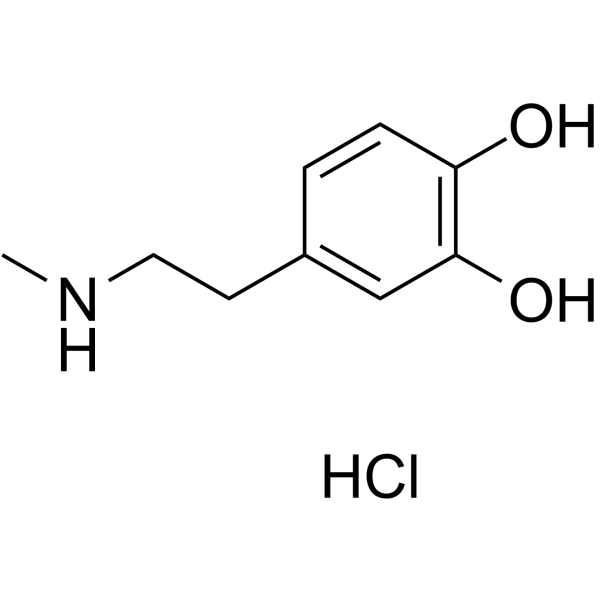
N-Methyldopamine hydrochloride is a precursor of adrenaline in the adrenal medulla. N-Methyldopamine hydrochloride is a modification of the dopamine (DA), and retains agonist activity at the DA1 receptor. N-Methyldopamine hydrochloride remains capable of universal surface coating and secondary reactions using the surface catechols. N-Methyldopamine hydrochloride can be used for heart failure research .
loading...
    loading...
Cat. No.: HY-116442
CAS No.: 13539-59-8
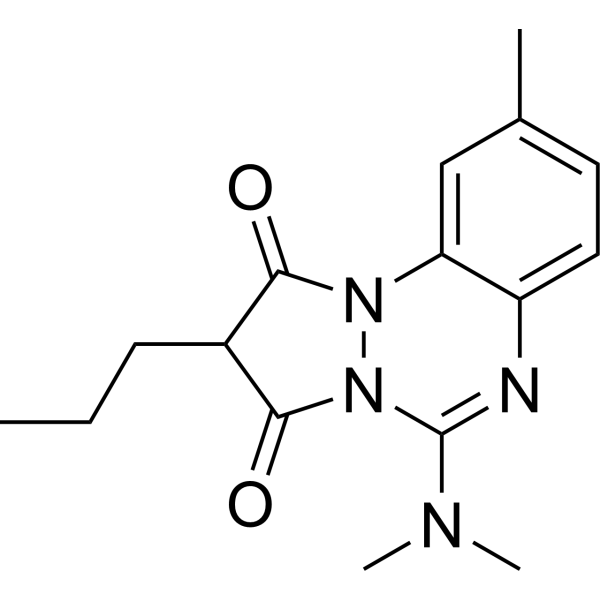
Azapropazone is an orally active nonsteroidal anti-inflammatory agent. Azapropazone inhibits Xanthine oxidase activity with an IC50 of 70-140 μg/mL. Azapropazone exerts significant cardiomyocyte protective effects on dogs with ischemia-reperfusion injury . Azapropazone reduces arthritis. Azapropazone inhibits Adrenaline-induced platelet aggregation. Azapropazone can be used for the research of myocardial ischemia and reperfusion injury, adjuvant arthritis, and gouty arthritis .
loading...
    loading...
Cat. No.: HY-P2757
CAS No.: 9001-88-1
Synonyms: PhK
Target:  

Others

Research Areas:  

Others

Phosphorylase kinase relies on Ca 2+ to exert its activity. Phosphorylase kinase’s sensitivity to Ca 2+ is influenced by its activation state and pH. Phosphorylase kinase can be activated by adrenaline .
loading...
    loading...
Cat. No.: HY-N3228
CAS No.: 89786-84-5
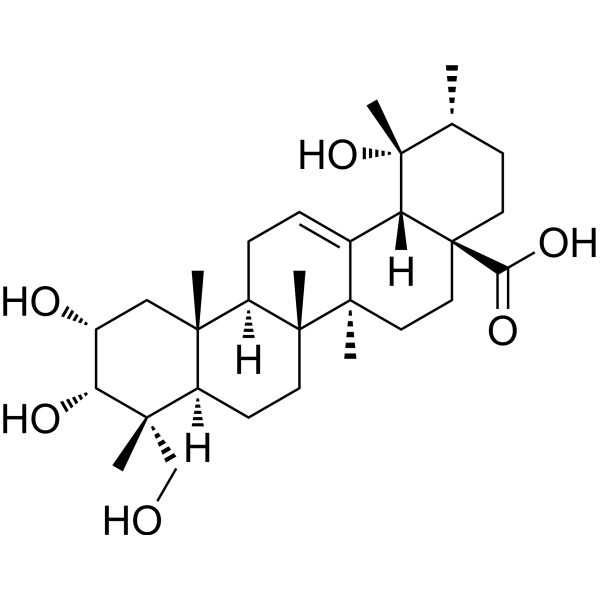
Myrianthic acid is a pentacyclic triterpenoid compound. Myrianthic acid can exist in the root wood of Myrianthus arboreus and the leaves of Campsis grandiflora. Myrianthic acid inhibits adrenaline-induced platelet aggregation, with a IC50 of 46.2 μM for this activity. Myrianthic acid can be used in studies related to thrombosis .
loading...
    loading...
Cat. No.: HY-W153159
CAS No.: 13062-76-5
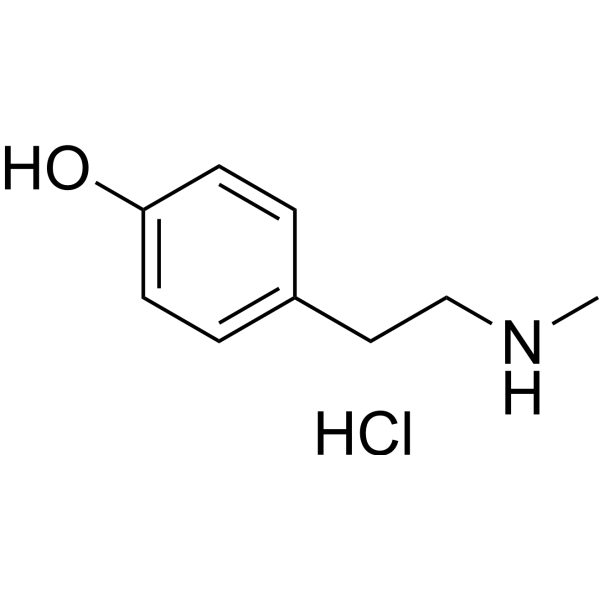
N-Methyltyramine hydrochloride is an orally active α2-adrenoreceptor antagonist with an IC50 value of 5.53 μM against rat targets. N-Methyltyramine hydrochloride blocks α2-adrenoreceptors, while inhibiting lipolysis, hyperactivity responses and small intestinal peristalsis in mice. N-Methyltyramine hydrochloride promotes gastrin release and pancreatic juice secretion, upregulates appetite, blood pressure, myocardial contraction frequency and contraction intensity, and increases renal blood flow, renal vascular resistance and mean peripheral arterial resistance. N-Methyltyramine hydrochloride relaxes mouse small intestinal smooth muscle and undergoes biotransformation in vivo to produce adrenaline. N-Methyltyramine hydrochloride can be used in studies related to gastrointestinal diseases .
loading...
    loading...
Cat. No.: HY-W587403
CAS No.: 74571-90-7
Target:  

Drug Intermediate

Research Areas:  

Others

Methoxy adrenaline hydrochloride is an Adrenaline impurity.
loading...
    loading...
Cat. No.: HY-13458S1
CAS No.: 1329556-63-9
Synonyms: L-DOPS-13C2,15N hydrochloride; DOPS-13C2,15N hydrochloride; SM5688-13C2,15N hydrochloride
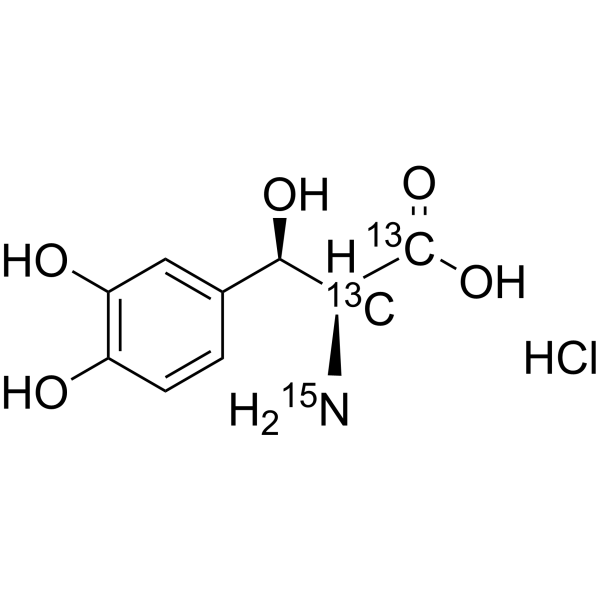
Droxidopa- 13C2, 15N (hydrochloride) is deuterium labeled Droxidopa. Droxidopa(L-DOPS), the mixture of Droxidopa (w/w80%) and Pharmaceutical starch (w/w20%), acts as a proagent to the neurotransmitters norepinephrine (noradrenaline) and epinephrine (adrenaline); Droxidopa(L-DOPS) is capable of crossing the protective blood-brain barrier .
loading...
    loading...
Cat. No.: HY-121354
CAS No.: 3614-47-9
Target:  

Drug Derivative

Research Areas:  

Cardiovascular Disease

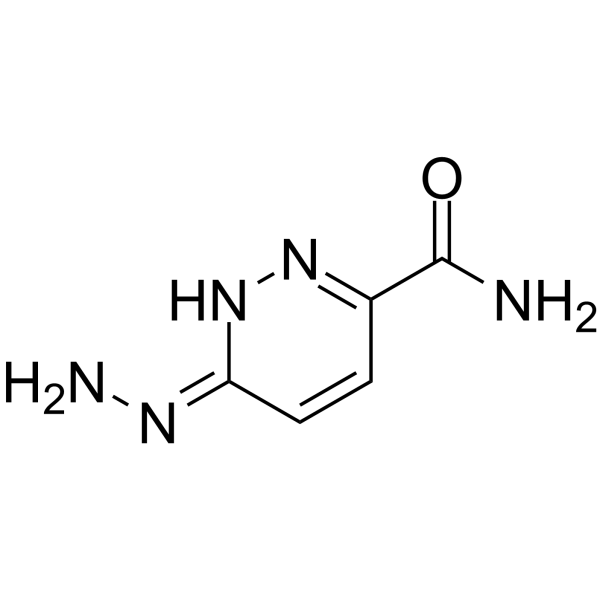
Hydracarbazine is a pyridazine. Hydracarbazine can effectively lower blood pressure, it can be used for the research of high blood pressure .
loading...
    loading...
Cat. No.: HY-Z8728
CAS No.: 317351-39-6
Target:  

Drug Intermediate

Research Areas:  

Others

Adrenaline impurity 3 is an impurity of Adrenaline.
loading...
    loading...
Cat. No.: HY-U00244
CAS No.: 63-12-7
Synonyms: P2647; BZQ; Benzoquinamide
Research Areas:  

Metabolic Disease

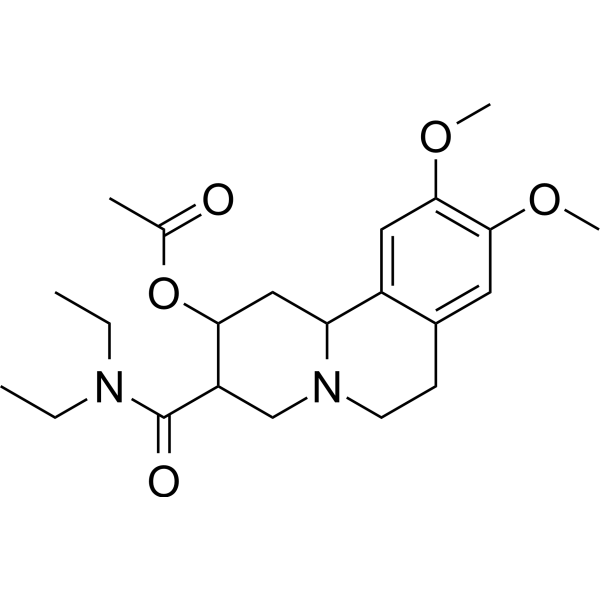
Benzquinamide (P2647; BZQ; Benzoquinamide) is an orally active binder of dopamine receptors and adrenergic receptors. Benzquinamide specifically targets dopamine D2, D3, D4 receptors and α-2A, α-2B, α-2C adrenergic receptors. Benzquinamide regulates blood pressure and heart rate, attenuates the pressor effect of adrenaline, and exhibits activities such as antiemesis, anxiolysis, and reduction of histamine-induced bronchoconstriction. Benzquinamide has good safety and does not deplete serotonin or norepinephrine in the brain. Benzquinamide can be used in studies related to nausea/vomiting, mental disorders, anxiety states, neurosis, and psychosis .
loading...
    loading...
Cat. No.: HY-W153897
CAS No.: 370-98-9
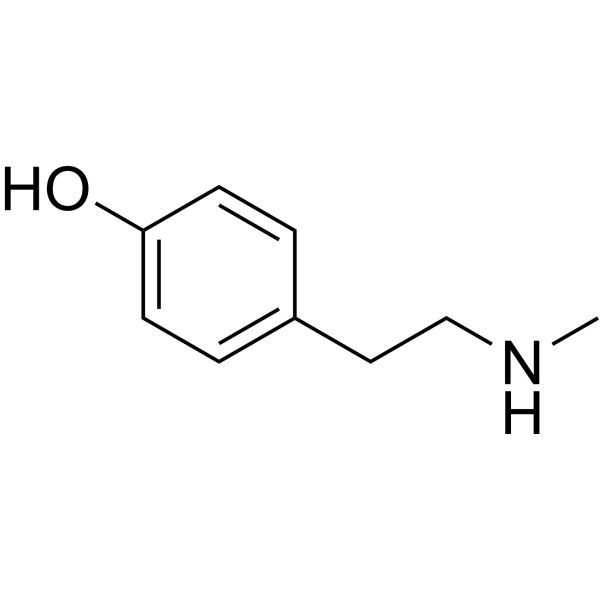
N-Methyltyramine is an orally active α2-adrenoreceptor antagonist with an IC50 value of 5.53 μM against rat targets. N-Methyltyramine blocks α2-adrenoreceptors, while inhibiting lipolysis, hyperactivity responses and small intestinal peristalsis in mice. N-Methyltyramine promotes gastrin release and pancreatic juice secretion, upregulates appetite, blood pressure, myocardial contraction frequency and contraction intensity, and increases renal blood flow, renal vascular resistance and mean peripheral arterial resistance. N-Methyltyramine relaxes mouse small intestinal smooth muscle and undergoes biotransformation in vivo to produce adrenaline. N-Methyltyramine can be used in studies related to gastrointestinal diseases .
loading...
    loading...
Cat. No.: HY-123311
CAS No.: 86329-06-8
Target:  

Adrenergic Receptor

Research Areas:  

Endocrinology

CP59430 is an azide analog of the α-adrenaline receptor antagonist Prazosin (HY-B0193). P59430 behaves as a competitive antagonist of α1-adrenaline receptor before photolysis. After photolysis, it specifically and irreversibly labels α1-adrenaline receptor and exhibits non-competitive antagonist activity. CP59430 can be used for the study of receptor molecular characterization .
loading...
    loading...
Cat. No.: HY-W181626
CAS No.: 26481-51-6
Synonyms: DU 21445
Target:  

5-HT Receptor

Research Areas:  

Cardiovascular Disease

Tiprenolol is a β-adrenoceptor blocker. Tiprenolol can abolish the ventricular arrhythmias produced by adrenaline in dogs respired with halothane .
loading...
    loading...
Cat. No.: HY-N9535
CAS No.: 79638-04-3
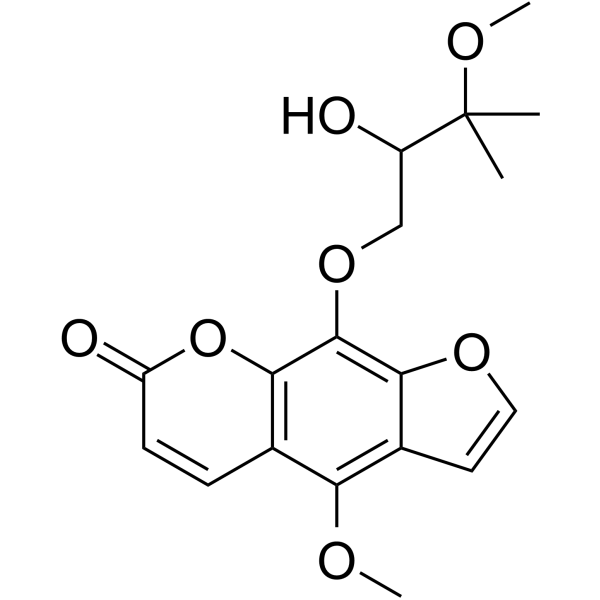
tert-OMe-byakangelicin is a coumarin that can enhances the adrenaline-induced lipolytic effect and inhibits insulin-stimulated triglyceride synthesis from glucose in fat cells .
loading...
    loading...
Cat. No.: HY-101355
CAS No.: 137888-49-4
Target:  

Adrenergic Receptor

Research Areas:  

Cardiovascular Disease

CGP 20712 is a highly selective β1-adrenoceptor antagonist (Ki=0.3 nmol/L). CGP 20712’s primary mechanism of action is through competitively binding to β1-receptors, thereby blocking the positive chronotropic effects of adrenaline and noradrenaline .
loading...
    loading...
Cat. No.: HY-105562
CAS No.: 54063-51-3
Target:  

Adrenergic Receptor

Research Areas:  

Cardiovascular Disease

Nadoxolol is a non-selective β-adrenaline receptor blocker that can be used in the study of arrhythmias. .
loading...
    loading...
Cat. No.: HY-W181626A
CAS No.: 13379-87-8
Synonyms: DU 21445 hydrochloride
Target:  

5-HT Receptor

Research Areas:  

Cardiovascular Disease

Tiprenolol hydrochloride is a β-adrenoceptor blocker. Tiprenolol hydrochloride abolished ventricular arrhythmias induced by intravenous epinephrine in dogs receiving halothane inhalation .
loading...
    loading...
Cat. No.: HY-106512
CAS No.: 74627-35-3
Research Areas:  

Others

Cianergoline is a ergoline derivative with the activity of reducing intraocular pressure (IOP). Its primary regulatory mechanism involves the inhibition of sympathetic nervous function, achieved through actions on both prejunctional (DA2) and postjunctional (α1) adrenergic receptors. Cianergoline can be used for research in the field of glaucoma .
loading...
    loading...
Cat. No.: HY-150100
CAS No.: 9036-22-0
Synonyms: Tyrosine hydroxylase
Target:  

Tyrosine Hydroxylase

Research Areas:  

Neurological Disease

Tyrosine 3-monooxygenase (Tyrosine hydroxylase) is a rate-limiting enzyme in catecholamine biosynthesis and belongs to the family of aromatic amino acid hydroxylases. Tyrosine 3-monooxygenase catalyzes the initial and rate-limiting step in the biosynthetic pathway of catecholamines, including dopamine, noradrenaline, and adrenaline .
loading...
    loading...
Cat. No.: HY-117379
CAS No.: 158198-45-9
Target:  

Adrenergic Receptor

Research Areas:  

Others

CHIR-2279 is a high-affinity ligand (Ki=5 nM) for the α1-adrenergic receptor and can be further studied as a drug lead compound .
loading...
    loading...

