



Clobetasol propionate
Based on 1 publication(s) in Google Scholar
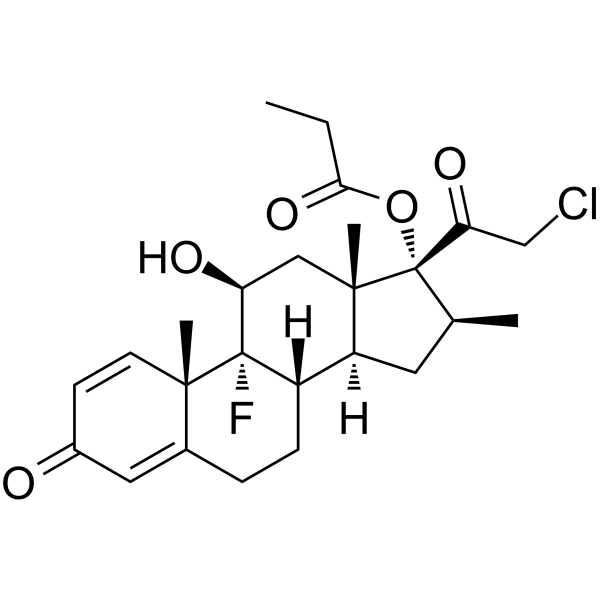
Clobetasol propionate is a potent and selective CYP3A5 inhibitor with an IC50 of 0.206 μM. Clobetasol propionate has no inhibiting on CYP3A4 or other major CYPs. Clobetasol propionate is a corticosteroid and has the potential for psoriasis and other dermatoses research.
商品は「研究用試薬」です。人や動物の医療用・臨床診断用・食品用の製品ではありません。
研究用途以外に使用した場合、当社は一切の責任を負いかねます。
- 純度 : 99.87%
- CAS 番号: 25122-46-7
- 分子式: C25H32ClFO5
- 分子量:466.97
-
保管条件:Powder -20°C, 3 years , 4°C, 2 years ; In solvent -80°C, 2 years , -20°C, 1 year

To place orders, for customer services and technical support, please contact: MedChemExpress USA
Tel: 609-228-6898 E-mail: [email protected] [email protected]


-
 生物活性
生物活性
-
化学情報
-
溶剤 & 溶解度
- プロトコル
- 純度とドキュメンテーション
- 参考文献
-
 Help & FAQs


-
HY-14648
DexamethasoneGR Agonist -
HY-B0415
Fluocinolone (Acetonide)Glucocorticoid Receptor Agonist -
HY-B0154
Fluticasone propionateGlucocorticoid Receptor Agonist -
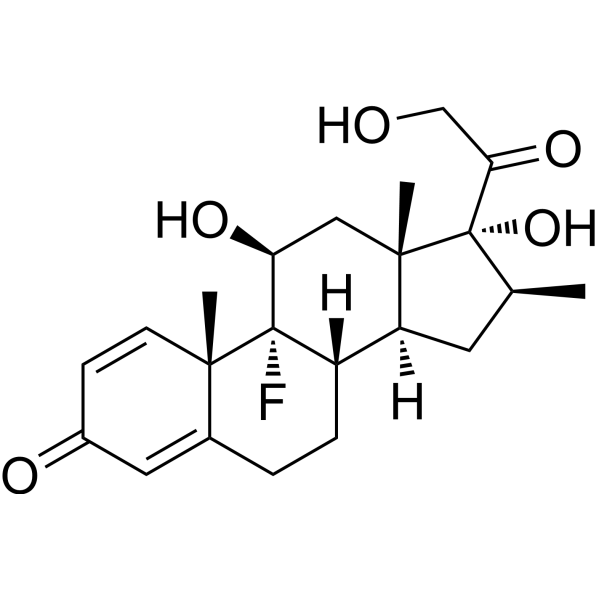
HY-13570
BetamethasoneGlucocorticoid Receptor Agonist -
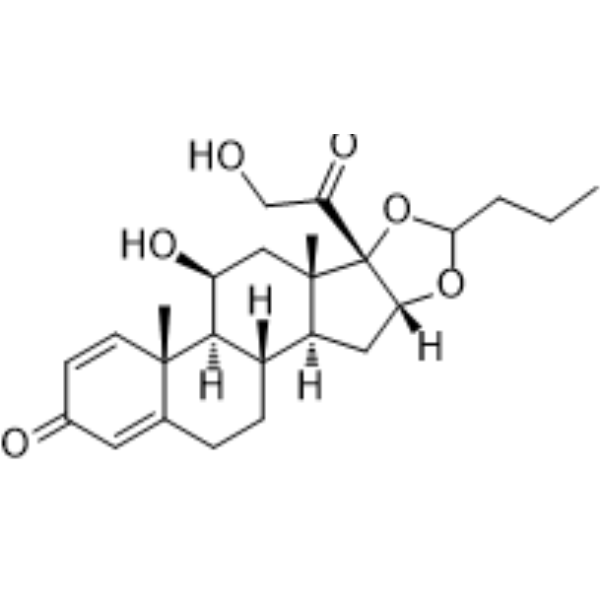
HY-13580
BudesonideGlucocorticoid Receptor Agonist -
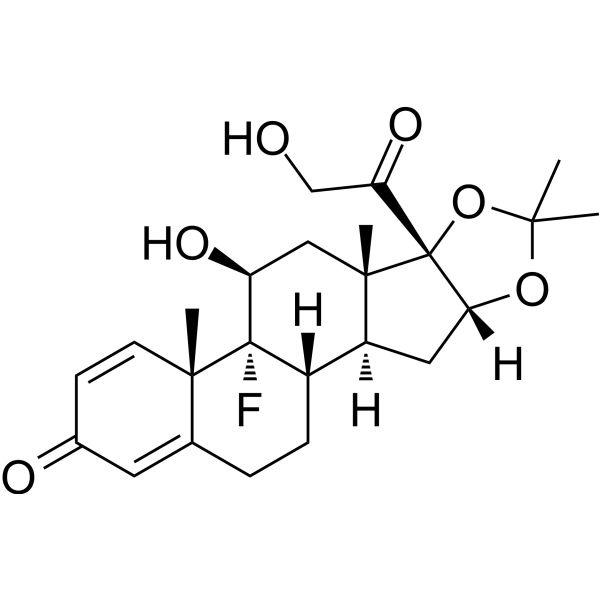
HY-B0636
Triamcinolone acetonideAnti-Inflammatory Agent -
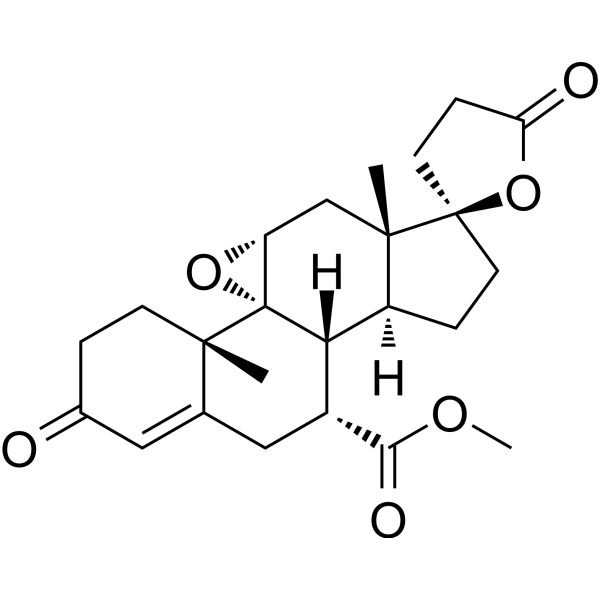
HY-B0251
EplerenoneAldosterone Blocker -
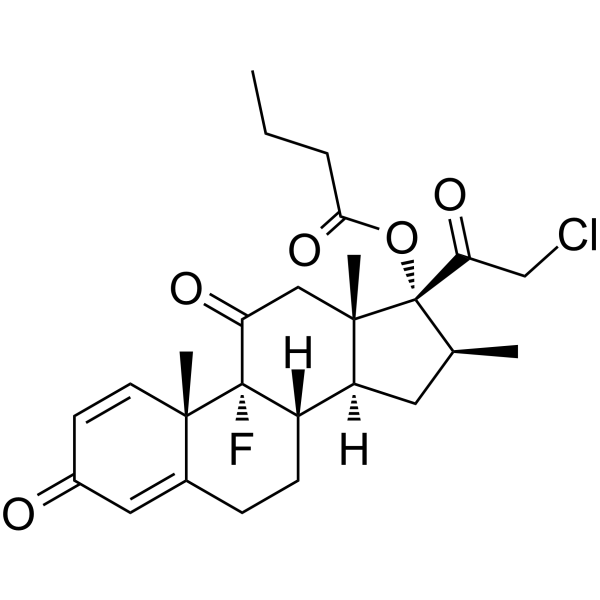
HY-B1616
Clobetasone butyrateGlucocorticoid -
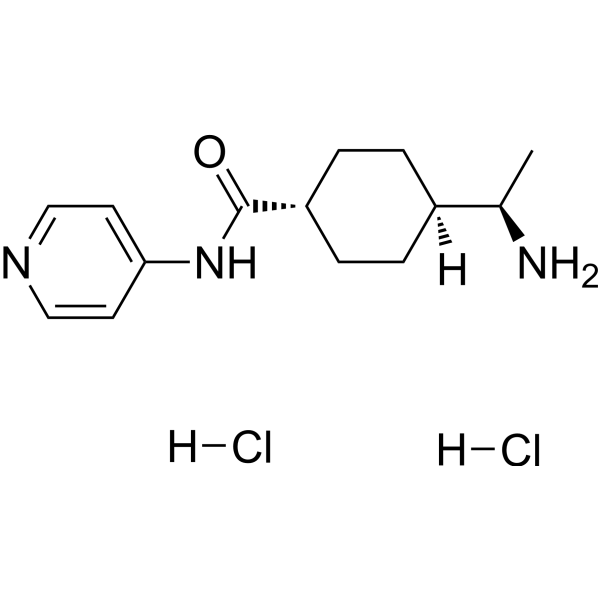
HY-10583
Y-27632 dihydrochlorideROCK Inhibitor -
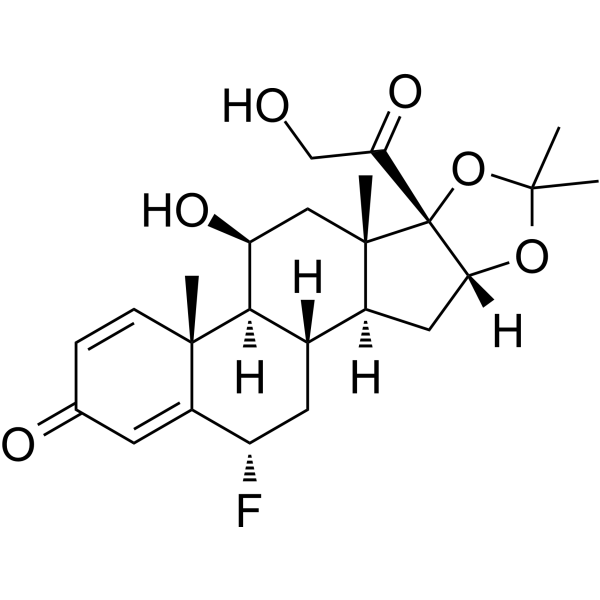
HY-B1121
FlunisolideGlucocorticoid Receptor Activator -
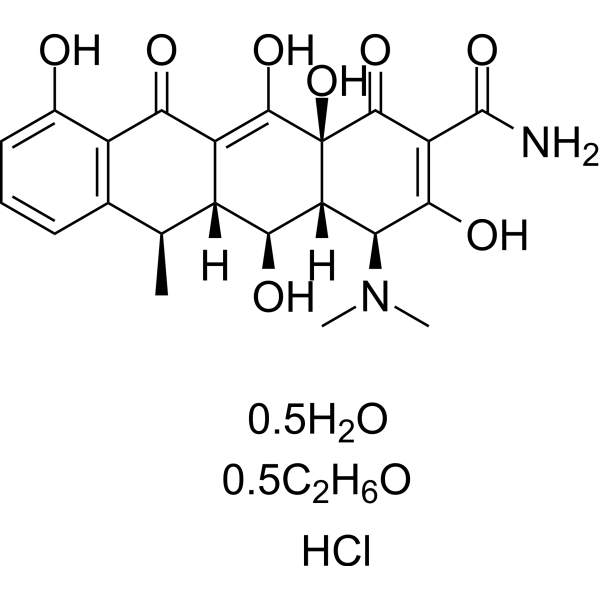
HY-N0565B
Doxycycline hyclateMMP Inhibitor -
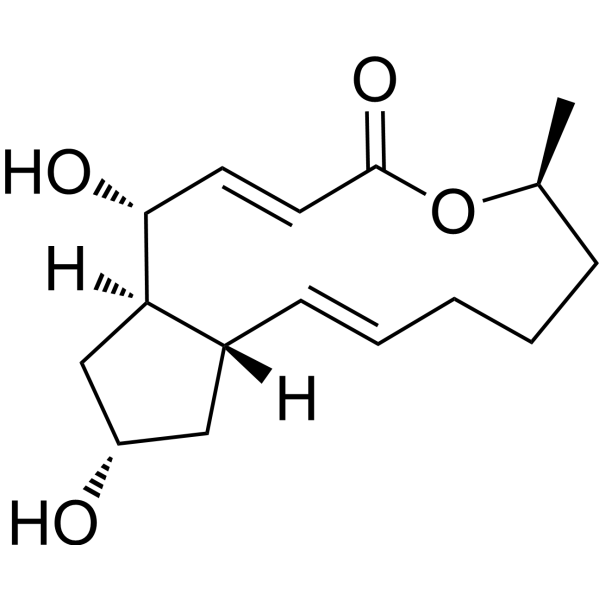
HY-16592
Brefeldin AProtein Transport Inhibitor
MedChemExpress(MCE)の使用を引用している文献 Clobetasol propionate
More

生物活性
製品説明
IC50 & Target
[1]|
CYP3A5 0.206 μM (IC50) |
CYP3A4 15.6 μM (IC50) |
Cellular Effect
|
Cell Line

|
Type | Value | Description | References |
|---|---|---|---|---|
| ASPC1 | IC50 |
0.021 μM
Compound: Clob
|
Inhibition of CYP3A5 in doxycycline-induced CYP3A5 overexpressing wild type human AsPC1 cells assessed as decrease in 1-hydroxymidazolam formation using midazolam as substrate pretreated with doxycycline for 24 hrs followed by incubation with compound for
Inhibition of CYP3A5 in doxycycline-induced CYP3A5 overexpressing wild type human AsPC1 cells assessed as decrease in 1-hydroxymidazolam formation using midazolam as substrate pretreated with doxycycline for 24 hrs followed by incubation with compound for
|
[PMID: 31965799] |
| ASPC1 | IC50 |
0.044 μM
Compound: Clob
|
Inhibition of CYP3A5 in wild type human AsPC1 cells assessed as decrease in 1-hydroxymidazolam formation using midazolam as substrate after 24 hrs by LC-MS/MS analysis
Inhibition of CYP3A5 in wild type human AsPC1 cells assessed as decrease in 1-hydroxymidazolam formation using midazolam as substrate after 24 hrs by LC-MS/MS analysis
|
[PMID: 31965799] |
| ASPC1 | IC50 |
0.078 μM
Compound: Clob
|
Inhibition of CYP3A5 in lentiviral pLVX-TRE3G-ZsGreen1-CYP3A5 transduced wild type human AsPC1 cells overexpressing CYP3A5 assessed as decrease in 1-hydroxymidazolam formation using midazolam as substrate after 24 hrs by LC-MS/MS analysis
Inhibition of CYP3A5 in lentiviral pLVX-TRE3G-ZsGreen1-CYP3A5 transduced wild type human AsPC1 cells overexpressing CYP3A5 assessed as decrease in 1-hydroxymidazolam formation using midazolam as substrate after 24 hrs by LC-MS/MS analysis
|
[PMID: 31965799] |
| ASPC1 | IC50 |
0.103 μM
Compound: Clob
|
Inhibition of CYP3A5 in CRISPR/Cas9-mediated CYP3A5 knock-out and doxycycline-induced CYP3A5 overexpressing human AsPC1 cells assessed as decrease in 1-hydroxymidazolam formation using midazolam as substrate pretreated with doxycycline for 24 hrs followed
Inhibition of CYP3A5 in CRISPR/Cas9-mediated CYP3A5 knock-out and doxycycline-induced CYP3A5 overexpressing human AsPC1 cells assessed as decrease in 1-hydroxymidazolam formation using midazolam as substrate pretreated with doxycycline for 24 hrs followed
|
[PMID: 31965799] |
| Sf21 | IC50 |
35 μM
Compound: Clobetasol propionate
|
Inhibition of Sprague-Dawley rat Bsep expressed in plasma membrane vesicles of Sf21 cells assessed as inhibition of ATP-dependent [3H]taurocholate uptake
Inhibition of Sprague-Dawley rat Bsep expressed in plasma membrane vesicles of Sf21 cells assessed as inhibition of ATP-dependent [3H]taurocholate uptake
|
[PMID: 21965623] |
| Sf21 | IC50 |
8.5 μM
Compound: Clobetasol propionate
|
Inhibition of human BSEP expressed in plasma membrane vesicles of Sf21 cells assessed as inhibition of ATP-dependent [3H]taurocholate uptake
Inhibition of human BSEP expressed in plasma membrane vesicles of Sf21 cells assessed as inhibition of ATP-dependent [3H]taurocholate uptake
|
[PMID: 21965623] |
体外実験
Clobetasol propionate has an IC50 of 15.6 μM for CYP3A4[1].
Clobetasol propionate (1 μM; 24 hours) selectively inhibits CYP3A5 and does not increase the protein level of CYP3A4. Clobetasol propionate does not affect cell growth in any cell line (AsPC-1 wild-type (WT), AsPC-1CYP3A5–/– cells with CYP3A5 overexpression ( "3A5–/– + 3A5OE" cells), and AsPC-1CYP3A5–/– cells with CYP3A4 overexpression ( "3A5–/– + 3A4OE" cells))[1].
MedChemExpress (MCE) has not independently confirmed the accuracy of these methods. They are for reference only.
体内実験
MedChemExpress (MCE) has not independently confirmed the accuracy of these methods. They are for reference only.
臨床実験
| NCT Number | Sponsor | Condition | Start Date |
Phase
|
|---|---|---|---|---|
| NCT01329991 | Plexxikon| | 2011-05 | PHASE1 |


化学情報
-
CAS 番号 25122-46-7
-
性状 Solid
-
分子量 466.97
-
分子式 C25H32ClFO5
-
Color White to off-white
-
SMILES
C[C@@]12[C@](C(CCl)=O)(OC(CC)=O)[C@@H](C)C[C@@]1([H])[C@]3([H])CCC4=CC(C=C[C@]4(C)[C@@]3(F)[C@@H](O)C2)=O
-
別名
プロピオン酸クロベタゾール
-
輸送条件
Room temperature in continental US; may vary elsewhere.
-
保管条件
Powder -20°C 3 years 4°C 2 years In solvent -80°C 2 years -20°C 1 year


Publications (1)
-
Journal Impact Factor
-
Most Recent


溶剤 & 溶解度
体外:
DMSO : ≥ 100 mg/mL (214.15 mM; Hygroscopic DMSO has a significant impact on the solubility of product, please use newly opened DMSO)
* "≥" means soluble, but saturation unknown.
Please refer to the solubility information to select the appropriate solvent. Once prepared, please aliquot and store the solution to prevent product inactivation from repeated freeze-thaw cycles.
Storage method and period of stock solution: -80°C, 2 years; -20°C, 1 year. When stored at -80°C, please use it within 2 years. When stored at -20°C, please use it within 1 year.
Please refer to the solubility information to select the appropriate solvent. Once prepared, please aliquot and store the solution to prevent product inactivation from repeated freeze-thaw cycles.
Storage method and period of stock solution: -80°C, 2 years; -20°C, 1 year. When stored at -80°C, please use it within 2 years. When stored at -20°C, please use it within 1 year.
濃度 (開始) × 体積 (開始) = 濃度 (終了) × 体積 (終了)
体内:
Select the appropriate dissolution method based on your experimental animal and administration route.
- For the following dissolution methods, please ensure to first prepare a clear stock solution using an In Vitro approach and then sequentially add co-solvents:
- To ensure reliable experimental results, the clarified stock solution can be appropriately stored based on storage conditions. As for the working solution for In Vivo experiments, it is recommended to prepare freshly and use it on the same day.
- The percentages shown for the solvents indicate their volumetric ratio in the final prepared solution. If precipitation or phase separation occurs during preparation, heat and/or sonication can be used to aid dissolution.
Add each solvent one by one: 10% DMSO 40% PEG300 5% Tween-80 45% Saline
Solubility: ≥ 2.5 mg/mL (5.35 mM); Clear solution
This protocol yields a clear solution of ≥ 2.5 mg/mL (saturation unknown).
Taking 1 mL working solution as an example, add 100 μL DMSO stock solution (25.0 mg/mL) to 400 μL PEG300, and mix evenly; then add 50 μL Tween-80 and mix evenly; then add 450 μL Saline to adjust the volume to 1 mL.
Preparation of Saline: Dissolve 0.9 g sodium chloride in ddH₂O and dilute to 100 mL to obtain a clear Saline solution.
In Vivo Dissolution Calculator
Please enter the basic information of animal experiments:
-
-
-
-
Recommended: Prepare an additional quantity of animals to account for potential losses during experiments.
Please enter your animal formula composition:
-
%DMSO +
Recommended: Keep the proportion of DMSO in working solution below 2% if your animal is weak.
-
%+
-
+%Tween-80 + +
-
%Saline +
The co-solvents required include: DMSO, . All of co-solvents are available by MedChemExpress (MCE). , Tween 80. All of co-solvents are available by MedChemExpress (MCE).
Working solution concentration: 0.22 mg/mL
Method for preparing stock solution: mg drug dissolved in μL DMSO. Stock solution concentration: mg/mL.
1. Take μL DMSO stock solution;
2. Add μL .
μL , mix evenly;
3. Then add μL Tween 80, mix evenly;
4. Then add μL
Please ensure that the stock solution in the first step is dissolved to a clear state, and add co-solvents in sequence. You can use ultrasonic heating (ultrasonic cleaner, recommended frequency 20-40 kHz), vortexing, etc. to assist dissolution.


純度とドキュメンテーション
-
データシート (280 KB)
-
SDS (419 KB)
- English - EN (419 KB)
- Français - FR (419 KB)
- Deutsch - DE (419 KB)
- Norwegian - NO (419 KB)
- Español - ES (419 KB)
- Swedish - SV (419 KB)
- Italian - IT (419 KB)
- Korean - KR (419 KB)
- Portuguese - PT (419 KB)
-
取扱説明書 (2659 KB)
参考文献
[1]. William C Wright, et al. Clobetasol Propionate Is a Heme-Mediated Selective Inhibitor of Human Cytochrome P450 3A5. J Med Chem. 2020 Feb 13;63(3):1415-1433. [Content Brief]
[2]. Steven R Feldman, et al. Topical clobetasol propionate in the treatment of psoriasis: a review of newer formulations. Am J Clin Dermatol. 2009;10(6):397-406. [Content Brief]
[3]. M Zeigler, et al. Anti-CD11a ameliorates disease in the human psoriatic skin-SCID mouse transplant model: comparison of antibody to CD11a with Cyclosporin A and clobetasol propionate. Lab Invest. 2001 Sep;81(9):1253-61. [Content Brief]


Complete Stock Solution Preparation Table
Please refer to the solubility information to select the appropriate solvent. Once prepared, please aliquot and store the solution to prevent product inactivation from repeated freeze-thaw cycles.
Storage method and period of stock solution: -80°C, 2 years; -20°C, 1 year. When stored at -80°C, please use it within 2 years. When stored at -20°C, please use it within 1 year.
| Optional Solvent | Concentration Solvent Mass | 1 mg | 5 mg | 10 mg | 25 mg |
|---|---|---|---|---|---|
| DMSO | 1 mM | 2.1415 mL | 10.7073 mL | 21.4147 mL | 53.5366 mL |
| 5 mM | 0.4283 mL | 2.1415 mL | 4.2829 mL | 10.7073 mL | |
| 10 mM | 0.2141 mL | 1.0707 mL | 2.1415 mL | 5.3537 mL | |
| 15 mM | 0.1428 mL | 0.7138 mL | 1.4276 mL | 3.5691 mL | |
| 20 mM | 0.1071 mL | 0.5354 mL | 1.0707 mL | 2.6768 mL | |
| 25 mM | 0.0857 mL | 0.4283 mL | 0.8566 mL | 2.1415 mL | |
| 30 mM | 0.0714 mL | 0.3569 mL | 0.7138 mL | 1.7846 mL | |
| 40 mM | 0.0535 mL | 0.2677 mL | 0.5354 mL | 1.3384 mL | |
| 50 mM | 0.0428 mL | 0.2141 mL | 0.4283 mL | 1.0707 mL | |
| 60 mM | 0.0357 mL | 0.1785 mL | 0.3569 mL | 0.8923 mL | |
| 80 mM | 0.0268 mL | 0.1338 mL | 0.2677 mL | 0.6692 mL | |
| 100 mM | 0.0214 mL | 0.1071 mL | 0.2141 mL | 0.5354 mL |


Clobetasol propionate 関連分類
HY-13600 関連分類
 Powered by Bioz