



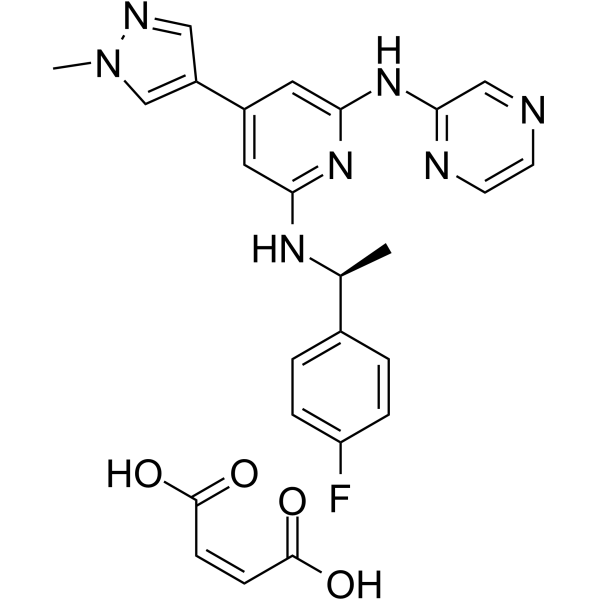
Ilginatinib maleate
Based on 1 publication(s) in Google Scholar
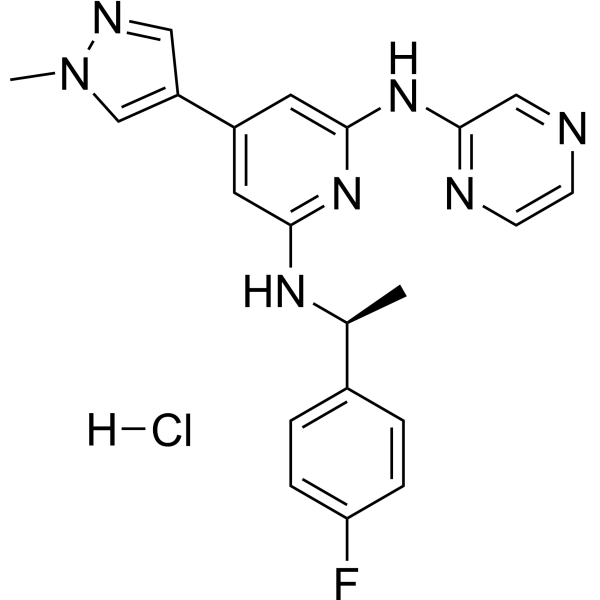
Ilginatinib maleate (NS-018 maleate) is a highly active and orally bioavailable JAK2 inhibitor, with an IC50 of 0.72 nM, 46-, 54-, and 31-fold selectivity for JAK2 over JAK1 (IC50, 33 nM), JAK3 (IC50, 39 nM), and Tyk2 (IC50, 22 nM).
For research use only. We do not sell to patients.
- Purity : 99.33%
- CAS No.: 1354799-87-3
- Formula: C25H24FN7O4
- Molecular Weight:505.50
-
Storage:
4°C, sealed storage, away from moisture
* In solvent : -80°C, 6 months; -20°C, 1 month (sealed storage, away from moisture)

To place orders, for customer services and technical support, please contact: MedChemExpress USA
Tel: 609-228-6898 E-mail: [email protected] [email protected]


-
 Biological Activity
-
Chemical Information
-
Solvent & Solubility
- Protocol
- Purity & Documentation
- References
-
 Help & FAQs


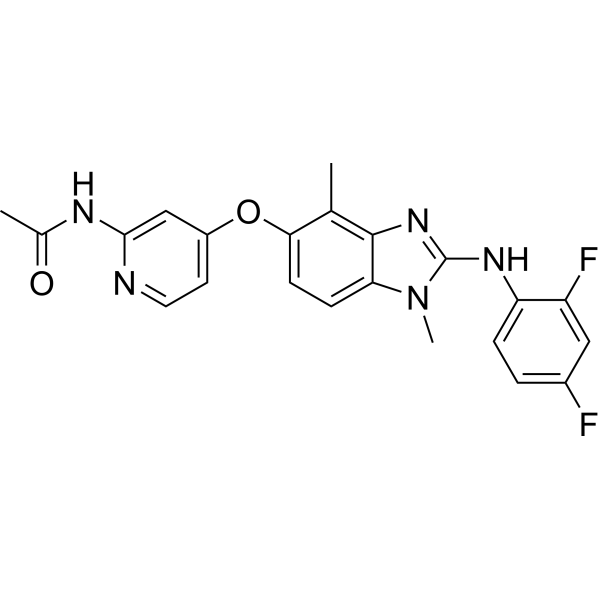
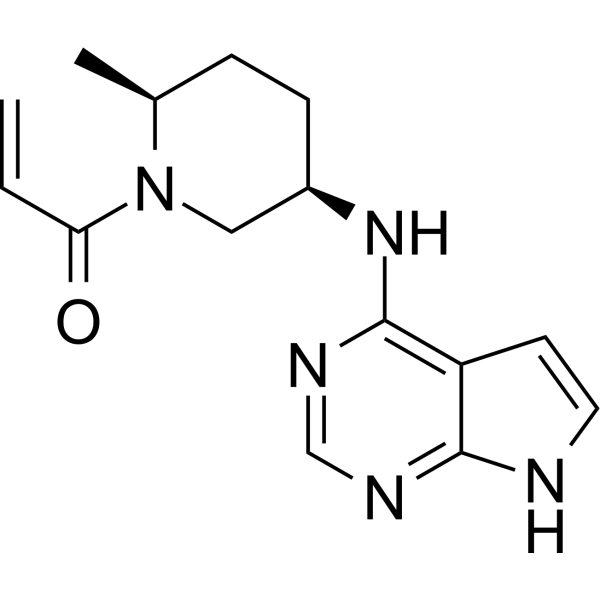
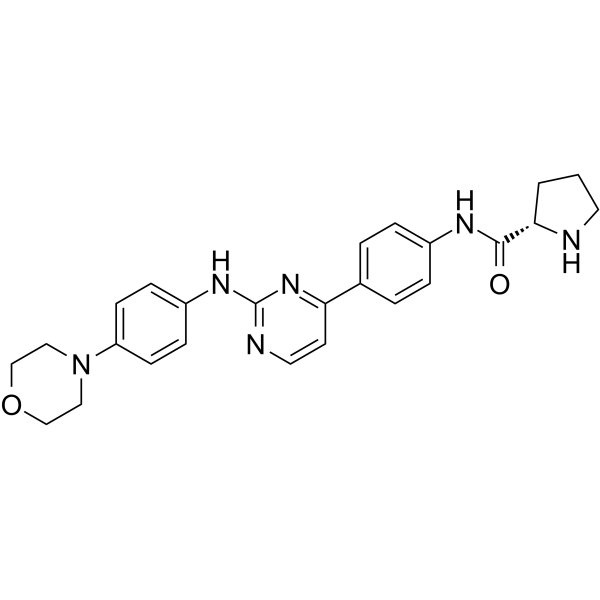
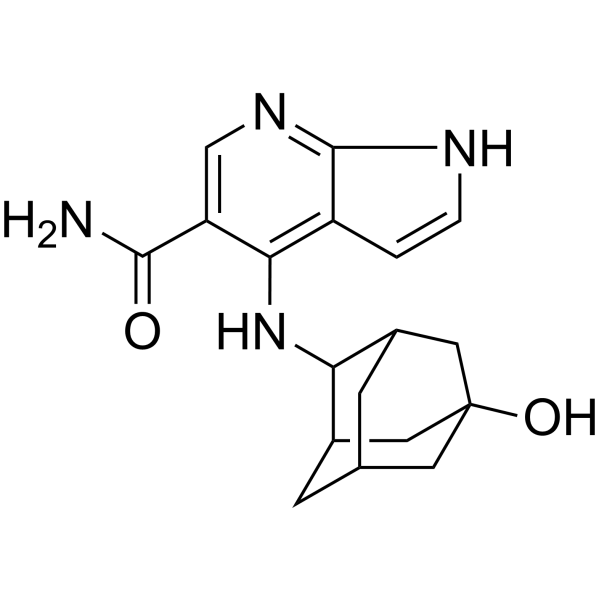
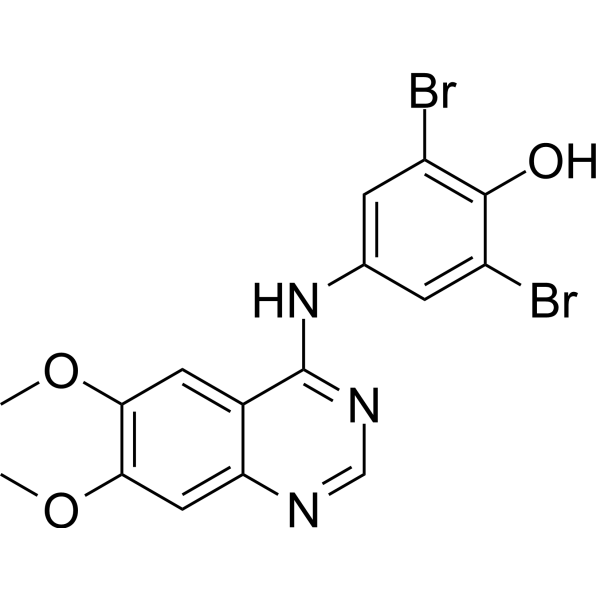
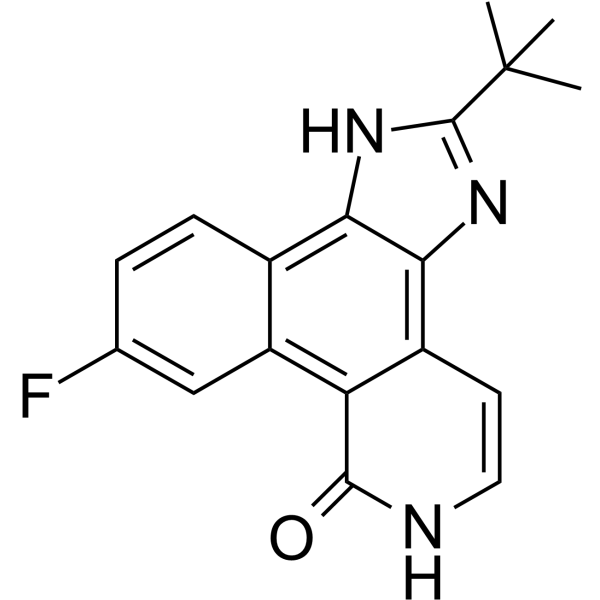
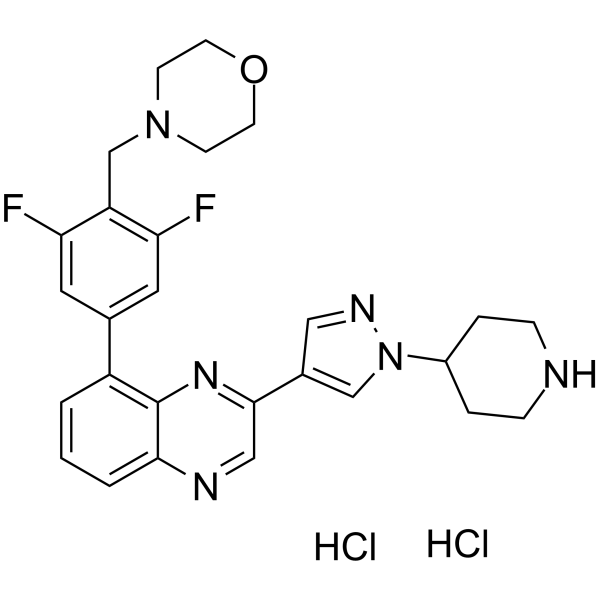
Publications Citing Use of MedChemExpress (MCE) Ilginatinib maleate
More

Biological Activity
Description
IC50 & Target
[1]|
JAK2 0.72 nM (IC50) |
Tyk2 22 nM (IC50) |
JAK1 33 nM (IC50) |
JAK3 39 nM (IC50) |
In Vitro
Ilginatinib maleate (NS-018 maleate) is a highly active JAK2 inhibitor, with an IC50 of 0.72 nM, 46-, 54-, and 31-fold selectivity for JAK2 over JAK1 (IC50, 33 nM), JAK3 (IC50, 39 nM), and Tyk2 (IC50, 22 nM). Ilginatinib maleate also inhibits Src-family kinases, especially SRC and FYN, and weakly inhibits ABL and FLT3 with 45- and 90-fold selectivity for JAK2, respectively. Ilginatinib maleate shows potent inhibitory activity against cell lines JAK2V617F or MPLW515L mutations or the TEL-JAK2 fusion gene (expressing a constitutively activated JAK2) with IC50 of 11-120 nM, but has only minimal cytotoxicity against most other hematopoietic cell lines that have no constitutively activated JAK2[1].
Ilginatinib maleate (0.5 μM) preferentially suppresses colony-forming unitgranulocyte/macrophage (CFU-GM) formation from myelodysplastic syndrome (MDS)-derived bone marrow mononuclear cells (BMMNCs). Ilginatinib maleate (1 μM) suppresses the phosphorylation of STAT3 (the downstream kinase of JAK2) in CFU-GM-forming cells from MDS patients[2].
MedChemExpress (MCE) has not independently confirmed the accuracy of these methods. They are for reference only.
In Vivo
Ilginatinib maleate (25, 50 mg/kg, p.o.) significantly reduces leukocytosis, hepatosplenomegaly and extramedullary hematopoiesis, improves nutritional status, and prolongs survival in JAK2V617F transgenic mice[1].
MedChemExpress (MCE) has not independently confirmed the accuracy of these methods. They are for reference only.
Clinical Trial
| NCT Number | Sponsor | Condition | Start Date |
Phase

|
|---|---|---|---|---|
| NCT01329991 | Plexxikon| | 2011-05 | PHASE1 |


Chemical Information
-
CAS No. 1354799-87-3
-
Appearance Solid
-
Molecular Weight 505.50
-
Formula C25H24FN7O4
-
Color Light yellow to yellow
-
SMILES
CN1N=CC(C2=CC(N[C@H](C3=CC=C(F)C=C3)C)=NC(NC4=NC=CN=C4)=C2)=C1.O=C(O)/C=C\C(O)=O
-
Synonyms
NS-018 maleate
-
Shipping
Room temperature in continental US; may vary elsewhere.
-
Storage
4°C, sealed storage, away from moisture
* In solvent : -80°C, 6 months; -20°C, 1 month (sealed storage, away from moisture)


Publications (1)
-
Journal Impact Factor
-
Most Recent
-
J Med Chem
Functional and Structural Characterization of Clinical-Stage Janus Kinase 2 Inhibitors Identifies Determinants for Drug Selectivity. [Abstract]2024 Jun 27;67(12):10012-10024. PMID: 38843875


Solvent & Solubility
In Vitro:
DMSO : ≥ 30 mg/mL (59.35 mM; Hygroscopic DMSO has a significant impact on the solubility of product, please use newly opened DMSO)
H2O : < 0.1 mg/mL (insoluble)
* "≥" means soluble, but saturation unknown.
Please refer to the solubility information to select the appropriate solvent. Once prepared, please aliquot and store the solution to prevent product inactivation from repeated freeze-thaw cycles.
Storage method and period of stock solution: -80°C, 6 months; -20°C, 1 month (sealed storage, away from moisture). When stored at -80°C, please use it within 6 months. When stored at -20°C, please use it within 1 month.
Please refer to the solubility information to select the appropriate solvent. Once prepared, please aliquot and store the solution to prevent product inactivation from repeated freeze-thaw cycles.
Storage method and period of stock solution: -80°C, 6 months; -20°C, 1 month (sealed storage, away from moisture). When stored at -80°C, please use it within 6 months. When stored at -20°C, please use it within 1 month.
Concentration (start) × Volume (start) = Concentration (final) × Volume (final)
In Vivo:
Select the appropriate dissolution method based on your experimental animal and administration route.
- For the following dissolution methods, please ensure to first prepare a clear stock solution using an In Vitro approach and then sequentially add co-solvents:
- To ensure reliable experimental results, the clarified stock solution can be appropriately stored based on storage conditions. As for the working solution for In Vivo experiments, it is recommended to prepare freshly and use it on the same day.
- The percentages shown for the solvents indicate their volumetric ratio in the final prepared solution. If precipitation or phase separation occurs during preparation, heat and/or sonication can be used to aid dissolution.
Add each solvent one by one: 10% DMSO 40% PEG300 5% Tween-80 45% Saline
Solubility: ≥ 2.5 mg/mL (4.95 mM); Clear solution
This protocol yields a clear solution of ≥ 2.5 mg/mL (saturation unknown).
Taking 1 mL working solution as an example, add 100 μL DMSO stock solution (25.0 mg/mL) to 400 μL PEG300, and mix evenly; then add 50 μL Tween-80 and mix evenly; then add 450 μL Saline to adjust the volume to 1 mL.
Preparation of Saline: Dissolve 0.9 g sodium chloride in ddH₂O and dilute to 100 mL to obtain a clear Saline solution.
Add each solvent one by one: 10% DMSO 90% (20% SBE-β-CD in Saline)
Solubility: ≥ 2.5 mg/mL (4.95 mM); Clear solution
This protocol yields a clear solution of ≥ 2.5 mg/mL (saturation unknown).
Taking 1 mL working solution as an example, add 100 μL DMSO stock solution (25.0 mg/mL) to 900 μL 20% SBE-β-CD in Saline, and mix evenly.
Preparation of 20% SBE-β-CD in Saline (4°C, storage for one week): 2 g SBE-β-CD powder is dissolved in 10 mL Saline, completely dissolve until clear.
In Vivo Dissolution Calculator
Please enter the basic information of animal experiments:
-
-
-
-
Recommended: Prepare an additional quantity of animals to account for potential losses during experiments.
Please enter your animal formula composition:
-
%DMSO +
Recommended: Keep the proportion of DMSO in working solution below 2% if your animal is weak.
-
%+
-
+%Tween-80 + +
-
%Saline +
The co-solvents required include: DMSO, . All of co-solvents are available by MedChemExpress (MCE). , Tween 80. All of co-solvents are available by MedChemExpress (MCE).
Working solution concentration: 0.22 mg/mL
Method for preparing stock solution: mg drug dissolved in μL DMSO. Stock solution concentration: mg/mL. * In solvent : -80°C, 6 months; -20°C, 1 month (sealed storage, away from moisture)
1. Take μL DMSO stock solution;
2. Add μL .
μL , mix evenly;
3. Then add μL Tween 80, mix evenly;
4. Then add μL
Please ensure that the stock solution in the first step is dissolved to a clear state, and add co-solvents in sequence. You can use ultrasonic heating (ultrasonic cleaner, recommended frequency 20-40 kHz), vortexing, etc. to assist dissolution.

Protocol
Cell Assay[2]
Bone marrow mononuclear cells (BMMNCs) from healthy volunteers and myelodysplastic syndrome (MDS) patients are incubated in MethoCult GF H4434 methylcellulose medium containing various hematopoietic cytokines at 1.0 × 10⁵ cells/mL with or without NS-018 at 37°C in a humidified atmosphere of 5% CO2. Commercially available purified normal human CD34-positive (CD34+) BM cells are used as a control. Burst-forming unit-erythroid (BFU-E) and colonyforming unit-granulocyte/macrophage (CFU-GM) colonies are counted under an inverted microscope on day 14 of culture[2].
MedChemExpress (MCE) has not independently confirmed the accuracy of these methods. They are for reference only.
Animal Administration[1]
Mice[1]
Female BALB/c nude mice are placed in blanket cages in an environment maintained at 21-25°C and 45-65% relative humidity, with artificial illumination for 12 h and a ventilation frequency of at least 15 times/h. They are allowed free access to food pellets and tap water. Ba/F3-JAK2V617F cells (106 per mouse) are inoculated intravenously into 7-week-old mice. Administration of vehicle (0.5% methylcellulose) or Ilginatinib (NS-018) twice daily by oral gavage begins the day after cell inoculation. Survival is monitored daily, and moribund mice are humanely killed and their time of death is recorded for purposes of survival analysis. In a parallel study, all mice are humanely killed after 8 days of administration, and their spleens are removed and weighed[1].
MedChemExpress (MCE) has not independently confirmed the accuracy of these methods. They are for reference only.


Purity & Documentation
-
Data Sheet (283 KB)
-
SDS (252 KB)
- English - EN (252 KB)
- Français - FR (252 KB)
- Deutsch - DE (252 KB)
- Norwegian - NO (252 KB)
- Español - ES (252 KB)
- Swedish - SV (252 KB)
- Italian - IT (252 KB)
- Korean - KR (252 KB)
- Portuguese - PT (252 KB)
-
Handling Instructions (2659 KB)
References
[1]. Nakaya Y, et al. Efficacy of NS-018, a potent and selective JAK2/Src inhibitor, in primary cells and mouse models of myeloproliferative neoplasms. Blood Cancer J. 2011 Jul;1(7):e29. [Content Brief]
[2]. Kuroda J, et al. NS-018, a selective JAK2 inhibitor, preferentially inhibits CFU-GM colony formation by bone marrow mononuclear cells from high-risk myelodysplastic syndrome patients. Leuk Res. 2014 May;38(5):619-24. [Content Brief]


Complete Stock Solution Preparation Table
Please refer to the solubility information to select the appropriate solvent. Once prepared, please aliquot and store the solution to prevent product inactivation from repeated freeze-thaw cycles.
Storage method and period of stock solution: -80°C, 6 months; -20°C, 1 month (sealed storage, away from moisture). When stored at -80°C, please use it within 6 months. When stored at -20°C, please use it within 1 month.
| Optional Solvent | Concentration Solvent Mass | 1 mg | 5 mg | 10 mg | 25 mg |
|---|---|---|---|---|---|
| DMSO | 1 mM | 1.9782 mL | 9.8912 mL | 19.7824 mL | 49.4560 mL |
| 5 mM | 0.3956 mL | 1.9782 mL | 3.9565 mL | 9.8912 mL | |
| 10 mM | 0.1978 mL | 0.9891 mL | 1.9782 mL | 4.9456 mL | |
| 15 mM | 0.1319 mL | 0.6594 mL | 1.3188 mL | 3.2971 mL | |
| 20 mM | 0.0989 mL | 0.4946 mL | 0.9891 mL | 2.4728 mL | |
| 25 mM | 0.0791 mL | 0.3956 mL | 0.7913 mL | 1.9782 mL | |
| 30 mM | 0.0659 mL | 0.3297 mL | 0.6594 mL | 1.6485 mL | |
| 40 mM | 0.0495 mL | 0.2473 mL | 0.4946 mL | 1.2364 mL | |
| 50 mM | 0.0396 mL | 0.1978 mL | 0.3956 mL | 0.9891 mL |


Ilginatinib maleate Related Classifications
HY-19631 Related Classifications
 Powered by Bioz