



PF-4136309
Based on 5 publication(s) in Google Scholar
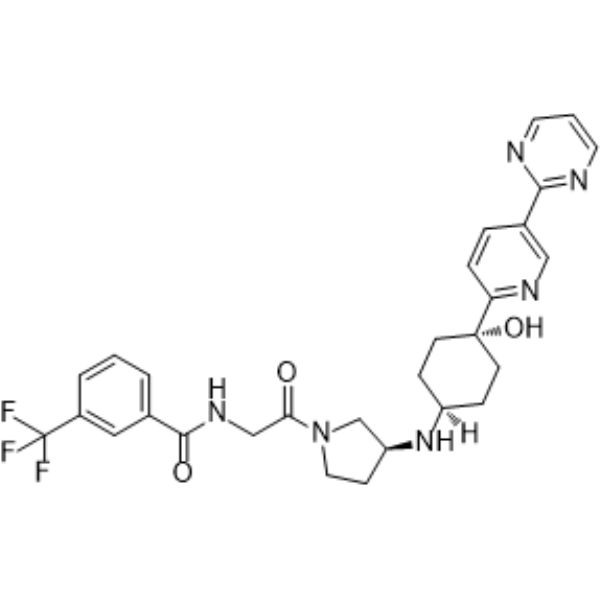
PF-4136309 is a potent, selective, and orally bioavailable CCR2 antagonist, with IC50s of 5.2 nM, 17 nM and 13 nM for human, mouse and rat CCR2.
Nur für Forschungszwecke. Wir verkaufen nicht an Patienten.
- Reinheit : 99.86%
- CAS. Nr.: 1341224-83-6
- Formel: C29H31F3N6O3
- Molecular Weight:568.59
-
Speicherung:Powder -20°C, 3 years , 4°C, 2 years ; In solvent -80°C, 2 years , -20°C, 1 year

To place orders, for customer services and technical support, please contact: MedChemExpress USA
Tel: 609-228-6898 E-mail: [email protected] [email protected]


-
 Biologische Aktivität
-
Chemical Information
-
Lösungsmittel & Löslichkeit
- Reinheit & Dokumentation
- Verweise
-
 Help & FAQs


-
HY-50674
INCB3344CCR2 Antagonis -
HY-12080
BX471CCR1 Antagonist -
HY-109593
BMS-813160CCR2/CCR5 Antagonist -
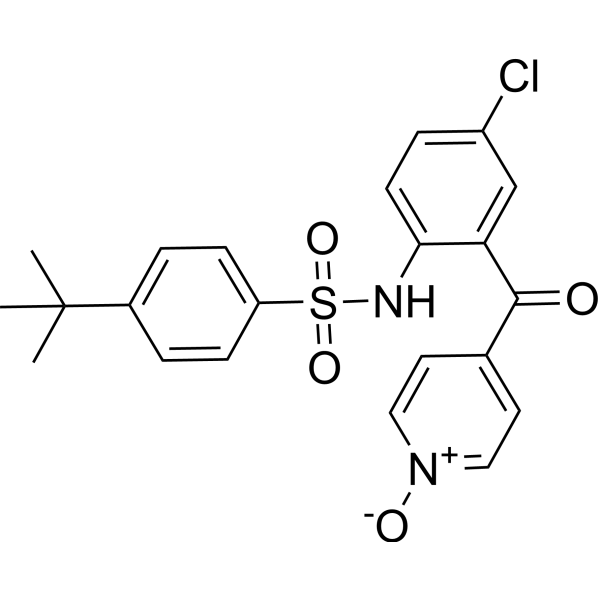
HY-15724
VercirnonCCR9 Antagonist -
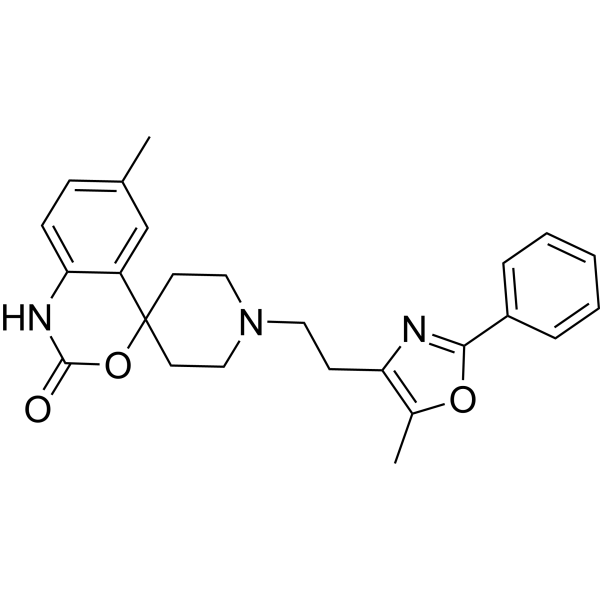
HY-15418
RS 504393CCR2 Antagonist -
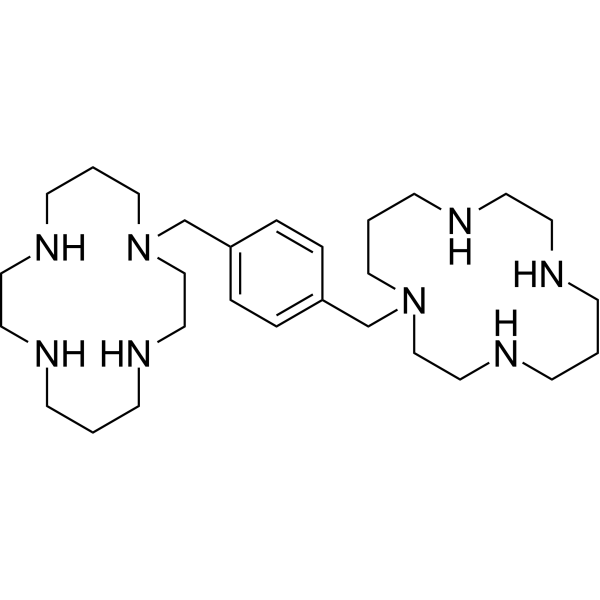
HY-10046
PlerixaforCXCR4 Antagonist -

HY-P99188
CarlumabAnti-CCL2 Antibody -
HY-Y0320
Dimethyl sulfoxide, meets analytical specification of Ch.P.Aprotic Solvent -
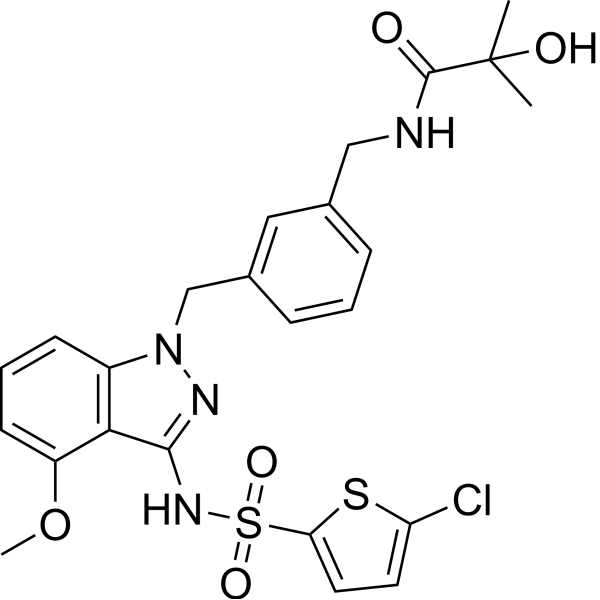
HY-100183
GSK2239633ACCR4 Antagonist -
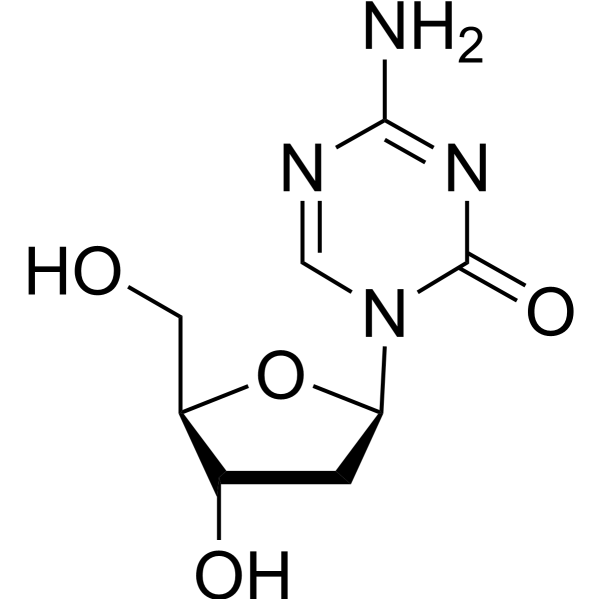
HY-A0004
DecitabineDNMT Inhibitor -
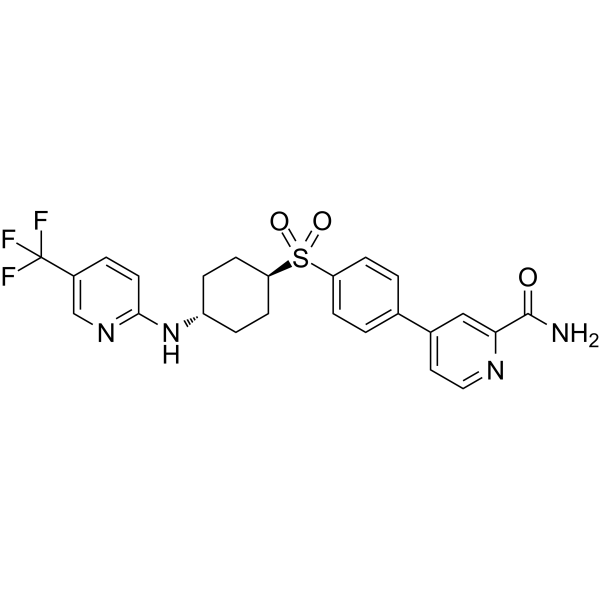
HY-112701
CCR6 inhibitor 1CCR Inhibitor -
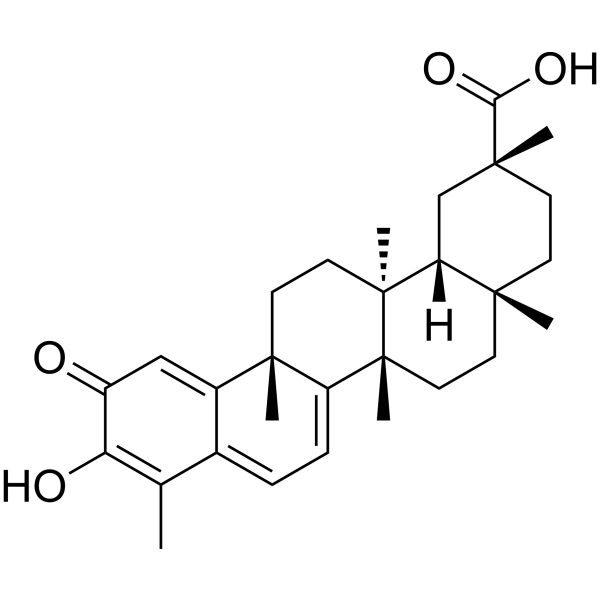
HY-13067
CelastrolAutophagy Inducer
Publications Citing Use of MedChemExpress (MCE) PF-4136309
More Customer Validation & Images

-
Cell Proliferation/Viability Assay


Biologische Aktivität
Beschreibung
IC50 & Target
[1]|
Human CCR2 5.2 nM (IC50) |
Mouse CCR2 13 nM (IC50) |
Rat CCR2 17 nM (IC50) |
In Vitro
PF-4136309 is potent in human chemotaxis activity (IC50=3.9 nM) and in the whole blood assay (IC50=19 nM), with IC50 of 16 and 2.8 nM in mouse and rat chemotaxis assays. PF-4136309 is potent in inhibiting CCR2 mediated signaling events such as intracellular calcium mobilization and ERK (extracellular signal-regulated kinase) phosphorylation with IC50 values of 3.3 and 0.5 nM, respectively. In hERG patch clamp assay, PF-4136309 inhibits hERG potassium current with an IC50 of 20 μM. PF-4136309 is not a cytochrome P450 (CYP) inhibitor, with IC50 values of >30 μM against five major CYP isozymes CYP1A2, CYP2C9, CYP2C19, CYP2D6, and CYP3A4. Moreover, PF-4136309 is not a CYP inducer at concentrations up to 30 μM[1].
MedChemExpress (MCE) has not independently confirmed the accuracy of these methods. They are for reference only.
In Vivo
MedChemExpress (MCE) has not independently confirmed the accuracy of these methods. They are for reference only.


Chemical Information
-
CAS. Nr. 1341224-83-6
-
Appearance Solid
-
Molecular Weight 568.59
-
Formel C29H31F3N6O3
-
Color Off-white to light yellow
-
SMILES
O[C@]1(CC[C@](CC1)([H])N[C@@H]2CN(CC2)C(CNC(C3=CC=CC(C(F)(F)F)=C3)=O)=O)C4=NC=C(C=C4)C5=NC=CC=N5
-
Synonyms
INCB8761
-
Versand
Room temperature in continental US; may vary elsewhere.
-
Speicherung
Powder -20°C 3 years 4°C 2 years In solvent -80°C 2 years -20°C 1 year


Publications (5)
-
Journal Impact Factor
-
Most Recent
-
Mater Today
Overcoming pancreatic cancer immune resistance by codelivery of CCR2 antagonist using a STING-activating gemcitabine-based nanocarrier. [Abstract]2023 Jan-Feb:62:33-50. PMID: 38239407
PF-4136309 purchased from MedChemExpress. Usage Cited in: Mater Today. 2023 Jan-Feb:62:33-50. [Abstract]
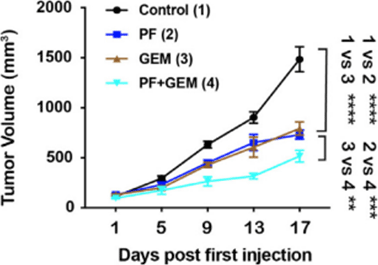
PGEM/PF-4136309 (PF) micelles exhibits potent anti-tumor efficacy. Tumor growth curve after combination of GEM (20 mg/kg; i.v) and PF (10 mg/kg; i.v). PGEM, an ultrasmall prodrug polymeric carrier of Gemcitabine (GEM).
-
Adv Sci (Weinh)
Deciphering the Role and Mechanism of Decidual Monocyte-Derived Macrophage Infiltration in Obstetric Antiphospholipid Syndrome at Single-Cell Resolution. [Abstract]2025 Aug 7:e03480. PMID: 40776470 -
Int J Mol Sci
Tumor-Microenvironment Characterization of the MB49 Non-Muscle-Invasive Bladder-Cancer Orthotopic Model towards New Therapeutic Strategies. [Abstract]2022 Dec 21;24(1):123. PMID: 36613562 -
-


Lösungsmittel & Löslichkeit
In Vitro:
Ethanol : 133.33 mg/mL (234.49 mM; Need ultrasonic)
DMSO : ≥ 34 mg/mL (59.80 mM; Hygroscopic DMSO has a significant impact on the solubility of product, please use newly opened DMSO)
H2O : < 0.1 mg/mL (insoluble)
* "≥" means soluble, but saturation unknown.
Please refer to the solubility information to select the appropriate solvent. Once prepared, please aliquot and store the solution to prevent product inactivation from repeated freeze-thaw cycles.
Storage method and period of stock solution: -80°C, 2 years; -20°C, 1 year. When stored at -80°C, please use it within 2 years. When stored at -20°C, please use it within 1 year.
Please refer to the solubility information to select the appropriate solvent. Once prepared, please aliquot and store the solution to prevent product inactivation from repeated freeze-thaw cycles.
Storage method and period of stock solution: -80°C, 2 years; -20°C, 1 year. When stored at -80°C, please use it within 2 years. When stored at -20°C, please use it within 1 year.
Konzentration (Stammlösung) × Volumen (Stammlösung) = Konzentration (Ziellösung) × Volumen (Ziellösung)
In Vivo:
Select the appropriate dissolution method based on your experimental animal and administration route.
- For the following dissolution methods, please ensure to first prepare a clear stock solution using an In Vitro approach and then sequentially add co-solvents:
- To ensure reliable experimental results, the clarified stock solution can be appropriately stored based on storage conditions. As for the working solution for In Vivo experiments, it is recommended to prepare freshly and use it on the same day.
- The percentages shown for the solvents indicate their volumetric ratio in the final prepared solution. If precipitation or phase separation occurs during preparation, heat and/or sonication can be used to aid dissolution.
Add each solvent one by one: 10% EtOH 40% PEG300 5% Tween-80 45% Saline
Solubility: ≥ 5 mg/mL (8.79 mM); Clear solution
This protocol yields a clear solution of ≥ 5 mg/mL (saturation unknown).
Taking 1 mL working solution as an example, add 100 μL EtOH stock solution (50.0 mg/mL) to 400 μL PEG300, and mix evenly; then add 50 μL Tween-80 and mix evenly; then add 450 μL Saline to adjust the volume to 1 mL.
Preparation of Saline: Dissolve 0.9 g sodium chloride in ddH₂O and dilute to 100 mL to obtain a clear Saline solution.
Add each solvent one by one: 10% EtOH 90% (20% SBE-β-CD in Saline)
Solubility: ≥ 5 mg/mL (8.79 mM); Clear solution
This protocol yields a clear solution of ≥ 5 mg/mL (saturation unknown).
Taking 1 mL working solution as an example, add 100 μL EtOH stock solution (50.0 mg/mL) to 900 μL 20% SBE-β-CD in Saline, and mix evenly.
Preparation of 20% SBE-β-CD in Saline (4°C, storage for one week): 2 g SBE-β-CD powder is dissolved in 10 mL Saline, completely dissolve until clear.
Add each solvent one by one: 10% EtOH 90% Corn Oil
Solubility: ≥ 5 mg/mL (8.79 mM); Clear solution
This protocol yields a clear solution of ≥ 5 mg/mL (saturation unknown). If the continuous dosing period exceeds half a month, please choose this protocol carefully.
Taking 1 mL working solution as an example, add 100 μL EtOH stock solution (50.0 mg/mL) to 900 μL Corn oil, and mix evenly.
Add each solvent one by one: 10% DMSO 40% PEG300 5% Tween-80 45% Saline
Solubility: ≥ 2.08 mg/mL (3.66 mM); Clear solution
This protocol yields a clear solution of ≥ 2.08 mg/mL (saturation unknown).
Taking 1 mL working solution as an example, add 100 μL DMSO stock solution (20.8 mg/mL) to 400 μL PEG300, and mix evenly; then add 50 μL Tween-80 and mix evenly; then add 450 μL Saline to adjust the volume to 1 mL.
Preparation of Saline: Dissolve 0.9 g sodium chloride in ddH₂O and dilute to 100 mL to obtain a clear Saline solution.
For the following dissolution methods, please prepare the working solution directly:
It is recommended to prepare fresh solutions and use them promptly within a short period of time.
The percentages shown for the solvents indicate their volumetric ratio in the final prepared solution. If precipitation or phase separation occurs during preparation, heat and/or sonication can be used to aid dissolution.
Add each solvent one by one: 0.5% Methylcellulose/saline water
Solubility: 10 mg/mL (17.59 mM); Suspended solution; Need ultrasonic
In Vivo Dissolution Calculator
Please enter the basic information of animal experiments:
-
-
-
-
Recommended: Prepare an additional quantity of animals to account for potential losses during experiments.
Please enter your animal formula composition:
-
%DMSO +
Recommended: Keep the proportion of DMSO in working solution below 2% if your animal is weak.
-
%+
-
+%Tween-80 + +
-
%Saline +
The co-solvents required include: DMSO, . All of co-solvents are available by MedChemExpress (MCE). , Tween 80. All of co-solvents are available by MedChemExpress (MCE).
Working solution concentration: 0.22 mg/mL
Method for preparing stock solution: mg drug dissolved in μL DMSO. Stock solution concentration: mg/mL.
1. Take μL DMSO stock solution;
2. Add μL .
μL , mix evenly;
3. Then add μL Tween 80, mix evenly;
4. Then add μL
Please ensure that the stock solution in the first step is dissolved to a clear state, and add co-solvents in sequence. You can use ultrasonic heating (ultrasonic cleaner, recommended frequency 20-40 kHz), vortexing, etc. to assist dissolution.


Reinheit & Dokumentation
-
Data Sheet (277 KB)
-
SDS (396 KB)
- English - EN (396 KB)
- Français - FR (396 KB)
- Deutsch - DE (396 KB)
- Norwegian - NO (396 KB)
- Español - ES (396 KB)
- Swedish - SV (396 KB)
- Italian - IT (396 KB)
- Korean - KR (396 KB)
- Portuguese - PT (396 KB)
-
Handling Instructions (2659 KB)
Verweise
[1]. Xue CB, et al. Discovery of INCB8761/PF-4136309, a Potent, Selective, and Orally Bioavailable CCR2 Antagonist. ACS Med. Chem. Lett., 2011, 2 (12), pp 913-918. [Content Brief]
[2]. Wang W, Chen XK, Zhou L, et al. Chemokine CCL2 promotes cardiac regeneration and repair in myocardial infarction mice via activation of the JNK/STAT3 axis. Acta Pharmacol Sin. Published online December 12, 2023. [Content Brief]


Complete Stock Solution Preparation Table
Please refer to the solubility information to select the appropriate solvent. Once prepared, please aliquot and store the solution to prevent product inactivation from repeated freeze-thaw cycles.
Storage method and period of stock solution: -80°C, 2 years; -20°C, 1 year. When stored at -80°C, please use it within 2 years. When stored at -20°C, please use it within 1 year.
| Optional Solvent | Concentration Solvent Mass | 1 mg | 5 mg | 10 mg | 25 mg |
|---|---|---|---|---|---|
| DMSO / Ethanol | 1 mM | 1.7587 mL | 8.7937 mL | 17.5874 mL | 43.9684 mL |
| 5 mM | 0.3517 mL | 1.7587 mL | 3.5175 mL | 8.7937 mL | |
| 10 mM | 0.1759 mL | 0.8794 mL | 1.7587 mL | 4.3968 mL | |
| 15 mM | 0.1172 mL | 0.5862 mL | 1.1725 mL | 2.9312 mL | |
| 20 mM | 0.0879 mL | 0.4397 mL | 0.8794 mL | 2.1984 mL | |
| 25 mM | 0.0703 mL | 0.3517 mL | 0.7035 mL | 1.7587 mL | |
| 30 mM | 0.0586 mL | 0.2931 mL | 0.5862 mL | 1.4656 mL | |
| 40 mM | 0.0440 mL | 0.2198 mL | 0.4397 mL | 1.0992 mL | |
| 50 mM | 0.0352 mL | 0.1759 mL | 0.3517 mL | 0.8794 mL | |
| Ethanol | 60 mM | 0.0293 mL | 0.1466 mL | 0.2931 mL | 0.7328 mL |
| 80 mM | 0.0220 mL | 0.1099 mL | 0.2198 mL | 0.5496 mL | |
| 100 mM | 0.0176 mL | 0.0879 mL | 0.1759 mL | 0.4397 mL |


PF-4136309 Related Classifications
HY-13245 Related Classifications
 Powered by Bioz