



Others
-
Others Related Products (75490)
Related Products (75490)


-
Butyryl-Coenzyme A sodium
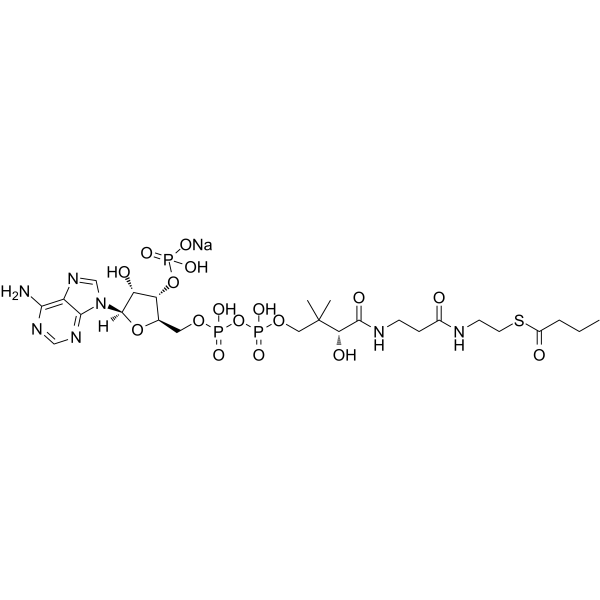 0 ImagesCat. No.: HY-138177CAS No.: 125527-24-4Synonyms: Butyryl CoA sodium
Butyryl-Coenzyme A (Butyryl CoA) sodium is a coenzyme A-containing derivative of Butyric acid. Butyryl-Coenzyme A sodium is responsible for the final step of Butyrate production in bacteria.
-
PREP inhibitor-1
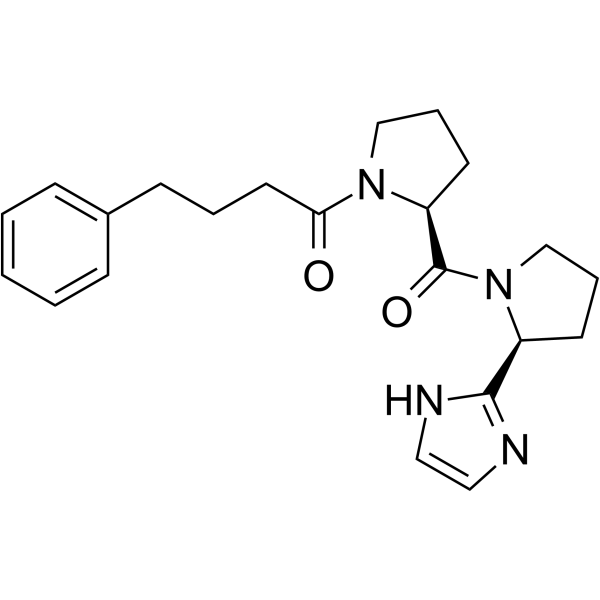 0 Images
PREP inhibitor-1 (compound 27a) is a highly potent prolyl oligopeptidase (PREP) inhibitor (IC50 < 1 nM).
-
Tripentadecanoin-d29
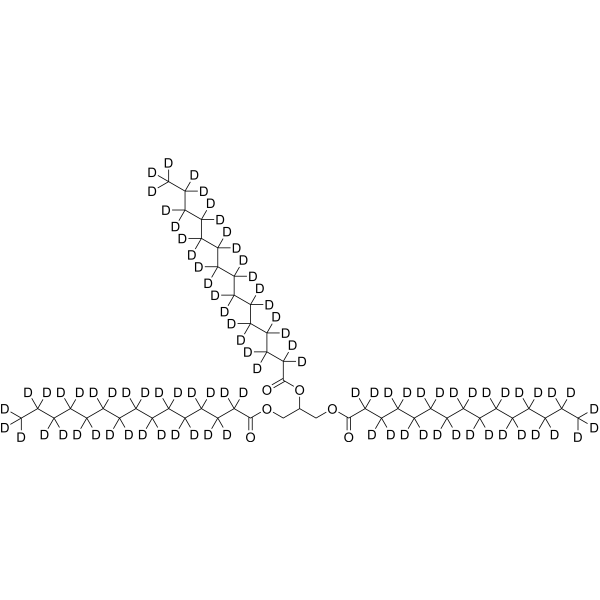 0 ImagesSynonyms: TG(15:0/15:0/15:0)-d29; 1,2,3-Tripentadecanoyl glycerol-d29
Tripentadecanoin-d29 is the deuterium labeled Tripentadecanoin.
-
Hoechst 33258 analog
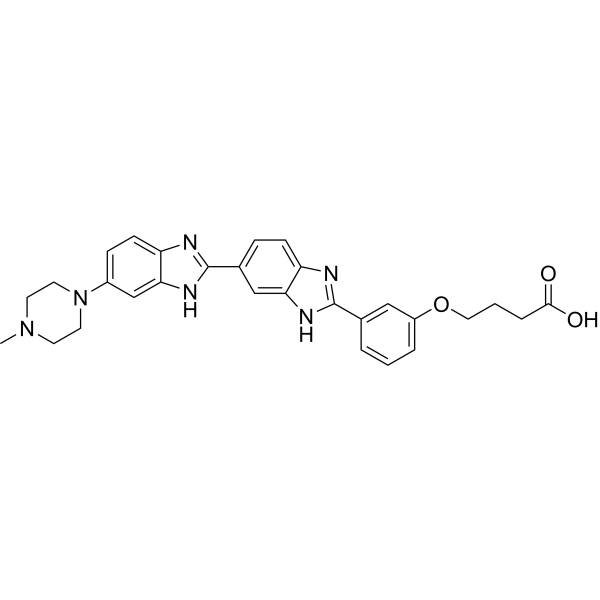 0 Images
Hoechst 33258 analog is a marker dye in Hoechst series. Hoechst is A live nuclear marker dye. Hoechst binds to the grooves in the DNA double strand, which tends to be A/ T-rich DNA strand. Although it binds to all nucleic acids, the A/ T-rich double strand DNA significantly enhances fluorescence intensity Therefore,Hoechst dye can be used for living cell labeling. The fluorescence intensity of Hoechst dye increases with the increase of pH of solution.
-
EphA2 antagonist 1
 0 ImagesCat. No.: HY-169849CAS No.: 1428095-28-6
-
Ammonium citrate dibasic, 99%
 0 ImagesSynonyms: Ammonium hydrogencitrate, 99%; Diammonium hydrogen citrate, 99%
Ammonium citrate dibasic, 99% (Ammonium hydrogencitrate, 99%) can be used as the carbon source to prepare carbon quantum dots (CDs). Ammonium citrate dibasic, 99% is a buffering agent.
-
DIDNTB
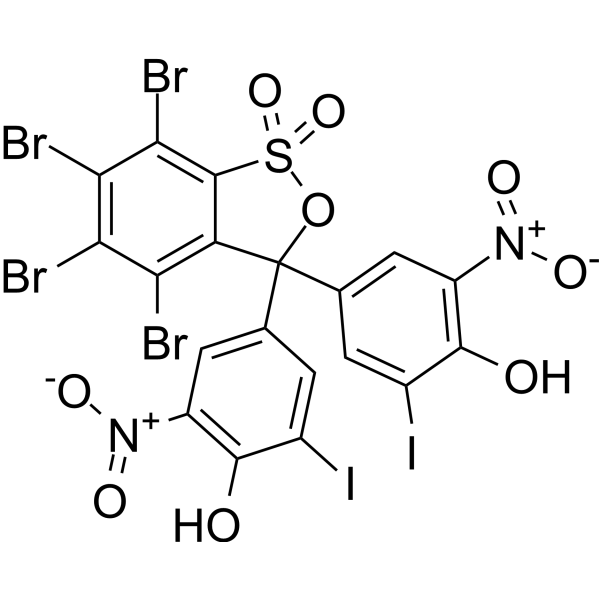 0 ImagesCat. No.: HY-D0862CAS No.: 145551-16-2
DIDNTB is a dye. DIDNTB exhibits chemical sensitivity and specificity toward albumin. DIDNTB is much less affected by other proteins. DIDNTB enables the detection of urinary albumin at concentrations ≥10 mg/L.\n
-
Sulfo-Cy5-tetrazine
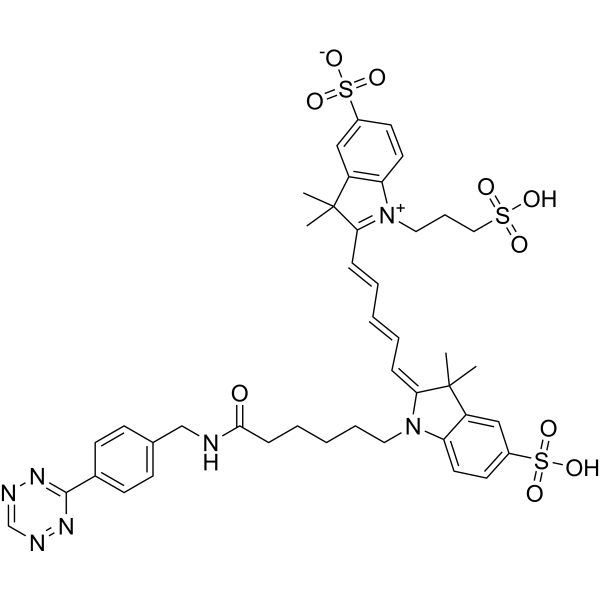 0 ImagesCat. No.: HY-D1482CAS No.: 1801695-57-7
Sulfo Cy5-tetrazine is a tetrazine-coupled Cy5 (HY-D0821) derivative dye with fluorescence properties similar to CY5 (Ex/Em=633/647 nm). Sulfo-Cy5-tetrazine is a click chemistry reagent, it contains a Tetrazine group that can undergo an inverse electron demand Diels-Alder reaction (iEDDA) with molecules containing TCO groups.
-
3-Hydroxyacetophenone
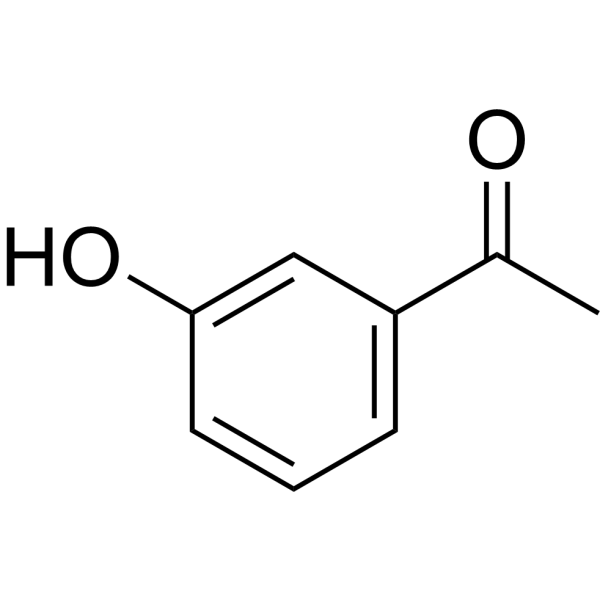 0 Images
3-Hydroxyacetophenone (m-Hydroxyacetophenone) is a hydroxy-substituted alkyl phenyl ketone and also a plant defensin in carnations. 3-Hydroxyacetophenone has antifusarium activity. In addition, 3-Hydroxyacetophenone can be used to synthesize Rivastigmine (HY-17368).
-
Pyruvic acid-13C
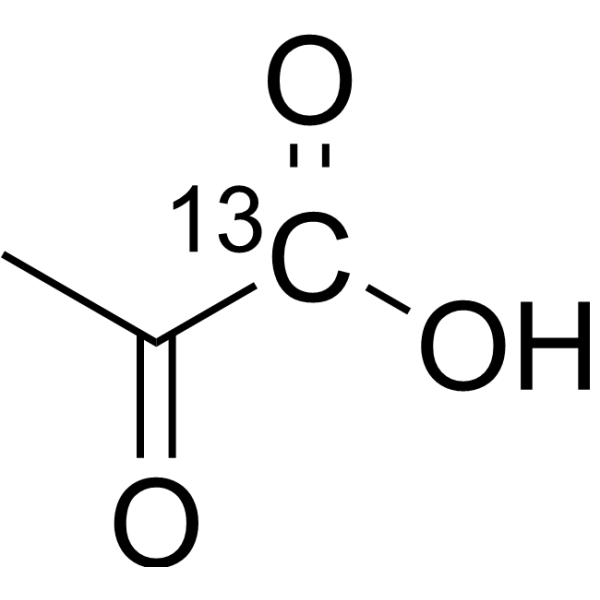 0 ImagesSynonyms: Acetylformic acid-13C
Pyruvic acid-13C is the 13C labeled Pyruvic acid. Pyruvic acid is an intermediate metabolite in the metabolism of carbohydrates, proteins, and fats.

-
(S)-Malic acid-13C4
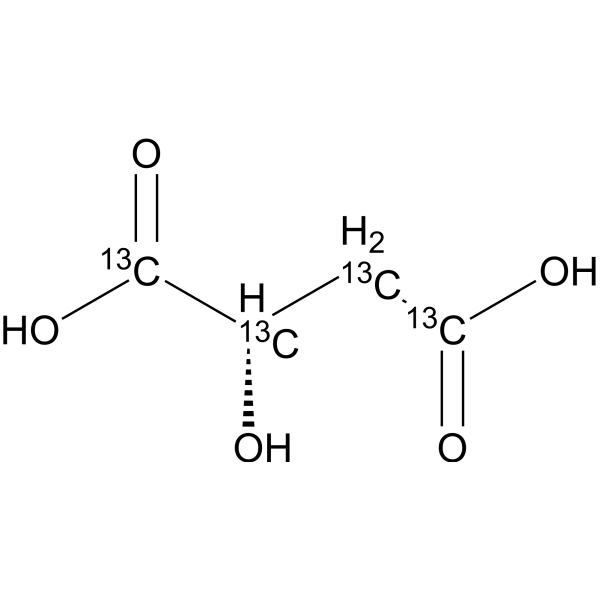 0 ImagesSynonyms: (S)-Hydroxybutanedioic acid-13C4; (S)-E 296-13C4; L-Malic acid-13C4
(S)-Malic acid-13C4 is the 13C labeled S-Malic acid (HY-Y1069).
-
Potassium carbonate, 99%
 0 Images
Potassium carbonate, with a purity of 99%, is an inorganic compound. At low concentrations, potassium carbonate can be used as an alkaline treatment agent and feed buffer in pork processing, as well as to inhibit the synthesis of milk fat in dairy cows.
-
Aconitic acid
 0 ImagesSynonyms: NSC 7616
Aconitic acid (NSC 7616) is an organic acid, and can be isolated from seeds of Brassica oleracea var. acephala (kale). Aconitic acid has antifungal activity.
-
5-Chlororesorcinol dimethyl ether
 0 Images
5-Chlororesorcinol dimethyl ether is a synthetic intermediate useful for pharmaceutical synthesis.
-
4-Pyrimidine methanamine
 0 ImagesCat. No.: HY-W017769CAS No.: 45588-79-2Synonyms: Pyrimidin-4-ylmethanamine
4-Pyrimidine methanamine (Pyrimidin-4-ylmethanamine) is a synthetic intermediate useful for pharmaceutical synthesis.
-
2-Carboxyphenol-d4
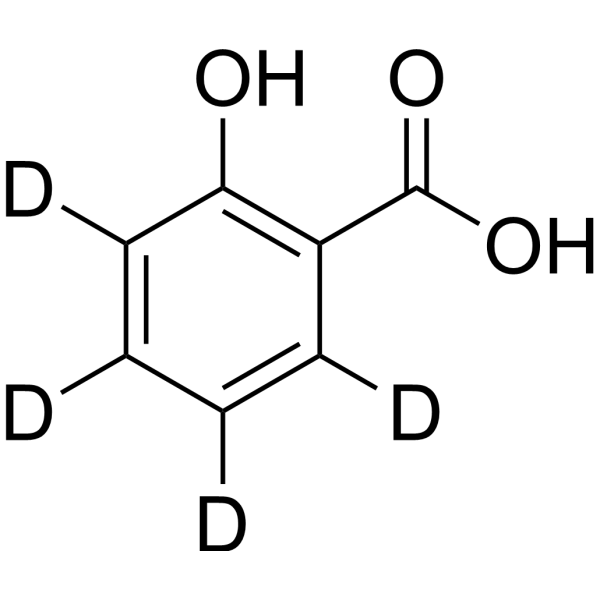 0 Images
2-Carboxyphenol-d4 is the deuterium labeled 2-Carboxyphenol. 2-Carboxyphenol is a plant hormone and mediates host responses against microbial pathogens.
-
3-(N-Maleimidopropionyl)biocytin
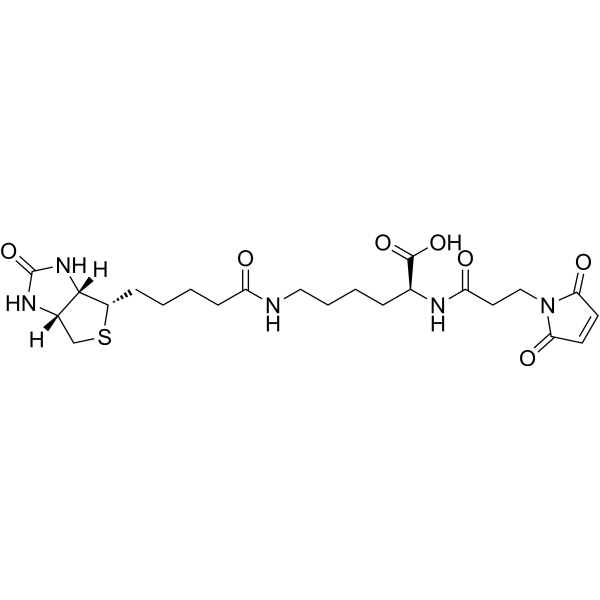 0 ImagesCat. No.: HY-W020784CAS No.: 102849-12-7
3-(N-Maleimidopropionyl)biocytin is a cysteine-specific labeling reagent and non-membrane-permeable probe. 3-(N-Maleimidopropionyl)biocytin covalently modifies the exposed cysteine residues of yeast Tim44, conjugating the biotin moiety to the polypeptide chain. 3-(N-Maleimidopropionyl)biocytin determines the topology of membrane proteins by modifying the exposed cysteine residues on the outer side of the inner mitochondrial membrane.



