Others
-
Others Related Products (76326)
Related Products (76326)


-
Hyaluronic acid (MW 50000-100000)
 0 ImagesSynonyms: Hyaluronan (MW 50000-100000); Hyaluronate (MW 50000-100000)
Hyaluronic acid (MW 50000-100000) (Hyaluronan (MW 50000-100000)) is a biopolymer composed of repeating units of disaccharides with a molecular weight of 50000-100000 Da. Hyaluronic acid (MW 50000-100000) can be used as a drug carrier for drug delivery.
-
YO-PRO-1
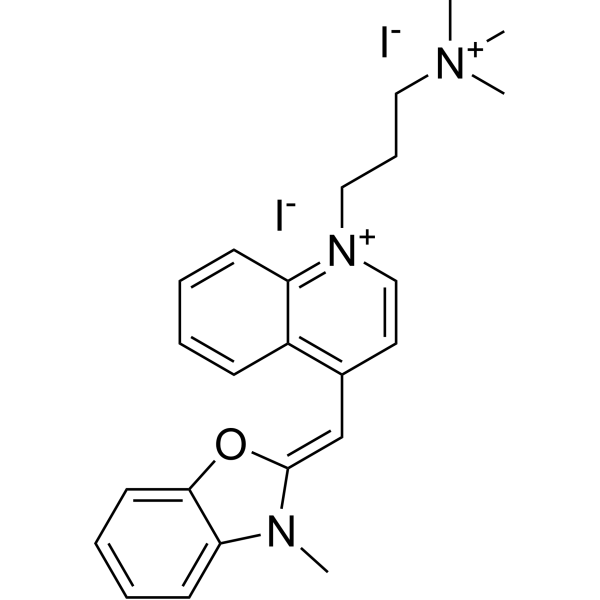 0 Images
YO-PRO-1 is a non-cell-membrane-penetrating green fluorescent dye. YO-PRO-1 cannot penetrate normal cell membranes but can penetrate the membranes of apoptotic and necrotic cells. YO-PRO-1 has a high affinity for DNA. When it is not bound to DNA, it emits almost no fluorescence, and when it binds to DNA, it can emit green fluorescence (Ex/Em: 488/530±30 nM). YO-PRO-1 is often used together with Propidium Iodide (HY-D0815) to analyze and identify apoptotic and necrotic cells.
-
BODIPY 576/589
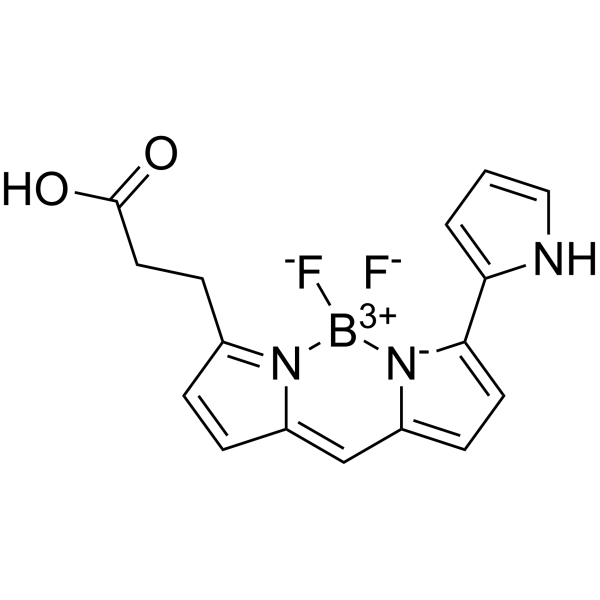 0 ImagesCat. No.: HY-D1118CAS No.: 150173-78-7
BODIPY 576/589 is a long wavelength biological labeled dye contains a free COOH-group (Em/Ex = 589/576 nm).
-
Fast Red Violet LB Zinc chloride
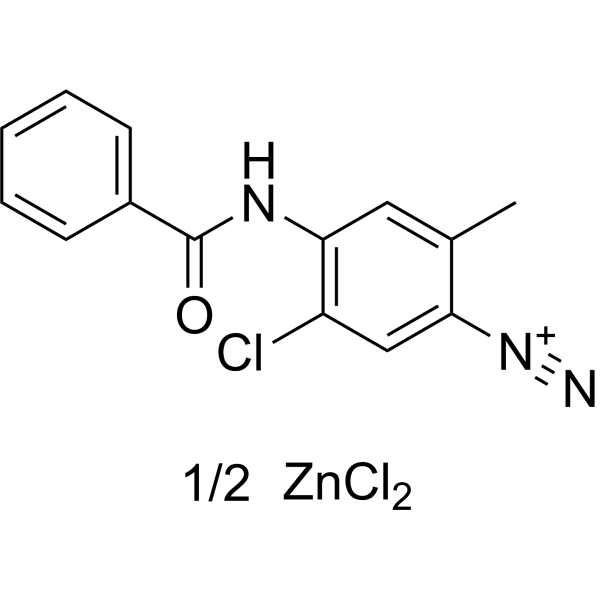 0 ImagesCat. No.: HY-D1491APurity: 99.50%
Fast Red Violet LB Zinc chloride is a stain that stains tartrate-resistant acid phosphatase (TRAP) and Fast Red Violet LB Zinc chloride can be used to stain alkaline phosphatase (ALP) activity.

-
Epimedin B
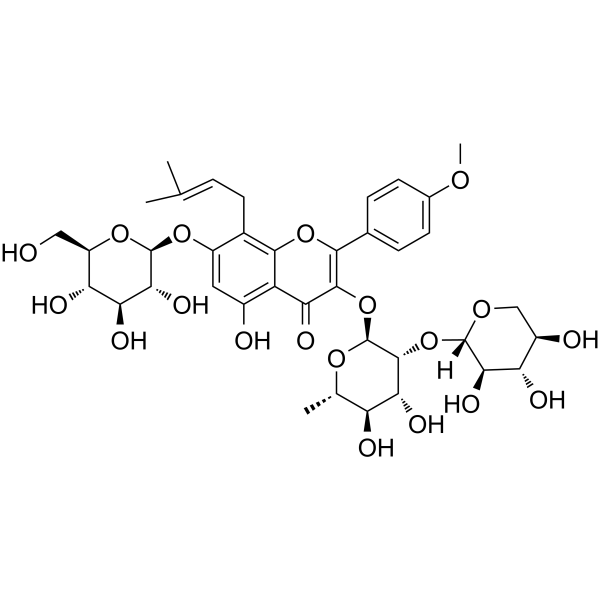 0 ImagesSynonyms: Epmedin B
Epimedin B, a component extracted from Epimedii Folium, is reported to have antiosteoporotic activity.

-
DiZPK
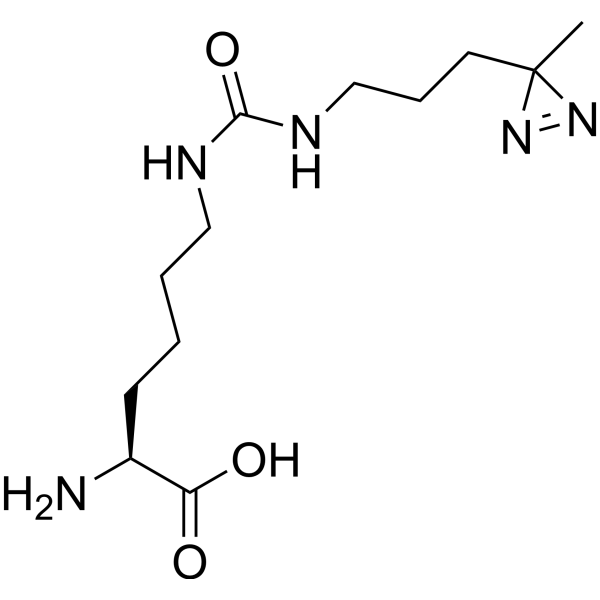 0 Images
DiZPK is a photocrosslinker for identifying direct protein-protein interactions in living prokaryotic and eukaryotic cells.
-
Fluorescein tyramide
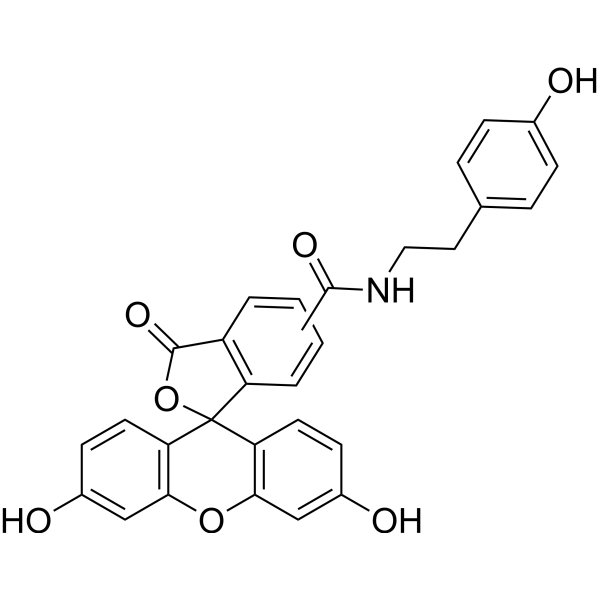 0 ImagesCat. No.: HY-131008CAS No.: 210236-90-1
Fluorescein tyramide is a green fluorescent reagent (λabs: 494 nm; λem: 517 nm). Fluorescein tyramide is widely used for tyramide signal amplification (TSA) with a low-abundance in IHC, ICC, in situ hybridization (FISH) and flow cytometry (FCM) applications.
-
Janelia Fluor® 646, Azide
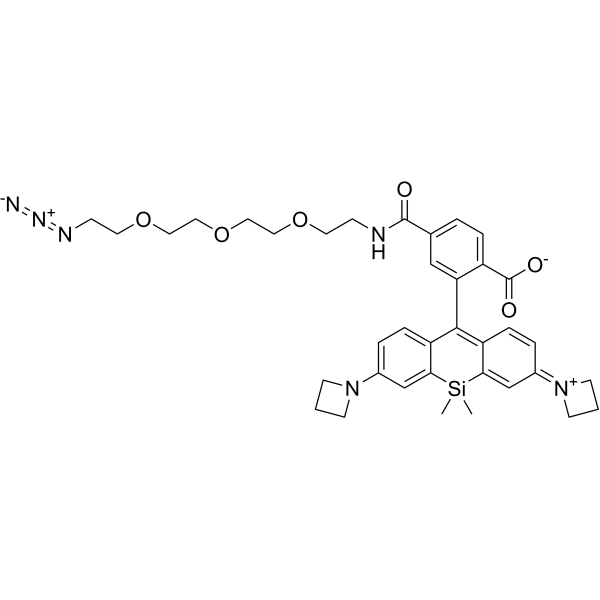 0 ImagesCat. No.: HY-131027Purity: 99.09%Synonyms: JF646, Azide
Janelia Fluor 646, Azide (JF646, Azide) is a red fluorogenic fluorescent dye containing a click chemistry group Azide. Janelia Fluor 646, Azide can be used for live-cell imaging experiments. Janelia Fluor fluorescent dyes can be chemically conjugated to the specific HaloTag substrate (a chloroalkane ligand) to form a fluorescent ligand, rather than binding directly to the HaloTag protein itself. Janelia Fluor products are licensed under U.S. Pat. Nos. 9,933,417, 10,018,624 and 10,161,932 and other patents from Howard Hughes Medical Institute. Janelia Fluor 646, Azide is a click chemistry reagent, it contains an Azide group and can undergo copper-catalyzed azide-alkyne cycloaddition reaction (CuAAc) with molecules containing Alkyne groups. It can also undergo strain-promoted alkyne-azide cycloaddition (SPAAC) reactions with molecules containing DBCO or BCN groups (Ex/Em = 646/664 nm).
-
Octanoyl coenzyme A lithium
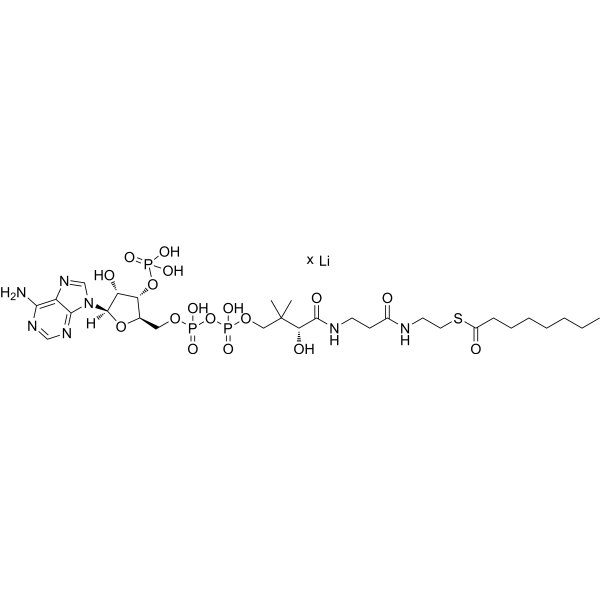 0 Images
Octanoyl coenzyme A lithium is an enoyl-CoA hydratase binder. Octanoyl coenzyme A lithium binds to the active site of enoyl-CoA hydratase, occupies the binding pocket for the fatty acid tail of the enzyme's substrate, and induces a conformational shift in a flexible protein loop via its longer octanoyl chain, forming an open channel leading to the inter-trimer gap.
-
8pyDTZ
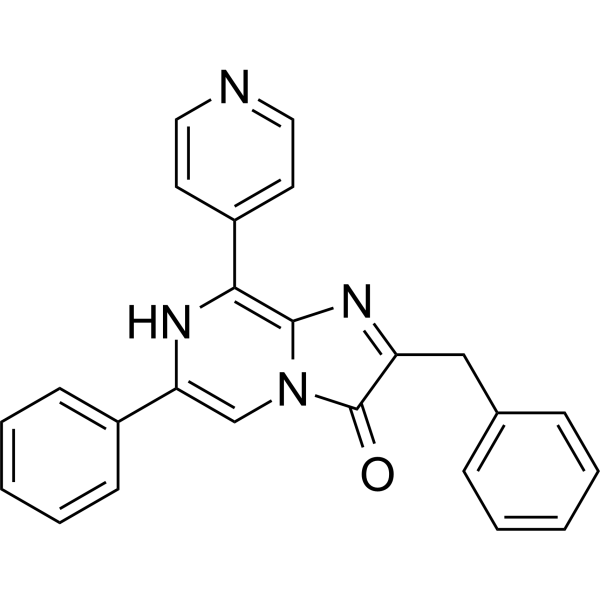 0 Images
8pyDTZ is a pyridyl diphenylterazine (DTZ) analog and an ATP-independent pyridyl substrate of LumiLuc luciferase. 8pyDTZ exhibits spectrally shifted emission. 8pyDTZ has excellent biocompatibility and superior in vivo sensitivity. 8pyDTZ can be used for in vivo luminescence imaging.
-
Cross-linked dextran LH 20
 0 Images
Cross-linked dextran LH 20 could be used for the isolation and purification of natural compounds and foods, such as red wine, pigments, and flavonoids.
-
N-Palmitoyl-L-glutamine
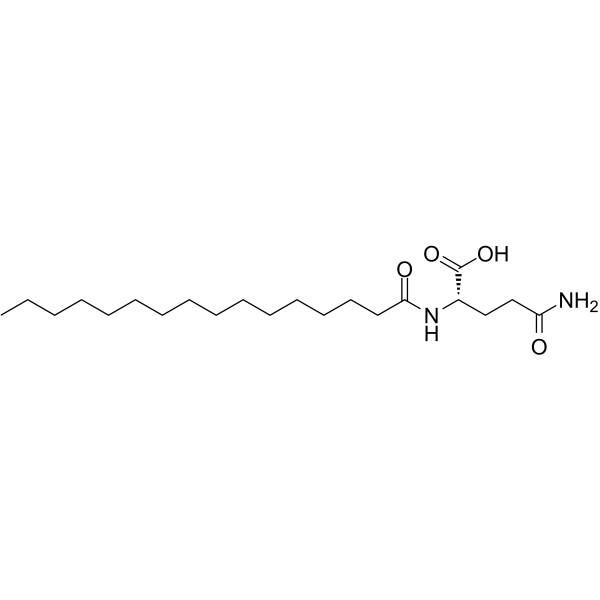 0 ImagesCat. No.: HY-139666CAS No.: 58725-34-1
N-Palmitoyl-L-glutamine is a Glutamine derivative.

-
Sodium phosphate buffer 0.1M, pH 8.0
 0 ImagesCat. No.: HY-160113E
Sodium phosphate buffer 0.1M, pH 8.0 is an aqueous sodium phosphate buffer with a concentration of 0.1M and a pH value of 8.0. Sodium phosphate buffer 0.1M, pH 8.0 can be used for the preparation of hydrated micellar membranes, the construction of pH-sensitive nanocarriers, and the maintenance of stable environmental conditions for pH-cleavable PEG-Hz-PE micelles. Sodium phosphate buffer 0.1M, pH 8.0 can also serve as a universal solvent, reaction medium and eluent, and is widely applied in experimental processes such as antibody thiolation, nanoparticle purification and cross-linking reactions.