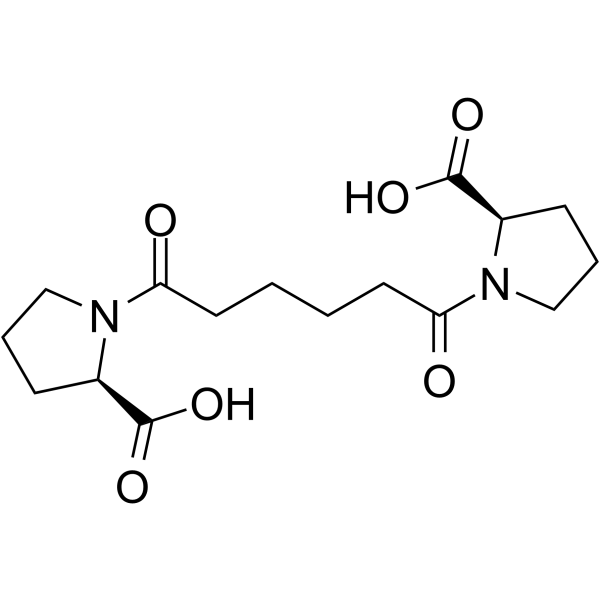
Amyloid-β
β-amyloid peptide; Aβ; Abeta
Amyloid-β (Aβ) denotes peptides of 36–43 amino acids that are crucially involved in Alzheimer's disease as the main component of theamyloid plaques found in the brains of Alzheimer patients. The peptides result from the amyloid precursor protein (APP), which is being cut by certain enzymes to yield Aβ. Amyloid-β molecules can aggregate to form flexible soluble oligomers which may exist in several forms. Amyloid-β peptide is due to overproduction of Aβ and/or the failure of clearance mechanisms. Amyloid-β self-aggregates into oligomers, which can be of various sizes, and forms diffuse and neuritic plaques in the parenchyma and blood vessels. Amyloid-β oligomers and plaques are potent synaptotoxins, block proteasome function, inhibit mitochondrial activity, alter intracellular Ca2+levels and stimulate inflammatory processes. Loss of the normal physiological functions of Aβ is also thought to contribute to neuronal dysfunction.
All Product Categories
-
Amyloid-β Inhibitors
(468)
View all products
-
Amyloid-β Agonists
(2)
View all products
-
Amyloid-β Antagonists
(5)
View all products
-
Amyloid-β Activators
(5)
View all products
-
Amyloid-β Modulators
(4)
View all products
-
Amyloid-β Chemicals
(7)
View all products
-
Amyloid-β Inducers
(5)
View all products
-
Amyloid-β Degraders
(6)
View all products
-
Amyloid-β Controls
(3)
View all products
-
Amyloid-β Substrate
(1)
View all products
-
Amyloid-β Ligands
(11)
View all products
-
Amyloid-β Related Products (744)
Related Products (744)

-
Antibodies (9)
-
Azure C
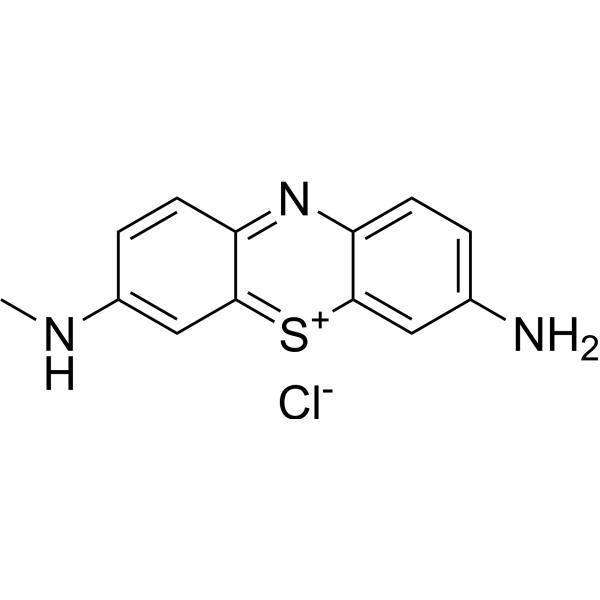 0 ImagesCat. No.: HY-W143216CAS No.: 531-57-7Synonyms: MonomethylthionineAzure C (Monomethylthionine) acts as a tau oligomer inhibitor and Aβ42 oligomerization inhibitor. Azure C regulates hsp70 ATPase activity, thereby mediating the clearance of tau protein. Azure C reduces the levels of toxic tau oligomers by promoting the formation of non-toxic tau aggregates, rescues neuroblastoma cells from tau oligomer-induced toxicity, and binds to and inhibits Aβ42 oligomerization. Azure C is generated via continuous oxidation of methylene blue or azure B through a horseradish peroxidase-mediated reaction. Azure C can be used in research related to tauopathies, including Alzheimer's disease.
-
ACI-19626
 0 ImagesSynonyms: TDP-43-IN-2ACI-19626 (TDP-43-IN-2) is a TDP-43 aggregation inhibitor that can be used in the research of neurodegenerative diseases.
-
Semax acetate
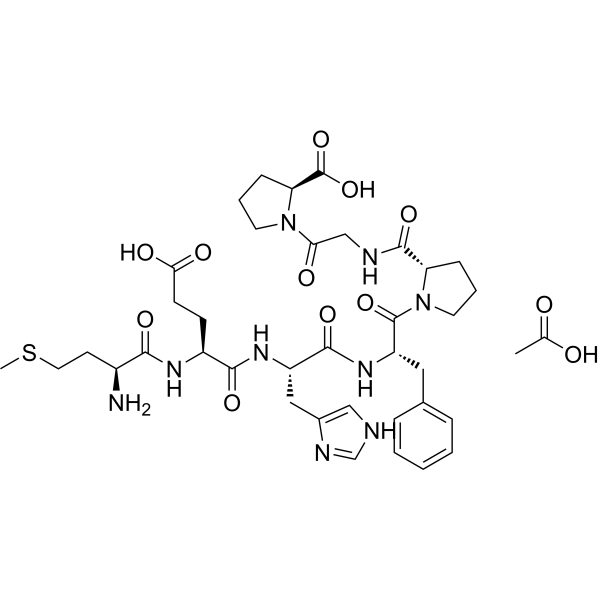 0 ImagesSemax acetate is a BBB-penetrable adrenocorticotropic hormone-like peptide and can form stable complexes with Cu2+. Semax acetate is a synthetic peptide analog of Adrenocorticotropic hormone (ACTH) (4-10). Semax acetate has immunomodulatory, nootropic and neuroprotective activities. Semax acetate can be used in the research of central nervous system diseases such as Alzheimer's disease and cerebral ischemia.
-
ELND 006
 0 ImagesELND 006 (Compound 30) is a metabolically stable γ-secretase inhibitor designed to selectively inhibit amyloid beta (Aβ) generation while sparing Notch signaling. It was developed through a synthetic strategy emphasizing diversity and chirality. ELND 006, along with its analog ELND007 (Compound 34), progressed into human clinical trials. In preclinical studies, both compounds demonstrated effective reduction of Aβ levels in vitro and in vivo. Comparisons with other γ-secretase inhibitors like Semagacestat, Begacestat, and Avagacestat underscored their potency and specificity in lowering Aβ levels in cerebrospinal fluid (CSF) of healthy human volunteers, suggesting potential therapeutic efficacy in Alzheimer's disease.
-
PF-719
 0 ImagesCat. No.: HY-113788CAS No.: 1404454-02-9PF-719 is a highly selective Pyk2 inhibitor with an IC50 value of 17 nM. PF-719 promotes the activation of LKB1 and p38 MAPK. PF-719 blocks synaptic deficits induced by Amyloid-beta oligomers and reverses the inhibition of long-term potentiation induced by β-amyloid oligomers. PF-719 can be used in research related to Alzheimer's disease and autoimmune diseases.
-
Phenserine
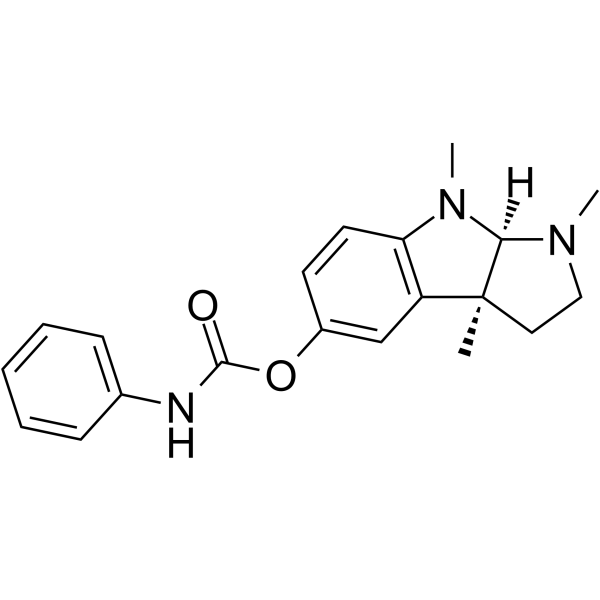 0 ImagesSynonyms: (-)-Eseroline phenylcarbamate; (-)-PhenserinePhenserine ((-)-Eseroline phenylcarbamate) is a derivative of Physostigmine (HY-N6608) and is a potent, noncompetitive, long-acting and selective AChE inhibitor. Phenserine reduces β-amyloid precursor protein (APP) and β-amyloid peptide (Aβ) formation. Phenserine improves cognitive performance and attenuates the progression of Alzheimer's disease.
-
RAGE antagonist peptide TFA
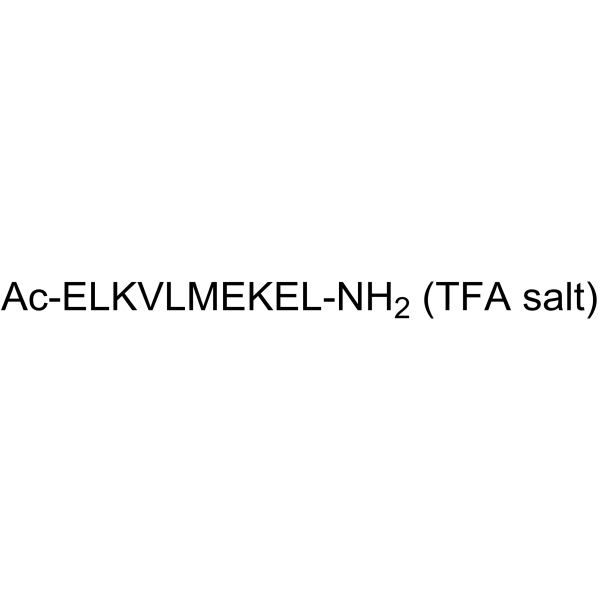 0 ImagesCat. No.: HY-P2268APurity: 99.41%RAGE antagonist peptide TFA is an advanced glycation end products (RAGE) antagonist. RAGE antagonist peptide TFA prevents RAGE from binding with several of its most important ligands, including HMGB-1, S100P, and S100A4. RAGE antagonist peptide TFA possesses anti-tumor and anti-inflammatory activities.
-
Dihydrochalcone
 0 ImagesSynonyms: 3-Phenylpropiophenone; β-PhenylpropiophenoneDihydrochalcone (3-Phenylpropiophenone) is a Aβ aggregation inhibitor. Dihydrochalcone destabilizes Aβ17-42 protofibrils by disrupting the β-sheet of β1 region. Dihydrochalcone destabilizes both U-shaped Aβ40/Aβ42 protofibrils and S-shaped Aβ42 protofibrils by binding to the protofibril cavity. Dihydrochalcone is the main component of daemonorops draco tree.
-
Simufilam
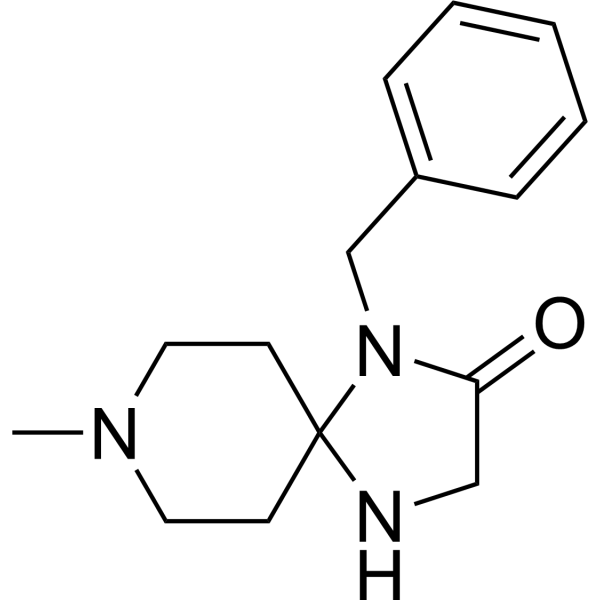 0 ImagesSynonyms: PTI-125Simufilam (PTI-125) is an orally active FLNA modulator. Simufilam restores NMDAR signaling and Arc expression. Simufilam inhibits overactive mTOR signaling by restoring the normal conformation of FLNA, improves insulin sensitivity, reduces Aβ42-induced neuroinflammation and tau protein hyperphosphorylation. Simufilam can be used for research of Alzheimer's disease.
-
Amilo-5MER TFA
 0 ImagesCat. No.: HY-P10935APurity: 99.45%Synonyms: 5-MP TFAAmilo-5MER (5-MP) TFA is an orally active and selective Serum Amyloid A (SAA) inhibitor. Amilo-5MER TFA specifically inhibits the release of pro-inflammatory cytokines IL-6 and IL-1β from SAA-activated cells. Amilo-5MER TFA reduces chronic inflammation and relieves symptoms of diseases such as rheumatoid arthritis (RA), inflammatory bowel disease (IBD), and multiple sclerosis (MS). Amilo-5MER TFA is promising for research of autoimmune diseases and chronic inflammatory diseases.
-
β-Amyloid (1-38) TFA
 0 ImagesCat. No.: HY-P3688APurity: 99.38%Synonyms: Aβ (1-38) TFA; Aβ38 TFAβ-Amyloid (1-38) (Aβ (1-38)) TFA is a β-Amyloid (Aβ) peptide. β-Amyloid (1-38) TFA interferes with the conversion of Aβ(1-42) to a β-sheet-rich aggregate. β-Amyloid (1-38)TFA reverses the negative impact of Aβ(1-42) on long-term potentiation in acute hippocampal slices and on membrane conductance in primary neurons, and mitigates an Aβ(1-42) phenotype in Caenorhabditis elegans.
-
EP2 receptor antagonist-3
 0 ImagesEP2 receptor antagonist-3 is a selective EP2 receptor antagonist (IC50: 8 nM in hEP2 SPA assay, 50 nM in hEP2 cAMP assay). EP2 receptor antagonist-3 increases the macrophage-mediated clearance of Amyloid-β plaques. EP2 receptor antagonist-3 can be used for the study of alzheimer’s diseases.
-
Zinc Phytate
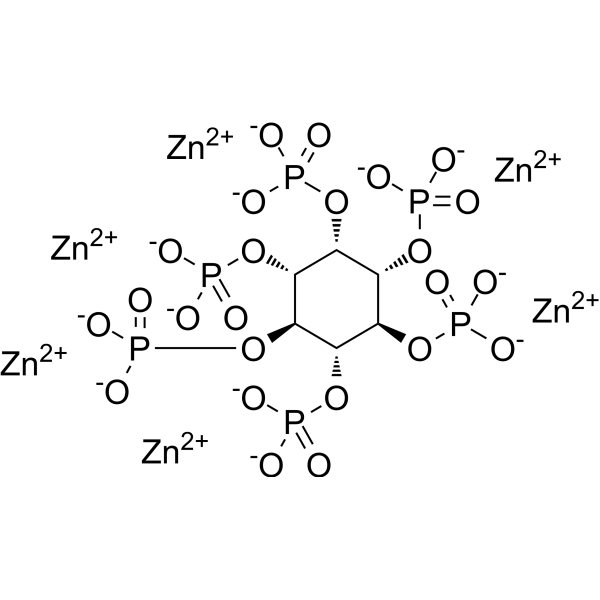 0 ImagesZinc Phytate (myo-Inositol; hexakis dihydrogen phosphate; Inositol hexaphosphate) is an orally active compound. Zinc Phytate can be derived from the seeds of legumes. Zinc Phytate is a [PO4]3- storage depot and precursor for other inositol phosphates and pyrophosphates. Zinc Phytate attenuates Aβ oligomers and upregulates autophagy protein. Zinc Phytate can be used in cardiovascular disease, metabolic disease, nervous system disease and cancer research.
-
Aβ1–42 aggregation inhibitor 1
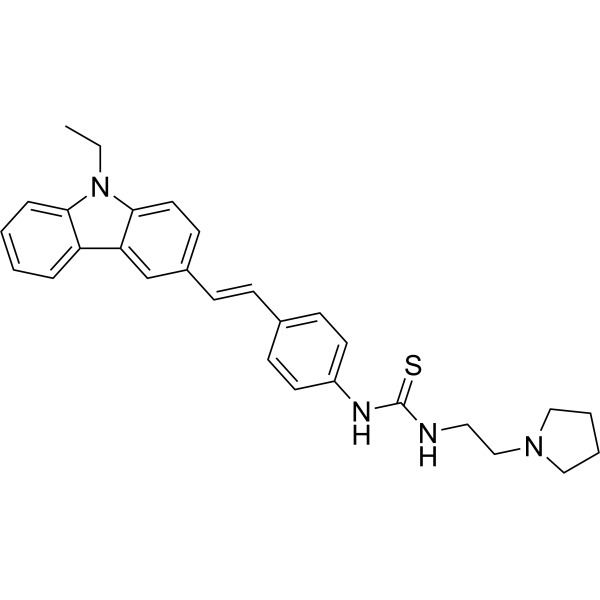 0 ImagesAβ1-42 aggregation inhibitor 1 inhibits AChE (acetylcholinesterase) and BuChE (butyrylcholinesterase) with the IC50 value of 2.64 μM and 1.29 μM, respectively. Aβ1-42 aggregation inhibitor 1 inhibits self-mediated Aβ1-42 aggregation by 51.29% at a concentration of 25 μM. Aβ1-42 aggregation inhibitor 1 has the potential for the research of anti-Alzheimer's disease.
-
Cl-NQTrp
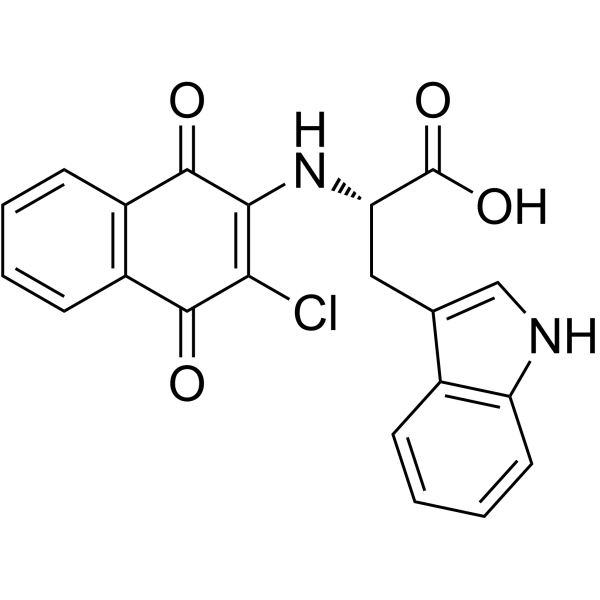 0 ImagesCl-NQTrp signifcantly disrupts the preformed fbrillar aggregates of Tau-derived PHF6 (VQIVYK) peptide and full-length tau protein.
-
β-Amyloid (35-42)
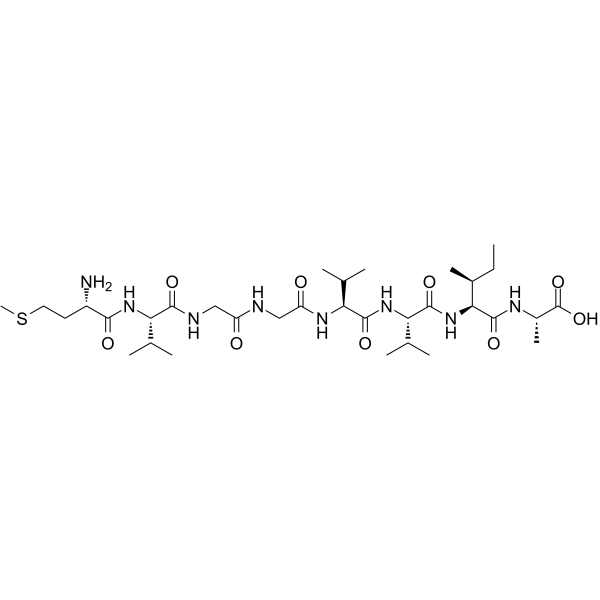 0 Imagesβ-Amyloid (35-42) is a peptide consisting of amino acid of 35 to 42 of beta amyloid protein.
-
TBPB
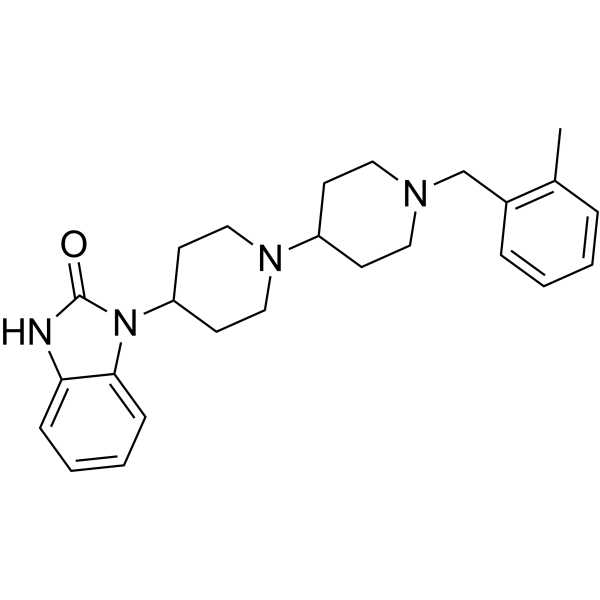 0 ImagesTBPB (tert-butyl peroxybenzoate) is a highly selective, blood-brain-permeable M1 mAChR allosteric agonist (EC50=289 nM) with anti-schizophrenia and anti-inflammatory activities. TBPB can enhance the sensitivity of M1 receptors to acetylcholine, activate downstream signaling pathways, and inhibit the release of pro-inflammatory cytokines (TNF-α, IL-6). TBPB can regulate the processing of amyloid and can be used in the study of neurodegenerative diseases (such as Alzheimer's disease) and inflammation-related diseases (such as sepsis).
-
gamma-secretase modulator 6
 0 Imagesgamma-secretase modulator 6 (Example 50) is a gamma-secretase modulator. gamma-secretase modulator 6 inhibits Aβ42 secretion in HEK cell line stably expressing APP (Aβ amyloid precursor protein) (pIC50: 8.1). gamma-secretase modulator 6 can be used for research of Alzheimer's disease.
-
Glimepiride (Standard)
 0 ImagesSynonyms: Glimperide (Standard); HOE-490 (Standard)Glimepiride (Standard) is the analytical standard of Glimepiride. This product is intended for research and analytical applications. Glimepiride (Glimperide) is a medium-to-long acting sulfonylurea anti-diabetic compound with an ED50 of 182 μg/kg.