



Amyloid-β Activator
-
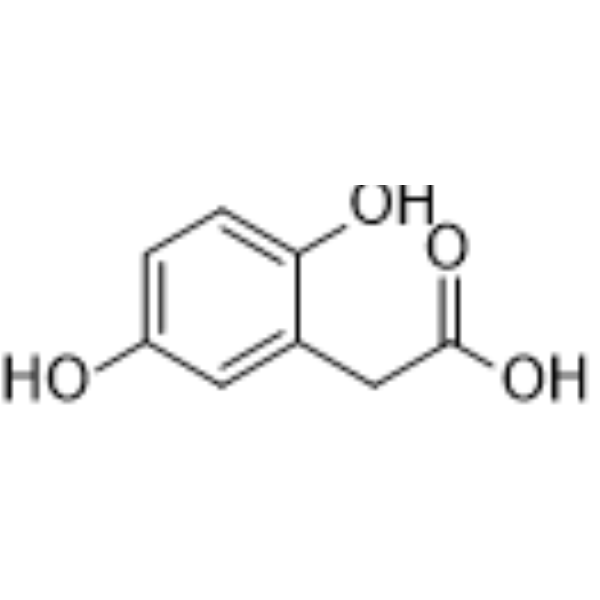
Homogentisic acid
 0 Images
Homogentisic acid is an orally active, blood-brain barrier-permeable amyloidogenic compound that functions as both an amyloid component and a pigment precursor. Accumulation of homogentisic acid downregulates tight junction proteins (such as claudin-5, occludin, ZO-1) and impairs blood-brain barrier integrity. Homogentisic acid and its oxidation product benzoquinone acetic acid not only induce the aggregation and fibrosis of multiple proteins (such as Aβ1-42, α-synuclein, SAA, Transthyretin (TTR), atrial natriuretic peptide), but also trigger oxidative stress, damage to the Wnt/β-catenin pathway, and neurotoxicity, leading to ochronosis pigment deposition and synaptic dysfunction. At specific concentrations, homogentisic acid exerts no cytotoxicity or genotoxicity on human peripheral blood lymphocytes, and even counteracts the genotoxicity induced by Irinotecan (HY-16562). Homogentisic acid serves as an important tool molecule for investigating the mechanisms of diseases including ochronosis, secondary amyloidosis, Alzheimer's disease, and colorectal cancer.
-
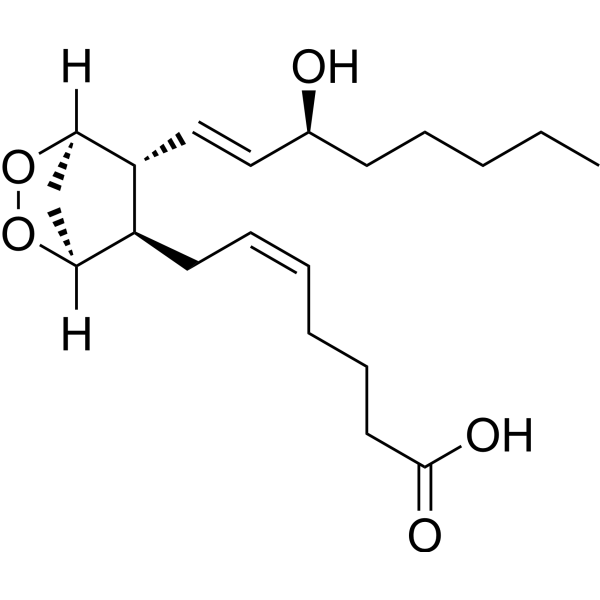
Prostaglandin H2
 0 ImagesSynonyms: PGH2
Prostaglandin H2 (PGH2) is an endothelium-derived contracting factor. Prostaglandin H2 can cause vasoconstriction. Prostaglandin H2 is the common precursor of all PGs and is produced by several cells that express cyclooxygen-ases. Prostaglandin H2 can activate PGD2 receptors CRTH2 and DP via interacting directly with the receptors and/or by giving rise to PGD2 after catalytic conversion by plasma proteins. Prostaglandin H2 can induce eosinophils migration and inhibit platelet aggregation. Prostaglandin H2 can accelerate the formation of dimers and higher oligomers of amyloid β1-42. Prostaglandin H2 can be used for the researches of inflammation and neurological disease, such as Alzheimer disease.
-
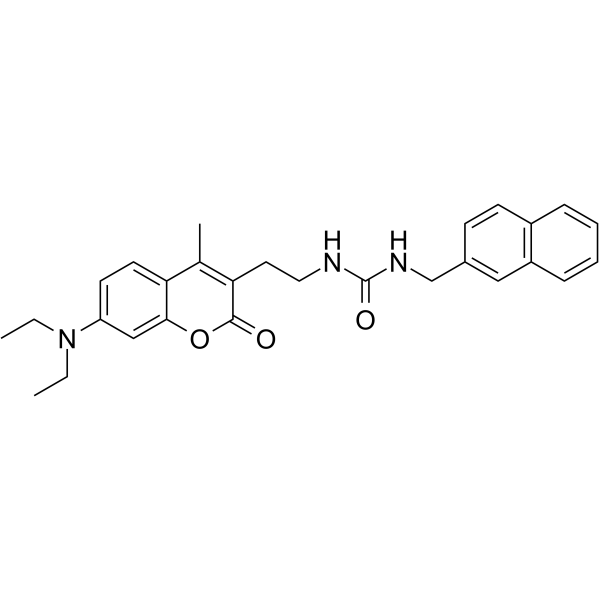
LC kinetic stabilizer-2
 0 ImagesCat. No.: HY-145890CAS No.: 2495750-20-2
LC kinetic stabilizer-2 is a potent amyloidogenic immunoglobulin light chain (LC) kinetic stabilizer with an EC50 of 24 nM.
-
Glycerophosphorylethanolamine sodium
 0 ImagesCat. No.: HY-134894ACAS No.: 883288-78-6Synonyms: GroPEtn sodium
Glycerophosphorylethanolamine (GroPEtn) sodium is an active phosphodiester metabolite of Phosphatidylethanolamine. Glycerophosphorylethanolamine sodium promotes the aggregation of amyloid β-protein (Aβ (1-40)) in vitro. Glycerophosphorylethanolamine sodium can be used in the field of neurodegenerative diseases, such as Alzheimer’s disease research.
-
Aβ aggregation modulator-1
 0 ImagesCat. No.: HY-13325CAS No.: 71939-12-3
Aβ aggregation modulator-1 is a stimulator of amyloid-β (Aβ) fibrillogenesis. Aβ aggregation modulator-1 binds hydrophobic residues in Aβ peptides and stabilizes β-sheet-rich protofibrils and fibrils. Aβ aggregation modulator-1 accelerates Aβ polymerization and reduces concentrations of small, toxic Aβ oligomers in heterogeneous aggregation reactions. Aβ aggregation modulator-1 suppresses long-term potentiation (LTP) inhibition by Aβ oligomers in hippocampal brain slices. Aβ aggregation modulator-1 can be used for the study of Alzheimer's disease (AD).



