Complement System
The complement system, composed of more than 30 serum and cell surface components, is collaborating in recognition and elimination of pathogens as a part of both the innate and acquired immune systems. Once the complement system is activated, a chain of reactions involving proteolysis and assembly occurs, resulting in cleavage of the third complement component (C3). The cascade up to C3 cleavage is called the activation pathway. There are three activation pathways: the classical, lectin, and alternative pathways.
The complement cascade is a dual-edged sword, causing protection against bacterial and viral invasion by promoting phagocytosis and inflammation. Pathologically, complement can cause substantial damage to blood vessels (vasculitis), kidney basement membrane and attached endothelial and epithelial cells (nephritis), joint synovium (arthritis), and erythrocytes (hemolysis) if it is not adequately controlled.
All Product Categories
-
Complement System Inhibitors
(136)
View all products
-
Complement System Agonists
(13)
View all products
-
Complement System Antagonists
(23)
View all products
-
Complement System Activators
(8)
View all products
-
Complement System Modulator
(1)
View all products
-
Complement System Controls
(2)
View all products
-
Complement System Ligands
(3)
View all products
-
Complement System Proteins
(112)
View all products
-
Complement System Produits associés (216)
Produits associés (216)

-
Protéines Recombinantes (112)
-
Anticorps (7)
-
C3a receptor agonist 1
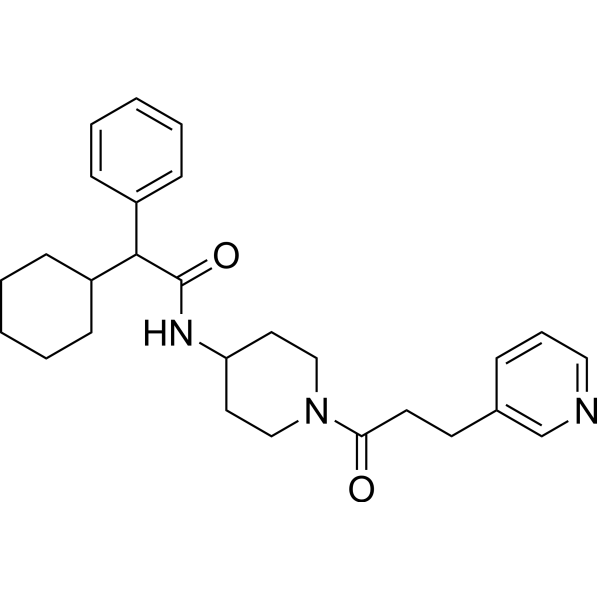 0 ImagesC3a receptor agonist 1 (compound benzeneacetamide) is a potent C3a receptor agonist. C3a receptor agonist 1 has the potential for the research of acute inflammation.
-
BM213
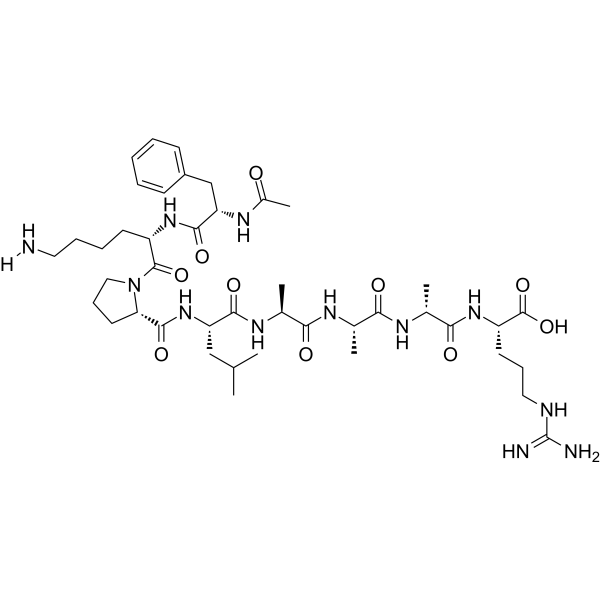 0 ImagesBM213 is a selective C5aR agonist, with an EC50 of 59 nM. BM213 specifically activates the C5a-C5aR1 axis, which in turn promotes neutrophil extracellular trap (NET) formation and exacerbates inflammatory responses. BM213 significantly induces ventricular dilationin, promotes myocardial ROS production, and induces cardiomyocyte apoptosis in rats. BM213 can be used for the study of myocardial ischemia/reperfusion (I/R) injury.
-
Empasiprubart
 0 ImagesSynonyms: ARGX-117Empasiprubar (ARGX-117) is a humanized inhibitory monoclonal antibody targeting complement C2. Empasiprubar binds to the Sushi-2 domain of C2, preventing the formation of C3 pre convertase and inhibiting the activation of classical and lectin pathways upstream of C3 activation. Empasiprubar can prevent complement mediated autoimmune hemolytic anemia and antibody mediated organ transplant rejection. Empasiprubar can prevent neuroglial lymphoconjunctival injury in GM1 antibody mediated mouse models.
-
Vilobelimab
 0 ImagesSynonyms: CaCP-29, IFX-1Vilobelimab (CaCP-29, IFX-1) is a monoclonal anti-C5a antibody to the allergen C5a, a pro-inflammatory complement division product that plays a central role in mediating organ dysfunction. Vilobelimab acts as a C5a inhibitor, inhibiting neutrophil activation, chemotaxis, and reducing inflammatory signalling, and may be used in studies related to sepsis, COVID-19, etc.
-
Avdoralimab
 0 ImagesSynonyms: IPH 5401; Anti-C5aR1 mAbAvdoralimab (IPH 5401) is a fully human IgGκ monoclonal antibody that targets the complement C5a receptor 1 (C5aR1) that prevents its binding to C5a. Avdoralimab can be used for complement-driven inflammatory diseases and solid tumours research.
-
C1q Protein (mouse)
 0 ImagesCat. No.: HY-NP0194AC1q Protein (mouse) is a complement protein and is a recognition molecule of the classical pathway, performs a diverse range of complement and non-complement functions. C1q Protein (mouse) binds various ligands derived from self, non-self, and altered self and modulate the functions of immune
and non-immune cells. C1q Protein (mouse) can be used for the research of mutiple disease.
-
POT-4
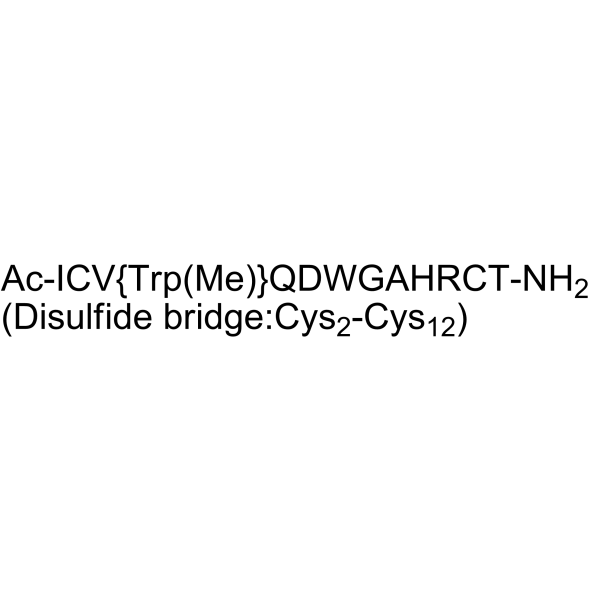 0 ImagesSynonyms: AL-78898APOT-4 (AL-78898A), a Compstatin derivative, is a potent inhibitor of complement factor C3 activation. POT-4 can be used for age-related macular degeneration research
-
Claseprubart
 0 ImagesSynonyms: DNTH103Claseprubart (DNTH103) is an inhibitor targeting C1s of the complement system and an inhibitor of the C1 component of the complement cascade. Claseprubart is in phase 2 clinical evaluation. Claseprubart has application potential in research related to multifocal motor neuropathy and generalized myasthenia gravis.
-
W-54011
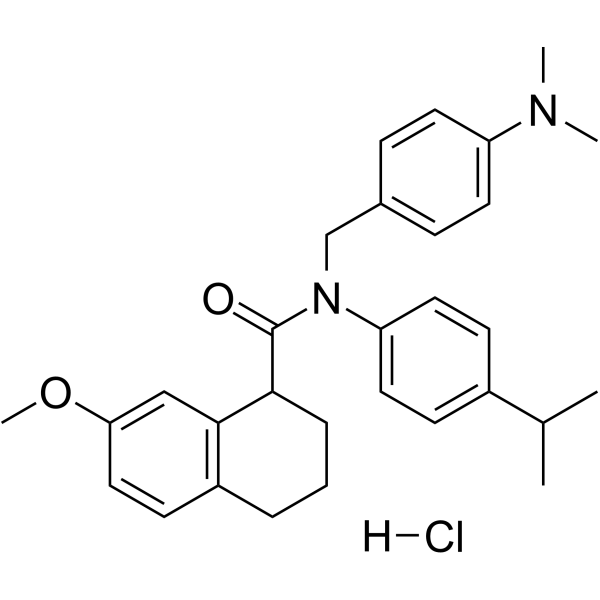 0 ImagesW-54011 is a potent and orally active non-peptide C5a receptor antagonist. W-54011 inhibits the binding of 125I-labeled C5a to human neutrophils with a Ki value of 2.2 nM. W-54011 also inhibits C5a-induced intracellular Ca2+ mobilization, chemotaxis, and generation of ROS in human neutrophils with IC50s of 3.1 nM, 2.7 nM, and 1.6 nM, respectively.
-
C5a Receptor agonist, W5Cha
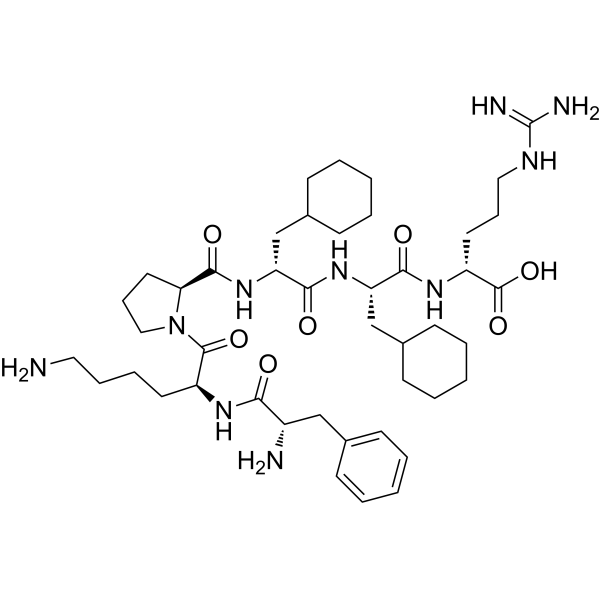 0 ImagesC5a Receptor agonist, W5Cha (Peptide 1) is a synthetic C5a receptor hexapeptide agonist. C5a Receptor agonist, W5Cha exhibits a IC50 of 0.07 μM for binding to C5a receptor on human neutrophil membranes. C5a Receptor agonist, W5Cha activates wild-type C5a receptor and induces Ca2+ flux. C5a Receptor agonist, W5Cha can be used in studies related to neutrophil activation and inflammation.
-
ADH-503
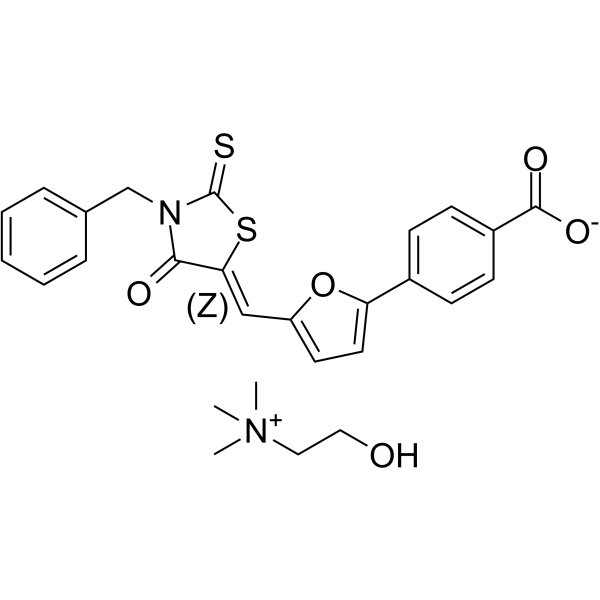 0 ImagesSynonyms: (Z)-Leukadherin-1 cholineADH-503 ((Z)-Leukadherin-1 choline) is an orally active and allosteric CD11b agonist. ADH-503 leads to the repolarization of tumor-associated macrophages, reduction in the number of tumor-infiltrating immunosuppressive myeloid cells, and enhances dendritic cell responses.
-
Certepetide
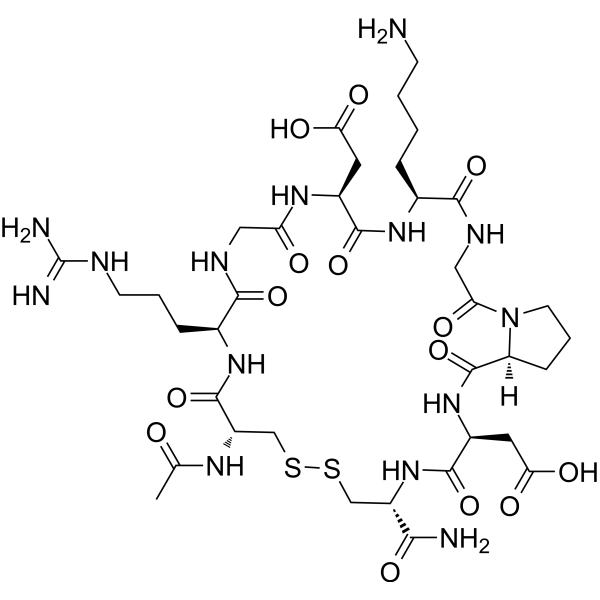 0 ImagesSynonyms: CEND-1; iRGD; LSTA1Certepetide (CEND-1) is a bifunctional cyclic peptide (a.k.a. iRGD). Certepetide is a tumor-penetrating enhancer via RGD motif interaction with alphav-integrins and via activating NRP-1, and transforms the solid tumor microenvironment into a temporary agent conduit. Certepetide accumulates in tumors, and is used in the research of pancreatic cancer and other solid tumors.
-
Tesidolumab
 0 ImagesSynonyms: LFG316; Anti-Human C5 Recombinant AntibodyTesidolumab (LFG316) is a fully-human IgG1/λ anti-C5 monoclonal antibody of 143 kDa (without glycosylation). Tesidolumab (LFG316) blocks cleavage of C5 and prevents subsequent formation of the membrane attack complex.
-
Cyclosporin A-d4
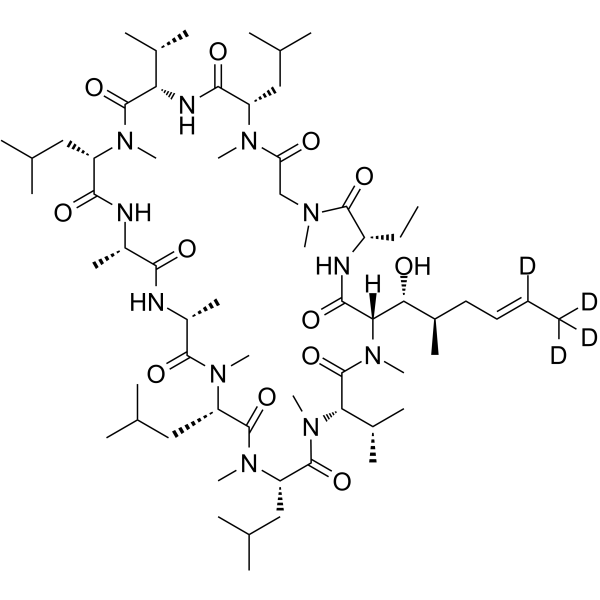 0 ImagesCat. No.: HY-B0579SPureté: 99.88%Synonyms: Cyclosporine A-d4; Ciclosporin A-d4; CsA-d4Cyclosporin A-d4 (Cyclosporine A-d4) is the deuterated-labeled Cyclosporin A (HY-B0579). Cyclosporin A (Cyclosporine A) is an immunosuppressant which binds to the cyclophilin and inhibits phosphatase activity of protein phosphatase 2B (PP2B/calcineurin) with an IC50 of 5 nM. Cyclosporin A is a molecular glue, binds to cyclophilin and calcineurin, leading to inactivation of nuclear Factor of activated T Cells (NFAT) and a subsequent decrease in the immune response. Cyclosporin A also inhibits CD11a/CD18 adhesion.
-
Gefurulimab
 0 ImagesCat. No.: HY-P99638CAS No.: 2456407-94-4Synonyms: ALXN-1720Gefurulimab (ALXN-1720) is a high-affinity antibody inhibitor targeting complement protein C5, which can specifically bind to C5 and inhibit its cleavage into C5a and C5b. Gefurulimab can block the activation of the terminal complement pathway and reduce inflammatory damage. Gefurulimab can effectively reduce the formation of membrane attack complex (MAC) and has good pharmacokinetic properties. Gefurulimab can be used to study kidney and autoimmune diseases related to abnormal activation of the complement system, such as IgA nephropathy, lupus nephritis, and myasthenia gravis.