



FGFR
Fibroblast growth factor receptor
FGFR (Fibroblast growth factor receptors) are the receptors that bind to members of the fibroblast growth factor family of proteins. Some of these receptors are involved in pathological conditions. A point mutation in FGFR3 can lead to achondroplasia. Five distinct membrane FGFR have been identified in vertebrates and all of them belong to the tyrosine kinase superfamily (FGFR1, FGFR2, FGFR3, FGFR4, FGFR6). The fibroblast growth factor family constitutes one of the most important groups of paracrine factors that act during development. They are responsible for determining certain cells to become mesoderm, for the production of blood vessels, for limb outgrowth, and for the growth and differentiation of numerous cell types.
All Product Categories
-
FGFR Inhibitors
(317)
View all products
-
FGFR Agonists
(4)
View all products
-
FGFR Antagonist
(1)
View all products
-
FGFR Activators
(5)
View all products
-
FGFR Modulators
(3)
View all products
-
FGFR Degraders
(11)
View all products
-
FGFR Control
(1)
View all products
-
FGFR Ligand
(1)
View all products
-
FGFR Proteins
(97)
View all products
-
FGFR-1 Proteins
(20)
View all products
-
FGFR-2 Proteins
(31)
View all products
-
FGFR-3 Proteins
(26)
View all products
-
FGFR-4 Proteins
(18)
View all products
-
FGFR Related Products (383)
Related Products (383)

-
Recombinant Proteins (97)
-
Antibodies (11)
-
IMC-D11
 0 ImagesCat. No.: HY-P991106Purity: 98.51%Synonyms: LY-3076226 antibodyIMC-D11 (LY-3076226 antibody) is an anti-FGFR3 IgG1 monoclonal antibody with an EC50 of approximately 0.1 nM against hFGFR3b and hFGFR3c. IMC-D11 inhibits the growth of FGFR3-dependent lung adenocarcinoma in mouse models and shows no effect on tumors that do not express FGFR3. IMC-D11 can serve as an ADC Antibody for ADC synthesis, such as LY3076226. IMC-D11 is applicable to research related to urothelial carcinoma, multiple myeloma, lung adenocarcinoma, as well as advanced or metastatic cancers.
-
Lenvatinib-d4
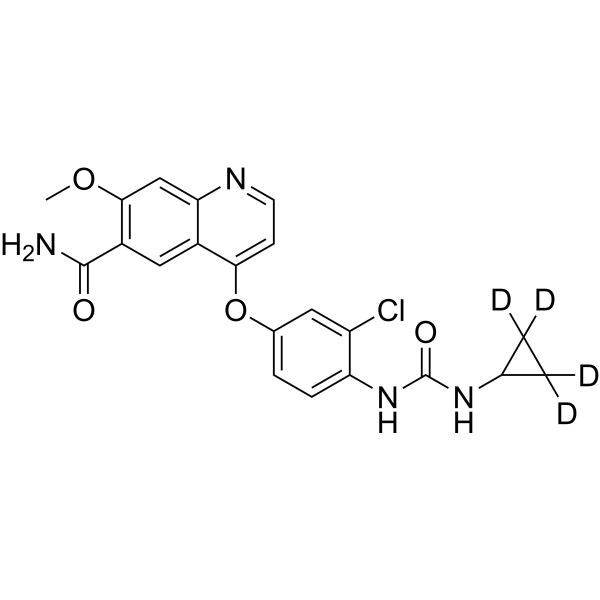 0 ImagesCat. No.: HY-10981SCAS No.: 2264050-65-7Synonyms: E7080-d4
-
FGFR1 Human Pre-designed siRNA Set A
 0 ImagesCat. No.: HY-RS04911
FGFR1 Human Pre-designed siRNA Set A contains three designed siRNAs for FGFR1 gene (Human), as well as a negative control, a positive control, and a FAM-labeled negative control.
-
Infigratinib-Boc
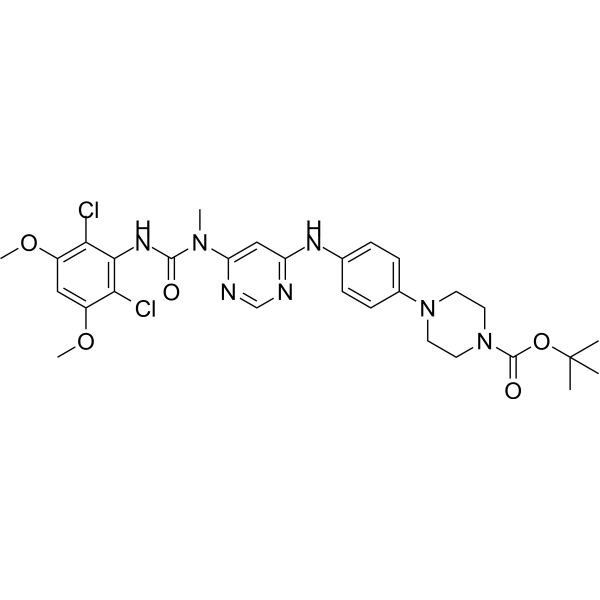 0 ImagesCat. No.: HY-160124CAS No.: 2504949-83-9Infigratinib-Boc is a derivative of Infigratinib containing a Boc (t-Butyloxy carbonyl) group. Infigratinib is an ATP-competitive pan-FGFR inhibitor.
-
(Z)-Orantinib
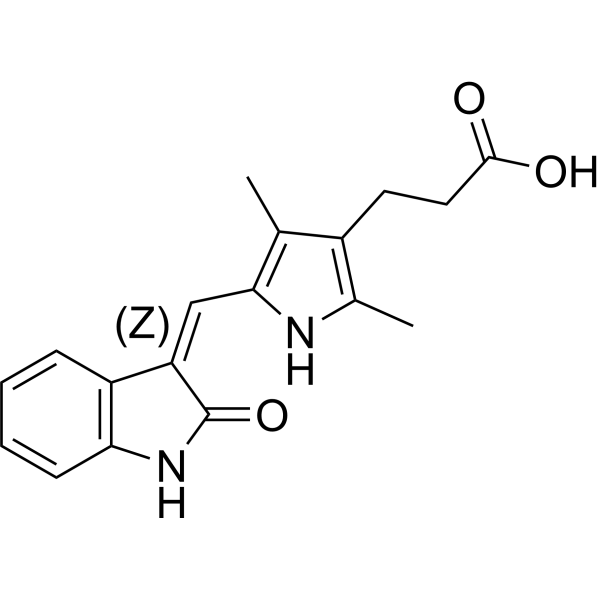 0 ImagesSynonyms: (Z)-SU6668; (Z)-TSU-68(Z)-Orantinib ((Z)-SU6668) is a potent, selective, orally active and ATP competitive inhibitor of Flk‐1/KDR, PDGFRβ, and FGFR1, with IC50s of 2.1, 0.008, and 1.2 µM, respectively. (Z)-Orantinib is a potent antiangiogenic and antitumor agent that induces regression of established tumors.
-
FGFR4-IN-5
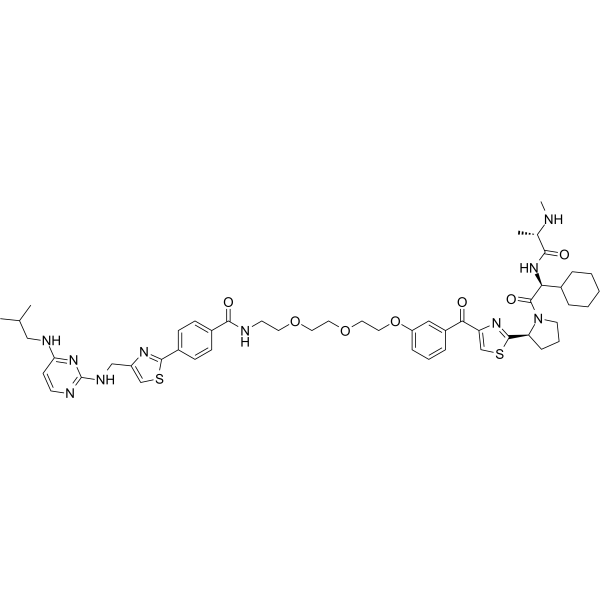
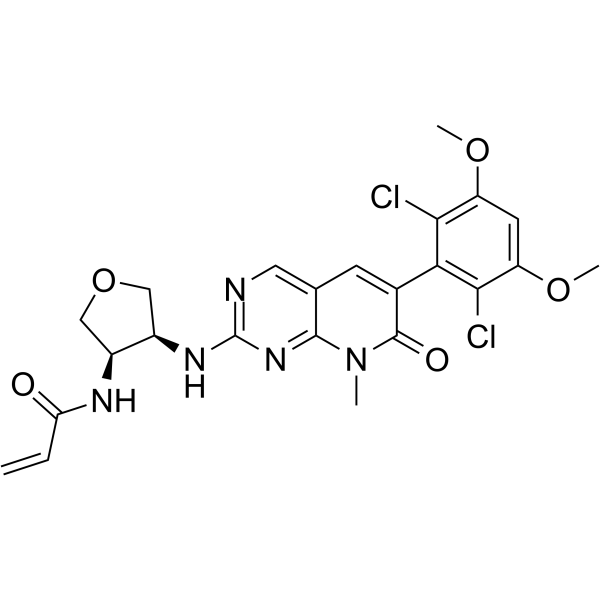 0 ImagesFGFR4-IN-5 is a potent and selective covalent FGFR4 inhibitor with an IC50 of 6.5 nM. FGFR4-IN-5 exhibits strong anti-tumor activity in vivo and can be used for hepatocellular carcinoma research.
-
KG-655
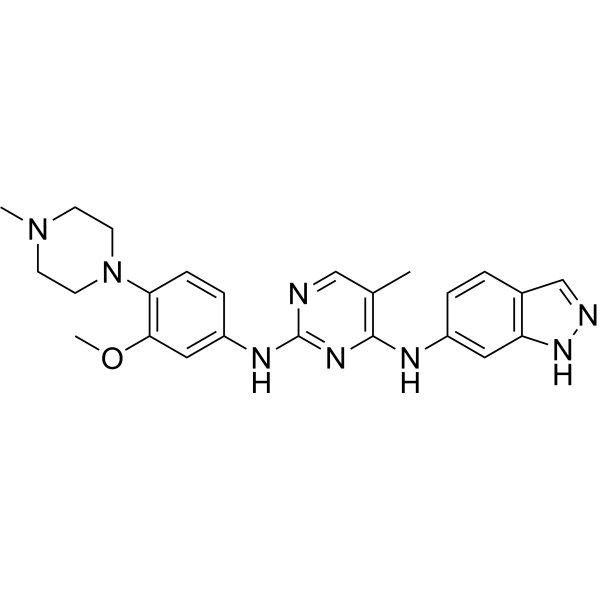
 0 ImagesKG-655 is a ligand that specifically binds to the ARNT PAS-B domain. KG-655 binds to the internal cavity of ARNT PAS-B to restrict its variable folded conformation, disrupts the interaction between ARNT PAS-B and the transcriptional coactivator TACC3, and promotes the homodimerization of ARNT PAS-B. KG-655 is widely applicable to cancer-related research.
-
FGFR2-IN-3
 0 ImagesFGFR2-IN-3 is an inhibitor of fibroblast growth factor receptor 2 (FGFR2). FGFR2-IN-3 has good binding properties, forming key interactions and inducing conformational changes in FGFR2. FGFR2-IN-3 can be used for research on tumors.
-
JK-P3
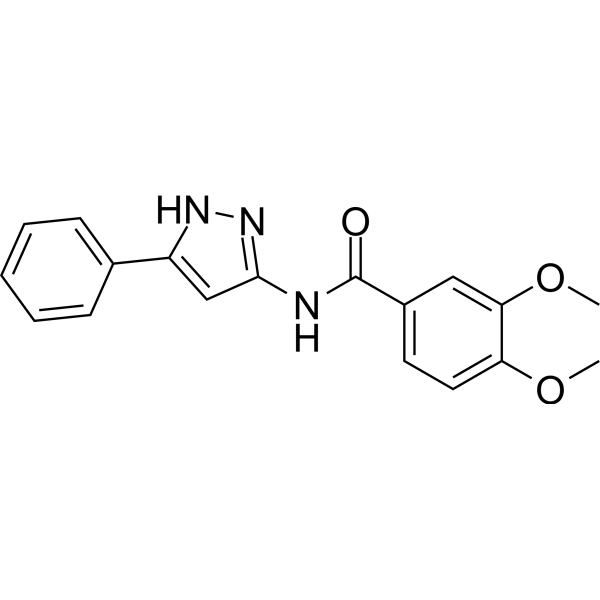 0 ImagesJK-P3 is a potent and pan VEGFR2 inhibitor, with IC50s of 7.83 μM, 27 μM and 5.18 μM for VEGFR2, FGFR1 and FGFR3, respectively. JK-P3 can inhibit VEGF-A-stimulated VEGFR2 activation and intracellular signalling, also inhibits endothelial monolayer wound closure and angiogenesis, as well as fibroblast growth factor receptor kinase activity in vitro. JK-P3 has anti-angiogenic activity.
-
FGFR3 Human Pre-designed siRNA Set A
 0 ImagesCat. No.: HY-RS04918
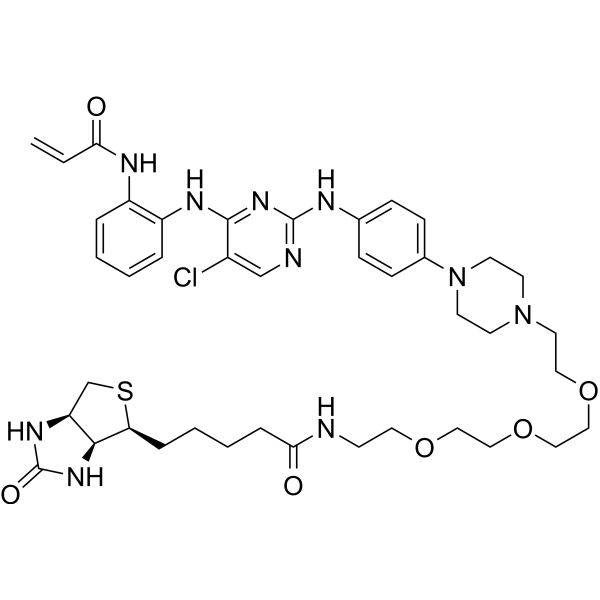
FGFR3 Human Pre-designed siRNA Set A contains three designed siRNAs for FGFR3 gene (Human), as well as a negative control, a positive control, and a FAM-labeled negative control.

-
S49076
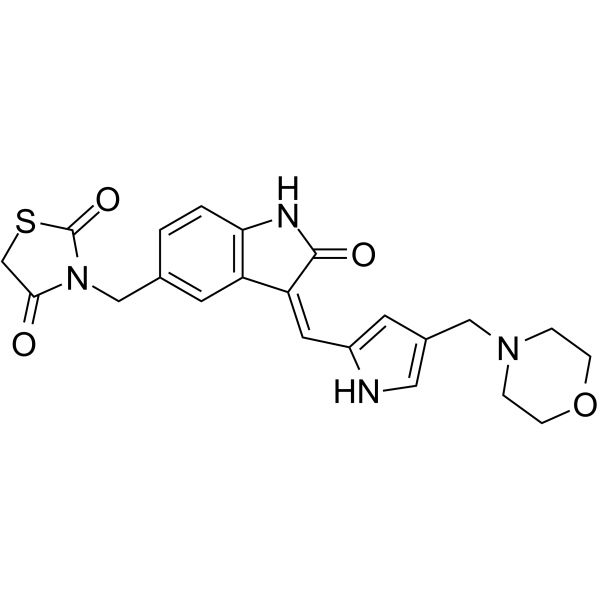 0 ImagesS49076 is a novel, potent inhibitor of MET, AXL/MER, and FGFR1/2/3 with IC50 values below 20 nM.
-
R1530
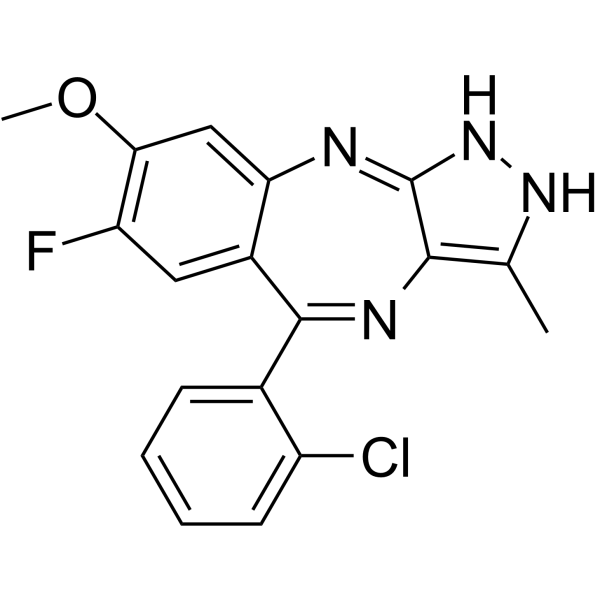 0 ImagesR1530 is a highly potent, orally active, dual-acting mitosis/angiogenesis inhibitor, with anti-tumor and anti-angiogenic activities. R1530 is a multikinase inhibitor which binds to 31 kinases with Kd values of <500 nM. R1530 inhibits VGFR2 and FGFR1 with IC50 of 10 nM and 28 nM, respectively. R1530 triggers apoptosis (mitotic catastrophe) or senescence.
-
Formononetin-d3-1
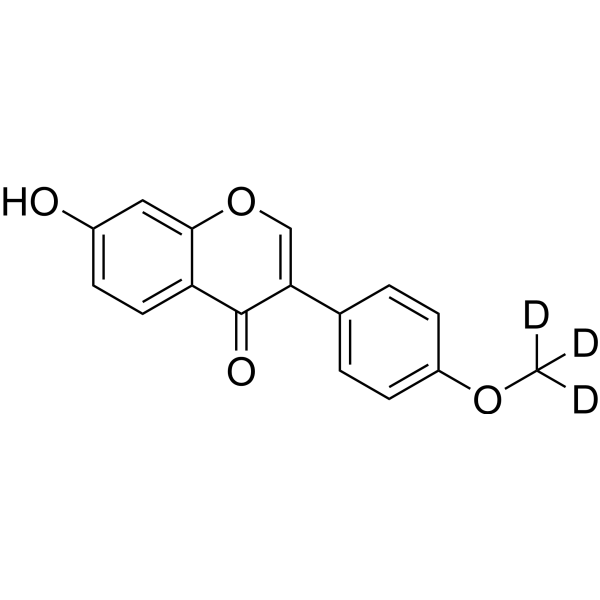 0 ImagesCat. No.: HY-N0183S4Purity: 99.67%
-
Kanglexin
 0 ImagesKanglexin is an orally active and novel anthraquinone compound. Kanglexin inhibits NLRP3 inflammatory body activation and cell pyroptosis, and has a cardioprotective effect. Kanglexin promotes angiogenesis through FGFR1/ERK signaling pathway and accelerates diabetic wound healing. In addition, Kanglexin has the effect of lipid-lowering and inhibiting the dedifferentiation of vascular smooth muscle cells, and can be used in the study of hyperlipidemia, fatty liver and atherosclerosis.
-
PD-089828
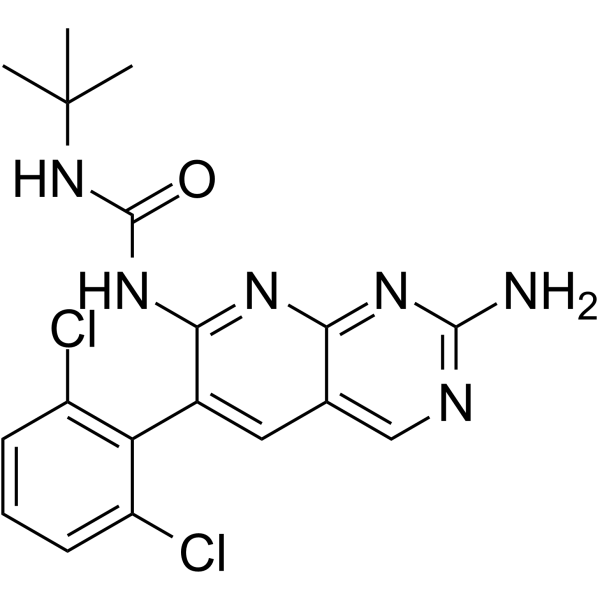 0 ImagesPD-089828 is an ATP competitive inhibitor of FGFR-1, PDGFR-β and EGFR (IC50s=0.15, 1.76, and 5.47 µM, respectively) and a noncompetitive inhibitor of c-Src tyrosine kinase (IC50=0.18 µM). PD-089828 also inhibits MAPK with an IC50 of 7.1 µM. PD-089828 inhibits PDGF-, EGF- and bFGF-mediated tyrosine kinase receptor autophosphorylation in vitro. PD-089828 has a long-lasting cellular activity.
-
DGY-09-192
 0 ImagesDGY-09-192 is a PROTAC FGFR1/2 degrader (FGFR1: DC50 = 4.35 nM; FGFR2: DC50 = 70 nM). DGY-09-192 preferentially degrades wild-type FGFR1/2 and multiple FGFR2 fusion proteins (including FGFR2-PHGDH and FGFR2-OPTN). DGY-09-192 suppresses downstream FGFR signaling (reducing phosphorylation of FRS2 Y196 and ERK1/2 T202/Y204) in vitro and vivo. DGY-09-192 can be used for the study of FGFR-driven cancers.




