



PKMYT1
PKMYT1 (protein kinase, membrane associated tyrosine/threonine 1) is a member of the WEE kinase family that functions as a key negative regulator of CDK1 activity and mitotic entry, thereby contributing to cell-cycle control and genomic stability[1]. Mechanistically, PKMYT1 participates in the G2/M checkpoint, where WEE-family kinases maintain inhibitory control over CDK1 to prevent premature progression into mitosis under conditions requiring cell-cycle surveillance[1][2]. Through this checkpoint-regulatory role, PKMYT1 supports proper mitotic timing and helps preserve genetic integrity in proliferating cells[1][2]. In cancer biology, increasing evidence indicates that tumor cells can become highly dependent on WEE-family kinase activity, including PKMYT1, to tolerate replication stress and DNA damage, making this pathway a relevant target for therapeutic investigation[1][2]. Studies in colorectal cancer have shown elevated PKMYT1 expression and demonstrated that PKMYT1 silencing impairs cellular proliferation, cell-cycle progression, migration, and invasion, supporting a role in tumor development and maintenance[3]. Compared with the related isoform WEE1, which has received substantially greater research attention, PKMYT1 remains a comparatively underexplored member of the WEE kinase family despite sharing critical functions in regulating mitotic control[4]. For experimental applications, PKMYT1 inhibitors have emerged as valuable tools for investigating G2/M checkpoint dependence, and inhibition of PKMYT1 can promote checkpoint override, premature mitotic entry, and mitotic cell death in cancer models, supporting its development as a potential therapeutic target[1].
References:
- [1]. Ghelli Luserna di Rorà A, et al. A WEE1 family business: regulation of mitosis, cancer progression, and therapeutic target. J Hematol Oncol. 2020 Sep 21;13(1):126. [Content Brief]
- [2]. Wang C, Lu X. WEE-family kinases in cancer: synthetic lethal interactions and drug discovery[J]. Trends in Pharmacological Sciences, 2025.
- [3]. Zhang Y, et al. Exploring PKMYT1 as a potential marker for colorectal cancer progression through bioinformatics analyses and experimental validation. Sci Rep. 2025 Sep 26;15(1):33016. [Content Brief]
- [4]. Asquith C R M, et al. PKMYT1: a forgotten member of the WEE1 family[J]. Nat Rev Drug Discov, 2020, 19(3): 157.
All Product Categories
-
PKMYT1 Related Products (29)
Related Products (29)

- 1
- 2
-
lunresertib
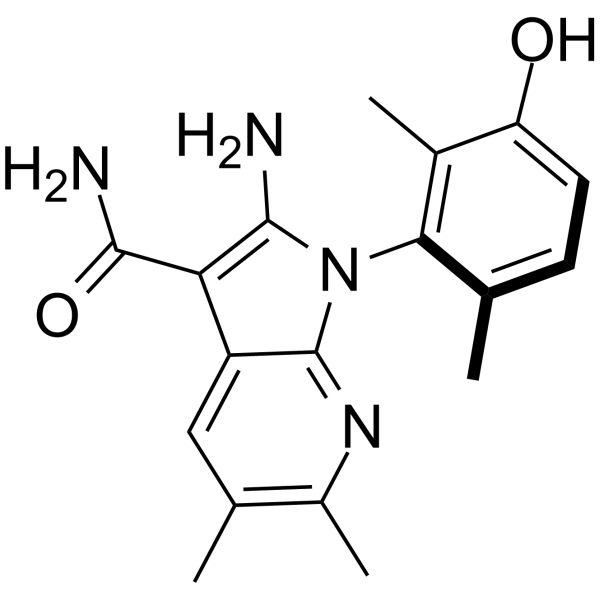 0 ImagesSynonyms: RP-6306lunresertib (RP-6306) is a potent, selective and orally active PKMYT1 inhibitor with an IC50 of 14 nM. lunresertib shows a high degree of selectivity over other kinases in cellular binding assays. lunresertib shows anticancer effects.
-
(Rac)-lunresertib
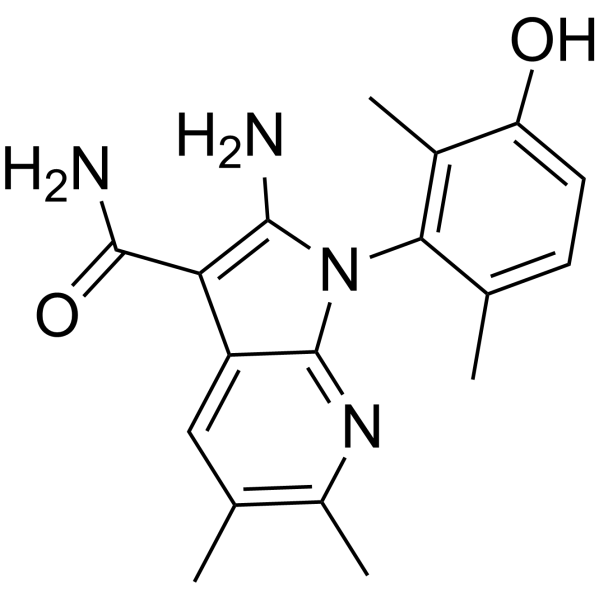 0 ImagesSynonyms: (Rac)-RP-6306(Rac)-lunresertib (compound 181) is a potent membrane-associated tyrosine and threonine-specific cdc2-inhibitory kinase (Myt1) (Gene name PKMYT1) inhibitor with an IC50 of <10 nM. (Rac)-lunresertib (compound 181) has anticancer effects.
-
PKMYT1-IN-8
 0 ImagesPKMYT1-IN-8 (Compound 137) is the inhibitor for PKMYT1 with an IC50 of 9 nM. PKMYT1-IN-8 inhibits EPHB3, EPHA1, KIT, EPHB1, EPHA2, EPHA3, and EPHB2with IC50s of 1.79, 3.17, 4.29, 6.32, 6.83, 8.10, and 10.9 μM, respectively. PKMYT1-IN-8 inhibits the proliferation of cancer cell OVCAR3 with GI50 of 2.02 μM.
-
Myt1-IN-1
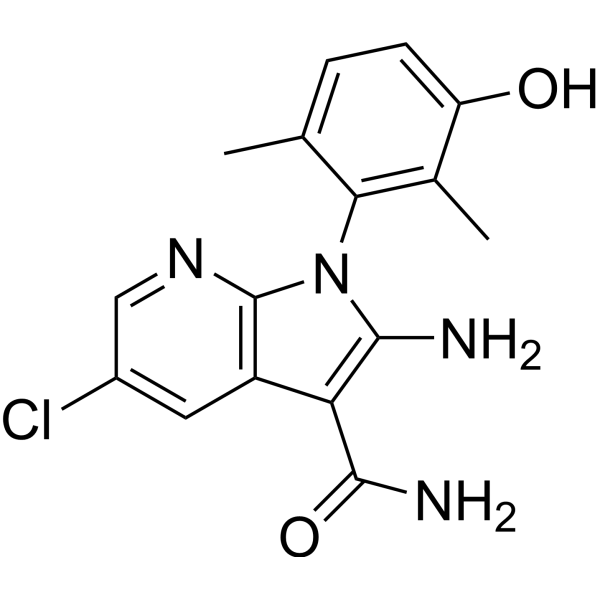 0 ImagesMyt1-IN-1 is a potent membrane-associated tyrosine and threonine-specific cdc2-inhibitory kinase (Myt1) (Gene name PKMYT1) inhibitor with an IC50 of <10 nM. Myt1-IN-1 has anticancer effects (WO2021195782A1; compound 132).
-
(R)-lunresertib
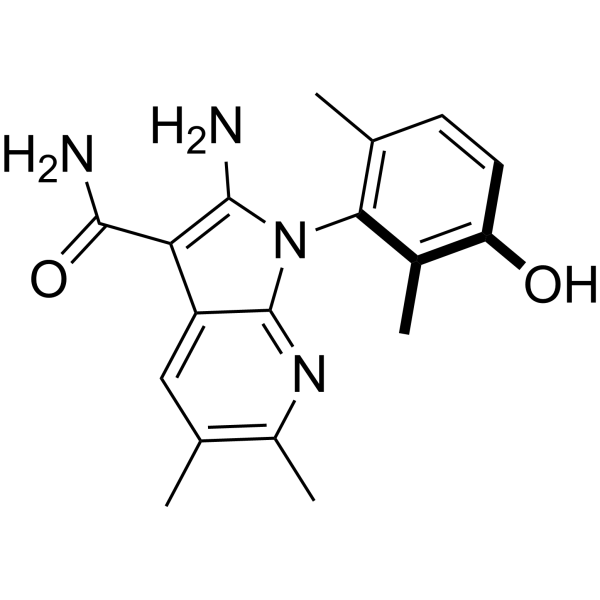 0 ImagesSynonyms: (R)-RP-6306(R)-lunresertib ((R)-RP-6306) (compound 183) is a membrane-associated tyrosine- and threonine-specific cdc2 inhibitory kinase (Myt1/PKMYT1) inhibitor with an IC50 of 1360 nM. (R)-lunresertib is applicable to Myt1-mediated cancer-related research.
-
PKMYT1-IN-15
 0 ImagesCat. No.: HY-187562PKMYT1-IN-15 is an orally active PKMYT1 inhibitor with an IC50 of 6.02 nM. PKMYT1-IN-15 inhibits the phosphorylation of CDK1 at Thr14. As an antiproliferative agent, DNA damage inducer and antitumor agent, PKMYT1-IN-15 triggers replication-associated DNA damage and cell death in CCNE1-amplified cancer cells, and suppresses tumor growth in the OVCAR3 xenograft model. PKMYT1-IN-15 can be used for the research of CCNE1-amplified cancers (e.g., ovarian cancer, breast cancer).
-
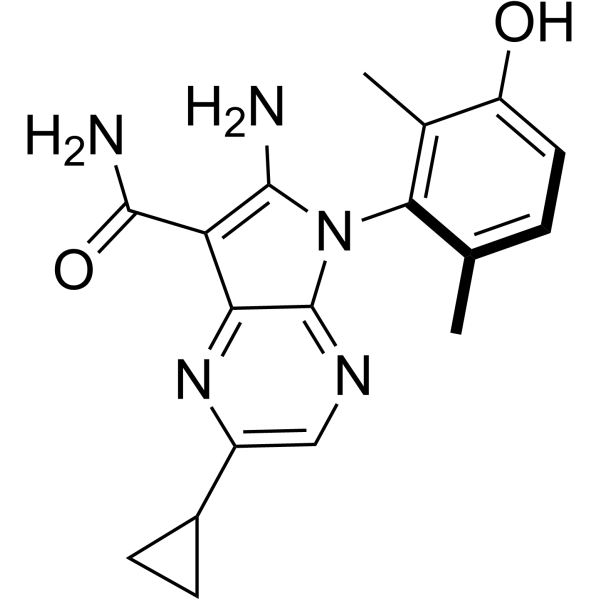
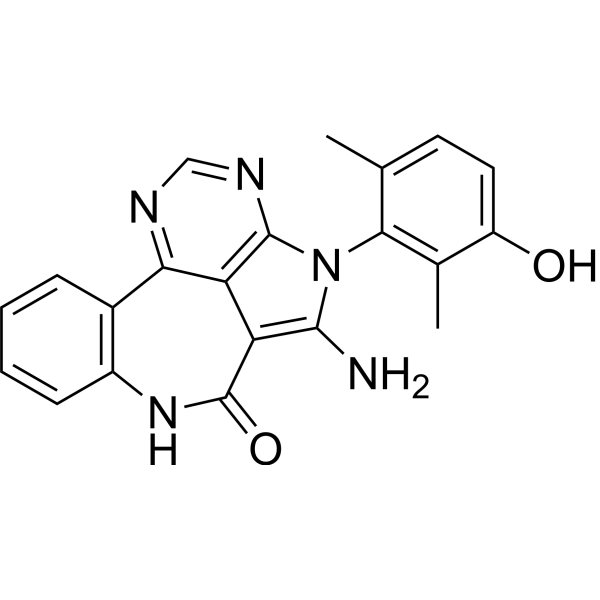
BAA-065
 0 ImagesCat. No.: HY-182790BAA-065 is a selective and orally active PKMYT1 inhibitor with an IC50 of <50 nM. BAA-065 inhibits cancer cells proliferation, induces γH2AX expression and DNA damage. BAA-065 inhibits tumor growth in OVCAR3 xenograft mice. BAA-065 can be used for the research of cancer, such as ovarian cancer.

-
PROTAC D16-M1P2
 0 ImagesCat. No.: HY-180485Purity: 99.94%PROTAC D16-M1P2 is an orally active CRBN-mediated selective PKMYT1 PROTAC degrader, with a DC50 of 0.7 nM in CCNE1-amplified HCC1569 breast cancer cells. PROTAC D16-M1P2 induces PKMYT1 degradation via the ubiquitin-proteasome system, directly inhibits PKMYT1 kinase activity, suppresses Thr14 phosphorylation of CDK1, and depends on functional CRBN and ubiquitination-like modification processes. PROTAC D16-M1P2 can be used for the research of CCNE1-amplified breast cancer, FBXW7-mutated cholangiocarcinoma, and PPP2R1A-deficient cancers.
-
Myt1-IN-2
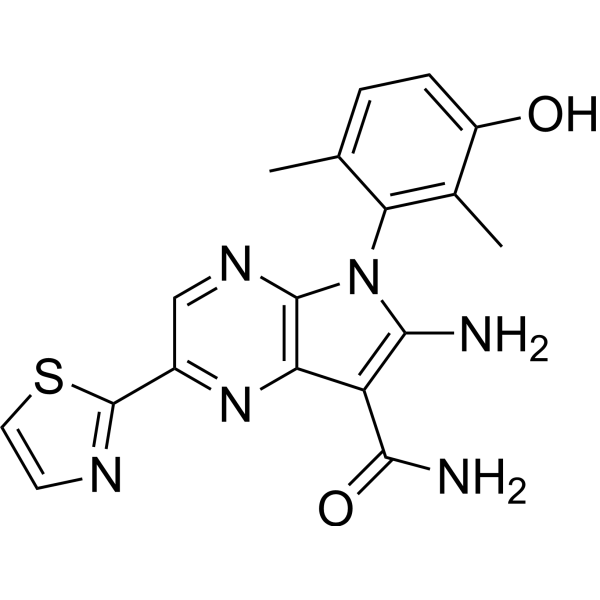 0 ImagesCat. No.: HY-145665CAS No.: 2719748-43-1Myt1-IN-2 is a potent membrane-associated tyrosine and threonine-specific cdc2-inhibitory kinase (Myt1) (Gene name PKMYT1) inhibitor with an IC50 of <10 nM. Myt1-IN-2 has anticancer effects (WO2021195782A1; compound 28).

-
PKMYT1-IN-2
 0 ImagesCat. No.: HY-163491CAS No.: 3033609-84-3PKMYT1-IN-2 (compound 2) is a potent PKMYT1 inhibitor with an IC50 of 5.7 nM. PKMYT1-IN-2 inhibits the growth of HCC1569 cells with an IC50 of 22 nM.
-
WEE1/PKMYT1-IN-2
 0 ImagesCat. No.: HY-169946ACAS No.: 3047759-59-8WEE1/PKMYT1-IN-2 is the axial chiral P configuration of WEE1/PKMYT1-IN-1 (HY-169946). WEE1/PKMYT1-IN-1 is a potent and orally active WEE1 and PKMYT1 inhibitor. WEE1/PKMYT1-IN-1 shows antiproliferation activity.
-
PKMYT1-IN-10
 0 ImagesCat. No.: HY-175817PKMYT1-IN-10 is a selective PKMYT1 inhibitor with an IC50 of 3 nM. PKMYT1-IN-10 inhibits colony formation, induces apoptosis, and induces S-phase cancer cell cycle arrest. PKMYT1-IN-10 exhibits liver microsomal stability, favorable plasma stability, minimal CYPs inhibition. PKMYT1-IN-10 can be used for the studies of ovarian cancer and breast cancer.
-
WEE1/PKMYT1-IN-3
 0 ImagesCat. No.: HY-169946BCAS No.: 3047759-60-1WEE1/PKMYT1-IN-3 is the axial chiral M configuration of WEE1/PKMYT1-IN-1 (HY-169946). WEE1/PKMYT1-IN-1 is a potent and orally active WEE1 and PKMYT1 inhibitor. WEE1/PKMYT1-IN-1 shows antiproliferation activity.
-
PKMYT1-IN-12
 0 ImagesCat. No.: HY-180484CAS No.: 2974454-59-4
-
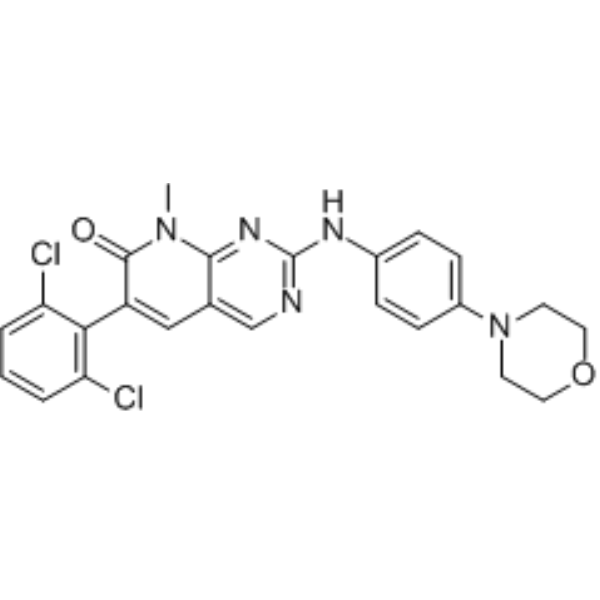
PD-166285
 0 ImagesCat. No.: HY-175819CAS No.: 717094-37-6PD-166285 is a PKMYT1 inhibitor, with an IC50 value of 17 nM. PD166285 shows strong antiproliferative effects against CCNE1-amplified OVCAR3 cells (IC50 = 0.14 μM) and HCC1569 cells (IC50 = 0.21 μM). PD166285 induces apoptosis and arrests CCNE1-amplified HCC1569 cells at the G1/S phase of the cell cycle. PD166285 can be used for the research of PKMYT1-targeted therapies for CCNE1-amplified cancers.
- 1
- 2



