



ASK1 Inhibitor
- 1
-
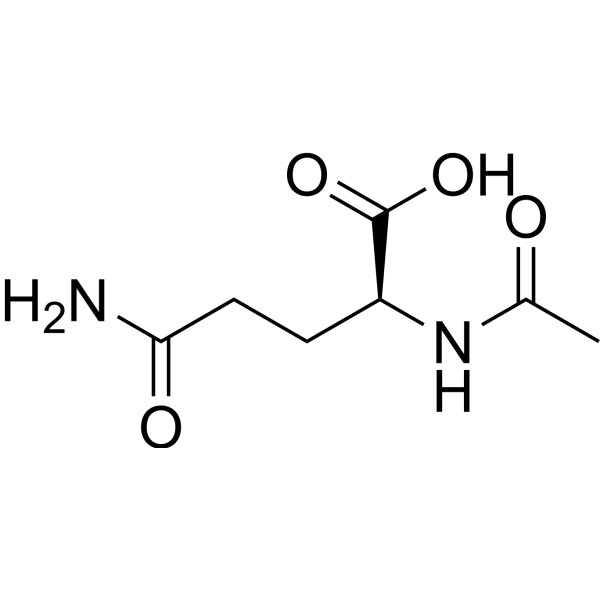
Aceglutamide
 0 ImagesSynonyms: α-N-Acetyl-L-glutamine; N2-Acetylglutamine
Aceglutamide (α-N-Acetyl-L-glutamine; N2-Acetylglutamine) is a neuroprotectant that can penetrate the blood-brain barrier. Aceglutamide can enhance the antioxidant systems of glutathione (GSH), thioredoxin (Trx) and Nrf2. Aceglutamide also inhibits ASK1 and TRAF1, activates the Akt/Bcl-2 anti-apoptotic pathway, enhances the activity of antioxidant enzymes and reduces oxidative damage. Aceglutamide can improve neurological deficits after cerebral ischemia, reduce infarct volume, and inhibit neuronal apoptosis, especially substantia nigra dopaminergic neurons. Aceglutamide can reduce cerebral ischemia/reperfusion injury, improve motor dysfunction, and is used in ischemic stroke-related research.
-
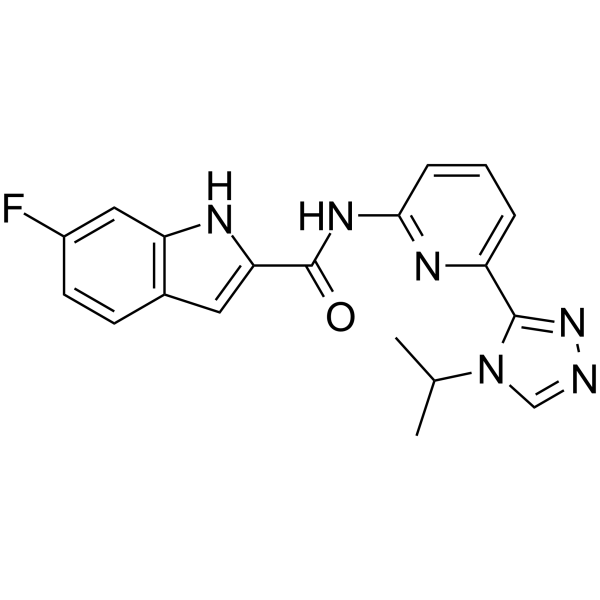
ASK1-IN-6
 0 Images
ASK1-IN-6 is a selective, orally active, and blood-brain barrier penetrant inhibitor of ASK1 (biochemical IC50: 7 nM; cellular IC50: 25 nM). ASK1-IN-6 exhibits anti-inflammatory and can be used in the research of neurodegenerative diseases such as Alzheimer's disease.
-
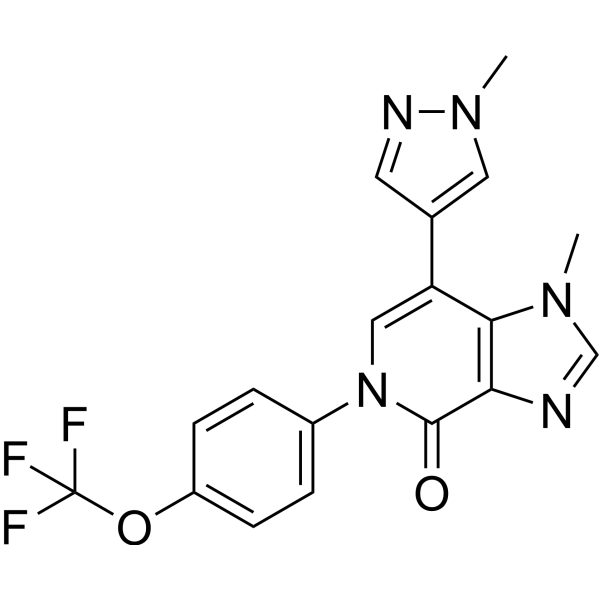
GDC-3280
 0 ImagesSynonyms: AK3287; AKEX0011
GDC-3280 (AK3287; AKEX0011) is an orally active compound based on Pirfenidone (HY-B0673)'s phenyl pyridone scaffold. GDC-3280 alleviates the inflammatory and fibrotic reaction of silicosis by inhibiting the ASK1-p38 MAPK pathway and regulating macrophage polarization. GDC-3280 exhibits anti-inflammatory and anti-fibrotic effects.
-
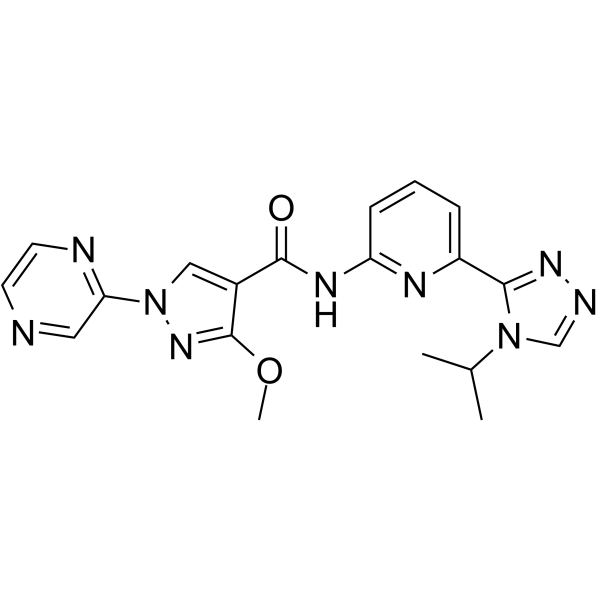
BPyO-34
 0 ImagesCat. No.: HY-183960CAS No.: 890601-68-0
-
ASK1-IN-4
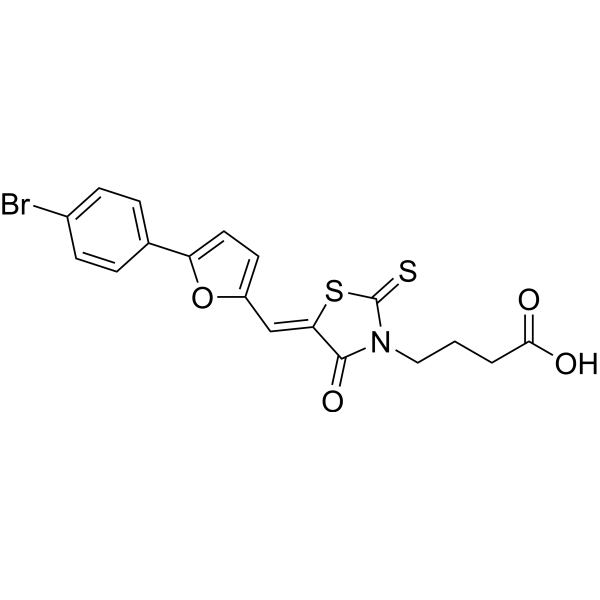 0 ImagesCat. No.: HY-153761CAS No.: 1427538-26-8
-
ASK1-IN-10
 0 ImagesCat. No.: HY-176881CAS No.: 2247064-84-0
-
ASK1-IN-8
 0 ImagesCat. No.: HY-173293CAS No.: 2570985-89-4
ASK1-IN-8 (Compound 35) is an orally active inhibitor of apoptosis signal-regulating kinase 1 (ASK1) with an IC50 value of 1.8 nM. In an experimental mouse model of liver injury induced by Acetaminophen (HY-66005), ASK1-IN-8 can significantly reduce the plasma alanine transaminase (ALT) level, protecting the liver. ASK1-IN-8 can be used in research related to liver diseases.
-
K811
 0 ImagesCat. No.: HY-182648CAS No.: 1355228-38-4
K811 is an orally active ASK1 inhibitor with an IC50 of 6 nM. K811 inhibits glial cell activation in the lumbar spinal cord of SOD1G93A transgenic mice. K811 extends the survival of SOD1G93A transgenic mice, a mouse model of amyotrophic lateral sclerosis. K811 can be used in studies related to amyotrophic lateral sclerosis.
-
ASK1-IN-11
 0 ImagesCat. No.: HY-176882CAS No.: 2247064-44-2
-
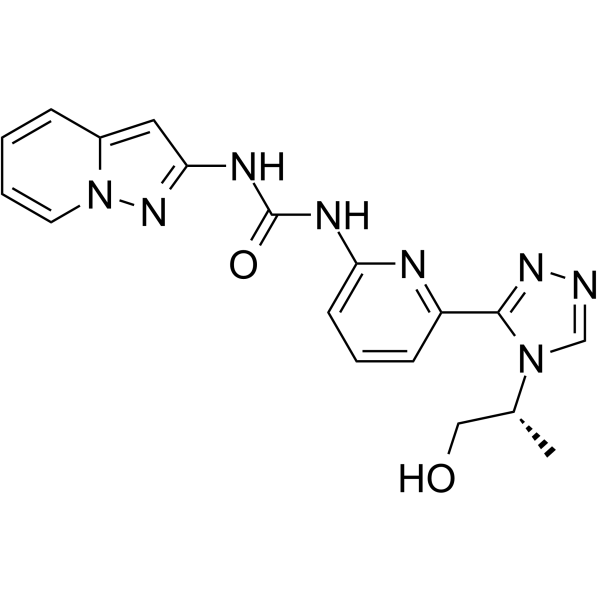
ASK1-IN-9
 0 ImagesCat. No.: HY-176880CAS No.: 2247064-34-0
-
ASK1-IN-12
 0 ImagesCat. No.: HY-179517
ASK1-IN-12 is an ASK1 inhibitor with an IC50 of 6.3 nM. ASK1-IN-12 inhibits TNF-α-induced activation of the ASK1-p38/JNK pathway. ASK1-IN-12 can reduce free fatty acid-induced cholesterol increase, lipid droplet accumulation and improves hepatocellular steatosis. ASK1-IN-12 can be used for the research of non-alcoholic steatohepatitis (NASH).
-
K812
 0 ImagesCat. No.: HY-183933CAS No.: 1355228-39-5
K812 is an orally active ASK1 inhibitor with a 6 nM IC50 against ASK1. K812 selectively inhibits ASK1 activation. K812 inhibits glial activation in the lumbar spinal cord. K812 extends survival of SOD1G93A transgenic mice. K812 can be used for the research of amyotrophic lateral sclerosis.
-
ASK1-IN-7
 0 ImagesCat. No.: HY-169555CAS No.: 1427537-92-5
ASK1-IN-7 (Compound 4c) is an ASK1 inhibitor and a derivative of the ASK1 inhibitor scaffold 5-(5-Phenyl-furan-2-ylmethylene)-2-thioxo-thiazolidin-4-one. ASK1-IN-7 holds promise for research related to the ASK1 signaling pathway, such as cell stress responses, inflammation, neurodegenerative diseases, and cardiovascular diseases.

-
ASK1-IN-5
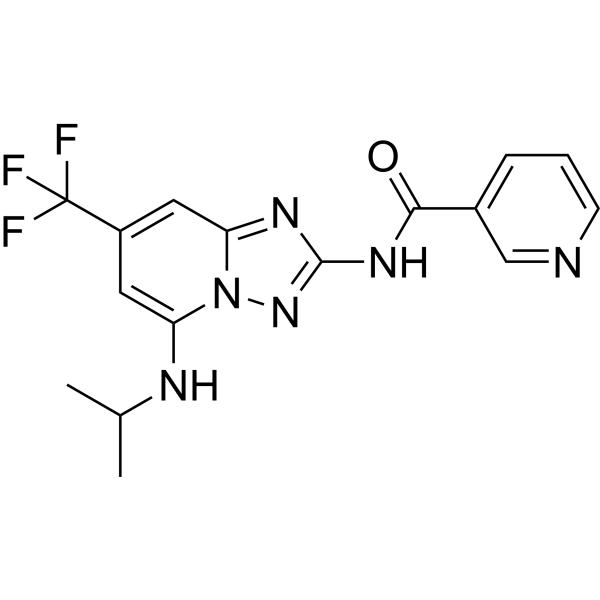 0 ImagesCat. No.: HY-18297CAS No.: 1124381-69-6
-
Aceglutamide (Standard)
 0 ImagesSynonyms: α-N-Acetyl-L-glutamine (Standard); N2-Acetylglutamine (Standard)
Aceglutamide (α-N-Acetyl-L-glutamine; N2-Acetylglutamine) (Standard) is the analytical standard of Aceglutamide (HY-B1065). This product is intended for research and analytical applications. Aceglutamide (α-N-Acetyl-L-glutamine; N2-Acetylglutamine) is a neuroprotectant that can penetrate the blood-brain barrier. Aceglutamide can enhance the antioxidant systems of glutathione (GSH), thioredoxin (Trx) and Nrf2. Aceglutamide also inhibits ASK1 and TRAF1, activates the Akt/Bcl-2 anti-apoptotic pathway, enhances the activity of antioxidant enzymes and reduces oxidative damage. Aceglutamide can improve neurological deficits after cerebral ischemia, reduce infarct volume, and inhibit neuronal apoptosis, especially substantia nigra dopaminergic neurons. Aceglutamide can reduce cerebral ischemia/reperfusion injury, improve motor dysfunction, and is used in ischemic stroke-related research.
- 1



