



Aceglutamide

Based on 1 Customer Validation
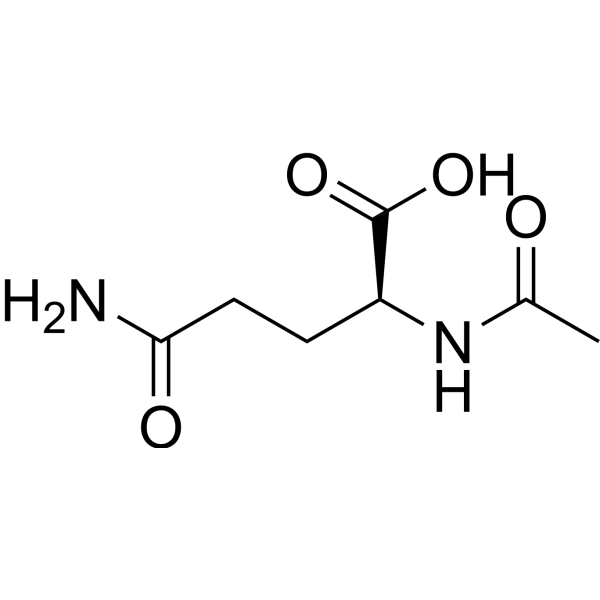
Aceglutamide (α-N-Acetyl-L-glutamine; N2-Acetylglutamine) is a neuroprotectant that can penetrate the blood-brain barrier. Aceglutamide can enhance the antioxidant systems of glutathione (GSH), thioredoxin (Trx) and Nrf2. Aceglutamide also inhibits ASK1 and TRAF1, activates the Akt/Bcl-2 anti-apoptotic pathway, enhances the activity of antioxidant enzymes and reduces oxidative damage. Aceglutamide can improve neurological deficits after cerebral ischemia, reduce infarct volume, and inhibit neuronal apoptosis, especially substantia nigra dopaminergic neurons. Aceglutamide can reduce cerebral ischemia/reperfusion injury, improve motor dysfunction, and is used in ischemic stroke-related research.
For research use only. We do not sell to patients.
- Purity : 98.0%
- CAS No.: 2490-97-3
- Formula: C7H12N2O4
- Molecular Weight:188.18
-
Storage:Powder -20°C, 3 years , 4°C, 2 years ; In solvent -80°C, 2 years , -20°C, 1 year

To place orders, for customer services and technical support, please contact: MedChemExpress USA
Tel: 609-228-6898 E-mail: [email protected] [email protected]


-
 Biological Activity
-
Chemical Information
-
Solvent & Solubility
- Protocols
- Purity & Documentation
- References
-
 Help & FAQs


-
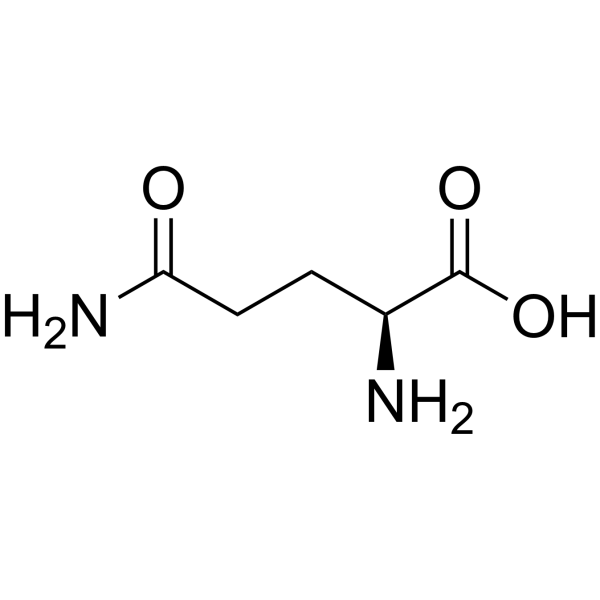
HY-N0390
L-GlutamineEndogenous Metabolite -
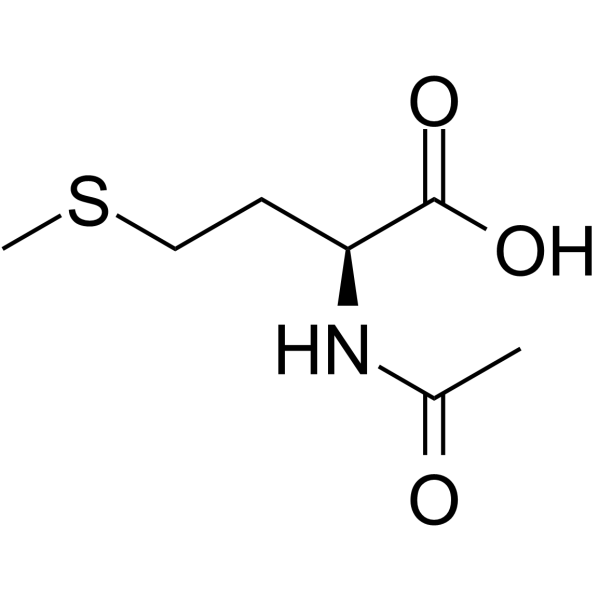
HY-W012499
N-Acetyl-L-methionineDietary Supplementation -
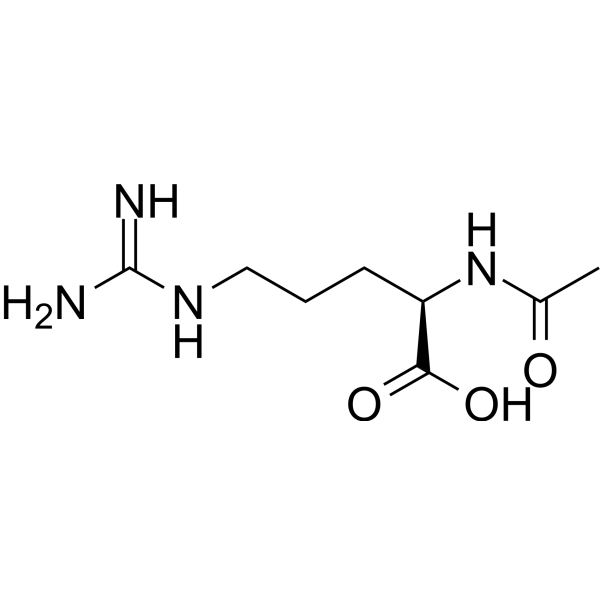
HY-W014130
N-Acetyl-L-arginineIVIG Aggregation Suppressor -
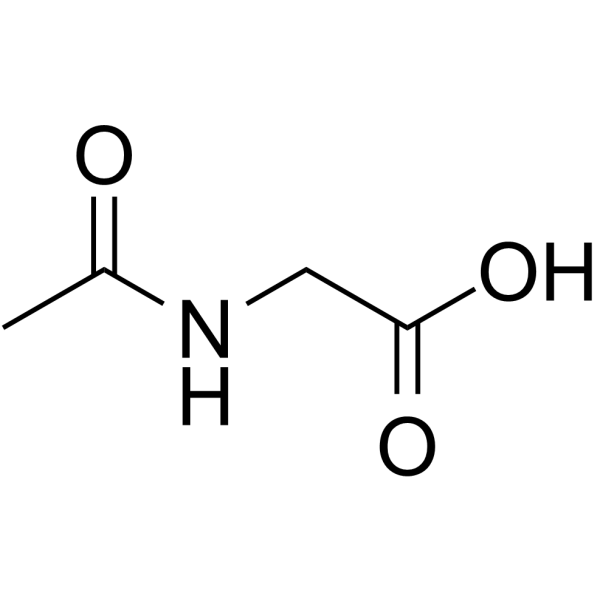
HY-Y0069
N-AcetylglycineFlavor Enhancer -
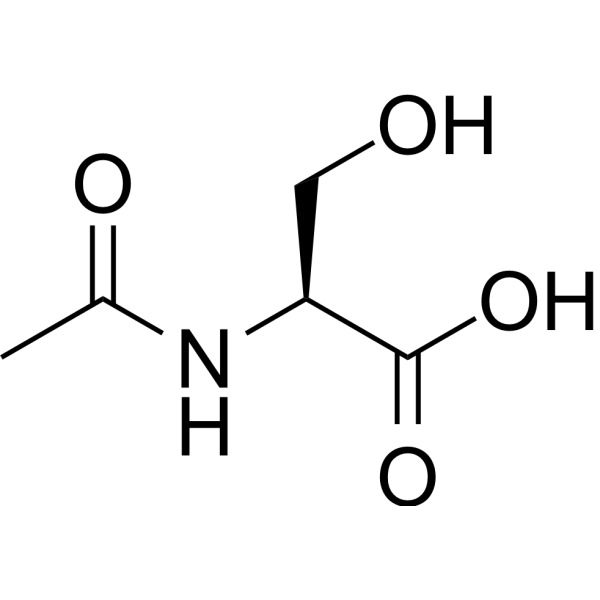
HY-134222A
N-AcetylserineC3b Inhibitor -
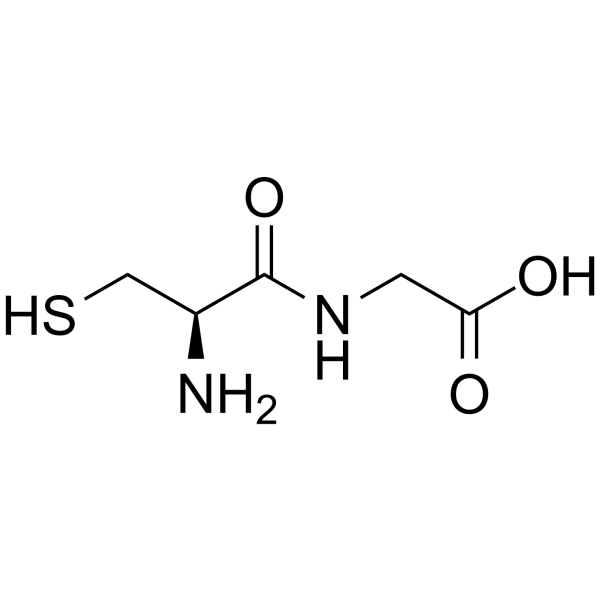
HY-113110
CysteinylglycineEndogenous Metabolite -
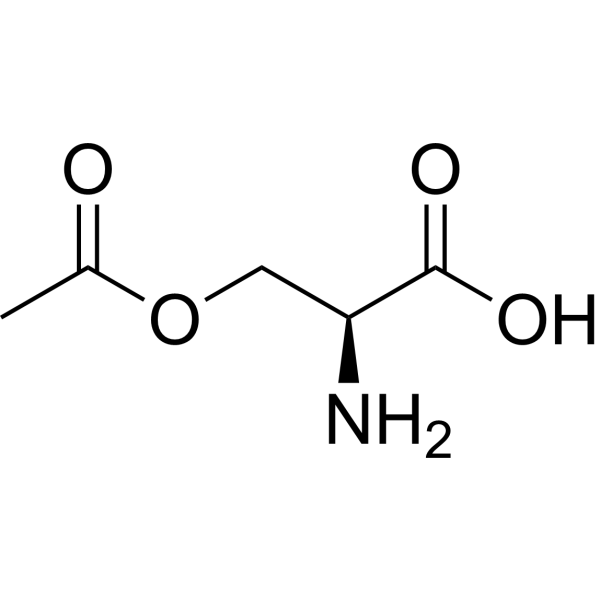
HY-101409
O-AcetylserineEndogenous Metabolite -
HY-113278
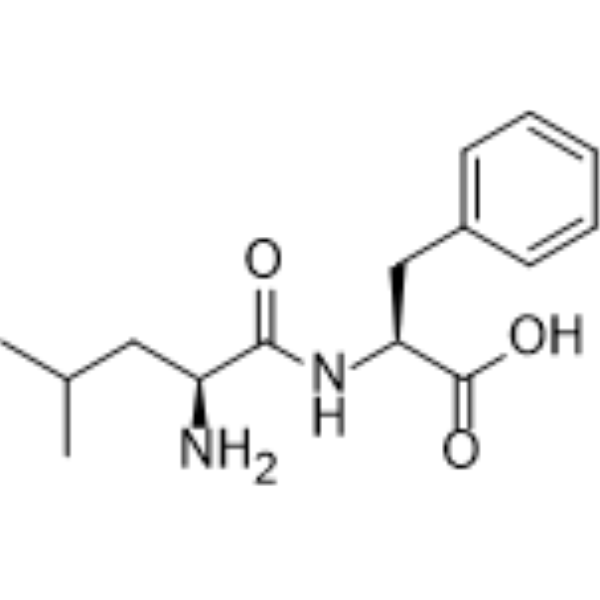
Leucyl-phenylalanineDipeptide -
HY-B1442
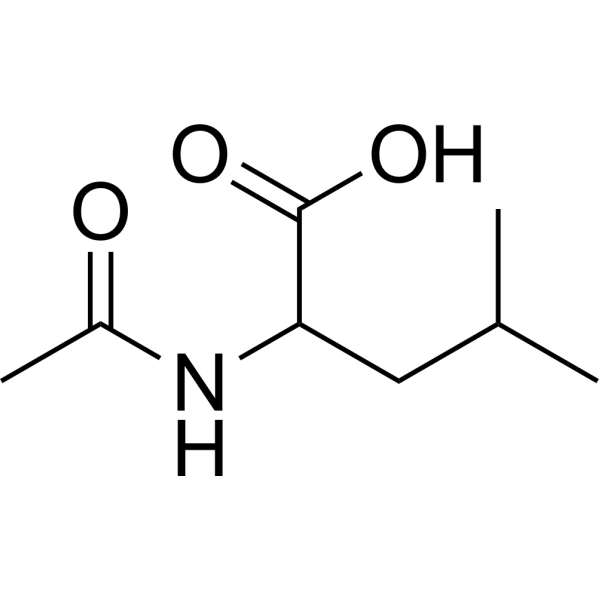
AcetylleucineAnti-Vertigo and Cerebellar Ataxia Compound -
HY-113139
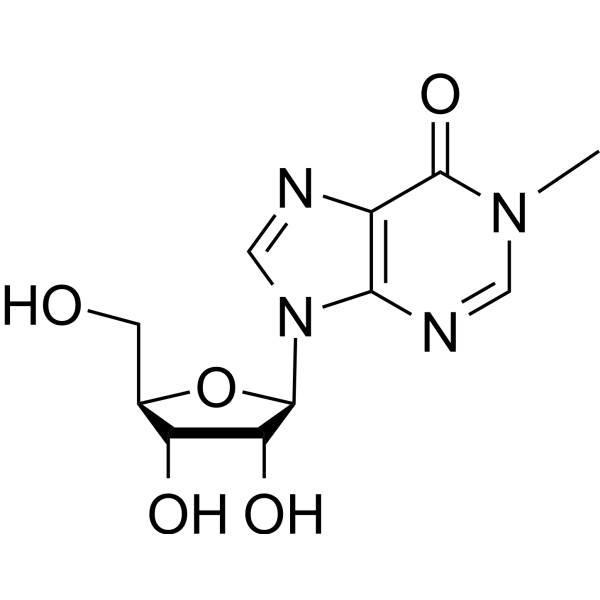
1-MethylinosineModified Nucleotide -
HY-WAA0142
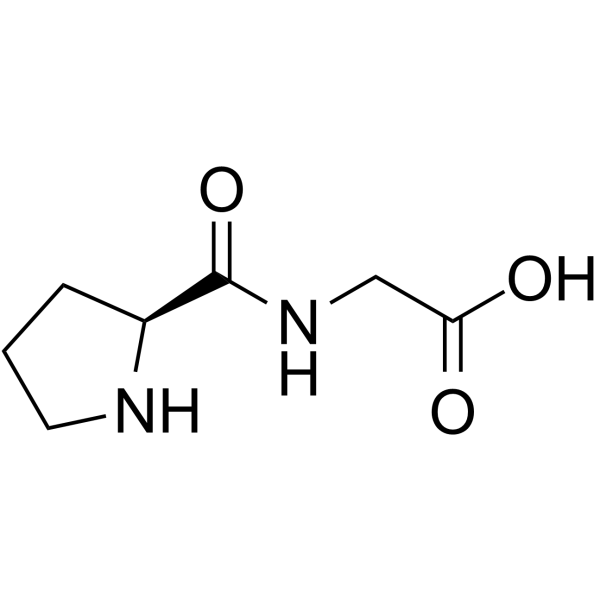
L-ProlylglycineAntidiabetic Agent -

HY-B1065R
Aceglutamide (Standard)Autophagy Inducer


Biological Activity
Description
IC50 & Target
|
Human Endogenous Metabolite |
In Vitro
Aceglutamide (1-10 μM; 24 h) improves the cell viability of H2O2-induced PC12 cells, reduces the levels of reactive oxygen species (ROS) and nitric oxide (NO), upregulates glutathione (GSH) content and activates the Nrf2/Trx antioxidant system[1].
Aceglutamide (10 μM; 24 h) inhibits apoptosis in hypoxia/reoxygenation-injured PC12 cells and primary midbrain neurons, improves mitochondrial membrane potential (MMP), downregulates the pro-apoptotic factor TRAF1 and upregulates the Akt/Bcl-2/Bax signaling pathway[2].
MedChemExpress (MCE) has not independently confirmed the accuracy of these methods. They are for reference only.
-
Cell Line:PC12 cells (rat pheochromocytoma cell line)
-
Concentration:0.01 μM, 0.1 μM, 1 μM, 10 μM
-
Incubation Time:24 h (post hypoxia/reoxygenation)
-
Result:CCK8 assay showed 1 μM and 10 μM Aceglutamide significantly increased cell viability by 18% and 25% compared to the hypoxia/reoxygenation control group, respectively.
-
Cell Line:PC12 cells (rat pheochromocytoma cell line)
-
Concentration:0.01 μM, 0.1 μM, 1 μM, 10 μM
-
Incubation Time:24 h (post hypoxia/reoxygenation)
-
Result:Flow cytometry (Annexin V/PI staining) revealed that 10 μM Aceglutamide reduced early/late apoptotic cells from 39.8% to 21.9%, accompanied by a dose-dependent decrease in apoptotic marker expression.
In Vivo
MedChemExpress (MCE) has not independently confirmed the accuracy of these methods. They are for reference only.
-
Animal Model:
-
Dosage:50 mg/kg, 150 mg/kg, 300 mg/kg
-
Administration:Intraperitoneal injection (i.p.), once daily, starting 24 h after reperfusion, for 14 consecutive days
-
Result:Behavioral Tests: At 14 days post-reperfusion, 150 mg/kg and 300 mg/kg Aceglutamide significantly reduced neurological severity scores (NSS) and adhesive-removal time, and improved beam-walking performance, indicating enhanced motor and somatosensory function compared to the vehicle group[1][2]. Infarct Volume: TTC staining showed 150 mg/kg and 300 mg/kg Aceglutamide reduced infarct volume ratio by 40% and 54%, respectively, compared to the vehicle group (32.13% vs. 19.22% and 14.76%)[1]. Neuronal Protection: Immunohistochemistry revealed a significant increase in TH-positive neurons in the substantia nigra (SN) and TH-positive fiber density in the striatum in 150 mg/kg and 300 mg/kg groups, with 300 mg/kg increasing SN TH-positive cells by 35% compared to the vehicle group[2].


Chemical Information
-
CAS No. 2490-97-3
-
Appearance Solid
-
Molecular Weight 188.18
-
Formula C7H12N2O4
-
Color White to off-white
-
SMILES
O=C(N)CC[C@@H](C(O)=O)NC(C)=O
-
Synonyms
α-N-Acetyl-L-glutamine; N2-Acetylglutamine
-
Structure Classification
-
Initial Source
-
Shipping
Room temperature in continental US; may vary elsewhere.
-
Storage
Powder -20°C 3 years 4°C 2 years In solvent -80°C 2 years -20°C 1 year


Solvent & Solubility
In Vitro:
H2O : 33.33 mg/mL (177.12 mM; Need ultrasonic)
DMSO : 16.67 mg/mL (88.59 mM; Need ultrasonic; Hygroscopic DMSO has a significant impact on the solubility of product, please use newly opened DMSO)
Please refer to the solubility information to select the appropriate solvent. Once prepared, please aliquot and store the solution to prevent product inactivation from repeated freeze-thaw cycles.
Storage method and period of stock solution: -80°C, 2 years; -20°C, 1 year. When stored at -80°C, please use it within 2 years. When stored at -20°C, please use it within 1 year.
* Note: If you choose water as the stock solution, please dilute it to the working solution, then filter and sterilize it with a 0.22 μm filter before use.
Please refer to the solubility information to select the appropriate solvent. Once prepared, please aliquot and store the solution to prevent product inactivation from repeated freeze-thaw cycles.
Storage method and period of stock solution: -80°C, 2 years; -20°C, 1 year. When stored at -80°C, please use it within 2 years. When stored at -20°C, please use it within 1 year.
* Note: If you choose water as the stock solution, please dilute it to the working solution, then filter and sterilize it with a 0.22 μm filter before use.
Concentration (start) × Volume (start) = Concentration (final) × Volume (final)
In Vivo:
Select the appropriate dissolution method based on your experimental animal and administration route.
- For the following dissolution methods, please ensure to first prepare a clear stock solution using an In Vitro approach and then sequentially add co-solvents:
- To ensure reliable experimental results, the clarified stock solution can be appropriately stored based on storage conditions. As for the working solution for In Vivo experiments, it is recommended to prepare freshly and use it on the same day.
- The percentages shown for the solvents indicate their volumetric ratio in the final prepared solution. If precipitation or phase separation occurs during preparation, heat and/or sonication can be used to aid dissolution.
Add each solvent one by one: 10% DMSO 40% PEG300 5% Tween-80 45% Saline
Solubility: ≥ 1.67 mg/mL (8.87 mM); Clear solution
This protocol yields a clear solution of ≥ 1.67 mg/mL (saturation unknown).
Taking 1 mL working solution as an example, add 100 μL DMSO stock solution (16.7 mg/mL) to 400 μL PEG300, and mix evenly; then add 50 μL Tween-80 and mix evenly; then add 450 μL Saline to adjust the volume to 1 mL.
Preparation of Saline: Dissolve 0.9 g sodium chloride in ddH₂O and dilute to 100 mL to obtain a clear Saline solution.
Add each solvent one by one: 10% DMSO 90% (20% SBE-β-CD in Saline)
Solubility: ≥ 1.67 mg/mL (8.87 mM); Clear solution
This protocol yields a clear solution of ≥ 1.67 mg/mL (saturation unknown).
Taking 1 mL working solution as an example, add 100 μL DMSO stock solution (16.7 mg/mL) to 900 μL 20% SBE-β-CD in Saline, and mix evenly.
Preparation of 20% SBE-β-CD in Saline (4°C, storage for one week): 2 g SBE-β-CD powder is dissolved in 10 mL Saline, completely dissolve until clear.
For the following dissolution methods, please prepare the working solution directly:
It is recommended to prepare fresh solutions and use them promptly within a short period of time.
The percentages shown for the solvents indicate their volumetric ratio in the final prepared solution. If precipitation or phase separation occurs during preparation, heat and/or sonication can be used to aid dissolution.
Add each solvent one by one: PBS
Solubility: 20 mg/mL (106.28 mM); Clear solution; Need ultrasonic
In Vivo Dissolution Calculator
Please enter the basic information of animal experiments:
-
-
-
-
Recommended: Prepare an additional quantity of animals to account for potential losses during experiments.
Working solution concentration: 0.22 mg/mL
This product has good water solubility, please refer to the measured solubility data in water/PBS/Saline for details.


Purity & Documentation
-
Data Sheet (278 KB)
-
SDS (394 KB)
- English - EN (394 KB)
- Français - FR (394 KB)
- Deutsch - DE (394 KB)
- Norwegian - NO (394 KB)
- Español - ES (394 KB)
- Swedish - SV (394 KB)
- Italian - IT (394 KB)
- Korean - KR (394 KB)
- Portuguese - PT (394 KB)
-
Handling Instructions (2659 KB)
References
[1]. Zhang J, et al. Enhanced thioredoxin, glutathione and Nrf2 antioxidant systems by safflower extract and aceglutamide attenuate cerebral ischaemia/reperfusion injury. J Cell Mol Med. 2020 May;24(9):4967-4980. [Content Brief]
[2]. Zhang R, et al. Neuroprotective effects of Aceglutamide on motor function in a rat model of cerebral ischemia and reperfusion. Restor Neurol Neurosci. 2015;33(5):741-59. [Content Brief]


Complete Stock Solution Preparation Table
Please refer to the solubility information to select the appropriate solvent. Once prepared, please aliquot and store the solution to prevent product inactivation from repeated freeze-thaw cycles.
Storage method and period of stock solution: -80°C, 2 years; -20°C, 1 year. When stored at -80°C, please use it within 2 years. When stored at -20°C, please use it within 1 year.
| Optional Solvent | Concentration Solvent Mass | 1 mg | 5 mg | 10 mg | 25 mg |
|---|---|---|---|---|---|
| DMSO / H2O | 1 mM | 5.3141 mL | 26.5703 mL | 53.1406 mL | 132.8515 mL |
| 5 mM | 1.0628 mL | 5.3141 mL | 10.6281 mL | 26.5703 mL | |
| 10 mM | 0.5314 mL | 2.6570 mL | 5.3141 mL | 13.2852 mL | |
| 15 mM | 0.3543 mL | 1.7714 mL | 3.5427 mL | 8.8568 mL | |
| 20 mM | 0.2657 mL | 1.3285 mL | 2.6570 mL | 6.6426 mL | |
| 25 mM | 0.2126 mL | 1.0628 mL | 2.1256 mL | 5.3141 mL | |
| 30 mM | 0.1771 mL | 0.8857 mL | 1.7714 mL | 4.4284 mL | |
| 40 mM | 0.1329 mL | 0.6643 mL | 1.3285 mL | 3.3213 mL | |
| 50 mM | 0.1063 mL | 0.5314 mL | 1.0628 mL | 2.6570 mL | |
| 60 mM | 0.0886 mL | 0.4428 mL | 0.8857 mL | 2.2142 mL | |
| 80 mM | 0.0664 mL | 0.3321 mL | 0.6643 mL | 1.6606 mL | |
| H2O | 100 mM | 0.0531 mL | 0.2657 mL | 0.5314 mL | 1.3285 mL |
* Note: If you choose water as the stock solution, please dilute it to the working solution, then filter and sterilize it with a 0.22 μm filter before use.


Aceglutamide Related Classifications
HY-B1065 Related Classifications
 Powered by Bioz