



iGluR
Ionotropic glutamate receptors
iGluR (ionotropic glutamate receptor) is a ligand-gated ion channel that is activated by the neurotransmitter glutamate. iGluR are integral membrane proteins compose of four large subunits that form a central ion channel pore. Sequence similarity among all known glutamate receptor subunits, including the AMPA, kainate, NMDA, and δ receptors.
AMPA receptors are the main charge carriers during basal transmission, permitting influx of sodium ions to depolarise the postsynaptic membrane. NMDA receptors are blocked by magnesium ions and therefore only permit ion flux following prior depolarisation. This enables them to act as coincidence detectors for synaptic plasticity. Calcium influx through NMDA receptors leads to persistent modifications in the strength of synaptic transmission.
iGluR Isoform Specific Products
All Product Categories
-
iGluR Inhibitors
(130)
View all products
-
iGluR Agonists
(131)
View all products
-
iGluR Antagonists
(347)
View all products
-
iGluR Activators
(35)
View all products
-
iGluR Modulators
(93)
View all products
-
iGluR MDM2 Inhibitor
(1)
View all products
-
iGluR Controls
(5)
View all products
-
iGluR Ligands
(3)
View all products
-
iGluR Related Products (828)
Related Products (828)

-
Antibodies (11)
-
iGluR Isoform Comparison
-
(R)-3C4HPG
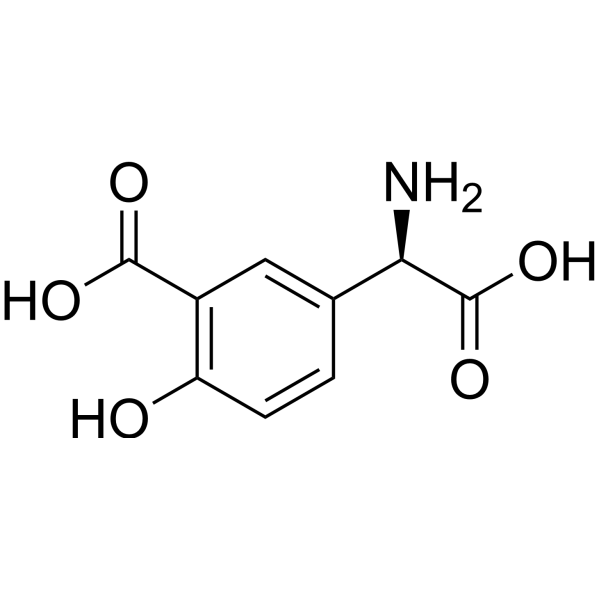 0 ImagesCat. No.: HY-100842CAS No.: 13861-03-5(R)-3C4HPG is an NMDA receptor antagonist.
-
NMDA agonist 1
 0 ImagesCat. No.: HY-169950CAS No.: 2576586-47-3NMDA agonist 1 (compound 42d) is a potent NMDA agonist with a Ki value of 96 nM. NMDA agonist 1 acts as a partial agonist of the GluN1/GluN2B complex with an EC50 value of 78 nM.
-
AMPAR modulator-12
 0 ImagesCat. No.: HY-183101CAS No.: 2163787-60-6AMPAR modulator-12 is a blood-brain barrier-permeable AMPAR positive allosteric modulator. AMPAR modulator-12 reduces NOX-1 expression, enhances AMPAR-mediated currents, promotes excitatory postsynaptic transmission and restores AMPAR function. AMPAR modulator-12 enhances excitatory and inhibitory synaptic transmission, reduces burst firing in the lateral habenula after withdrawal, and produces rapid and sustained antidepressant-like effects. AMPAR modulator-12 is applicable for the research of depression.
-
SN-35210 free base
 0 ImagesCat. No.: HY-167885CAS No.: 1450615-41-4SN-35210 free base, an ester analogue, is designed for rapid offset via esterase-mediated hydrolysis.
-
CGP 43487
 0 ImagesCat. No.: HY-111528CAS No.: 146388-56-9CGP 43487 is a NMDA receptor antagonist. CGP 43487 significantly affects the gross structural characteristics of the developing dentate gyrus.
-
EVT-101 free base
 0 ImagesCat. No.: HY-112095CAS No.: 627525-33-1Synonyms: ENS-101 free baseEVT-101 free base is a GluN2B antagonist. EVT-101 free base binds at the same GluN1/GluN2B dimer interface as Ifenprodil (HY-12882). EVT-101 free base inhibits calcium influx in chicken-derived cells, with an EC50 of 22 nM. EVT-101 can be used in the research of brain disorders.
-
TAN 950A
 0 ImagesCat. No.: HY-105476CAS No.: 127607-88-9TAN 950A is antifungal amino acid antibiotic. TAN 950A has affinity for three excitatory amino acid (EAA) receptor and can inhibit [3H]AMPA, [3H]kainite and [3H]CPP binding competitively. TAN 950A can be used for the researches of infection and neurological disease.
-
Indantadol
 0 ImagesCat. No.: HY-101440CAS No.: 202844-10-8Synonyms: CHF-3381 free baseIndantadol (the free base of CHF-3381) is an orally active, non-selective NMDA antagonist and MAO inhibitor. Indantadol blocks the binding of [³H]-MK-801 to NMDA receptors in a non-competitive manner, with an IC50 of 8.1 μM. Indantadol completely inhibits dopamine release caused by NMDA. Indantadol protects neurons, with an ED₅₀ of 35 μM. Indantadol has anticonvulsant and anti-high pain hypersensitivity activities.

-
NMDA receptor antagonist-3
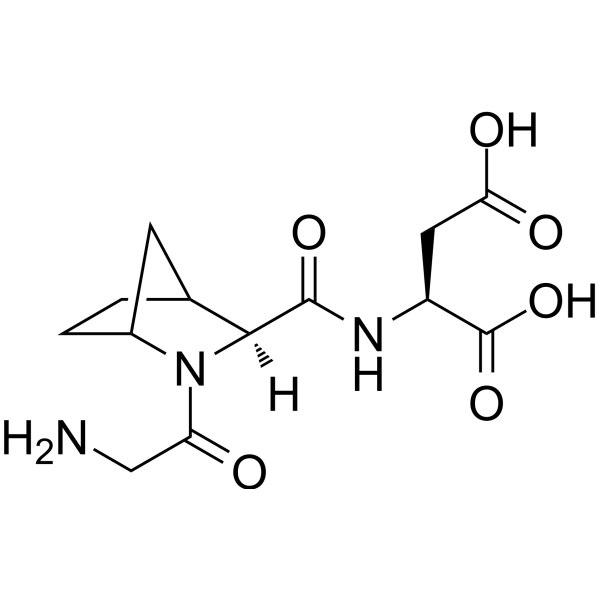 0 ImagesCat. No.: HY-139708CAS No.: 2762181-52-0NMDA receptor antagonist-3, a NMDA receptor antagonist, stands out with a remarkable percentage of recovery (40.0%, at 100 μM) and safe toxicological profile in SH-SY5Y and human adipose mesenchymal stem cells.
-
UK-240455
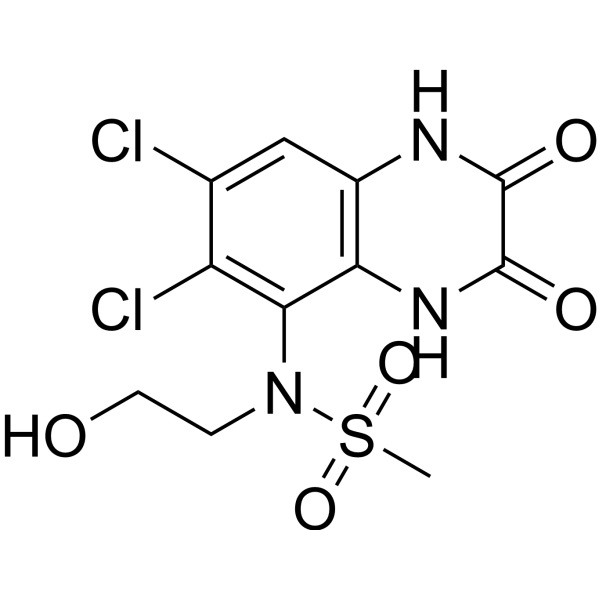 0 ImagesCat. No.: HY-19391CAS No.: 178908-09-3UK-240455 is a potent and selective N-methyl D-aspartate (NMDA) glycine site antagonist.
-
NMDA receptor antagonist 8
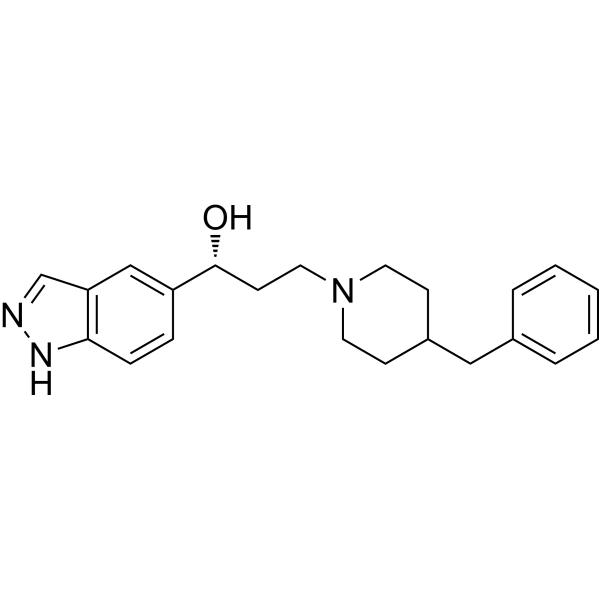 0 ImagesCat. No.: HY-155185ACAS No.: 3033746-14-1NMDA receptor antagonist 8 (Compound (R)-10a) is GluN2B subunit-selective NMDA Receptor antagonist, with an Ki of 265 nM and an IC50 of 62 nM. NMDA receptor antagonist 8 can be used for research of neurodegenerative diseases.
-
Fluorolintane
 0 ImagesCat. No.: HY-171979CAS No.: 2149042-90-8Fluorolintane exhibits high affinity for N-methyl-D-aspartate (NMDA) receptors with a Ki of 87.92 nM. Fluorolintane inhibits prepulse inhibition in rats. Fluorolintane also inhibits NMDA receptor-induced field excitatory postsynaptic potentials in rat hippocampal slices.
-
Ipenoxazone hydrochloride
 0 ImagesCat. No.: HY-100159ACAS No.: 118635-68-0Synonyms: MLV-6976 hydrochloride; NC-1200 hydrochlorideIpenoxazone (MLV-6976) hydrochloride is a potent and centrally acting muscle relaxant.
-
ADCI
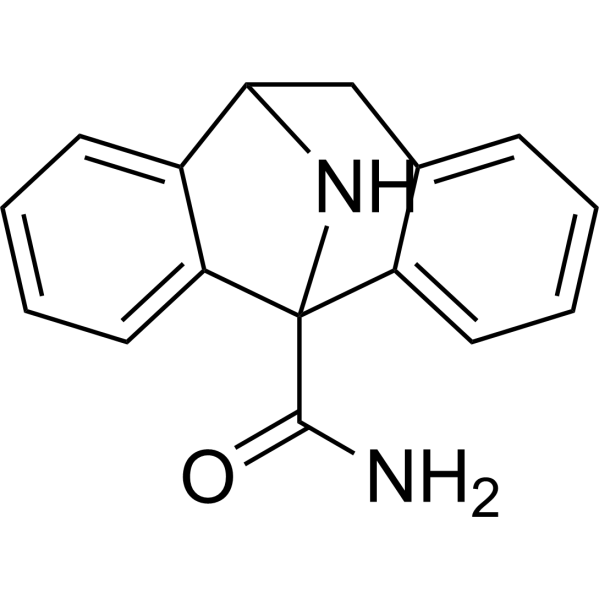 0 ImagesCat. No.: HY-119950CAS No.: 124070-15-1ADCI, a noncompetitive NMDA antagonist, is a broad-spectrum anticonvulsant agent.
-
UBP-282
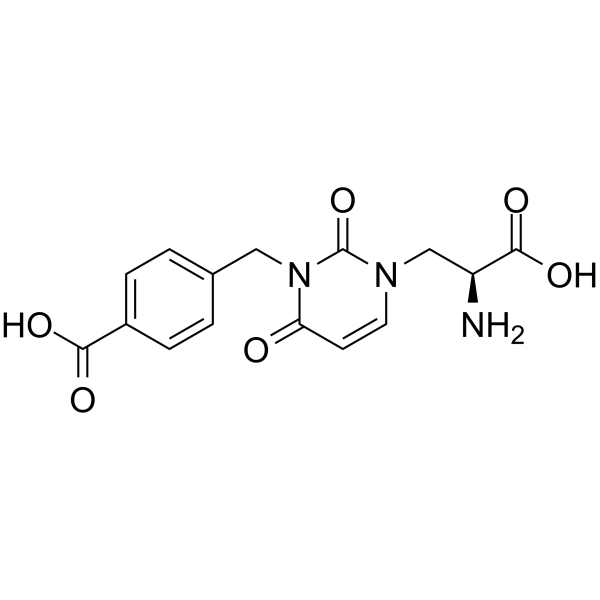 0 ImagesCat. No.: HY-19432CAS No.: 544697-47-4UBP-282 is a potent, selective and competitive AMPA and kainate receptor antagonist. UBP-282 inhibits the fast component of the dorsal root-evoked ventral root potential (fDR-VRP) with an IC50 value of 10.3 μM. UBP-282 antagonizes kainate-induced depolarisations of dorsal roots with a pA2 value of 4.96.
-
Withaphysalin D
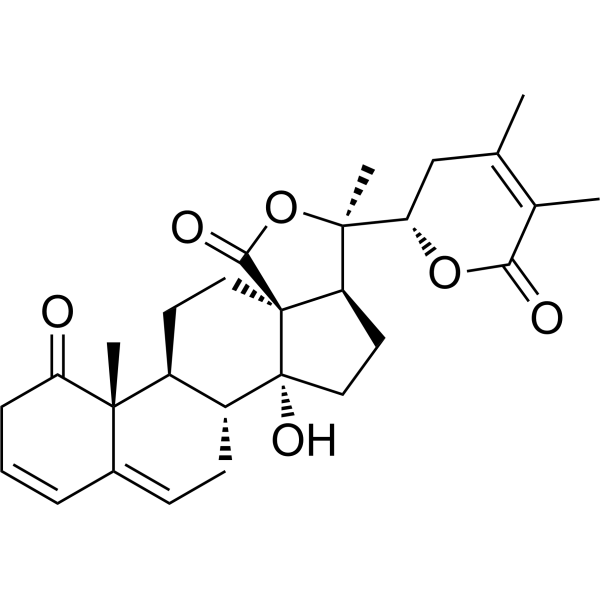 0 ImagesCat. No.: HY-N11061CAS No.: 91599-21-2Withaphysalin D is a selective antagonist against the N-methyl-D-aspartate receptor (NMDAR) containing GluN2B. Withaphysalin D can be isolated from water lilies and has neuroprotective properties. Withaphysalin D is able to cross the blood-brain barrier.
-
5,7-Dichlorokynurenic acid sodium
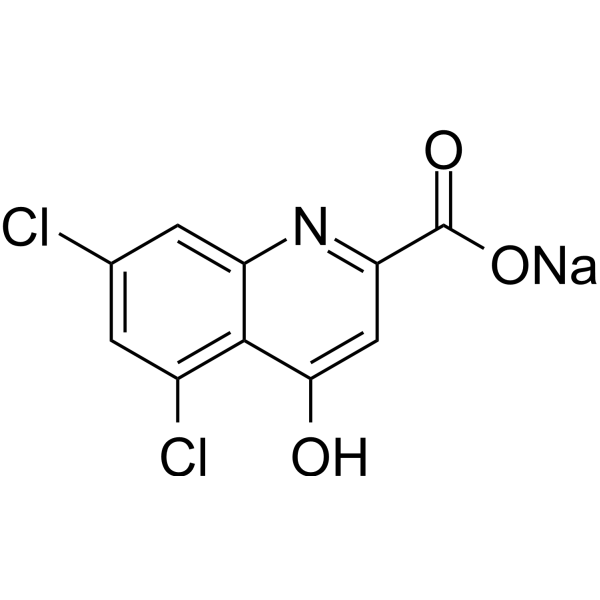 0 ImagesCat. No.: HY-100834ACAS No.: 1184986-70-6Synonyms: 5,7-DCKA sodium5,7-Dichlorokynurenic acid (5,7-DCKA) sodium is a selective and competitive antagonist of the glycine site on NMDA receptor with a KB of 65 nM. 5,7-Dichlorokynurenic acid sodium reduces NMDA-induced neuron injury. 5,7-Dichlorokynurenic acid sodium increases social interaction time, increases open arm exploration time, disinhibits suppressed conflict responding in rodent models. 5,7-Dichlorokynurenic acid sodium exhibits anxiolytic-like activity in rodent models and supports exploration of glycine’s role in NMDA receptor-mediated synaptic transmission.
-
KRP-199
 0 ImagesCat. No.: HY-117176CAS No.: 221164-28-9KRP-199 (compound 14h) is an α-amino-3-hydroxy-5-methylisoxazolepropionic acid receptor (AMPA-R) antagonist (Ki=16 nM) with high potency and selectivity for AMPA-R in vitro and good neuroprotective effects in vivo. KRP-199 can be used in the study of neurodegenerative diseases.




