



iGluR
Ionotropic glutamate receptors
iGluR (ionotropic glutamate receptor) is a ligand-gated ion channel that is activated by the neurotransmitter glutamate. iGluR are integral membrane proteins compose of four large subunits that form a central ion channel pore. Sequence similarity among all known glutamate receptor subunits, including the AMPA, kainate, NMDA, and δ receptors.
AMPA receptors are the main charge carriers during basal transmission, permitting influx of sodium ions to depolarise the postsynaptic membrane. NMDA receptors are blocked by magnesium ions and therefore only permit ion flux following prior depolarisation. This enables them to act as coincidence detectors for synaptic plasticity. Calcium influx through NMDA receptors leads to persistent modifications in the strength of synaptic transmission.
iGluR Isoform Specific Products
All Product Categories
-
iGluR Inhibitors
(131)
View all products
-
iGluR Agonists
(131)
View all products
-
iGluR Antagonists
(348)
View all products
-
iGluR Activators
(35)
View all products
-
iGluR Modulators
(93)
View all products
-
iGluR MDM2 Inhibitor
(1)
View all products
-
iGluR Controls
(5)
View all products
-
iGluR Ligands
(3)
View all products
-
iGluR Related Products (830)
Related Products (830)

-
Antibodies (11)
-
iGluR Isoform Comparison
-
Lanicemine-d5 dihydrochloride
 0 ImagesCat. No.: HY-108235AS1Synonyms: AZD6765-d5 dihydrochloride; ARL 15896AR-d5Lanicemine-d5 dihydrochloride (AZd6765-d5 dihydrochloride) is the deuterium labeled Lanicemine dihydrochloride (HY-108235A). Lanicemine (AZD6765) dihydrochloride is a low-trapping NMDA channel blocker (Ki of 0.56-2.1 μM for NMDA receptor; IC50s of 4-7 μM and 6.4 μM in CHO and Xenopus oocyte cells, respectively). Antidepressant effects.
-
NMDA receptor modulator 9
 0 ImagesCat. No.: HY-175508NMDA receptor modulator 9 is an orally active NMDA receptor positive allosteric modulator (PAM). NMDA receptor modulator 9 enhances GluN2A receptor activity. NMDA receptor modulator 9 demonstrates significant antidepressant-like effects in chronic restraint stress (CRS)-induced depression mice. NMDA receptor modulator 9 can be used for the study of depression.
-
Ro 25-6981 hydrochloride
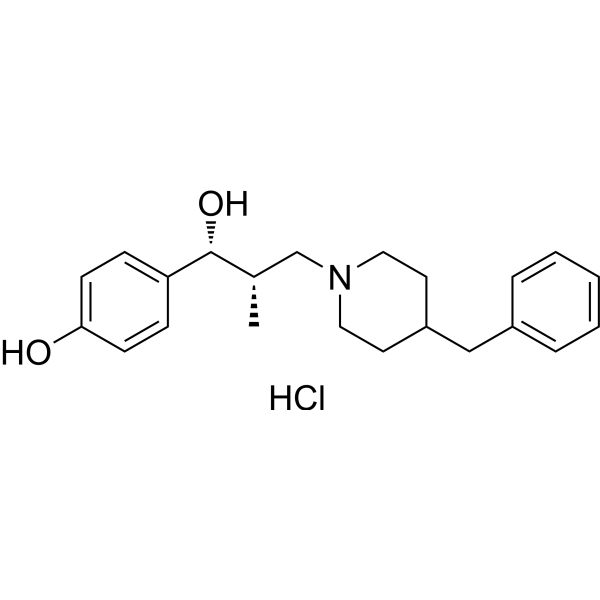 0 ImagesCat. No.: HY-13993BCAS No.: 919289-58-0Ro 25-6981 hydrochloride is a potent, selective and activity-dependent NR2B subunit specific NMDA receptor antagonist. Ro 25-6981 hydrochloride shows anticonvulsant and anti-parkinsonian activity. Ro 25-6981 hydrochloride has the potential for the research of parkinson's disease (PD).
-
LY 274614
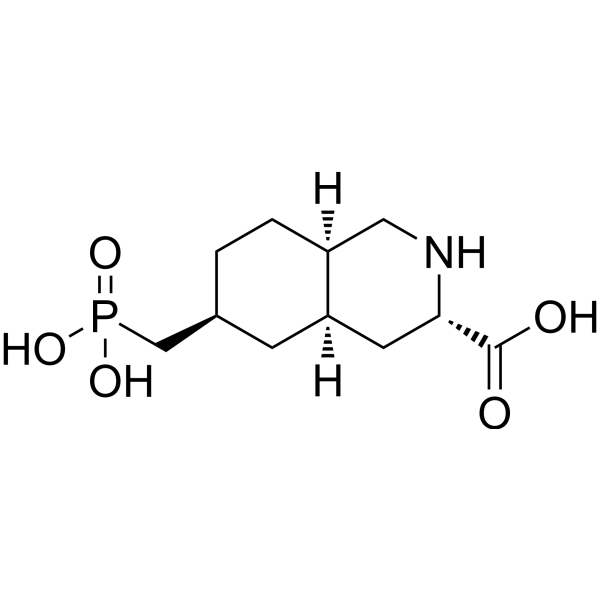 0 ImagesCat. No.: HY-124204CAS No.: 136109-04-1LY 274614 is an orally active, competitive NMDA receptor antagonist. LY 274614 can be used for Neurological Disease study.
-
MDL 27266
 0 ImagesCat. No.: HY-105340CAS No.: 116114-14-8MDL 27266 is an orally active NMDA receptor antagonist with neuroprotective effect. MDL 27266 is a broad-spectrum anticonvulsant agent.
-
Fluorofelbamate
 0 ImagesFluorofelbamate, a Felbamate (HY-B0184) analog, is a potent NMDA receptor antagonist. Fluorofelbamate exhibits anticonvulsant and antiepileptogenic effects in an experimental rat model of self-sustaining status epilepticus (SSSE). Fluorofelbamate can be used for epilepsy research.
-
GYKI 53405
 0 ImagesCat. No.: HY-15080CAS No.: 143691-37-6Synonyms: LY 293606GYKI 53405 (LY 293606) is a non-competitive, orally active AMPA receptor antagonist. GYKI 53405 shows no significant binding affinity for GABAA, GABAB or benzodiazepine receptors. GYKI 53405 increases self-grooming behavior, induces wet dog-like shakes, reduces spontaneous activity, produces anxiolytic-like behavior, reverses the anxiogenic effect induced by mCPP, inhibits locomotor activity, suppresses sound-induced and maximal electroshock-induced seizures, prolongs survival in global cerebral ischemia models, and exhibits sustained anticonvulsant effects at doses below the sedation threshold. GYKI 53405 can be used in research related to absence epilepsy, anxiety disorders and global cerebral ischemia.
-
EU 1622-240
 0 ImagesCat. No.: HY-173623CAS No.: 3057728-22-7EU 1622-240 is a biased positive allosteric modulator of GluN2B, GluN2C, and GluN2D, with EC50s of 0.57, 0.82, 1.1 μM respectively. EU 1622-240 has good physicochemical properties, in vitro stability, and permeability.
-
Memantine-d3 hydrochloride
 0 ImagesCat. No.: HY-B0591SCAS No.: 1329802-06-3Memantine-d3 (hydrochloride) is deuterium labeled Memantine. Memantine is an orally active, noncompetitive N-methyl-D-aspartate receptor (NMDAR) antagonist. Memantine can be used for the research of moderate-to-severe Alzheimer's disease (AD).
-
Metapramine
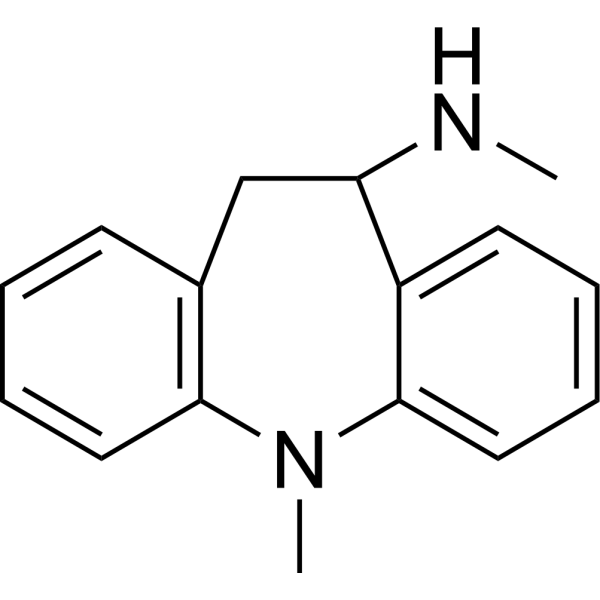 0 ImagesCat. No.: HY-107031CAS No.: 21730-16-5Synonyms: 19560 RPMetapramine (19560 RP) is an antidepressant agent, belonging to the class of tricyclic compounds. Metapramine inhibits norepinephrine reuptake, without affecting the reuptake of serotonin or dopamine. Metapramine is a low-affinity antagonist of the N-methyl-D-aspartic acid (NMDA) receptor complex channel.
-
NSC339614 potassium
 0 ImagesCat. No.: HY-148611CAS No.: 1135037-53-4NSC339614 potassium is a selective GluN1/GluN2C and GluN1/GluN2D receptor enhancer with the activity of enhancing neuronal responses to specific NMDA receptors. NSC339614 potassium can selectively enhance the signaling of GluN1/GluN2C and GluN1/GluN2D receptors without affecting other NMDA receptors. The mechanism of action of NSC339614 potassium does not compete with agonists of L-glutamate or glycine, nor does it depend on membrane potential. The activity of NSC339614 potassium depends on the specific structure of the agonist ligand binding domain, showing its potential as a novel pharmacological agent for studying the function of NMDA receptor subtypes and providing new lead compounds for a variety of neurological diseases.
-
Pep2m
 0 ImagesCat. No.: HY-P1058CAS No.: 243843-42-7Pep2m is a peptide receptor inhibitor. Pep2m inhibits the interaction between the C-terminus of the AMPA-type glutamate receptor (GluA2) subunit and N-ethylmaleimide-sensitive fusion protein (NSF). Pep2m prevents synaptic long-term depression (LTD). Pep2m can reduce postsynaptic currents in neurons, AMPA-mediated currents in cultured hippocampal neurons, and AMPA receptor surface expression[1][2][3][4][5].
-
Co 101244
 0 ImagesCat. No.: HY-137049CAS No.: 193359-26-1Synonyms: PD 174494Co-101244 (PD 174494) is an NMDA receptor blocker that specifically targets the NR2B subunit.
-
NS1219
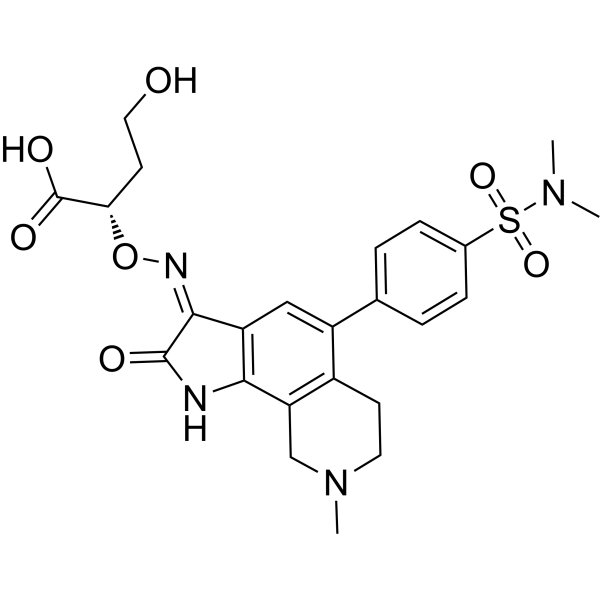 0 ImagesCat. No.: HY-15078CAS No.: 233603-81-1Synonyms: (R)-SPD502NS1219 ((R)-SPD502) is the isomer of NS 1209 HY-15074. NS1209 is a selective AMPA receptor antagonist with neuroprotective activity. NS1209 can be used for the research of stroke, neuropathic pain and epilepsy.
-
Aptiganel
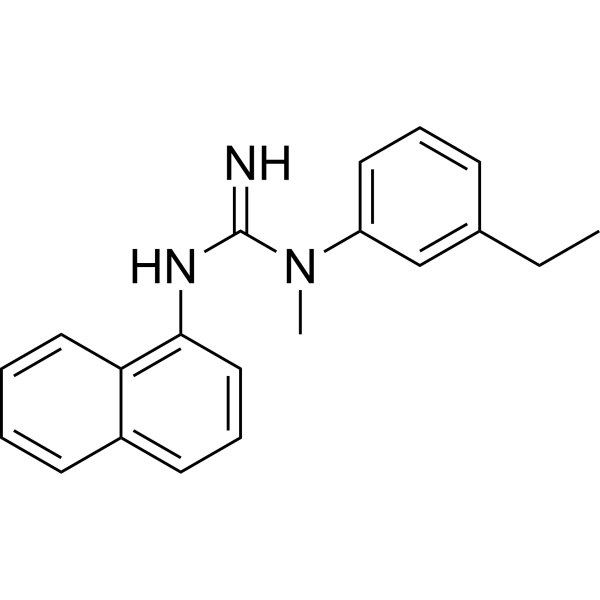 0 ImagesCat. No.: HY-100356CAS No.: 137159-92-3Synonyms: CNS 1102 free baseAptiganel (CNS 1102 (free base)), peptide, is a noncompetitive NMDA antagonist with cerebroprotective effects. Aptiganel can be used for the research of stroke.
-
AVLX-144
 0 ImagesCat. No.: HY-P11263CAS No.: 1413933-25-1AVLX-144 is a highly potent inhibitor of postsynaptic density protein 95 (PSD-95). AVLX-144 can be used as a template to develop imaging probes for postsynaptic density (PSD) molecules, and can be labeled with fluorine-18 (¹⁸F) or tritium (³H) to visualize PSD-95 in vivo. AVLX-144 can be utilized for the study of Parkinson's disease.
-
NMDA receptor modulator 6
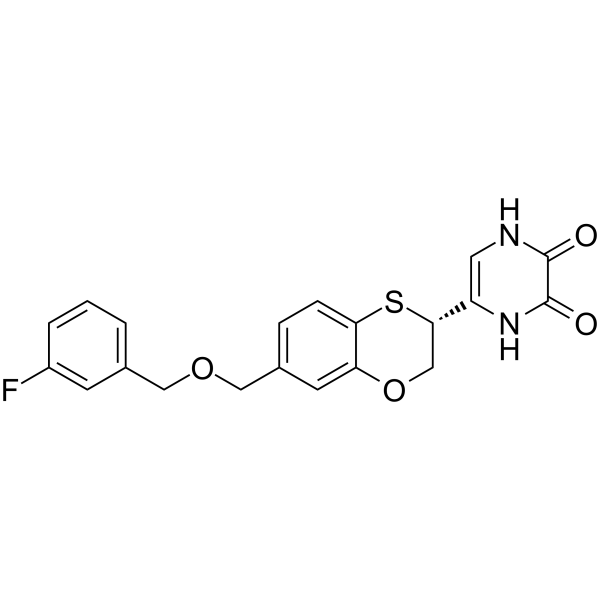 0 ImagesCat. No.: HY-143397CAS No.: 2758256-85-6NMDA receptor modulator 6 (Compound 183) is a potent NMDA receptor modulator. NMDA receptor modulator 6 can be used for neurological disorder research.
-
AMPA receptor antagonist-2
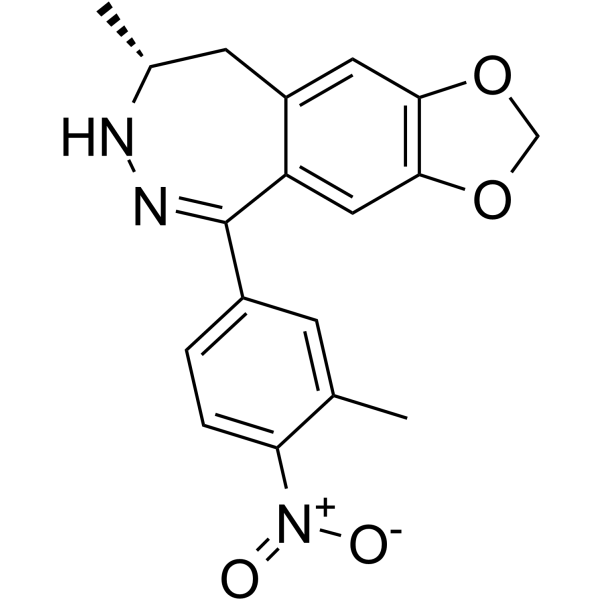 0 ImagesAMPA receptor antagonist-2 (example 23) is an AMPA receptor antagonist.
-
Benzylaspartic acid
 0 ImagesCat. No.: HY-W274652CAS No.: 5555-22-6Synonyms: IEM-1770Benzylaspartic acid (IEM-1770), a derivative of aspartic acid, is a NMDA agonist. Benzylaspartic acid has antidepressant activity. Benzylaspartic acid blocks alcohol-abstinence syndrome (AAS) development in chronic alcohol drinking rat models. Benzylaspartic acid can be used for depression research.
-
Ro 48-8587
 0 ImagesCat. No.: HY-116244CAS No.: 211120-62-6Ro 48-8587 is a selective AMPA receptor antagonist with an IC50 of 8 nM. Ro 48-8587 functionally inhibits AMPA receptor activity, blocks AMPA-induced depolarization of rat cortical wedges. Ro 48-8587 can be used for the research of ischaemia and seizures.




