



-
Mucin Related Products (35)
Related Products (35)

- 1
- 2
-
Gatipotuzumab
 0 ImagesSynonyms: PankoMab; DS-3939a antibodyGatipotuzumab (PankoMab) is a humanized monoclonal antibody which recognizes the tumor-specific epitope of mucin-1 (TA-MUC1). Gatipotuzumab reveals a potent tumor-specific antibody-dependent cell cytotoxicity (ADCC).
-
Ac5GalNTGc
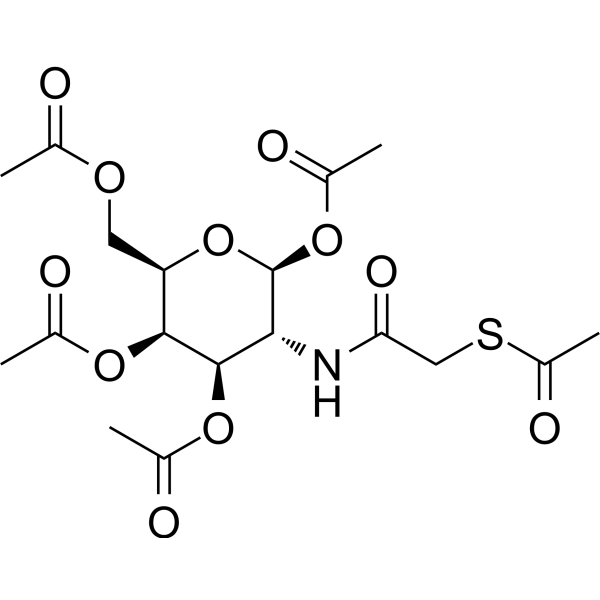 0 ImagesCat. No.: HY-160109Purity: 98.54%Ac5GalNTGc is a potent, peracetylated C-2 thioglycolyl-substituted GalNAc analog that efficiently inhibits mucin-type O-glycan biosynthesis. Ac5GalNTGc reduces leukocyte sialyl-Lewis-X expression and inhibits L-/P-selectin mediated rolling under flow, as well as P-selectin dependent leukocyte-platelet adhesion. Ac5GalNTGc exhibits anti-inflammatory activity in a thioglycollate-induced acute peritonitis model. Ac5GalNTGc can be used for studies of O-glycan/mucin biology, inflammation, and related translational research.
-
Guaifenesin
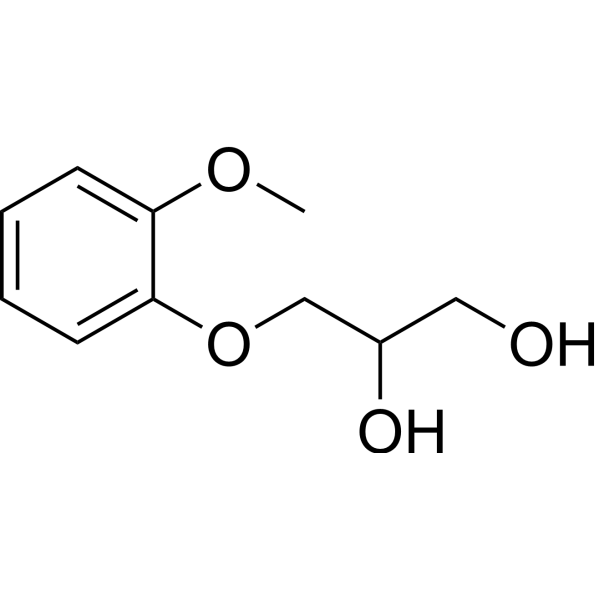 0 ImagesSynonyms: Guaiacol glyceryl ether; Guaiphenesin; Glycerol guaiacolateGuaifenesin (Guaiacol glyceryl ether), a constituent of guaiac resin from the wood of Guajacum officinale Linné, is an expectorant. Guaifenesin can alleviate cough discomfortby increasing sputum volume and decreasing its viscosity, thereby promoting effective cough.
-
Sofituzumab
 0 ImagesSynonyms: MMUC 1206ASofituzumab (MMUC 1206A) is an anti-MUC16 antibody with a Kd of 0.3-0.9 nM. Sofituzumab can bind multiple adjacent antibody molecules to the repeat sequences of the same MUC16 molecule. Sofituzumab exhibits no anti-tumor activity in the HPAC pancreatic adenocarcinoma xenograft model.
-
Minretumomab
 0 ImagesCat. No.: HY-P99732CAS No.: 195189-17-4Synonyms: CC-49Minretumomab (CC-49) is a murine monoclonal antibody against TAG-72 (tumor-associated glycoprotein 72). Minretumomab is used in cancer and immunity research.


-
huCC49
 0 ImagesCat. No.: HY-P992373
-
Sontuzumab
 0 ImagesSynonyms: AS1402; huHMFG-1; Epitumomab

-
Kaempferol 3-O-gentiobioside
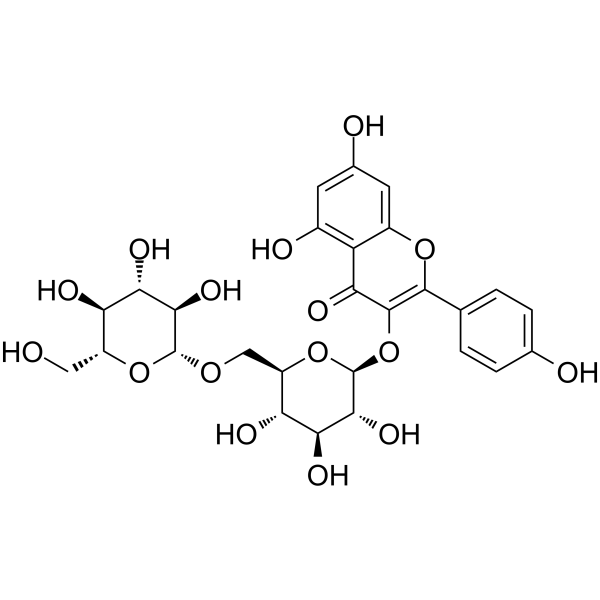 0 ImagesKaempferol 3-O-gentiobioside is an orally active flavonoid, with a Ka value of 57 µM against human NOTCH1 and an IC50 value of 50 μM against α-glucosidase. Kaempferol 3-O-gentiobioside inhibits the NOTCH signaling pathway. It downregulates the expression of TLR4 and NLRP3, and suppresses the activation and nuclear translocation of NF-κB. Kaempferol 3-O-gentiobioside inhibits the expression of MUC5AC, reduces nitrite and ROS levels, and attenuates excessive mucus secretion. It exhibits antibacterial activity, reducing the formation and growth of MRSA biofilms. Kaempferol 3-O-gentiobioside blocks the TGF-β/ALK5/Smad signaling pathway and inhibits epithelial-mesenchymal transition. It suppresses the proliferation, migration, invasion and metastatic growth of tumor cells. Kaempferol 3-O-gentiobioside alleviates airway inflammation and mucus hypersecretion in mice with allergic asthma. It reduces the volume of ovarian cancer xenografts in mice. Kaempferol 3-O-gentiobioside can be used in research related to allergic asthma, diabetes, MRSA infection, breast cancer, gastric cancer and ovarian cancer.
-
Fexlamose
 0 ImagesSynonyms: AER-01; MUC-031Fexlamose (AER-01) is a thiol-modified carbohydrate agent with mucolytic property. Fexlamose cleaves disulfides to cause mucolysis. Fexlamose can be used for researchs of chronic obstructive pulmonary disease (COPD) and muco-obstructive lung diseases (MOLD).
-
Surzebiclimab
 0 ImagesCat. No.: HY-P99962CAS No.: 2342597-90-2Synonyms: BGB-A425Surzebiclimab (BGB-A425) is a humanized IgG1-variant monoclonal antibody against T-cell immunoglobulin and mucin-domain containing-3 (TIM-3). Surzebiclimab binds to the extracellular domain of human Tim-3 with high affinity (KD=0.36 nM) and specificity. Surzebiclimab can be used in research of cancer.


-
Anti-MUC1/CD227 Antibody (C595 (NCRC48))
 0 ImagesCat. No.: HY-P990831Anti-MUC1/CD227 Antibody (C595 (NCRC48)) is a kind of mouse IgG3 κ chimeric antibody inhibitor, targeting to human MUC1/CD227. Anti-MUC1/CD227 Antibody (C595 (NCRC48)) specifically recognizes and binds to the MUC1 protein, which is overexpressed and abnormally glycosylated on the surface of tumor cells, thereby precisely killing cancer cells. Anti-MUC1/CD227 Antibody (C595 (NCRC48)) can be used for the researches of cancer, such as ovarian cancer.
-
Ensituximab
 0 ImagesSynonyms: Anti-MUC5AC Reference Antibody (ensituximab); NEO-102Ensituximab (NEO-102; NPC-1C) is a chimeric monoclonal IgG1 antibody targeting a variant of MUC5AC. Ensituximab shows specificity to colorectal and pancreatic cancer.

-
S2.2 aptamer sodium
 0 ImagesCat. No.: HY-160062S2.2 aptamer sodium is a nucleic acid-based MUC1-binding aptamer with high affinity and low toxicity. Upon binding to its target, S2.2 aptamer sodium undergoes a conformational switch and restores fluorescence signal, serving as a targeted imaging agent for MUC1-positive cancer cells. S2.2 aptamer sodium enables targeted delivery to breast cancer cells with overexpressed MUC1. When formulated as the S2.2-PEG-MZF molecular probe, S2.2 aptamer sodium possesses the functions of T2 signal inhibition, magnetic field-induced hyperthermia and targeted magnetic resonance molecular imaging. In the S2.2-PEG-MZF/DOX nanoliposome, S2.2 aptamer sodium supports targeted thermochemotherapy, effectively inhibiting cancer cell proliferation and invasion as well as inducing apoptosis, and is widely used in studies related to breast cancer.
-
Ac5GalNTGc epimer
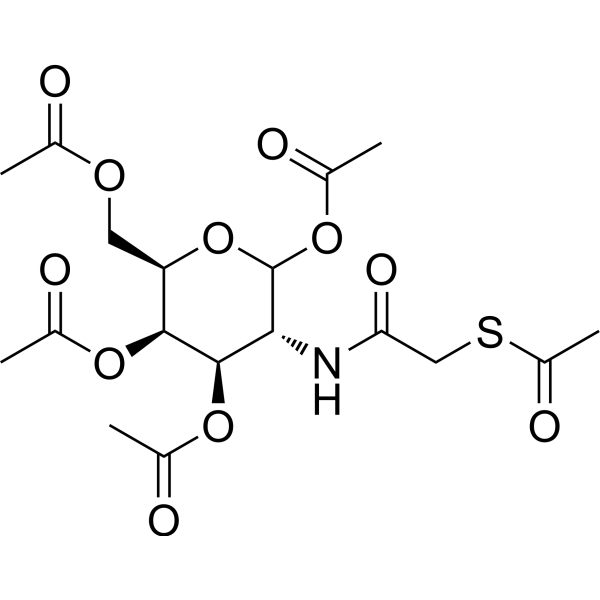 0 ImagesAc5GalNTGc epimer is an analogue of hexosamine and the racemate of Ac5GalNTGc (HY-160109). Ac5GalNTGc is a potent, peracetylated C-2 thioglycolyl-substituted GalNAc analog that efficiently inhibits mucin-type O-glycan biosynthesis. Ac5GalNTGc reduces leukocyte sialyl-Lewis-X expression and inhibits L-/P-selectin mediated rolling under flow, as well as P-selectin dependent leukocyte-platelet adhesion. Ac5GalNTGc exhibits anti-inflammatory activity in a thioglycollate-induced acute peritonitis model. Ac5GalNTGc can be used for studies of O-glycan/mucin biology, inflammation, and related translational research.
- 1
- 2



