



Teprenone
Based on 5 publication(s) in Google Scholar
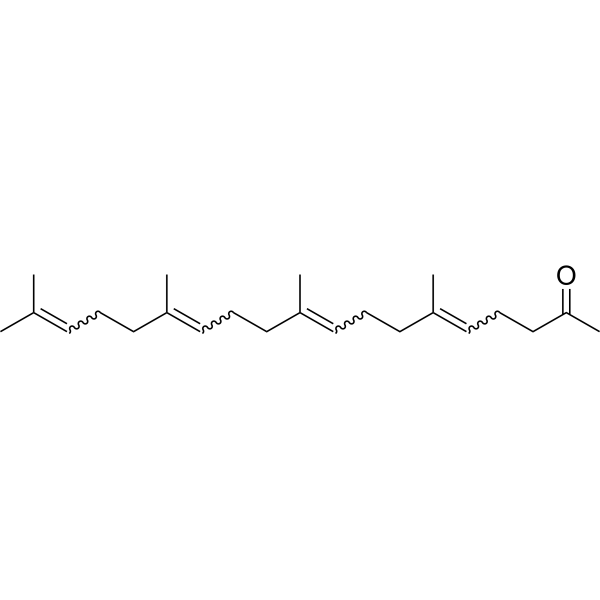
Teprenone is an anti-ulcer agent, and works as an inducer of heat shock proteins (HSPs).
For research use only. We do not sell to patients.
- Purity : 99.31%
- CAS No.: 6809-52-5
- Formula: C23H38O
- Molecular Weight:330.55
-
Storage:
4°C, stored under nitrogen
* In solvent : -80°C, 6 months; -20°C, 1 month (stored under nitrogen)

To place orders, for customer services and technical support, please contact: MedChemExpress USA
Tel: 609-228-6898 E-mail: [email protected] [email protected]


-
 Biological Activity
-
Chemical Information
-
Solvent & Solubility
- Purity & Documentation
- References
-
 Help & FAQs


-

HY-B0779R
Teprenone (Standard)HSP Inducer -
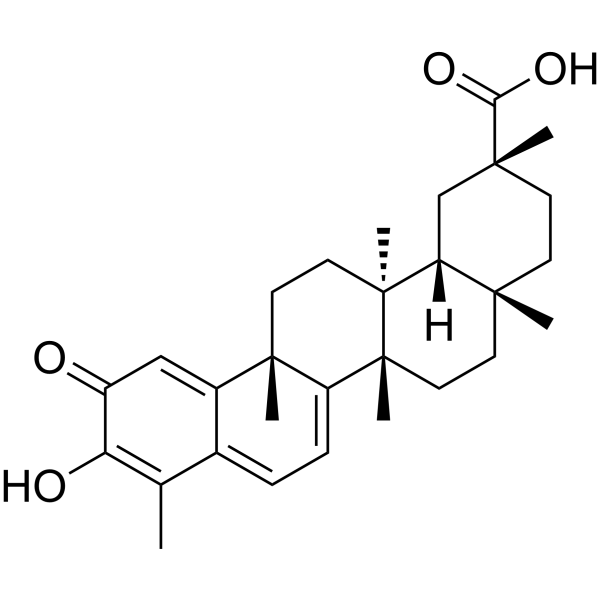
HY-13067
CelastrolAutophagy Inducer -
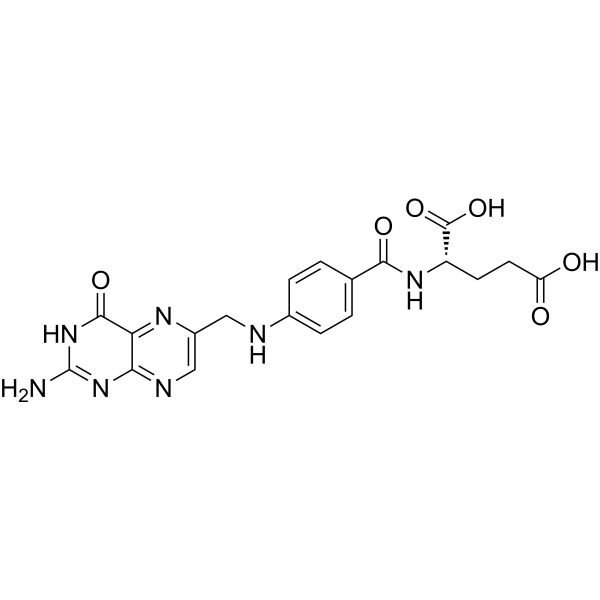
HY-16637
Folic acidB complex -
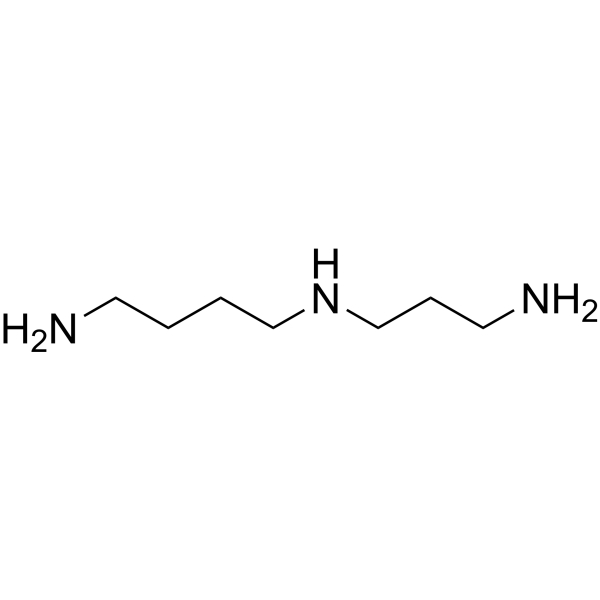
HY-B1776
SpermidinePolyamine Compound -
HY-Y0320
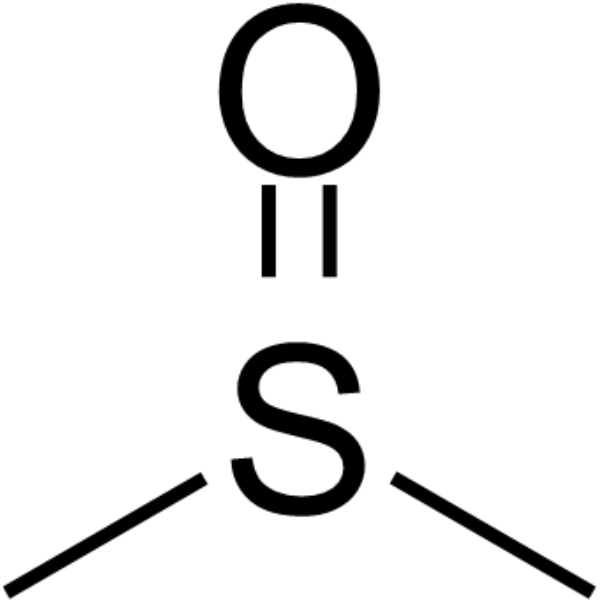
Dimethyl sulfoxide, meets analytical specification of Ch.P.Aprotic Solvent -
HY-15763
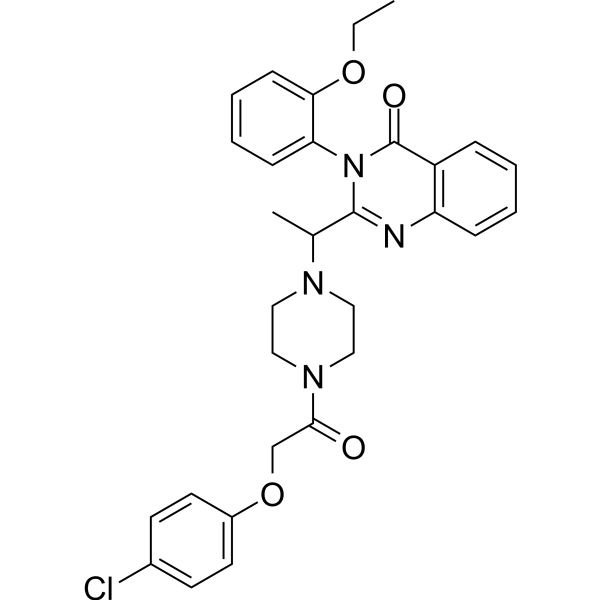
ErastinFerroptosis Inducer -
HY-14398
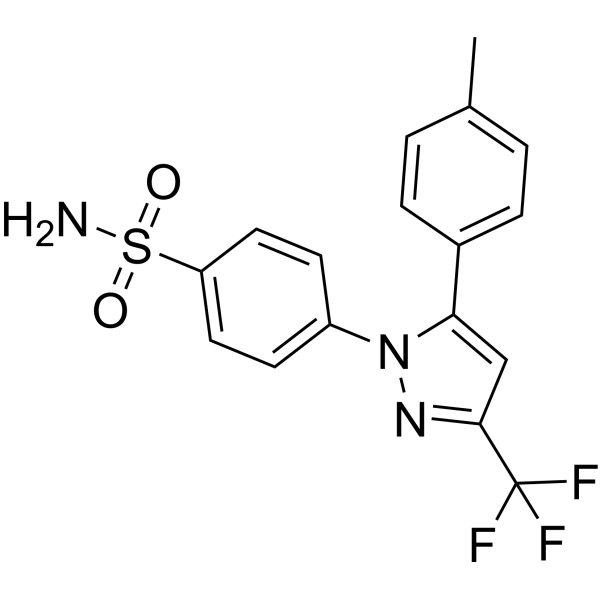
CelecoxibCOX-2inhibitor -
HY-101712
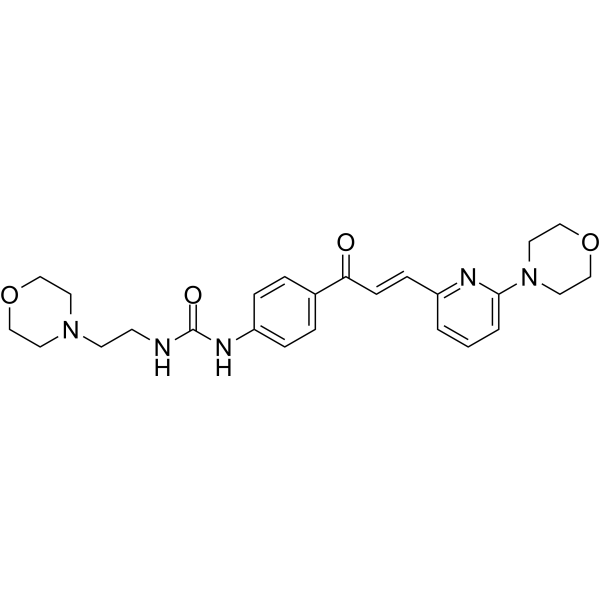
TRC051384HSP70 Inducer -
HY-134541
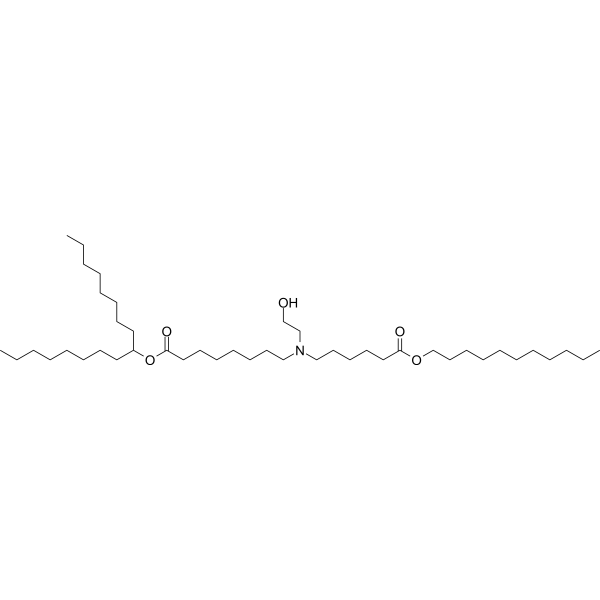
SM-102Ionizable Amino Lipid -

HY-B0710
Betaine -
HY-106443
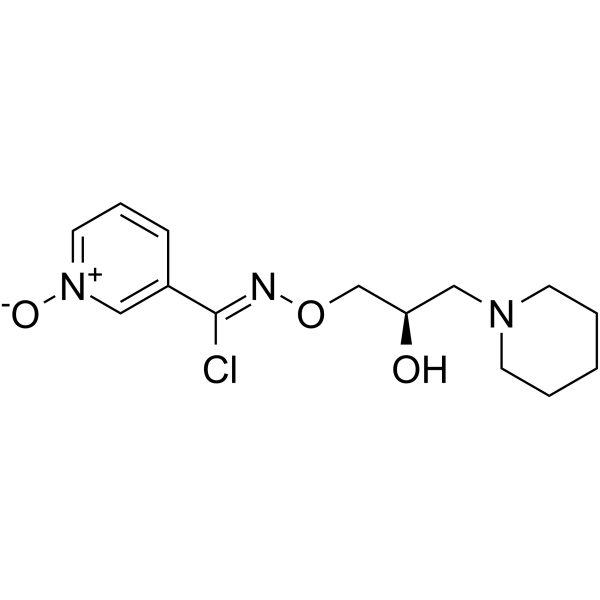
ArimoclomolHSP Co-Inducer -
HY-13313
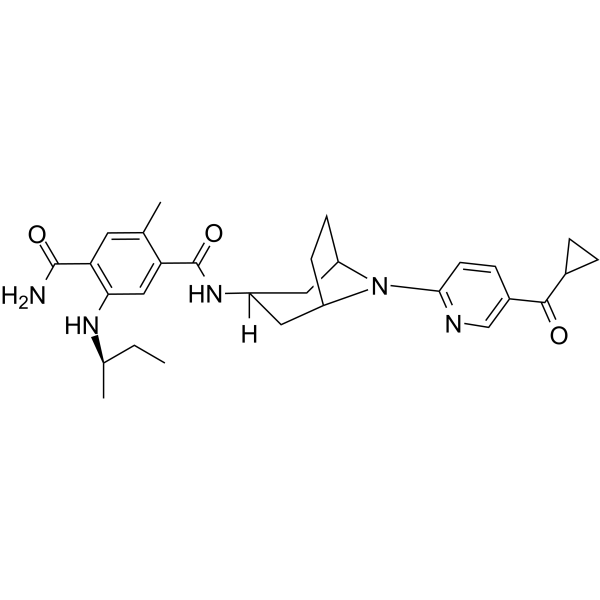
XL888HSP90 Inhibitor
Publications Citing Use of MedChemExpress (MCE) Teprenone
More Customer Validation & Images

-
WB


Biological Activity
Description
IC50 & Target
[1]|
HSP |
In Vitro
Teprenone is an inducer of HSPs. Teprenone (Geranylgeranylacetone, 1 μM) significantly prevents ethanol-induced exfoliation, and reduces lactate dehydrogenase (LDH) release in gastric mucosal cells. Teprenone (1 μM) gradually increases HSC70 level, and rapidly accumulates the stress-inducible HSP90, HSP70, and HSP60 concentrations within 30-60 min. Teprenone also activates the heat shock factor 1[1].
Teprenone (0-20 μM) slightly increases human umbilical vein endothelial cell (HUVEC) viability following irradiation (IR). Teprenone (10 μM) exhibits no effects on HUVEC migration and invasion, but enhances HUVEC tube formation and wound healing both with and without IR. Teprenone (10 μM) also promotes angiogenesis by inducing VEGF and eNOS expression in HUVECs[3].
MedChemExpress (MCE) has not independently confirmed the accuracy of these methods. They are for reference only. .
In Vivo
Teprenone (200 mg/kg daily) induces HSP72 in retinal ganglion cells (RGCs) from rat retinas. Teprenone significantly reduces the loss of RGCs (evaluated after intraocular pressure (IOP) elevation), lessens optic nerve damage, decreases the number of TUNEL-positive cells in the RGC layer, and increases HSP72 in a rat model of glaucoma[2].
Teprenone (200 mg/kg, p.o.) shows protective effect on radiation-induced intestinal injury in mice[3].
MedChemExpress (MCE) has not independently confirmed the accuracy of these methods. They are for reference only.
Clinical Trial
| NCT Number | Sponsor | Condition | Start Date |
Phase

|
|---|---|---|---|---|
| NCT01329991 | Plexxikon| | 2011-05 | PHASE1 |


Chemical Information
-
CAS No. 6809-52-5
-
Appearance Liquid (Density: 0.9081 g/cm3)
-
Molecular Weight 330.55
-
Formula C23H38O
-
Color Colorless to light yellow
-
SMILES
CC(CC/C=C(C)/CC/C=C(C)/CC/C=C(C)/CC/C=C(C)\C)=O
-
Synonyms
Geranylgeranylacetone
-
Shipping
Room temperature in continental US; may vary elsewhere.
-
Storage
4°C, stored under nitrogen
* In solvent : -80°C, 6 months; -20°C, 1 month (stored under nitrogen)


Publications (5)
-
Journal Impact Factor
-
Most Recent
-
Phytother Res
2018 Jul;32(7):1320-1331. PMID: 29516568
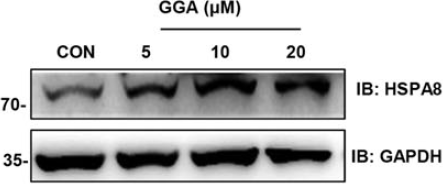
Teprenone purchased from MedChemExpress. Usage Cited in: Phytother Res. 2018 Jul;32(7):1320-1331. [Abstract]
Panc-28 cells are treated with GGA (20 μM) for 48 hr and the expression of HSPA8 is determined using western blot.
-
Cell Rep
HSPA8 dampens SCAP/INSIG split and SREBP activation by reducing PKR-mediated INSIG phosphorylation. [Abstract]2025 Feb 19;44(3):115339. PMID: 39977267 -
Int Immunopharmacol
Geranylgeranylacetone mitigates sepsis-associated intestinal injury through CHIP-dependent anti-inflammation and anti-oxidative effect. [Abstract]2024 Jun 30:135:112263. PMID: 38788444 -
Chem Biol Interact
Geranylgeranylacetone, an inducer of heat shock protein 70, attenuates pulmonary fibrosis via inhibiting NF-κB/NOX4/ROS signalling pathway in vitro and in vivo. [Abstract]2023 Sep 1:382:110603. PMID: 37307957 -
Cell Stress Chaperones
Overexpression of heat shock protein 70 inhibits epithelial-mesenchymal transition and cell migration induced by transforming growth factor-β in A549 cells. [Abstract]2021 May;26(3):505-513. PMID: 33598875


Solvent & Solubility
In Vitro:
DMSO : 50 mg/mL (151.26 mM; Need ultrasonic; Hygroscopic DMSO has a significant impact on the solubility of product, please use newly opened DMSO)
Ethanol : 50 mg/mL (151.26 mM; Need ultrasonic)
Please refer to the solubility information to select the appropriate solvent. Once prepared, please aliquot and store the solution to prevent product inactivation from repeated freeze-thaw cycles.
Storage method and period of stock solution: -80°C, 6 months; -20°C, 1 month (stored under nitrogen). When stored at -80°C, please use it within 6 months. When stored at -20°C, please use it within 1 month.
Please refer to the solubility information to select the appropriate solvent. Once prepared, please aliquot and store the solution to prevent product inactivation from repeated freeze-thaw cycles.
Storage method and period of stock solution: -80°C, 6 months; -20°C, 1 month (stored under nitrogen). When stored at -80°C, please use it within 6 months. When stored at -20°C, please use it within 1 month.
Concentration (start) × Volume (start) = Concentration (final) × Volume (final)
In Vivo:
Select the appropriate dissolution method based on your experimental animal and administration route.
- For the following dissolution methods, please ensure to first prepare a clear stock solution using an In Vitro approach and then sequentially add co-solvents:
- To ensure reliable experimental results, the clarified stock solution can be appropriately stored based on storage conditions. As for the working solution for In Vivo experiments, it is recommended to prepare freshly and use it on the same day.
- The percentages shown for the solvents indicate their volumetric ratio in the final prepared solution. If precipitation or phase separation occurs during preparation, heat and/or sonication can be used to aid dissolution.
Add each solvent one by one: 10% DMSO 40% PEG300 5% Tween-80 45% Saline
Solubility: 2.5 mg/mL (7.56 mM); Suspended solution; Need ultrasonic
This protocol yields a suspended solution of 2.5 mg/mL. Suspended solution can be used for oral and intraperitoneal injection.
Taking 1 mL working solution as an example, add 100 μL DMSO stock solution (25.0 mg/mL) to 400 μL PEG300, and mix evenly; then add 50 μL Tween-80 and mix evenly; then add 450 μL Saline to adjust the volume to 1 mL.
Preparation of Saline: Dissolve 0.9 g sodium chloride in ddH₂O and dilute to 100 mL to obtain a clear Saline solution.
Add each solvent one by one: 10% DMSO 90% (20% SBE-β-CD in Saline)
Solubility: 2.5 mg/mL (7.56 mM); Suspended solution; Need ultrasonic
This protocol yields a suspended solution of 2.5 mg/mL. Suspended solution can be used for oral and intraperitoneal injection.
Taking 1 mL working solution as an example, add 100 μL DMSO stock solution (25.0 mg/mL) to 900 μL 20% SBE-β-CD in Saline, and mix evenly.
Preparation of 20% SBE-β-CD in Saline (4°C, storage for one week): 2 g SBE-β-CD powder is dissolved in 10 mL Saline, completely dissolve until clear.
In Vivo Dissolution Calculator
Please enter the basic information of animal experiments:
-
-
-
-
Recommended: Prepare an additional quantity of animals to account for potential losses during experiments.
Please enter your animal formula composition:
-
%DMSO +
Recommended: Keep the proportion of DMSO in working solution below 2% if your animal is weak.
-
%+
-
+%Tween-80 + +
-
%Saline +
The co-solvents required include: DMSO, . All of co-solvents are available by MedChemExpress (MCE). , Tween 80. All of co-solvents are available by MedChemExpress (MCE).
Working solution concentration: 0.22 mg/mL
Method for preparing stock solution: mg drug dissolved in μL DMSO. Stock solution concentration: mg/mL. * In solvent : -80°C, 6 months; -20°C, 1 month (stored under nitrogen)
1. Take μL DMSO stock solution;
2. Add μL .
μL , mix evenly;
3. Then add μL Tween 80, mix evenly;
4. Then add μL
Please ensure that the stock solution in the first step is dissolved to a clear state, and add co-solvents in sequence. You can use ultrasonic heating (ultrasonic cleaner, recommended frequency 20-40 kHz), vortexing, etc. to assist dissolution.


Purity & Documentation
-
Data Sheet (274 KB)
-
SDS (393 KB)
- English - EN (393 KB)
- Français - FR (393 KB)
- Deutsch - DE (393 KB)
- Norwegian - NO (393 KB)
- Español - ES (393 KB)
- Swedish - SV (393 KB)
- Italian - IT (393 KB)
- Korean - KR (393 KB)
- Portuguese - PT (393 KB)
-
Handling Instructions (2659 KB)
References
[1]. Hirakawa T, et al. Geranylgeranylacetone induces heat shock proteins in cultured guinea pig gastric mucosal cells and rat gastric mucosa. Gastroenterology. 1996 Aug;111(2):345-57. [Content Brief]
[2]. Caprioli J, et al. Retinal ganglion cell protection with geranylgeranylacetone, a heat shock protein inducer, in a rat glaucoma model. Trans Am Ophthalmol Soc. 2003;101:39-50; discussion 50-1. [Content Brief]
[3]. Han NK, et al. Geranylgeranylacetone Ameliorates Intestinal Radiation Toxicity by Preventing Endothelial Cell Dysfunction. Int J Mol Sci. 2017 Oct 7;18(10). [Content Brief]


Complete Stock Solution Preparation Table
Please refer to the solubility information to select the appropriate solvent. Once prepared, please aliquot and store the solution to prevent product inactivation from repeated freeze-thaw cycles.
Storage method and period of stock solution: -80°C, 6 months; -20°C, 1 month (stored under nitrogen). When stored at -80°C, please use it within 6 months. When stored at -20°C, please use it within 1 month.
| Optional Solvent | Concentration Solvent Mass | 1 mg | 5 mg | 10 mg | 25 mg |
|---|---|---|---|---|---|
| DMSO / Ethanol | 1 mM | 3.0253 mL | 15.1263 mL | 30.2526 mL | 75.6315 mL |
| 5 mM | 0.6051 mL | 3.0253 mL | 6.0505 mL | 15.1263 mL | |
| 10 mM | 0.3025 mL | 1.5126 mL | 3.0253 mL | 7.5632 mL | |
| 15 mM | 0.2017 mL | 1.0084 mL | 2.0168 mL | 5.0421 mL | |
| 20 mM | 0.1513 mL | 0.7563 mL | 1.5126 mL | 3.7816 mL | |
| 25 mM | 0.1210 mL | 0.6051 mL | 1.2101 mL | 3.0253 mL | |
| 30 mM | 0.1008 mL | 0.5042 mL | 1.0084 mL | 2.5211 mL | |
| 40 mM | 0.0756 mL | 0.3782 mL | 0.7563 mL | 1.8908 mL | |
| 50 mM | 0.0605 mL | 0.3025 mL | 0.6051 mL | 1.5126 mL | |
| 60 mM | 0.0504 mL | 0.2521 mL | 0.5042 mL | 1.2605 mL | |
| 80 mM | 0.0378 mL | 0.1891 mL | 0.3782 mL | 0.9454 mL | |
| 100 mM | 0.0303 mL | 0.1513 mL | 0.3025 mL | 0.7563 mL |


Teprenone Related Classifications
HY-B0779 Related Classifications
 Powered by Bioz