



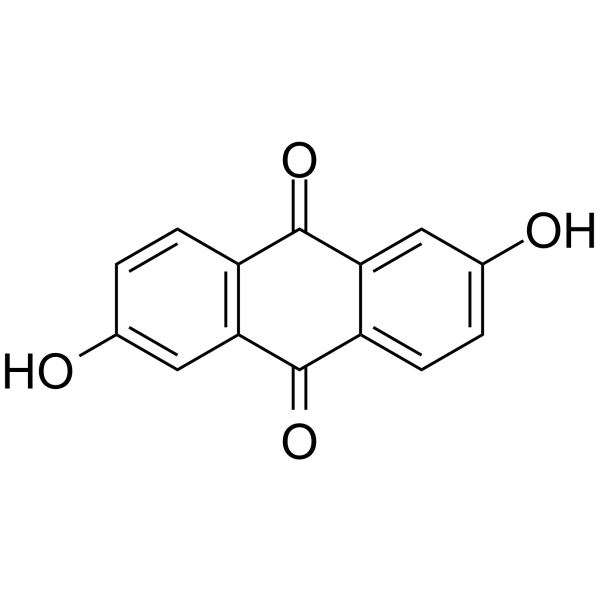
Anthraflavic acid

Based on 1 Customer Validation
Anthraflavic acid specifically inhibits the activity of cytochrome P-448 without affecting phenobarbital-induced cytochrome P-450 or NADPH-dependent cytochrome c reduction. Anthraflavic acid inhibits cytosolic metabolic pathways, blocks the microsomal and cytosolic activation of IQ, and reduces the metabolic activation level of Glu-P-I. Anthraflavic acid may exert anticancer activity by inhibiting the metabolic activation of chemical carcinogens. Anthraflavic acid is applicable to cancer-related research.
Nos produits utilisent uniquement pour la recherche. Nous ne vendons pas aux patients.
- Pureté : 99.51%
- CAS No.: 84-60-6
- Formule: C14H8O4
- Masse moléculaire:240.21
-
Stockage:
4°C, stored under nitrogen
* In solvent : -80°C, 6 months; -20°C, 1 month (stored under nitrogen)

To place orders, for customer services and technical support, please contact: MedChemExpress USA
Tel: 609-228-6898 E-mail: [email protected] [email protected]


-
 Activité biologique
-
Chemical Information
-
Solvant et solubilité
- Pureté et documentation
- Références
-
 Help & FAQs


-
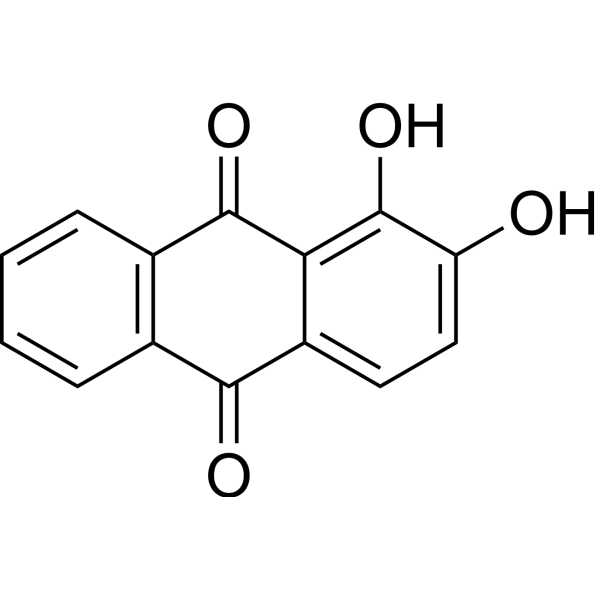
HY-N0563
AlizarinNatural Dye -
HY-N1739
TectoquinoneSARSCoV-2 Mpro Inhibitor -

HY-N0563R
Alizarin (Standard)natural dye -
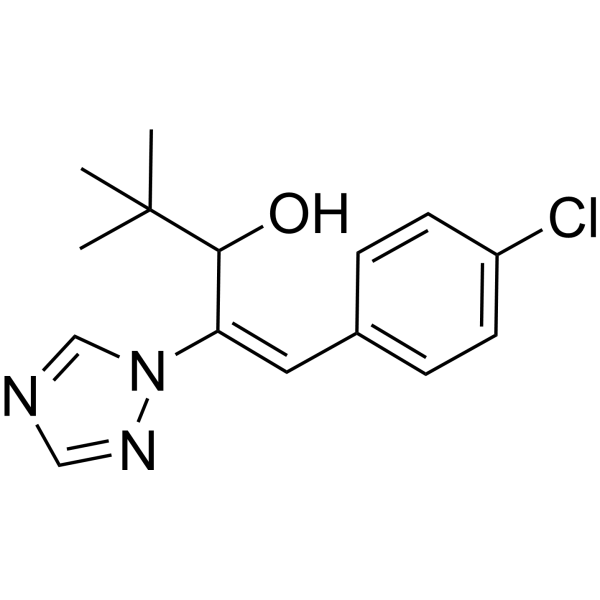
HY-B0873
UniconazoleCytochrome P450 Inhibitor -

HY-N1739R
Tectoquinone (Standard)SARSCoV-2 Protease Inhibitor -
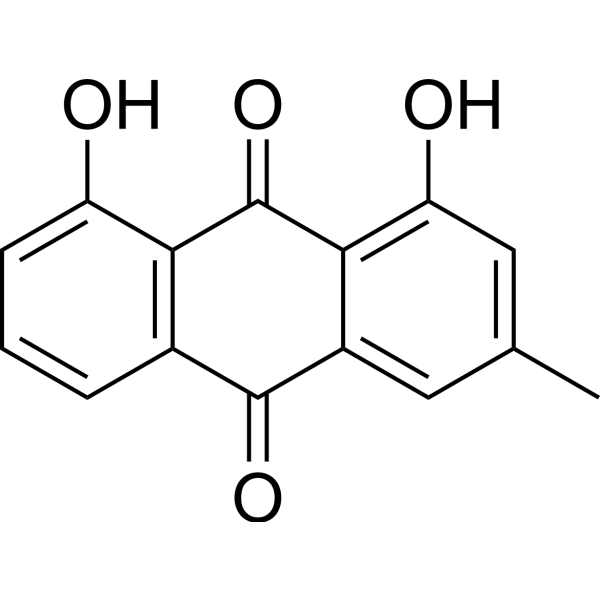
HY-13595
ChrysophanolEGFR Inhibitor -
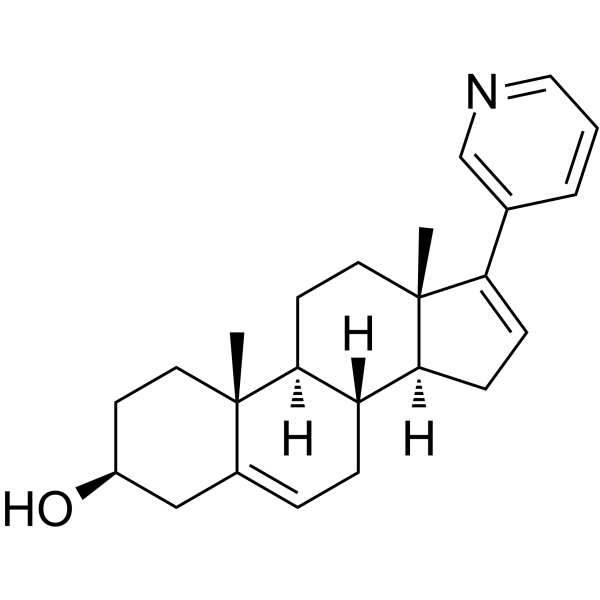
HY-70013
AbirateroneCYP17A1 Inhibitor -
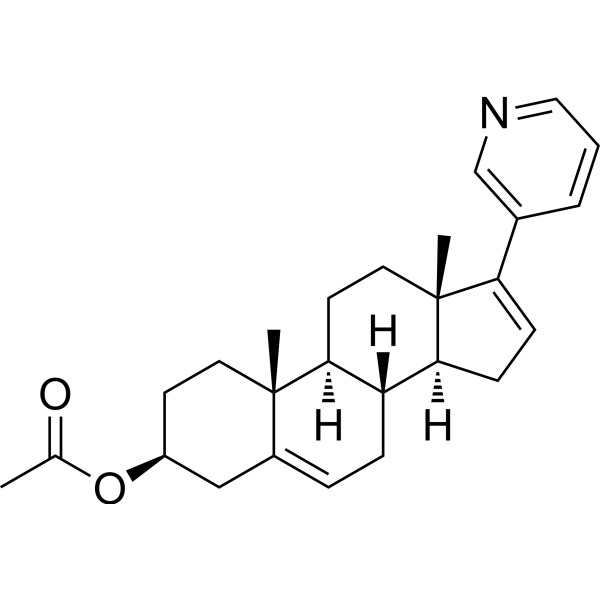
HY-75054
Abiraterone acetateCYP17A1 Inhibitor -
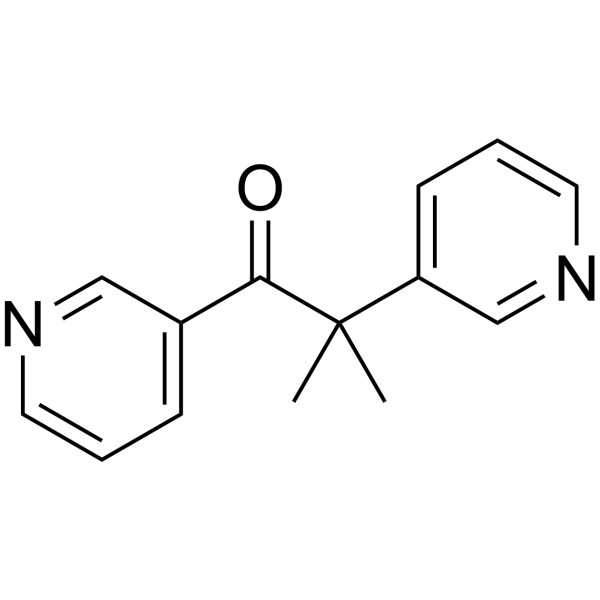
HY-B1232
Metyrapone11β-hydroxylase Inhibitor -
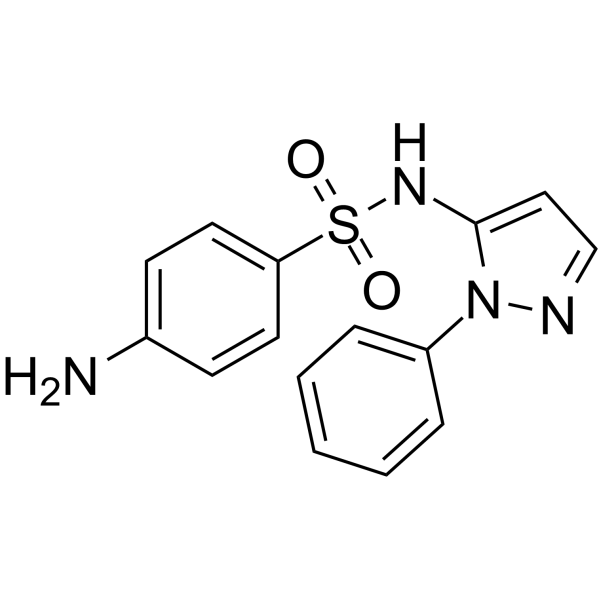
HY-B1218
SulfaphenazoleCYP2C9 Inhibitor -
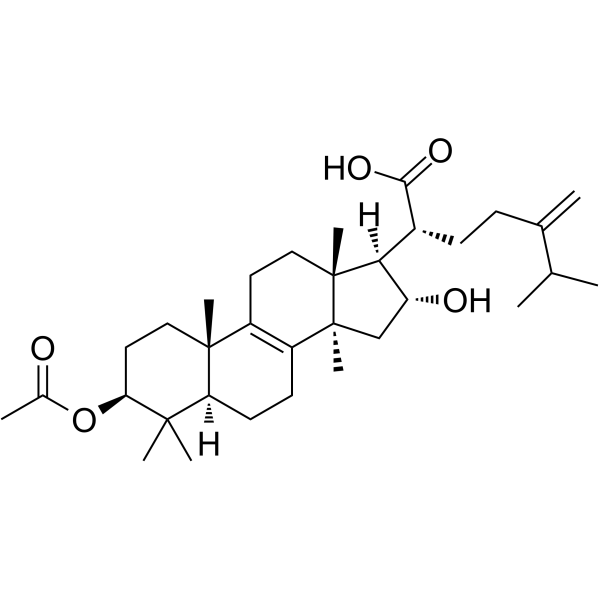
HY-N0371
Pachymic acidTriterpenoid Compound -
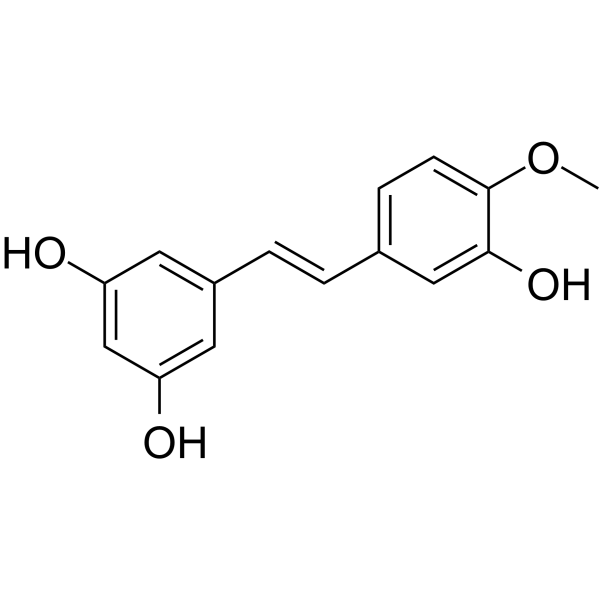
HY-N2229
RhapontigeninCytochrome P450 1A1 Inactivator


Activité biologique
Description
Cellular Effect
|
Cell Line

|
Type | Value | Description | References |
|---|---|---|---|---|
| HEK293 | IC50 |
3.6 μM
Compound: Anthraflavic acid
|
Inhibition of human recombinant UGT1A1 expressed in HEK293 cells assessed as reduction in bilirubin glucuronidation by LC-MS/MS method
Inhibition of human recombinant UGT1A1 expressed in HEK293 cells assessed as reduction in bilirubin glucuronidation by LC-MS/MS method
|
[PMID: 21030469] |
| HEK293 | IC50 |
4 μM
Compound: Anthraflavic acid
|
Inhibition of human recombinant UGT1A1 expressed in HEK293 cells assessed as reduction in estradiol 3-glucuronidation by LC-MS/MS method
Inhibition of human recombinant UGT1A1 expressed in HEK293 cells assessed as reduction in estradiol 3-glucuronidation by LC-MS/MS method
|
[PMID: 21030469] |
In Vitro
Anthraflavic acid (5×10⁻⁷-5×10⁻⁵ M; 20 min) potently inhibits S9-mediated mutagenicity of IQ in Salmonella typhimurium strain TA98 in a concentration-dependent manner, with complete inhibition observed at 5×10⁻⁵ M[1].
Anthraflavic acid (1×10⁻⁷-5×10⁻⁵ M; 20 min post-microsomal reaction termination) inhibits cytosol-mediated potentiation of microsome-generated IQ mutagenicity in Salmonella typhimurium strain TA98, with a pronounced effect at 5×10⁻⁵ M[1].
Anthraflavic acid (5×10⁻⁷-5×10⁻⁵ M) potently and concentration-dependently reduces cytochrome P-448-dependent Glu-P-1 mutagenicity in the Ames test with Salmonella typhimurium strain TA 98 and an Arochlor-1254-induced rat hepatic S9 activation system, and shows no mutagenic activity itself[2].
Anthraflavic acid (5×10⁻⁷-5×10⁻⁵ M) does not inhibit NADPH-dependent cytochrome c reductase activity in Arochlor-1254-induced rat hepatic microsomes, even at concentrations up to 5×10⁻⁵ M, showing it does not interfere with electron flow to cytochrome P-450[2].
MedChemExpress (MCE) has not independently confirmed the accuracy of these methods. They are for reference only.
In Vivo
MedChemExpress (MCE) has not independently confirmed the accuracy of these methods. They are for reference only.
-
Animal Model:Wistar (male, 150-180 g)[3]
-
Dosage:100 mg/kg
-
Administration:i.p.; daily; 5 days
-
Result:Showed no significant effect on total cytochrome P-450 levels, NADPH-cytochrome c reductase activity, cytosolic protein concentration, microsomal protein concentration, or cytosolic glutathione S-transferase activity.
Increased hepatic microsomal ethoxycoumarin O-deethylase activity to 86.6 pmol/min/mg protein and 164.7 pmol/min/nmol P-450.
Increased hepatic microsomal ethoxyresorufin O-deethylase activity to 0.314 nmol/min/mg protein and 0.59 nmol/min/nmol P-450.
Induced cytochrome P-450 I A1 and P-450 I A2 apoproteins, with no change in P-450 II B1 levels.


Chemical Information
-
CAS No. 84-60-6
-
Appearance Solid
-
Masse moléculaire 240.21
-
Formule C14H8O4
-
Color Yellow to green
-
SMILES
O=C1C2=C(C=C(O)C=C2)C(C3=CC=C(O)C=C13)=O
-
Livraison
Room temperature in continental US; may vary elsewhere.
-
Stockage
4°C, stored under nitrogen
* In solvent : -80°C, 6 months; -20°C, 1 month (stored under nitrogen)


Solvant et solubilité
In Vitro:
DMSO : 16.67 mg/mL (69.40 mM; ultrasonic and warming and heat to 60°C; Hygroscopic DMSO has a significant impact on the solubility of product, please use newly opened DMSO)
Please refer to the solubility information to select the appropriate solvent. Once prepared, please aliquot and store the solution to prevent product inactivation from repeated freeze-thaw cycles.
Storage method and period of stock solution: -80°C, 6 months; -20°C, 1 month (stored under nitrogen). When stored at -80°C, please use it within 6 months. When stored at -20°C, please use it within 1 month.
Please refer to the solubility information to select the appropriate solvent. Once prepared, please aliquot and store the solution to prevent product inactivation from repeated freeze-thaw cycles.
Storage method and period of stock solution: -80°C, 6 months; -20°C, 1 month (stored under nitrogen). When stored at -80°C, please use it within 6 months. When stored at -20°C, please use it within 1 month.
Concentration (start) × Volume (start) = Concentration (final) × Volume (final)
In Vivo:
Select the appropriate dissolution method based on your experimental animal and administration route.
- For the following dissolution methods, please ensure to first prepare a clear stock solution using an In Vitro approach and then sequentially add co-solvents:
- To ensure reliable experimental results, the clarified stock solution can be appropriately stored based on storage conditions. As for the working solution for In Vivo experiments, it is recommended to prepare freshly and use it on the same day.
- The percentages shown for the solvents indicate their volumetric ratio in the final prepared solution. If precipitation or phase separation occurs during preparation, heat and/or sonication can be used to aid dissolution.
Add each solvent one by one: 10% DMSO 40% PEG300 5% Tween-80 45% Saline
Solubility: 1.67 mg/mL (6.95 mM); Suspended solution; Need ultrasonic
This protocol yields a suspended solution of 1.67 mg/mL. Suspended solution can be used for oral and intraperitoneal injection.
Taking 1 mL working solution as an example, add 100 μL DMSO stock solution (16.7 mg/mL) to 400 μL PEG300, and mix evenly; then add 50 μL Tween-80 and mix evenly; then add 450 μL Saline to adjust the volume to 1 mL.
Preparation of Saline: Dissolve 0.9 g sodium chloride in ddH₂O and dilute to 100 mL to obtain a clear Saline solution.
In Vivo Dissolution Calculator
Please enter the basic information of animal experiments:
-
-
-
-
Recommended: Prepare an additional quantity of animals to account for potential losses during experiments.
Please enter your animal formula composition:
-
%DMSO +
Recommended: Keep the proportion of DMSO in working solution below 2% if your animal is weak.
-
%+
-
+%Tween-80 + +
-
%Saline +
The co-solvents required include: DMSO, . All of co-solvents are available by MedChemExpress (MCE). , Tween 80. All of co-solvents are available by MedChemExpress (MCE).
Working solution concentration: 0.22 mg/mL
Method for preparing stock solution: mg drug dissolved in μL DMSO. Stock solution concentration: mg/mL. * In solvent : -80°C, 6 months; -20°C, 1 month (stored under nitrogen)
1. Take μL DMSO stock solution;
2. Add μL .
μL , mix evenly;
3. Then add μL Tween 80, mix evenly;
4. Then add μL
Please ensure that the stock solution in the first step is dissolved to a clear state, and add co-solvents in sequence. You can use ultrasonic heating (ultrasonic cleaner, recommended frequency 20-40 kHz), vortexing, etc. to assist dissolution.


Pureté et documentation
-
Fiche technique (282 KB)
-
SDS (394 KB)
- English - EN (394 KB)
- Français - FR (394 KB)
- Deutsch - DE (394 KB)
- Norwegian - NO (394 KB)
- Español - ES (394 KB)
- Swedish - SV (394 KB)
- Italian - IT (394 KB)
- Korean - KR (394 KB)
- Portuguese - PT (394 KB)
-
Instruction de manipulation (2659 KB)
Références
[1]. Ayrton AD, et al. Anthraflavic acid inhibits the mutagenicity of the food mutagen IQ: mechanism of action. Mutat Res. 1988;207(3-4):121-125. [Content Brief]
[2]. Ayrton AD, et al. Anthraflavic acid is a potent and specific inhibitor of cytochrome P-448 activity. Biochim Biophys Acta. 1987;916(3):328-331. [Content Brief]
[3]. Ayrton AD, et al. Induction of rat hepatic cytochrome P-450 I proteins by the antimutagen anthraflavic acid. Food Chem Toxicol. 1988;26(11-12):909-915. [Content Brief]


Complete Stock Solution Preparation Table
Please refer to the solubility information to select the appropriate solvent. Once prepared, please aliquot and store the solution to prevent product inactivation from repeated freeze-thaw cycles.
Storage method and period of stock solution: -80°C, 6 months; -20°C, 1 month (stored under nitrogen). When stored at -80°C, please use it within 6 months. When stored at -20°C, please use it within 1 month.
| Optional Solvent | Concentration Solvent Mass | 1 mg | 5 mg | 10 mg | 25 mg |
|---|---|---|---|---|---|
| DMSO | 1 mM | 4.1630 mL | 20.8151 mL | 41.6302 mL | 104.0756 mL |
| 5 mM | 0.8326 mL | 4.1630 mL | 8.3260 mL | 20.8151 mL | |
| 10 mM | 0.4163 mL | 2.0815 mL | 4.1630 mL | 10.4076 mL | |
| 15 mM | 0.2775 mL | 1.3877 mL | 2.7753 mL | 6.9384 mL | |
| 20 mM | 0.2082 mL | 1.0408 mL | 2.0815 mL | 5.2038 mL | |
| 25 mM | 0.1665 mL | 0.8326 mL | 1.6652 mL | 4.1630 mL | |
| 30 mM | 0.1388 mL | 0.6938 mL | 1.3877 mL | 3.4692 mL | |
| 40 mM | 0.1041 mL | 0.5204 mL | 1.0408 mL | 2.6019 mL | |
| 50 mM | 0.0833 mL | 0.4163 mL | 0.8326 mL | 2.0815 mL | |
| 60 mM | 0.0694 mL | 0.3469 mL | 0.6938 mL | 1.7346 mL |


Anthraflavic acid Related Classifications
HY-W006230 Related Classifications
 Powered by Bioz