



GW1929
Based on 14 publication(s) in Google Scholar
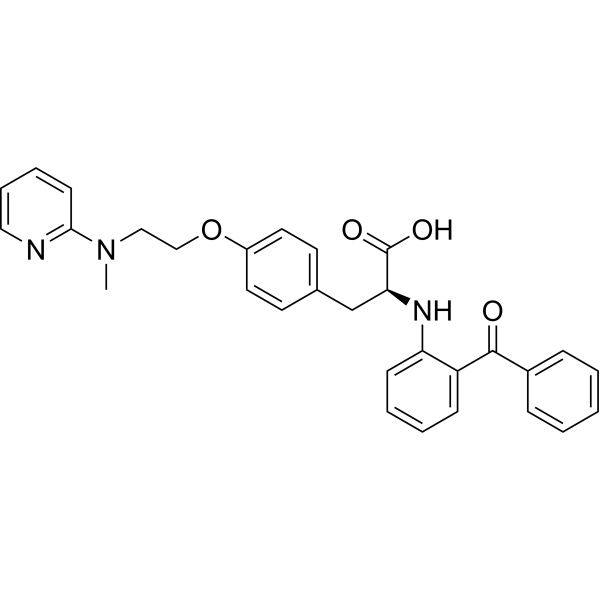
GW 1929 is an orally active peroxisome proliferator-activated receptor-γ (PPARγ) agonist with a pKi of 8.84 for human PPAR-γ, and pEC50s of 8.56 and 8.27 for human PPAR-γ and murine PPAR-γ, respectively. GW 1929 (hydrochloride) has antidiabetic efficacy and neuroprotective potential.
Nur für Forschungszwecke. Wir verkaufen nicht an Patienten.
- Reinheit : 99.93%
- CAS. Nr.: 196808-24-9
- Formel: C30H29N3O4
- Molecular Weight:495.57
-
Speicherung:Powder -20°C, 3 years , 4°C, 2 years ; In solvent -80°C, 2 years , -20°C, 1 year

To place orders, for customer services and technical support, please contact: MedChemExpress USA
Tel: 609-228-6898 E-mail: [email protected] [email protected]


-
 Biologische Aktivität
-
Chemical Information
-
Lösungsmittel & Löslichkeit
- Reinheit & Dokumentation
- Verweise
-
 Help & FAQs


-
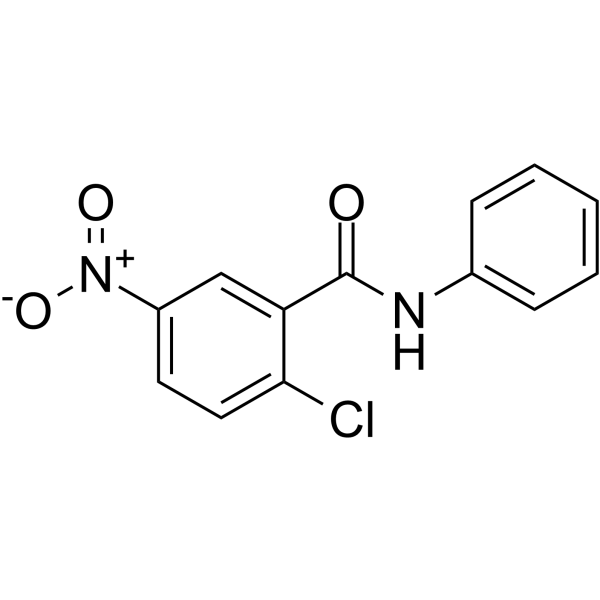
HY-16578
GW9662PPARγ Antagonist -
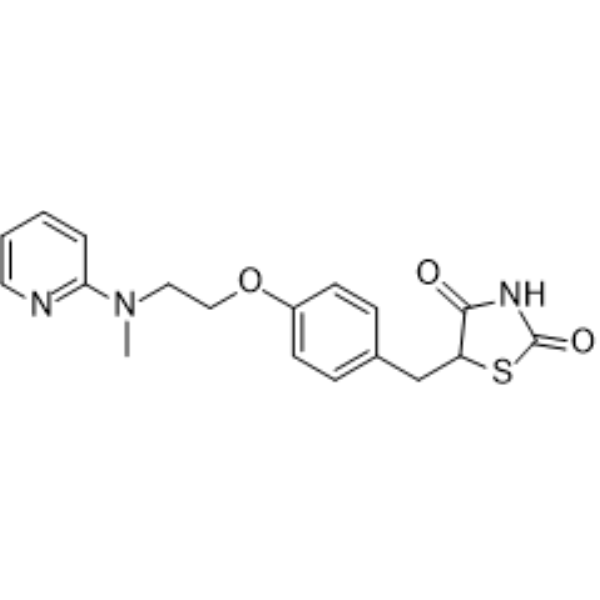
HY-17386
RosiglitazonePPARγ Agonist -
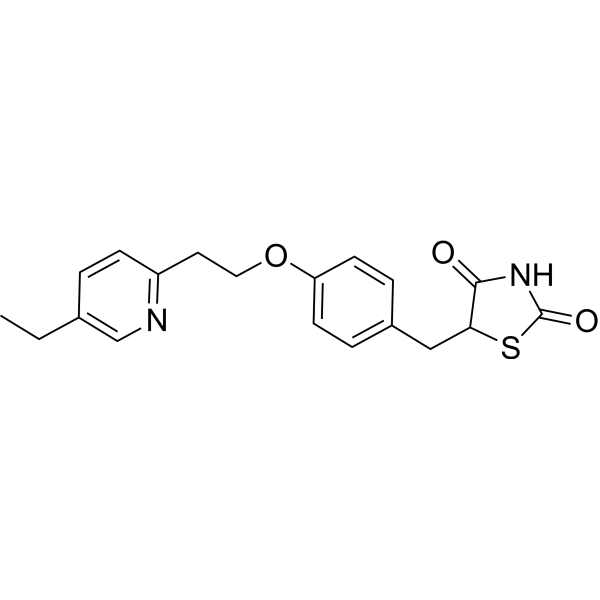
HY-13956
PioglitazonePPARγ Agonist -
HY-13861
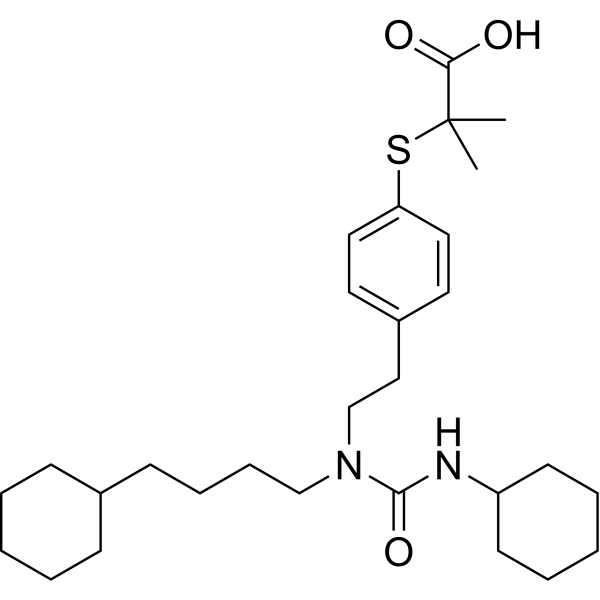
GW7647PPAR Agonist -
HY-50935
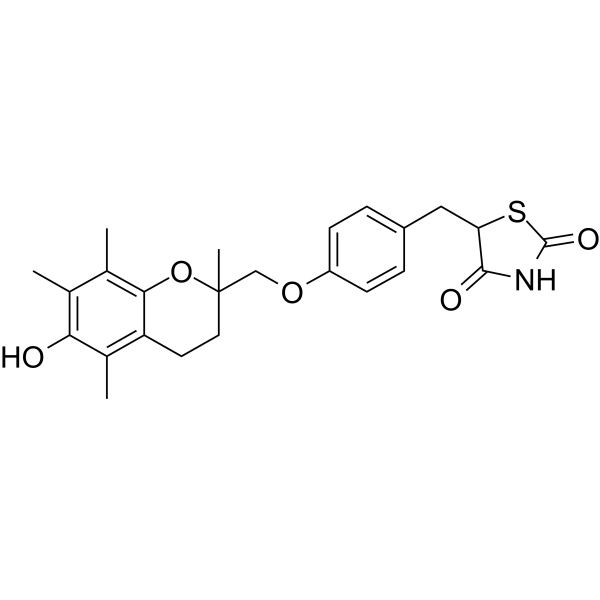
TroglitazonePPARγ Agonist -
HY-16995
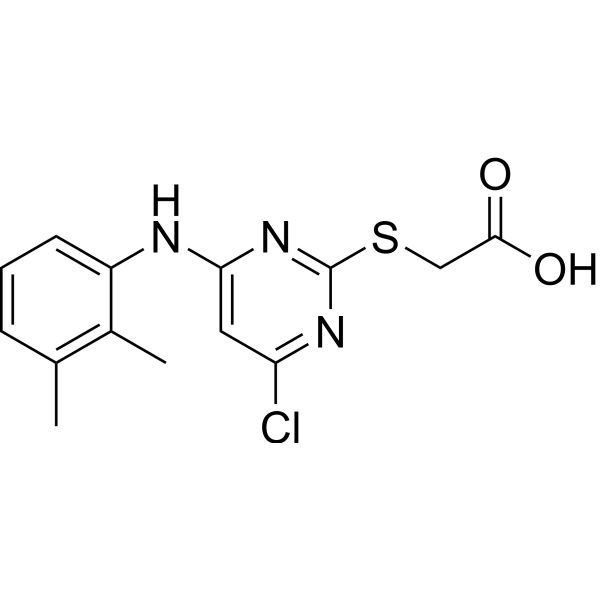
Pirinixic acidPPAR Agonist -
HY-13202
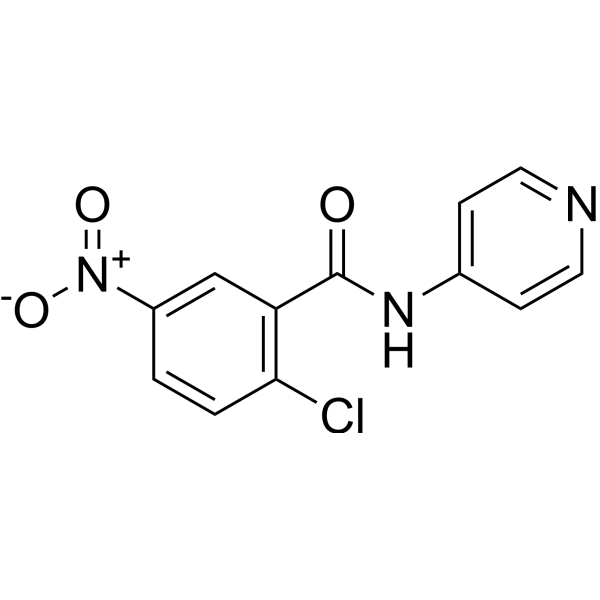
T0070907PPARγ Antagonist -
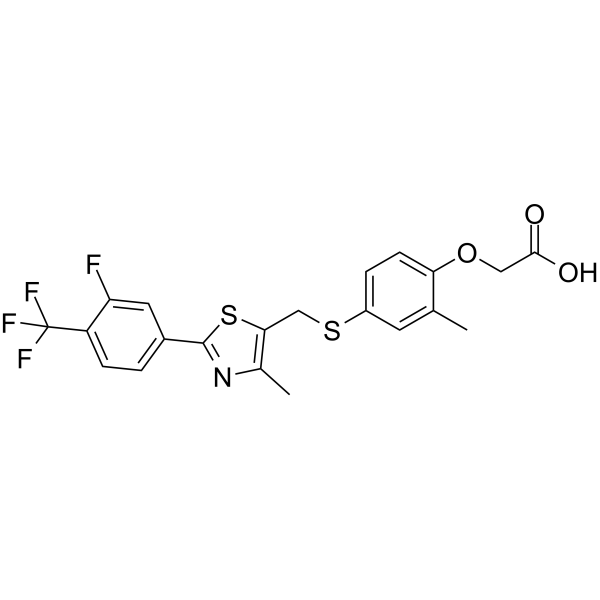
HY-10838
GW 501516PPARδ Agonist -
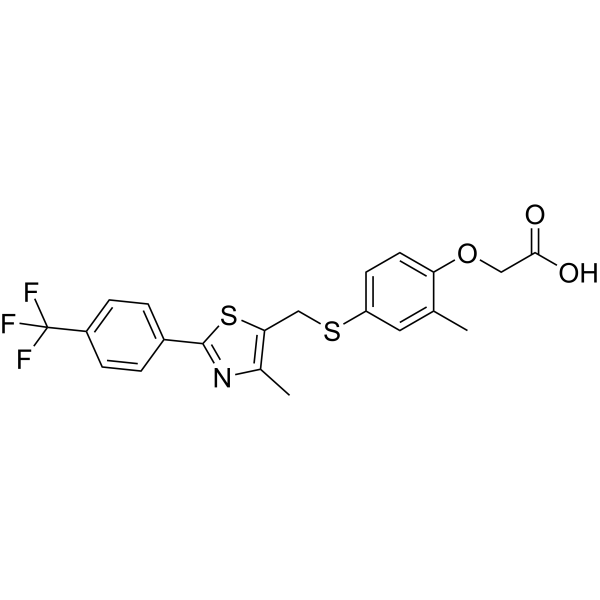
HY-13928
GW0742PPAR Agonist -
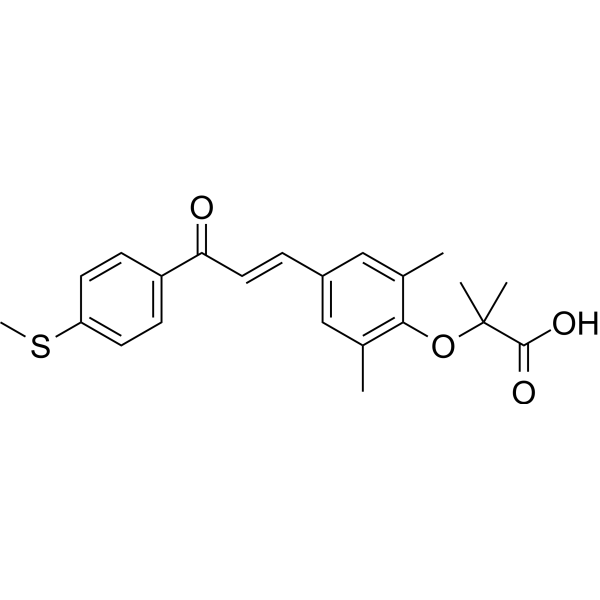
HY-16737
ElafibranorPPARα/δ Agonist -
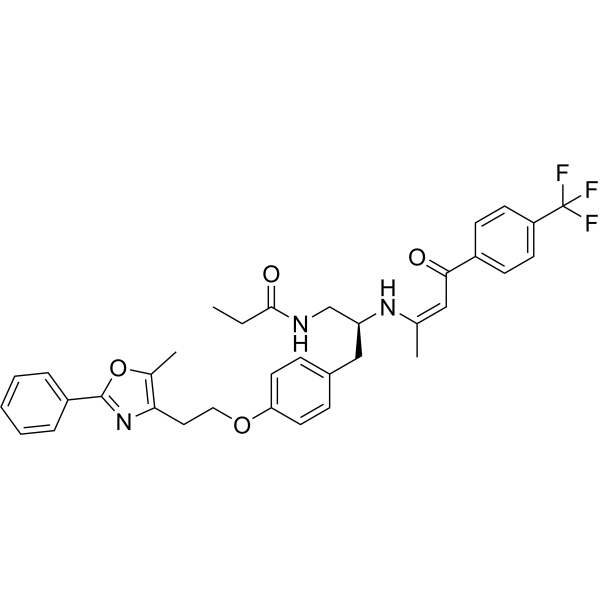
HY-15372
GW6471PPARα Antagonist -
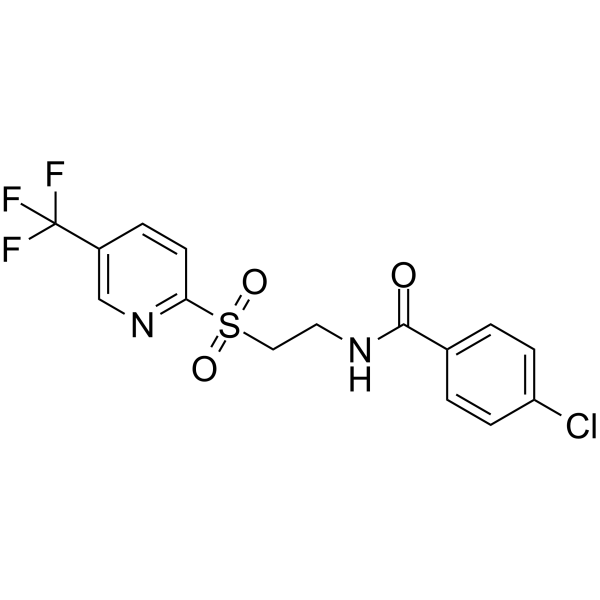
HY-15577
GSK3787PPARδ Antagonist
Publications Citing Use of MedChemExpress (MCE) GW1929
More- Nat Aging. 2026 Aug;6(8):1631-1646.
- Nat Commun. 2025 Aug 27;16(1):8009. [Abstract]
- Cell Death Dis. 2024 Aug 26;15(8):623. [Abstract]
- Mater Today Bio. 2026 Feb 4:37:102865. [Abstract]
- Nat Struct Mol Biol. 2026 Aug;33(8):1147-1157.
- Phytother Res. 2023 Nov;37(11):5394-5406. [Abstract]
- J Agric Food Chem. 2024 Jun 5;72(22):12541-12554. [Abstract]
- Ecotoxicol Environ Saf. 2020 Sep 15:201:110801. [Abstract]
- Food Biosci. 2026 Apr 18;80:108920.
- J Zhejiang Univ Sci B. 2020;21(12):990-998. [Abstract]
- Int Immunopharmacol. 2023 Sep 9;124(Pt A):110840. [Abstract]
- Biochim Biophys Acta Mol Basis Dis. 2018 Oct;1864(10):3322-3338. [Abstract]
- J Cell Mol Med. 2025 May;29(9):e70416. [Abstract]
- Aging (Albany NY). 2021 May 25;13(11):15240-15254. [Abstract]
 Customer Validation & Images

-
In Vivo Efficacy Study
-
IF
-
WB
-
WB


Biologische Aktivität
Beschreibung
IC50 & Target
[1]|
PPAR-γ 8.56 (pEC50, Human PPAR-γ) |
Cellular Effect
|
Cell Line

|
Type | Value | Description | References |
|---|---|---|---|---|
| CV-1 | EC50 |
0.006 μM
Compound: GW-1929
|
Agonist activity at human PPARgamma expressed in african green monkey CV1 cells by Gal4 transactivation assay
Agonist activity at human PPARgamma expressed in african green monkey CV1 cells by Gal4 transactivation assay
|
[PMID: 20079636] |
| CV-1 | EC50 |
0.013 μM
Compound: GW-1929
|
Agonist activity at mouse PPARgamma expressed in african green monkey CV1 cells by Gal4 transactivation assay
Agonist activity at mouse PPARgamma expressed in african green monkey CV1 cells by Gal4 transactivation assay
|
[PMID: 20079636] |
In Vitro
GW1929 is a potent PPAR-γ activator, with pKis of 8.84, < 5.5, and < 6.5 for human PPAR-γ, PPAR-α, and PPAR-δ, and pEC50s of 8.56 and 8.27 for human PPAR-γ and murine PPAR-γ, respectively[1].
GW1929 (10 μM) inhibits TBBPA-induced caspase-3 increase and TBBPA-stimulated LDH release in neocortical cell cultures[2].
MedChemExpress (MCE) has not independently confirmed the accuracy of these methods. They are for reference only.
In Vivo
MedChemExpress (MCE) has not independently confirmed the accuracy of these methods. They are for reference only.


Chemical Information
-
CAS. Nr. 196808-24-9
-
Appearance Solid
-
Molecular Weight 495.57
-
Formel C30H29N3O4
-
Color Light yellow to yellow
-
SMILES
O=C(O)[C@H](CC1=CC=C(C=C1)OCCN(C)C2=NC=CC=C2)NC3=CC=CC=C3C(C4=CC=CC=C4)=O
-
Versand
Room temperature in continental US; may vary elsewhere.
-
Speicherung
Powder -20°C 3 years 4°C 2 years In solvent -80°C 2 years -20°C 1 year


Publications (14)
-
Journal Impact Factor
-
Most Recent
-
-
Nat Commun
Remodeling adipocytes' lipid metabolism with a polycation loaded enzyme-active framework reverses osteoporotic bone marrow. [Abstract]2025 Aug 27;16(1):8009. PMID: 40866384 -
Cell Death Dis
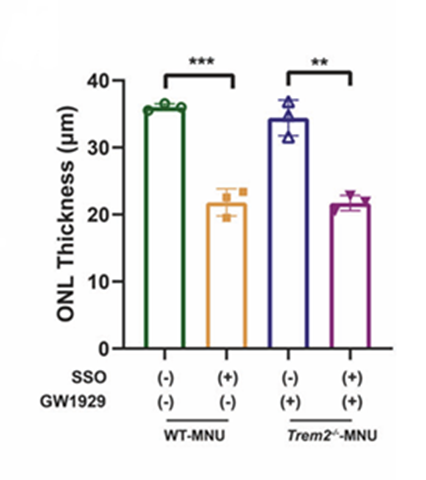
TREM2-dependent activation of microglial cell protects photoreceptor cell during retinal degeneration via PPARγ and CD36. [Abstract]2024 Aug 26;15(8):623. PMID: 39187498
GW1929 purchased from MedChemExpress. Usage Cited in: Cell Death Dis. 2024 Aug 26;15(8):623. [Abstract]
Quantitative analysis of the outer nuclear layer thickness in SSO (sulfosuccinimidyl oleate) (50 mg/kg, oral gavage)-treated MNU-induced WT mouse retina and GW1929 (30 mg/kg, intraperitoneal injection, twice)+SSO treated MNU-induced Trem2−/− mouse retina.
-
Mater Today Bio
Intelligent nanoliposome ameliorate chronic intermittent hypoxia-mediated neuronal injury via a dual regulation microglial inflammation strategy. [Abstract]2026 Feb 4:37:102865. PMID: 41716351 -
-
Phytother Res
Angelica sinensis polysaccharide improves mitochondrial metabolism of osteoarthritis chondrocytes through PPARγ/SOD2/ROS pathways. [Abstract]2023 Nov;37(11):5394-5406. PMID: 37632225 -
J Agric Food Chem
Walnut-Derived Peptides Ameliorate Scopolamine-Induced Memory Impairments in a Mouse Model via Activation of Peroxisome Proliferator-Activated Receptor γ-Mediated Excitotoxicity. [Abstract]2024 Jun 5;72(22):12541-12554. PMID: 38785039 -
Ecotoxicol Environ Saf
Inflammasome/NF-κB translocation inhibition via PPARγ agonist mitigates inorganic mercury induced nephrotoxicity. [Abstract]2020 Sep 15:201:110801. PMID: 32502906
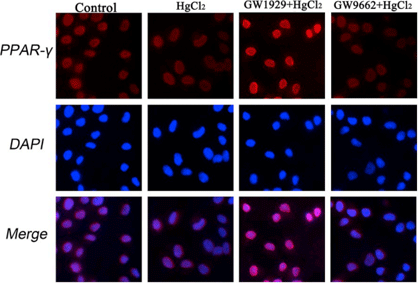
GW1929 purchased from MedChemExpress. Usage Cited in: Ecotoxicol Environ Saf. 2020 Sep 15:201:110801. [Abstract]
PPARγ agonist (GW 1929) effectively increased the PPARγ expression. Immunofluorescence staining analysis the expression levels of PPARγ in HK2 cells.
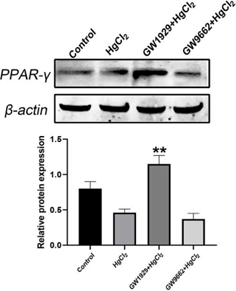
GW1929 purchased from MedChemExpress. Usage Cited in: Ecotoxicol Environ Saf. 2020 Sep 15:201:110801. [Abstract]
PPARγ agonist (GW 1929) effectively increased the PPARγ expression. Western blotting analysis the expression levels of PPARγ in HK2 cells.
-
-
J Zhejiang Univ Sci B
Silencing of DsbA-L gene impairs the PPARγ agonist function of improving insulin resistance in a high-glucose cell model. [Abstract]2020;21(12):990-998. PMID: 33843164 -
Int Immunopharmacol
CTRP6 regulates M1 macrophage polarization via the PPAR-γ/NF-κB pathway and reprogramming glycolysis in recurrent spontaneous abortion. [Abstract]2023 Sep 9;124(Pt A):110840. PMID: 37696144 -
Biochim Biophys Acta Mol Basis Dis
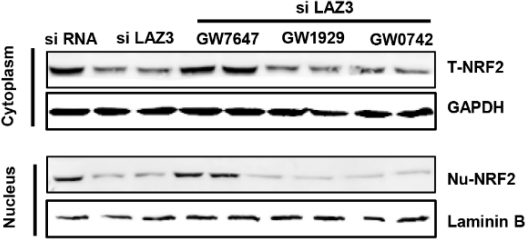
LAZ3 protects cardiac remodeling in diabetic cardiomyopathy via regulating miR-21/PPARa signaling. [Abstract]2018 Oct;1864(10):3322-3338. PMID: 30031228
GW1929 purchased from MedChemExpress. Usage Cited in: Biochim Biophys Acta Mol Basis Dis. 2018 Oct;1864(10):3322-3338. [Abstract]
LAZ3 knock-down decreases NRF2 expression and nuclear translocation, while only the PPARa agonist (GW7647) can prevent this inhibition. Both PPARγ agonist (GW1929) and PPARδ agonist (GW0742) can not reverse these inhibitions.
-
J Cell Mol Med
Disruption of PPARG Activity and CPT1A Regulation by Bisphenol A: Implications for Hepatic Lipid Metabolism. [Abstract]2025 May;29(9):e70416. PMID: 40346756 -
Aging (Albany NY)
Depletion of SENP1-mediated PPARγ SUMOylation exaggerates intermittent hypoxia-induced cognitive decline by aggravating microglia-mediated neuroinflammation. [Abstract]2021 May 25;13(11):15240-15254. PMID: 34035184


Lösungsmittel & Löslichkeit
In Vitro:
DMSO : ≥ 35 mg/mL (70.63 mM; Hygroscopic DMSO has a significant impact on the solubility of product, please use newly opened DMSO)
* "≥" means soluble, but saturation unknown.
Please refer to the solubility information to select the appropriate solvent. Once prepared, please aliquot and store the solution to prevent product inactivation from repeated freeze-thaw cycles.
Storage method and period of stock solution: -80°C, 2 years; -20°C, 1 year. When stored at -80°C, please use it within 2 years. When stored at -20°C, please use it within 1 year.
Please refer to the solubility information to select the appropriate solvent. Once prepared, please aliquot and store the solution to prevent product inactivation from repeated freeze-thaw cycles.
Storage method and period of stock solution: -80°C, 2 years; -20°C, 1 year. When stored at -80°C, please use it within 2 years. When stored at -20°C, please use it within 1 year.
Konzentration (Stammlösung) × Volumen (Stammlösung) = Konzentration (Ziellösung) × Volumen (Ziellösung)
In Vivo:
Select the appropriate dissolution method based on your experimental animal and administration route.
- For the following dissolution methods, please ensure to first prepare a clear stock solution using an In Vitro approach and then sequentially add co-solvents:
- To ensure reliable experimental results, the clarified stock solution can be appropriately stored based on storage conditions. As for the working solution for In Vivo experiments, it is recommended to prepare freshly and use it on the same day.
- The percentages shown for the solvents indicate their volumetric ratio in the final prepared solution. If precipitation or phase separation occurs during preparation, heat and/or sonication can be used to aid dissolution.
Add each solvent one by one: 10% DMSO 40% PEG300 5% Tween-80 45% Saline
Solubility: ≥ 2.5 mg/mL (5.04 mM); Clear solution
This protocol yields a clear solution of ≥ 2.5 mg/mL (saturation unknown).
Taking 1 mL working solution as an example, add 100 μL DMSO stock solution (25.0 mg/mL) to 400 μL PEG300, and mix evenly; then add 50 μL Tween-80 and mix evenly; then add 450 μL Saline to adjust the volume to 1 mL.
Preparation of Saline: Dissolve 0.9 g sodium chloride in ddH₂O and dilute to 100 mL to obtain a clear Saline solution.
Add each solvent one by one: 10% DMSO 90% (20% SBE-β-CD in Saline)
Solubility: ≥ 2.5 mg/mL (5.04 mM); Clear solution
This protocol yields a clear solution of ≥ 2.5 mg/mL (saturation unknown).
Taking 1 mL working solution as an example, add 100 μL DMSO stock solution (25.0 mg/mL) to 900 μL 20% SBE-β-CD in Saline, and mix evenly.
Preparation of 20% SBE-β-CD in Saline (4°C, storage for one week): 2 g SBE-β-CD powder is dissolved in 10 mL Saline, completely dissolve until clear.
In Vivo Dissolution Calculator
Please enter the basic information of animal experiments:
-
-
-
-
Recommended: Prepare an additional quantity of animals to account for potential losses during experiments.
Please enter your animal formula composition:
-
%DMSO +
Recommended: Keep the proportion of DMSO in working solution below 2% if your animal is weak.
-
%+
-
+%Tween-80 + +
-
%Saline +
The co-solvents required include: DMSO, . All of co-solvents are available by MedChemExpress (MCE). , Tween 80. All of co-solvents are available by MedChemExpress (MCE).
Working solution concentration: 0.22 mg/mL
Method for preparing stock solution: mg drug dissolved in μL DMSO. Stock solution concentration: mg/mL.
1. Take μL DMSO stock solution;
2. Add μL .
μL , mix evenly;
3. Then add μL Tween 80, mix evenly;
4. Then add μL
Please ensure that the stock solution in the first step is dissolved to a clear state, and add co-solvents in sequence. You can use ultrasonic heating (ultrasonic cleaner, recommended frequency 20-40 kHz), vortexing, etc. to assist dissolution.


Reinheit & Dokumentation
-
Data Sheet (280 KB)
-
SDS (251 KB)
- English - EN (251 KB)
- Français - FR (251 KB)
- Deutsch - DE (251 KB)
- Norwegian - NO (251 KB)
- Español - ES (251 KB)
- Swedish - SV (251 KB)
- Italian - IT (251 KB)
- Korean - KR (251 KB)
- Portuguese - PT (251 KB)
-
Handling Instructions (2659 KB)
Verweise
[1]. Brown KK, et al. A novel N-aryl tyrosine activator of peroxisome proliferator-activated receptor-gamma reverses the diabetic phenotype of the Zucker diabetic fatty rat. Diabetes. 1999 Jul;48(7):1415-24. [Content Brief]
[2]. Wojtowicz AK, et al. PPAR-γ agonist GW1929 but not antagonist GW9662 reduces TBBPA-induced neurotoxicity in primary neocortical cells. Neurotox Res. 2014 Apr;25(3):311-22. [Content Brief]


Complete Stock Solution Preparation Table
Please refer to the solubility information to select the appropriate solvent. Once prepared, please aliquot and store the solution to prevent product inactivation from repeated freeze-thaw cycles.
Storage method and period of stock solution: -80°C, 2 years; -20°C, 1 year. When stored at -80°C, please use it within 2 years. When stored at -20°C, please use it within 1 year.
| Optional Solvent | Concentration Solvent Mass | 1 mg | 5 mg | 10 mg | 25 mg |
|---|---|---|---|---|---|
| DMSO | 1 mM | 2.0179 mL | 10.0894 mL | 20.1788 mL | 50.4470 mL |
| 5 mM | 0.4036 mL | 2.0179 mL | 4.0358 mL | 10.0894 mL | |
| 10 mM | 0.2018 mL | 1.0089 mL | 2.0179 mL | 5.0447 mL | |
| 15 mM | 0.1345 mL | 0.6726 mL | 1.3453 mL | 3.3631 mL | |
| 20 mM | 0.1009 mL | 0.5045 mL | 1.0089 mL | 2.5223 mL | |
| 25 mM | 0.0807 mL | 0.4036 mL | 0.8072 mL | 2.0179 mL | |
| 30 mM | 0.0673 mL | 0.3363 mL | 0.6726 mL | 1.6816 mL | |
| 40 mM | 0.0504 mL | 0.2522 mL | 0.5045 mL | 1.2612 mL | |
| 50 mM | 0.0404 mL | 0.2018 mL | 0.4036 mL | 1.0089 mL | |
| 60 mM | 0.0336 mL | 0.1682 mL | 0.3363 mL | 0.8408 mL |


GW1929 Related Classifications
HY-15655 Related Classifications
 Powered by Bioz