



VU591 hydrochloride

Based on 1 Customer Validation
VU591 hydrochloride is a selective inhibitor of the renal outer medullary potassium channel (ROMK, Kir1.1). VU591 hydrochloride inhibits ROMK via binding to the intracellular pore region near residues Val168 and Asn171, with IC50 of 240 nM in Tl+ flux assay and 300 nM in whole cell patch clamp electrophysiology, suppresses native ROMK mediated K+ secretion in isolated perfused rat collecting ducts, and exerts antidepressive effects in the mouse tail suspension test (TST). VU591 hydrochloride can be used for the study of ROMK channel function, renal potassium handling, antidepressant mechanisms, and diuretic drug discovery.
Nur für Forschungszwecke. Wir verkaufen nicht an Patienten.
- Reinheit : 98.89%
- CAS. Nr.: 1315380-70-1
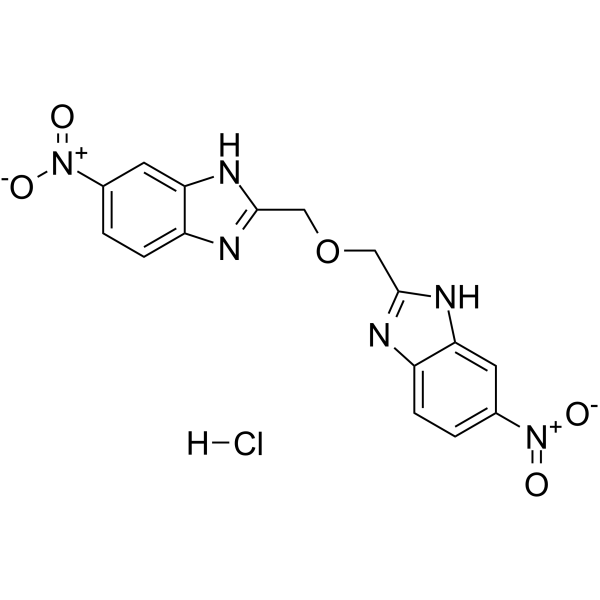
- Formel: C16H13ClN6O5
- Molecular Weight:404.76
-
Speicherung:
4°C, sealed storage, away from moisture
* In solvent : -80°C, 6 months; -20°C, 1 month (sealed storage, away from moisture)

To place orders, for customer services and technical support, please contact: MedChemExpress USA
Tel: 609-228-6898 E-mail: [email protected] [email protected]


-
 Biologische Aktivität
-
Chemical Information
-
Lösungsmittel & Löslichkeit
- Protokoll
- Reinheit & Dokumentation
- Verweise
-
 Help & FAQs


-
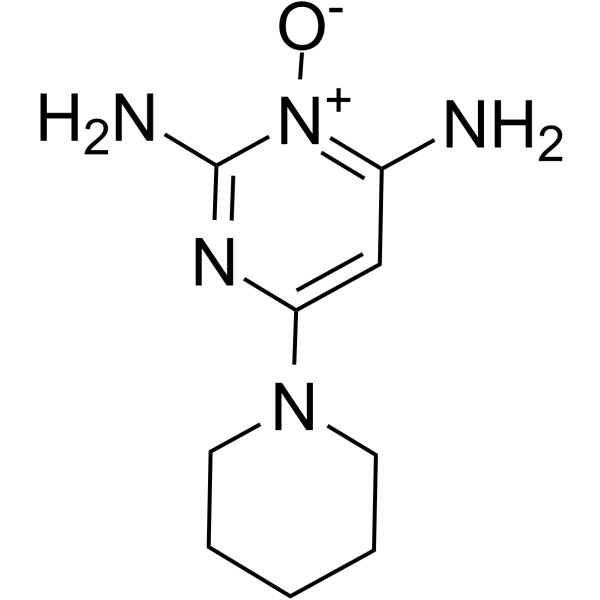
HY-B0112
MinoxidilEndogenous Metabolite -
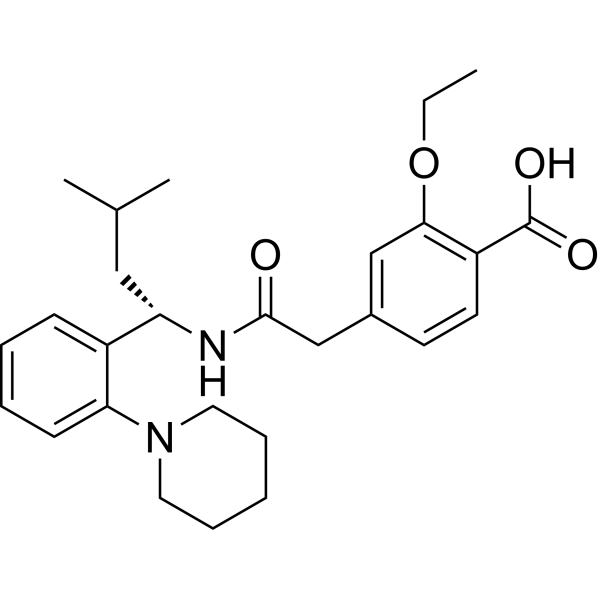
HY-15209
RepaglinideInsulin Secretagogue -
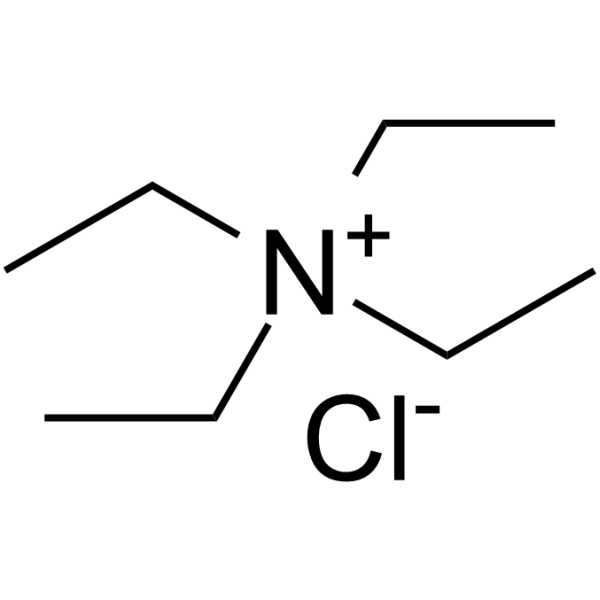
HY-B1793
Tetraethylammonium chloridePotassium Channel Inhibitor -
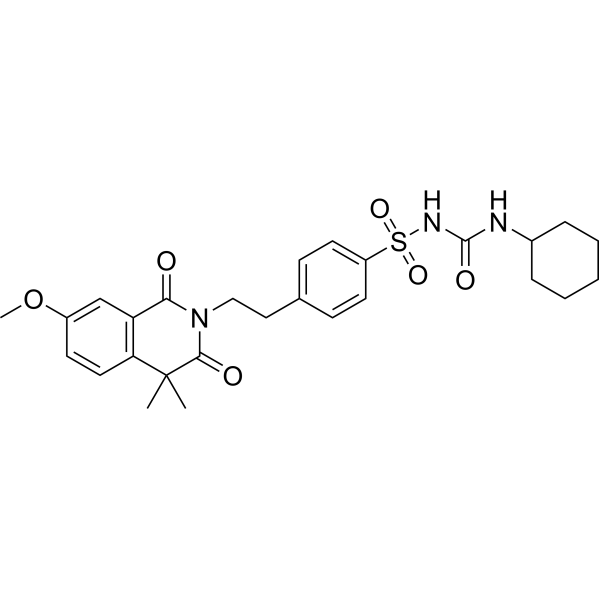
HY-B1114
GliquidoneAnti-Diabetic Drug -
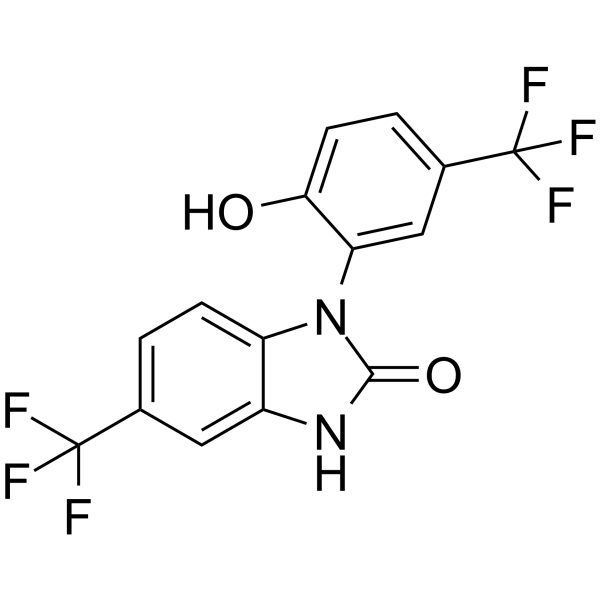
HY-12496
NS-1619BK Channel Opener -
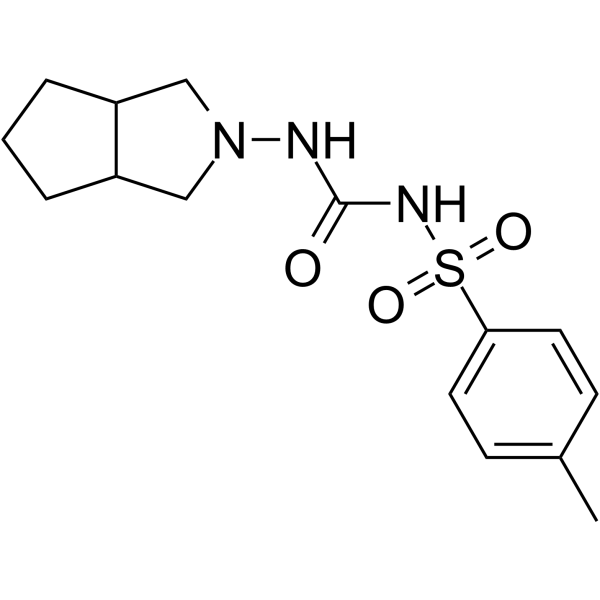
HY-B0753
GliclazidePotassium Currents Blocker -

HY-B0112R
Minoxidil (Standard)Endogenous Metabolite -
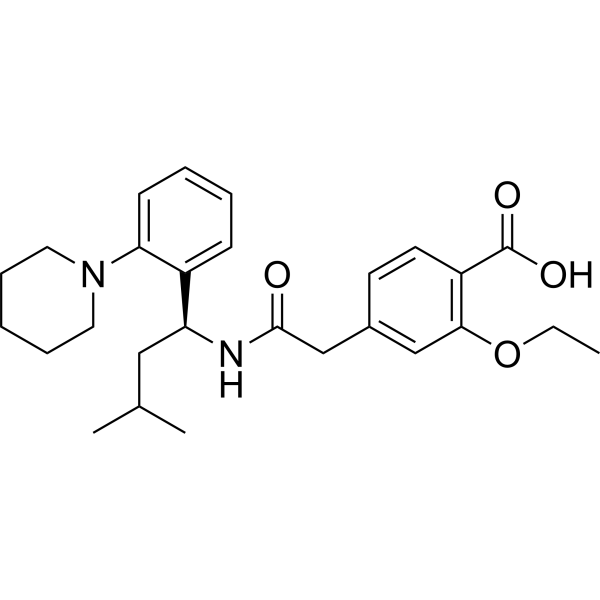
HY-15209R
Repaglinide (Standard)Insulin Secretagogue -
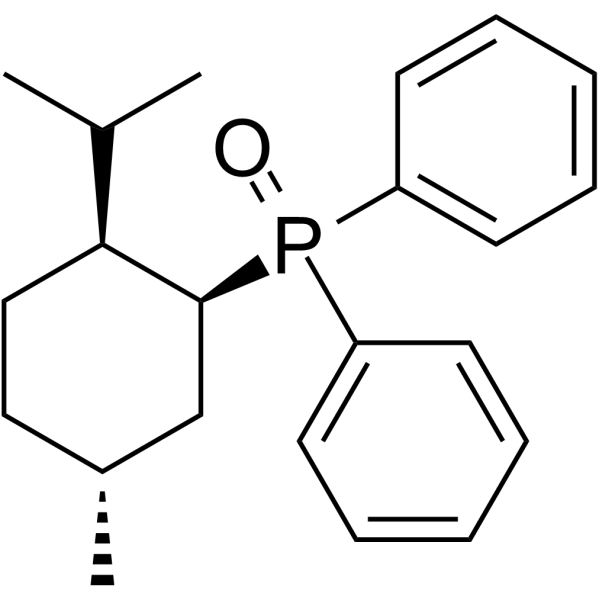
HY-100712
DPO-1Potassium Channel Inhibitor -
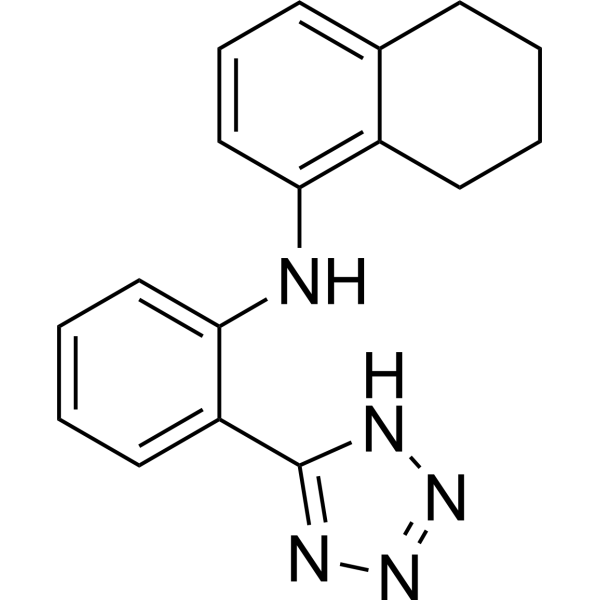
HY-108596
BL-1249TREK-1/2 Opener -
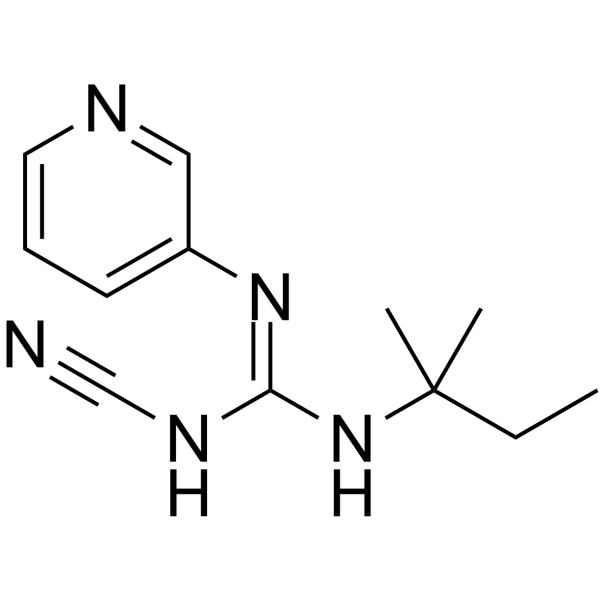
HY-108573
P-1075Potassium Channel Activator -
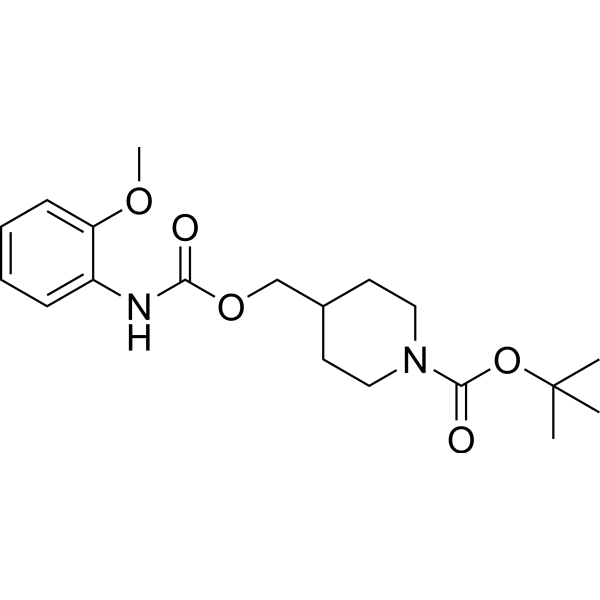
HY-12550
GW542573XSK2 Activator


Biologische Aktivität
Beschreibung
IC50 & Target
IC50: 0.24 μM (ROMK)[1].
Cellular Effect
|
Cell Line

|
Type | Value | Description | References |
|---|---|---|---|---|
| HEK293 | IC50 |
240 nM
|
Inhibition of rat ROMK1 expressed in HEK293 cells by Tl+ flux assay.
Inhibition of rat ROMK1 expressed in HEK293 cells by Tl+ flux assay.
|
31034224 |
| HEK293 | IC50 |
0.24 μM
|
Inhibition of ROMK S44D mutant expressed in HEK293 cells assessed as inhibition of thallium efflux incubated for 20 mins prior to thallium addition measured after 7 to 12 secs by fluorescence assay.
Inhibition of ROMK S44D mutant expressed in HEK293 cells assessed as inhibition of thallium efflux incubated for 20 mins prior to thallium addition measured after 7 to 12 secs by fluorescence assay.
|
24900480 |
In Vitro
VU591 (1 nM-30 μM; 5-10 min) hydrochloride inhibits rat ROMK1 (Kir1.1) with IC50 of 240 nM in Tl+ flux assay and 300 nM in whole-cell patch-clamp electrophysiology[1].
VU591 (10 μM; 4 10 min) hydrochloride produces 86% inhibition of human ROMK1 in patch clamp assay, and shows no significant inhibition of Kir7.1, Kir2.1, Kir2.3, Kir4.1, Kir6.2/SUR1, Slo1/β1, Kv1.3, or hERG channels[1].
VU591 (1-10 μM; luminal perfusion) hydrochloride inhibits net K+ transport (JK) from 7.0 to 3.6 pmol/min/mm in isolated perfused rat cortical collecting ducts, with no significant effect on Na+ transport[1].
VU591 (300 nM) hydrochloride shows voltage-dependent "knock-off" at hyperpolarizing potentials, with block decreasing at strong negative voltages[1].
VU591 (10 μM; 4 h dialysis) hydrochloride exhibits high plasma protein binding (human: 99.14%; rat: 98.39%) in rapid equilibrium dialysis assay[1].
VU591 (15 min incubation) hydrochloride shows metabolic stability, with 60-80% compound remaining in human and rat liver microsomes[1].
VU591 (up to 30 μM) hydrochloride inhibition of ROMK is abolished by mutation of pore residues Val168 and Asn171[3].
VU591 (50 and 100 μM; 4-10 min) hydrochloride exhibits 6.8% and 22.6% inhibition for Kir2.1 D172N, and 9% and 28% inhibition for Kir2.1 C169V/D172N at corresponding concentrations[3].
VU591 (20 μM; 20 min) hydrochloride blocks the cardioprotective effect of diazoxide in isolated mouse cardiomyocytes[5].
MedChemExpress (MCE) has not independently confirmed the accuracy of these methods. They are for reference only.
-
Cell Line:HEK-293 cells stably expressing ROMK-S44D (C1 cells)
-
Concentration:1, 3, 10, 30, 100, 300 nM; 1, 3, 10, 30 μM
-
Incubation Time:Approximately 20 min (pre-incubation) + 5-12 s (Tl+ addition)
-
Result:Inhibited ROMK with IC50 of 240 nM.
In Vivo
MedChemExpress (MCE) has not independently confirmed the accuracy of these methods. They are for reference only.
-
Animal Model:ICR mice (6 weeks old, male)[2]
-
Dosage:5 μL of 20 mM
-
Administration:i.c.v.; single injection; 30 min before behavioral testing
-
Result:Decreased immobile time in the tail suspension test (TST), confirming ROMK involvement in antidepressant-like effects.


Chemical Information
-
CAS. Nr. 1315380-70-1
-
Appearance Solid
-
Molecular Weight 404.76
-
Formel C16H13ClN6O5
-
Color White to gray
-
SMILES
O=[N+](C1=CC=C2N=C(COCC3=NC4=CC=C([N+]([O-])=O)C=C4N3)NC2=C1)[O-].[H]Cl
-
Versand
Room temperature in continental US; may vary elsewhere.
-
Speicherung
4°C, sealed storage, away from moisture
* In solvent : -80°C, 6 months; -20°C, 1 month (sealed storage, away from moisture)


Lösungsmittel & Löslichkeit
In Vitro:
DMSO : 16.67 mg/mL (41.18 mM; Need ultrasonic; Hygroscopic DMSO has a significant impact on the solubility of product, please use newly opened DMSO)
H2O : < 0.1 mg/mL (insoluble)
Please refer to the solubility information to select the appropriate solvent. Once prepared, please aliquot and store the solution to prevent product inactivation from repeated freeze-thaw cycles.
Storage method and period of stock solution: -80°C, 6 months; -20°C, 1 month (sealed storage, away from moisture). When stored at -80°C, please use it within 6 months. When stored at -20°C, please use it within 1 month.
Please refer to the solubility information to select the appropriate solvent. Once prepared, please aliquot and store the solution to prevent product inactivation from repeated freeze-thaw cycles.
Storage method and period of stock solution: -80°C, 6 months; -20°C, 1 month (sealed storage, away from moisture). When stored at -80°C, please use it within 6 months. When stored at -20°C, please use it within 1 month.
Konzentration (Stammlösung) × Volumen (Stammlösung) = Konzentration (Ziellösung) × Volumen (Ziellösung)
In Vivo:
Select the appropriate dissolution method based on your experimental animal and administration route.
- For the following dissolution methods, please ensure to first prepare a clear stock solution using an In Vitro approach and then sequentially add co-solvents:
- To ensure reliable experimental results, the clarified stock solution can be appropriately stored based on storage conditions. As for the working solution for In Vivo experiments, it is recommended to prepare freshly and use it on the same day.
- The percentages shown for the solvents indicate their volumetric ratio in the final prepared solution. If precipitation or phase separation occurs during preparation, heat and/or sonication can be used to aid dissolution.
Add each solvent one by one: 10% DMSO 90% (20% SBE-β-CD in Saline)
Solubility: ≥ 1.25 mg/mL (3.09 mM); Clear solution
This protocol yields a clear solution of ≥ 1.25 mg/mL (saturation unknown).
Taking 1 mL working solution as an example, add 100 μL DMSO stock solution (12.5 mg/mL) to 900 μL 20% SBE-β-CD in Saline, and mix evenly.
Preparation of 20% SBE-β-CD in Saline (4°C, storage for one week): 2 g SBE-β-CD powder is dissolved in 10 mL Saline, completely dissolve until clear.
In Vivo Dissolution Calculator
Please enter the basic information of animal experiments:
-
-
-
-
Recommended: Prepare an additional quantity of animals to account for potential losses during experiments.
Please enter your animal formula composition:
-
%DMSO +
Recommended: Keep the proportion of DMSO in working solution below 2% if your animal is weak.
-
%+
-
+%Tween-80 + +
-
%Saline +
The co-solvents required include: DMSO, . All of co-solvents are available by MedChemExpress (MCE). , Tween 80. All of co-solvents are available by MedChemExpress (MCE).
Working solution concentration: 0.22 mg/mL
Method for preparing stock solution: mg drug dissolved in μL DMSO. Stock solution concentration: mg/mL. * In solvent : -80°C, 6 months; -20°C, 1 month (sealed storage, away from moisture)
1. Take μL DMSO stock solution;
2. Add μL .
μL , mix evenly;
3. Then add μL Tween 80, mix evenly;
4. Then add μL
Please ensure that the stock solution in the first step is dissolved to a clear state, and add co-solvents in sequence. You can use ultrasonic heating (ultrasonic cleaner, recommended frequency 20-40 kHz), vortexing, etc. to assist dissolution.


Reinheit & Dokumentation
-
Data Sheet (277 KB)
-
SDS (252 KB)
- English - EN (252 KB)
- Français - FR (252 KB)
- Deutsch - DE (252 KB)
- Norwegian - NO (252 KB)
- Español - ES (252 KB)
- Swedish - SV (252 KB)
- Italian - IT (252 KB)
- Korean - KR (252 KB)
- Portuguese - PT (252 KB)
-
Handling Instructions (2659 KB)
Verweise
[1]. Bhave G, et al. Development of a selective small-molecule inhibitor of Kir1.1, the renal outer medullary potassium channel. Mol Pharmacol. 2011 Jan;79(1):42-50. [Content Brief]
[2]. Okada M, et al. Antidepressive effect of an inward rectifier K+ channel blocker peptide, tertiapin-RQ. PLoS One. 2020 Nov 13;15(11):e0233815. [Content Brief]
[3]. Swale DR, et al. Computational and functional analyses of a small-molecule binding site in ROMK. Biophys J. 2015 Mar 10;108(5):1094-103. [Content Brief]
[4]. Sammons MF, et al. Discovery and in Vitro Optimization of 3-Sulfamoylbenzamides as ROMK Inhibitors. ACS Med Chem Lett. 2018 Jan 19;9(2):125-130. [Content Brief]
[5]. Wang J, et al. Kir1.1 and SUR1 are not implicated as subunits of an adenosine triphosphate-sensitive potassium channel involved in diazoxide cardioprotection. JTCVS Open. 2023 Jun 16;15:231-241. [Content Brief]


Complete Stock Solution Preparation Table
Please refer to the solubility information to select the appropriate solvent. Once prepared, please aliquot and store the solution to prevent product inactivation from repeated freeze-thaw cycles.
Storage method and period of stock solution: -80°C, 6 months; -20°C, 1 month (sealed storage, away from moisture). When stored at -80°C, please use it within 6 months. When stored at -20°C, please use it within 1 month.
| Optional Solvent | Concentration Solvent Mass | 1 mg | 5 mg | 10 mg | 25 mg |
|---|---|---|---|---|---|
| DMSO | 1 mM | 2.4706 mL | 12.3530 mL | 24.7060 mL | 61.7650 mL |
| 5 mM | 0.4941 mL | 2.4706 mL | 4.9412 mL | 12.3530 mL | |
| 10 mM | 0.2471 mL | 1.2353 mL | 2.4706 mL | 6.1765 mL | |
| 15 mM | 0.1647 mL | 0.8235 mL | 1.6471 mL | 4.1177 mL | |
| 20 mM | 0.1235 mL | 0.6176 mL | 1.2353 mL | 3.0882 mL | |
| 25 mM | 0.0988 mL | 0.4941 mL | 0.9882 mL | 2.4706 mL | |
| 30 mM | 0.0824 mL | 0.4118 mL | 0.8235 mL | 2.0588 mL | |
| 40 mM | 0.0618 mL | 0.3088 mL | 0.6176 mL | 1.5441 mL |


VU591 hydrochloride Related Classifications
HY-108585 Related Classifications
 Powered by Bioz