



Zipalertinib
Based on 3 publication(s) in Google Scholar
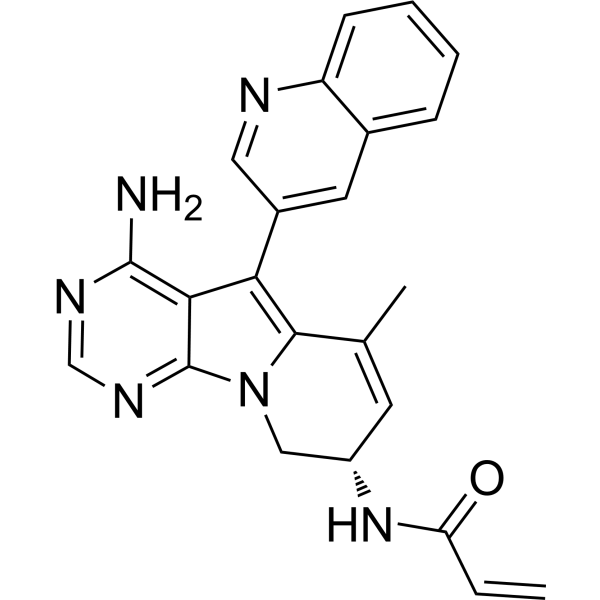
Zipalertinib (TAS6417; CLN-081) is a highly effective, orally active and pan-mutation-selective EGFR tyrosine kinase inhibitor with a unique scaffold fitting into the ATP-binding site of the EGFR hinge region, with IC50 values ranging from 1.1-8.0 nM.
For research use only. We do not sell to patients.
- Purity: 99.62%
- CAS No.: 1661854-97-2
- Formula: C23H20N6O
- Molecular Weight:396.44
-
Storage:
4°C, protect from light, stored under nitrogen
* In solvent : -80°C, 6 months; -20°C, 1 month (protect from light, stored under nitrogen)

To place orders, for customer services and technical support, please contact: MedChemExpress USA
Tel: 609-228-6898 E-mail: [email protected] [email protected]


-
 Biological Activity
-
Chemical Information
-
Solvent & Solubility
- Purity & Documentation
- References
-
 Help & FAQs


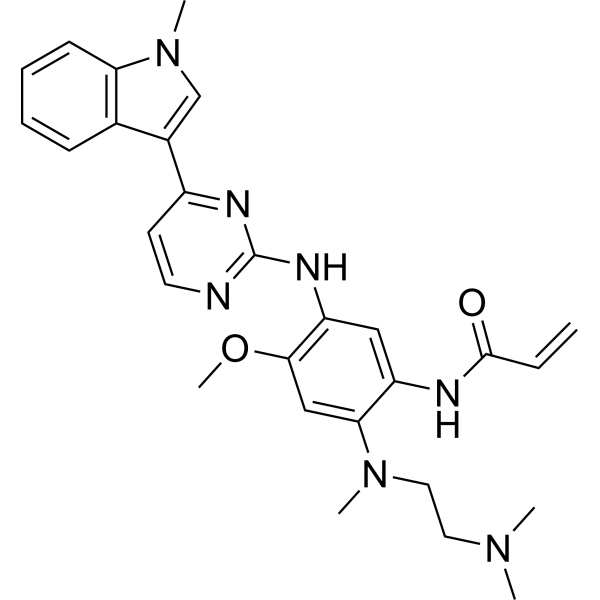
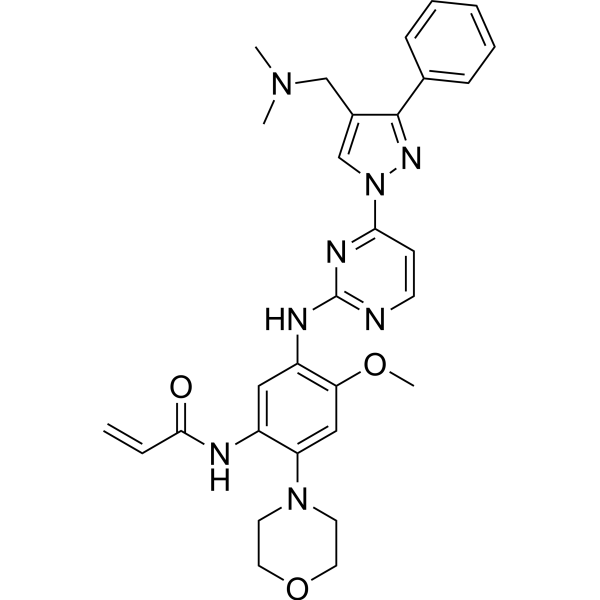
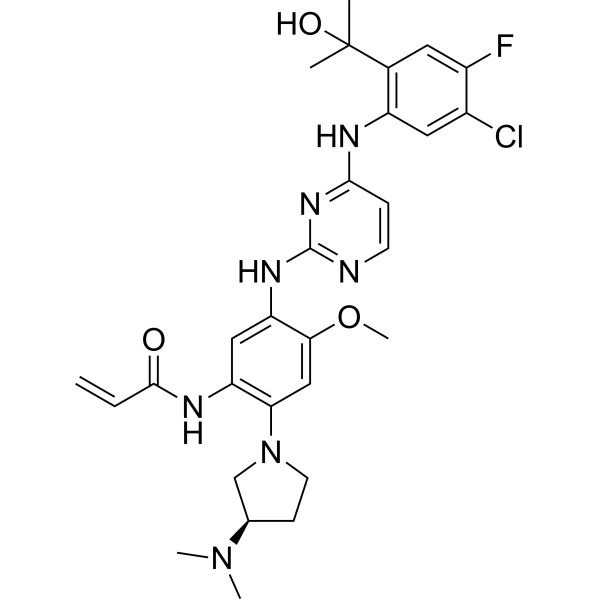
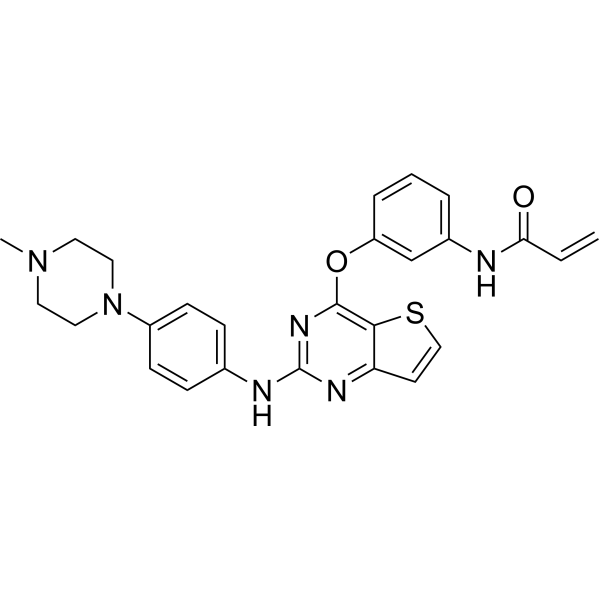

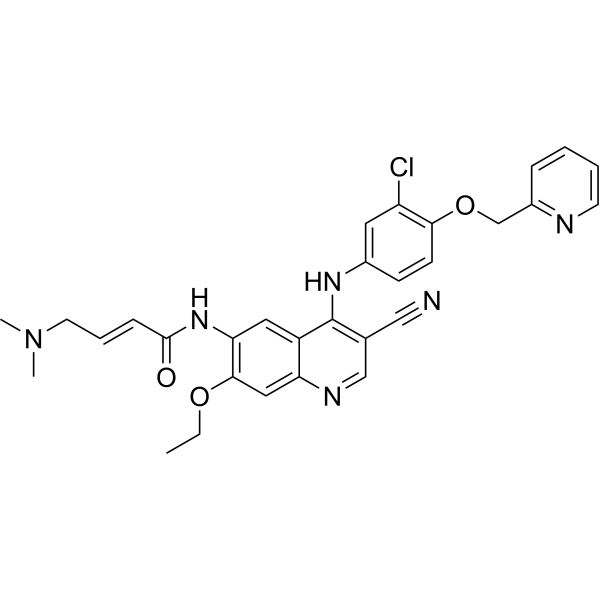
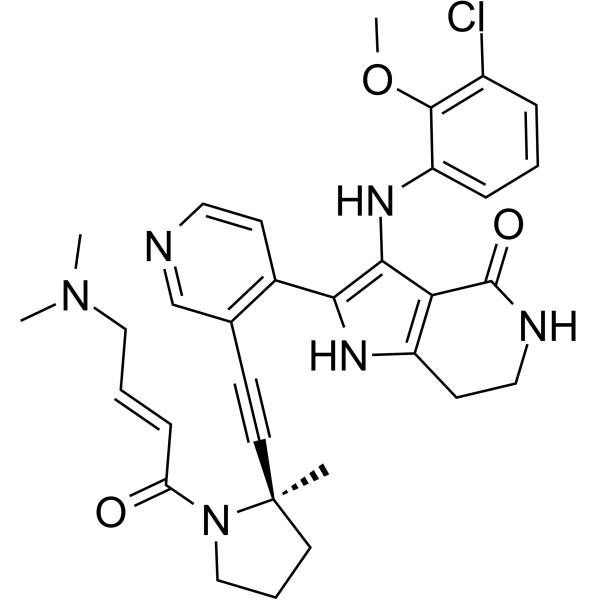
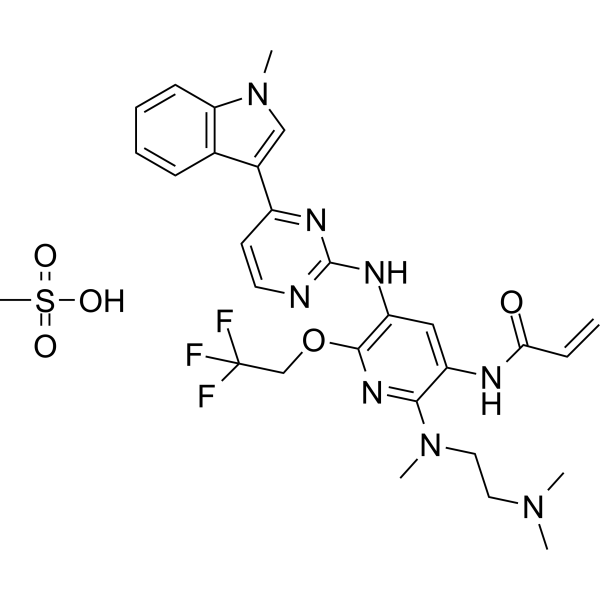
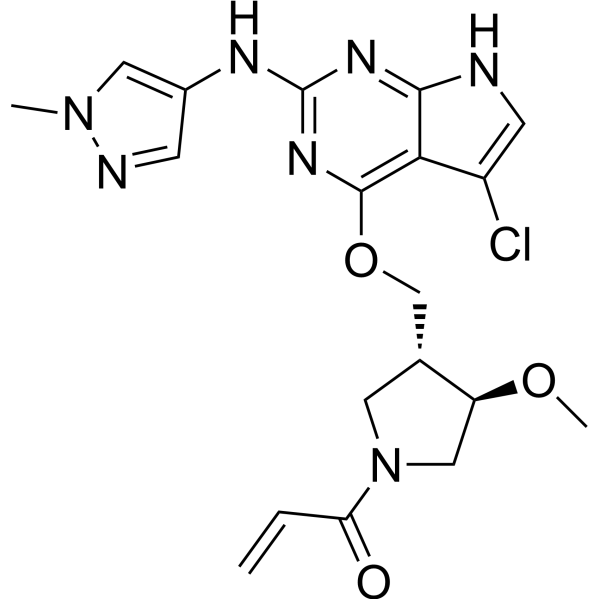
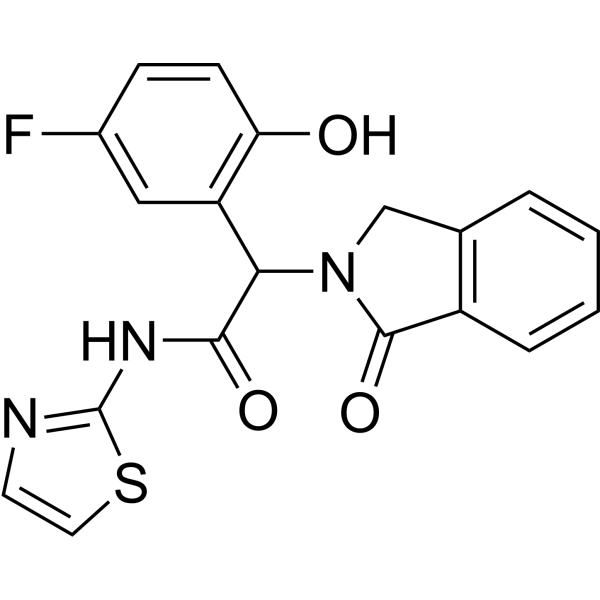
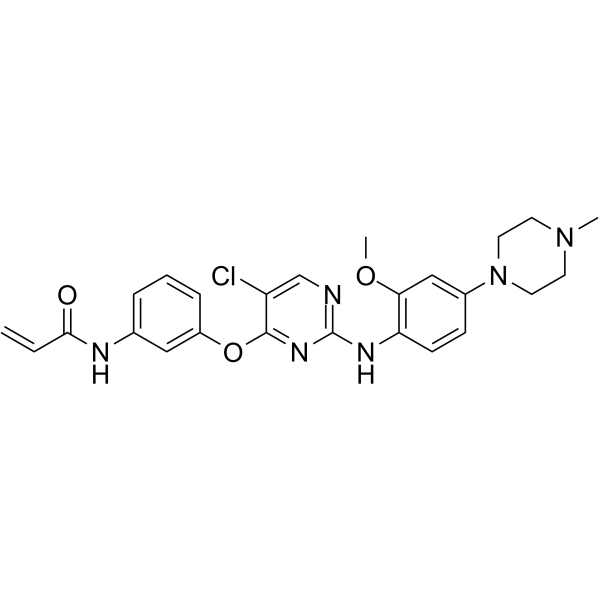
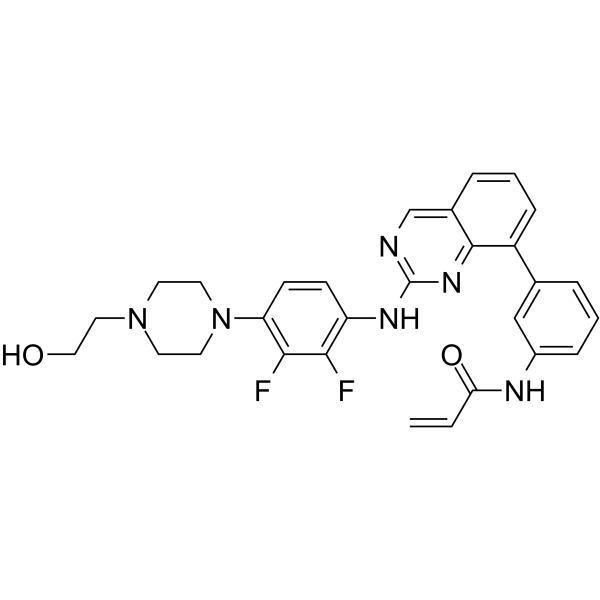
Publications Citing Use of MedChemExpress (MCE) Zipalertinib
MoreAll EGFR Isoforms
More

Biological Activity
|
EGFR 1.1-8.0 nM (IC50) |
|
Cell Line

|
Type | Value | Description | References |
|---|---|---|---|---|
| BaF3 | IC50 |
5 nM
Compound: CLN-081; TAS6417
|
Antiproliferative activity against mouse Ba/F3 cells harboring EGFR-D770-N771ins_G mutant incubated for 3 days by Cell Titer-Glo assay
Antiproliferative activity against mouse Ba/F3 cells harboring EGFR-D770-N771ins_G mutant incubated for 3 days by Cell Titer-Glo assay
|
[PMID: 37669428] |
| BaF3 | IC50 |
5 nM
Compound: CLN-081; TAS6417
|
Antiproliferative activity against mouse Ba/F3 cells harboring EGFR-H773-V774ins_PH mutant incubated for 3 days by Cell Titer-Glo assay
Antiproliferative activity against mouse Ba/F3 cells harboring EGFR-H773-V774ins_PH mutant incubated for 3 days by Cell Titer-Glo assay
|
[PMID: 37669428] |
| BaF3 | IC50 |
676 nM
Compound: CLN-081; TAS6417
|
Antiproliferative activity against mouse BaF3 cells harboring wild type EGFR incubated for 3 days by Cell Titer-Glo assay
Antiproliferative activity against mouse BaF3 cells harboring wild type EGFR incubated for 3 days by Cell Titer-Glo assay
|
[PMID: 37669428] |
| NIH3T3 | IC50 |
<4.48 nM
Compound: CLN-081; TAS6417
|
Antiproliferative activity against mouse NIH/3T3 cells harboring EGFR-A763_Y764insFQEA incubated for 72 hrs by Cell Titer-Glo assay
Antiproliferative activity against mouse NIH/3T3 cells harboring EGFR-A763_Y764insFQEA incubated for 72 hrs by Cell Titer-Glo assay
|
[PMID: 37669428] |
| NIH3T3 | IC50 |
23.4 nM
Compound: CLN-081; TAS6417
|
Antiproliferative activity against mouse NIH/3T3 cells harboring EGFR-D770-N771ins_SVD incubated for 72 hrs by Cell Titer-Glo assay
Antiproliferative activity against mouse NIH/3T3 cells harboring EGFR-D770-N771ins_SVD incubated for 72 hrs by Cell Titer-Glo assay
|
[PMID: 37669428] |
| NIH3T3 | IC50 |
368 nM
Compound: CLN-081; TAS6417
|
Antiproliferative activity against mouse NIH/3T3 cells harboring wild type EGFR incubated for 72 hrs by Cell Titer-Glo assay
Antiproliferative activity against mouse NIH/3T3 cells harboring wild type EGFR incubated for 72 hrs by Cell Titer-Glo assay
|
[PMID: 37669428] |
| NIH3T3 | IC50 |
66.7 nM
Compound: CLN-081; TAS6417
|
Antiproliferative activity against mouse NIH/3T3 cells harboring EGFR-H773-V774ins_NPH incubated for 72 hrs by Cell Titer-Glo assay
Antiproliferative activity against mouse NIH/3T3 cells harboring EGFR-H773-V774ins_NPH incubated for 72 hrs by Cell Titer-Glo assay
|
[PMID: 37669428] |
| NIH3T3 | IC50 |
78.2 nM
Compound: CLN-081; TAS6417
|
Antiproliferative activity against mouse NIH/3T3 cells harboring EGFR-V769_D770insASV incubated for 72 hrs by Cell Titer-Glo assay
Antiproliferative activity against mouse NIH/3T3 cells harboring EGFR-V769_D770insASV incubated for 72 hrs by Cell Titer-Glo assay
|
[PMID: 37669428] |
Zipalertinib (TAS6417) inhibits EGFR phosphorylation and downstream molecules in NSCLC cell lines expressing EGFR exon 20 insertions, resulting in caspase activation[1].
?
Zipalertinib (TAS6417) is a robust inhibitor against the most common EGFR mutations (exon 19 deletions and L858R) and the most potent against cells harboring EGFR-T790M (1st/2nd generation TKI resistance mutation)[2].
?
Zipalertinib (TAS6417) covalently modified the cysteine residue at position 797 of recombinant EGFR harboring an in-frame insertion mutation in the exon 20 region[1].
?
Zipalertinib (TAS6417) inhibits EGFR signal transduction, leading to cell growth inhibition and apoptosis induction in NSCLC cells driven by EGFR exon 20 insertion mutations[1].
?
Zipalertinib (TAS6417) (0-10 μM) inhibits cell proliferation and EGFR signaling in NSCLC cell lines harboring EGFR common mutations in the presence or absence of T790M[2].
MedChemExpress (MCE) has not independently confirmed the accuracy of these methods. They are for reference only.
-
Cell Line:PC-9, H1975, BID007, BID019, BEAS-2B cells.
-
Concentration:0-10 μM.
-
Incubation Time:24-48 h.
-
Result:Led to apoptosis via inhibition of mutant EGFR.
? Zipalertinib (TAS6417) had no effect on EGFR-independent proliferation in NCI-H23 or NCI-H460 cells[1].
? Zipalertinib (TAS6417) administered at 20 mg/kg, which achieves complete suppression of tumor growth, induces a significant decrease in pEGFR, leading to reduction of pAKT and pERK at 1 h. The inhibitory effect is still noted at 6 h, and phosphorylation of EGFR, ATK, and ERK recovered by 24 h[1].
? Zipalertinib (TAS6417) (100 and 200 mg/kg/day) prolongs survival of animals bearing lung cancer[1].
MedChemExpress (MCE) has not independently confirmed the accuracy of these methods. They are for reference only.
-
Animal Model:Mice implanted with NCI-H1975 EGFR D770_N771insSVD xenografts[1].
-
Dosage:50 and 100 mg/kg.
-
Administration:Orally once daily for 14 days.
-
Result:Showed marked tumor growth inhibition with treatment/control (T/C) ratios of 51% and 19%, respectively.
| NCT Number | Sponsor | Condition | Start Date |
Phase
|
|---|---|---|---|---|
| NCT01329991 | Plexxikon| | 2011-05 | PHASE1 |


Chemical Information
-
CAS No. 1661854-97-2
-
Appearance Solid
-
Molecular Weight 396.44
-
Formula C23H20N6O
-
Color White to yellow
-
SMILES
NC1=C2C(N3C(C(C)=C[C@@H](C3)NC(C=C)=O)=C2C4=CC5=CC=CC=C5N=C4)=NC=N1
-
Synonyms
TAS6417; CLN-081
-
Shipping
Room temperature in continental US; may vary elsewhere.
-
Storage
4°C, protect from light, stored under nitrogen
* In solvent : -80°C, 6 months; -20°C, 1 month (protect from light, stored under nitrogen)


Publications (3)
-
Journal Impact Factor
-
Most Recent
-
Clin Cancer Res
STX-721, a Covalent EGFR/HER2 Exon 20 Inhibitor, Utilizes Exon 20-Mutant Dynamic Protein States and Achieves Unique Mutant Selectivity Across Human Cancer Models. [Abstract]2025 Jun 4:OF1-OF17. PMID: 40465424 -
Lung Cancer
Efficacy of EGFR tyrosine kinase inhibitors in patients with non-small cell lung cancer with EGFR exon 19 insertions: clinical-genomic, preclinical analysis through LC-SCRUM-Asia (multi-institutional genomic screening registry). [Abstract]2025 Apr:202:108479. PMID: 40088581 -
JTO Clin Res Rep
The Impact of On-Target Resistance Mediated by EGFR-T790M or EGFR-C797S on EGFR Exon 20 Insertion Mutation Active Tyrosine Kinase Inhibitors. [Abstract]2023 Nov 27;5(1):100614. PMID: 38229766


Solvent & Solubility
DMSO : 125 mg/mL (315.31 mM; Need ultrasonic; Hygroscopic DMSO has a significant impact on the solubility of product, please use newly opened DMSO)
Please refer to the solubility information to select the appropriate solvent. Once prepared, please aliquot and store the solution to prevent product inactivation from repeated freeze-thaw cycles.
Storage method and period of stock solution: -80°C, 6 months; -20°C, 1 month (protect from light, stored under nitrogen). When stored at -80°C, please use it within 6 months. When stored at -20°C, please use it within 1 month.
Please refer to the solubility information to select the appropriate solvent. Once prepared, please aliquot and store the solution to prevent product inactivation from repeated freeze-thaw cycles.
Storage method and period of stock solution: -80°C, 6 months; -20°C, 1 month (protect from light, stored under nitrogen). When stored at -80°C, please use it within 6 months. When stored at -20°C, please use it within 1 month.
Concentration (start) × Volume (start) = Concentration (final) × Volume (final)
Select the appropriate dissolution method based on your experimental animal and administration route.
- For the following dissolution methods, please ensure to first prepare a clear stock solution using an In Vitro approach and then sequentially add co-solvents:
- To ensure reliable experimental results, the clarified stock solution can be appropriately stored based on storage conditions. As for the working solution for In Vivo experiments, it is recommended to prepare freshly and use it on the same day.
- The percentages shown for the solvents indicate their volumetric ratio in the final prepared solution. If precipitation or phase separation occurs during preparation, heat and/or sonication can be used to aid dissolution.
Add each solvent one by one: 10% DMSO 40% PEG300 5% Tween-80 45% Saline
Solubility: ≥ 2.08 mg/mL (5.25 mM); Clear solution
This protocol yields a clear solution of ≥ 2.08 mg/mL (saturation unknown).
Taking 1 mL working solution as an example, add 100 μL DMSO stock solution (20.8 mg/mL) to 400 μL PEG300, and mix evenly; then add 50 μL Tween-80 and mix evenly; then add 450 μL Saline to adjust the volume to 1 mL.
Preparation of Saline: Dissolve 0.9 g sodium chloride in ddH₂O and dilute to 100 mL to obtain a clear Saline solution.
Please enter the basic information of animal experiments:
-
-
-
-
Recommended: Prepare an additional quantity of animals to account for potential losses during experiments.
Please enter your animal formula composition:
-
%DMSO +
Recommended: Keep the proportion of DMSO in working solution below 2% if your animal is weak.
-
%+
-
+%Tween-80 + +
-
%Saline +
The co-solvents required include: DMSO, . All of co-solvents are available by MedChemExpress (MCE). , Tween 80. All of co-solvents are available by MedChemExpress (MCE).
Working solution concentration: 0.22 mg/mL
Method for preparing stock solution: mg drug dissolved in μL DMSO. Stock solution concentration: mg/mL. * In solvent : -80°C, 6 months; -20°C, 1 month (protect from light, stored under nitrogen)
1. Take μL DMSO stock solution;
2. Add μL .
μL , mix evenly;
3. Then add μL Tween 80, mix evenly;
4. Then add μL
Please ensure that the stock solution in the first step is dissolved to a clear state, and add co-solvents in sequence. You can use ultrasonic heating (ultrasonic cleaner, recommended frequency 20-40 kHz), vortexing, etc. to assist dissolution.


Purity & Documentation
-
Data Sheet (286 KB)
-
SDS (252 KB)
- English - EN (252 KB)
- Français - FR (252 KB)
- Deutsch - DE (252 KB)
- Norwegian - NO (252 KB)
- Español - ES (252 KB)
- Swedish - SV (252 KB)
- Italian - IT (252 KB)
- Korean - KR (252 KB)
- Portuguese - PT (252 KB)
-
Handling Instructions (2659 KB)
References
[1]. Hasako S, et al. TAS6417, A Novel EGFR Inhibitor Targeting Exon 20 Insertion Mutations. Mol Cancer Ther. 2018 Aug;17(8):1648-1658. [Content Brief]
[2]. Hibiki Udagawa, et al. TAS6417/CLN-081 Is a Pan-Mutation-Selective EGFR Tyrosine Kinase Inhibitor with a Broad Spectrum of Preclinical Activity against Clinically Relevant EGFR Mutations. Mol Cancer Res. 2019 Nov;17(11):2233-2243. [Content Brief]


Complete Stock Solution Preparation Table
Please refer to the solubility information to select the appropriate solvent. Once prepared, please aliquot and store the solution to prevent product inactivation from repeated freeze-thaw cycles.
Storage method and period of stock solution: -80°C, 6 months; -20°C, 1 month (protect from light, stored under nitrogen). When stored at -80°C, please use it within 6 months. When stored at -20°C, please use it within 1 month.
| Optional Solvent | Concentration Solvent Mass | 1 mg | 5 mg | 10 mg | 25 mg |
|---|---|---|---|---|---|
| DMSO | 1 mM | 2.5224 mL | 12.6122 mL | 25.2245 mL | 63.0612 mL |
| 5 mM | 0.5045 mL | 2.5224 mL | 5.0449 mL | 12.6122 mL | |
| 10 mM | 0.2522 mL | 1.2612 mL | 2.5224 mL | 6.3061 mL | |
| 15 mM | 0.1682 mL | 0.8408 mL | 1.6816 mL | 4.2041 mL | |
| 20 mM | 0.1261 mL | 0.6306 mL | 1.2612 mL | 3.1531 mL | |
| 25 mM | 0.1009 mL | 0.5045 mL | 1.0090 mL | 2.5224 mL | |
| 30 mM | 0.0841 mL | 0.4204 mL | 0.8408 mL | 2.1020 mL | |
| 40 mM | 0.0631 mL | 0.3153 mL | 0.6306 mL | 1.5765 mL | |
| 50 mM | 0.0504 mL | 0.2522 mL | 0.5045 mL | 1.2612 mL | |
| 60 mM | 0.0420 mL | 0.2102 mL | 0.4204 mL | 1.0510 mL | |
| 80 mM | 0.0315 mL | 0.1577 mL | 0.3153 mL | 0.7883 mL | |
| 100 mM | 0.0252 mL | 0.1261 mL | 0.2522 mL | 0.6306 mL |


Zipalertinib Related Classifications
HY-112299 Related Classifications
 Powered by Bioz